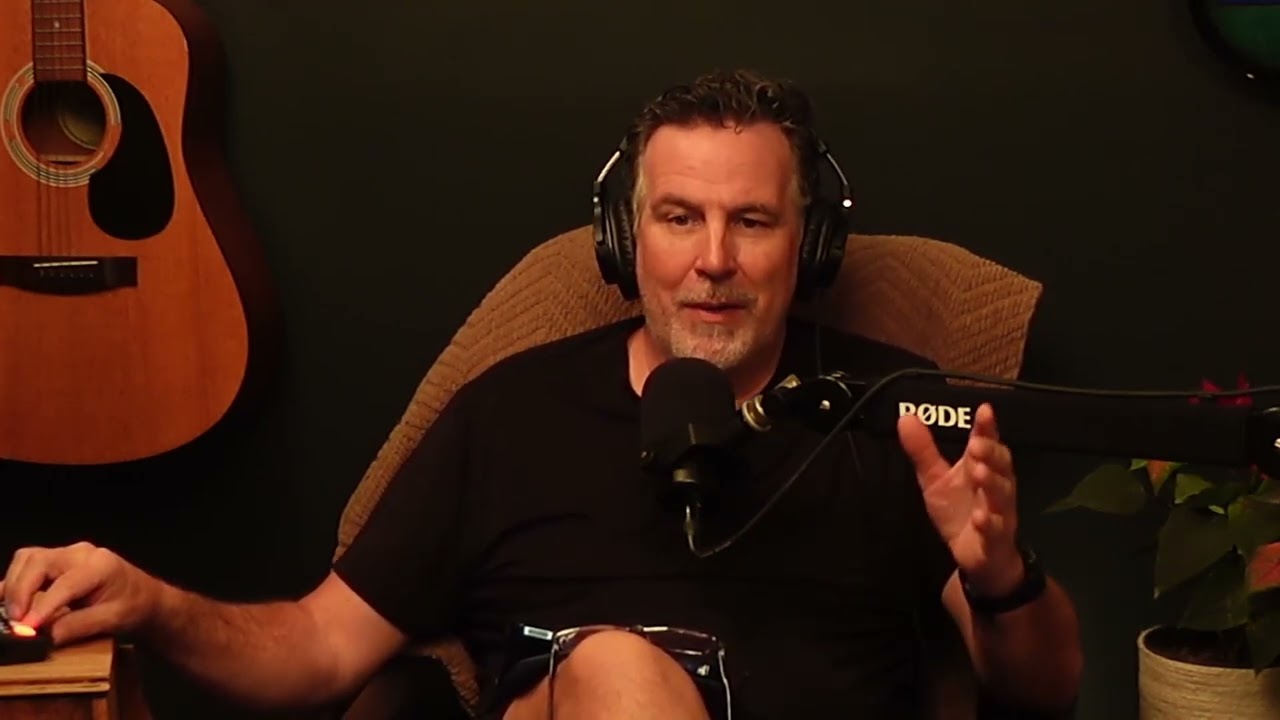
In Episode 19 of the GenZ Series, Dr. Farzon Danesh shares his unique perspective as a member of the Zillennial micro-generation, discussing his upbringing in a Persian immigrant family and the impact of technology on his life. He reflects on his educational journey, the challenges of balancing fun and responsibility in college, and his current role as a doctor of audiology, where he helps patients manage tinnitus and hearing loss.
[Music] Welcome to GenX Adulting and today we have Farzahn with us. Welcome. Hello, thank you so much for having me. It's a pleasure. It's a pleasure to have you here with us tonight. So our first question we always ask everyone is what year were you born? Right. So I was born in 1997 just before the cutoff of the 2000s. Okay, so you're Gen Z. Did you know that? I think I'm right on the cutoff actually of between generations. So I really haven't focused on it. I'm going to be honest. So I'll tell you a little snippet. You are part of a micro generation within Gen Z that's called Zillennial. So you are the oldest Gen Zs, but the little group of you, you can't really totally relate to the Gen Zs of now that are younger, but you're not totally with the millennials. You're kind of in between both of those generations. You had a childhood that was pretty technology free. Technology more hit you guys high school, early high school. You don't really have phones in your hands through your childhood. So you got kind of that old fashioned technology free childhood. And then you also experienced technology in high school college. So you kind of have a foot in the millennial world and a foot in the Gen Z world. So you guys are called Zillennials. Yeah, I always think about how blessed I was to be in that time. Yeah. I remember when I was like 13, I had a razor. It was just a flip phone and you were the coolest guy on the block. Like my I when I was like 10 years old, I don't even remember. Like I bought my parents were like, you could buy a ringtone. And I bought my humps by Ferdy. I had no idea. I had no idea what she was even singing, but it was like a 30 second snippet. I would play for my friends. It's a good tune though. It's a good tune.
And I bought my humps by Ferdy. I had no idea. I had no idea what she was even singing, but it was like a 30 second snippet. I would play for my friends. It's a good tune though. It's a good tune. Nothing says that time frame like that song for sure. Oh gosh, I forgot about buying ringtones. That was a thing. Yeah, that was a big deal. Yeah. So you kind of got the best of both worlds in a way. Whereas the younger Gen Z's, I mean, some of them only know technology and social media, you know, so, you know, I always think the Zillennials get a little bit of little bit of both worlds and it's a nice balance. Oh yeah. You know, when I started high school, that was like the start of Instagram. So it was, you know, people were just posting pictures of what they were eating that night and, you know, it was not even taken too seriously. My parents had no idea what it was. Yeah. Stop wasting your time. Yeah. Yeah. Yeah. And now they're on Facebook every day. Yeah. It was just that. Yeah. It was just that transition, you know? So I'm always, I feel so blessed to have lived in that time when social media was not, didn't play so much of an impact in our lives as it does now. Yeah, absolutely. For sure. So did you grow up in one town through your childhood? Yeah. So I was born in Memphis, Tennessee. No way. Yeah. So, you know, my dad was an immigrant from Iran. So how he kind of got by in the U.S. was through education. So my sister is three years older than me. She was born in Pocatello, Idaho. Oh, wow. And then my dad got his PhD in Memphis. And so I was born when he was a student in Memphis, Tennessee. Okay. So when he came over here, how old was he? So when he came, I think he was in his early thirties.
And so I was born when he was a student in Memphis, Tennessee. Okay. So when he came over here, how old was he? So when he came, I think he was in his early thirties. He was just given the ability to get an education in the U.S. Right. So he came with my mom and, you know, we, they worked a bunch of jobs to make things work. They only came with about three hundred dollars in their pocket. Wow. And so did they start in Idaho? Yeah. So they started in Idaho. My dad got his masters. He was working several jobs to provide for not only his wife, my mom, but their new daughter, which is my older sister. Right. Yeah. So, you know, their story is really remarkable. And so they were working a bunch of jobs, like creating roads in the street, getting paid like four dollars an hour to make things work. So in the U.S. or in Idaho, Idaho. Okay. When my dad was a student, he was like a parking ticket officer, you know, just trying to find ways to get his ass off. Exactly. Yeah. So, so he applied for a visa to come over here for school. Did your mom also come over here for school or she was able to just come with them because she was his wife? Yeah, exactly. That's what happened. Okay. What, why do you think they wanted to come over here? Oh, it was just, you know, education in the U.S. is something that is not really available elsewhere. You know, everyone from all over the world is always trying to come to the United States to get a good education. That's typically, that's why they came. And even to this day, I actually have some people in my family that are always, you know, they're trying to come to the U.S. to get an education. It's something that is probably taken for granted considering the ample amount of opportunities that we have here and
you know, they're trying to come to the U.S. to get an education. It's something that is probably taken for granted considering the ample amount of opportunities that we have here and just, you know, it's not available elsewhere. So you still have a lot of family over there. Not, not a lot. I have an uncle who's still there. His son, which is my first cousin came actually studied at FAU and he ended up now he's working in Silicon Valley in SF. Yeah. It's just, he worked really hard. It's like just that immigrant spirit. Yeah. So then did your dad get his undergraduate in Idaho? Is that how that worked? He got, I think it was his master's and then he ended up getting his PhD in Memphis. Okay. Yeah. And then how long were they in Memphis? They were in Memphis for about, I would say, I think it's about two years. And after he was done with Memphis, my mom, she's so funny. She told them, she, she said, I only want to go to two places from here. It's either going to be Hawaii or Florida. She wanted the warm weather. Yeah. She wanted to, so my dad was like, all right, well we're not going to Hawaii. I need to look for some jobs. And he actually got an opportunity to teach at Florida Atlantic University in Boca. Okay. So that's what actually brought our family down here. Okay. Okay. So then how old were you when you moved here? I was about a year and a half old. I mean, I'm pretty much grown here completely. I'm a South Florida boy. It's all I know. Okay. So how was it having, you know, being that South Florida boy, this is you and your sister, you know, are born here, American, American life. But then I assume your parents still have a lot of their culture from Iran. Did you grow, did they maintain that within the home?
are born here, American, American life. But then I assume your parents still have a lot of their culture from Iran. Did you grow, did they maintain that within the home? Yeah, they were very, they, so how I consider Persian values, it's just very family oriented. You know, I, it was so hard to, for example, to explain to my friends how I can never be available for New Year's because, you know, things like that, it's all about family. So, especially with my family specifically, we have a very family oriented environment where, you know, my mom's mom or my grandma, she had nine siblings. So that family tree kind of just came down and, once my mom came here, she decided to bring a lot of her family here. Even to this day, like our thanksgivings and our family, you know, holidays, it's usually with like 30, 40 people. It's in this area. Everyone lives in this area. Oh yeah. That's wonderful. Yeah. It's pretty cool. And especially being Persian, there's almost like a sub community here. So it's, we take care of each other. It's something that I was discussing with my friend how, you know, it's like, if you understand that someone has the same background as you, it's, you guys will immediately connect and, it's just like something that I don't take for granted. It is nice to be able to connect to people with a similar background as your own. 100%. And so is there a, there's a decent Persian community in South Florida? It's not decent, but it's there. There's places in the US, like LA. There's a lot, even some parts of like Texas, but you know, Florida really is not one of those places, but you know, it's there. Yeah. The most important question then of the whole time here is going to be, where's the best Persian food locally? Shahs of kebab.
places, but you know, it's there. Yeah. The most important question then of the whole time here is going to be, where's the best Persian food locally? Shahs of kebab. And where's that at? They actually started in Miami. Um, but you know, there was never really good Persian food. And so that was always something that bothered me because I was, I would go to places like Toronto and there would be tons of different restaurants and places to go. So I was never able to get a good culinary experience in my culture other than my, in my home. Right now, there's this place called Shahs of kebab. They, it's very authentic and delicious. I mean, it's not that there weren't places to eat, but they just, it wasn't that good. Where's the closest one? It's right here on federal and near fifth app shops. It's really, yeah. Oh yeah. Oh, okay. I know what we're doing this weekend. Absolutely. Nathan actually went, um, Nathan went and he, he was like, what should I get? He told us. He sent us pictures. Yeah. Yeah. And you know, I'm Armenian and it reminded me, I think there's a lot of similarities in Middle Eastern food because I make pilaf and I make hummus and all that stuff. He was sending pictures of his food and telling us, speaking of taking pictures of your food and telling us you have to come here. It's phenomenal. You're going to have to make farzana when your, your meals come over for Doma. I'm sure his mom, oh yeah, I love Doma. Well you found a market too. There's a market here in Boga. Um, Damascus. Oh yeah. I've heard of it. Yeah. Yeah. They have some good stuff. Okay. We're going there. Cause yeah, that's what, didn't you, are you the one that told Nathan to go there? No, it's funny. He, he just texted me. He said, what
They have some good stuff. Okay. We're going there. Cause yeah, that's what, didn't you, are you the one that told Nathan to go there? No, it's funny. He, he just texted me. He said, what should I get a shot of kebab? And I, I told him what to get. He's like, he's like, I already ordered and that's exactly what I got. Yeah. You're going to have a great time. He said it was insane. Yeah. It's my barber actually, um, off topic. He is all about that Mediterranean food and he, he ate there. And now, he tells me every single person who he cuts their hair, it's like the first thing he says. Yeah. That's hilarious. Is it family owned? I don't know. Um, I'm not sure, but it tastes authentic. Yeah. And they are Persian there. Okay. So you will actually, it's nice cause I never get to speak Persian, you know, it's other random people, but I'll walk in there and you know, sometimes someone will be Persian. So you speak Persian. Yeah. I'm fluent. Um, I did not know that. Yeah. I'm fluent. I could speak Persian. I could read and write a little bit. That's something that my parents ingrained in me when I was young, especially my grandma, I would always say, you know, grandma, why do I need to learn how to read Persian? And you know, I think it was more of like a way of showing our culture and love to me and keeping that with me. And I never use it, but I, you know, I know how to do it a little bit, probably at like a third grade level. And you know, it's nice. Absolutely. So in the home, did you only speak Persian? So my two grandmas don't speak English. So we have to include them and speak Persian. Um, but you know, we, it's, it's a mix. Okay. Yeah. My, me and my dad speak English to each other mostly. Um, but it's also nice cause it's like a
So we have to include them and speak Persian. Um, but you know, we, it's, it's a mix. Okay. Yeah. My, me and my dad speak English to each other mostly. Um, but it's also nice cause it's like a second language. I mean, I'm sorry, a secret language. So, you know, you, can you interchangeably go back and forth and say one sentence, go English, Persian, English and flip flop. Oh yeah. That's cool. Yeah. We do it all the time. That is really cool. So then growing up here, um, and having such a strong ethnic background and, uh, your parents being immigrants, how did that affect you at all? Going to school, um, socially, how did you, I know for me growing up Armenian, I grew up in Portland, which is all white and I had a very unusual last name for people. And so I, I kind of felt a little, um, separate, you know, because of that background. Did you experience that down here or is it so diverse that it didn't affect you? No. Um, you know, anyone as a child will experience these things when they feel like they're a little bit different. Yeah. Um, you just want to kind of go with the crowd and be the same. So when you're younger, you kind of think to yourself, you know, can I be more similar to my peers? You don't want to stick out too much. Yeah. My first name is Farzahn. I mean, right, right. Everyone's like, what? So, um, you know, with that being said, um, you know, there's some challenges with culture, especially when you're young, but you know, as you mature in age, you realize how much of a beautiful thing it is to have two perspectives. Um, that's definitely something that I don't take for granted, but yeah, growing up, it was, my parents were really good. Um, I was able to, my, my friends actually make fun of me because you know, I am Persian,
take for granted, but yeah, growing up, it was, my parents were really good. Um, I was able to, my, my friends actually make fun of me because you know, I am Persian, but you know, I like played the cross and right. Right. Like a lot of things that are is like super, you know, I was like on homecoming court. Right. You know what I mean? So it's like, it did. My friends will like make fun of me. Like you're like, like, what? So you had a very all American, you know, you were able to have that all American, uh, childhood and high school experience and didn't really run into feeling like a little bit, um, different than everyone else. No, we're able to simulate no problem. Yeah, no, not at all. My parents did a really good job of, um, not only showing us our culture, but, um, allowing me to kind of be myself and do what I wanted. Yeah. They were not very pushy on pushing, um, their culture, which you know, it does happen unfortunately with a lot of kids, but you know, they allowed me to explore, do things that I wanted. I had a very free childhood. Yeah. Um, they did allow me to do a lot that I felt like, you know, yeah, that's awesome. I wanted to. That's wonderful. It was great. Yeah. Yeah. So you said you played lacrosse in high school. Did you play any other sports? Um, you know, I like played football, um, recreationally. Um, I, I tried to stay active as a kid. It was something other than school then that I took seriously. And you know, my whole idea was to just continue to better myself, not only, you know, for myself, but you know, I always had ambitions to do big things like go to college and things like that. So, you know, finding ways to put things on my resume and build myself was always a priority for me.
I always had ambitions to do big things like go to college and things like that. So, you know, finding ways to put things on my resume and build myself was always a priority for me. Did you have any idea where you wanted to go to college when you were in high school? Yeah, that's, that's a good question. I, I was obsessed with Florida state. Yes. As, as most kids here are. Yeah. So, you know, I think I just wanted to have like a fun college experience. So I would always, you know, go and it's, it's what I thought I wanted to do. But once I started applying to schools, I ended up realizing that it ended up not being a good fit for me. So I studied biotechnology and it was, you know, it's basically genetic engineering. And unfortunately at FSU their program wasn't good. And for some reason I decided to switch to the university of central Florida at last second. And it's all like divine intervention. I do believe that that was the best thing that could have happened to me because you know, everything that I've wanted to, to happen in my life relatively has happened. And so I do think that it is a plan that is out of my control. 100%. Although, although I did decide to choose to go to that school, it was, ended up being the best decision for me. And of course I don't, I can't go back and switch to going to the other school, but you know, I do think everything happens for a reason. 100% as do I God's plan, you know, you can't end and free will. That's also part of God's plan. So changing at the last minute, but with that guidance for sure. When you were in high school, did you know what you wanted to study or well you must have, because you made that decision for UCF instead of FSU. When in high school, did you have an idea? That's what you
were in high school, did you know what you wanted to study or well you must have, because you made that decision for UCF instead of FSU. When in high school, did you have an idea? That's what you were going to study. Yeah. So, you know, in my culture, one thing that is ingrained is you're either going to be a doctor or lawyer or an engineer. Right. So it's, you know, my parents always say, you know, you shoot for the stars and you know, if you, if you miss your, at least you're putting yourself in a good position for other things. So I come from a family of doctors. My dad is a doctor. His three siblings are in medicine as well. Wow. I felt like it was a good path for me and I did have my reservations at points and I, I was confused on what I really did want to do. And you know, when you, when I actually ended up going to college, I had a couple of options of career paths and everything. And I'm sure we'll get into it later in the pod, but everything, I think everything just worked out as it should. It should have for me. So you had an idea and mainly that was from your background, your childhood. And I kind of kind of helped guide you a little bit into that. What'd you say? Bioengineering, bioengineering. So you kind of gave you at least some boundaries to work with them and to help you choose UCF. During that freshman year, I assume, was it, since you went where you went to school, I assume you earned some college credits because I know where you went to school. So some of those classes, did you meet some of your prerequisites already in your high school and you didn't have to take them your freshman year? Yeah. I mean, I took a lot of those prerequisites, only like two classes transferred. Oh, really? Yeah. It's a very specialized field
didn't have to take them your freshman year? Yeah. I mean, I took a lot of those prerequisites, only like two classes transferred. Oh, really? Yeah. It's a very specialized field that you got into. Yeah. My, my field is very specialized. It was the one thing about my field is that it was very, it had a lot of the hard sciences. So I did all of the biochemistries, organic chemistries, and it was part of the reason why I chose it. I thought that if I put my, if I did the hard work and, you know, did those more difficult courses and had that under my resume, that it would just show me in a better light to whatever job I wanted to go to, whatever school. So I always tried to challenge myself. And you know, I do think that because I did challenge myself, even though my GPA could have been better doing an easier major or something like that, that it did end up going into my favor, not only with the ability to show my credibility, but also that I ended up learning much more about myself and what, how to study and, you know, actually learn because I feel like very often people tend to do things to make them look better on paper. And although it's true, you're, you're also missing an opportunity to grow within yourself. And, you know, when I went to college, my experience was my main priority, not only with, you know, the connections I would make in my life, but also the things that I could learn. So, you know, I had a, I feel like I did a good job with putting myself in a position to do those things. Did you do it right from the start? Like, did you jump in? A lot of kids when they get their freshman year, it's challenging to balance independence, partying, going to class. If you don't know people, making friends, living in a dorm, there's
A lot of kids when they get their freshman year, it's challenging to balance independence, partying, going to class. If you don't know people, making friends, living in a dorm, there's a lot of variables there. And then you're taking this, this major, that's major. And it's very challenging. How was freshman year? Did that make it more challenging for you? Yeah. So my first year of college was an interesting one. So everyone I knew went to Florida state and I went to a different college. I didn't know anyone. So it was almost like I was going to school in a different state. I mean, I had almost no connection. So, you know, when I started school, I met who's now one of my best friends, his name's Alex, but we ended up rooming together. And my freshman year, we were partying all the time. I mean, it was nonstop. And it was a great time. I don't regret it. But after my first semester, I lost my scholarship. So it's like, yeah, yeah. The bright futures. Yeah. The bright futures is gone. So I was like, man, whatever. How did that land at home? How'd your parents deal with that? Oh man. It's so, it's so far away. I don't remember, but you know, I just got it like a 2.75 GPA my first year and it wasn't cause I didn't, you know, I just didn't care honestly as much as like, I did put myself in those positions, but you know, like, psych one, you know, those intro classes. Yeah. US history. So you don't care. So I just, I just didn't go. And at UCF, those are probably some really big classes like with people, right? Are they the type where you walk in? It's a whole auditorium vibe. Yeah. It's a big lecture hall with, which is good if you want to skip class. But you know, when there's not that sensation of, um, you know,
a whole auditorium vibe. Yeah. It's a big lecture hall with, which is good if you want to skip class. But you know, when there's not that sensation of, um, you know, you know, the fact that there's hundreds of people in your classroom, you're just like, okay, well, no one's going to notice if I, I don't go and I wake up at, you know, 12 in the afternoon. Right. So yeah, my experience was, was very fun. It, it did involve, you know, partying and drinking and all that stuff. And, um, you know, do I regret it? No, I don't think anyone does in college, but after that first semester, so for second semester, did you make an adjustment or did you just kind of finish out freshman year and join yourself? Yeah. I finished out my freshman year, um, enjoying myself. And I will say that having that experience as a child has helped me, um, quote unquote lock in into my career today. You know, I feel like a lot of people that didn't have that experience tend to try to feel that experience later in their life. And, um, you know, I think of life as chapters, you know, that chapter of my life was my quote unquote fun chapter where, you know, I prioritize drinking and making friends and, but being able to, you know, have that experience and then move it behind me was something that has helped me grow a lot because if I didn't have that sensation of, okay, I've done that stuff, then, you know, there's so many people that were serious in that stage of their life. And now they're trying to figure that out. And as an adult, it's a little bit more dangerous because you're just not a kid anymore. You have a lot more. So true. It's so, it's almost like, especially the, the first year of college, it's almost set up. So you can do that. It's a usually a pretty
you're just not a kid anymore. You have a lot more. So true. It's so, it's almost like, especially the, the first year of college, it's almost set up. So you can do that. It's a usually a pretty safe environment and you know, you're not on the road driving. You're not, you're not, you don't have a job. You have to worry about maintaining. So, um, it does make it easy. Did you continue into sophomore year with that same vibe? Yeah, I did. I think I, when I really logged in was my junior year. Okay. So the first two years we had a good time. Yeah. And then what made you, well, what did you do? So did you do anything different sophomore year? I assume you moved off campus. No, I moved into my frat house, my sophomore year. Oh, right. Okay. Okay. You lived in your frat house sophomore year. Wow. Okay. Yeah. Um, I will say I did end up taking school more seriously, but you know, again, I, my priorities were, um, my experience. And that's, you know, that's a big reason why most people go to school today. It's, for a lot of people, it's not about that education. You're right. So it's about quote unquote finding yourself and, um, becoming an adult. I can't tell you how many people that haven't had that experience and you know, are either still looking for it or regretting it. You are so right. I've always said, I think college is half academic and half finding yourself. And I think it's important to go away to do that. You know, you can stay in your hometown, but I think you'll get a lot more out of it if you go away to go to school. I think it's just like 300, 200, 300 miles or something. Something. Yeah. It doesn't mean out of state, but out of your town, it helps you grow a little bit more. Yeah. You know,
I think it's just like 300, 200, 300 miles or something. Something. Yeah. It doesn't mean out of state, but out of your town, it helps you grow a little bit more. Yeah. You know, a distance that's far enough where your mom can't just come check in or show up. Okay. So you're, I'm impressed that you made it through, I mean, living in your frat house sophomore year, that's pretty young to jump right in to that. So the fact that you maintained your grades and school and all that, I mean, that had to have been a balancing act because I assume from what I know, he was maintaining a 2.7. My first semester. First. Okay. Okay. Moving up from there. Yeah. It was like, it was probably like the threes. Um, did you also work at all? Yeah. So I was a DJ in, in college, which did not help. It just, it actually kind of did help in a sense because I separated. I, I, that party lifestyle became a job and when it's a job, it's a different outlook. It's not all about fun you're going, you're setting up. And yeah, you have a good time, but it's also how you pay your bills. So I think that's actually a big reason why I was able to grow into the man I became my junior senior year. It's because I was able to, you know, um, work and you know, those weekends where everyone was going out, I, I had a place to be, you know, I was working and where did you work as a DJ? Um, I did pretty much all the local bars and my college. So, um, you know, any bar that was close to UCF, I was DJing on the weekends. Did you change bars every weekend? Okay. So I would go places downtown. I would do the clubs in Orlando. So it was actually funny. I, I didn't want to become a DJ. Um, I, yeah, it was fun and I wanted it, but I have a musical background.
the clubs in Orlando. So it was actually funny. I, I didn't want to become a DJ. Um, I, yeah, it was fun and I wanted it, but I have a musical background. And I think that really elevated my ability to understand music and DJ. So wait, we have to pause there. A musical background. Explain a little bit more on that. So, you know, my dad's an academic, he understands what music can do to the brain and how people can benefit from that. So my sister played the violin. I started with the piano. I played that for about two and a half years. And then I switched to the drums. I played that for five years. Wow. So I was even in a rock band. Were you really, were you in one in high school? You're almost drawing a memory for me here. No, I used to play in high school. Um, okay. I actually, I, it wasn't serious like it was when I was younger, but yeah, my parents really ingrained in me, um, the importance of music and you know, something like, you know, playing the drums requires a lot of integration of the brain, moving your legs and the hands and you know, that rhythm, it's, it's something that's great. And it actually opens up a lot in the brain. So definitely. Yeah. So, so how old were you when you were in a rock band? I was, um, I think I was like 12, 13 years old. So like middle school. Yeah. Did you play in places around here? Um, not really. Um, you know, we didn't get the gigs. Right. I'm just asked cause Kaya was too. Yeah. Our daughter, who, you know, she was the lead singer of a rock, but did you ever, did Nathan ever drag you to one of her shows? Man, I'm not sure. You know, I, I've done a lot with Nathan, but that's true. I know he used to, I think Tommy had, he used to drag different people to, cause she,
shows? Man, I'm not sure. You know, I, I've done a lot with Nathan, but that's true. I know he used to, I think Tommy had, he used to drag different people to, cause she, I don't know if drag is the right word. That's probably not, she wouldn't like to hear that. They were actually pretty good. They were good, but she played at Packies out West. She played at beer garden and um, Royal, yeah. Royal Palm or whatever. She played at a few different, that's why I'm asking, but they would book it for them. Like they didn't get paid. It was more, they were given the opportunity to play in public. She played at the amphitheater and Meisner for something. So that's what I meant. Did you play in any local places where people could go, your family and friends could go watch you like in a restaurant or a bar? Yeah. You know, I kind of stopped because I just wanted to be cool in high school. I think she stopped for the same reason. She did. Yeah. She stopped in middle school. That was it. When you're older, it's just like, man, why didn't I just keep going? Who cares? Yeah. But that's a hard one. You know, there's very few kids that have that self confidence at that age, you know, what your peers think is everything. I do have a question. So you see your dad's an academic and he's a doctor and your parents found the value of music. We, we are avid music listeners, right? In our family, but you're talking about, they took it to the next level to have you actually make music. Right. Is there, was that, was there academic mindset there? It'll help build neurons or connections or develop the brain further type of thing. Yeah, it does. Um, there are things, um, you know, there's neural firings that can occur through music.
It'll help build neurons or connections or develop the brain further type of thing. Yeah, it does. Um, there are things, um, you know, there's neural firings that can occur through music. And there's a lot of studies that show the development of the brain when it comes to musicians, especially at a young age. So I, I don't know if they did it for, you know, the cognitive brain, but they did know that it had some good benefits on, on those things. So it was a priority that may have been the main priority. Honestly, I can't answer that. That would make sense. Now did have you played as an adult? Have you gone and sat back down at the piano or at the drums and played again? Yeah. So I played a little bit, um, as an adult, my form of expressing music came from DJing. Okay. Okay. All right. So, so that's where you were saying you kind of tunneled that into DJing. Yeah. And you know, I never like really cared or tried to push myself, but what actually happened was I would DJ one place and then people there would say, okay, this guy's good. And then they would say, Hey, can you come here and that? And then I know growing that web into, you know, working at multiple places. And you know, it was like a fun time in my life because you're a college kid, you're getting paid a couple hundred bucks to DJ night. And you know, it's like you feel cool. And so I think that part of my life was pretty funny. And I definitely don't regret it at all. And I know in college like every night has a special night typically. So I doubt was this only Friday, Saturday or were you doing this on a Wednesday and on a Thursday and on a Friday and on a, you know what I mean? Depending on what's going on, what theme is going on or was it mainly just weekends? Um, so it did start on the
Wednesday and on a Thursday and on a Friday and on a, you know what I mean? Depending on what's going on, what theme is going on or was it mainly just weekends? Um, so it did start on the Tuesday, Wednesdays. So Tuesday was tank Tuesday. What was it? Tank Tuesday, you were a tank top and you get in for free. Okay. Um, so it just started with those, but then eventually there, there was a Saturday night where I don't know who it was supposed to be. They couldn't make it and they asked me to come and I had maybe DJed four times in public at that. Wow. So a big thing that even I was talking about with my staff today was how I always find myself putting myself in these positions where I am very, very uncomfortable, but I do it because you know, why not? It's growth. Yeah, exactly. So that's something that I feel like I have always done to an extent. That's excellent. You know, they say the older you get, the more uncomfortable you should get. And as you age, you should make sure you do something uncomfortable on a regular basis. Yeah. I, I loved being uncomfortable. So when I got that call, I'd even have like a hundred songs in my computer and I, and I said, you know, let's do it. So I think I remember I went to my buddy's room and I was just like, okay, what songs should I download? And he's like, for what? I said, I'm about to DJ this bar for five hours tonight. Wow. And he was like, all right, well you better start downloading. So I think what ended up happening was I ended up playing a couple of songs more than once. It was a good experience because after that night, the person who managed that place was like, Hey, you're pretty good. Keep coming on Saturday nights. So if I didn't make myself uncomfortable and put myself in that
because after that night, the person who managed that place was like, Hey, you're pretty good. Keep coming on Saturday nights. So if I didn't make myself uncomfortable and put myself in that position, you know, God knows, I feel like that's something that has been a theme in my life where I know I love feeling uncomfortable. I want to push those boundaries. So, you know, being, being able to do that and given, being given that opportunity is, you know, it was amazing. Well, and it's a great habit that you, have you always had that? Do you remember even being in middle school feeling that way? Or is this something that as you got a little older, you took on that habit really? Yeah, I think I got that from my mother. My mother, it's funny. She, she doesn't have a plan usually, but she, she gets it figured out. So being around her, I was able to learn a lot and see how, see her outlook in life. So when I end up having these opportunities, I try not to pass them down. You know, there's a, I never think about the opportunities that I've taken. It's really the opportunities that I've missed that have always bugged me. And even to this point, I can, I don't even remember all the opportunities I took, but the opportunities I missed, I think I remember them all. Wow. So, you know, that's probably something because it's been ingrained with me from my mother that, you know, I've just tried to always take advantage of those opportunities because you never know when opportunity comes knocking again. Right. Well, it's an interesting thing because them coming from Iran to the US, that's uncomfortable, but it's also such a huge opportunity. So it's probably part of your DNA, your upbringing to take a chance, go for it.
them coming from Iran to the US, that's uncomfortable, but it's also such a huge opportunity. So it's probably part of your DNA, your upbringing to take a chance, go for it. Yeah, they've comfortable. Yeah. They've always taken opportunities. So it's probably something that I've learned from my parents. Yeah. It sounds like that they have a life, live life to the fullest attitude and take advantage of every day, really. And don't take anything for granted. Even now, my dad is 60 years old. He's always taking all these opportunities and, you know, he's pretty successful at this point. And I always tell him, you know, why are you taking all of these opportunities? You know, why don't you just relax at home a little bit? He just, it's part of his DNA. Yeah. And it's, I think it's that immigrant mindset where you come somewhere and you're told that you can really get what you give. So my dad's always been a very hard worker, something that I've been around. My mom has always been very supportive of him. So I think being in that environment and we had a very healthy family dynamic. So I was able to see that. And, you know, it's motivating. Absolutely. Was she home with you guys? Yeah. So she was home. We had the luxury of having both of our grandmas at home too. So. Oh, that's wonderful. Yeah. I was pampered as a kid. My laundry and stuff. But. Listen, so was Nathan. It's just how we feel our love. That's fine. Yes. So they, you know, even my mother always, she stayed home to take care of us for the most part, but she also worked at our school, you know, in middle school, she, she works at our office right now. She's our office manager. I kind of think of it as she's my father's manager. She has the last say, but she manages his clinic.
know, in middle school, she, she works at our office right now. She's our office manager. I kind of think of it as she's my father's manager. She has the last say, but she manages his clinic. She takes care of everything at home and she, in my opinion, maybe worse harder than my father. So. I don't doubt that at all. Now it sounds like both of your parents in their own way have been exceptional role models and inspiration for you. And I've given you such a beautiful balance of your Persian culture and pride and being an American. And it's probably like Brian said, where you learned how to challenge yourself and tackle opportunities and make yourself uncomfortable and has led to the growth of where you are. So, and so much of where a child comes from and their family dynamic, you can see how it affects how successful a person is and how happy they are in life. You know, so. I would agree. Yeah, absolutely. My, you know, my dad, he worked really hard. He was not always available. You know, like some sports games and stuff, he wasn't always there. And you question that you're you're asking, you know, dad, where are you? He was there for the most part, but, you know, he was just always so busy. And I didn't realize how much he was doing to provide for our family. So. Especially when, you know, his father got sick with lung cancer. He died about 10 years ago. He was providing for not only, you know, his kids, but also his parents. You know, those forties can become really, really overwhelming for a lot of people. Is that that would happen when he was in his forties? He was like in his 40 late forties, early 50s. Yeah. Now the 40s decade is can be totally chaotic. I don't know what it is about that decade,
when he was in his forties? He was like in his 40 late forties, early 50s. Yeah. Now the 40s decade is can be totally chaotic. I don't know what it is about that decade, but a lot of things can go down during that time. Yeah. It's, it's viewed as a bell curve. So interesting. In terms of stress, when people are in their forties, that's actually when they feel their most stressed because in the science, but it's not even science, but it's really because people tend to care for both their parents and their children at that time. And of course that could be stressful financially, time wise. And so, you know, all I've been trying to do, I really tried to think ahead as much as I can. I'm just trying to make those forties as easy as I can. No, that's smart. You know, they call it like right now for us Gen Xers. There's a lot of us that are called the sandwich generation, because like you said, we're in between raising kids and taking care of elderly parents. And it can be very high stress financially, emotionally, mentally, you know, so yeah. And you're right. Everyone kind of ends up there at some point. So the fact that you're thinking ahead is way more than any of us did at your age. So it's very impressive. Okay. So you're having a wonderful time DJing. You're using that as also a musical outlet, making money. And are you managing your grades at the same time? Yeah, it's actually funny. So you would think I was having like the time of my life. But when I reached that point where I was DJing every night and, you know, everyone would think, OK, well, this is like you're kind of plateauing. I actually I wasn't as happy as you would think I was. I think when you reach that point and you're there, you know, you expect more. And once you're there at
I actually I wasn't as happy as you would think I was. I think when you reach that point and you're there, you know, you expect more. And once you're there at a plateau, you kind of think, OK, well, now what? And that's actually when I started thinking way more about education. So there was actually a study done where, you know, with like NHL players and NFL players of when their happiest moments were. And it was always when they won that Stanley Cup or that Super Bowl, because once you reach that point, you think to yourself, OK, well, now what? So, you know, as an individual, you people are just naturally hunger for growth, whether they believe it or not, or whether they actually push themselves for that. When I reached that point, I was I was not that happy with myself, honestly. You would think that I would be the happiest person on the planet. But man, I just was lacking a lot of, you know, that sense of like pride in myself. So interestingly enough, although I was DJing and partying, you know, I don't consider that the the happiest time of my life by any means. You know, once you work in a profession where, you know, like me, you know, I'm in the medicine route and I get to help people every day, it's way more gratifying. I am working harder, but I am definitely happier now than I was before. Did it did it get dark for you at some point? Or was there a turning point? Did something happen or a catalyst of any? I was always happy. I was. I was I was a happy kid. But yeah, it was that was probably my darkest point, because, you know, before then, I wasn't my grades were not the best. So, you know, I always thought, OK, well, what am I going to do? And that sense of hopelessness where you're 22 years old and you're transitioning
wasn't my grades were not the best. So, you know, I always thought, OK, well, what am I going to do? And that sense of hopelessness where you're 22 years old and you're transitioning from one chapter to the next. You're just so concerned about your life. It does bring out that aspect of, you know, self doubt and feeling insecure. And, you know, that definitely happened with me. So even though a lot of people from the outside in, you know, I thought I was having a blast, I just I didn't have that sense of, you know, feeling as maybe like my purpose in life was not where it needed to be. It wasn't meaningful anymore. Yeah, it was not meaningful. Yeah. You know, you go, you do the same thing. You play the same songs. And, you know, everyone goes home at the end of the night. You get your 200 bucks and you go home. And then, you know, what's the meaning in that? Yeah, it's fun, I guess. And I did have a good time doing it. But, you know, after it's a big reason why a lot of these DJs who have made it so far, you know, they commit suicide. Like there's a lot of substance abuse to maybe not necessarily for you, but I might be drinking beers or whatever, but the people you're surrounding yourself with who knows what they're doing. Oh, yeah. You know, there's definitely a lot of of those things. So a lot of people using substances and abusing them. And I was never really into that to that extent, but it was always around. Yeah, I think it ties in. It ties into the whole scene. Well, probably also after you talked about how you like to be uncomfortable, you probably got too comfortable. It wasn't challenging you in any way. It was just it was it was kind of going nowhere at that point. Yeah. No, that's exactly what happened.
you probably got too comfortable. It wasn't challenging you in any way. It was just it was it was kind of going nowhere at that point. Yeah. No, that's exactly what happened. So actually, towards the end of college, all I was trying to do was get fired. I was doing the most outrageous things for them to for them to get me to say, OK, you're done instead of just quitting. Yeah. I don't know why I actually this is something that, you know, instead of me actually quitting, I always try to get whoever it is or whatever it is to try to end the relationship with me, because in my head, I think that maybe that's a better way of getting past it. I are you non-confrontational? I'm trying to get better. But at least at that time, were you non-confrontational? What would you have viewed quitting as a confrontation? I just you know, I was always a guy who thought that, you know, I my life was like I was very blessed. So, you know, for me to quit, it felt like I was ungrateful. So even though it was quote unquote my darkest time. You know, I didn't want to feel ungrateful for what I had in front of me. Right. So in a way, did you feel you didn't have a right to quit? Yes, that's the best way to put it. You know, because I did work. I did work to get to that point where, you know, I was headlining these things and whatever, but it did get to the point where. Yeah, exactly what you said. So did they end up firing you? No. I ended up just fading away. No. What happened? You know what you want to know what happened? Yeah. COVID happened. Oh, great. When COVID happened, you said divine intervention. You talked about divine. It all ties back. Yeah. Wow. So this was your COVID experience actually changed the trajectory of your life positively in some ways.
divine intervention. You talked about divine. It all ties back. Yeah. Wow. So this was your COVID experience actually changed the trajectory of your life positively in some ways. Oh, absolutely. Again, it's divine intervention. So once that happened, I told myself, you know, I actually was contemplating continuing that career. And thank God I didn't because I would not be the man I am today. I'm probably the happiest I've ever been, even though I'm working way harder than I ever have in my life. Right. And it's just that sense of purpose when, you know, you get to help people. You know, my job is all about making people feel better. And that gives you a lot of purpose. Yeah. So when COVID happened, I had to think to myself, what? What I should do. And it was definitely prioritizing education and trying to pursue further education. So that's actually when I decided to pursue a doctorate. OK. And become a doctor of audiology. So so that's a huge change. So did that change your life socially as well? Like, did you have to kind of did you have to make a big change, not just academically, but socially? Yeah. So I'm going to backtrack a little. My senior year of high school, I'm in college. I definitely faded away from all of those things. So I did really prioritize school. And the beauty of applying for a doctor, it is for a lot of places. They only view your last 60 credits. So it was amazing. I really just really focus on education. Those last that last like two years. And luckily, it worked out for me. I was able to get into a school down in South Florida, Nova Southeastern, where I got my doctorate. And again, divine intervention. I actually met with the dean of the college and I was so scared of failure and being
school down in South Florida, Nova Southeastern, where I got my doctorate. And again, divine intervention. I actually met with the dean of the college and I was so scared of failure and being rejected that I didn't submit my application. But I had met with the dean and she actually emailed me and asked me why I didn't do it. And I said, I regret it. Can I please still apply? And she actually allowed me to apply after the deadline, which is crazy. Wow. Again, divine intervention. So after sophomore year, you made a mental decision to start focusing on school. And at that time for your junior year, did you know you were going to pursue becoming a doctor in audiology? Yeah, once my junior year started, I was all in on my education. I cut off a lot of people in my life. I cut off a lot of things. I was not going out other than to work. To me, working was still going out and having a good time. But truly, I was just so focused on my growth at that point. And luckily, I became serious enough at that point because if I didn't, I don't know if I would be where I was today. So although I didn't take advantage of that opportunity I had in college, it ended up flourishing in my junior and senior year when I kind of said, OK, I got to really lock in and kind of focus on my career, because if I don't do it now, you know, I don't know what's going to happen in the future. And, you know, even before I applied to my doctorate, I was thinking of other ways to prove myself, such as getting a master's and things like that. But, you know, I just really focused and I did cut off a lot of people. I had my close knit friends that were by my side the whole time. To me, that's really what always mattered. I think when you're young, you want to
I did cut off a lot of people. I had my close knit friends that were by my side the whole time. To me, that's really what always mattered. I think when you're young, you want to impress and, you know, be quote unquote what they would call face, you know, popular and things like that. And at that point, my junior senior year, I just said, I have my close friends. I love them to death. I don't need anything more than this. I'm very happy with this. And when it comes to the other side of that, where people just want to be popular, it's just very superficial. Everyone's there for themselves. And realistically, they will forget about you. I mean, yeah, that's not the true relationships that matter are your close friends. My two roommates, Alex and Dylan, were my best friends. And I had a bunch of close friends that lived by me. And, you know, we, I was able to focus on my career and but still having a great time. I mean, it was not any worse than how it was before. Well, it's impressive that you maintained the DJing as a job and made such a mental change, change or trajectory towards medical school at the same time that you were doing that. Oh, I think you stopped the DJing and then I kept going. You kept going. But yeah, that's two different worlds that you're managing there, you know. Yeah, I treated it more as a job. I still had fun. Yeah, it was just a way to pay the bills at that point. That's impressive. That's very impressive. So then you go to interview and you why why didn't you apply? So what happened was I actually got a job in medical sales. I had a connection with one of my buddies and, you know, he was like, you would be a great fit. And for some reason, I thought that going through with my father's footsteps in
I had a connection with one of my buddies and, you know, he was like, you would be a great fit. And for some reason, I thought that going through with my father's footsteps in medicine was just I was ignorant. Realistically, it's ignorant to see what was actually in front of me. My dad, he's very well known in the field and he has a great reputation. So but I just in my head, I thought that maybe I should just do my own thing and kind of, you know, like my father did. He came from a different country and figured it out. Maybe I don't need to have that, quote unquote, you know, jumpstart to others. But I just think that's an ignorant way to think. Sometimes you got to understand the opportunities that are in front of you. And so although I did take that medical sales job and it was a great job, I was going to go for my onboarding and everything. And I just really rethought about it. Once I had my discussion with that dean, she was very supportive of me applying again. And again, I thought that was divine intervention. Once 100 percent, once that opportunity opened for me again, I said, OK, I can't mess this up. Yeah. So although I was onboarding for this other job in Atlanta, Georgia, which my life would have been completely different compared to what it is now. I jumped on the opportunity and I applied and did everything I needed to do. And, you know, I will say that my self-esteem and my. That confidence I had in myself was very low, but. I just I was just so scared of failure. I think that's what it was. At what point was it low when you were applying or when I was when I was applying because, you know, I did I did have a hard major, but my GPA when I ended was a little bit lower than other candidates. I had like a three to and
applying or when I was when I was applying because, you know, I did I did have a hard major, but my GPA when I ended was a little bit lower than other candidates. I had like a three to and in medicine, that's very low. You do a lot of people, like I said, were really focused in their undergraduate time. But so I guess I wasn't as focused, but I was able to apply and they liked me and I got in. Now it's amazing you had the best of both worlds. You had a real college experience. You were in a frat and then you were able to pull it together to get into medical school. And so in a way, you had a very balanced college experience. Yeah. And I don't regret it at all. And that's that's awesome. Because now when I was in my doctorate, especially now as a young doctor, I am so able to focus. Whereas a lot of people I know who never had that experience are trying to do these things like they're still trying to party and go to Miami and this and that. And God, it's just so taxing. Yeah, yeah. It's out of your system. You know, now I'm I feel grown. I mean, I have my girlfriend who I love and probably get married, hopefully me and her are very focused. She also had a great college experience. But being able to put that behind us and really focus on our careers now has been like a huge blessing. Yeah, no, it makes a lot of sense. I think it's great to have that realistic college experience. And then if you and then hopefully pull it together. So then how old were you when you started medical school? So it was a little different than medical school. It was it was a doctorate in audiology. So whereas a med program is multifaceted with a bunch of different rotations, I had four years dedicated to years. And, you know, the ears play a vital
It was it was a doctorate in audiology. So whereas a med program is multifaceted with a bunch of different rotations, I had four years dedicated to years. And, you know, the ears play a vital role, a role in our lives, not only for hearing, but it's where we get our sensation of balance. Sometimes if there's dysfunction in your inner ear, you have vertigo and other, you know, balance, dizziness, so we diagnose and treat that. And my clinic is really known for its tinnitus management. So a lot of people are told that there's nothing you can do for your tinnitus or tinnitus, tomato, tomato. But we've done research in our clinic. It's our main priority where we help a lot of people and see a lot of people from honestly all over the world. This year I had someone not this year this week, I had someone from Egypt. I had someone from Peru last week. I had someone from Brazil and Mexico. So a lot of people are coming for management now because we're finally able to show the benefit that people can have from tinnitus management. And that's something that, you know, they were hopeless with and they thought there was nothing you can do. So when you were going to school, did you know you wanted to focus on? I call it tinnitus. Did you know you wanted to focus in that area? Well, I like I said, my father was a big role. So that's where he has a lot of his research and his focus on. And, you know, my first job actually when I was 16 was working in that clinic. So I was able to understand the practice. I was able to understand how it's ran and how to work it. I never actually experienced the clinical side. But when you are working in any job or anything of that, it's really important to understand the different components
it's ran and how to work it. I never actually experienced the clinical side. But when you are working in any job or anything of that, it's really important to understand the different components that could play a role in that job. So right now as a clinician, you know, I work in a practice that's it's a family practice. Being able to understand the different components of that practice and not being so one dimensional is important in my job and probably every other job there is. Yeah. So being able to understand, you know, as a doctor, what it's like to be someone working secretary or, you know, front desk or someone who's calling to make appointments or working with insurance. You being able to just understand that it makes you much better at your job. Yes. So you understand the workings of the machine, basically. Yeah. Although all the working parts. Exactly. And, you know, in medicine, a lot of people are one dimensional. So they see their patients and they leave and they're really good at their jobs. But if you want to grow, especially when it's your business, you really do need to know everything. No, that makes perfect sense. Now, as far as your office specializes in tinnitus, why did your dad choose? Do you know why your dad chose that area? Yeah, because he has it. Oh, interesting. How long did he, has he had it always? Well, to be fair, he had an interest in it before, but what happened was he was at a tinnitus conference and he was going down the Eiffel Tower in an elevator and he got a sudden hearing loss. Because of that sudden loss, you know, any damage to the auditory system can cause tinnitus. So tinnitus is not a disease. It's just a symptom. And in about 72% of people, hearing loss
Because of that sudden loss, you know, any damage to the auditory system can cause tinnitus. So tinnitus is not a disease. It's just a symptom. And in about 72% of people, hearing loss is the leading cause of tinnitus followed by loud noise exposure followed by medications. Interesting. Loud noise exposures are around 23% of tinnitus patients. Medication is around 10%. But then there's also neurological conditions like Meniere's disease that can cause tinnitus. I had that. Meniere's? Yeah, I was diagnosed with Meniere's back in what, 2004, five or six? About 20 years ago. Yeah. And do you still deal with your Meniere's symptoms? I, fortunately, it stopped. And I think my theory is, I think it, my, the neurons or nerves in my ears probably died. They stopped functioning. Because I think one of the treatments, and this sounds very archaic, but I think one of the treatment options back then was to do ear drops. Um, put ear drops in to kill the nerves to help prevent the vertigo. Yeah. That's something that happens to some people with like acoustic neuromas or like a tumor on their auditory nerve. Once it becomes a certain size, they often end up just having to snip the nerve, which does help with the vestibular symptoms. But a lot of people lose hearing due to that. So I went through this whole thing, right? Cause for anybody who doesn't know what Meniere's disease is, for me, it's, it's, I had, uh, extreme vertigo. If the vertigo, anyone who ever drank too much and you got the bed spins, that's, that's vertigo. And I would get it. The worst was like driving and having what would be like a kind of a drop attack, I think they called it. Oh yeah. And all of a sudden you're the world spinning and you're driving. It's like, whoa. Yeah.
what would be like a kind of a drop attack, I think they called it. Oh yeah. And all of a sudden you're the world spinning and you're driving. It's like, whoa. Yeah. Um, the way they diagnose Meniere's is you need at least one significant episode of 20 minutes of vertigo or more. Yep. So it has to be a duration of 20 minutes of vertigo or more. And I believe after you have five of those episodes, that's when they consider that you actually do have Meniere's. So there's actually testing that we do do in our clinic to determine whether someone does have Meniere's or not. So I've been, I haven't had any symptoms for at least five years now, six, seven years, actually. I don't remember the last time. Thank God. I mean, you don't even know, like, Do you want to hear a story that Nathan, uh, when, when he's listening to this, he'll know. Yeah. He, uh, they were in a, uh, canoe. Yeah. Um, out on a lake in New Jersey and he had a Meniere's attack and flipped the canoe and they both went in. And Nathan was probably six, five. And, uh, he came up and he couldn't find Nathan for a few seconds. And it scared the shit out of me. Yeah. And Nathan's fine. Nathan remembers it too. Yeah. But thank God I was, we, he had a life jacket on, but we were in the shallower part of this lake and north of the lake's like a hundred feet deep. It's like an old quarry. We were in the shallow part. So when I fell in, um, I could stand and I was totally disoriented, right? And, um, but I could stand, but all of our gear fell into the water and almost died. It was crazy. And that was probably had to have been rock bottom in terms of, of vertigo and Meniere. So I actually went to an ENT got diagnosed. Um, we thought it cause part of Meniere's, you get
And that was probably had to have been rock bottom in terms of, of vertigo and Meniere. So I actually went to an ENT got diagnosed. Um, we thought it cause part of Meniere's, you get pressure within your ears. Um, I w I actually had tubes inserted in a little tubes. You'd give a child with, um, so I had your tubes put in four year Meniere's. Yeah. Wow. It was an approach. It was like, what do we do? I can't do this. Cause like I say, I remember once we were driving, um, coming home or going to the airport or home, I don't remember. And she's with me and I was like, take the wheel. I can't see. She grabbed the wheel. So, um, you know, she's like, all right, go slow, speed up until we got to the, to the shoulder. That crazy, but you know, not a big believer in God, but there's some divine intervention that finally stopped it because it was, it's so dysfunctional. Oh yeah. Vertigo is very scary. And when it comes with something such as Meniere's, it comes unprovoked. So you don't know, you could be on a canoe, you could be driving. Driving is the worst case scenario. Yeah. And you're lucky that you had her because when it, when it hits you, there's, you have very limited control of what you can see or do. And it's, it's scary. So, um, again, with Meniere's, it accompanies with some low frequency hearing loss. So low frequencies where we get our volumes and tinnitus. So it comes as a roaring sensation. It's, it's like one of the hallmarks of the condition. And you usually end up having to treat it with, um, a dietary chain. And some people take water pills. Did you end up having to do any of those things? I did. I tried everything. Um, I, I had these, uh, this homeopathic thing that was like, Compostedum something you may have heard
Did you end up having to do any of those things? I did. I tried everything. Um, I, I had these, uh, this homeopathic thing that was like, Compostedum something you may have heard of it, but you put it under your tongue. That seemed to work, um, taking, uh, antihistamines, but it, none of it really totally worked. Um, but it finally stopped. And I do, I agree with you in, in, in what I've noticed is I still have tinnitus. Um, but it's, it's not that bad actually, but what I do notice is if I don't sleep enough, if I make poor food choices, drinking alcohol, um, all of those things, all of those stressors around cigarette smoke, cigarette smokes, a huge trigger. Yeah. So with tinnitus, there is a difference between a tinnitus patient and someone with tinnitus, so 50 million people in the U S have tinnitus, but around 25 million people seek professional care. So, you know, like I said, tinnitus is not a symptom. It's not a disease. It's just a symptom. It won't hurt you, but for a lot of people, it can actually get to a point where it really affects their quality of life. So exacerbating factors of tinnitus, and this is what I tell my patient. There's three big things. It's the stress you have in your life. It's your sleep quality and your anxiety. So none of those can cost tinnitus, but when you have those things, um, it can really be a detriment to your tinnitus. And you're really going to feel that a lot more. Yeah. What it does actually is elevating your autonomic nervous system or your fight or flight response. So, you know, when you hear something like tinnitus, it can be perceived as a threat to your body and because it's perceived as a threat to your body, your body's always looking for threats. You know, it wants to keep itself safe
like tinnitus, it can be perceived as a threat to your body and because it's perceived as a threat to your body, your body's always looking for threats. You know, it wants to keep itself safe and make sure that nothing is hurting you. And because you're always seeking for it, you know, you end up noticing your tinnitus much more and you just get stuck in this feedback loop of noticing it, having it bother you, your body looking for it, and it's just nonstop. So there's ways to break that loop. And we do focus about that in our clinic and we have some pretty great results. Um, we're able to work with the newest technology. There's new devices that actually create neural anatomical changes in the auditory system that can cause you to hear your tinnitus less. My clinic is maybe one of 100 clinics that have that technology and it's because we've really been focusing on tinnitus. So I was looking at your website and I'm going to, I'll put this in for our listeners, I'll, I'll, uh, I'll add in the, um, your links and stuff. Cause I do think you guys are doing important work. And I noticed that you have that machine. Can you talk about what that machine is and how it works? And you think it would work for me in a with mild, is it for mild cases extreme? How does, how does that work? Yeah. So it's called the linear and it's a very, um, cool approach. The technology has been out since 2019, but it's, it just got a de novo approval with the FDA. But a de novo approval is when something or a type of technology that hasn't been used before is now being, um, introduced into the United States and the people in the U S so what it does is you're stimulating to NURBS. So you're wearing headphones, which is stimulating your auditory nerve.
into the United States and the people in the U S so what it does is you're stimulating to NURBS. So you're wearing headphones, which is stimulating your auditory nerve. And it's usually programmed based on your hearing loss. So as we know, hearing loss is the number one cause of tonight is in about 72% of patients. Then you put a tongue tip on your tongue. So it's actually sending electrical pulses through the second nerve that it uses called the trigeminal nerve. So the trigeminal nerve is actually a nerve that branches all across the face. And the best way to access that is the tongue. So, yeah, I don't know. I mean, these people must have been really trying to find any way to figure this out. But what it does is you're hearing sounds that are similar to your tonight is through the auditory nerve. And these electrical pulses are actually going through the auditory pathway and specifically affecting a part of your auditory pathway called the dorsal cochlear nucleus. And in layman's terms, it's the most malleable part of our auditory pathway. So when you're hearing these sounds, you're, we're creating neurophysiological changes into that pathway and it's been shown to dramatically reduce tinnitus in most people. I won't say all because I always tell my patients your tinnitus is like an onion. There's always so many layers. I said sleep, stress, anxiety, drinking, smoking. All those negative aspects actually can play a role with how larger tinnitus can be. Yeah. I found that weight loss, exercise, sleep and diet are my treatment really. Well, it probably brings down all those things, bring down inflammation. Does inflammation have something to do with this? So there can be inflammation of the auditory nerve. That's usually after like
things, bring down inflammation. Does inflammation have something to do with this? So there can be inflammation of the auditory nerve. That's usually after like a sickness or something. It can lead to it, but like a healthy lifestyle has been shown to dramatically reduce the effects of tinnitus. You know, I had a patient today who was 34 years old and he's like, man, this tinnitus is really killing me. I have to drink so much every night to go to sleep. Like alcohol. Yeah. And I'm just like, all right, well, well, that's probably where you should start. Yeah. And you know, a lot of my patients, just by having this discussion and that frontal lobe and that, you know, that reasoning part of your brain, it really does help them with their tinnitus because you know, tinnitus is very emotionally based. It's something that if you think about it and you're very sad about it and you get into that negative feedback loop that I discussed about with you earlier, you can make your symptoms a lot worse. But you know, when you teach the brain and mold the brain to think about it less, you notice it less and then it in retrospect becomes less severe. So a lot of the approaches that we use in our clinic involve cognitive behavioral therapy, which is essentially removing those negative thoughts that you may have with your tinnitus. That is amazing. Yeah. We, we try to use an approach that's multifaceted. We try to, you know, with tinnitus there's a couple of great people that I've had as mentors, but they always say that if you've seen one tinnitus patient, you've only seen one tinnitus patient because of all the different factors that can play a role into that exacerbation. Yeah. So for most people, I'm sorry, for most
only seen one tinnitus patient because of all the different factors that can play a role into that exacerbation. Yeah. So for most people, I'm sorry, for most people does it, is there, is there symptom from hearing loss? Yes. In most people it is, but not always. Um, a lot of people can have completely normal hearing, but realistically any damage to the auditory system can cause tinnitus. I've had patients like my patient from Egypt, she was doing a surgery for her TMJ. And I think the surgeon hit a nerve because of that. Now she has constant ringing in her left ear and she came all the way from Egypt for management and, you know, I wish I had a pill, but I don't. So it's really all about management and reducing symptoms. I'm sure you, it's amazing that you're dealing with a cognitive aspect because I'm sure there's some mental health issues here too. I'm sure you're seeing, I don't know. I'm assuming you see a lot of depression from this. Yeah. Suicidality. A lot of people, it's because they feel like they don't have control over their condition. It ends up feeling like a sensation that they have no control over their life. So, you know, sometimes people will commit suicide because of it. The owner of Texas Roadhouse, he actually killed himself because of tinnitus. Really? Yeah. It's, and you know, actually it's funny this week, February 3rd to the 9th is tinnitus Awareness Week. I got a week. Yeah. Yeah. I got a week. You have a week. I got a week. And we'll get your episode out during that week, which is kind of cool actually. Yeah, that'll be great. Yeah, that'll be great. Yeah. Yeah. So when it happened with your dad, was it from the change in pressure? No, he had a sudden hearing loss. So a sudden hearing loss can occur
Yeah, that'll be great. Yeah. Yeah. So when it happened with your dad, was it from the change in pressure? No, he had a sudden hearing loss. So a sudden hearing loss can occur sometimes due to reactive oxygen native species in the ear, which basically means that, you know, there can be an imbalance in oxygen or chemicals in the hearing organ, which can cause a sudden loss and about sudden losses, you're actually on the clock. So when you have a sudden hearing loss, you need management as soon as possible. The quicker you get management, the better of a chance of getting your hearing back. And that management usually revolves around use of corticosteroids. So steroids that are injected into your ear to strengthen your ear. But for a lot of people, sometimes, especially men, they tend to kind of put these things, they don't go to the doctor. Yeah, they don't go to the doctor. And people don't understand the importance of early detection, not only with ears, but things like cancer. And of course, so 100%, you know, people have white coat syndrome, which is they're scared of the doctors, but realistically, if they don't get that care soon, their life can dramatically change. I would say that's really sage advice because my first bout of vertigo was a mild case back when, before we even had Nathan or maybe Nathan was a kid and I was working at the nursery. And I remember I gazed across the nursery and all of a sudden I was like, Oh, and it got diagnosed as a, as a near infection. And I think it went away, but then I probably should have pursued it a little bit more and maybe I'd have been able to hit it off. I don't know. Yeah. As much as I think it's important to see doctors, I think it's even more important to get a second opinion.
bit more and maybe I'd have been able to hit it off. I don't know. Yeah. As much as I think it's important to see doctors, I think it's even more important to get a second opinion. I can't tell you how many things are misdiagnosed. It happens way more than you think. I would never trust the opinion of one doctor unless you have a lot of faith in that doctor. Sure. But would you say that like for Brian, he has genetic issues with their ear, they on his dad's side, they all have lost their hearing getting older. Would you say that genetics has something to do with getting manears or tinnitus as well? Yeah. Um, you know, people can, like I said, tinnitus is just a symptom. It's not a disease. So people who are predisposed to hearing loss genetically can definitely have tinnitus because of that. So yeah. Now, so, um, when do, does air pressure affect your ears like that? Like an airplane when you're on the airplane and you have that period where your ears are weird and then they get normal again, can that, can that cause damage to your ears long-term? Not damage. Um, there is a tube called the Eustachian tube that helps pressurize that ear. Um, it's just annoying, but it would never cause permanent damage unless it's to a very severe level, but even like people who skydive, for example, I mean, they can, that dramatic drop in pressure, um, can cause pain, but, um, I don't think it would cause permanent damage. Maybe I'm wrong, but it's a big, you know, our ears and the pressure that's within it, it's very important to, um, you know, have an approach that is safe for your ears. So for example, a lot of divers can rupture their eardrum and cause permanent hearing loss and ruptures in the eardrum. They don't always, um, heal.
have an approach that is safe for your ears. So for example, a lot of divers can rupture their eardrum and cause permanent hearing loss and ruptures in the eardrum. They don't always, um, heal. So your ear will naturally heal, but, um, in about 80, 70 to 80% of cases it will. So I'm sorry, but are you, do you see a lot of that down here since we're in a scuba area? Oh yeah. All the time. Yeah. I don't do surgery. I'm not surgical. Yep. Um, which is the beauty of my job. I, a lot of people in medicine who have more of a, um, you know, more of an intense job than me, they don't have weekends, you know, they have to answer to emergencies. So there was also a reason why I was inclined to go into audiology. It was, um, an environment where I can still maintain a life where I could have a weekend, you know, I have a lot of friends who are studying and in residency to become orthopedic surgeons, but man, it's just very hard. They really do deserve every penny that they get because it's too much. I mean, I don't, they don't even give you an eight hours to sleep. It's just truly good to work at four. You leave at 10 PM and then, you know, if you, I don't know how you cook dinner or goes to the gym and have a balance life, a healthy life. Um, my, my biggest mentors in my profession have ingrained to me, you know, that you work to live. You don't live to work. I will say right now, I've been trying my hardest to stay motivated and work as much as I can, because ideally this is my chapter. I always think of my life as chapters. This is my chapter where I'm really focused at least for the next four or five years, because when I have a family, I do want to be available. And I do want to be a good father because
This is my chapter where I'm really focused at least for the next four or five years, because when I have a family, I do want to be available. And I do want to be a good father because to me, that's a priority that I would definitely put over, you know, driving the nicest cars or yada, yada, yada. Yeah, no, it's, it's, you can only raise your children once. So you can't go back and redo it. So yeah, you want to, it's, it's good that you're already thinking about that now. And, um, having that vision, because by the time you get there, you'll know how you want to do it to some degree, but then they're born and then they throw everything off and you don't know what you're doing anymore, but you'll at least have an outline. Yeah. I'm a big advocate of the, what you're doing is terms of you, you're young now. Work your butt off, get to a point where you're, you're financially okay. And mentally okay. You've achieved something, your, your level of satisfaction. And you kind of back off a little bit and you, you focus more on the family or different aspects of what you're interested, interested in professionally. Yeah, I know. Um, you know, one of the leading causes of divorce is financial hardship. So, and I just, I'm trying my best to not have to deal with that. Um, and yeah, it's, it's a lot of sacrifice right now. I'm working pretty much, you know, nine hours in the clinic and then another three, four hours when I'm home writing reports or finding ways to grow my practice, it's, it's pretty much nonstop. And I'm lucky to be part of a team with my father. That's how I was going to ask you. Is it, is it just you and your dad? No, we have two other doctors on staff. We're four doctors total. Um, we also have some assistants who are
That's how I was going to ask you. Is it, is it just you and your dad? No, we have two other doctors on staff. We're four doctors total. Um, we also have some assistants who are able to perform some of our jobs just to like a 20% degree. And we have a great staff of young students actually who run our front desk. And my mother is, is the office man. Right. You sound that they are. That's great. So it's truly a great, um, experience to build something like that with my family because, you know, I am on salary on them and I'm not asking for a lot. I do tell them that I feel, I almost feel like I owe something to them because of everything that they've provided for me. So I'm really just trying to focus on growing the practice with the, also the understanding that hopefully one day it will be mine. Right. Right. So is every doctor there specialized in tinnitus and that everything, like, do you see anyone that has an ear issue or do you only see people that have tinnitus or manures, it's things like that. Yeah. So in audiology, there's a bunch of different subspecialties. So the number one specialty is hearing loss. So, you know, you have your geriatric patient or whatever people who have difficulty with communication. One thing about hearing loss that a lot of people don't know is this significant impact it has on overall brain health. So the number one modifiable risk factor for cognitive decline is actually untreated hearing loss. Yeah. If you're at a moderate hearing loss, you're at a 3x chance of cognitive issues. You jump to a severe level, it becomes 5x. So it's not always about communication, but it's also about those neural firings in the auditory cortex or the brain that are dampened because realistically what's
level, it becomes 5x. So it's not always about communication, but it's also about those neural firings in the auditory cortex or the brain that are dampened because realistically what's happening is your cochlea or your hearing organ is declining, but that doesn't mean your auditory nerve is declining or the auditory cortex where sound is process is declining. And because of that decline, you know, the brain is very malleable. So where energy isn't being used, it'll go elsewhere. So a lot of people actually develop cognitive issues because of an untreated hearing loss. So does that mean that they're more prone to dementia and Alzheimer's? Yeah, absolutely. The number one modifiable risk factor for cognitive issues like dementia is an untreated hearing loss. So yeah, that's something that's new. A lot of people don't know that and it's been proven through research more recently. Yeah. I feel like I've just started seeing stuff about that. And is it mainly kind of like if you don't use a muscle at atrophies in a bit away? Atrophies is the best way to say it. Okay. It is an atrophy. Okay. It's part of me. Thanks. You know, when you think about it more globally, yes, that auditory cortex is not being stimulated as it used to be. But people with the hearing loss often tune out of life. You know, they aren't active anymore. They tune out of conversation. They are more lonely, which leads to more anxiety and depression and things like that. So also just being tuned out of life in general may result in a lot of these issues. Now, I'm not sure how well the studies that show this were able to identify whether it was actual hearing loss in terms of the brain or the things that may occur due to a hearing loss. But yeah, it's very interesting.
studies that show this were able to identify whether it was actual hearing loss in terms of the brain or the things that may occur due to a hearing loss. But yeah, it's very interesting. And it's a reason why we do cognitive tests and screenings in our clinic for a lot of individuals with hearing loss. It's even as a baseline. So it makes sense. Yeah. Like if you think about it, it makes sense because you're not your brain is not having to use that part. It just to me, when I heard that, I was like, that's it. That makes sense. And it makes me wonder, is that why I don't know, is that why we have more of an increase in Alzheimer's dementia or do we not? And we're just more aware. Like, has it been always been an issue? But now it's becoming more identifiable. But that that match with the hearing loss and an increase in dementia or Alzheimer's, it makes perfect sense. It's honestly my biggest concern. As I think about as I'm aging, dementia is a big deal because I've got poor hearing and all these studies have come out about that. So it's a fascinating thing. And it's kind of like the question I have is as we get older, right, we're encouraged to exercise, obviously. But one, there's big, you know, new interest on strength training, resistance training for folks as they get older. Do you have therapeutic effects or therapeutic approaches that exercise your hearing and your, you know, that kind of thing? Yeah, there are some programs that we provide that it's basically auditory retraining therapy where we almost simulate difficult situations for a lot of people who have processing issues. So when you have a hearing loss, what happens is the processing declines. Yeah. There are ways to improve it. You know, there is something called LACE
people who have processing issues. So when you have a hearing loss, what happens is the processing declines. Yeah. There are ways to improve it. You know, there is something called LACE that is basically an auditory retraining therapy app that we give to our patients. So those who have difficulty with processing can have access to therapy because, you know, the brain is very smart and valuable. So if you do put in the time to improve that, it can definitely lead to more positive outcomes. And, you know, we try to think of hearing loss and the treatment of that as a treatment plan. It's not a transaction. So you can go to places like Costco and you could buy a device and they'll send you home. But it really is a treatment plan because with all the cognitive aspects that play a role in that, it's really difficult for a patient who doesn't have that support. Yeah. Yeah. So basically, it's kind of like I go to a chiropractor when I first started going to him because I was in horrible shape. I was going three times a week and then two times a week and then one time a week. And now I'm in maintenance, but I still go because I want to hold on to all the progress I've made. So is it that kind of concept you're saying is you guys help, but then you need to keep the maintenance going to hold on to those results? Yeah, the maintenance is pretty easy because once you get to a level where, you know, you functioning well, all you have to do is continue to simulate to maintain that. So how we stimulate is just wearing devices like a hearing aid. So when you wear a hearing aid, what you're really doing is you're continuing to stimulate that auditory cortex and it's not something extraneous or something that requires a lot of
So when you wear a hearing aid, what you're really doing is you're continuing to stimulate that auditory cortex and it's not something extraneous or something that requires a lot of effort because our ears are always actively listening. So you are doing the work just by being alive and wearing your hearing aids to watch television or, you know, talk to some friends or going to a restaurant. So when you get to that level, that constant simulation can help maintain. But going back to it, when it comes to cognitive issues, there are things that are not modifiable, you know, age, obviously, things like that. So, you know, there are it's there's so many different aspects, but overall, we end up seeing that the profound impact that untreated hearing loss may have on someone's cognitive health. Yeah, no, I think it makes like I said, it makes so much sense. And to me, it feels like a breakthrough and a lot of I wonder if you're going to start seeing more and more people who were resistant to hearing aids and to even dealing with their hearing. But as this information comes out, it may motivate them to be proactive and and seek preventative care. I don't know if you've even started to see that already. Well, I think, too, just the way you're talking about it, it's a processing event that's happened. Right. And I've noticed that if we were talking about that earlier, if if Nicole comes in, if she says something to me and I don't have a context for what she's talking about, it takes me longer to process. But if we're mid conversation, I might it takes me a little longer to process sometimes, but at least I can piece it together because I have the context. So just the way you're talking about it in the medical terms of the cognitive relationship
longer to process sometimes, but at least I can piece it together because I have the context. So just the way you're talking about it in the medical terms of the cognitive relationship between hearing and comprehension, really, I don't know if it's I've ever heard it. I have recently because I've researched this. But the way you're talking about it, I don't think that's common. Would you say that the way you're talking about it now is different than, say, what how your dad might have been talking about it five, 10, 15 years ago? Yeah, so that's great. There is definitely a negative stigma with hearing aids. My worst patients are men who are in their 80s. They're just like, you know, I don't want to look old. That's what's making them look old. Yeah, you are old. Yeah, I'm sorry to break it to you. And so they end up not doing these things to help themselves because of this whole vanity thing you know, I don't want to feel old, but then I'll have a patient in his 20s or 30s who's just so active and, you know, loves his devices, understands the utility of them. So, you know, it's so funny how it's different with that perception and how people view it. And, you know, of course, hearing aids make you hear better. You could hear your wife better. I can't tell you how many people come with their wives and, you know, they're like, oh, she brought me here. And yeah, but there's just way more than that. Well, I think something that probably doesn't get discussed enough and maybe in your practice it does. But there is frustration in a relationship when you're living with someone and I'm not I'm not making this personal, but I'm I'm just no, but I remember even just being I think there's a frustration when a person is always having to repeat
when you're living with someone and I'm not I'm not making this personal, but I'm I'm just no, but I remember even just being I think there's a frustration when a person is always having to repeat themselves. There's a breakdown as people age together and the hearing gets worse and worse than maybe the person, the other partner stops even trying talking as much to them. Maybe there's less communication, less conversation. So then there's a breakdown in the relationship that leads to that dementia too, I think in that cognitive impairment that withdrawal from society or interacting with people. Right. Then even on the depression. Yeah. But even on an interpersonal level in your own, because that's I think of when you're at a restaurant, I forget them all or whatever. But in your interpersonal home, it can really affect, you know, if you're 80 years old and you've been married to this guy and he you're screaming, it's that's exhausting. Yes. You know, hearing loss is a secondary condition in which it affects everyone around you. But going back to that feeling of exhaustion for the person that has it. The thing is with that exhaustion is that when people have a hearing loss, they end up tending to withhold a lot of their feelings and things like anger tend to compound. So, you know, it continues to build and build on top of each other. And, you know, something like a hearing loss can lead to a lot of issues. Yeah, no, I'm sure I'm sure there's a whole psychological aspect of this and emotional and mental and and it all ties back to the hearing loss because there's a disconnection because you feel disconnected from your I remember I would watch his dad and we'd all be sitting at the table and I know his dad was not following the
there's a disconnection because you feel disconnected from your I remember I would watch his dad and we'd all be sitting at the table and I know his dad was not following the conversations and he wasn't participating unless someone really said dad, dad, you know, and I just kind of would watch him be disconnected from the event. And so if that happens enough, that can be very depressing and feel and feel you feel alone, I would assume. Yeah, it's sad. I can't tell you many people are depressed because of it. And those people are depressed. Some people are just still concerned over their vanity. What I always tell my patients is it's much more noticeable to not be a part of a conversation than it is to have something in your ears. And realistically, nowadays, they're pretty discreet. I mean, they're not designed to be seen. I had someone say, you know, she was a boca lady. Oh, they should make Gucci hearing aids. I'm like, all right, well, no one's supposed to see them. That's the whole point. It's not designed to be seen, you know. Oh my gosh, that's so funny. I can actually I can actually or Beverly Hills. Probably I can vouch for the Apple AirPods. I got the new ones for Christmas and they're pretty good. They're do a little hearing test. You kind of look cool. And now I look like that that that dude with, you know, the AirPods. Yeah, they're functional. Check those out No, I have. And it's been really good even for my clinic. A lot of, you know, obviously we give hearing aids and some people will think that it's a form of competition to me, but it's actually brought a lot of people to the space of hearing health care. That makes sense. Yeah. There's actually been a study that shows the success success rate of
competition to me, but it's actually brought a lot of people to the space of hearing health care. That makes sense. Yeah. There's actually been a study that shows the success success rate of clinics that are next to a Costco because Costco is quote unquote a big competitor. But audiology clinics actually perform much better. And it's because this continuing to bring people into the hearing health care space. It's almost a bridge. Yeah. And about hearing health care, it's always a growing demand. It's been growing so much. But the there's only about 14,000 providers in the US and that number is actually declining. So it's it's one of the fields where although there's a growing, you know, consumer space need. Yeah, growing need. It's just there's a lot less people getting into it. I mean, my graduating class was only like 12, 13 people. Why do you think that is? I don't know. Is it is it more challenging than other areas of medicine? I mean, you know, optometries, you know, the eyes. Yeah. Yeah. The optometry class that graduated with my class had over 100 students. And then you come to my class, we did start with 25 people. We ended up with 12 to 13 people. I don't remember the number. Seriously. Yeah, it was challenging. It was not easy. Is that normal? And all the schools around the country would you say to have such a small class? I don't think so. And if I had to bet, I'm sure the management up top was was kind of annoyed about the low retention because it was hard. But, you know, it is a business for them to, you know, students need to come in and pay to get an education. Yeah, yeah. So but it is. And I think as us Gen Xers, you know, we went to concerts and didn't protect our ears at all. We were the generation, the first generation with
an education. Yeah, yeah. So but it is. And I think as us Gen Xers, you know, we went to concerts and didn't protect our ears at all. We were the generation, the first generation with Walkmans where you put something in your ear and listen to music. No one talked to us about volume control. Like we, you know, we're the generation to new sunscreen and all that. So we certainly did not take care of our ears. So I feel like you're going to have a whole nother group of elderly Gen Xers coming into the office. I'm a fan and an advocate because I'm telling you know, you kind of touched on I don't know what it was, what you said, but I can for 250 bucks, I think the cost of those AirPods, I got them to test them. And it's giving me hope because it's like, oh, my gosh, I put them on, I walk outside, I can hear a lawnmower three blocks away. I can hear a dog barking that I never heard. If I scratch my shirt, I can hear the fabric that normally I just wouldn't hear. So talk about being disconnected. Now, when she wants to go in on something, I think there is an advantage. No, but for you, it's created a bridge and interest at least because for a long time, he's that typical patient that has never wanted to go in on a hearing aid. And I probably for the reason of vanity, I would think in some ways, right? I don't know if you had to really be honest about it. Maybe a vanity play because they've you know, until recently, they've been these big, almost robotically type of things. You've got a big contraption in your ears and the tubes hanging out. I think they've found it's very different now. It's way different. Yeah. Yeah. One thing I will say is that it does take people an average of seven years to seek help once they find out
out. I think they've found it's very different now. It's way different. Yeah. Yeah. One thing I will say is that it does take people an average of seven years to seek help once they find out or realize that they have a hearing issue. So the average time it does take is seven years. Another thing about hearing loss is that it does occur over such a long period of time. So it's very gradual. It affects people over the course of their whole life. It's insidious. It's very slow. And yeah, and you're living life, right? You're raising kids or you're doing things and it's easy to push it aside. And oh, yeah. Yeah. Once I stopped having vertigo, it's like, well, I'm good. Yeah. And and you know, when it occurs over such a long period of time, you know, when I have a patient that comes in and they realize that they have an issue, you know, putting a device in their ears and turning it on, it's what I use in my clinic. And what I tell my patients, it's very similar to being in a dark room and turning on a light. Yeah. You know, the way the brain gets so excited, it almost can't handle it. So we always have to start at a comfortable level. We don't try to replicate what would be considered normal hearing, because if we were to jump from that gradual decline and then go to what would be considered normal, it can be very overwhelming. So we take a comfortable approach. It does take time for the brain to adjust. But again, you don't really know what you're missing. I had a patient who called me and she was like, you know, Dr. Dinesh, I just hear this whistle every time I go into my kitchen. I said, you know, maybe it's just something in your kitchen that you never heard before. And it was her tea kettle. And she was like, you know, I've never heard my tea kettle.
kitchen. I said, you know, maybe it's just something in your kitchen that you never heard before. And it was her tea kettle. And she was like, you know, I've never heard my tea kettle. Oh, my gosh. It's like, I mean, I have like 100 stories of things like that where people will call me, you know, what's this whistling that I hear in my in my ex? Yeah. That's me. If I throw those AirPods on, I'm in a whole new world. It's a trip. Have you? Do you guys have pediatric care at your office? Like, would you have babies come in where you get hearing aids for them? Yeah, I have a history working in a pediatric hospital, Nicholas Children's in Miami. It's just not my main focus. You know, there's so many sub specialties in my field. So pediatrics is just its own specialty. My clinic, we do focus on almost everything. And we do see pediatrics occasionally, but it's just not what we're really passionate about. Right. We do have people that we can refer to. And, you know, we do help kids, but infants not not really. Right, right. I'm sure when you were talking about how when you start opening up people's hearing, you start slow so the brain can adjust. Have you witnessed like a lot of emotional reactions to being able to hear something as you're in the process of doing that? Oh, yeah, I've cried. I'm at my job. Yeah. Yeah. Oh, yeah. Giving someone the ability to hear. I have a patient who I'm thinking about right now. He was in a trucking accident where he was at a rest stop and a semi truck hit him and he was in a coma for several weeks and he woke up with no hearing. And when I say no hearing, I mean, just like probably 20 percent of his hearing left. We don't like to use percentages in our field, but it was it was a big impact on his life and his
no hearing. And when I say no hearing, I mean, just like probably 20 percent of his hearing left. We don't like to use percentages in our field, but it was it was a big impact on his life and his relationships. And when he came to my clinic, I was he was very, very standoffish. He did not want anything to do to me. He was like another doctor's office, you know, because he's dealing with this legal case because someone hit him and caused issues with his gait and his cognitive function and everything. And I said, hey, just give me a chance. You know, that's always what I tell my patients who are standoffish. Just give me a chance and I can help you. And he said, you know, sure, whatever. He had some influence from his wife as well. But, you know, we did the hearing test and the whole evaluation. And, you know, I wanted to put something in his ears. Again, he was standoffish. And I just said, hey, listen, like I'm here to help you. I'm on your side. Please allow me to do this. And he said, fine. And I put the devices in just about 50 percent of his prescription. And he was just telling me, you know, I can hear. Oh, my God, I could hear. And he started just crying. Everyone in the room started crying. And it's goes back to school. Yeah, it's awesome. It's amazing. It goes back to, you know, that lack of purpose I had with being a DJ like none of that mattered. You know, being able to just help people and make it your career is just something that should never be taken for granted. And that's why I always look forward and advocate for people to be in medicine. Yeah. Yeah. No, I can only imagine that every day is meaningful and also at times gives you that discomfort you crave because every a lot of patients are probably a challenge. So
medicine. Yeah. Yeah. No, I can only imagine that every day is meaningful and also at times gives you that discomfort you crave because every a lot of patients are probably a challenge. So then it forces you to challenge yourself and and get out of your comfort zone too. Sometimes I would assume. Oh, yeah. That's why I'm into tinnitus. You know, you're someone told me there's nothing you could do for tinnitus. And I said, you know, me and my dad are like, bring it on. Right. It's right. It's what we focus on. Did it make sense? I'll start calling. I'll start calling it tinnitus. But did your dad ever regain his hearing? You mentioned it was sudden sudden hearing loss, but he did it. Did he get it back? Yeah, he knew what to do. He ended up getting some corticosteroid shots in his ear, which was gave him some hearing back, but that tinnitus always stayed. And he has learned to adapt and it doesn't bother him anymore. He did use a hearing aid to enhance the habituation of his tinnitus. And a lot of tinnitus management is enhancing that habituation and kind of cutting out that negative feedback loop of you hear it, it bothers you, your body interprets it as a threat, and your body's looking for threats. So you hear it again. Is that what that new machine does with the tongue and the headphones there? And you kind of trying to, from what I read, it sounds like you're, it's trying to make that positive, almost retrain you instead of a negative association. It's either neutral or positive. Yeah, so other than what the, so what it does is, you know, it's creating actual neurophysiological changes to you. But part of your treatment, which I think has a huge role is that for 30 minutes, two sessions, two 30 minute sessions a
is, you know, it's creating actual neurophysiological changes to you. But part of your treatment, which I think has a huge role is that for 30 minutes, two sessions, two 30 minute sessions a day, you have to sit down and you can't work, you can't email, you just have to sit down and put your headphones on and you relax twice for 30 minute sessions a day. And you know, how much of an impact does that have on tinnitus management? You know, probably a decent amount. So with that being said, the treatment plan with Lanier is not always about the neurophysiological changes, but your ability to sit down and relax and focus on understanding that you're doing something for yourself. That is something that is often taken for granted. And a lot of my worst tinnitus patients are my patients who are what we call our perfect personalities, you know, they're very anxious, and they need answers, and they're always looking for answers. However, it's just being able to just sit down and understand that sometimes you don't need the answer and you just need to be okay with that. Yes. Is half the battle, you know, something I've doing that, you know, sitting down, relaxing, it's almost you get into a meditative state. I've recently been cold plunging. And I've noticed I think that has had a positive impact. So it's, you know, I don't know if there's any research on that or not. But you get into a cold plunge, half the battles the mind fighting through this shock, right? And then I get out, I feel like million bucks and my head's not ringing. My head is clear. And it's an interesting experience. Yeah, I'm pretty sure I saw research that said the the chemical changes that happen in your brain after a cold project are the same as doing cocaine. Yeah. So
an interesting experience. Yeah, I'm pretty sure I saw research that said the the chemical changes that happen in your brain after a cold project are the same as doing cocaine. Yeah. So I moved from Coke to this. No, he definitely perks up for sure after every cold plunge. So how is it working alongside your dad? Is it just a dream come true? Yeah, it's it's great. I know he's proud of me. I, you know, and my mom too. Of course. So that's true. I am learning from them. And it is a great experience to be able to work with your family on a common goal. It's something that I'm very blessed to be able to do. And to be able to work alongside my father who, you know, he's he's pretty well known in the field. I didn't know until I was in the field. I'm still referred to Dr.elnisch's son. And when I go to conferences and things. So I just hope I just hope that I can continue to work and, you know, fill his shoes because you know I may not have the same motivation as him, coming to a new country and supporting a family. You know, I was born and raised in the US and I had a very normal childhood. But, you know, I just I look up to his work ethic. Even now he's he's a full time professor at the at the university to he works at Florida Atlantic University. He teaches multiple classes. And believe it or not, Florida Atlantic University is one of is a very well known college for audiology, and they don't even have a program for it. It's just it's funneled through my dad. He really yeah, he's, he's several, several times in a row. I mean, he's published too much research. He probably has close to half a million citations. Wow. So he considered a pioneer in the field. Oh, yeah, especially with tinnitus and sensitivity disorders.
he's published too much research. He probably has close to half a million citations. Wow. So he considered a pioneer in the field. Oh, yeah, especially with tinnitus and sensitivity disorders. I bet I've read his articles that didn't even know that I did. Yeah, I mean, if you if you just search his name, Google Scholar, you'll see a bunch. Now, you're also teaching or lecturing at FAU, too, right? Yeah, I'm just doing a clinical audio, audiology course. What that is, is I'm teaching people how to do my job, mostly so they have a better understanding of what the job of an audiologist is and how it kind of be can be integrated in a whole health approach. I'm really teaching master students who are studying to be speech pathology students. And, you know, with a hearing loss, it can lead to a bunch of speech issues. So yeah, just teaching them how to do it and understand my job. It's been really gratifying. You know, I work from I work the clinic all day. And I teach from 530 to 730. I go home. It is busier. And yeah, it's, it could be tiring, but it's very gratifying to be able to teach the next generation. Absolutely. Even when I just graduated, right? Yeah, because you really just finished school what less not even a year? Yeah, so my academics was done in 2023. And then I took 2023 to 2024 to work at the VA in Miami. Yeah, I always had passion helping veterans and with their history of, you know, noise exposures and PTSD and tinnitus, which is what I wanted to do, it was, it was the perfect environment to learn. And also, when you work for the government, it's your it's a very strict environment as well. You know, if I was done at four o'clock, I would have to sit into my in my chair until 430 when it was my time. Oh, my goodness.
government, it's your it's a very strict environment as well. You know, if I was done at four o'clock, I would have to sit into my in my chair until 430 when it was my time. Oh, my goodness. Yeah. So that's why I do love private practice. Did you see a lot of were you able to help a lot of the veterans you worked with? Yeah, I've had veterans come up to me and tell me that, you know, they wanted to end their lives. So it's really tough because the way it works in our country is, you know, typically, they're, they're just following orders, a lot of these people are being taken advantage of, because they are just looking for an opportunity after high school, you know, yeah, they're not given a lot of opportunities. So a lot of people end up going to the military, because they're trying to find ways to make something out of themselves and be a good person. Yeah, sure, you have the patriot who loves our country and wants to fight and, you know, support our country. But a lot of people end up going to the military because they don't know what to do. Yeah. So with that being said, I've had a lot of young people who are deployed to Iraq, Afghanistan, who have now crippling PTSD affected their marriages, their relationships with their families. So, you know, and the worst part is I deal with a lot of people with survivor's guilt, or dealt with, I don't work at the VA anymore, but a lot of Vietnam and Korea war veterans who came out alive, but, you know, a lot of people that they knew, they passed away. And, you know, I can't tell you how many times a patient would just come and just start bawling and, you know, why am I alive? And that's very sad. That survivor's guilt can be very taxing. But I feel like we have
you how many times a patient would just come and just start bawling and, you know, why am I alive? And that's very sad. That survivor's guilt can be very taxing. But I feel like we have them well, no, they should have asked, they should have connections for everything, hearing, psychological help, like therapy or like everything, not just medical, but a whole holistic approach to when they come back. It's just do you, did you find that that does exist, but they're resistant to come see the doctor because of all the things we talked about earlier? No. Well, the thing is, I don't think the VA is available to every veteran. So that's number one, I think you have to have a certain, a certain social economic status to be eligible for VA care. I will say that, in my experience, they're getting better with mental health care and things like that and things that they can provide for veterans. But yeah, it's getting better, but it's still nowhere near where it should be. I mean, you know, I don't know the number, but the amount of homeless veterans in our country is, it's very, really sad, because not only do they go to serve their our country, but once they come back, the mental impact that that has on them, right? It's just to get back into normal life and learn how to get a career and everything. It's, it's, it's almost unrealistic. Yeah, no, I agree. Hopefully, and that'll continue to improve and change because we need to stop going to war. Well, that too, stop going to war and creating this conversation took a turn. Well, if people weren't getting rich off war, that's exactly you. I do have a question agreed. Just bring it back to your office in the educational part of it. You had mentioned that you have a lot
people weren't getting rich off war, that's exactly you. I do have a question agreed. Just bring it back to your office in the educational part of it. You had mentioned that you have a lot of students that work in your clinic. Are they FAU students or where are they students from? So some of them are FAU students who are trying to build the program. So working in a practice that is, it's a pretty reputable practice, especially with my father, it's something that they can put on their resume. Another thing is, we do take residents from Nova Southeastern, which is where I graduated. Yep. And we have some residents that come and do like an internship for a year. And it's, it's a great opportunity not only for us, but for them, because they get to see the side of the private practice and a lot of private practices really focus on just hearing aids. We focus on every aspect of audiology other than PEDS. So we focus on hearing loss, tinnitus, but also vestibular, which is the balance portion of audiology. So, you know, a patient with manures or positional vertigo where they're rolling in bed and they get a severe sensation of spinning, we diagnose and treat that. And also some auditory processing issues. So, you know, some, some kids may not be doing good in school, having trouble listening in noise. So we can do evaluations for their auditory processing to see whether that may be playing an impact on how well they're doing academically or, you know, in noise. Yeah, no, that's really cool. So it's really a student seek out to it's an honor to be able to probably work at your, your office for them or a great opportunity. It's very educationally based, I would say, we do prioritize education. And I would say that we do find ourselves to be very
your office for them or a great opportunity. It's very educationally based, I would say, we do prioritize education. And I would say that we do find ourselves to be very genuine in our care. And I think that's why we've been doing so well. You know, I don't think people are stupid. So as long as you're there to be genuine and help someone with their condition, because ideally, they're coming there because they know they have a problem. If you focus on why they're coming and helping them. That's how you become a good doctor. Yeah, I can't tell you how many people become a doctor for the money. A lot of people who are doctors should not be doctors. And there are a lot of doctors in our society that should not be able to treat patients. No, truly. So with that being said, you know, I found that just being genuine is the best way to not only build your practice, but to seek every other thing. I don't think you should have any other, you know, like focus in medicine other than to help people feel better. Yeah, everything else will come after that. Yeah, if a patient feels truly seen by their physician, it's life changing for them. And they will continue to stay with that physician and that builds a practice. Yeah, our patients are walking billboards. We, you know, we understand that. If we could help people, then they would be happy. And not only will they be happy, but they will bring people who are also having an issue. Yeah. And so, you know, our it's tough being in a private practice, especially in my position, because I see a full patient load a day. But also, I need to find ways to build our practice advertise and, you know, build a business. So it is tough on the aspect. But a great way to advertise is to, you know, make
load a day. But also, I need to find ways to build our practice advertise and, you know, build a business. So it is tough on the aspect. But a great way to advertise is to, you know, make sure your patients are having a great experience or feeling word of mouth word of mouth is huge. So many I mean, that's I talked to all my friends before I go to any if I'm looking for a doctor, I say, Who do you like? Who do you go to? So word of mouth is huge. Now, I know you said that right now you're, you're grinding and working hard with the hopes of in the future. Maybe you won't have to be going as hard when you have a family. But what would you say your five year goal is right now? Yeah, so I do always think about my life as in chapters. My five year goal is basically so 27. Which I'm sorry, our listeners are going to be shocked that you just I mean, I know you said what year you were born. But after everything, just discuss, and then you dropped I'm 27 is gonna blow some people away better hurry up because you're just getting too old to know about what you've accomplished, what you've accomplished that only 27 and your outlook on life is very impressive. But anyways, I'm sorry that I interrupt. No, thank you. I do appreciate that. So, man. So in five years, that's probably what I'm gonna have my first kid. So, you know, just like the revolutionary era of the US where, you know, it's just work, work, work, whatever. I'm really just focusing on building my practice and providing as much to my patients in my career as possible. It is a selfish approach. But I'm okay with that because I am planning to be selfless the rest of my life. So right now, I'm focusing on myself and my health, as long as the success of my girlfriend who is
approach. But I'm okay with that because I am planning to be selfless the rest of my life. So right now, I'm focusing on myself and my health, as long as the success of my girlfriend who is likely going to be my best friend, we're really building our future together. So, you know, I'm just really selfish, and it's okay to be selfish. I don't feel bad about being selfish right now. You know, I've, I feel like I've pulled apart from my friends and even lost relationships. But it's really because I'm just so focused on building my career. So I could do things that I'll be able to enjoy for the rest of my life. And where I'm getting that whole idea of selfishness is when I just talk to people who are in the older generations, like Gen X, you know, they, I can't tell you how many people I've spoken to who's in their 40s. And they're like, you know, I still feel young, I could still do things. Oh, totally. Like I'm we're 53. And we feel like we did when we were 30, as far as our mental or your age, like our, we're how we think feels the same. Yeah, no, I would agree. I was gonna say we're still waiting to grow up. And we're halfway there. More than halfway there. Yeah, exactly. So, you know, I think wisdom is the idea of understanding knowledge and implementing it into your life without having to experience it yourself. I so you know, I've just a lot of my friends want to have fun and experience things when they're young. And I think we discussed about this a little bit before just the whole idea that social media has played a role in this, where, you know, you will go on social media, and there's a 27 year old guy with a bunch of $100 bills and a Lamborghini, you know, swipe up if you want to make seven figures in a year. And I come on. Yeah.
go on social media, and there's a 27 year old guy with a bunch of $100 bills and a Lamborghini, you know, swipe up if you want to make seven figures in a year. And I come on. Yeah. So, you know, with that whole idea of people living these lavish lives and all all those things, it's really easy to focus on that rather than building yourself. I mean, you know, I feel like I've been really focused with my priorities in terms of what I see for my future. And with that being said, you know, going back to it, yeah, I'm going to be selfish right now, with the idea of being selfless with my life later. Oh, it's you're working for your future. Yeah. And you're, you're setting yourself up. And it isn't selfish as one way of putting it, but you're also setting boundaries, you're setting, you're creating your outline, your boundaries to work in so that you accomplish those goals. And without goal setting and without doing that, you won't end up there. It just won't happen. Yeah, I know. And I understand that it's a process. And, you know, I am working hard. But again, this is probably the best time of my life. You know, it's a lot of work, but it's very gratifying. And, you know, yes, I am 27 years old. But I can't tell you how many people who started a venture like I have at a age rather than when I was younger. So, you know, I can't tell you how many dentists I know who started at a much later age, and are, you know, and still are doing an amazing job. My uncle, he actually got his dentist dentistry degree three times, once in Iran, once in Ukraine, and once in Canada. Oh, my gosh. Yeah. Imagine getting your dentistry degree three times. Did he have to go through the same amount of schooling each year? Yeah. So nothing transferred over where you only
my gosh. Yeah. Imagine getting your dentistry degree three times. Did he have to go through the same amount of schooling each year? Yeah. So nothing transferred over where you only have to go two years. I don't I don't believe so. But I could be wrong. But when he came to Canada, he interviewed with someone in the Canadian border customs. And they asked, what do you want to do? And he said, I want to be a dentist. And the guy was like, Good luck, you're probably going to be a taxi driver. And then he said, All right, I'll show you, you know, yeah, it was almost like a challenge where he's like, Okay, yeah, let me show you what I can do. And now he owns his own practice. He just, you know, he's really built an amazing life for his family and kids. But when he was going to school in Canada, he would go to school during the day as a student. And then at night, he was a night security guard. So he slept through like four hours during the day every day in dental school. Wow. So the reason why I bring that up is because as someone who comes, you know, that immigrant mentality, it's and you know, yeah, I'm 27. And I'm starting my career. But man, you you can still do it. Yeah, you know, yeah, yeah, absolutely. I mean, and I think you know, I know you say, you see, you want to get to a point where maybe you're not working as much because you have a family and everything. But I foresee, because you do like to challenge yourself, you do like to feel uncomfortable. So I think I foresee that you're gonna find a balance, but I think you're going to continue find ways to be uncomfortable to challenge yourself. But it'll be your choice won't be because you have to you're setting yourself up now. So the next decisions you make are on your terms.
find ways to be uncomfortable to challenge yourself. But it'll be your choice won't be because you have to you're setting yourself up now. So the next decisions you make are on your terms. Yeah, and you know, I really hope that's how it turns out. You never know in life. You know, but one thing I will say is, hopefully, you know, at this point, I'm content with what I'm doing. I'm working really hard. And it's what I'm just kind of focusing on what I can do at this moment. Yeah. You know, the whole idea of anxiety is overthinking of the future. And what if this can happen? Is that I'm just taking everything a day at a time, you know, my girlfriend, she can think a little bit ahead. And I'm just saying, hey, just take it day by day. That's, that's our motto. You just Yeah, do you say you've said several times you're working really hard? Do you view it as work? Given the passion? You're very passionate about what you're doing? Does it work? Or is it passion? It's funny, it was, it was work. And how I actually ended up rationalizing my, my work and how much I enjoyed it or not is, you know, I'm not gonna lie, come Tuesday night, you're thinking, Okay, I got to wake up early three more days. Yeah. But every Friday, I always ask myself, you know, can I go to work tomorrow? Right? And if the answer is, yeah, I could wake up and go to work tomorrow, then you probably like your job. Yeah. If you're saying, no, absolutely not. Maybe, maybe it's not the job for you. Yeah, a lot of and the thing about America America and how things are run in the US. You know, it's everything is determined or people have these pre convinced notions in life, based on everyone else's path, you, you go to school, you go to college, and a lot of people after
everything is determined or people have these pre convinced notions in life, based on everyone else's path, you, you go to school, you go to college, and a lot of people after college stay in the same career forever. It's a reason why I brought on my uncle. I mean, I can't tell you like, how important it is to maybe explore other career paths. If you feel like on a Friday, you cannot stand work and you just don't want to go anymore. No, that's never too late to start another, another journey. I think the woman who founded Girl Scouts was 51 when she founded Girl Scouts. And look at the like McDonald's. Yeah, look at the impact. So you can always keep starting a new chapter. And that's great advice. I do have one last question actually for you because we've we've had some interactions with our listeners around the corporate world. There's a lot of disenfranchisement in the corporate world. But I think you just said something that's really critical. And I'm curious, you know, there's it's never too late to start something in. But would you have advice for kids say younger than you that are coming up? And what they how they would get into their career and get it going? And just any advice for them? Yeah, that's a great question. So when I was young, I studied biotechnology. And it wasn't for the purpose of me learning how to do genetic engineering. It was strictly the purpose of if I do this, a lot of more opportunities will open because people will think, okay, he, he developed in a strong, you know, difficult academic environment. And that truly did open doors for me. So when I was actually in my major, I was contemplating just doing a normal health science degree. And I called my sister and everything. And, you know, she
truly did open doors for me. So when I was actually in my major, I was contemplating just doing a normal health science degree. And I called my sister and everything. And, you know, she was kind of like, hey, do what you want. I call my dad, he said, no, absolutely not, you got to finish. And that was the best. You know, that was, that was me continuing to push myself in uncomfortable positions. Yeah. If I decided to go with the pack, I can't tell you how many friends I had that were in that basic degree where it was just like to pass and maybe get a good GPA. But I continue to put myself in that uncomfortable position. So if you're young, and you're listening, the importance of allowing yourself to put yourself above others, not just with GPA, but the opportunities that you could give yourself is huge. When I was in my fraternity, I was vice president. You know, I've always tried to take leadership roles so that I wasn't just someone in the pack, I could be viewed as a leader. Even, um, you know, I when I was in high school, I was tear I was not good at lacrosse. I wasn't, but I still got a bunch of votes to be team captain. And it's it's not because I was good. It's because I showed up every day and I did give it my all. So people do see that. It's the same reason why when I am, you know, when I go to work every day, I could be wearing scrubs. But you know, I dress up, I dress nice, because I tried to hold myself to that standard where I care, and I'm willing to come here and given my all. And that's why I even brought up how I dress, you know, it's things like that, where I care and people do see that people are not stupid. Yeah. No, you're separate advice. Yeah, it is great advice. You're separating yourself
know, it's things like that, where I care and people do see that people are not stupid. Yeah. No, you're separate advice. Yeah, it is great advice. You're separating yourself from the pack. You have to. Yeah. Yeah. That's truly the best way to separate yourself from the pack. So, you know, how did you decide to be a leader and and separate yourself from the pack? Yeah. And lead leadership also is a huge aspect of that. And in any situation, like you said, in lacrosse, even, you know, you took the leadership role. I think most situations present a leadership opportunity. And it's recognizing that too. Where's the leadership? I do. All right. So I have another question for you. You had mentioned the role your dad played in terms of probably getting you interested in this field. There's no doubt, your mom played an equally critical role. What was that for you? What how do you how did she influence you in that kind of getting to where you are? Yeah. You know, my mother played a profound impact in my life. I'm this boy. I am. She is a woman who will always take an opportunity if it arises. So with that being said, she did help in the fact that, you know, even if I feel like I'm not ready, you just got to take that opportunity. That's really what it boils down to. And, you know, those opportunities can, you don't know when they're going to come, but, you know, and the thing is, you think they're going to come organically, like a lot of the times you do have to create those opportunities. And it's really, really uncomfortable. There was something that I saw online where, you know, people were working from home and there was a girl who was every FaceTime or Teams meeting where the team will all get online and, you know,
something that I saw online where, you know, people were working from home and there was a girl who was every FaceTime or Teams meeting where the team will all get online and, you know, talk, she would always turn on our camera, look nice, whatever. And she got promoted and someone who was in that same team meeting who always had their camera off said, you know, she went online, I'm so annoyed. This girl who's always showing her face is, you know, getting this recognition. And I've been in at this company for, you know, three more years than her. It's like, all right, well, where have you showed that you want that opportunity? Because when you continue to hide, you're just going to be placed in the shadows. You know, how are you going to be able to feel comfortable, feel okay with being uncomfortable and putting yourself in a position to be seen and recognized and all the above. So that's been a theme for you become uncomfortable. You're saying that's more from your mom, maybe? Yeah, definitely. I would say I have to give credit to my dad too. But my mom is very go with the flow in the sense that she answers, she's able to create those answers, whether it leads to her being in an uncomfortable situation or not. And I think I just that's something that you get from an immigrant family. It's like, they never had answers, especially when they came in here. So with that being said, they're okay with being uncomfortable. I mean, even when it comes to the business they created or their house and everything, I mean, they really never had answers or any sort of clarity. So to be okay in that divine intervention that we talked about earlier and understanding that it's okay if you don't have those answers and that if you just continue and
So to be okay in that divine intervention that we talked about earlier and understanding that it's okay if you don't have those answers and that if you just continue and understanding that yeah, it's uncomfortable, but maybe it's something in your benefit. Well, and to sum it up, it sounds like she instilled in you. Let your faith be stronger than your fear. Yeah, yeah. That's what it sounds like. Yeah, go for it. My parents, I won't say that they're very religious, but they do believe in a higher power and God. And that's the power of faith really. And, you know, am I a full on believer of God and everything? I can't answer that. But what I can tell you is as a doctor, our patients who have faith, and who believe in a higher power, they perform much better. And it's really just hope and that faith, especially with something like tinnitus, I was a patient who had terrible tinnitus. And she was working with me for, you know, a couple, like a couple months, honestly. And, you know, she was actually using this linear device. And, you know, the linear device is a new technology. It's kind of a shot in the dark. There's not that much clinical evidence compared to more traditional methods. And around the eighth week, she wasn't noticing that much of a benefit. And she said, you know, Dr. Dinesh, I feel really annoyed. I feel like I spent all this money, and I'm not getting anything out of it. I said, you know, you know, you should do you should continue. And I know you're you're religious, just read the Bible while you're while you're doing this. And then three weeks later, her tinnitus completely went away. Wow. Can you believe that? And she said, I can't believe it. It's completely gone. It's amazing. And for someone who's told that there's no
later, her tinnitus completely went away. Wow. Can you believe that? And she said, I can't believe it. It's completely gone. It's amazing. And for someone who's told that there's no answer to this. And to, to have that outcome. I mean, she put herself in that uncomfortable position to seek help and to get that outcome. Yeah, that's cool. I know it was it was truly incredible. It's one of the parts of being in the medical field where, man, it's just it's just that purpose. And so rewarding. It's so rewarding. Yeah, cool. No, that's that's amazing. I can't wait to see where you are in five years. I'm excited. And I hope that you'll come back and catch up our listeners on where you are as a follow up. And it'll be nice for you to kind of see how far you've come in those five years and where you're at. Yeah, I can't wait. The whole idea is just continuing to just be a genuine person. I'm never going to stop doing that. Because I know that that's the true path to success. Well, authenticity, we're big believers. Authenticity is the key to most things. That's the basis of this podcast, honestly. It's real people, real stories and, and authenticity. And, and we definitely have portrayed that. And, and we've known Farzan, I think we met you when you were a freshman in high school, find a guess. I think I was 14 or 14 or 15. So we've been privileged to watch him grow up. And he's a good friend of our son, Nathan's and keep track of him and everything that's been going on. But to listen to it from your to hear it, all the experiences been wonderful. So we're, I'm just gonna say, we're very proud of you. Yeah, thank you. It's, it's been like amazing to just talk to you guys. And even seeing your son Dylan, like how much he's grown, it's,
say, we're very proud of you. Yeah, thank you. It's, it's been like amazing to just talk to you guys. And even seeing your son Dylan, like how much he's grown, it's, it's crazy. And, you know, you know, I don't feel like it's been that long, but you know, I see your son and he's almost he's like, what, six foot two? Yeah, well, not yet, but almost, but he's, yeah, I think Farzan watched him pretty much grow up in a lot of ways. Like he, you experienced his younger years. So now to watch him walk in, and he's already six foot in high school is a bit of a jump scare. He comes in with a slow bit. Hey, mom. Yeah, Brian's voice. What's funny is, um, being a kid, he goes through shoes, he likes a pair, then he doesn't like them. So I get his old shoes. They have the same shoes. Yeah. His. They look nice. Yeah. So, but again, thank you for sharing your story. And, um, you know, I know, I know that there are listeners out there that this is going to reach that will give them, especially with the tinnitus, I'm going to keep saying that. This is what I'm used to, but, um, we'll give them some hope. Just hearing what you had to say and reach out to your, actually, what is the official name of your practice? So our practice is called labyrinth audiology. So labyrinth is a maze, but, um, part of our ear is considered a labyrinth. So my dad actually made up that name and when he was 19 in Iran. Wow. And, um, so he came and called a labyrinth audiology and I've had people come and tell me that we should rebrand, but I'll never change that name. It means too much to me. I don't care. So yeah, we're a clinic based out of Boca Raton, Florida. Um, we are very educationally based and we just try to be genuine people. And, um, you know, we've had a lot of success as of late.
So yeah, we're a clinic based out of Boca Raton, Florida. Um, we are very educationally based and we just try to be genuine people. And, um, you know, we've had a lot of success as of late. And, you know, we're just continuing to just provide the best product for our patients. Although we are mostly known for our tinnitus, we do everything. Um, but I think we just like tinnitus, like we said, because of the challenge it has. So, um, yeah, it's, it's been good. And there's a lot of people out there that need help with it. So, um, just putting this out there, um, can reach some people and give them some hope. So thank you. Tonight is scarce. It comes up as nothing. There are no cures, really. It's been the historical perspective on it, but I do think you're offering a shot of hope really. Yeah, I don't have a pill, but I have a plan. Yeah. Yeah. That's, and, and like you said, a lot of people are just barely holding on. So again, thank you for sharing that and sharing how you got there. So it's all very, it's all very fascinating and impressive. And you've motivated me to continue to be uncomfortable because that's something that I've been really working on, um, in my fifties to try to challenge myself to be uncomfortable. Cause I know it will help with slowing down aging and just having this conversation has inspired me to continue to do that. Cause it's not, sometimes I don't want to do that. I don't do new year's resolutions, but that's my theme for the year is to be uncomfortable. That's why I've been the cold plunging is the epitome of being on. Oh yeah. And you, you have time. I, you know, you have time. Yeah. I can't stress that enough. Your time is done when you are dead. Yeah. Yeah. No, I'm a big believer in that too. So,
Oh yeah. And you, you have time. I, you know, you have time. Yeah. I can't stress that enough. Your time is done when you are dead. Yeah. Yeah. No, I'm a big believer in that too. So, so thank you to our listeners. And if you have any questions or concerns or comments, please leave them. We always welcome them. And, um, thank you again Farzan for sharing everything with us and we look forward to having you back again. It's been a blast. Thank you. Yep. Thank you so much. Bye.