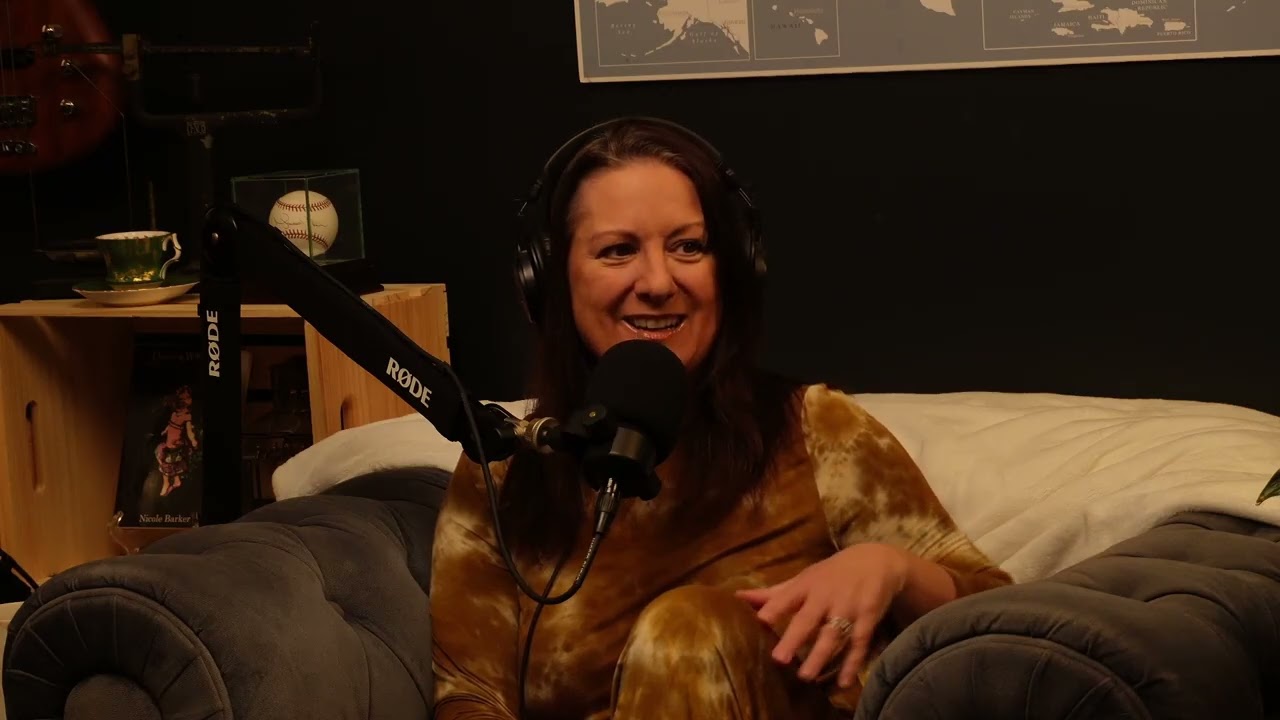
In Episode 21 of GenX Adulting, Andrew, a millennial from Maine, shares his experiences growing up in a small town and the challenges of navigating adulthood. He discusses his family background, the impact of his father's health issues, and the importance of maintaining strong family connections while raising his daughter.
[Music] Welcome to GenX Adulting and today we have Andrew with us. Welcome. Thank you for having me. We're happy to have you here. So our first question for our guests is always what year were you born? 1986. Okay, so you're our first millennial. Okay. Yeah, I'm so excited to have a millennial here. Now I am so impressed with the millennials and I've been wanting to get one on. So I'm just so excited to have a millennial here. Where were you born? Maine. And where in Maine? Portland. Oh, okay. I'm from Portland, Oregon. Okay, perfect. So I know it's I think Portland, Maine is smaller than Portland, Oregon, right? Very small. Oh, yeah. But it's still a city. It is a city. It's a I guess made up of a few different towns. Westbrook being one of them and that's kind of where I grew up. So there's like a greater Portland area. Okay. And Portland's very diverse. Like I said, the bigger city and then everything kind of branches off from Portland. So suburbs are suburbs off of Portland. We've been through there. We did. We drove through there. But we didn't spend any time in there. We didn't stop. But it has a downtown. Yep. Right. Small little fishing town. Okay. Has a downtown area where like I said, big lobster ring fishing community itself. I mean, tuna. I mean, my friends used to go out, catch big tuna and try to bring it in and see how much money they can make. I had actually a family that we were very close with had like a 1400 pound tuna. It was like, wow, the biggest thing when we were growing up. Of course. Everybody talked about it. And then the father and the grandfather made like a load of money. Yeah. For bringing in. Does it still have that fishing town vibe? I'm assuming it's grown a lot. It's become more of
And then the father and the grandfather made like a load of money. Yeah. For bringing in. Does it still have that fishing town vibe? I'm assuming it's grown a lot. It's become more of like a craft beer hipster. Yeah, cool. The recreational marijuana. Okay. Everything like that has popped off. Okay. So cannabis craft beer. Fishing. I grew up in a small town with the main thing is the paper mill. So if you don't have a trade or if you don't work in the paper mill, a lot of times, you know, your feast or famine. So is that is that paper mill still going? Yep. It's called sappy actually now. Okay. But we grew up actually, it was called SD Warren and they were like this big sponsor of everything around town for the most part. So is it? The league. Is that that sounds like it's a timbered? Town to that. A lot of cutting. It's so it's just fine paper, but yeah, a lot of definitely a lot of trees and everything up north. Yeah. Because they have another. I want to say the second location was further up north, but it wasn't as big as the paper mill. Yeah. In our town. So it's really it was the paper mill and fishing was that the thing. Yeah. When you were growing up or trade or a trade. Is there a college there? So you have a university in Maine, which is Orno, which is like three hours up north. And then you have like the smaller community college. Okay. And there are some like southern Maine University is like a it's like a Palm Beach state. Okay. Where they have branches everywhere and it is, you know, they have sports, athletic teams, everything like that. Just a lot of not so much on campus students. Right. Commuters. Like a commuter school. So the town you grew up in, was it small? Westbrook. Yep. Yeah.
everything like that. Just a lot of not so much on campus students. Right. Commuters. Like a commuter school. So the town you grew up in, was it small? Westbrook. Yep. Yeah. I couldn't even probably tell you the size of it, but there was what 600 kids in our high school. Total. So what was your graduating class? 172, I think. Okay. So small. So how did your parents end up there? So my dad's from Canada. Okay. Just my his father left Canada and his family and came to Portland. My dad was like 17, went came with him. His mom had passed away already and his dad was like, we're going to states. And he was like, all right. What made him decide, do you think, to come to America? I don't know so much because it's funny. His brother stayed in Canada and didn't come to Portland at all with the father, my and my father and his father. And he stayed in Canada back because he was starting his family and everything like that. And so he went to Portland High. They they did started a car wash with his father. And after high school went on to the Navy and that was and then after the Navy came back and he started working for Hannaford Brothers, which I think is on that same food chain as Food Lion, like that public. But Hannaford Brothers is like the grocery store. Okay. With a big grocery. So he was an accountant there. Did he become a citizen or? Yep. I actually sorry. Technically, he's still on a green card. He served did all his service on a green card and everybody able to vote or anything like that. Wow. Was that's already he's still on a green card. He's has it's what's that 30 years or something. And he's 77 now in assisted living actually up just a little further north. Yeah, he's in assisted living now. OK, she's 77 in Portland. No here.
He's has it's what's that 30 years or something. And he's 77 now in assisted living actually up just a little further north. Yeah, he's in assisted living now. OK, she's 77 in Portland. No here. Oh, so that's cool. Yep. OK. I pretty much moved my my mom and dad have been living out of an RV travel up and down East Coast for a while. And then when my dad got dementia, it took a toll on my my parents during COVID. My mom's like, we're just going to kind of roll. We're going to go over putting the RV on the back of the truck. I'm taking dad. He's not. We don't have too much longer. We're going to enjoy ourselves. Wow. Really? Now, I was like, really sure you want to do this? How old was he when he got diagnosed? Seventy two, I think was about young. Yeah, very. But he's the oldest person living on his side of the family. Really? Everybody else was gone by like 56, 58. So he's kind of been on borrowed time. I joke. Is there a common is it cancer? Is there a thing diabetes? Just health. There's a lot of underlying health issues. His brother died a heart attack. Fifty four. Dad died of a heart attack as well. He was 48, I think. Wow. Yeah. And then actually my grandma, who I never got to meet, but she would have in today's world, obviously live with just fluid in the lungs and everything like that. And wow. Complications. I don't really know the full story about it. Right. He was like eight years old. So 70, like you said, 72, that's. Yeah. I mean, well, is he still. Yep. Still. So how old is he now? 78. Okay. Yep. And is he has this dementia progress where he can't really participate in things anymore? It's made it harder. Um, I it's like the loud noises, the constant, um, you know, just reminders. I think he's very dependent on my mother as well.
participate in things anymore? It's made it harder. Um, I it's like the loud noises, the constant, um, you know, just reminders. I think he's very dependent on my mother as well. And so sometimes he just wants it to either just be them too, or just wants to kind of separate himself. So he's kind of the sole focus, I guess. And so he probably gets overstimulated. Right. And so it's hard for him to focus too much on multiple things. Loud noises. Yeah. He doesn't hear very well. And some of just like the habits as he's gotten older, you know, I jokingly say it's like having another kid in some ways. It's like reteaching and everything like that. It it does weigh on you a little bit for sure. But, um, having him around my daughter loves him. My they my daughter wants to push the wheelchair around and everything like that and try to help grant you out and recognize you and your daughter. Yeah. Okay. And he's very like good in the mornings. Like that sundown thing, like I never really understood it until I saw it firsthand, I guess. But that's a real thing. I mean, good in the morning, afternoon, and you just slowly see it start to digress and kind of almost show its signs a lot more. Has it progressed to Alzheimer's or still more? It's dementia. He remembers a decent amount. So it's not okay. But he does like a lot of the same stories. That stuff is still pretty prevalent in that. Where did your parents meet? Actually, so my dad was a teacher assistant in an accounting class that my mom was taking. And in Portland. Yep. Okay. In a U.S. it was USM was is the school. But my dad was a like graduate assistant. And he was working for Haniford at the time. And still taking class. And my mom, they met there in class.
Okay. In a U.S. it was USM was is the school. But my dad was a like graduate assistant. And he was working for Haniford at the time. And still taking class. And my mom, they met there in class. My dad, my dad used to go out to the bars where my mom actually was living with my sit with my sips sister actually. And then my sister would call him and be like, are you out? Do you want to come over? My mom wants to see things like that. Yeah, that's awesome. He would go to the bar and then he would go to her house to have a hot tuna. Oh, my gosh. And then go home. So your mom was from Portland. Yeah. Originally born in Keene, New Hampshire. Oh, okay. And then my grandfather moved up to Bar Harbor, was in the Jackson laboratory, which was a big lab did genetics testing on rabbits and rats. Okay. And then do you have siblings? I have two half sisters. Okay. So one from my mom had a daughter from a previous marriage and my dad had a daughter from a previous marriage. So so you're the baby. Yeah. And I'm I'm joked around as the golden boy. Yes. Sure. Yeah. Yeah. I get a hard time every once in a while. That happens when there's all girls and then the boys shows up that happens. And and be the younger one. And yeah, I mean, I've always just kind of known that I was going to be the caretaker. My sister on my mom's side is out in California. Okay. Now and two I have two nieces out there who she's a stay at home mom. My brother in law actually is in like the movie industry, kind of so producing and writing. And then my other sister's up in Maine and she's been there and they they're not married. But I always say she's had a significant other for right forever. A partner. Right. Right. I'm like my brother anyway. Right.
and she's been there and they they're not married. But I always say she's had a significant other for right forever. A partner. Right. Right. I'm like my brother anyway. Right. And then your parents after they did their road tripping, did they decide to settle down here because you were down here? I think it was easier. It was a it was a struggle for a while because I had to make the call to put my dad kind of in the assisted living. So when that came down, I'm I don't say I'm like I'm closer to both of them, but I guess I was the last one to live there at the house. Right. Grow up through everything. They've always come down here in the winter time, even when they were in Maine. And they were accountants. Again, they own their own firm for a while. And when they sold it and I moved down here, they were like, we'll come down here in the winter. I can do tax returns. Yeah. Everywhere. Yeah. Yeah. Much warmer, better place. Exactly. As you get older. And my dad loved it. It was a way to get out. My dad, my dad retired before my mom. Roughly eight or nine years before my mom. Oh, OK. Wow. So it was time to kind of for my mom to move on like they're 10 years apart. But my dad had a hard time being retired while my mom was still working. Yeah, that makes sense. That makes sense. So all of your formative years were in Maine. Yeah. Elementary, middle school, high school. College. And college. Did you play sports in high school or middle school? Baseball and hockey for the most part. OK. Was and I swam for a while growing up all the way up when I got to high school after freshman year, it was pretty much just hockey and baseball. And then I played baseball in college. Oh, wow. Yeah. What position did you play in baseball?
the way up when I got to high school after freshman year, it was pretty much just hockey and baseball. And then I played baseball in college. Oh, wow. Yeah. What position did you play in baseball? Pitched in college. OK. I played first base kind of all through high school. And then I wanted to kind of dual position it. And then my freshman year of college, I just I happened to pitch very well and get into the rotation. And I was like, I'm not going to focus on first base anymore. I'm going to just pitch. So where did you go to school? St. Joe's. It's called St. Joseph's College in Maine. It's a standish means on the water, small liberal arts college. Yeah. But was very homey feeling to me in the sense that I needed a small school with structure. And I needed it to it couldn't be the 3000 kids in every room. Right. Yeah. The big classes. I don't know how I would have done with major events like my sister went to Clemson and I saw like, you know, run the field. And that was the first time I really saw big time football. Yeah. I'm early college football like that. It was always pro football up north. And even then the Patriots growing up were great. But my dad was always a diehard Giants fan. Yeah. And we got that stuff. But college football and that atmosphere. I don't know if I would have been able to handle that. Isn't that unusual to be from New England and be a Giants fan? Yes. But the Giants were doing his first team before the Patriots were there. Oh, I didn't know that. Yeah, I will say that. Did you know that? I didn't actually. I thought the Giants were the Giants from New York. The Giants existed before the Patriots. Correct. So the Giants were the original team for New England and then the Patriots showed up.
I thought the Giants were the Giants from New York. The Giants existed before the Patriots. Correct. So the Giants were the original team for New England and then the Patriots showed up. Joe says my father. But yeah, we'll see if anyone comments on that. Right. Well, Belichick Belichick was the Giants coach before he went to the playoffs. Yeah. That's really interesting. So I want to go back to you played baseball in middle school and high school. So at the time, was youth sports as crazy then as it is now? No, it was it was crazier in the sense that I felt like everybody in town played it like every kid had a little 18 every like when we went to school, everybody talked about that. It wasn't like, you know, whatever season it was, basketball, everybody had a rec team, indoor rec league, and it was like everybody gave each other a hard time and bragging rights throughout school or, you know, elementary school and things like that. Yeah. And now I feel like it's a lot more like crazy in the sense it's like targeting now traveling. Where are we going to go? Tournament here, tournament there. You know, I mean, it's it's expensive, too. I mean, I was I think about ice time and like growing up, we were like, no, we're not going to the ring because it costs money to go play there, but we can put on skates and go on the pond. Yeah. Right. There's a you know, there's a it's like. It was the cemetery, really, is what we called it, but they used to flood it and we used to go back there and skate on purpose. Yeah, they they would flood it always. And it was a little skating rink, but it was a mile, not even a mile from our house. And a lot of us would just walk down with our skates, stick and and go put out our shoes for goals and go skate out
was a mile, not even a mile from our house. And a lot of us would just walk down with our skates, stick and and go put out our shoes for goals and go skate out there just because it was. I wonder if I think the millennials were the last ones to have youth sports old school. If I had to guess, because now all of the Gen Z's have been it's all travel. It's hyper focus. It's expensive. It's situational, too, in that in the Northeast, because I grew up in New Jersey. We played football in the fall, basketball in the winter and baseball in the spring. And we played hockey on the ponds. Right. It was awesome. But in Florida, it's everything's year round and there's a lot of money now. So kids have to choose early. They're still playing three sports, I think. I don't know. I don't know. I know they're specializing earlier. Yeah. And there's others clubs and it's all expensive, but they still get to play more than one sport. You don't have to commit as early, I think. So I don't know how it is in high school here. But when I went my freshman year in high school, if you weren't signed up for an activity for a sport or activity in every semester, it was like you were blackballed almost. You were like, really? What are you doing? Why aren't you doing anything? You had to participate in something. In something. It didn't have to be the one thing. It could be key club. It could be, you know, drama. Yeah. You know, anything, but it had to be something. Right. Whether it be, you know, even like Latin, there was like Latin clubs. There was like Spanish clubs. There were, I mean, there were all kinds of just something. Yeah. Sports are way easier than Latin club. Right. Yeah. Sure. Definitely. Definitely. I'll play golf.
There were, I mean, there were all kinds of just something. Yeah. Sports are way easier than Latin club. Right. Yeah. Sure. Definitely. Definitely. I'll play golf. My freshman year, I was like, they were like, no, there's a golf team. I was like, you mean, I don't have to play football. I was never really big in football. Fall baseball wasn't a thing at high school, so it wasn't considered an activity. It was like your hometown. Yeah. Put together two or three teams. They played it on Saturday mornings, something like that. Yeah. But for, you know, actual high school, they were like, you play golf. I was like, you go out, you play nine holes, and you get to go to the driver range. And I was like, and they bus you. And I was like, it's free. Yeah. I was like, I'm it. Yeah. Exactly. It sounds great. And you like to golf. Yeah. I love it. Are you still, do you still golf today? Yep. Okay. Cool. Most Saturday mornings, like today we played this morning at seven. He golfed this morning. Oh, that's awesome. Yeah. But I think now they just pressure parents that if your kid isn't doing these private trainings, if they aren't doing these travel, if they aren't doing a travel team, then they're going to be behind everyone else. I don't, I think that's across the country. I really do. What's happening to those, if you're, say you play baseball. And, and it's fine till you're about nine, then 10 ish for all sports, 10 ish down here. Kids start to specialize. So you play, you're playing rec baseball and you get some travel kids coming in and they just roll everybody. Same with lacrosse football. I'm not sure. I don't football starts young. We're still a football state here. Even soccer, soccer is where a soccer state. Yeah.
just roll everybody. Same with lacrosse football. I'm not sure. I don't football starts young. We're still a football state here. Even soccer, soccer is where a soccer state. Yeah. So, but that nine, 10 year, you know, kids start to get, I just don't think there's that carefree vibe that I don't think they have the freedom now. They don't. And I wonder what I think is even more like the exposure to weight training, lifting, and it's not even so much lifting at such a young age, but it's like now do the arm, like the band stuff, or go out there and do the laser, this like high cart, uh, uh, intense heart rate style. Yeah. And it can be body weight, but you're still getting stronger. You may not be, you know, playing other sports, but you are being active to specialize in that one sport and it's more driven, you know, what are you, how are you going to get stronger to help baseball instead of playing soccer to get cardio? You're like, I'm in the gym or I'm doing this. So do you think playing multiple sports and having multiple experiences actually helped your baseball college career? Yes. I mean, I, yes, to the, uh, extent that it opened up my eyes and adapted with other kids' personalities coming together as a team, that stuff, I could have probably focused in on like my actual strength training to like, you know, that I was a left-handed pitcher. So the big thing when you go to a showcase or anything, they're like, we want to see you hit 90 miles an hour. Yeah. Oh, I can never hit 90 miles an hour. I could hit maybe 84, 86, but to throw 90 that made that little specialized training maybe could have gotten me there. Right. You never know, obviously, but still always think the body works, how the body works. Yeah.
that made that little specialized training maybe could have gotten me there. Right. You never know, obviously, but still always think the body works, how the body works. Yeah. And you didn't burn out. No, I certainly did. And you didn't burn out your body. Nope. So did you play all four years? Yep. And that's impressive too. Were you on scholarship? So technically in Division III, they don't give you an athletic scholarship, but I got an academic scholarship that I probably would have never gotten had enough. Yeah, right, right, right. And what did you major in? Actually, so I taught, I was going to be a teacher, a phys-ed teacher, pretty much. So I taught in, I got a bachelor of science. Okay. With a minor, it's like a minor focus in kinesiology and stuff like that, because it was like, I learned how the body works. Yeah. But I, yeah, and I spent the first seven years teaching in, actually at my alma mater and coaching baseball there. The high school? Yep. Yeah. I went back and, so when I was finishing up at college, one of the ladies got pregnant and I knew from my town, I knew the other guy that was, I did my observations with and everything like that for phys-ed. And he's like, I need a substitute, but I need a long-term substitute. He's like, you can do your internship pretty much, or your apprentice, like lesson plans and all that, and you can get paid for. And I was like, what? Yeah. He's like, yeah, he's like, fill out this. He's like, I'll just observe your and do this as your observation. And I was like, sweet. Is that like your fifth year, almost? Yeah, I did it my senior year. Oh, okay. I actually got kind of permission through the school and set up my classes around that, was it like, I think it was
Yeah, I did it my senior year. Oh, okay. I actually got kind of permission through the school and set up my classes around that, was it like, I think it was like 12 weeks that she was out. And so I had a class at eight in the morning, went there, did class, and then I left and went to the middle school, actually, in Westbrook, which was like a 25-minute drive. Did my talk from there until about 2 p.m. and then left back and went to practice. So did you do that for about seven years? I did it. No, I did it. Well, that was just for 12 weeks. Okay. Okay. Right. Right. Seniors semester, like I said, last 12 weeks of college. Okay. Because classes were winding down. I really didn't have anything that I was pressing. Everything was pretty much buttoned up as far as graduation. I had like, you know, two classes that I met to make sure I like passed, I guess. And then I was like, I'm getting paid. I'm making a little bit of money. It was nice. And then once that 12 weeks was done, you accepted a full-time position. Yeah. And I didn't get a PE job, actually. They were like, we have an opening in our special needs. It was I was an ed tech. So I went in a functional life skills room, worked with nonverbal autistic kids. Wow. And there was like six or eight kids in the class. And that was really how I got my foot in the door. And they had a coaching job. The assistant baseball job was open. So I got the assistant coach for baseball and I got to work in the school. So it was like a double whammy. How were the kids? High school. So okay. So high school. Yes. High school. And they some of them aged out. So some of them are older. Like I had a couple of kids that were in the classroom until they were 20. And they just aged out.
So okay. So high school. Yes. High school. And they some of them aged out. So some of them are older. Like I had a couple of kids that were in the classroom until they were 20. And they just aged out. And then they, the one kid, I actually got very close with his family. I did in home care after school. I would actually, he had some, you know, just behavioral issues and things like that with riding on the bus for a long time. So the school district actually set up an opportunity where I would go to the bus yard. I would pick up a school van, go to his house, pick him up in the school van, bring him to school. Then after the school, I would drive him home and bring the van back. But it was, wow. It worked out awesome for me because I was getting paid like extra money. They like gave me a stipend on top of it. Yeah. I'm like, yeah, I'll do this. Plus this. Yeah. You're like a saint on earth. Exactly. You're... Well, it didn't help him. Yeah. That's what I mean. It actually, it helped everything. It helped me with a lot of things as I kind of got into a professional career wise. And just, you know, not taking so many things for granted, I guess. It really put a lot of things in perspective for me. Yeah. Seeing that side of it. Did you get any special training in college for special needs children or special education? Nope. I did do when they, I was going to take the ed tech job. They did a six week training of like holds, like different type of holds and stuff. If they kind of like, I guess more or less freak out or have it, you know, have an episode. Like how to safely restrain them and stuff. Training. Yeah. And that was, I was like, whoa, what am I getting myself into? Yeah. Kind of. Yeah.
you know, have an episode. Like how to safely restrain them and stuff. Training. Yeah. And that was, I was like, whoa, what am I getting myself into? Yeah. Kind of. Yeah. But it was fun, like you said, and the family that I did get to know of the kid after I ended up doing in-home care, bringing him to the facility after he graduated the high school. And when I would go to him at night, as you know, we play men's league, so pitch softball. Yeah. I played that up north as well. So I would do in home. I would go to school, go to practice. Then I would go pick him up at like 6 37 PM at night, take him out, whether it was go swimming and just have like one on one time. Like I was kind of just like a big brother. Yeah. A friend for the family. And I got to a point where he would come out to our softball games and be our bat boy. Wow. And he was a huge he loved to sift. So a lot of times he would sift sand just sitting like the batter's box, sift sand, then run out and grab the bat and come back in. And it was really cool to give all the guys a high five. Yeah. And I just kind of made him inter I kind of integrated integrated with our whole like my whole men's league. So I talk about progress, though. Yeah. I mean, for him and his family had to have been thrilled. Yeah. He's actually a triplet to. Oh, wow. Yeah. And the brother had his I would say disabilities in the sense that completely high functioning normal college has a good career. I think he's in insurance now, still in insurance, but very smart kid. Right. Daughter was in the nursing field. She's gone and got her master's. I mean, she's kind of killing it. They they come from a very, very good family. Are you still you must still be in touch with them to some degree.
the nursing field. She's gone and got her master's. I mean, she's kind of killing it. They they come from a very, very good family. Are you still you must still be in touch with them to some degree. When I go home, I've I've seen them in crossing and that always comes up and gives me a hug. We always kind of exchange pleasantries and everything like that. You know, it's always a good thing. We I moving to Florida, I had a little bit of a fall, you know, in the sense that I tried to ease everybody into it. Right. I kind of knew I wanted to go to Florida, but I wasn't sure how I was going to get there when I was going to do it. So one of my best needed a job. So then I slowly I had a pretty serious girlfriend at the time. And I wanted a little bit more time with her and not I was working six, seven nights a week going over there every night. And I was like, that's a lot. Huge commitment. Just listening to your schedule. Yeah. So I got my buddy to come in and help out. And I started passing off shifts to him. And I was like, listen, this is a job. And he ended up when I moved to Florida, ended up taking full control over it. It was pretty much Monday through Friday. And then, you know, six hour shifts on Saturdays and Sundays. That's wonderful. You were able to find someone for them that vetted that they can trust. What was the what was the friction point, though? Me wanting to take more and more time off like that. So and they listen, if I hadn't, they wouldn't have probably become so familiar in, you know, trusting of the other of my friend. To do as much care. But I was like, listen, I just need something. And the father actually wanted to make like a home, do like a group home thing where he would have I
To do as much care. But I was like, listen, I just need something. And the father actually wanted to make like a home, do like a group home thing where he would have I mean, they were very well off. You know, it was very, you know, blessing in itself, right? But he had the money to almost build a unit for these for any child that aged out needed like that assisted living type. And he wanted me or somebody to live in like a bottom apartment and just kind of supervise the house almost right. And it never materialized. Had I stayed, maybe it would have. But it was it was definitely a cool opportunity. And I always look back like I'm very thankful for it. But the hard time really came as me starting to weed out and try to get away from it and not do it so much. Gets in balance. Yeah. And I think that that makes perfect sense. Yeah, it absolutely worked out. I find that because our kid, you know, Nathan, and then our daughter, Kaya, and now Dylan, they also you worked, but they volunteer off and on with special needs kids. And they'll say they always say this. And I told them this would happen is you actually are getting more out of this than and what you get out of this, you're going to carry with you the rest of your life and it will actually transform you as a person. And you're blessed to have this opportunity. And there's no question. Not at all. I have the patience. I have the just seeing like little things. I mean, I use it for an exam just the other day. I'm in the gas station and this guy is giving the cashier just like a hard time for like no reason. And I'm like two people back and I can hear like just the conversation. And I'm just like, what's the point of giving him such the girl such a hard time like she's having a bad day and can't
And I'm like two people back and I can hear like just the conversation. And I'm just like, what's the point of giving him such the girl such a hard time like she's having a bad day and can't communicate that. I mean, and it was over something super. It was like just like them setting up the wrong pump and not scanning something right. And I'm like, you know, there's so many different variables in life that mess things up. It's not just their fault. Yeah. I mean, don't get me wrong. It can be user error. Yes. Very well. You don't need to be a dick about it. Right. Exactly. Yeah. You don't know what someone's going through. And I think especially when you go through a situation like what you went through, it just builds empathy inside of you that it becomes a natural go to. So when you automatically start thinking about, well, where's the other person coming from? So it costs nothing to be kind. Absolutely. Absolutely. So how long did you work with in the special education area for five, five out of the seven years, pretty much. Wow. Yeah. And then after. So in like you said, more rewarding to piggyback on right. If it wasn't for, I guess, financial stress or strain, right. I would still teach and work with coaching and all that. It was much more rewarding. And I got more out of it than say, let's go in. For lack of a better term, in nine to five, where I'm selling things and I love what I do. Don't get me wrong. I love talking with people and I love. But I guess growing up in that going to that high school, then teaching at the high school, building those kind of relationships and then being kind of almost like a role model to some of these people and watching them grow and be successful is much more rewarding than, you know, I hate to say it than saying,
relationships and then being kind of almost like a role model to some of these people and watching them grow and be successful is much more rewarding than, you know, I hate to say it than saying, oh, yeah, I took your business from making three million to five million. Right. Because we helped you collect some debt or, you know, right. So did you leave your hometown after the five years of teaching? Yep. So I chased. I had a pretty serious girlfriend. She was a flight attendant down in. She was based out of Fort Lauderdale. So she was living in sunny Isles. OK. And it was kind of like shit or get off the pot in some ways. So I was like, you know, screw it. I was like, I'm from a small mill town. I don't work the mill. I don't have a trade. Teaching is great. I love it. But do I want to work seven a.m. to seven p.m. every day of my life? No. So I was like, let's take it. My dad was like, you can always come back. Yeah. If it doesn't work out. Yeah. Maine's not going anywhere. Right. Right. And I was like, he makes a good point. And I watched a couple of my other friends who I went to college with one move to Austin, Texas, you know, and it kind of bounced around. A couple of people went out west and it's like. It's maybe hard to get used to or hard to restart, but no one was like mad. They left. Right. And I was like, I hated it. You know, I was like, screw it. I have an opportunity. I left. We lived in sunny Ohio and I got a job with Comcast doing door to door sales selling cable TV. And how was that? Hard. I would imagine so. I be a six foot three bigger guy knocking on some people's doors. And listen, I was so we were based out of Boca. They were actually redoing the office and I did all my training down in Fort Pierce, I think it is. So it was like
knocking on some people's doors. And listen, I was so we were based out of Boca. They were actually redoing the office and I did all my training down in Fort Pierce, I think it is. So it was like about an hour and 40 minute drive from Sunny Isles to Fort Pierce. So that was like one of my that was when it kind of was going one of my down. Yeah. And then they put me in Boca and I'm going door to door knocking. And I'm a big guy. So like you get some stay at home. Things a day and I'm knocking and they're like, no, open it. That's us. What am I doing? You're like, no one down here opens their door. Just so our listeners, we have a worldwide audience at this point. And in South Florida, it's known as the scam capital of our country. Right. Yeah. So people are out scamming the retirees down here. So no one answers their door. Or you say not interested through the door, but you you don't open your door. It's so it's so strange. So it was that part was really hard for me. And then I got a neighborhood and crushed it like. I don't know what it was just that day. I went down like one street and like six out of eight houses were like, wow, we'll sign up. We'll sign up. That's great. You're going to I think I mean, I think I was just in like an AT&T area specifically. Comcast was finally in there. I was able to save some of these people like 50 to 80 bucks a month, right? Just on cable TV for signing up. Now they always get you on the year two, whatever. But anyway, yeah, that first year. Yeah. But it was like, boom, they want they want they want it. And then all these like started happening. And I was like, wow. And that was like the first time I really got like a I think I got like an 18000 dollar commission check. And I was like, wow, it's good money. Like this is
like started happening. And I was like, wow. And that was like the first time I really got like a I think I got like an 18000 dollar commission check. And I was like, wow, it's good money. Like this is sales. Yeah, this is what I was like. And that got me hungry. And then I started learning a little bit. That was my first real sales job. And so this is now 10 years ago, I ended up buying a condo in Boynton Beach, which was like right off of Wulbright in federal. And I loved it. That's a good location. It is. It's a great location. It was like a mile from the beach. I was like a five dollar Uber ride to Atlantic Ave. And I was 28 years old. And I was like, this is us. And I had a flight attendant so we we could fly kind of I could use a buddy pass. We could go wherever we wanted from here. You're living the life. Yeah, it was. And then we and we lived together probably for about a year. And then once we split, I actually had taken the job with IDI and I got one of the guys from IDI to move in with me. And now I'm like, this is great. Not only do I have a roommate, I getting a stipend on top from a rental. Yeah, yeah, yeah. I was like, this is the best. So we would go out to the air. Yeah. And it was just fun. It was. Are you near that golf course over there? There's a public golf course there, I think, right? So there's Lakeview, which is right off of Linton. It was a small part three. I'm thinking of Lake Worth, I think. Okay, so Lake Worth now, now that I'm west after I sold the condo, I moved to Lake Worth up in Winston Trails. And I'm in Winston Trails now. And they have a public golf course and the community you don't have to buy in or buy a membership or anything to the equity. But it is a it's a good track. And I
And I'm in Winston Trails now. And they have a public golf course and the community you don't have to buy in or buy a membership or anything to the equity. But it is a it's a good track. And I the neighborhood's great. It's gated. The school district's great. I'm a six year old. That's that was really the underlying issue was find a place, a house where it has a good school district and she can go to a public school. Well, that leads us to. I want to go back. Just I've got a couple things that one is the baseball, playing baseball in college. I'm curious, did you have to get a Tommy John surgery at all? I did not. I do have a torn a little bit of a partial tear in my labrum. But I pitched through it, was able to do rehab and everything like that. That happened like my junior year. And I was like, they were like, you want to do surgery? And I was like, no, I want to rehab because I just I was my junior year was at that point where it's like, I'm not going to play professional. I'm not. That was gonna be my next question. I'm not gonna go make a million dollars. What's next? And I was like, Do you really want to go and do nine months of rehab and maybe pitch again or not pitch again? I was like, I'll just finish it out. And if it tears and tears. So you had no you got into college and it was like, this is it. I'm not trying out for the pros going to minors and all that my freshman year. I think when I got to pitch a lot, I had aspirations. I was like, What could happen? Yeah. And I did very well. And we went to regionals, we won a couple games or regionals. And then we had a kid who was there a year before us who pitched with us his name was Charlie for Bush. He pitched at St. Joe's then he got a contractor 10 day contract at the
games or regionals. And then we had a kid who was there a year before us who pitched with us his name was Charlie for Bush. He pitched at St. Joe's then he got a contractor 10 day contract at the Cape Cod league. pitched unbelievable LSU made him offer like immediate I think he faced like six hitters and struck out five or something in his first day like edition. And he went to LSU and then got drafted by the Mariners. Okay. And I was like, Man, this could happen. I'm like, yeah. And I was like, D3. This ain't never gonna happen. Yeah. And I saw that I was like, Man, maybe it will. Yeah. And so like my freshman sophomore year, I did, like I said, I did very well. My sophomore year, I ended up getting like MVP of the tournament. For playoffs, we won our tournament, we went on to the finals, and we were like, two games from going to the World Series. Oh, wow. And that was that was really cool. But when you got to that level, you realize how much of a difference it is to that next step, I guess, in the sense of really going professional. Yeah. What about Oh, go ahead. Well, yeah. Well, what about your teammates? Did any of them go professional or try to pursue that? Um, not really. There was a couple kids that played like independent baseball, which is like, minor leagues. I hate to downplay it, but you're getting like a bag lunch and you're getting to ride around on a bus. And, and listen, if you're chasing a dream, that's what you have your heart set on. It's good. I did it a little bit, not to that extent, but I just wasn't, I wasn't the bag driver around on a bus and hope to get 15, 20 bucks. Right. You know, I was, I was a general question. Um, if somebody's going to play sports in college, do you feel that they need to be pretty
driver around on a bus and hope to get 15, 20 bucks. Right. You know, I was, I was a general question. Um, if somebody's going to play sports in college, do you feel that they need to be pretty much obsessed with that sport? I mean, is that your entire life? Yeah. And that's what you do. You, you practice every day. You live with your teammates basically. And you live and breathe whatever sport that is. Yeah. You can't do it. You can't do it half ass. Right. And so you can't really have, you can't be in the frat. You can't do all those things and play. You can, if you can prioritize it, okay. There I mean, listen, I had some of my friends that were nursing majors, guys, and you know, they would literally go to baseball and then they would study for literally 10 hours and they just, that was what they wanted to do. They knew they had a goal. So I mean, I'm very easily distracted. Um, I can get swayed pretty easily in a lot of ways. Um, but I knew I wanted to play baseball and I knew that playing baseball meant me going to class. It had that kind of responsibility that I had to stay on my shit, you know, in a little ways. Did it affect your social life? Meaning, um, were you, did you not have as much of a social life because you were playing baseball in college? I probably had more of it. Okay. Listen, I mean, during the week, it might have, you know, curbed it in the sense, but I still had a lot of the guys we would play. We were in a suite. So we had eight, uh, seven other roommates. So we played what we did. Um, two of them, uh, we had the same kind of, um, uh, So we would just go to the gym together. Do like, just everything, like you said, bought in and we were all together. So my social life may be outside of baseball, maybe lacked in
So we would just go to the gym together. Do like, just everything, like you said, bought in and we were all together. So my social life may be outside of baseball, maybe lacked in some ways, but I was Anyway, so I was going to get along with whoever, wherever, whenever, right? No matter what. Was it practice every day? Oh, yeah. In the morning before classes. We would we would get up at five and go. They had this stuff called like black dirt pretty much. And we in this it would snow on the field and we would have to get up at five and shovel the field and throw this black ice or black salt and stuff over the field so it would like try to melt faster. So there was no excuse. No excuse. You you were practicing every morning and you might be hungover. Yeah, it happens. But like you, it's you have to be obsessed with it. You have to love that sport. It can't be and you can't be doing it because your parents want you to do it. It has to 100 percent come from that. That's the separation to you. You can't be pushed by your parents like at high school. Easy when you come home to, you know, mom and dad. And you can be like, go out in the garage and I'm going to watch you do this. I mean, there's nobody really watching you there at college. They can call you and tell you to get on it. But if you don't want to do it, you don't have to. I mean, we used to get out of things if we didn't really want to be there. But there was a time I mean, we had pretty much like three or four hours blocked off almost daily of that. You had to be with the baseball team. Three to four hours a day. Yeah. So that's yeah. That's your world. Yeah. Yeah, it was. And I and I I did. I ate it up. I loved it. But like I said, it was because I knew I needed that to stay on top of my
Yeah. So that's yeah. That's your world. Yeah. Yeah, it was. And I and I I did. I ate it up. I loved it. But like I said, it was because I knew I needed that to stay on top of my schoolwork and my academics. How hard was it when you graduated to transition? You'd been playing since middle school and then now you're an adult, quote unquote, and living a more adult life. Was it a hard transition to not have baseball being your life? I don't I still do it. So that's what a softball came in. OK, I play men's league softball Mondays, Tuesdays and Thursdays. Are you in multiple leagues besides? Oh, you are. OK. Yeah. I put so you kept it in your life. Yeah. I mean, like and even after I graduated college, I went right into coaching. So like that summer summer baseball. Um, you know, we coached American Legion or Babe Ruth, right? The All-Star teams. Um, then I got into it like I coach golf as well at the high school level. And I chose always around something competitive to keep me going. It stayed in your life. Yeah. So who is your team? Red Sox. We're going to end right now. Yeah. Yeah. I was a result. The wrong. We'll just move on from that. But you may go back and forth. We are a Yankee family. For those who, you know, listeners, Andrew's a baller, we've seen him play softball. The rocks, the ball, he catches crazy, shitty throws, thrown to him at first. So how come you're not pitching there? So I would. But I just tend not to because I always played first. Well, they need you on first base. 100 percent. Yeah. So my thing, too, is I saw up north, you don't get a net when you pitch. So like pitching was fun because you can actually kind of play defense a little bit at the bottom of the bag. The net for me is like, I want to feel the ball.
don't get a net when you pitch. So like pitching was fun because you can actually kind of play defense a little bit at the bottom of the bag. The net for me is like, I want to feel the ball. Yeah. Yeah. Yeah. It's a vacuum. You want to make the play. It's like batting practice net. Right. Yeah. That makes sense. I interrupted you. You had another question. It's in line with what you just asked. And I'm curious when so you went back to your hometown. Yeah. And you mentioned you were kind of a role model. How much did you embrace that? Like you probably were being that you went to college to play baseball. You were an athlete. You're in a small town, probably a big fish in the small town. Right. Everybody probably do you right. So going back, you kind of took on a noble cause and profession. How did what were the dynamics? It's no. I loved it. And I embraced it in the sense that I wanted to really give back to the community. That was like when I came back and taught at my alma mater, like I then envisioned like I'm going to be the head coach of the baseball team like this. I'm going to try to take this to the next level. Like I had a lot of good coaches growing up that gave me a lot of support that I needed. And I wanted I knew kids at that high school level needed somebody that they can, whether it be just to count on and trust. I'm a pretty open book for I don't hide much at where my emotions are my sleeve. So what you get is what you get. And I always felt like the kids, you know, you know, took that they respond to that pretty. Trust. Yeah, exactly. They trusted you. You know, and I and I built a pretty good rapport with a lot of families, too, that knew me as when I was growing up there, they
Trust. Yeah, exactly. They trusted you. You know, and I and I built a pretty good rapport with a lot of families, too, that knew me as when I was growing up there, they they either had me and then they had kids and I got to coach some of them or they had brothers and sisters, right. They came through and it was just really cool. And my senior year of high school, actually, we lost. We had like 14 seniors. There was like a tight knit group. Wow. All the way up. And we were a baseball team or just a town and we lost in state championship. And it was like just kind of cool to go through the whole row with these 14 seniors from Little League. Go to a state championship. It sucked. It hurt for a long time. It still does to a lot of us, even when we get back, you know, losing state. But going back as a coach, I got to win a state title for the high school and my alma mater shows like. That was nice. Yeah, that was closer. Yeah, it was good to get over. And then I ended up actually not getting the head coaching job of the alma mater. And I. We after we won state championship, I ended up jumping ship to another town and coaching them there. Did you beat them? OK, we did. Yeah, good. So it was yeah, it was fun. Yeah. Yeah. But it was it was tough for a little while going back. You know, it always made it a little bit more competitive when you when I went back. Yeah. So when you were in high school, I assumed that you were in the paper and all that type of stuff and people knew you where you went. And when you're playing, I assume there was more pressure put on you. The more the more notoriety received, the more pressure you might have felt. Would you say that's an accurate statement? Yeah. Yes. I know. I. So I come from a small town, so like,
put on you. The more the more notoriety received, the more pressure you might have felt. Would you say that's an accurate statement? Yeah. Yes. I know. I. So I come from a small town, so like, yeah, you go to like some of the local spots and a lot of us were very tight knit in the community. So like it was like bragging rights, I guess, in the sense that, you know, we would poke fun of each other for it. Um, pressure, I never really looked at it as pressure. I just looked at it as like, this is like, I know what we were supposed to do. Like we were kids growing up. It's like the couple grades right below us ended up going to like the Little League World Series the same year that we went to the state championship. Oh, wow. And so it was just always like just kind of following suit. It is a baseball. Yeah. Yeah. Yeah. Yeah. So it was very. Just fall. Like I say, yes, it's like, that's what you do. It didn't take the fun out of it for you. No, I know. You thrived on it. Yeah. I mean, we would all ride bikes, like come from across town and all meet at the Lily fields and play like pick up baseball with like a tennis ball and a bat if we have, you know, baseball. Yeah. And like even in the wintertime or summertime, it was. How do we get to the rink where the cemetery and play hockey? Yeah. And they built a roller hockey arena where we could all rollerblade or skateboard, whatever it was and go meet there. Yeah. And it was so it was like there was always six or eight of us like just rolling around town together. That's cool. That's very organic. Right. We at all. So like now. And now I always say like my daughter, like my six year old daughter, I'm like, actually, can you call or text like so and so's parents? Yeah. If Sophia can
We at all. So like now. And now I always say like my daughter, like my six year old daughter, I'm like, actually, can you call or text like so and so's parents? Yeah. If Sophia can come out, I'm like, no. Like you can go down there and ride your scooter down there, knock on her door. And yeah, like I want her to have that interaction. Yeah, it's it's different now. It's so different. It's very different. I don't even let her out. Like some of the other parents in the neighborhood too are like, oh, they can go out and I'm like, I'll be outside with them. Yeah. Yeah. No, it's very it's very, very different. And I look back, I'm like, I was riding around. Oh, yes. Call 1 800 collect like on the pay for totally. You have a call from Andrew. Do you accept my mouth? You're like, no, get home. Like I'm not taking your phone. You're supposed to be home. We used to do that. That's funny. You say you came to the collect call system. Yeah, it'd be like collect call from I'll be home in 10 minutes. No, but I think millennials had some of the Genex childhood. Like I think I think you guys got the last of it. Yeah. You know, the 90s for you were your childhood, right? Where for us, we were in our 20s. But that's their childhood. The night I can relate to a lot of what you're saying. I grew up in a small town, played three sports, was pretty well known, pretty good sports. But I took a different route in that I don't I didn't like it as much. I kind of prefer to be lower key. Yeah. And not. Yes, he didn't he didn't necessarily thrive. He he quit basketball his senior year because of the pressure. He just took the pressure. Just the. Just wasn't fun. It's the fun that hit me after when it was my professional career, when I got into teaching and I realized
because of the pressure. He just took the pressure. Just the. Just wasn't fun. It's the fun that hit me after when it was my professional career, when I got into teaching and I realized how political it was. I think I was just so naive growing up and I embraced everything that was going on. I have all my friends. I'm playing sports. It's like we're going to high school, we're going to college, like what's next? And then when I got to like my career, I was like, wait a minute, everybody's like watching me, telling me and talking about what I'm doing now at like the local water and corn. I'm like. Yeah, I got that at a young age and I didn't like it. Yeah. And to this day, I won't be critical of other kids. I don't even pick on college kids too much to be honest with you. You know, someone's like, oh, so and so sucks. You should have made that three. I'm pretty sympathetic in the pros. I'm way the rules are slightly different. But yeah, college down their kids. I don't really pick on them a whole lot. No, you know. Yeah. That's from your I think that comes from 100 percent. Yeah. Yeah. It is a real thing. I mean, to be sympathetic and not listen, kids make mistakes. It's it's all about having second chances. I mean, I. Well, for lack of a better term, right, I'm out of in my teaching career. I go out for a basketball game. We were all having drinks, a bunch of teachers. I drive home. I get pulled over. I'm a I'm next thing you know, I'm on the local American Journal. Like coach teacher got a DUI. And I mean, listen, I got dropped down to driving to endanger and whatnot. But it was still like a shit. Show up at the, you know, superintendents office. And I was like, listen, this is what happened. Is it was what it was? Yeah. I was like,
But it was still like a shit. Show up at the, you know, superintendents office. And I was like, listen, this is what happened. Is it was what it was? Yeah. I was like, where do we go from here? And I ended up doing some like volunteer stuff and whatever. But it was. Very. I was like, wow, this is small town living now, because everybody wants to talk about how you do this. How do you want to take you down? Yeah. Yeah. And listen, it didn't tear me down. No, I got pretty tough skin. It changed the way I viewed things, I think in the in the big picture. I was like, wow, like I'm still a human. Like, yeah, I mean. So it sounds like when you were growing up, like you said, not naive, but you weren't aware maybe of a lot of the stuff going on. And then when you became an adult in your town, you started the veil was. Yeah. Yeah. So it was the the the oh, it's not Andrew Keirstead like the Little League. Right. Playing with all his friends. Yeah. Call it a mistake. This is like you got to own it. Yeah. So did that actually kind of help with the decision to go to Florida to? Yes, for sure. Kind of like a fresh start. Yeah. It was a get away from everything. Yeah. Right. They still go to like we have this small place called Profenance. It's a local watering hole. A lot of my friends that are still there. So going there, getting it. And listen, I'm. Teach is. Oh, yeah. That's a the pizza is great. Yeah. The food's good. Yeah. But it's just I was getting I wanted, you know, something different and I and I needed it. And it's changed. Yeah. Change is good. So now you're in Boynton. You have your roommate. No, so now I'm well, no, no, I mean, that's where we left off. You're in Boynton. You have your roommate.
And it's changed. Yeah. Change is good. So now you're in Boynton. You have your roommate. No, so now I'm well, no, no, I mean, that's where we left off. You're in Boynton. You have your roommate. Yeah. You're still living your 20s life. 20s life going to the. Go on to the. Yeah. Working for how did you why did you pursue IDI? So where you are now? Yep. So I went to Comcast. I was doing sales at Comcast and then I actually showed cable TV to a guy right over here who had a data company. He kept saying, giving me the ring around and he's like, listen, yeah. The wife was like, you got to talk to my husband. You got to talk to my husband. You're good. You convinced us to do this. You got to talk. Yeah, you got to get final approval from the husband. So, OK, so I kept coming back. He's not here. He was a fisherman. He was very busy. Had his own company, everything like that. Two sons. And I'm like, well, when can I. Get a hold of him. And she's like, come over for dinner. Oh, wow. And I'm like, wait a minute. Come on for dinner. So I might call my boss. I'm like, listen, I'm going home now. I'm in a shower. I'm going back. I mean, I have a sale. It's done. But I have to go back for dinner. Yeah, he was it. Yeah. And he's like, wait a minute. He's like this stay at home. Mom is inviting you over for dinner with her husband. I'm like, yeah, it's like he's like, you don't see anything. I'm like, no, I'm like, I've gone to this house like five, six times over the last like three weeks. It's a sale. I'm going to it's done. I just have he's like, all right. He's like, well, call me if you need to. Yeah. My phone. Like they track you. I don't know. I'm like, wait a minute. And even then, like now to this day, now looking back, I'm like, man,
He's like, well, call me if you need to. Yeah. My phone. Like they track you. I don't know. I'm like, wait a minute. And even then, like now to this day, now looking back, I'm like, man, I probably was out of line. Like maybe I should have just been like, what time can I. Right. Right. Right. But yes, I can't get there. I have a seat at the dinner table and I'm like, man, this is awkward. He's like, no, what are you selling me pretty much? And I'm like, oh, shit. Here we go. And I'm like, here the numbers are the say ends up signing up. And he's like, listen, he's like, you're a good salesman. He's like, you you came back, you keep coming back. He's like, my wife said you were very respectful, blah blah blah. He's like, I need sales people at my job. You know, first question, how much money you might get? You know, like I'm open to it. But how much money can I make? So he's like, we have this new product. It's going to be in like law enforcement and all this. And I was like, all right, law enforcement, I can also, you know, hopefully I'll be making it, helping people out. You know, I'm fairly can follow suit pretty well. Yeah. And I saw I was like, talk to him more, talk to him more. And it was selling like personal information and verified services or, you know, a lot of. It were like trying to track for theft, like online theft and all this, a lot of Rolexes, scam stuff, because it was getting so big down here in South Florida. And so I took the job. And. Probably six, eight weeks into it, he's like, it's not going to take off. Wait a minute. Yeah. Yeah, it just made me quit this job. Yeah. I mean, weeks in and now we're just thrown in the towel. He's like, yeah, but here's the deal. I'm going to give you 12 weeks severance.
Yeah. Yeah, it just made me quit this job. Yeah. I mean, weeks in and now we're just thrown in the towel. He's like, yeah, but here's the deal. I'm going to give you 12 weeks severance. He's like, because I'm and I'm like, well, wow, 12 weeks severance. I'm like, that's not that long. He's like, no, but I was like, but I'll be able to pay my bills. And I was like, 12 weeks, I should be able to find a job. And so like, I really contemplated. Do I go back to Maine? I was single at the time. You know, I was living by myself then because this is prior to IDI. So before I even have a roommate or anything. And I'm like, oh, shit, like I'm going to sell my condo and move back. And I was like, I got 12 weeks. I'm just going to play some golf. I'm going to rip up the app and see what happened. And then the secretary, actually, I went in, I updated. I used their computers to update my resume and everything like that, because I wanted to. He was paying me severance and I wanted to go in there and at least make it look like I was trying to find something else and put the right foot forward. So the secretary comes over and she goes, listen, I know some people over at this startup that are selling data like us, but it's not exactly. It's she's like, you'll love it. These people are great. I'm like, all right, I'll go interview. So I took the interview and, you know, I met. Uh, buddy, Mike shed, who, uh, who's still there at IDI and everything like that. And the interview went really well. It was very home like, and I was like, screw it. I'm going to stay. I call my mom. I left the interview and, uh, I was like, I'm going to stay, but I'm giving her the background and I don't know if you guys have looked, but there was a stockholder,
I call my mom. I left the interview and, uh, I was like, I'm going to stay, but I'm giving her the background and I don't know if you guys have looked, but there was a stockholder, a major stockholder in our company who had some, you know, bad run ins and some negative publicity with, uh, the sec and all this. So I get out of the interview and I call my parents who are accounts and I'm like, yeah, this publicly traded company, blah, blah. I'm like, went great. My mom calls me back like four hours later and she's like, yeah, you know, there's like, this is like a pump and dump or anything. I'm like, no, I didn't, I didn't get that feeling. She's like, Andrew, she's like, how did it really go? Oh, they said they were going to give me X amount of dollars. It's the comp plan's good. If the numbers look good, I'm like, I can stay down here in South Florida. I'm, I'm like, and she's like, just be careful. And I was like, okay. And like I said, here I am 10 years, 10 years later, eight years later, been there nine years now. So it was, it was all, it was kind of wiped under the rug. I think he is still a major shareholder or one of our bigger shareholders, but he's not on our board or anything like that anymore. I think he's out, but. So you do sales. Yeah. What you do there. Okay. And so you accepted that job. You got the roommate. You're living in Boynton and working at IDI. Yep. And was there any other big life changes that happened shortly after that? Yes. I had had a roommate that was like, said I had moved him in and he had been in there roughly two years or so. Okay. Um, and, and once, uh, you know, I had everything kind of changed in that sense. Um, and you can't explain that to someone until they become a parent.
in there roughly two years or so. Okay. Um, and, and once, uh, you know, I had everything kind of changed in that sense. Um, and you can't explain that to someone until they become a parent. The best feeling she's my, uh, she's definitely a little princess. Yeah. It's, it's a club that no one understands until you're part of it. And I always tell people it's an emotion that you don't have until you become a parent, like you think you know, love, but you don't know until you become a parent. It's like, it's a whole new ball game. So it's life changing. So it certainly is. And growing up from a sports background, playing sports, all that, my, my other, one of my best friends, he's got four boys now. Um, but they were always like, when I told them that like, you're, you hope it's a boy, don't you know, honestly, at that point I'm like, I just wanted to be healthy. Yeah. Along with your special education background, you understand the importance of that. And everybody into I coming from that world, remember having the conversation with him, like, you know, if we're going forward, but I'm just going to let you know, I'm all in like whatever happens, good, bad, and different, like I'm all in. Like I already know, like I kind of explained, like I've already seen it from the other side, so I just want you to know, there's reassurance. Like you don't have anything to worry about. I'm going to get, regardless of what it is, we're going to get through it. Right. I guess having that other part of my life earlier in my, or earlier in my life, knowing that green, orange, yellow, doesn't matter. 10 toes, four toes. You can still have a happy life. Yeah. I that's life is still precious. Precious. Right. And we take a lot of things in everyday
orange, yellow, doesn't matter. 10 toes, four toes. You can still have a happy life. Yeah. I that's life is still precious. Precious. Right. And we take a lot of things in everyday life for granted, like being with somebody who is nonverbal, autistic, you know, needed help with the shower, changing everything like that, like, you know, just as easy as, you know, say, say, wiping your own ass, right? You know, like you don't understand just being able to get up and walk to the fridge or to say, I'm hurt or I know I'm tired is it's a blessing itself. Yes. 100%, 100%. So your perspective on becoming a father was already, um, just heightened. Yeah. Then maybe a normal guy your age, you know, and you understood what you were getting into no matter what happened. Yeah. So now, so she's born and they hand her to you. Yep. And, uh, like still remember it, like clear as day when she opened the little gooey blue eyes and I was like, here, like, this is real. Like that was you like you said, you realize what love is. Did you cry? Yeah. Yeah. Right. So did Brian. Yeah. Yeah. And like I said, healthy and happy was all I cared about. And then I remember show. So then, um, but then you have this beautiful little girl. Yeah. Yeah. That's awesome. It's amazing. The absolute best thing ever. How big was she? Do you remember her? I think she was eight pounds. She's big girl, 37 weeks. Yeah. Yeah. That's a big girl. And then, uh, she dipped down. Like they say, like the first week, she got down to like seven or like just under seven. Yeah. Um, but yeah, I mean, everything was perfect for a while. We were doing, she was, she was at home and I was working. I would come home. She would pretty much have dinner ready.
under seven. Yeah. Um, but yeah, I mean, everything was perfect for a while. We were doing, she was, she was at home and I was working. I would come home. She would pretty much have dinner ready. Um, and I would come home to feeding like the tub in the, in the, uh, sink or whatever, and she would go lay down. And so from like, you know, seven or 8 PM to like one, I would just do night shift and let her get a few hours of sleep. And I became very good at video games. Uh, that was, I would put in the bassinet. Two hour feedings and play video games. Yeah. Yeah. That's great that you did that though. Yeah. It was that you gave her that, that break that was, you know, not all guys do that. I was props to you. Honestly, I appreciate that. I was, I was definitely a all in, uh, that was like, that was a big thing for me for sure. Yeah. But to recognize that she, that the mother of your child needed that break and to come through. Uh, and I've heard that a lot of millennial guys are more aware of that stuff than the older generations. So I don't know if that's true, but you're an example of that. Yeah. No, I know. I like said, I loved it. I embraced it. And I like, even to this day, like, you know, she wants to paint my toenails. I'll sit there and prop up. I mean, we've, we've gone to get our, you know, Manny petties for a while. So that's, that's cool. That's awesome. You're a good girl. Yeah, that's, that is my girl. That's for sure. Now we split, um, we go into bed reading, uh, being there in the morning was me pretty much a lot of the times. Now, when she moved out, she moved into a condo and there were certain nights that she'd be like, I want you to, I want you to read to me. And we were always in a very good relationship in the
Now, when she moved out, she moved into a condo and there were certain nights that she'd be like, I want you to, I want you to read to me. And we were always in a very good relationship in the sense that I would drive over there, I would read to her. She would go to bed and I would leave. Wow. That's amazing. And we were like, you said, we were always close enough for like a five, 10 minute drive. So very easy to do, even though I probably would have done it had it been a 30 minute drive. Yeah. Yeah, of course. You know, that's just the agreement that we have in place ultimately just says whoever lives in the better school district would be the house kind of. Interesting. It tends. And that's just always been my thing. I mean, listen, school first, obviously in the sense that even as a former athlete, right, it was always told by all my coaches, it's your student athlete, student first athlete second. Yeah. It just, you know, you need that foundation and like that. And she's very, she's very confident. Um, she's a, she's got a big personality for young, for young girls. So she first grade, uh, kindergarten, kindergarten. Okay. So you have kindergarten graduation this year. Oh yeah. That's your first graduation. So we graduate from preschool. She graduated from preschool, VPK. Yes. Um, the biggest blessing that I think for school wise was after VPK, instead of sending her to summer, uh, school there and finishing out VPK, we did the early graduation and we sent her to, uh, the summer camp, which is where she goes to school. She prior to going to school in kindergarten, she got to have summer camp at the middle school or elementary school. So it was like, and she is like that. She gets very comfortable and then starts really opening up.
kindergarten, she got to have summer camp at the middle school or elementary school. So it was like, and she is like that. She gets very comfortable and then starts really opening up. She, she needs to get that comfortable ground. So that part of her going to summer camp at the elementary school before she had to go to kindergarten and be in the classroom setting, I think was very huge. Got to know some of the kids in the year. Yeah. Is she playing sports yet? No, she does dance. Oh, that's a whole world. Oh yeah. And expense. Yeah. And there's competition and travel. So we just had our first competition. Uh, oh my gosh, two weeks ago, actually. Um, and, uh, now we get one coming up this weekend. Uh, so now it starts again. So you're getting a taste. Oh yeah. Oh yeah. That, uh, competition cheer. That's like travel baseball. Yeah. And listen, like you said, I'm I'll support her wherever I never wanted to be that dad that pushed her to sports. Now, do I want to play sports? Of course. Um, I've always kind of been that let's go to games. Let's do that. I probably take sports a little bit too serious. It becomes my life a little bit in the sense that even when I'm not at work, ESPN is on the TV or there's a game on. Um, but yeah. Whatever activity it was that she decided I was going to support her. And I wasn't going to push her to say, you have to do this. You have to do that. Now she wants to pick up the ball and do it. I'll play whatever you want. Yeah. But, um, as a, someone like, say with the background that I had with the special needs with teaching with all that, if you don't have that drive to do it or self you're, you're not going to be really successful in it anyway. So you have to want it and want to do it.
needs with teaching with all that, if you don't have that drive to do it or self you're, you're not going to be really successful in it anyway. So you have to want it and want to do it. So I'll open the door, right? For you. But if you don't want to walk in and, and like observe around or play it, then that's your choice. You know, it's interesting because there's probably two ways to go about it for um, parents who played sports in college. There's the parents that then went their kids to play that sport and get really hyper focused on that and serious and, um, and almost go way overboard with the trainings with, um, being on all the teams, whatever it takes, like spending the money and then there's the parents like you who are like, look, I know really what it takes to do this. And I know what it takes to maintain it in college and it has to come from inside the child, so I will open the door for you and you can have every opportunity to explore whatever sport, whatever activity you want, but I'm not going to be psychotic about it. And I feel like it's two, there's two ways because I know, you know, there's people that did it in college and aren't taking the same route that you're taking. There's actually a third route. Those are the parents that barely dropped their kids off and pick them up and don't go to things. Yeah. But I don't know if those, I don't know if those parents played in college. They, I don't know. I don't know if they played sports. You know, that's my disclaimer is that these are the two pass as if you play, you can either be like, I need you to, I want you there. Vicariously living through them again or Hey, whatever you decide. And I watched that losing a state championship and just seeing, listen, not
need you to, I want you there. Vicariously living through them again or Hey, whatever you decide. And I watched that losing a state championship and just seeing, listen, not my friends directly, but the kids in other communities, you know, the dad screaming like, Oh, why isn't he playing or, you know, Johnny struck out in the biggest situation, he shouldn't be in that spot. It's like, did the, you know, what? Yeah. Yeah. It happens. Yeah. And then this bill Buckner, right? I see Yankee fan. I'm actually 86. I'm sympathetic to Buckner as a Yankee fan. Right. Yeah. It's a big deal. And I always said to like, as a, like, okay, growing up, right. You have that parent that goes all a crazy living vicariously through you. It doesn't help the child really grow and be his own person either. Like you're now just creating yourself again. And I always wanted her to have her own personality, her own things. She likes to swim. And I'm actually, when my mom used to come down, um, just in the winter, that was like their thing, they would do swim lessons. Um, and she would pick her up from daycare and do swim lessons once a week. Yeah. That's cool. I'm at the Y and that's kind of like there. Yeah. That's awesome. That's awesome. It's key for kids in Florida to know how to swim. It's just, you have to, it's so important, but then to have a love of swimming and that's such a great sport for the overall condition of the body, everything. And it stays with you. Right. You know, I think there's a muscle memory to it, but, but it's hard in travel sports. We've been involved very heavily in Dylan's across and we've caught ourselves being crazy because there's a vibe and energy and it's almost like, okay, well, we're supposed to all be like this and
We've been involved very heavily in Dylan's across and we've caught ourselves being crazy because there's a vibe and energy and it's almost like, okay, well, we're supposed to all be like this and you kind of, and then him and I one day looked at each other like, what are we doing? You know, it's, this is stupid, you know, and Dylan, thank God. Um, cause he was on a team that was very serious. And after that season, he said, this was two years ago. He said, you know, I don't, I don't think I want, I don't want to play D1. I don't even know if I want to play D2 or D3 if I play maybe club. And we were like, I'm so grateful. You felt comfortable telling the stuff. And you weren't nervous about telling us. And this is perfect. Cause now we can reroute your lacrosse experience and you don't have to keep going for this one team that's so serious. And we were able to back off, help him back off and he enjoys it again. Doesn't have to, if he's not obsessed with it, right. And that's right. He enjoys it. Your daughter's very lucky that you have that level of maturity to just whatever she wants and not necessarily drive her. And I want to get her to do gymnastics. Listen, and I joke around. So, uh, her PE teachers, uh, certain, uh, so Patrick, certain's like uncle and Patrick, certain's the cornerback for the Broncos. And I'm always like, just get her playing. Like as long as AP former PE teacher, like, I just don't want her to be the girl. That's like on the sideline, walking where, you know, where, listen, it is what it is. You want to wear your pants and along, so you sure. And do your hair and makeup. That's fine, but just participate. I don't, I don't care if you don't like it. You don't maybe don't want to do it. Just participate.
pants and along, so you sure. And do your hair and makeup. That's fine, but just participate. I don't, I don't care if you don't like it. You don't maybe don't want to do it. Just participate. Play the sports. She has a competitive drive. So I don't worry about that part too much. Yeah. But I, I just want her to be able to, like I said, participate in it, play with the boys. If she doesn't like it, she doesn't have to do it later, but have those experiences as part of being in gym class. Yeah. You can be a gym. You can be a gym class here a little bit. Jim was awesome. Right. We were kids. Yeah. We had, did you have dodge balls still? So they saw it. Did you have like red Rover where you closed line kids? Yeah. Were you held? You said red Rover, red Rover, let Jimmy come over and you would all hold hands in my clothes, line them as they ran like on their neck. I don't remember that. Really? They didn't get them. The group didn't get them. They wouldn't join the squad. Then once you got them, they would walk in. I don't remember that. I didn't realize how many shared childhood experiences millennials and Gen X have, but they really, you guys, we thought we were the last ones to have that come home when the streetlights come on, go hang out with your friends. But I think you guys were probably, I really, I remember my dad being like, if the streetlights are on, you better be home. And if you're not home, you don't have long. And if I have to scream, cause we, I grew up on like a neighborhood, a hill where he could scream and I could literally be, you know, three streets down and hear him and be like, I better. Yeah. Yeah. No, I think you guys had that or that childhood. Cause again, you guys talk about the
literally be, you know, three streets down and hear him and be like, I better. Yeah. Yeah. No, I think you guys had that or that childhood. Cause again, you guys talk about the nineties and how great the nineties were. And that's how we talk about the eighties. He's a kid of the nineties. Really. He is where we were in our twenties, but I, I thought it ended with us, but I think it ended with you guys. I think you guys got that last bit before technology took over and changed everything. So it was, it was my senior year of high school. There was like the start of social media in the sense it was people taking pictures, but it was like with cameras and they were like loading it up to like photo bucket and like stuff like that. And like little, like, I don't think they were even apps really. Then they were just like computer programs or websites where you could load pictures in and I remember this because the winner, I was playing hockey. We all went to a party. Um, it was right after our last hockey game we'd lost in the playoffs and playoffs were getting ready to go. And we had a really good high school basketball team. Well, there was a huge party. We all go and ended up being at one of the cheerleaders houses who I think was like the assistant basketball coach's daughter and all these pictures get posted online. Well, the, uh, athletic director found them or whatever somebody said, some now these guys got suspended for the first round of the playoffs. We ended up losing. Wow. And it was a big deal in our town. Like people were party pics. Yeah. Like just pictures from a party. Yeah. And we were, you, you signed an athletic code of con code of conduct. It got pushed the right parents pushed it. Just got these kids suspended.
Yeah. Like just pictures from a party. Yeah. And we were, you, you signed an athletic code of con code of conduct. It got pushed the right parents pushed it. Just got these kids suspended. That was like probably the first time that social media. What year did you graduate? Oh five school in 2005. Um, and so I remember being called in now hockey season was over. I had long hair, uh, during hockey kind of grew out on my things. And then I shaved it. Um, as once the season ended, it was kind of like playoffs were over and I was kind of like, I gotta get rid of it. We gotta, so I get called into the athletic department and there's pictures of me drinking and, and. G and sitting around a table with like a bunch of friends and, and for partying. And I'm like, well, that's, that's me. It's clearly my face. Hey, I can't deny. I was looking right at the camera and say like, whatever. Um, but I'm like, I had long hair then like that's during hockey season. I shaved my head. Well, you know, they were like, well, you sign an athletic code for the season. I ended up getting suspended for the opening day of my senior year, my baseball season, wow, um, for like first home game. And it was against one of the biggest teams in our region. So it was really a big deal buzzkill for me. Um, but we ended up losing. It was, it was sitting in the sidelines and watching it, but you know, like it, having that experience, though, too, was kind of like you, you got to follow, like say you're student athletes shooting before you're an athlete. And it probably also, um, helped you realize what you put on the internet is forever, think about what you put on the internet, but you guys were really that first group to even learn those lessons. Cause I'm sure none
realize what you put on the internet is forever, think about what you put on the internet, but you guys were really that first group to even learn those lessons. Cause I'm sure none of you thought of that. It didn't even think, no, cause you know, did you have my space? You're the my space was the first. And, and I, when I tell you this, there were people that lost friends over people. Oh, you're not my top eight or my top 10. And people used to like get mad at one another. And I'm like, what did that mean? Top eight or top 10? My space had like this thing where it was like the top, your top 10 friends, like who you communicate or who you liked the best, I guess. Like, like who you interacted with the most on my space. Yeah. Probably some favorites list, right? Where you could say Nicole's my favorite. And if I swapped you for Susie, now you would eat. Oh my gosh. The drama. Oh, it was bad. And like some people I would like get into it over and I'd be like, this, this is crazy. Yeah. Yeah. But that was the first though that my face was, you call, you said the one thing was the photo, photo, photo, photo. We had like a, uh, instant message. Aim. Yeah. Well, and so, and I remember people putting up like your, uh, you know, away messages, like BRB, you know, I see Q. Yep. And I remember too, like my sister, um, being in high school and having the dial up and so it would be AOL. Yeah. You have mail. You got mail. Yeah. And like, I remember being the like asshole wise ass downstairs being like Amy's on the computer talking in these chat rooms with like her friends and I'd pick up the phone and hang it up and she would lose internet connection because it would all go through the telephone line. You know, that's when did you get
chat rooms with like her friends and I'd pick up the phone and hang it up and she would lose internet connection because it would all go through the telephone line. You know, that's when did you get broadband in Portland? Oh, it became, it was known as roadrunner. I think. Okay. A roadrunner. Yeah. Roadrunner.net. Yeah. Yeah. Um, and that, I don't even know exactly. It probably had to be late nineties. Probably. Oh, so you did that. Okay. Yeah, we, we did, but I, I just remember going on the internet with AOL. Me too. And just picking up the phone. Yeah, but you weren't doing it as an adult. He's doing as a kid. Yeah. Yeah. We don't have to, we could walk over that. So then Facebook would have been when you were in your twenties. Yeah. It was a Facebook was like college. Okay. Um, yeah. So that's probably a big deal for you guys. That's probably like what, um, Instagram and Snapchat is right for the kids. Yeah. I mean, and we'll take talk. So I don't do Tik TOK or that, but I have Facebook, I have all that stuff. Um, Facebook was definitely the first real way to interact. I mean, I can remember getting to college and being like, Oh, I don't know her or I don't know, it was a great way to start getting chicks involved with your friends and everything like that is like, well, what's she doing? And we can kind of look at her profile. Hey, who's she hang out with? Well, yeah. Intel now it gave you guys a leg up. You know, what dorm room is she in? You know, what's funny is just to go back to you getting busted. That would be a generational difference as Gen X. If we was as athletes, when we'd get busted, we'd get driven home. Yep. I remember once we came back from, uh, from college, went to a party up in
That would be a generational difference as Gen X. If we was as athletes, when we'd get busted, we'd get driven home. Yep. I remember once we came back from, uh, from college, went to a party up in Pennsylvania, driving home, got pulled over at like two, three in the morning by the cops, the cop brought my buddy to the police station. They waited like six hours to do the breathalyzer. Meanwhile, the cops drove us home and they're like, you know, because they're athletes, they were all athletes. Everybody knew who we were. And that's Gen X. And there was no proof. There was no proof. There were no pictures like that. Anyone could touch if there were, they were, it needed to be developed. So yeah. But you are from that generation where they started to crack down. There's video photo proof. And yeah, I mean, I, I look back and think like my, we got to a point where some, I mean, I hate to admit this now for my mom and some of the other parents, right? It's like, they would be like, we'll buy you alcohol, but where are you going to be? Yeah. Are you going to, you will supply, will buy you a little bit of all the keys. You can play poker downstairs and everything like that. And I just, I mean, I can remember sitting outside in my buddy's shed, playing poker with six dudes, drinking beers, like Keystone lights. Cause we could get, you know, a 30 pack for 13 bucks or 14 bucks. Yeah. And then, but they probably would rather have it controlled because you guys, because with all teenagers, they just want a place to be. And that's the hardest part. They need a place to be too. So they're safe. Right. Right. And so you don't want people drinking and driving. Like, yeah, if they're going to, I mean, I always say this, right.
They need a place to be too. So they're safe. Right. Right. And so you don't want people drinking and driving. Like, yeah, if they're going to, I mean, I always say this, right. When my, even my mom and I was very open with my parents for the most part, because I was the one who we, we were, we were out at a party running through the streets, whatever. And everybody's like, dude, the cops are coming, the cops come and everybody scatters and it's like, I'm calling my mom and everybody's like, no, you're not. Like, I'm like, yeah, I'm calling my mom. Like my mom will come pick me up right now. And I don't care. Like I'm going home. I'll tell her the truth. I might get a little bit of backhand in some ways, but I'm going home and I'm going to be safe. That's a beautiful thing. And I remember a couple of my friends like, dude, you're not calling me mom, but I'm like, I call my mom. Yep. That is amazing. And that's a testament to the relationship she created with you. Right. Is that your parents gave you space to have open communication with them and trust them and they really follow through on, Hey, if you're in trouble, call us and we'll be there for you. They gave you that a hundred percent. And that's, and a lot of parents don't understand, like you've got to have open communication because this stuff is going to happen. So you're, they're going to be part of the narrative or not. Right. So you have to open your mind, you know, for the safety of your child. I'm a firm believer in, in being just transparent and honest. Like, and I even told my mom, listen, if I want to do it, I'm going to do it. Yeah. I, I have a car, you know, I have a few dollars in my pocket. If I, if they really, if I need to find a
Like, and I even told my mom, listen, if I want to do it, I'm going to do it. Yeah. I, I have a car, you know, I have a few dollars in my pocket. If I, if they really, if I need to find a way to do something, most likely I can do it. So if I'm at least telling you, yeah. And, and it was what it was. And, and she was always, you know, listen, I'm not going to judge you. No, I'll pick you up. I mean, see this day, I mean, now I'm 38. I'm going to be 40 here soon. And my mom lives with me. And like last night I go out and my mom's like, yeah, you didn't, you know, you didn't come home till late. I do. And she's like, I, I still kind of, you know, the way you feel about Katie is how she feels about you. And I'm sure when you had, then you probably understood your parents more and why they are, they were the way they were because they love you as much as you love your daughter. Right. And that's why parents are crazy sometimes, you know, because we're scared that we don't know anything to have no children. Right. So, um, but it kind of then creates a bridge between you and your parents. You're like, Oh, okay. Now I understand. I get this. Yeah. Now I understand. So I didn't know your mom lives with you. So yet when, uh, for probably the last six to eight months she has, um, just with everything that's going on with my father, um, and so forth, it's just been a lot easier, um, right around Christmas time, right before Christmas. He, my dad has stroke. Um, and that was in the, he was in like the rehab center and things like that. Which is my mom was like, gonna take the RV and go back out to California where I'm going to see my sister and so forth. And I was like, you know, that's all I'll drive by yourself.
Which is my mom was like, gonna take the RV and go back out to California where I'm going to see my sister and so forth. And I was like, you know, that's all I'll drive by yourself. You shouldn't, you know, dad's not with you anymore or all that stuff. And it just, you know, it was just made sense. I mean, I'm five miles from where my dad is now. Um, she's there for extra hands and you know, eyes on you. Um, she helps out a lot with her. I'm sure. Um, especially like dances early on Wednesday. So a lot of times she picks her up from school. It's been, it was, so I always joke around like, Oh, I live with my mom now and all that, but like, I always say this now is like the relationship that I had with my grandparents that I was able to be close with them. I never got to meet my dad's mom, everything like that. I never got to meet, uh, his father, any of that relationship she now has with my parents and with my mom now that she lives with us is just, you can't see her price. It's priceless. It's going to enrich her life so much and it enriches their life and it extends their life. Right. You know, our, my mom lives with us. Okay. And, um, when you say help, it's a huge help. Right. It's, it's, it's those little things that they help, but also that relationship building, she's incredibly close to all three of the kids. And, um, I know it has enriched her life in that her, she's using her brain. So a lot, she's going and doing things she's having, she's needed. Right. And that just purpose and it helps them because she's 77, but you wouldn't know it. Cause she's still humming along, you know, cause we, she's had to be active in this family. How, uh, how old is your mom? Uh, my mom's 68. So my, yeah.
because she's 77, but you wouldn't know it. Cause she's still humming along, you know, cause we, she's had to be active in this family. How, uh, how old is your mom? Uh, my mom's 68. So my, yeah. And actually show last year, um, she just did her first triathlon. No way. So it's a, uh, now it's like a slim down version. Yeah. They call it a sprint. Yeah. Um, but it's a for breast cancer and what was even, you know, her being, she's a warrior, she, you know, swim bike run. She was, she didn't really run a lot, um, here because she's like, it's so hot, but she would ride her bike. So goes to the YMCA goes swimming. Um, so she has a lot of drive. We got to go fly up last July 4th. Um, cause the fourth July is usually my one week that I like to spend up North lobster, growouts, all American. Yeah, I can't beat it. I pass the saddle lobsters, whatever you want fried clams. And we got to go and watch my mom do the triathlon. That's cool. Um, and so for this straight away, there's like, probably not even a half a mile, he got to run right next to her and like, run alongside her. We're like, come on, Grammy. And it was just, it was really, really cool to see and be a portal. You know, listening to you though, talk about your mom and she's ready to get in the RV and drive to California. That's impressive. What's she's got to have a strong personality, right? What's her kind of background or what's. Yep. So she, uh, been a kind of single mom at first with my sister. Um, and then, um, always had that kind of like hardworking drive. They, they had a CPA firm for 30 plus years, um, right in our small town. Um, and she's just been a worker be, uh, pretty sharp. Yeah. Diagnosed. She actually got colon cancer. She's been cleaned out 10 plus years.
years, um, right in our small town. Um, and she's just been a worker be, uh, pretty sharp. Yeah. Diagnosed. She actually got colon cancer. She's been cleaned out 10 plus years. Wow. Um, the cancer survivor. Um, and you know, even when I was at college and, and you know, I look back and say, like, so thankful for the things that, you know, they gave me and provided for me is the business was doing fairly well, but it was peaks and valleys of, of everything with all businesses, right. And she would go, uh, after she'd had really trouble sleeping, bad things. She just needed to stay busy. So she would do packing at LL bean at nighttime. That's right. They're a main company. Yeah. And so they would pick up, you know, people in a peak time or peak time of season, right, that would come in at night and work like, you know, three or four hours just doing packing and, um, like labeling and all that stuff. And she would go in and do that. She's like, you know, and just to kind of like, you know, provide help. Um, it gave me, you know, uh, I guess. A little bit extra freedom sometimes at college, right. Because I was playing sports and I was doing, I was working at the pool. Um, and what they call, uh, just like kind of like almost like volunteer hours, but I, because I was a student athlete, I would, you know, lifeguard at the pool or help out at the gym and supervised. And then, you know, mom, listen, I'm going out, you know, look, can I, can I borrow some money? You know, college, I mean, it's like, where can you get even scroung up 20 bucks? I mean, I can remember counting. We used to store bottles from parties and stuff. And in up north, you can return them for five cents a bar. We would get trash bags and fill up like
I mean, I can remember counting. We used to store bottles from parties and stuff. And in up north, you can return them for five cents a bar. We would get trash bags and fill up like a truck and be like, all right, we got like 160 bucks pool for this week. Here's a bottle of like Stoli or five o'clock vodka and two 30 bags of keystone. That's amazing. That's amazing. So she, was she an athlete? Um, so she did, she played sports, um, early on, but nothing, uh, she comes from, uh, a small Island, um, right there. They were, she was born on in ball Harbor or not born in ball Harbor. She born in Keene, but then moved to Barbara, which is small. We call them. Yeah. Mount desert Island and everything like that. So very small. It's beautiful up there. It is absolutely gorgeous. Like, yeah, we got the fourth of July is usually when we go up there, I spend a couple of days with my friends in Portland. And then my sister usually takes my nieces and they spend a month in an Airbnb up in barber and they just love it. That's awesome. Yeah. That's awesome. What are winners like though? Like our friend was on from Buffalo and they have four or five feet of snow. Is Maine the same deal? Brutal. It's, you know, I always say it's seven months of miserable. I mean, I hate to say it like that, but like you leave work here, it's still 75 degrees out and maybe dark, but you can still be active. You leave work up north. It's like four 30. It's dark and it's, you know, 22 degrees. And you've got a foot and a half of snow and you're like, I want to be home. And listen, I say this sarcastically in some ways, but like, there's nothing more to do than to drink. Yeah. There's a big opiate, uh, you know, up north. I mean, the heroin and the Suboxone, the,
some ways, but like, there's nothing more to do than to drink. Yeah. There's a big opiate, uh, you know, up north. I mean, the heroin and the Suboxone, the, the, all the oxies that, and then don't get me wrong. It took its course down here and you have a lot of like the drug rehab, you know, when I moved to Wayne, they called the drug rehab capital of the world. But like up there, it's almost like intensified because there's so much downtime and inside time that it, it almost gets blown up. Um, and people just, there's no, there's no opportunity. That's gonna, I hate to say it like that, but I just felt like there was a lot more opportunity once I left me. It makes sense. It was, there's more to life than Maine. And I'll never forget when my father told me that when I was like thinking about moving down, he's like, you can always come back. Yeah. It's not going anywhere. I think when we were, we drove through Maine in probably 1993. And I remember it being cool, but it was, it's a rust belt area. And I remember like abandoned buildings and stuff, but old buildings, it was cool. But it was probably past its prime, I guess. Right. Yeah. Um, I mean, I loved the nineties that I thought once it got after, like when I graduated in 2005, I always felt like things became a little bit more or less industrialized and like, yeah, booming. Bring your family here. Like a renovation, a renaissance in a sense. Yeah. Yeah. And it just, it just changed it. Oh, it didn't have that homie feeling like I almost, I jokingly used to say when COVID hit and all the prices of properties skyrocketed, why don't we just sell this, take all the equity and go buy something in cash and cheap town. Yeah. Cause you got to find the right place to do it too.
properties skyrocketed, why don't we just sell this, take all the equity and go buy something in cash and cheap town. Yeah. Cause you got to find the right place to do it too. And all the things have to line up, but I always said that would have been kind of cool cause you don't, you pay for your house. Yeah. And you know, when I look back, yeah. But those are some long winters. Oh yeah. No, I don't know if I could go back to Maine. Like I could go to a small town, maybe even Midwest, you know, Mississippi, yeah, Mississippi, Tennessee, you know, the Carolina. A lot of people are, a lot of people are moving to those. Not as cheap anymore either. No, no, the prices have gone up. So I do have to ask you because you are a millennial. So what is, what is the online dating scene like? Is it as much of a dumpster fire as everyone says? I mean, listen, I think if you're really looking, I just think that there's a stigma, I guess to it, right? Is like, you're really hesitant. Even if you meet somebody or match up with somebody, right? It's like, are you really getting somebody that's being real with you? Is it, are you going to get catfished? Are you going to, you know, is this, you know, like that small town feeling, right? Of being loyal, right? Do you, meeting somebody online, are you really getting their loyalty? I mean, yeah, it should may develop that or get to that, but there's not that authentic meet and greet face to face, uh, bond, I guess that you kind of make right off it takes a lot more. It's not organic. It's almost somewhat forced in a sense that you now usually, what do we talk about? You don't just come across right into you. You're from here. You grew up doing this stuff. You know, we're, we have a common ground,
that you now usually, what do we talk about? You don't just come across right into you. You're from here. You grew up doing this stuff. You know, we're, we have a common ground, whether it be work, uh, you know, school, you know, what are you studying? What, you know, when, when some of those finer relationships, I guess start. Um, so I, you know, I'm, I'm very hesitant to online online dating. I mean, like I said, we didn't have a real strong foundation necessarily. Like, right. It was just like, all right, we're dating, you know, there are no real friendship build up to it, you know, you're, you're not in groups going out with eight or 10 people. It's like, all right, you want to go out tonight one on one. It's not like, Oh, we're going to get a group of guys. We're going to go to a concert. Now we're solely bonding or, you know, you, your friends with her, your, your sister's friend, you know, something like that. It's just no history. Yeah. It's just a, it's a real weird thing. And I'm not, listen, and not against it or anything like that. You can definitely build that organic partnership and that loyalty. Cause I still think that that's the two people that they decide that. If they want that. But I think it's just not as organic and authentic as it maybe once was. Do you think it's possible to have that old school, um, dating at all again and in society, it's going to be really hard. Um, and I, and I even say from this standpoint, it was like, even now at 38 is like, if I want to go out and meet somebody, right. I don't necessarily want to just go to the bar and, and, or, or, um, you know, I'm like, I'm not going to go out here having drinks or something like that, you know, now maybe in an event, uh, right.
the bar and, and, or, or, um, you know, I'm like, I'm not going to go out here having drinks or something like that, you know, now maybe in an event, uh, right. Or, um, like I said, work. Um, you know, I was jot, joke around with like my, my daughter now, right. She's getting into dance. You know, you start seeing a lot of these people every week, you start, you know, like, you can use it as like, almost like a spider web. How far can you extend your spider web and then have that kind of real authentic connection with somebody and does it spark that way? Yeah. School, right. Maybe now, um, I mean, it's not get away from it. It, the single or co-parenting set up now is a lot more prevalent than it once probably was in the sense that I feel like, you know, watching my parents like through thick and thin, like now I watch my mom who's my dad's in assisted living and she still goes and spends almost every waking day or hour with him. And I'm like, you know, you could be out doing things, playing pickleball. She goes to the gym, you know, could be traveling. They once, they always had that envision of just driving all over the country in the RV and it's like, now you're kind of stuck. And she's like, well, but I'm with dad, you know, it's not, I'm not stuck. And like, you know, she's living with me and I always say it's like always, it's kind of coming full circle now. Like, I grew up with you and now like, you know, and like, you know, her person, right. And I always say, like, she's always like, I hope I'm not like, you know, intruding or, you know, being burdensome, you know, and I'm like, no, not. Yeah. I'm like, first of all, if I was to meet somebody and if they can't accept that I'm going to, you know, ultimately bring
you know, and I'm like, no, not. Yeah. I'm like, first of all, if I was to meet somebody and if they can't accept that I'm going to, you know, ultimately bring you home and to my mother or whatever, right, then I probably shouldn't be out with you anyway. I mean, if I'm not comfortable bringing you home to my mom, like you're going to have to meet my mom at some point. Yeah. Yeah. Yeah. Yeah. Yeah. Yeah. Yeah. You know, maybe not right off, but yeah. No, it makes sense. I hope for, I hope that some old school organic dating somehow gets brought back into society. I think that it would help everyone. But to your point, I'm not, I think we, like you said here at these different places, you know, maybe I know there's a lot of running clubs and people. So I think clubs, like adults or even like the softball, like adults are doing things and I think that's where it will be more organic is in those situations as opposed to online dating. No, I totally, and, and to, you know, go back, right. In real relationships, right. You guys, they may think back, you probably met out or through friends, right? College. College. Yeah. Yeah. So, you know, there's a foundation, uh, you know, a bond that's, you know, raised, not everybody's available via social media, like, Oh, this girl's hot. I'm going to send her a message. Yeah. And then, you know, listen, we're human, right? We all may wonder is the grass greener on the other side and being so accessible. Right. In a relationship you might wonder, then that's, I do think it leads to a lot of splits, infidelity. Yeah. Infidelity. Right. You there's that loyalty isn't the same. Okay. I just like always use my mom as that example is like to think that you're just saying, yeah.
splits, infidelity. Yeah. Infidelity. Right. You there's that loyalty isn't the same. Okay. I just like always use my mom as that example is like to think that you're just saying, yeah. And I hate to say it like that because it is my, like my father and everything, but like, where's it depend? He's at the facility, you know, he needs constant care and she's 10 years younger than him, able to go out, do things, still have a life. But yet she wants to sit there and spend it with him and, and kudos, right. And you know, there's just not a lot of that I don't think anymore. Like just because of, you know, they, they ran a business together. They had a foundation. They built a life together. Exactly. I think with a lot of, um, younger generations, they think they're supposed to have everything before they even get married, not understanding that the marriage is building that together. Like we started with nothing. We literally lived in a house probably the size of this room when we brought Nathan home and maybe a teeny bit bigger. And we, what we built together is the marriage and that's the bond you're talking about, but it's the journey, but with social media and with all the FOMO, with all the comparisons, everyone's like, well, once we buy, once I buy a house and once I get here, once I get there, once I have everything perfect, then I'm going, but it's like, you've just skipped over everything without your, you're supposed to be doing that with your partner. Right. That's the bond and that's the life, you know, so I, and I do think social media has something to do with that. Breaking that down. Yeah, no, definitely. I, uh, I think social media is, has its pros and cons for sure. I kind of watching everything unfold now.
has something to do with that. Breaking that down. Yeah, no, definitely. I, uh, I think social media is, has its pros and cons for sure. I kind of watching everything unfold now. I kind of think there's a lot more cons than there are pros. I mean, unfortunately, um, I, I see social media. It's like a way to interact with, uh, some of my former teammates, keep up and see how they're doing with their families and whatnot. I don't really use, see it as a, like, you know, I'm going to promote my business or this, that, and it's like, you know, don't get me wrong. I do think that is a pro in the grand scheme of things, but then again, now the market, the more accessible you are. If you are in a relationship, you know, there are tough times. Everybody faces them good, bad and different. There's Epson flows, right? Yeah. When it's bad and you're accessible. Yeah. No, it's a good point. Someone can slide right in. Yeah. You know, knowing that that's a relationship and they have, you have ups and downs, you don't need that extra challenge coming in to make things even more difficult. It can be toxic for sure. Yeah. Yeah. For sure. Okay. So what, where do you see yourself in five years? Uh, had probably some dance competition. You'll be up at the Disney's wide world of sports. Yeah. That's right. Cause she'll be 11. Yeah. Um, five years. I mean, listen, I've always said my, when I had her, my like 15, 20 year goal for her, like by the time she got in high school, I always said, I wanted to have a, some kind of a passive income, right. Of, you know, that like $5,000 threshold, right. Where you could maybe pay your generic bills, right. Um, with a passive income just to have, be able to open doors for her, right.
Of, you know, that like $5,000 threshold, right. Where you could maybe pay your generic bills, right. Um, with a passive income just to have, be able to open doors for her, right. Once you get into that middle school, early high school days, it's like, now, where do you want to go? And, you know, I always say the going on experiences, traveling a little bit, seeing outside, like coming from that small town and knowing that there is more outside of than just where you grow up, um, was always important to me to show to her. So, I mean, you know, having some kind of, uh, passive income or creates something to, to be able to give to her, right. Um, I always thought about maybe even buying like property, um, somewhere, um, in her name, just, you know, my, I had a buddy, um, who, his uncle, when he passed, he left them some money and when they went to college, he ended up buying a condo or like a townhome and just in the small college town where they went. That's smart. Right. He has to get three buddies. They all now paid him rent while they were at college. And now they use it as a rental. It's so smart. And it's a man. What a team, you know, if you, if you can do that, do that, because we had Nathan and Kaya went, we had eight years of FSU. Of course we didn't know. And it was like, she was going to go there too, but if we could go back, cause the rent you pay, yeah, we could have easily bought a place. So that's one piece of advice I would say once you know where she's going and you can go for it. Right. And then, and then at the end of the day, right. You can have all the money you want, but when you start talking about, you know, getting being financial savvy and getting, you know, loans, you know, being able to leverage your
You can have all the money you want, but when you start talking about, you know, getting being financial savvy and getting, you know, loans, you know, being able to leverage your financial status or anything, right. You have to have an asset. So like, if you can have an asset and borrow against it, right. Or, you know, show some kind of stability, right. Like they're more apt to, you know, loan you more money. Yeah. That's true. That's true. There's no shortage. No, I think those are all great goals and I love that they're centered around your daughter. Yeah. I mean, that's amazing. Your daughter's very lucky. Just hearing you speak about your five year plan, it's really all about her. That's very lucky. It's kudos to you, man. Like I said, you're an amazing girl, dad. Yeah. Thank you. I embrace it. That's for sure. I'm not going to say I'm perfect by any means, but the, uh, that is my, my pride and joy for sure. Well, we look forward to having you on again, maybe in like five years and seeing where she is and seeing where, or three years somewhere where we can hear about like where you guys are. Perfect. We'll still be playing some men's league. So he got everybody out there this week. We had to fill some spots this week. You have Kaya now for, she loves it. She, she was, um, little behind the scenes on her as she played every single sport, every single sport from the time softball started at five, but, um, you know, made varsity everything. She just was that natural talent, um, went to states for cross country soccer, all that. So, and then, um, what's interesting is when she hit senior year, she said, I don't want to do any of it anymore. I'm done. And we even had to take down all her trophies in her room and she changed.
when she hit senior year, she said, I don't want to do any of it anymore. I'm done. And we even had to take down all her trophies in her room and she changed. She's like, I'm done. Then she became a gym rat. Okay. Um, and then she kind of took a break for a couple of years and then got back into, you know, uh, the gym and everything, but what's funny about when she played the other night, she's like, it's my competitive. I felt it again. It's like, once you're out there again, she's like, all of a sudden it's like, it all came back. Like she's so competitive. I can't, I can't give it up if it, I mean, it's, I look at it as an outlet now. Like it's a way just to get out. It's an hour. It's a way away from everything. It separates work, kind of like time to myself and even likes coming to the games to now and running around. I don't think we've seen, well, we haven't, we've only been to two or three. So we haven't seen her yet. Came to, uh, she came two weeks ago, the seven 30 game, I think. Okay. We weren't there. Yeah. That's that one. Yeah. Yeah. So we'll see her one of these nights. She'll you'll see her show. She's a crazy nonstop. I can't wait. I'm around on the bleachers and everything. I look forward, I look forward to it. So thank you for sharing your story with us. That's awesome. Thank you for having me. No, it was, it was so interesting and getting your perspective, especially on as an athlete that went to school and your perspective on that, I think a lot of listeners will find that very interesting because a lot of them are in the thick of it, whether they're parents or they're student athletes and hearing your perspective can offer a lot of clarity that in particular. And being a girl dad, you know, yeah, for sure.
the thick of it, whether they're parents or they're student athletes and hearing your perspective can offer a lot of clarity that in particular. And being a girl dad, you know, yeah, for sure. So thank you so much. Thank you. The best advice I can say is this too shall pass. That's always, yeah. Yeah. That's wonderful advice. Good things, bad things. They all come and go. Yeah. So true. So true. And thank you to our listeners. If you have any comments or questions, we welcome them. We love to hear from you and we'll see you next time. Bye. Bye.