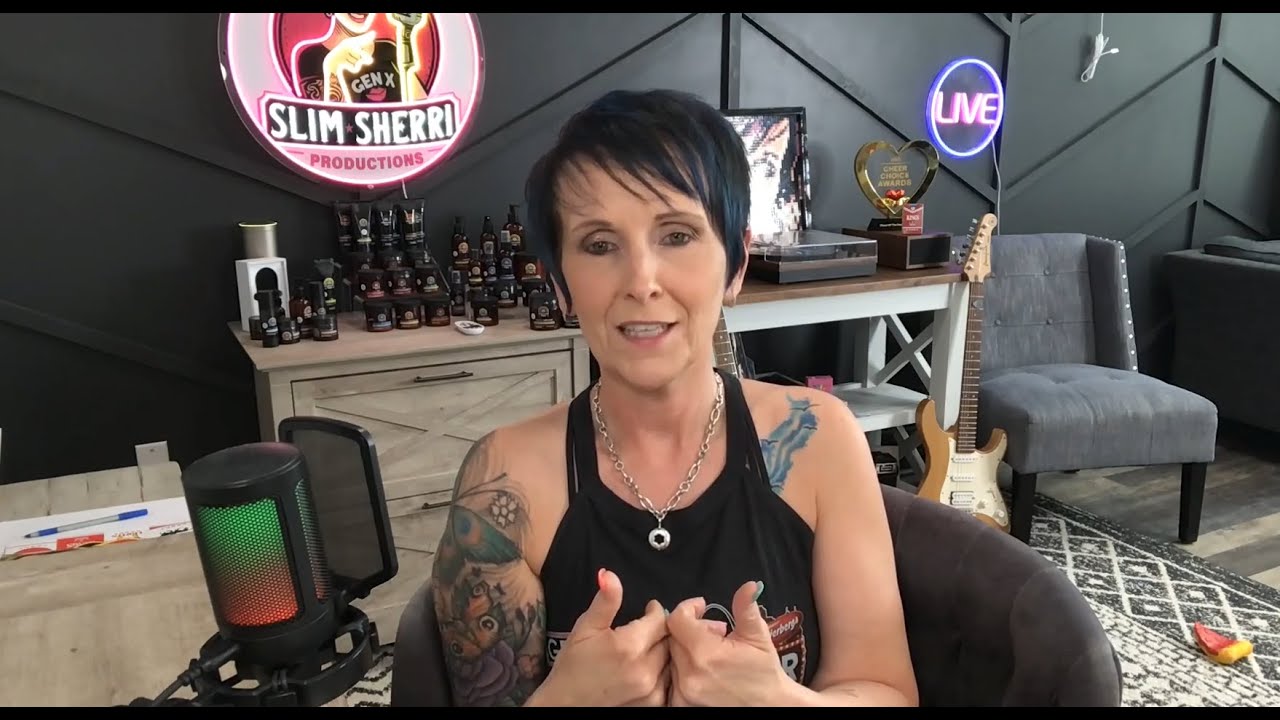
In Episode 42 of the GenX Speaks Series, Sherri Dindal, known as The Real Slim Sherri, shares her experiences growing up as a Gen Xer, discussing the challenges of childhood, the impact of parenting styles on her generation, and her journey through life and career. The conversation delves into the unique struggles faced by Gen Xers, including the transition to adulthood, parenting, and the effects of societal expectations.
[MUSIC] Welcome to GenX Adulting. Today we have Sherri Dindal, who listeners probably better know her as The Real Slim Sherri in the studio. Welcome Sherri. Thanks for having me. It's good to be here. We're thrilled to have you here. Our first question is always, what year were you born? 1972, man. It was a good year. It was a good year. Yes, you're GenX. Yeah, right in the middle, right smack. Everybody's like, there's all these microgens, where they're like, "Oh, I straddle this gen and that gen, I'm right in the middle." I'm right smack in the middle with GenX. I'm not the oldest of GenX, I'm not the youngest, I'm the middle child of GenX. We also are, we're 1971. Another good year, right? Also, right in the middle. No, it's nice to be able to claim, we are GenX. There is no zennial, there is no Generation Jones for us. We are it. I said, those micros, I'm dead in the middle. You cannot argue that I'm GenX. I mean, I'll get people occasionally be like, "Are you sure you're not a boomer?" I'm like, really? Oh my goodness. Absolutely not. Where were you born? I was born in Ohio, Finley, Ohio. Tiny little town. It's not as tiny as it, it used to be, but just a small town in Ohio, the Midwest, Bible Belt. But I didn't, I spent probably about seven years of my life there and then grew up the rest of my youth. I spent in the city in Toledo, Ohio, which is north, right on the border of Ohio and Michigan. Now, were your parents from Finley? My dad was from Finley. My mom was from Akron, Ohio. Okay. And so, obviously, they met wherever they met and she moved to Finley. But yeah, originally she was from Akron, but she was born in West Virginia, actually. My dad was born and raised in Finley. Where in West Virginia? My mom was born in Charleston.
But yeah, originally she was from Akron, but she was born in West Virginia, actually. My dad was born and raised in Finley. Where in West Virginia? My mom was born in Charleston. Okay. Brian's, his dad is from Morgantown, Granville area. Yeah, I know where that is. Yeah. That's so funny. A lot of people don't know Granville. They know Morgantown. I know Morgantown. Yeah, I know Morgantown. Granville's right across the river. Okay. He looks from the Coliseum like, whatever direction it is to the river, Granville's right there. So you grew up there? You grew up almost there? My dad grew up there. I actually spent a lot of time there in the summers, all through my childhood, even through college, I would go back. We go back every now and then. It's beautiful. It's nice. No, it's beautiful there. I spent a lot of time there as a kid too, visiting my great-grandmother and my mom's family down there. We would go down in the summers as well and spend time in the mountains. The rivers and it's just beautiful there. Really is. Absolutely. Rivers and mountains. Yeah, it's amazing. Do you know how your parents met? Not really. They probably should have never met, to be honest. I don't know how they met. I should know that story. Both my parents were still alive. I guess I should maybe ask one of them at some point, but no, I'm not sure how they met, but they did. Okay, so they met and they moved to Finley. Well, you had already lived there. My mom. Okay, your mom moved to Finley. They got married. Yep. And were you the oldest? I am the, of my parents, I am the only child that they had. I have an older half-brother from my mother. My mother was married, had a husband before she met my father. So my oldest half-brother.
I am the, of my parents, I am the only child that they had. I have an older half-brother from my mother. My mother was married, had a husband before she met my father. So my oldest half-brother. And then my dad, after my parents got divorced, he got remarried and I have a younger half-brother, but I'm the only child, but technically the middle child. Okay, and what are the years, the distances and ages between the boys for you? So my older brother and I are about two and a half years apart. My younger brother and I, there's 13 years between us. Okay. So when your parents got married, you and your older brother were pretty close in age. Did you guys jive at first? Oh yeah, we were really close. And yeah, we, you know, we had a pretty crazy childhood, I guess you would say. So, you know, we were pretty close. We relied on each other. How long were your parents married? I don't know. I was seven or so when they got divorced, close to eight. So they were to be married maybe nine or 10 years, I guess, in total counting, you know, my mom being pregnant with me. And then I think they had been together not maybe a year before she got pregnant. So yeah. And during those years, did you experience that typical Gen X childhood where you were gone during the day and no one knew where you were until the nighttime? I think that that's like a standard. You can't be Gen X if you didn't. I mean, I can't say you can't be, but most Gen Xers, yeah. We were feral. We ran around. Nobody, I mean, my mom locked us out of the house. Like we were kicked out, get out, you know, we were locked out of the house. We, I can remember very, very young, you know, the house we lived in when I was around four or five years old, my brother and I
we were locked out of the house. We, I can remember very, very young, you know, the house we lived in when I was around four or five years old, my brother and I being blocks away on our bikes at that age, you know, in the, I don't know why, but I have this memory. I don't have a lot of memories from my childhood. They're kind of sporadic and crazy because I had a chaotic childhood, but I can remember my brother and I going to this, this woman that lived a couple of streets away had a candy store in the front of her house. And we were like in her house buying candy and looking back on like, this is like some old mother Hubbard shit. Or like, or like the woman who, you know, like Hansel and Gretel, that lady, like she could have put us, she could have cooked us or some shit, you know? Like we should, we didn't have belong in her house buying candy. It was all, but we, we played on the railroad tracks and you know, we played in the creeks and we did, we did all the crazy wild shit, you know, drank from the hose. We had, that was my, that was my upbringing very much. And were you with neighborhood kids or was it mainly just you? Okay, so it's like a group of you. Yeah, there was a group that my, I think most of the kids at that, at that age, were all being locked out of the house. I think it might, maybe it was like a standard in the neighborhood of like lock your kids out and we all ran together, yeah. Or we would go from house to house, you know, we would go from place to place. We had a couple of friends who, their moms didn't lock them out. You were low. I remember one friend had, they had like a, looking back, I mean, I didn't know at the time, it's probably like a, what do they call them? A Casita where you have
You were low. I remember one friend had, they had like a, looking back, I mean, I didn't know at the time, it's probably like a, what do they call them? A Casita where you have like a mother-in-law suite. That's like a separate house out back. They had like a separate house, you know? And we would go out there and play and that's where we, that's where we hung out. You know, we would hang out there. Nobody ever checked on us. And then, you know, I mean, we, we wanted to eat. If we scrounged up some quarters out of the couch, we'd go down to the Lawson's and buy some candy or some shit, you know, or maybe a Slurpee, but yeah, we were, we were wild and feral. Yeah, I think that's definitely one of the shared experiences most of us Gen Xers have. And it always shocks me, even though I hear it repeatedly, it still shocks me every time because you think about all the things that could have happened to all of us. And as parents, we know now. And I sometimes, I don't know if you remember that Tom and Jerry cartoon where they're watching the baby and no matter what happens to the baby is always okay and they're killing themselves trying to save the baby, but the baby's fine. Sometimes I think some, we were, we were just floating through and somehow okay with all these things that could have happened to us, you know, I don't, I- I think that, I think as adults now we look back and go, I think a lot of us overcompensated as parents of like, I will never, my, you know, that would never, I'm never gonna let my kid do that, right? Cause we did really crazy wild things that nobody, they don't even know that we did. Like I still haven't admitted some things to my parents. So I think there's a little bit of that of like, we were determined to make
wild things that nobody, they don't even know that we did. Like I still haven't admitted some things to my parents. So I think there's a little bit of that of like, we were determined to make sure our kids didn't have that type of a childhood. But then as adults, we also kind of come to this realization of like, how could somebody let us just be free and feral and wild like that? And this is, but then this is why we had kids on the side of milk cartons, you know, this, this is why, you know, we had so many missing kids. And I think that, you know, in hindsight, you know, we, like I said, as adults can look back and go, that won't be my kids experience. And now there's a lot more stranger danger. We had a little bit of that. Yeah, a little bit. Our parents would tell you, don't talk to strangers, take candy from strangers, right? Stay away from white panel vans. Those are like the standards. But yeah, like it was like, you told me not to take candy from strangers, but you didn't tell me I couldn't go in some lady's house and give her money for candy. Like she could have been a predator looking back and nobody knew, they didn't even know we were in the house because nobody knew where we were. They didn't, they didn't, as long as you were home and looking back, that's so crazy to think like you would leave the house early in the morning and then you wouldn't come home until the street lights came on. And if you, I think about those parents who had kids go missing and think, well, your kid just didn't come home when the street lights came on. And at what point do you go, like they're missing? You know, I think about that process of like, did you wait until the next day? They didn't come home to figure out they were missing because we were gone for
go, like they're missing? You know, I think about that process of like, did you wait until the next day? They didn't come home to figure out they were missing because we were gone for hours already, literally hours. Gone. It's not like now where like if a child goes missing, you typically know where they are within some shorter window of time, you know, but this is probably why most of those kids on the milk carton were never found. Yeah, I agree. I mean, we've had some listeners comment that their parents would look for them after a couple days because their parents assumed that they were spending the night at a friend's and they were, they were, but what about, you do wonder when the kids who went missing, was it a couple days before or a day before those parents? I've always kind of wondered like how did, at what point did you go there, you know, they're not coming back, at what point did that happen? And it's, you know, it definitely made me as a parent much more, I'm very protective of my children and I have three kids. And so I think about my first one, who's my oldest, you know, he'll be 36 this year. So I think of my oldest and how I raised him, you know, he was a little, he had a little bit of that feral because it was still the 90s, you know, so it was a little bit different, but you know, people, it's funny to me how people were like, oh, it's, but the world is so much more dangerous now. I'm like, but is it, is it really that much more dangerous or is it just that we're more aware of the danger because you have this kind of 24 seven media in your face, news channels and social and everything is like an instantaneous headline. We didn't have that. You either caught the shit on the six o'clock news or you read the
24 seven media in your face, news channels and social and everything is like an instantaneous headline. We didn't have that. You either caught the shit on the six o'clock news or you read the newspaper, if you were lucky and everything else was kind of word of mouth. And so you look back at the eighties, specifically the eighties and early nineties, crime rates were at their highest, you know, they were literally at their highest for violent crime, violent crimes. Those are down significantly. And so I'm like, I don't really know that it was any, that it was a safer time. I think we were just not as aware and, and, and, you know, it wasn't in our lens like it is today. And so that made me a very overprotective parent of my younger ones, but my oldest, he did still get a little bit of the benefit of not having this constant, you know, fear mongering with this, with the media that keeps it in your face. So my girls, they're, they can't leave the yard without me knowing. Yeah, yeah, no, I think it makes sense though, because how could we not be so hyper aware when, as you said, we're constantly consuming what's going on every second around the world. So as the reaction to that, not just us trying to create the childhood that we always wanted and be the people that we needed, but the reaction to just social media consumption and then 24 hour, 24 seven news cycle, what do you expect us to be like as parents? You know, I think the way we parent part of it is the reaction to all of that, because it scares the shit out of us. Well, yeah, I mean, would they rather the opposite of us to parents? Could you imagine in this day and age, if we parented kids today with all that we know and with media in our face the way it is and the news and all the
they rather the opposite of us to parents? Could you imagine in this day and age, if we parented kids today with all that we know and with media in our face the way it is and the news and all the stuff that, like you said, around the world that we're aware of, if we parented our kids like we were parented in this time, what that would look like. Yeah. It would look like we were the shittiest parents on the planet. We would go to jail. You go to jail today for neglect, for endangering your children, for whatever. Nobody gave a shit about that at the time. And I don't know a question that sometimes like is it because they weren't aware, they didn't have that knowledge or did they not care? I don't really know. I don't know if they paid attention because how fucked up is it that when we were kids and you're eating your shitty sugar-laden cereal with the milk carton of a missing kid right there, right? I remember reading that thinking what happened? So it was there, the parents kind of had an idea, but I don't know if they ever corrected or changed, right? That is the question of like, did they not care? Were they, so to your point, the milk carton right is in their face, but were they really absorbing that information? Were they looking at it going, were they wondering the same thing we were, we're sitting there eating our honeycombs, looking at this kid's face on the side of the milk carton going, wonder what the fuck happened to him? Like I don't know if they were doing that, but I also think that part of it was, and I try never to talk negatively about any other generation. I intentionally try not to do that. So this is not a dig at our parents or either the boomers or silent gens, but the boomers specifically, very self-centered and
about any other generation. I intentionally try not to do that. So this is not a dig at our parents or either the boomers or silent gens, but the boomers specifically, very self-centered and narcissistic generation that were very much me, me, me. And so there's some of me that wonders too was just the sign of the times. Like everybody was just for themselves and kids were sort of like an expectation. You have to have kids. Everybody has to have kids, you get married, you get a job, you work till you die and you have kids, that's your job, that's what society expects of you. And so they had kids that they didn't maybe necessarily really want. And so in some cases, I think some of us, and I'm not saying that that's my experience, I'm just saying maybe some, and maybe it was my experience. I don't know, I'm still working on it, I'm still in therapy for that. But that maybe we weren't really wanted. We were just sort of in the way. Yeah, I think that's a really good point. I think you can only claim ignorance so much. And I do think there are people that shouldn't be parents in general. And I think back in that time, women especially, I would not have been supported to make that decision. That really has just shown up in the last, strongly, I wanna say in the last five to 10 years where if a woman says I'm not gonna have children, people are like, oh, okay, it's not a big deal. But back then, I think people would have said, what do you mean you're not gonna have children? That's what you do. Like you just said, you get married and have children. And they married them young. It was like an expectation. Like you gotta find a man. You have to find somebody to take care of you. You have to have children, secure everything. You wanna secure your future.
It was like an expectation. Like you gotta find a man. You have to find somebody to take care of you. You have to have children, secure everything. You wanna secure your future. Somebody to take care of you when you're old. Like all these sort of like expectations of the world of like who they were and what they were to become. And so I do think a lot of them, they were kind of in that whole free love, the 60s and they just wanted to just be themselves. And I think that's beautiful until they decided, I have to get married and settle down and have kids. And I don't think a lot of them really wanted it. It was also the expectations of the church. It was the expectations of their families. And now you just mentioned something and I don't get into anything too crazy. But talking about like the last five or 10 years and how now it's not as big of a deal, but now we're starting to turn back a little bit because now birth rates are down. And so now all of a sudden you get a shit again about whether women are having kids. And so like make up your mind. You either don't give a shit if we have kids. It's not an expectation. Or you absolutely, it's an expectation that every woman puts out at least one kid so we can keep this machine running because that's the money maker, right? Yeah. I don't usually talk about stuff like that, but when you look at it, it's like kind of fucked up. We started to fix things where maybe women had a little bit more ability to choose. Do I wanna have a kid? Do I not wanna have a kid? Do I wanna get married? Do I not wanna get married? To now we're back to, hey, we're declining. Our numbers are declining. So yeah, you gotta have kids. No, I think it's a really good point.
Do I wanna get married? Do I not wanna get married? To now we're back to, hey, we're declining. Our numbers are declining. So yeah, you gotta have kids. No, I think it's a really good point. Just as Gen X swung the pendulum as parents and went completely the opposite of how we were raised. And maybe sometimes a little too helicoptery, but so what? That's again, the reaction to many variables. I think to write that expectation of women to get married and raise children, women are swinging the pendulum to the opposite of that. And now you want it to come back. Well, there has to be balance. And not like you said, not to go too deep into that, but I'm hoping for the Gen Z women, and I see it happening, that they are going to have higher standards, higher expectations, and hopefully the Gen Z men will rise to it. Because if they wanna have these families, they're going to need to, at least from my experience. Do you see us get to a place of like you have kids, you choose to have children because you want to. Yes. I think that's the difference is that a lot of people, unfortunately, and especially if you live in an area where maybe the more low income neighborhoods tend to be, there tend to be more children in those environments, and that's a byproduct of that. And those kids, unfortunately, they're gonna have, a lot of them will have more difficult upbringings, and that's unfortunate. But I would love to see us get to a place where you have kids because you want to. Because the last thing, what I despise is people who have kids and don't really want them. And the only people who suffer are the kids for them. The kids. Yeah. The kids suffer. 100%, and I think that brings it back to, I think there were many boomers,
And the only people who suffer are the kids for them. The kids. Yeah. The kids suffer. 100%, and I think that brings it back to, I think there were many boomers, we're talking the Woodstock generation, and then it was like-- You love, man! (laughing) You need to go into a box, and you need to have these children and raise, and so, I mean, you think about it, not just was there the commercial, do you know where your children are, that would come on at 10 p.m. to remind them, do you know where your children are? But there was a commercial, I think a few years before that, that was all about have you hugged your child today? Oh, I remember that, yeah. Yes, and I think-- That's the one, if you listen to the, what's being said in that commercial, it is gut wrenching. I'm like, I can't believe that we, this was our life. But this is what they were putting out, and I think that was to counter abuse, more than just-- Well, yeah. We would view it as, oh, we need to remember, because of course we don't abuse our children, we need to remember to give them a little extra love, maybe, for their self-esteem, their confidence, whatever they need. Back then it was just, don't hit your kid, hug them instead. What was fascinating? I'm sorry, go ahead. No, go ahead, go ahead. So if you listen to the little, the kids that are in that, like that, I think if we're talking about the same one, there's like a mom who's upset, the dad's upset, the kid's like, I don't know what I did wrong, and they're like making excuses for the parents of daddy had a long day at work, you know, mommy is stressed out, like they're making excuses, they were making excuses for their behavior and for abusing their children, for hitting their children. And so, and it wasn't,
know, mommy is stressed out, like they're making excuses, they were making excuses for their behavior and for abusing their children, for hitting their children. And so, and it wasn't, it's not like discipline. We're not talking about discipline, we're talking about hitting kids for all kinds of shit. Yeah, yeah. As an outlet. Dysfunctional. Yes, as an outlet. Because, you know, whatever, they did something, a minor mistake that was-- You know what's crazy to me though, is it wasn't the parents that were watching it, it was us. We were the ones that were the consumers of this thinking, oh, it's okay, that dad should-- You mean the commercial? Yeah, it's all right, guys. It's not just that shit. No, it's so true. I think Gen X, we are the first generation to be gas lit as a whole, because every time we showed any emotion or concern or needs, we were gas lit, like completely undermined, completely belittled. And so we all grew up, and we'll get deeper into this, but grew up grinding. Oh yeah, we're still grinding, what are you talking about? We're still grinding. But, and again, when we get to midlife, we'll go on this further, but I think that it's just now, where we're kind of like, wait a minute, we can-- We're waking up, we're hitting this phase of life where you start, and I'm actually, we can get into it, I'm writing a book about that very thing. But it's, you know, when you talk about the gas lighting, we still gas, we're still gas lighting ourselves. We gas light ourselves, we were taught that. And a live product of that was Apathy. And we are just, we, you know, we became a very apathetic generation, a generation that kind of took on the mantra of, you can't, we don't care, you can't hurt us,
And we are just, we, you know, we became a very apathetic generation, a generation that kind of took on the mantra of, you can't, we don't care, you can't hurt us, we don't give a fuck about anything. That's a facade, that's a mask. And we learned to wear that very, very young. And that was a result of conditioning, that was a result of compliance and obedience and all the things that we were taught, which was, you stop that crying, I'll give you something to cry about. You know, it was go to your room if you're gonna cry, self isolation even, we still self isolate a lot of us. Because we were not taught healthy ways of managing our emotions. And so we just stuffed them down, we've pushed them down. And so usually if you see, I usually, I make jokes about it, but I try to, my content, I take serious topics and I infuse humor into them in a way to give people something to think about or maybe see things in a different way. But I've talked about, you know, how our generation, you know, the whole self isolation, the shoving our emotions down, you know, masking, that if you see a Gen Xer getting upset about something, get the fuck out of the way. Because we don't, we were not, and I don't say this as like a joke, it's like pretty serious that we were not taught healthy ways of coping with big emotions. Because we weren't allowed to have big emotions. Big emotions would get met with discipline or that wasn't even discipline, it was just punishment. And so we learned that emotion equaled punishment or emotion equaled isolation, you know. And so when you start peeling those layers off and you start looking deeper, you're like, I don't, I don't process big emotions because I don't fucking know how. Those were during our fundamental
peeling those layers off and you start looking deeper, you're like, I don't, I don't process big emotions because I don't fucking know how. Those were during our fundamental and foundational years of our life. And we were kind of stunted there. And so I also joke about how we're just kind of perpetually adolescent. Well, that's a joke, we got Peter Pan Syndrome people, but it's because we, a lot of us were very emotionally stunted during those fundamental and foundational years of our life. And so here we are as midlife adults going, I don't know what to do with this. What's remarkable to me is you're spot on. You're an absolute expert in this. I'm not an expert in anything. Just hearing you talk about it, you are absolutely spot on. No, 100%. It's amazing. 100%. We were never taught how to identify even what emotion we're feeling. No one said, you're feeling anxious because of this and that's okay, I sometimes feel anxious too. This is what you can do to deal with your anxiety or you're feeling depressed and this could be the reason. It's boys and girls, especially the boys though. Like I think some of us girls had a look. Well, boys weren't allowed to, boys don't cry. Boys don't cry and sometimes-- Boys don't show emotion. No, and then, yeah. They gaslight, back to the gaslighting ourselves, we still gaslight ourselves. It is what you're talking about is when I am feeling anything. We gaslight ourselves into going, I'm okay. Everything's fine. Shove it down, shove it down. I'll be okay because that's how we've always been. That's how we've gone through life. That's how we have gotten to where we are is just by shutting everything else out because we generally can't even manage our own emotions, let alone anybody else's.
That's how we have gotten to where we are is just by shutting everything else out because we generally can't even manage our own emotions, let alone anybody else's. So we're just apathetic to everybody else's emotions because I don't even know how to process my own shit. Get away from me, I can't handle your shit. And so I find myself, especially with two girls, one is 14, one is about to be 12. So I am on the ride in the struggle bus, let me tell you, is looking at them going, I struggle to manage their big emotions because I don't know how to manage mine. And so I'm like, my only response is, your crazy's gonna meet mine because I don't know how else to deal with you. But I don't want to cope with them that way. I want to be a better parent. I want to be able to manage. And so I'm having to work through my own stuff to figure out how to manage my own big emotions so that I can be a better parent and teach them to have good coping mechanisms and good ways of dealing with their own emotions so that they can be better people in the future. And this is what a lot of Gen X parents I think struggle with. And so you have two kinds of Gen Xers. You have the one that you're talking about, the helicopter the shit out of their kids and overcompensate it. And then you have the ones that never changed and they're exactly like their parents. They raised their kids exactly the way they were raised. And so you're seeing this reflection of that in these younger millennials and the Gen Zs where they're like, you have two sides. They either absolutely love their Gen X parents or they fucking hate them. Yes, yes. I'm always surprised when we'll hear from people who say that their Gen X parents are exactly like boomers. And they'll say Gen
love their Gen X parents or they fucking hate them. Yes, yes. I'm always surprised when we'll hear from people who say that their Gen X parents are exactly like boomers. And they'll say Gen Xers are just like boomers. And I'm thinking, we aren't, but it's-- Because there's two types. There really are two kinds. And I didn't really realize it until, and now almost four years making content. And I see the comments, I read it. I can pick them out very, very quickly. The ones that are still, they didn't break the cycle. They didn't break that generational abuse cycle. I wonder if there's a third because I almost feel like I'm in that third in that because on a continuum, I feel like I'm in the middle. Well, there could be a hybrid of the two. Habits, but trying to-- You were born in 1971. Yeah, maybe. I think there could be a little hybrid of one that's like still has a little bit of that. Because there are people, especially if you're an older Gen Xer, like almost Gen Jones, they're kind of, I joke, but it's not really, they're kind of boomer light. So they've got a lot of boomer tendencies, but they also are Gen Xers that have a lot of Gen X tendencies. So there could be like a hybrid, but I think-- It's a struggle. Yeah, I think this is-- You don't want a helicopter too much, but you also don't want to be completely devoid of understanding and support. And I find it fascinating. How many kids do you guys have? We have three. So we have a 28 year old, a 24 year old, and then we have a 15 year old. He was our surprise baby. Bonus baby. And when you said, I'm actually laughing inside because he's characterizing himself as in the middle of the road, but he tracks our kids constantly, even our 28 year old. On the GPS on the life 360.
And when you said, I'm actually laughing inside because he's characterizing himself as in the middle of the road, but he tracks our kids constantly, even our 28 year old. On the GPS on the life 360. Yeah, but I don't tell them. No, they don't matter. They all know that. There's a time our daughter was-- Your helicoptering behind a curtain, that's all you're doing. Yes. Probably, yeah. When he wants to know all the goings ons and he hears us talking, he's like, what's happening? He wants to know everything. So-- But I want him to figure some shit out on the ramp. Yeah, yeah. You don't want to solve every problem. You want to bring some tough love, wherever that may fall. Yeah. So here's a question for the two of you. I'm curious. I was an investigator for a long time, so my brain works in really wild, curious ways. Because this is your podcast, I'm asking you questions. As parents that parent together, how do you parent differently in that way? Are you more of a more helicoptery and more protective and you're more behind the scenes, still protective, helicoptering from a distance with, I wonder because I'm questioning if it's maybe a male perspective versus the female mother perspective versus mom, I'm wondering if that's maybe that. So you see two parents together, what is your take on that dynamic? Yeah. So because your dad? I think in some ways-- Well, I'm gonna go first. Go ahead. I'm on the front lines, so I find out the information. I'm knowing everything that's going on first. So you're the one saying we wait till your dad gets home? No, I'm kidding. No, no. You wait till your father gets home. I have a complimentary answer to where you're going. And then I fill him in, like just so you know, this is what's going on. So then when he approaches them,
You wait till your father gets home. I have a complimentary answer to where you're going. And then I fill him in, like just so you know, this is what's going on. So then when he approaches them, he already has background on a situation and it helps him communicate with them easier. So he's not 20 questioning them as much because he already has some background. And I found through the years, he's worked from home since COVID, but when he used to be driving home from work, he would call me and I would fill him in on what went on with them through the day. So when he walked in, he could kind of ease into it a little bit easier. Cause I don't know if you've experienced this, but especially once they turn 12, 13, 14, if you start 20 questioning them, they stop answering all your questions. So it's a dance. I've had two, we just didn't have, they couldn't track us. That was the difference. Yeah, well, no one was asking us any questions. Yeah, nobody gave it. Well, if you did get asked, you were probably already knew the answer. It was a loaded question. They already knew wherever you were and they were just waiting for you to lie to them so that you had a reason to hit you. But anyway, what's your- It was a setup. I was gonna say, I think she prevents problems. I probably solve problems. And it's maybe not always with grace, but maybe a bigger hammer or something. Like if there's ever an issue at school, which is very rare to probably count them, she'll work with the administration to solve it. But I'll be the first to say, we'll come in tomorrow and we'll talk about this type of thing. So I don't know if that makes sense to you or not, but you certainly prevent. And I'm like, fuck it, let's see where this goes. Other than when it goes sideways.
So I don't know if that makes sense to you or not, but you certainly prevent. And I'm like, fuck it, let's see where this goes. Other than when it goes sideways. Then is the heavy. Yeah, then I'm probably the heavy. I was wondering if, because I think about the dynamic of dad versus mom. Are you feeling maybe more like a hybrid because you're the dad and dads are supposed to show up a certain way. They're supposed to present a certain way to the family dynamic, to their children, especially being that we're Gen Xers because we were taught this dynamic of the dad versus the mom. And dad was the heavy. Dad was usually, although my mom would beat the shit out of you with a belt and a heartbeat, but dad was usually the one you feared the most. And also dad was the one that we often worry, that was my mom with threat. I mean, I think a lot of us were threatened with the dad. Like you wait till your dad's around about that. You wait till your father gets home. I thought that was just me. Apparently that is a standard across Gen Xers that brothers use. But it was an interesting dynamic as I'm like, do you yourself that way because of the way we were-- The difference might be, I'm okay if they get hurt and if they're crying because I look at it as a longer journey that this is part of growing up. It's part, and the world sucks. The world's full of assholes, world's tough. You need to be able to deal with it, right? And so, whereas she's the mom primary caretaker, I don't think she likes to see them hurt. I'm not saying I like to see them hurt, but it's like they're gonna grow from it. And it is, it's the only way I could frame it, I guess. I mean, he says that, but his first answer is always if someone hurts them, fuck them. And like, you know, and
And it is, it's the only way I could frame it, I guess. I mean, he says that, but his first answer is always if someone hurts them, fuck them. And like, you know, and he's angry immediately. So I think-- That's part of the solution though. Yeah, yeah. I think you're spot on in, and him as a Gen X dad trying to still hold on to some of that traditional male role, that vibe. Oh yeah. But also be progressive enough where his children will talk to him. Yeah, he's there for him. That's what I'm wondering if that's maybe where that feeling of being a little bit of that, a hybrid, if you will, of like new age dad versus old school dad. And you fall somewhere in the middle, carrying on a little bit of the tradition that you grew up with, but still breaking a lot of that, the curses that we were plagued with, right? Breaking the cycle. So when your parents were married, was there a lot of, you said your mom would hit you guys with the belt. Was there a lot of physical abuse? My dad was an alcoholic. So yeah, there was a lot of, not just abuse to us, but just domestic violence in the house in general. And yeah, I mean, if my dad, I can recall my dad backhanding my brother across the room and bloodying his nose and stuff like, so I did live in sort of this chaotic hyper, hyper vigilance is like my, that's my calling card. Like I just, always reading the room. I think that's another thing with Gen X is that we're always reading the room. We learned at a very, very young age, a lot of us, not all, I'm not in any way implying that all of Gen X was abused or that all of them were hit. Cause I get told that that was not my experience. That's great. I'm happy that that was not your experience, but for a lot of us it was. And so for a lot of us, we
or that all of them were hit. Cause I get told that that was not my experience. That's great. I'm happy that that was not your experience, but for a lot of us it was. And so for a lot of us, we learned really, really young to read the room, micro expressions, body language, behavior, anticipating and trying to correct ourselves. I mean, I remember already, I didn't need to be punished cause I was learning to punish myself at the age of four. You know, I'd stand myself in the corner, myself in the corner. And so, you know, thinking about that of like us at a very young age, already learning hyper vigilance and like how to read micro expressions and how to read body language and all that in an attempt to sort of predict and then avoid, right? That's that's an avoidance. And so yeah, for me, that was a pretty standard in my house from my earliest memories. You know, my earliest memories were probably around the age of three. So were your coping mechanisms mainly to either be gone and out of the house or just in your room and away from everything to be hiding. Quiet. Yeah. And you're nervous system, fight or flight. Oh yeah. You're a constant fight or flight. Oh yeah. Yeah. You know, that definitely, you know, I've just recently started working, I moved my mom here a year ago from New Mexico and we hadn't really been around each other in 30 years. And that's been an interesting experience, just getting to know each other again. And it brought up a lot of things in me physically that I couldn't explain and it's fight or flight and fawn, all of them. And so it was surprising to me. I thought I had done a lot of work and that I was much further along and then my mother shows up in my life and I'm just, you know, triggered like all over the place.
I thought I had done a lot of work and that I was much further along and then my mother shows up in my life and I'm just, you know, triggered like all over the place. And I'm like, what the fuck is this? So I started EMDR therapy and it's actually helping me tremendously to sort of work through some of that. Cause I don't think traditional talk therapy, I've always been not, I don't have a problem with therapy for anybody else, but I always had a barrier to it. Like I wasn't really okay with sitting down and getting really intimate and getting into, I don't need to do that with some stranger, but EMDR is different. And so it's helped me to learn to identify things that trigger me physically. Like your logical brain will tell you one thing, right? Logical brain is like, we're fine, we're safe. Like what the fuck is your problem? But the other part of your brain, cause the body keeps the score, you know, it's sending you the wrong signals because at a very young age, we were wired essentially. You can think about how you have fundamental foundational years where the hard wiring takes place and is wired for that. And so it's trying to undo those, trying to rip those fucking wires out and rewire myself. And so that's been an interesting, it's been an interesting year. I think that a lot of Gen Xers can relate to that of having to care for their parents or having their parents live closer to them, all of a sudden, and it triggers traumas they thought that they had resolved or that they buried and never dealt with and are now having, cause you almost become that child again, as you said, your body does at least. Yeah. I think it can be very shocking, especially if you've never, if you've buried everything and never dealt
cause you almost become that child again, as you said, your body does at least. Yeah. I think it can be very shocking, especially if you've never, if you've buried everything and never dealt with any of your emotions as a lot of Gen Xers have, and then you're in midlife, and now you're having to care for someone that was the cause of a lot of your trauma. And it's almost like being re-traumatized. It is. Well, the body doesn't see it, the body, I had to learn this, the body doesn't perceive it any differently. The body still perceives it as a threat. Yeah. And so if you don't fix that part, you know, like I said, your logical brain could be telling you one thing, but the body is doing something totally different. So it shows up in a lot of ways, shows up in anxiety and stress and heavy breathing and heart palpitations and tension and just shortness of like, just being short with people. It shows up in so many ways that I never, I mean, I always knew I was wound tight. I would tell it would warn people, I'm wound pretty tight. But I'm learning that that was, that was showing up, that wound up tight part of me was showing up under moments of stress and anxiety as that was a trauma response that I didn't recognize. I didn't know because I was the person that tried to bury the shit as deep as I possibly could under concrete. And unfortunately, it doesn't matter. The truth is for all the listeners, it doesn't matter how deep you bury it, it can resurface someday. And for me, I didn't expect it to show up in the ways that it did with my mom. And so both my parents are still alive. And I knew my dad triggers the shit out of me. Every time he comes to visit, I'm like, I can tolerate you for about two days. And then I'm gonna probably
And so both my parents are still alive. And I knew my dad triggers the shit out of me. Every time he comes to visit, I'm like, I can tolerate you for about two days. And then I'm gonna probably start coming off the rails because he just triggers me all over the place. But I'm aware of that. My mom, I hadn't really been around in 30 years. And so it was surprising to me to discover that I felt like I was having these physical responses. So I decided to go and start therapy. A friend recommended EMDR because I just was like, I didn't move her here to make her life miserable. And I realized that I was, because she would say things like, my reaction to her made her say things like, I'm just a burden, I'm just a problem for you. And I was like, but you're not. But I realized that my reaction to her, and very short, treating it almost like, this is a task I have to get done. I have to do this, this and this. And then I'm gonna go back to my life. And it was very transactional. And I was like, that's not fair to her. I don't want that to be her experience for whatever days she has left on this earth. And so I decided to do the work. And so I recommend it highly to people to do this work. What is the EMDR? EMDR, I don't know what the EMDR specifically stands for. It's like bilateral. So for me, I do it through a computer, but you can go into an office and do it. And it's either through tapping or bilateral stimulation through the eyes. So you kind of follow these dots. So you work on certain memories, things that you, maybe trauma or whatever. And you don't really have to talk through anything. You just watch these dots and whatever happens, happens and then my therapist will say, what are you feeling? Because you're looking for
And you don't really have to talk through anything. You just watch these dots and whatever happens, happens and then my therapist will say, what are you feeling? Because you're looking for the response in the body. Like where do you feel that in the body? And essentially what is happening is our brains are, they're basically a computer. So when you think about your hard drive and all these files and shit that are on it and the way that it's wired, you're basically reprogramming your brain. You're allowing, you're working through memories and allowing it to basically like, it's always been sort of wherever it is. For me, it was like in this nice little tight little chest that I had locked up, shoved behind another safe door, like I'm not gonna set it. It's dragging those out and figuring out like, okay, where do those belong? How can I process through that feeling? And so, the trigger or the trauma response and put it where it belongs, where that memory is like you're not erasing memories, but they do, what I have noticed is that over time, they have faded a little bit. Like they're not as prominent. Like I used to be pretty controlled by like, the loop of memories that would just sort of play in my brain that I couldn't control. And it's being able to file those and put them in places where they belong. And sure, the memory's still there, I can reach for it, but it doesn't disturb my system like it did before. You don't need to reprocess it as a-- You do, your brain is just reprocessing. You're reprogramming essentially that wiring, that wiring I was talking about. And so, it's kind of like taking the wire and go, okay, that wire doesn't really belong here, it belongs over here. And so you just, and you work, it's wild to me. It's very woo woo to
And so, it's kind of like taking the wire and go, okay, that wire doesn't really belong here, it belongs over here. And so you just, and you work, it's wild to me. It's very woo woo to me, it was very woo woo. And in the beginning, I didn't have any expectations. I was like, this is, initially I was probably a pretty standard gen-ex response, this fucking stupid. Like what am I doing? But over time, it has really allowed me to just show up in ways that I haven't before. And it has allowed me to like reach for memories and not feel that overwhelming response. I can now step in my mother's house and not feel this instant heaviness that I had felt before. I was just about to ask you that. So if you go into an encounter with your mom, you can deal with it now. Yeah, I'm still working-- You've got some school. There's still little things we're working on. Oh, I'm sure, yeah, yeah. But yes, it has gotten better. I can now sit down at the table and have a cup of coffee with her and just have a chat and not feel all that stuff that I was feeling that I couldn't understand. Like I was like, I don't understand, I've been around her in 30 damn years. Why the fuck do I feel like this? Like that was really wild for me. And I couldn't control it. And I knew it was showing up in ways that were aggressive for me. Like I was snippy with her or short with her, like I said, transactional. And I like, okay, I gotta come in, I gotta do this, this and this, and then I'm out. And so it's allowed me to work through that in ways that I don't think, that probably would have taken me years of talk therapy to get through. And I've done that in six months. So-- It's a huge. Yeah, it almost sounds like it allowed you to have closure with each of those experiences.
taken me years of talk therapy to get through. And I've done that in six months. So-- It's a huge. Yeah, it almost sounds like it allowed you to have closure with each of those experiences. It does. Those experiences and then disconnect the physiological reaction that those memories triggered in you. That's what you're trying to do. It's just, what you're doing is essentially trying to, you're trying to tell your body like, that's not a threat anymore. Right. And so because the body still perceives, like I said, the body keeps the score. I don't know if you've ever read the book, the body keeps the score, it's very valid. Like the body's gonna say, this is a perceived threat. And not only because of whatever happened to you like as a child with your parents, so it's not just my parents that trigger, but even allowing me to connect the dots with other things that go on in my life, with my children, with my family, to identify like, ooh, I just, I'm more aware of what's happening in my body, where I'm like, oh, why did that make me feel that way? Like I'm more aware to be like, oh, I need to think about like what that is and try to connect it, try to figure out where that learned behavior came from or where my body learned that. And it's allowed me to sort of peel back the layers in other aspects of my life, not just with my mom. Yeah, and it's probably, in a way it's allowed you to ground yourself physically, like ground your body more, because I think for a lot of Gen Xers, we've buried our emotions so much and we have been grinding so hard that our mind and our body kind of became disconnected a little bit, because you're just kind of going through the motions of life sometimes without being fully grounded physically head to toes,
that our mind and our body kind of became disconnected a little bit, because you're just kind of going through the motions of life sometimes without being fully grounded physically head to toes, like toes deep into the ground. And so by what you're doing, by disconnecting those traumas physiologically from your body and allowing your body to heal, you're fully present. Yeah, that was something, I love that you said that, because I can tell you prior to, I spent 51 years of my life, 50 years of my life not being present. I could be here and we could be having this conversation, but my brain could be doing all kinds of wild shit. And like I said, that kind of loop that just sort of always made in my brain, like I would wake up in the morning and I would for a moment have like peace and then it would just kind of flood in and that's sort of, and that's the stuff that you're like, nobody knows, you just put that over, I know it's here, but I can still get through that, I just grind, we just go, we just suck it up because that's what we were told to do, you're fine, suck it up, rub some dirt on it, keep going. And that's how I went through life. And so yes, it has allowed me to be more present. And I talk about this because it's so important of like, life is happening in them now. So many people spend so much of their lives in the past or in the future that they're missing all of what life has to offer, all the good that's happening right here in the moment. And I had never really truly been living until I figured out how to be present. And I was working on mindset and working on being present before EMDR, like I had been, 50 was a big like year for me where I was like, I gotta shed this baggage, this shit is heavy. And so I was already
and working on being present before EMDR, like I had been, 50 was a big like year for me where I was like, I gotta shed this baggage, this shit is heavy. And so I was already working on sort of trying to learn to ground myself and be present so I could control my thoughts. But this EMDR process has made, I don't even have to work as hard at it. It has allowed me to be more in the moment and more aware, like I said, more in tune with my own body and how my body's showing up, even when my brain is showing up in a different way. And so that has been just amazing to have, for the first time in my life to be like, oh, my brain and my body are in sync. Yeah. Wow, wow. Yeah, and as a result, you can truly enjoy moments that are enjoyable because I know I found for myself before I connected fully with my body again, even in enjoyable, relaxing moments, I still wasn't 100% there. My body was still tense. I was still in fight or flight, even though I'm going through the motions. Yeah, this is great, but I'm still on alert. But when you go through that and you ground and you become fully present, then you can enjoy the good times truly and your body can relax and enjoy it too. You remember more of those moments. Like memory has always been a struggle for me from the time I was a child. I think a lot of that just has to do with trauma in general. I know it does, because I've talked about that with my therapist, but looking back at moments that should have been really significant in my life and big joyful moments and having so little recollection of those moments, that's sad for me. And so now it's like, oh, I can fully embrace and enjoy these moments in the present. And my memory is a much, much more, it's a much broader memory now.
that's sad for me. And so now it's like, oh, I can fully embrace and enjoy these moments in the present. And my memory is a much, much more, it's a much broader memory now. I'm able to be like, oh, there's more detail to it. There's more to the memory than what I had before, rather than just these little snippets, almost like a little movie trailer. Now I'm able to really take in more of what is happening in the moment. And I look back and I'm like, that's sad. That the first 50 years of my life, I didn't really have that. I didn't really experience life in that way. Yeah, but I think that Gen Xers, especially disassociation was like our number one tool. It is. And it was our survival mechanism. It was everything. So I think for a lot of us, just not disassociating anymore, is like can be shocking to the system. Because that's a- It's also recognizing when you're disassociating. That's something I never could do before. And now I'm able to go, why are you there? Why are you here? I never could do that before. I couldn't have that kind of control over where my brain was going or what my brain was thinking about or what my body was doing. Now I'm able to be more aware and more in tune with that. And I talk about this a little bit. You guys are kind of the first people I've talked about the EMDR thing with. But I wanna talk to share that with people because there is hope. I think for a lot of times, most of my life, a lot of times I felt like there was no hope. I was just meant to live that way my entire life. And that's a horrible place space to be in. When you just feel overwhelmed all the time by these emotions, you don't know how to express and you don't know how to control them. And you also don't know what to do with them.
When you just feel overwhelmed all the time by these emotions, you don't know how to express and you don't know how to control them. And you also don't know what to do with them. Nobody wants to hear, we also were never told, we also were told nobody ever wanted to hear how we felt either. So also believe that nobody wants to hear about your feelings. And so finally arriving at a place where I'm like, there is hope. You can actually feel joy and happiness and peace. And you can feel like you are standing in your own power where I never did before. A certain event that, because I feel like I've gone through a similar enlightenment or epiphany, whatever it might be. Awakening. Awakening, it was there, and it feels like it's almost onset with age because I can't trace it back to anything else. Was there anything like that for you? Was it, do you think it's age? Was there an event, some big-- There wasn't an event, age definitely played a factor. So I'm always sort of looking back at me, even my 30s, my 40s, I was too young and stupid. I was just surviving in my 20s. I was a young mom, I had a kid at 17, like 20s is a blur. But my 30s and my 30s and 40s, I always wanted. Like I had this hope and wish for wanting to feel the way I feel now, but never knowing how to do it. Like it just felt like an impossible thing. You'd hear people talk about it, but it just sounded like that, like some fantasy, some myth, like that's not real. And so turning 50 for me, I think was the big moment. I really struggled with the idea of turning 50. Like it was this looming huge number that I was like, I can't believe I'm turning 50, partly because I think a lot of Gen Xers like myself didn't think I'd live that long. I didn't think we planned for that.
huge number that I was like, I can't believe I'm turning 50, partly because I think a lot of Gen Xers like myself didn't think I'd live that long. I didn't think we planned for that. We lived hard, ran hard, the whole work hard, play hard mentality. And we just were like, only the good die young. That's what we were told. And so it was like, I didn't really plan to get there. So when 50 was coming, I was like, holy shit, I'm turning 50. I think you become, I did for me, became suddenly very aware of my mortality, which I don't know why that 50 number made me very aware of my mortality. And this idea of like time was running out and not, I think for me specifically, I can't speak for others, but for me personally, for living 50 years and never really feeling like I had ever really lived, that was scary. I'm like, fuck, time is running out and I haven't even lived. So that was a big number and a big moment for me. And something happened when I turned 50 that just was like, it was like an awakening. It was like this unraveling of like, it was almost like there had been these little frayed threads for a long time that I was always afraid to pull at for fear that I would just fall apart. And then one day I just started picking away at them and I realized that as I pulled them out, that I wasn't falling apart, I was actually falling into place. And so I just started letting that shit unravel and wanting to be like, for me, it was like, look, I plan to live to be like over a hundred. I've been planning that for a long fucking time, even though I didn't plan to live this long. In my brain, I was always like, I'm gonna live to be, my great-grandmother lived to be 104. And so I was always like, I'm gonna live as long as she did.
plan to live this long. In my brain, I was always like, I'm gonna live to be, my great-grandmother lived to be 104. And so I was always like, I'm gonna live as long as she did. And so in my mind, after I accepted like, okay, you're 50, that's a big number, time is running out. Yeah, okay, in my brain, I'm convinced I'm gonna live another 50 years plus, but this first 50 years went by so fast, that I'm like, time is running out. And if that first 50 years went by as fast as it did, this next 50 is going to be like this, because time just speeds up as we get older. And so I just wanted so badly to just truly know what it felt like to really live and feel what happiness felt like and joy. Not happiness, like where your babies are born and you're like, oh my God, I'm so happy, I love you. That's like a, not that kind of happiness, but like genuinely true everyday peace and happiness and joy and just finding good in my days, not always looking into the dark, which is where I spent most of my life, was sort of in the past. You were unpacking your trauma and you were honoring yourself for the first, you were honoring that little girl and that teenager and that young woman that never was given that, her moment, her time, and you finally created space to honor yourself. And you looked at the next half of your life and said, it's her time now. And made a decision to live an authentic life for you. But in order to do that, you have to unravel, you have to unpack so that that healthy version of yourself, the version you were supposed to be and would have been if you hadn't grown up in trauma can now exist. Yeah, I talk about that too, like, who would you be if you could be whoever you were meant to be before the world got its hands on you?
if you hadn't grown up in trauma can now exist. Yeah, I talk about that too, like, who would you be if you could be whoever you were meant to be before the world got its hands on you? That's the version of me that I am today, is like, I'm still working on that version of me. Like, who I'm supposed to be before the world got its hands on me. And so I try to share that with others because I want that so badly for other people. I know what it's like to live in that darkness for so long that I'm like, that's what really got me making videos to begin with, was wanting to just somehow either inspire somebody or share some nugget that I had learned. I don't even call it wisdom. It's just like, this is what I think. I don't, it worked for me. I don't know if it's gonna work for you, but I'm willing to share it because you know what? Wisdom serves nobody but yourself unless you share it with other people. I was like, I never had anybody sharing any kind of insight like that with me. I wish that I had had that, but you know, for me, I'm like, I love being able to connect and touch people in my age demographic, but I really wanna touch the young people. I wanna give them those nuggets to be like, listen, figure it out sooner. Cause if I could just get back 10 years, that time that I wasted in that dark place, in that miserable place, in that depressed place, in that place that was constantly showing up because of my trauma, like that person, that version of me, if I could give that to somebody else and they could get back some of that time, like that's all, that's why I do it. Even if it's just one person, to just have them, and maybe I never know. I'm like, that old saying, what is it? The student appears when the lesson is needed
like that's all, that's why I do it. Even if it's just one person, to just have them, and maybe I never know. I'm like, that old saying, what is it? The student appears when the lesson is needed or something like that. I don't know what the teacher, teacher, but whatever the fucking saying is, I'm hoping to be the teacher maybe, that goes up when they need it. Well, and I think also a lot of Gen Xers have worked hard to try to break the cycle as parents. And so hopefully just by being different parents to our children, we're giving them that, to we're giving them their own voice. We're giving them space to express themselves, anything. Even if it's the smallest thing, we're honoring whatever it is. Even if it's a Tuesday and they feel like the world's falling apart, we know it's gonna be fine tomorrow. They don't. We're stopping and we're saying, okay, let's talk about this instead of being like, it's no big deal, go away. So I think by us doing that, we're already giving them so many of those tools. And then I think Gen Xers and especially Gen X women, the more we talk about all this, if you combine the two, hopefully they're gonna be 10 steps ahead of us by the time they hit 30s and 40s and not have to go through some of the suffering. I can tell you when I get to menopause, my kids are gonna know. Oh yes. You asked if there was a big moment. It's 50 yes. Yes. Menopause. Listen, the shit starts falling off really fast when you hit menopause. You're just like, my give a damn meter is completely busted, okay? And so that was part of it too, is I think you just hit this phase of life and just suddenly things just hit different when you're in menopause. Oh, 100%. I know for myself, I was in perimenopause in my 40s and I had no idea. No one talked about it.
and just suddenly things just hit different when you're in menopause. Oh, 100%. I know for myself, I was in perimenopause in my 40s and I had no idea. No one talked about it. No one talked about it. No one was talking about it. I didn't know either. I look back, I quit my corporate job when I was 40. It'll be 10 years this year. So I was 43. And I look back at that time and I had been a 26 year career investigator. I loved my job until I didn't. And then I was like, I gotta get the fuck out of here. So I quit with no plan. I didn't know what I was gonna do. I didn't have a job. I'd never done that. I had always worked my entire life, made sure I had another job before I quit that job. And so it was the first time in my life where I was like, no, I don't care. I have to get out of here. I'm gonna, I literally am going to go crazy. And I look back and go, I was probably in perimenopause then. I went to the doctor. I remember before I quit my job, knowing I felt off, something felt crazy in me, crazier than normal. And they wanted to put me on antidepressants. And they made me feel really shitty. And I was like, no, I don't like this feeling. I don't want to be medicated like that. So I didn't do that. So I just went through my 40s not knowing like you because nobody was talking about it. Perimenopause was not even a word. I thought menopause was just like the only thing. Like you just, you stop having a period and then you're just in menopause, right? But then to find out there's perimenopause and that that can last for 10 plus years. And there's over a hundred different symptoms associated. I was like, why are we not talking about this? Why is nobody talking? So, and if people don't know, suicide rates are highest for
And there's over a hundred different symptoms associated. I was like, why are we not talking about this? Why is nobody talking? So, and if people don't know, suicide rates are highest for women in our age demographic and drug abuse and alcohol abuse. And you're in your fifties age bracket or starting in the 40s? 40s to fifties, yeah. That age range, highest suicide rates, highest divorce rates are high, drug and alcohol abuse, because so many women are going through all these changes and not knowing what is going on. And you, like me, I felt crazy. I felt insane. It's a silent thing. And it can hit as early as 35. That's why I tell Gen X women, talk about it, talk about it, because a lot of these millennial women could be going through these things at 35, 30 times. They're all starting to go through it. Some of them are, they're talking about it. There's a whole movement, I think it's hilarious, but I love it, on TikTok, where I keep seeing these videos pop up of these women in their 30s and early 40s talking about perimenopause. And I'm like, yes, I thank God for social media in this regard of like being able to put this kind of awareness out there. And it's funny, but then there's some of those videos that are not funny. They're literally women begging other women to what is wrong with me? Like, what can I do? Because there just needs to be more education around it. And more doctors need more education for sure, but we need to be talking about it. So I love to see people like Drew Barrymore and Halle Berry and Oprah and all these other people with huge platforms get behind talking about menopause, because it's a really big mental health and physical health problem for women that is not being, does not get the attention it needs.
get behind talking about menopause, because it's a really big mental health and physical health problem for women that is not being, does not get the attention it needs. So menopause for me was really one of another big factor. And I think it is for a lot of women. I think it- I think that it can be a positive thing in that it can give us that personal freedom to just go for things maybe before we win it, but it gives us that, I don't give a shit anymore. I'm doing what I want, fuck everyone attitude. So I think there's a positive to it. There's a positive to it, but I don't think we need to feel like we're going crazy or utter shit through the process. Yeah, no, that's the part they need to do better. It's like women, so many women talk about going to their doctors in perimenopause and being gas-lipped by the doctors, telling them that this is just normal. This is just normal phase of life or there's nothing wrong with you, your levels are fine. They want to, again, like me, put them on antidepressants and I look back, like I said, when I quit my job, had I known more about what was happening to my body, maybe I wouldn't have made, maybe I wouldn't have quit my job. Not that it was a bad thing. I've been in business for myself now for almost 10 years and life is great, but everything happens for a reason. But I do look back at that and there's times I miss being an investigator. I love doing what I did until, like I said, I didn't. And so, my hope is for women, especially younger, that we'll get to where we have more doctors that are advocating for women, that are more educated, that are not gas-lighting these women into believing that there's nothing wrong with them, that it's all in their heads. And that's a law that a lot
women, that are more educated, that are not gas-lighting these women into believing that there's nothing wrong with them, that it's all in their heads. And that's a law that a lot of doctors are telling women is it's just in your head. And they're bandating the symptoms, antidepressants, go exercise more, change your diet. Eat less, you're overweight because you're eating too much. Oh, a lot of these women, they're like, I literally work out every single day. I barely am eating anything and I'm still gaining weight. And so, what they're doing is they're lacking nutrition. They're lacking what their bodies actually need, which is doing other harm to them because they're trying not to gain weight because society tells you that you're supposed to be skinny or there's all these self-esteem issues and all these other things that creep up. Your skin starts to change, your hair changes, like all these things start to change and you suddenly become, you feel less relevant, you see it feel less appealing, all this. And then, it's just a snowball. It's a big snowball. Yeah, and then a lot of women during this time are still caring for young children. Yes. So there's knees there. And because it's not talked about, I mean, if you think the women don't know what's going on with them, their partners have no clue. That's what I was gonna say. We have no fucking idea what's going on. At least in middle- Did you ever have any idea what was going on? I'll plead the fish. No, but at least in middle school, boys do get an idea of what girls go through through puberty, so they understand physiologically. They get their period, da, da, da. But there's no conversation for men about perimenopause and menopause. And so you see marriages falling apart.
through puberty, so they understand physiologically. They get their period, da, da, da. But there's no conversation for men about perimenopause and menopause. And so you see marriages falling apart. Well, men go through menopause too, that's the thing. They don't call it menopause. But men also- It's like eight menopause. Men also go through a cycle of menopause where they're also affected, their energy and their libido and your moods are affected. And so you have kind of this combination which is basically building the perfect bomb if you don't work on it, right? And so that's where, yeah, the divorce rates, one or the other or both. They just are like, "Okay, I'm done." Where those marriages might've been, they might've been great marriages until one day, menopause catches up and they're like, "I'm over your shit. I'm sick of everything, shit." Yeah. What's that book, "What to Expect When You're Expecting?" Yeah, they need to make one. "What to Expect When You're..." Yeah, when you hit what? I don't even know. It's not middle age. Well, technically. Technically. Middle age. Because technically, if you go based on life expectancy, they say 35 is like middle age. I'm like, "Yeah, fuck you. That's really good." Yeah, I don't buy that. I want you. But you could say, "What to Expect When You're Midlife," because that's ages 35 and up to probably 60. That's kind of midlife, 55, 60. Because there's some women that get there, they don't go through menopause until later. They may be 52, 54, whatever. And so, yeah, I say there's no handbook. We should be issued a standard issue handbook when we get to this point in life. It kind of lists all this shit out. But yeah, there's not, and there should be. I think there should be more OBGYNs too that specialize in
standard issue handbook when we get to this point in life. It kind of lists all this shit out. But yeah, there's not, and there should be. I think there should be more OBGYNs too that specialize in midlife and hormones for women, because there's plenty to take care of the baby stuff, but there's so few there for women our age. And to your point, we get handed all this information about get your mammogram, da-da-da-da-da. There should be a pamphlet or a piece of paper even saying, these are the signs of perimenopause. These are things that look out-- How are you feeling these things if so talk to your doctor? I am very fortunate to have an amazing, I highly recommend, I say this to women all the time, if you have a doctor that's gaslighting you, if you have a doctor that's not listening to you and you feel all these things, find a doctor that will listen and that will advocate for you. I have a doctor who is my OBGYN, who is my age. She's actually a couple years older than me, so she's in the thick of it herself. And she is probably one of the few doctors I found that listens to everything. And she knows, because she's going through it. So I highly recommend it. You got some doctor gaslighting you, because the women doctors do it too. 100%. And sometimes they're worse. This is just the way it is. It's not the way it is. We don't have to suffer. And there's so many other side effects of menopause that needs to be addressed. We start losing muscle mass and bone density and there's all these other things. And cognitive function, there's lots of various things that are showing up. But I highly recommend, go find yourself a doctor that's in your age. And I guarantee you they will see things differently. Not a male, no offense, no male doctor.
things that are showing up. But I highly recommend, go find yourself a doctor that's in your age. And I guarantee you they will see things differently. Not a male, no offense, no male doctor. But you need a female doctor. I don't know how you could go to a male doctor for this. I agree with you. You have to give this to someone your age or older who's been through it or is in it. Well, you gotta be careful even with some of the older ones because when I make menopause videos, because I do, I joke around about it a lot. Because all I can do is poke fun at it because it's so stupid. But a lot of some of, I feel like the 60 and up, so the boomers, they're basically like, it just is what it is. They are still gaslighting it, suck it up. It never gets any better, just get over it. They're still living. No sitting in the sun and eat more things. They're still living that way. Yeah. They are. But I feel, especially with menopause, they hardcore judge us. And once in a while, in general, when people are projecting stuff, I'm like, that's not about me. That's about their own situation. But once in a while, I may comment back and say, what's different is Gen X women are talking about it. So the younger generations are educated and don't have to suffer. You guys suffered, we suffered. We're trying to change the narrative and be part of a cultural shift. You're way better than I am at that. Cause you know what? So my mom, I asked my mom one day, I was like, why did you not warn me? Why did you not tell me? Cause they don't talk about it. Her response was, well, nobody told me. This is how they see shit. Like nobody told me. So basically you're like, fuck you, you're on your own, figure it out. That's how I feel. You are way better at like
This is how they see shit. Like nobody told me. So basically you're like, fuck you, you're on your own, figure it out. That's how I feel. You are way better at like going through the explainer. Me, I'm like, you know what? This is where my, I don't give a fuck attitude shows up. And I don't give a fuck. Okay. We are going to, we are not, we are going to talk about it, whether you want us to talk about it or not. And I'm, you know what? I could say I'm doing it for all the younger people and maybe, yeah, the rude I am, but I'm doing this for me. I'm talking about it because you know what? This shit sucks and everybody needs to know how shitty this is. And it's funny, right? I talk about it in a funny way, but it is to get people to go, wait, that's what's so many women in the comments are like, wait a minute, this is what's going to happen to me. I want them to pay attention. I want them to be like, holy shit. This is, and so when they get there, they might be quicker to identify like, this is what's going on with my body. This is what's happening to me. I'm not crazy because they do make so many women feel like they're crazy. And that's not fair. You know, so. We're undermined in general with our health and then let alone if we come in with a mental health issue. So I mean, no, you're a tool in this. You know, you're bringing it to the forefront and you're kind of saying, look, I'm future you. Listen to me before you get here. I'm giving you the tools. Let me tell you what's going to happen to you. (laughing) And also bringing awareness. So men can finally hear this because I'm telling you, there's so many men. It's the first time I think they've heard anything about perimenophiles and menophiles. We just assume you're crazy.
So men can finally hear this because I'm telling you, there's so many men. It's the first time I think they've heard anything about perimenophiles and menophiles. We just assume you're crazy. I will give it to some of the guys in my comments, not all, but there are a lot of guys who are like, oh my God, they see, and I make a video like that. They're able to go, this is my wife. And now you just, I've given them a different perspective. And they've, a lot of them will be okay saying that. Like I am, you know, I'm here for her. I'm, you know, I'm going to be there to honor what she's going through. And they're understanding, but some guys are not. Some are just like, she's a raging bitch and I can't stand her. And it's like, she can't control that. Like she's, her hormones are all fucked up. And when you start to lack estrogen, we start to lack empathy. So that's where my go fuck yourself kicks in. You want to be an asshole, I can be one in return. Absolutely, absolutely. I think it's a full shift in a relationship. And it gets the point where the men in their lives are either going to go along for the ride or you're out because- And I think a lot of women do get there where they just, well, not just the women. I think some guys too are, no, I'm not in any way minimizing for the men. It's not easy to go through that and watch and like have this person who you've loved for however long and the person that you fell in love would suddenly not be that person anymore, right? Because we're not the same people. Like we are definitely going through an evolution, a metamorphosis, if you will, into a different version of ourselves. But we can't control it. It's not something we're doing that's changing it. And I think some guys can't take that.
a metamorphosis, if you will, into a different version of ourselves. But we can't control it. It's not something we're doing that's changing it. And I think some guys can't take that. Or they're like, this is not what I signed up for. And so, in some cases the guy checks out, but in a lot of cases it is the women who are like, I'm done because they don't have- Which is why we all need to be talking about it. Men too. I love to see men talking about their experience with their wife going through it and the things they did to help her. And as a result, they have a better relationship. They're closer, it's strength than their relationship. So I'm hoping more of that comes out the more we talk about it. But to go back, when your parents divorced, did you go with your mom? Like how was the custody agreement? Oh, that's a whole, that's a can of worms, man. So I did go with my mom and well, we were kind of always on the run a little bit. And so when we finally got away, they didn't divorce right away. I was with my mom. And then, I lived with my mom for maybe six months or so. So my dad always, he's a frugal fuck and always money was always a problem for him, still is. And he didn't want to pay child support for a child he didn't have. And so my mom didn't have a job. She was just starting over. She had just met her future husband at the time and decided that he was gonna fight her for custody. So she didn't fight and I had to go live with my dad. So I lived with him for three and a half years. And so I was old enough to choose. I was told at that time, when you're 12, you can decide who you wanna live with. And so when I was 12, I went back to live with my mom, but it was a little too late by then for me. So I was- When you were nine or eight or nine?
you can decide who you wanna live with. And so when I was 12, I went back to live with my mom, but it was a little too late by then for me. So I was- When you were nine or eight or nine? I lived with, yeah, I was probably closer to nine, eight and a half or so when I had to go. I was just, I was in the third grade. I just remember that. I was in the third grade numbers or that age. That's eight or nine. So you had been with your brother your whole life and now you're living in separate houses? No, no, my brother was gone too. So that's what I said, it's a whole can of worms. My brother, my dad was a lot meaner to him because he wasn't his son. He was mean to everybody, but I mean, he even kicked the damn dog, but he was pretty mean to my brother. And we were sent away to my grandparents a lot. And my grandparents, my mom's parents, they were pretty religious and they lived out in the country of Ohio and we were there a lot. And my brother eventually, he wasn't doing well in fourth grade and he came home with some F's on his report card and they just decided to send him to my grandparents permanently. So my grandparents pretty much raised my brother. And so I was already separated from him. So it was just me and my mom and my dad. And so, yeah, then my mom and I were kind of on the run on and off and yeah, then I had to go live with him for three and a half years. So fourth, fifth, sixth grade, I lived with my dad. Did you have to change schools? Oh yeah, but we were always kind of moving around. When you're a family with domestic violence issues, you tend to not stay put very long. You move around a lot because the neighbors pay attention, the cops are at your house, shit like that. So we never set still very long anyway.
you tend to not stay put very long. You move around a lot because the neighbors pay attention, the cops are at your house, shit like that. So we never set still very long anyway. I think I went to like four different elementary schools. And middle school, I always say is I hate it. I think it's the worst time of all the school. I agree. It's the worst to be in it. And it's the worst to be parents of kids in middle school. Like I have four. Oh yeah, I have two. I've one in middle school, one just finished middle school. It's the worst. I saw PTSD, especially girls. Oh, terrible. I saw PTSD from our daughter because there's mean girls, right? And they're mean to your girls. And so it's a whole thing. And then you want to be mean to them, Jennie. You're like, "We used to solve this kind of shit after school out in the park or behind the school. We threw hands. And if you talk shit, you got punched in the mouth." We don't do that anymore. I occasionally think we should go back to that. But anyway. Oh no, when there would be mean girls towards my daughter, like I did want to do that. I would go, and my daughter would be, I'd be so, I would have that Jenniex react. I've told her even if they're married and I see them in the grocery store when I'm 80, I'll still curse them as I walk. Well, still don't want to punch them in the face. It's never over. Yeah, it's never over. It's a funny sidebar. Our daughter will give her shit for that. Our daughter's like, "I'm good. I'm past that." She's like, "I'm not." I'm not. Yeah, I'm not good. We would go round and round pulling each other's hair if this was me back in mid school. Yes, absolutely. But so you went through all this and then now you're in middle school. So that just added even
round pulling each other's hair if this was me back in mid school. Yes, absolutely. But so you went through all this and then now you're in middle school. So that just added even more fun to middle school. Did you, were there any reprieves for you? Did you play sports? Did you do art? Did you have clubs? Anything that gave you an outlet to give you a break? No, no. So I went to live with my mom seventh grade year. I went from living in with my dad in this sort of middle class, white picket fence, although we didn't have that, we lived in an apartment, but little middle class, white picket fence kind of suburb outside of the city to then moving to the inner city with my mom. And so I went to, we called it junior high, but I went to junior high, seventh, eighth grade. No, I did not play sports. I was in the band because you had to be. You had to pick band or choir or some shit. I had already done choir in elementary school, so I had no desire to do that. And no, I didn't play sports. I wasn't in any clubs. I didn't have any, my outlet was drinking and doing recreational shit that I wasn't supposed to be doing. So you started that in middle school or junior high? Yeah, yeah. I mean, there was nothing else to do. And I was at, now let me paint the picture a little bit. I was in the inner city, it was the eighties. In inner city Toledo, which is basically 30 minutes south of Detroit, it's the eighties, drug, more on drugs is pretty big at that time. Violent crime is very high. We'd be walking to school or, I mean, I rode public transportation to school, so we walked a lot because we had to take the bus downtown and catch a transfer to get out to school. And very different than riding a yellow bus to school.
transportation to school, so we walked a lot because we had to take the bus downtown and catch a transfer to get out to school. And very different than riding a yellow bus to school. Anyway, catching the transfer downtown, there's homeless people and bag ladies and drug deals happening on the corner and shit like that. So I was exposed to a lot of shit in seventh grade and also just coming from the suburbs where there really was none of that. And so it was a very big shift in my, a huge pivot in my life of like, if you wanna survive in that environment, you have to show up a certain way. And that's what I had to learn to do. And so my don't fuck with me wall, it's pretty permanent now. I put off a certain, but that I had to learn that because I was getting jumped. I would get jumped by people, for no reason, just breathing. I just didn't look like I didn't belong. And so I was getting picked on and bullied and jumped. And so you learned to fight back. And so my club was the, hanging out with the people who would whip your ass club. It was one of those, that's what I was doing just to survive. It wasn't gonna be, I looking back, I'm like, I didn't wanna be that, but that's what I had to be in order to survive the environment that I was in. And so it was very different. And it was middle school, junior high was rough as was high school. Did you ever go to bars? Cause I know in the eighties, a lot of us were able to get into bars even. We had our own clubs. I was clubbing in eighth grade and even into high school because they would have like these junior nightclubs and we would go to the club. We were dancing and a lot of drugs were being passed around and shit like that in there. But that's why looking at my girls now,
like these junior nightclubs and we would go to the club. We were dancing and a lot of drugs were being passed around and shit like that in there. But that's why looking at my girls now, I was that age at that time. And I'm like, holy shit, the stuff that I was doing at that age, I will never tell them. I will never tell them because I don't wanna plant any seeds, but no, I was just, it was a, you know, it was not your traditional, I didn't go, I didn't eat. I never went to college. I got pregnant when I was 16, I had my kid at 17. I didn't even finish high school. I didn't get my GED till later. I was very much a byproduct of where I was living and growing up and the environment around me. And I somehow managed to get out of that. That's a tough, tough, tough, tough town, right? I mean, that's because that was probably when the auto industry left too. It was. So it was a depressed area. It was a weird decline at that time. Yeah, yeah. Falling apart, it's a big industrial city for people who don't know. In the steel belt and very, you know, white, or not white color, blue collar, you know, type city. And at the time, you know, Toledo was not, it was not, it's still not thriving, but that was sort of the beginning of the decline. Like it's really not a thriving city now. They've got it, right? Yeah, they did. The only thing keeping that there is Jeep's factory that they built. That's the only thing really holding that city together. But, you know, at the time, you know, this would have been, like I said, 84, 85, you know, up through. And I didn't leave Toledo until my job took me to Cincinnati in 08. So I stayed there till like 08. Always wanting out. I knew I wanted out, but it was just, I had to find, you know, a way to get out.
took me to Cincinnati in 08. So I stayed there till like 08. Always wanting out. I knew I wanted out, but it was just, I had to find, you know, a way to get out. I think if my career, if I hadn't got a job transfer, I don't know if I might still be there. I hated it there, but yeah, it's a rough city. And it was rougher. I can't say rougher. I just went home a couple, like two years, a year and a half ago to visit my sister and my brother and my dad. And I was shocked at how, what the city looks like now. It was, it's almost a shell of what it was. And it was already a shitty place before that. So it's worse, not vice-shred. Yeah, it's worse. It's worse. Crime has definitely gotten worse. It's kind of, I don't know if you know anything about Youngstown. It happened to Youngstown years before that where everything kind of pulled out and it's just a shell of a city, a lot of crime and low income. And that's sort of what's happened to Toledo, just tiny little pockets that are still decent. But we lived in Michigan for a winter just north of Detroit. And we were there when Detroit probably wasn't too bad, but to your point, it declined. And yeah, it's crazy there. Yeah, I worked in our city of Detroit as an investigator for five years during probably some of its worst years. When the mayor and the governor, there was a lot of controversy. One of them went to prison. It was four of the five years I was there. Detroit was the most dangerous city in the country. It was rough. And going back to Toledo, a couple of years ago, I was like, this reminds me of Detroit, which was wonderful to me. So in high school, was it a boyfriend that you had your, did your son, right? Yeah, my son. Was it a boyfriend? Yeah, he was a high school sweetheart.
which was wonderful to me. So in high school, was it a boyfriend that you had your, did your son, right? Yeah, my son. Was it a boyfriend? Yeah, he was a high school sweetheart. Yeah. Oh, okay. Tony and I. Are you still in touch like co-parent? Oh, yeah, we still in touch. Yeah, yeah. Oh yeah, we kind of grew up and grew apart. I think like some high school sweethearts do. He's a cop. He's been, I mean, we both, while the way that worked, I wanted to be a cop. I let him be a cop because we didn't think it was wise for our child to have two parents who are both police officers. And so I went into the private sector and got an investigator job and that was my career. And so, yeah, we still keep in touch. And we left. We always, when we split, the most important thing was that we created an environment for our son where he had still had two parents and that we were never, we never pinned each other against one another. He could go to his dad's if he wanted. He could come home to me. He was, you know, he had that freedom to do that. And so, yeah, Tony and I will always be friends. We said, we'll grow old one day, rocking on a porch and rocking chair together. Did you guys get married? We never legally got married, no. No, we didn't. Were you together? We were together 11 years. Okay. So you got pregnant, you had your son, you left school. Were you home with your son for a while before? Like, did you start working? Oh, I've been working my entire life since I was 14. So I was already working. My job as I climbed my career excelled. I was, you know, I was gone. I was an investigator. I would be gone sometimes, you know. At that time when he was really young, I was home every day, because I had a job that was isolated
I was, you know, I was gone. I was an investigator. I would be gone sometimes, you know. At that time when he was really young, I was home every day, because I had a job that was isolated to just the one city that I was in. But then as my career progressed, I started being responsible for multiple territories. And so I would be gone sometimes for a couple of days at a time or whatever. But he was always, he would be with his dad or his grandmother and he never, you know, I can't say never looking back, I've said to him at times, like, you know, I hope he never felt like I wasn't there enough, but I know I wasn't. You know, I know I could have, I missed out on some parts of his life that I wish I had been present for, but the job I was, had, you know, to pay the bills and that was what did it. How old were you when you became an investigator? I was 19. Oh, wow. Well, I mean, that's where my career started and then it progressed. Eventually when I left my career, I was doing organized crime investigations. And so it just sort of progressed. Early on, I was getting into the ORC stuff, the organized crime stuff. And then it just, it became a bigger and bigger and bigger issue as my career grew. That's what I specialized in. And so, but I did a lot of internal investigations too. Were you considered a cop? No, no, no, no, no, no, no. Tell me. What kind of investigator were you? Like a private eye or? No, no, no, no, not private. I just worked in the private sector. So I worked for other, for different companies and did internal investigations or large scale fencing type cases, like fencing operations. So large scale theft cases is what I worked. Yeah. So you would get hired by companies basically to do investigative work.
or large scale fencing type cases, like fencing operations. So large scale theft cases is what I worked. Yeah. So you would get hired by companies basically to do investigative work. I worked for different companies. Yeah, I worked in either their asset protection department or in their safety department. Sometimes we did safety investigations. It depends on what company it was, but I worked for various, let's see how many, probably five or six different companies during that course of my 26 year career. When I came here, it was Home Depot that brought me. I worked for Home Depot. Their organized crime division, they called it CIT, Central Investigations Team, where I covered the whole country and did large scale fencing operations for them. Not like just loss prevention, but organized. Yeah, this was a specialized program, specialized teams strategically placed throughout the country that specialized only in organized crime. So did you enjoy it? I loved it. I loved being an investor. I love the hunt. So I love, not only that, I not only love the hunt, but the more I've become aware, like as I've done this whole discovery process. I think it wasn't just the hunt. I do like the hunt. I like piecing things together. I like discovering, uncovering things that lead me, give me clues to other things. I really enjoyed that part. My brain lights up when I do that. But I've also realized that there's a part, I think a strong part of me that enjoyed bringing justice. I always wanted to be a cop. And letting Tony pursue that career, I don't regret that. But I always knew that I had this desire to write, like right wrongs or in some way bring about justice. And so I felt very rewarded when a case would come to closure and we'd go to
But I always knew that I had this desire to write, like right wrongs or in some way bring about justice. And so I felt very rewarded when a case would come to closure and we'd go to trial and I'd put people in prison. I did enjoy that very much. And did you, you said you left Toledo in 07? Yeah, I think I moved to Cincinnati in like 08. Yeah. And still as an investigator. You were still- Yes. And then from Cincinnati, did you go to where you are now or did you- To Atlanta. Okay. And then during that time, because I know you said you were 43 when you stopped being an investigator. I quit my job at 43. Yeah. So it'll be 10 years this year. Okay. So during that time, did you have any other personal, you must've had other personal relationships. You have two daughters. I am celebrating 20 years this year with my wife. Okay. How did you guys meet? How did you meet your wife? I was in Detroit. She worked, we both worked in, she grew up in Detroit, but we both worked in Detroit and we met there. She moved into my house pretty quickly in Toledo and then I got transferred to Cincinnati. So she came to Cincinnati with me and she's seven years younger than me. She wanted kids. So we had our first in Cincinnati. And then we moved, Lily must've been about a year and a half old when we moved to Atlanta. My job brought me here. So she moved, she's moved many times for me. And yeah, we've been here for maybe 13 years this year. Now, does she work as well? Well, we both own businesses together. Okay, so the businesses you have, that's what-- Yeah, she used to be, she was a teacher before. She was a teacher and then she taught, well, the job she quit finally when we started our own businesses and things were going well.
Yeah, she used to be, she was a teacher before. She was a teacher and then she taught, well, the job she quit finally when we started our own businesses and things were going well. She was actually a professor. She taught online college courses. So she, that's where she lived with her world as education and media and technology instructor is what she was doing before she quit. And now we, that's all we do. We just run our businesses together. That helps in your content creation, I would assume. And then online-- Which are the fact that you work and live with the same person. No, not just that, but the fact that she taught, what was it, media and-- Media and technology, it actually doesn't help. It was very different. Hers was more like how to fix the printer in an administrative office and shit like that. But, or how to, whatever, tech has changed so much since she was in school. It's very different now. But I couldn't help but make fun of like, which part, the part where you work and live with the same person all the time, 24 hours a day and you parent with those people as well? Like that, yeah, sure, there's a lot of content in there. Oh yeah, so when you guys were having your daughters, though, was she also working as a teacher then and you were working as an investigator? Yeah, she was a teacher when we had Lily. And then when Reese was born, I think at that time she wasn't working. She was just kind of a stay-at-home mom with Lily. Because I was gone a lot, so she was a stay-at-home mom. And then when Reese was born, I think Reese must have been maybe, I don't know, one or two years old when she started teaching online college courses, but it was all remote, so it worked, so she would teach from home,
I think Reese must have been maybe, I don't know, one or two years old when she started teaching online college courses, but it was all remote, so it worked, so she would teach from home, remote college instruction. And so she was able to work from home. And then eventually I was like, I just want you to quit that job. I don't want you to do that. I don't want you to just do this. And so eventually she was able to quit and we just have run our own businesses together. She's the one that encouraged me to quit my job when I quit. She was definitely the one stoking that fire, like just quit, just quit. And I was like, it took me a long time to work up the nerve to do it, because it was scary to me. I'd never been without a job. And that's, I think, another classic sign of Gen X too, is we've been working since we were very young. And yeah, I started working when I was 14, lied about my age, you know? You didn't need a work permit. Your work, if you did, it was like a piece of paper work permit, you know, you could fake any signature on, nobody gave a shit. And I never had been without a job. And so she knew I was miserable and very unhappy and also not knowing that I was in perimenopause at the time. She was like, just quit. She would text me every day. Did you quit yet? Did you quit yet? And it took me a few months. I had written up my resignation letter and I sat on it for a really long time until one day. I was just like, today's the day. And I quit. The courage that had to have taken, because that was such a leap of faith for so many reasons for you, you know, from where you came from, from your childhood. Everything I had, I built on my own. Nobody gave me anything. And so it was a very scary thing for me to quit with no safety net.
from where you came from, from your childhood. Everything I had, I built on my own. Nobody gave me anything. And so it was a very scary thing for me to quit with no safety net. Yeah. Did you have any plan at all? No, no, my plan was, I'm gonna quit. I have one year. I told myself I had enough money saved up. I could live for a year. And if I couldn't figure out what I was gonna do within that year, I was gonna have to go back to work. And to me, that was kind of like a challenge because I didn't wanna have to go back. I was like, I don't wanna fail at this. I don't wanna be like, I knew I was gonna start a business. I have no idea what. I had zero plan. I'm gonna start a business. I have always been really creative and have a lot of great ideas, but had never pulled the trigger on any of them. And so I was like, I'll figure something out. Like I'm gonna do something. And so I quit not with a plan. And thankfully this year will be 10 years and I haven't had to go back to work. That's awesome. I worked my ass off, but I'm gonna work for somebody. Yeah, yeah, yeah. But I mean, I think it's especially courageous for a Gen Xer to do that because we were raised in any way to where we were entitled or allowed to feel special in any way and any way. We were told we weren't special. Exactly. And we were not raised to have high self-esteem and we were not raised to be confident. In fact, I think a lot of times our confidence, they tried to break it down. Like you were being too bully yourself for something, God forbid. So just the belief in yourself, you had to dig up to even take that step because no one gave that to you. And so now you're 43, you haven't even gotten to the point where you're like at 50 where you really started to think about unraveling
because no one gave that to you. And so now you're 43, you haven't even gotten to the point where you're like at 50 where you really started to think about unraveling all the things and unpacking all the things. So I just think that's so impressive at that stage in your life that you found that, you dug deep into your well and found that belief in yourself to just take that leap of faith. I think that's so awesome, honestly. I don't think I could have done it if it hadn't been for Christa. She showed up for me, her and I had extremely different upbringings. And so she grew up not in a house with domestic violence and chaos and she had more stability in her home. And two parents and it did eventually get divorced but she was an adult when they did. And so just a very different environment. And so she went to college, she had this, and I really struggled with this for a long time. When I met her, she was working on her masters. I felt very, it felt, I don't even know the word to describe it. I felt very out of my league and less because I had never gone to college. And that held me back in my career significantly. I could have gone much further in my career but it was always the degree that held me back because they wanted it, even though you couldn't teach what I knew in a book. That was not, but it was just an expectation. That was a thing that our generation and the millennial generation was sold as a, you're going nowhere without a degree. And so I didn't have that. And so I always said, I really struggled with that. And remember thinking how much better she was than me because she had this master's degree. And that she was gonna go so much further. And so to have her in my corner going, you don't need that.
And remember thinking how much better she was than me because she had this master's degree. And that she was gonna go so much further. And so to have her in my corner going, you don't need that. Like you're so, you are so capable of doing all these other things. And she believed in me in a way that I didn't even believe in myself. That gave me, I can't say she gave me the courage, but she definitely co-signed it in a way that made me feel like, okay, I can do this. And she's gonna be there in my corner while I figure it out. And so it's funny that this comes up because just today she texted me, because this is our 20th year together. We just got back from St. Martin last week. We went on a vacation, just the two of us for our 20th with some friends of ours. And she just texted me this morning and was saying how she was thinking about 20 years together and how when she first met me, that she kind of like stepped in in a way where, she got, she helped me with my son. He was going, he was graduating high school and going into college. And I didn't understand that process. I had no idea what, how to get him into college. I hadn't had that experience. And so she was there in that way and supported me when the move to get to finally leave Toledo and go to Cincinnati and then move to Atlanta with me. And she had always sort of supported me and then followed that with, and now she's like, I feel like I saved you, but she's like, now I look at where we are today and I realize how much you saved me. And it was such an interesting contrast of like all the ways that I have shown up for her and like our business now we have, I think she looks at it and thinks if I hadn't quit that job, we wouldn't be where we are. We wouldn't have the businesses that we have
that I have shown up for her and like our business now we have, I think she looks at it and thinks if I hadn't quit that job, we wouldn't be where we are. We wouldn't have the businesses that we have because we run, I own four businesses. And so, and we were just on Good Morning America at the beginning of July. Like there's just so many things going on in our lives that are really amazing things. And when you believe in yourself and you have the right people in your corner, I think you can do anything. And so I think that's what it boiled down to is that her being in my corner and me believing that she would support me no matter what, whether I was successful at starting a business or I failed at that miserably and had to go back to work for somebody else, that she believed in whatever that was and supported it. It was like, go for it, do it. Because she had a belief system that was very different than mine. She grew up in a different environment that did support her in that way and did like give her, you know, granted she's got her own trauma, her own baggage. But she just had parents who supported her. She played, she went to college on a scholarship and played college volleyball for Notre Dame and like had all these things that she was able to achieve and was proud of. And so she just had a different belief system of like, fuck that, you can do whatever you wanna do. It doesn't matter what the piece of paper, fuck the piece of paper. Like that was how she approached it. And it just gave me this sense of freedom that I didn't feel like I had. And the ability to say, you know what, I'm not really sure what I'm doing. I didn't know what I was doing. I'm not sure if I'm gonna succeed, but I'm gonna go for it anyway.
And the ability to say, you know what, I'm not really sure what I'm doing. I didn't know what I was doing. I'm not sure if I'm gonna succeed, but I'm gonna go for it anyway. Because I feel like I have this person. Even though I didn't have the safety net that I talked about like financially and like that fear of a job, especially medical, like not having health insurance. And there were all these factors that I had to weigh. But you know, it was again, just the belief that she had in me that I could do anything that was like, okay, even without that safety net, I feel a little safe with her that she's got my back no matter what. And that's how it worked out. And well, she became the safety net in a way. You know, like- I still, yeah. I had some luck there to catch me just in case. Just in case, but she also validated the dream you were about to partake in. She gave you that validation, which is another thing Gen X never received. And so for her to just validate you as a person and just supported, she created space for you to believe in yourself. I'm curious based on your background, was she the first person to like, maybe give you that unconditional acceptance and love and support? Yeah. You know, if I piece it together, chaotic life, you know, growing up, and now you're with her, you guys are 20 years in, which is amazing. Congratulations, that's fucking awesome. But was she that for you, I guess? Yeah, she really was. Like, I mean, Tony and I, you know, he's a great guy and we just kind of grew up and grew apart. It wasn't that he, he just, we were at younger earlier phases of our life where we were both trying to figure out what we were doing and he was pursuing his career and going to school. I mean, I didn't say,
we were at younger earlier phases of our life where we were both trying to figure out what we were doing and he was pursuing his career and going to school. I mean, I didn't say, I can't say I let him. He went to college, you know, and, you know, I assumed the role of mom, I assumed the role of, you know, also working and being helping to provide and being a homemaker and all that shit that I didn't really have anybody ever, I think, you know, in my corner in the way that Krista has that unconditional, there was always some level of expectation of me, I feel like, and so, yeah, I think that as I've kind of looked over our 20 years, you know, she is just been there for me in a way that nobody ever had. And I think that you nailed it. It's that sort of unconditional, she takes me as I am, she knows I'm not perfect. You know, she doesn't really expect more from me than what she's, know she's able to get. And it's, she's put up with a lot of shit that I've had to work through. You know, I would say that, you know, she has, she picked one with a lot of baggage. (laughing) She's been with you for all your bumps and bruises. Yeah, she's been there to cheer me on and encourage me. And, you know, even in my moments of crazy, because I have had them, she's just, you know, like I said, been there and supported me in a way that I didn't really, I've never had in my life prior. And so I think that's what's kept us together for 20 years. I'm the same for her. I'm a blue for her in a way that's different than she is for me. But we just, yeah, somehow we've held our shit together. Probably what makes it work. Yeah, we're very different people, but also we're very similar. And so yeah, we've just somehow, I mean, look,
But we just, yeah, somehow we've held our shit together. Probably what makes it work. Yeah, we're very different people, but also we're very similar. And so yeah, we've just somehow, I mean, look, 20 years for me is like the 50 mark, where I'm like, holy shit, how the hell did we get here? Where the hell did 20 years go? You know, but that's through, you know, several moves and career change and businesses and children and college. And my, you know, my daughter had, my 14 year old, she struggles with anxiety issues post COVID. So we, you know, we've been through all of that together. And now social media and all of this chaos that's come into her life with the tour that I'm on. And she's just, I'm sure sometimes if I were her, I'd sit there and go, what the fuck is this life that I live? Does she swear? Yeah, not as much as I do, but she does. Everything is just a fact. She's a Gen X-er too. She might be seven years younger than me, but she still, she made it in. She's born in 79. I've been around some people. She just made it in. I've been around some people lately who don't swear. And I'm like, I don't know. I could trust people that don't say fuck. I just, I know. I agree. I agree. Everything you just described is marriage. Like everything you guys have done is marriage. And I always say that and I think it's such a beautiful thing because it's going through ups and downs. It's building the life together. It's going through the bad days, months, weeks, years, whatever, but you, I do feel you hit a point where it's like, okay, yeah, we're doing this. You know, this is, we made it. We're doing it. Like we do marriage. Because it's not easy. No. You know, and at all, we're going on almost 31 years and honestly, when we hit
You know, this is, we made it. We're doing it. Like we do marriage. Because it's not easy. No. You know, and at all, we're going on almost 31 years and honestly, when we hit the 20 year mark is when I was like, okay, yeah, I think we know what we're doing. You go from what the fuck are we doing to, wow, 20. Okay. Like we're doing something, right? There's a lot of what the fuck are we doing? We don't know. Yeah, yeah, yeah. If you can get past the hard years, right? The years you raise your children, you get past the menopausal years. Now see, the good thing for her is that I've already been through it and she's just starting. And so I have a lot more understanding because not that she wasn't, but she just didn't know what was going on either. She didn't know nobody was talking about it. So I'm able to go, nah, that's perimenopause right there. I'm able to see it and give her where she's able to manage that a little bit better than I did. And I can also be more understanding. But yeah, I think if you can get past the hard years with children, and there's a lot of couples that come out on the other side of children, the empty nesters that don't make it, right? I think is what happens is you find out, I think what happens once kids are done and they move out and they go to college or whatever they're gonna do, is you come into this space of like, do we still like each other? Do we know who we are anymore, right? You lose yourself so much in being parents and being in whatever your career is and being whatever you're gonna be for your partner and whatever. And so if you can come out on the other side of that and still like each other, I think there's a lot of hope for like, okay, we can do this for another 20 years.
and whatever. And so if you can come out on the other side of that and still like each other, I think there's a lot of hope for like, okay, we can do this for another 20 years. And that's where we are. Our kids aren't fully grown yet, but we are definitely still in a place where it's like, I still like you, even though, and it's really tougher for us in a lot of ways because we also work together. We work together, we parent together, we do life together. And so sometimes I don't like her and she doesn't like me, but at the end of the day, we do still like each other. And that is the bonus right there, is if you still love each other. That's marriage. Is she your best friend? Yeah, and that's why it works. We still like it. She is my best friend. She is absolutely my best friend. And I can't imagine doing life without her, which is nice that I still feel that way after 20 years. It's like, oh, I really can't imagine doing life without you and don't want to. I don't want to go through life without her. So that makes it better too. Like, you know, I mean, Tony and I, we spent a lot of years together, but I don't think I ever once was like, oh, I don't know if I could live without him. You know, that thing is I'm like, it was tough when we separated. He was my best friend as well. But like I said, we just kind of grew up and grew apart. And I think part of that was just because we were so young. We were young parents. You know, I was 16 when I got pregnant, had my kid at 17. He changed my, he, I really do attribute, you know, a lot of people could look back and go, oh, she was 17. Like that had to be tough in your life, you know, was forever altered away. My son saved my life. Like I look at where I was, if I had,
a lot of people could look back and go, oh, she was 17. Like that had to be tough in your life, you know, was forever altered away. My son saved my life. Like I look at where I was, if I had, I don't think if I'd have got pregnant, I don't think I'd be here today. I'd either be dead or in jail. And so that's the, that was a big moment for me of like, Tony and I had this kid together, we were really young. And, you know, I look at Justin and go, he changed, he saved my life. Not only changed my life, he saved my life. And Tony and I, we stayed together as long as we could until we couldn't, you know? And then it was just like, it wasn't good for Justin for us to stay together. We just were not, you know, we just weren't compatible anymore. And so, but I love the fact that we were able to separate and still be friends. And so, you know, Tony, he's a great guy. And he's also with, I think, probably celebrating close to 20 years with his, his wife. I think they got married, wife, girlfriend, partner, whatever the fuck she is. We're gonna get her a long time. Now you guys, do you live in the same area where Justin was able to stay at the same school and everything as you've been? We did, we did then, yeah. Tony still lives up in, he's still a cop in Toledo. And Justin, my son lives here in Atlanta where I live. He'll never be far from his mom. So he followed me here when he was-- You did something right then, right? You can look at that and say he's nearby. So that's huge. Oh yeah, he finished, so he was still living in Toledo when I moved to Cincinnati. He stayed behind and lived with his dad to finish high school, because I got transferred during his senior year. And so it was like, you stay and finish high school. So I moved to Cincinnati.
He stayed behind and lived with his dad to finish high school, because I got transferred during his senior year. And so it was like, you stay and finish high school. So I moved to Cincinnati. Now when he started college, he started college in Toledo. He fucked off for the first six months of college and I threw all that money down the drain because I paid for college. And I was like, okay, if you're not actually gonna apply yourself, then I'm not paying for college until you get your shit together. So you're gonna take out loans because I'm not gonna throw out and throw away money. And so I also at the same time was like, I didn't really give him a choice even though he's a grown man. I was like, you're not staying in Toledo. Toledo is going to ruin you, you're gonna go nowhere. It's a dead end. You're gonna move your ass, pack your shit up and move to Cincinnati and you're gonna go to school here. And so I forced him to move to Cincinnati and go to Northern Kentucky University, which is right across the river from Cincinnati. So he went to NKU and then I got transferred to Atlanta and he was still in college. And so he had to stay behind and finish school there. And then he moved here when he was done with college. And when he got here, he looked at me, he was like, if you move again, I'm gonna kill you. (laughing) And so we've stayed put here and he is a middle school teacher going on 10 years now as a middle school teacher. And he just finished his master's degree and he's just doing, he's doing fantastic. That's wonderful. I always say middle school teachers are a special breed. I don't know how he does it. I don't either. I mean, it takes a special person to do that. So thankfully there are people like him out there,
teachers are a special breed. I don't know how he does it. I don't either. I mean, it takes a special person to do that. So thankfully there are people like him out there, thankfully, but I couldn't do it. I give him mad props for that. I don't know. I told him, I don't even like kids enough to even teach any grade. Well, I always say it's such a great sign if your adult children wanna still see you and hang out with you. I think it's always indicative of how you did as a parent and how much time and effort you put in to them in their childhood. So that's a great sign for you that he's staying close and you're, you know, where you are and wants to still see you and be a part of the family. So that's a huge success. You broke the cycle. I did. I poured, I poured every, you know, when I had my son, I didn't really have, I didn't have many, like again, I was a young mom, 17, not even remotely close to figuring anything out in life. And, you know, I said he saved my life, but when he was born, I just remember looking at him and thinking, first of all, this little person, this tiny little thing is depending on me to like, I'm supposed to keep him alive. But I looked at him and thought, nobody's ever gonna hurt you and nobody's ever going to make you feel less than. And I poured every single ounce of myself into that child. Even though I was worked a lot and I was gone when he, when I was with him, he never went without, he always knew he was loved. And yeah, he's, he is a mama's boy, even at 36 years old, he is a mama's boy. And I don't think he'll ever be far from me. I think the coolest thing for me is like looking at my, this 35 year old man, he's six foot three, 200 pounds, 210 pounds, whatever, and think we're gonna grow old together.
I think the coolest thing for me is like looking at my, this 35 year old man, he's six foot three, 200 pounds, 210 pounds, whatever, and think we're gonna grow old together. You know, that's kind of cool. Is it, when I was young, it seemed like a huge gap, but the older we get, the smaller that gap gets, you know, where I'm like, it's wild to me that I have a 30, soon to be 36 year old son. And he's starting to complain about aches and pains and his joints and shit. Welcome to old age. So that's kind of wild, you know, that we, I get, kind of cool also that I get to, I get to grow old with one of my kids, you know, the other two will be, there's a lot of years, 21 years between my son and my second. How is their relationship? Oh, he, they love him. They adore him. He's a great big brother. Yeah, they're at their, they also are now getting older. And so when he comes around, he's starting to feel what I feel, which is, they're like, he, you know, he's here high, you know, they're teenagers and preteen and a teenager. So he's feeling a little bit of that, but he also is aware because he teaches middle school, how shitty that age is. They're just little assholes at that age. And so he's also aware of that, but no, they adore him. He's a, he, they love him. I love that they're, they have this really like big, big brother in their life, you know, that if anything should ever happen to me, you know, they have him as well. And so, and that he's older and he's wiser, kind of 35. The guys are still figuring it out at 35, but they just mature smaller. I don't know what it is, but you know, but he'll have this wisdom and he'll always look out for them and I really love that. Now that's cool. Like with our 28 year old
I don't know what it is, but you know, but he'll have this wisdom and he'll always look out for them and I really love that. Now that's cool. Like with our 28 year old son, I remember last year, he actually, he came over and we were talking, he goes, I think my frontal lobe closed. Like I feel different. I see the world differently. He's like, I think I'm understanding now. Yeah. Yeah. So it's, so he's 28 and I still see he's working stuff out, but I did see that shift where he's like, okay, I think I understand now, like the adult thing. Cause I just see everything differently. I think my son's frontal lobe may be closed then too, now that I think about you. Yeah. Yeah. This is a point where he said the other day, I just, things just feel like life has started, you know, coming together in a way that it never had. I'm like, welcome to 35. Like that's sort of the age where I feel like that begins to happen for women, for me, it was like 33, 32, 33. I started to feel like things were starting to sort of balance out a little bit, even though life was still chaotic cause when you're a mom, life stays chaotic. But yeah, 35 is like, you come into this space where you suddenly feel wiser and life calms down a little bit. And you start, he, him saying, yeah, I don't really like, I'm not going to the clubs anymore. Like you stopped doing that, you know, you stopped going to the bar, like that, cause the hangover sucks, you know, whatever. He's in that point of his life where I'm like, oh yeah, he's, he's here. That's great. So you have a millennial, you have a millennial too, Jamie. He was born in 1989, which is why. Wow. December 18th, very 1989. Yeah, very, so I'm like, oh, you're officially old because you were born in the eighties. Yes.
millennial too, Jamie. He was born in 1989, which is why. Wow. December 18th, very 1989. Yeah, very, so I'm like, oh, you're officially old because you were born in the eighties. Yes. Technically. Did you have help when you first had him? Because he's come out well. You've come out well. Did I have help with raising him, you mean? Yeah, like, so in the beginning there, statistically at such a young age, that's hard, right? You were young having a, having a baby. Did you have help at that time to, to kind of get on your feet and get him kind of on his feet? No, I mean, Tony and I were on, we, we, we left, we got our own apartment, like little apartment. We stayed with his parents when I was pregnant and Justin was born and within a few months, we, we did move out. Cause I left home when I was 16. I moved out of my house at 16 and lived with him for a short while and then we got our own apartment. But we just had a really chaotic life where we got an apartment and then he got, Justin was a baby and he got in an accident and our car got totaled. Tony did, he couldn't work for like a year. So we had to move in with friends and rent like a room and then we got in, you know, just, we had a lot of wild shit that happened to us. It didn't help our relationship because it was always some sort of something always setting us back and keeping us, holding us back financially or other crazy shit that would happen in our lives. So no, we just, Tony and I, and Tony was pursuing his career in law enforcement. So I was kind of, even though we were together, I felt a lot like a single parent where I was just, I was working and being the mom and the home. And you had no real model, right? No, nobody to model mom after, not the mom you wanted to be at least.
single parent where I was just, I was working and being the mom and the home. And you had no real model, right? No, nobody to model mom after, not the mom you wanted to be at least. No, I mean, I had a mom, but yeah, no, I didn't have, I didn't, I knew what I did, I did essentially, I knew what I didn't want to be. The opposite, yeah, yeah. Mm-hmm, mm-hmm. And I'm sure, I mean, I know for myself, because I also come from a fairly chaotic childhood, when I had our first child, something inside of me healed. There was just a part of me that, not everything, but something that part of it healed. And also having him forced me to get past certain things, at least to raise him. And that's probably what a lot of Gen X women do when they become mothers, is they kind of put their stuff on hold, because I'm gonna now raise these children and make sure I do it right. And I give them that childhood that I always wanted. And that brings us to then we're in midlife and our kids are getting older and now we're like, okay, now I'll deal with these things. But I think we were so determined. I don't know if it's a choice even to like, okay, now I'll deal with these things. I think you're almost not, I think you're almost in a position where you don't get a choice. Like you have to, you just hit a point where you're like, okay, now I have to deal with this. I've tabled this stuff for so long, because I had to assume these other roles and identities. And honestly, I think Gen X, especially Gen X women really struggle with identity. We struggle to have an identity outside of mom or daughter or caretaker, right? And so you get into this phase of life where you're all of a sudden like, who am I? Like, I don't know myself and I have all this baggage
identity outside of mom or daughter or caretaker, right? And so you get into this phase of life where you're all of a sudden like, who am I? Like, I don't know myself and I have all this baggage and shit I didn't deal with. And now I feel like if you want to, if you want to be able to figure that out, you have to deal with that shit. You have to be able to figure out who you are, right? And you're out your own identity. And I know for me, I was 50 years old going, I've never been anything other than, well, at 43 really. I was like, I've never been anything other than, when I first quit my job and trying to figure out what I was gonna do, I was like, well, what do you wanna do? I was like, I don't know. I don't have an identity outside of being a mom or an investigator. Like I don't know how to do anything else. I didn't think I did, and I didn't think I was good at anything. And so even now at 52, I still sometimes am like, I'm still just a mom and a wife and a caretaker, but now content creator, and apparently now also comedian, which was new, there's just all these things where I'm like, still trying at 52 to figure out my own identity. And I think a lot of women our age struggle with that. But you're doing it on your terms now. Yeah. And it's on your foundation. And it's completely present. Yeah, and I hope that, I wish that for not just Genex women, I wish that, I mean, I wish that for anybody. Everybody deserves that. Everybody deserves to arrive at a point in life where you're like, yeah, I know who I am. And I like who I am, and I'm okay with where I'm at, and I'm living in the moment, enjoying life, what life has to offer me right now. I'm not gonna say tomorrow, not what happened yesterday, but right now.
and I'm okay with where I'm at, and I'm living in the moment, enjoying life, what life has to offer me right now. I'm not gonna say tomorrow, not what happened yesterday, but right now. What was the first business you started after you had left your career? I started a boutique, a clothing boutique. And so that, Feather & Vine has been around going on 10 years, it'll be close to 10 years. Online or brick and mortar? Online, yeah, I know. I have zero desire to own a brick and mortar that's a little too much commitment for me to show up and be in a building every day, unlock a door and show up. I didn't wanna do that, but yeah. Online, and then about five years ago, for my boutique, I started a skincare company. I thought I would exclusively carry in my boutique. And now my skincare company is hands down the biggest brand of the two. It's now not only exclusively at Feather & Vine, it's its own brand. And that's what we were on Good Morning America a couple of weeks ago, July 2nd actually. And we might be on some other shows here soon. And so Wholesome Hippie, which is my skincare company, is an all natural wellness company that we make right here in Georgia. And so we have wellness and beauty and that's my baby. That's what I poured my heart and soul into. So what is, how would you describe what Feather & Vine is? What do you sell in your boutique? So it's mostly a clothing boutique. Like now currently in the beginning, we sold all kinds of stuff, but we sell denim and shoes, but we also own our own T-shirt machine. So we make these for the Genex takeover, but we make our own shirts and hoodies. We've sold everything and anything, especially during COVID, during COVID. We were almost completely unaffected by COVID because we've been in
but we make our own shirts and hoodies. We've sold everything and anything, especially during COVID, during COVID. We were almost completely unaffected by COVID because we've been in the live selling business for a long time. That's how we started was we would go live and sell, try clothes on and sell them that way. And so when COVID came around, we were a lot of people's entertainment. Like they were tuning in, because we have our own app and stuff, and they were tuning in, like, oh, can you guys just go live? Cause they felt lonely. They were home themselves and they couldn't go out. And so we were in their living rooms every day, Chris and I, you know, trying on clothes and selling. Now we just, we got into selling all kinds of wild shit because we could, like they were just, they're like, can you get this? And can you get this? Cause they couldn't go out and shop or couldn't do whatever. So we got into selling food and snacks and kitchen shit and all kinds of wild stuff. It was wild, the stuff that we got into and Christmas decor and Halloween and all this stuff. And so now we dialed it back, back to just a clothing boutique. And we sell Wholesome Hippie also through Feather and Vine, but Wholesome Hippie, it's its own, it's its own thing separately from Feather and Vine. So. What was your motivation to start Wholesome Hippie? It really came out of my own skin, my own needs. So I'd spent, you know, I've always had, I always had really sensitive skin. I had eczema horribly as a child. And it really sucked to have it as a kid because this was during a time when we didn't, we were poor, we didn't own a dishwasher. I was the dishwasher and I was really allergic to dish soap. And so I would break out like from here to here, washing dishes.
a time when we didn't, we were poor, we didn't own a dishwasher. I was the dishwasher and I was really allergic to dish soap. And so I would break out like from here to here, washing dishes. And I just always had really sensitive skin. I eventually outgrew the eczema side of it, but I didn't outgrow the sensitivity. So as I just, you know, I got into my forties and it still was washing my face with a bar of caress or dove soap because nothing, I couldn't use anything else on my skin. It would break me out or burn me. All the stuff I would buy like at the store to try. I was always like, I wanted to have a skincare regimen, but I didn't. And so I wasn't really beauty in the beginning. I, you know, my mom, she had been in the apothecary business for over 30 years. And I grew up with her being sort of crunchy granola and in the wellness space. What people would think was really woo woo at the time, you know, essential oils and shit like that. And so I kind of knew a little bit about it. And a friend of mine who was in the boutique business is the one, he started a skincare brand for himself, Wellness, and he was like, you really should check this out. You should think about this. And I was like, I know I'm not going to use any of that stuff because my skin is so sensitive. He was like, you just need to try it out. Well, I didn't. But I tuned into one of his live shows one day because the boutique space is really small. We're all very interconnected and you know a lot of people. And he had had the manufacturer, this manufacturer on there, and listening to her talking about ingredients and how the products and stuff, reminded me a lot of my mom and how my mom was. And I was like, oh, this lady, she actually knows
and listening to her talking about ingredients and how the products and stuff, reminded me a lot of my mom and how my mom was. And I was like, oh, this lady, she actually knows what she's talking about. She got my attention. So so much that I was like, I don't want to talk to her. I want to talk to her. I want to ask some questions. And that's how whole hippie was born. Because I got her on the phone. I talked to her. She sent me some samples. And initially, it was like, she was like, what ailments do you have? And I struggle with migraines. At the time, I had really bad-- I was having perimenophiles. I was having terrible migraines and pain, joint pain. She's like, let me send you some stuff. And I talked to her about the fact I had XM as a kid. So our early products were like wellness, head rescue, ecstema rescue, stuff for pain. And then slowly, she chipped away at me, where she was like, you really should try-- consider some beauty products. And I was like, nope, that's where I draw the line. My face is very sensitive. And even though it's all natural, clean ingredients, made in small batches, all that, I was still really hesitant. But she's like, let me just send you some samples. And let me know what you think. So she did. And I fell in love with it. It was the first time in my life that my skin, my face, felt like it had something that was not going to burn me, not going to break me out. And our beauty line was born, and multiple beauty lines now. But looking back, I look at pictures of today of my skin, especially my face, like six years ago. And I looked older then than I do now. And it's just because I actually started taking care of my skin. Most people think of their skin as like an afterthought. Like you think about
And I looked older then than I do now. And it's just because I actually started taking care of my skin. Most people think of their skin as like an afterthought. Like you think about what you put in your body. But a lot of people don't think about what they put on it. And what you put on your body goes in. And so anyway, yeah, we make a lot of wellness products and beauty stuff that's clean that people can feel good about putting on their skin or on their family. And that's how in Wholesome Hippie, we went viral on TikTok with our Calm Cream. Magnesium creams is really what-- I mean, we were on the map. But that really put us on the map, is our magnesium creams and stuff. And so yeah, we've just been slowly building this brand into something that is like a people love and can't live without. And we saw you on Good Morning America. You did. Yeah, we did. That's awesome. Thank you. You did a good job. You did a great job. Yeah, no, it was nerve-wracking. I mean, there was a huge commitment to be on there inventory-wise. You have to commit a lot of inventory to do a segment like Deals and Steals. And so I was really nervous. I was like, oh my god, don't fuck this up. This is a big moment. And it went well enough that they just reached out recently to ask us if we might consider being on one of their other segments. So-- Oh, that's true. Congratulations. Thank you. You did great. You did wonderful. You were seamless. Thank you. And I know you had to have been so nervous. I was nervous. I don't get nervous easily. I'm pretty cool and collected most of the time. But that did have me nervous. I had to be there really early in the morning. I'm sorry. Clock, I'm in New York City. Krista booked the hotel. So GMA, they just recently
collected most of the time. But that did have me nervous. I had to be there really early in the morning. I'm sorry. Clock, I'm in New York City. Krista booked the hotel. So GMA, they just recently moved out of the building. They'd been in for, I don't know, a fucking decade or longer. If you've ever watched it where they're like, you can see the people looking in through the windows. They moved from there over to another place in Greenwich Village. And so Krista booked a hotel by what she thought was the Good Morning American Building, which was literally a block down from where I was saying, which was the old building. So that made it extra nerve-wracking because I get there thinking, she's like, you're going to be good. You can walk to the place. Well, then I get there. My friend from New Jersey picks me up, my friend Marina, to take me into the city because I was like, Krista didn't come with me. And I was like, I can't go into the city by myself. I can't go anywhere without being approached. I get recognized in public a lot. And so I was like, I can't go to New York by myself. Marina will take you. So my friend Marina comes in from Jersey, takes me to New York. So she's like, that's not the building. And I was like, Krista said she booked us right by the building. She's like, that's the old building. So she looks like it's 2 and 1-1-2 miles away. We had to get up at 4 o'clock in the morning. So we could be ready so we could get a cab because it's New York City. Unless you're within walking distance, traffic is a bitch. So we had to get up really early, get a cab to get over to Greenwich Village to get there in time. Because I had to be there at 6.30. 6.30 was the latest you could be there.
So we had to get up really early, get a cab to get over to Greenwich Village to get there in time. Because I had to be there at 6.30. 6.30 was the latest you could be there. So that you could go on for the segment that we had to start like do our run through at 7.30. And so yeah, I was like, by the time we actually got out there on the stage and everything was going, I was like, I was nervous as shit. I mainly, first was being nervous about being on time. I was so afraid to be late because of traffic or whatever. And so anyway, I was just glad. I was like, whatever you do, just don't, don't swear and just say what you're supposed to say and shut your mouth. You did great. You really did. And you looked great. In fact, it was so funny because we were in, was that on a, wasn't it on a weekend, right? It was on a weekend. It was on a week. It was on a weekend. It was like a Thursday and a winter. It was on a week. It was like a Thursday and a winter. It was like a week before 4th of July, July 2nd. Okay. Okay. Okay, so we hadn't gotten out of bed yet, I don't think. It was early. And so I'm scrolling on Instagram, I think, and you had put up, you're about to go on. So we quickly turned it on and Brian hit record just in case. And I said, I think we missed it. And then they said, it's coming up. I'm like, oh my God, we didn't miss it. So, and then we ordered too. We ordered, let me- What did you guys get? What did you order? The magnesium. Oh, I missed it. Listen, that's right there. Pain, restless leg, muscle cramps, nausea, sleep, it can help us know many things. Yeah. And then the cold for the migraine. That's good shit. Yeah, no, I want to order more stuff. It's great. So yeah, we were so excited. I was nervous for you.
Yeah. And then the cold for the migraine. That's good shit. Yeah, no, I want to order more stuff. It's great. So yeah, we were so excited. I was nervous for you. I was nervous because I was like, obviously we don't know each other, but I was like, I hope she does well and you killed it. Yeah. You really did a good job. We were super excited to be invited. We've also been submitted. I don't even know if I can say this, because I don't know if we'll get on. We hired a PR company and she just recently, you have to submit. We were submitted to be part of Oprah's favorite things. So we're hoping maybe for holiday, we'll be part of Oprah's favorite things, but they only pick so many and you have to submit and like whatever. So we haven't heard back on that yet, but yeah. No, I was nervous. I'm not nervous, like I said, easily. And that was the first time in a long time. I've been like really nervous where I was like, good, now we were on GMA last year, but it was not deals and steals. It was here in Atlanta. It was a collaboration with Chase Bank. Chase had reached out to us and said, cause we're one of their customers, would you want to do this segment? And we were like, sure. And so it was just like a quick, not a deals and steals. They were just featuring like businesses of like the Chase Bank customers and businesses that were Atlanta based. And so it was like a very quick little 15 second. It was nothing major. So I had already kind of been through that, but the production here remote is very different than the production in the studio. And so that was very different where it was like much bigger. And, but I took it to meet Robin Roberts and Tori Johnson. And so Krista was super jealous. She's like, I didn't, she's texted me.
And so that was very different where it was like much bigger. And, but I took it to meet Robin Roberts and Tori Johnson. And so Krista was super jealous. She's like, I didn't, she's texted me. I didn't know you were going to meet Robin Roberts. I didn't either. I had no idea. She was standing right next to me. I gave her a jar of calm cream, you know? She loved it. But yeah, I know I'm glad. It was as soon as it was done, I was glad that it was over. Like, that's the mother. Yeah. It's like, whoo. Yeah. And there was a dog there too. Before your segment, like somebody had their puppy on, right? Yes. Yeah. All kinds of wild shit. And then in that building, they shoot Good Morning America, the view and the Mark and Kelly show all in the same building. Oh, wow. So yeah, there's a lot of shit going on in there. And, you know, but I know more than walked into the elevator and one of the people that worked there was like, Oh my God, I love your videos. Oh, that's awesome. I literally can't go anywhere. Not I can't. It's, but it's wonderful stuff. I mean, I love meeting people, depending on where I'm at. Sometimes not so much. I'm like, if I'm at the doctors, that's a little weird. You know, but cause I've been in the dentist and they're like, I love your videos. Well, I got shit in my mouth. That's a little bit weird, but, or your, or your, or your, your tech that's cleaning your teeth. There's talking about video. That's happening. But now it's good. It's good stuff. No, I'm sure it's super cool. Okay. So you have feather and vine and you have wholesome, wholesome hippie. What's your third business? Slim Sherri is my third business. Okay. So content cream, right? Yeah. So when, when did that start? That it'll be four years in November
What's your third business? Slim Sherri is my third business. Okay. So content cream, right? Yeah. So when, when did that start? That it'll be four years in November that I started making content. Yeah. So about three and a half years right now that I've been actively making content. Yeah. And I, and you alluded to this earlier, but your inspiration to start this account and start putting up these videos, was it to connect Gen Xers or was it like, what, where, how did this start? I like so many other people got COVID in 2021. And I was just laying in bed constantly scrolling TikTok. I had never been on TikTok before that. I didn't even know what the hell it was. And that, you know, it was everybody at that time was like, it's just a kids, a kids app, dance trends and shit. So I found myself scrolling. And what I discovered was it wasn't just that. There was like so much more happening there. And there were people that I was listening to where I was like, oh, this is actually more than just dance trends. And I remember thinking I could do this. Like I think I could do this. And so that might've been the drugs talking. I don't know. I was pretty sick for a while. I was, I'd been in bed, I, I bed for like a month and, and at one point was like telling Chris to check my will kind of shit. Like it was, I was pretty sick. But anyway, you know, that, that's sort of like a near death where you're like, okay, let my life needs to really change. That's, that's a story for after that later on. But anyway, I was laying there just scrolling and thinking, I could do this. I thought initially I would use it for my business. So I was like, I think I could do this and, you know, promote my business or whatever, but it just never turned into that. I don't know what happened.
would use it for my business. So I was like, I think I could do this and, you know, promote my business or whatever, but it just never turned into that. I don't know what happened. I didn't, I had no idea what I was doing. I look back at my early videos and I'm like, these are fucking cringy as shit. So cringy. I didn't know what I was doing. I was trying to learn the technology and I made a few videos, nothing, nothing Gen X related. And I don't really remember how the Gen X thing came up. People ask me all the time. And I'm like, you know, before TikTok, I never identified as a Gen Xer. Like that was not in our vocabulary. Like we, not a generation that walked around calling ourselves Gen X or like that was more millennial thing. I feel like we, we, we called them millennials, but we, we were not anything. And so that was new to me. And I don't know if I, maybe somebody came up on my feed and they were talking about Gen X or something, but I'm, you know, maybe I was looking back. I'm like, I think maybe I was like, oh, that's me. Like that's my generation, but they weren't talking about anything significant. It was probably like a, just a dumb video, but I remember thinking that's me. And I one day made a video of a call, it was called the sounds only Gen X years, which was just like opening notes to songs that we all would know. And it was, you know, I didn't had zero expectation cause all my videos up to then had done nothing. Like they were just like, I didn't think anybody was ever going to watch them. And so I post this video sounds only Gen X years, which is like opening notes. That's the kind of like a dog whistle, you know, where it's like, oh, and I post that video. I went to bed, I wake up the next day
sounds only Gen X years, which is like opening notes. That's the kind of like a dog whistle, you know, where it's like, oh, and I post that video. I went to bed, I wake up the next day and that video had gone viral. And I picked up like 40,000 followers overnight. And I was like, whoa. Like I didn't know what to do with that. And so being an investigative mind, I was like, oh, I need to know more about how this works because now, you know, I don't know, I don't know what to do with all these people. And so I went down the rabbit hole and I did the research, you know, and everybody at the time was like, oh, you have to be, you have to niche down. You have to, you know, make, pick a niche and get in it and the algorithm will love you for it. So early on, I just started making a lot of Gen X videos and they were funny videos, just, you know, kind of like the sounds only Gen X years until, I mean, I fell into that trap of like niche down. And so I was only making early on, a lot of my videos were just Gen X videos. And I get bored really easily. And so I was like, I can't just talk, I can't just do this forever. So I started getting, going deeper. I started talking about more taboo topics when it comes to Gen X and really kind of, I also was going through that phase, right? I said, I was turning 50, you know, and that sort of unraveling. And so I started chipping away a little bit at some of those topics and maybe traumas and people, it resonated and the followers just started to grow even more so, like even, you know, just, they were coming out of the woodwork. And then I started talking about midlife and aging and menopause and, you know, all these things that really just are hitting in all the places where we are, you know?
And then I started talking about midlife and aging and menopause and, you know, all these things that really just are hitting in all the places where we are, you know? And I feel like I was just not in, not, wasn't accidental, but it also wasn't intentional, where I just feel like I was meeting a lot of people in places where they needed to be met. And they were like, you are the voice, you know, that I needed. And you say all the things that I'm thinking. And you nail it, like, you know, you get me. And I think some people, they just want, they just want to be feel seen, you know, they just want to feel heard. And first, a lot of people, they feel like I give words or credence to what they feel and how they feel and they feel validated. And so, and they also don't feel so alone. And so that kept me going, you know, that kept me going. And now three and a half years later, I have over 6 million followers across the, you know, all the different platforms, which is wild to me. And I don't take that for granted ever. Like I show up every day, whether I want to or not, you know, even if it's just reposting a video, maybe from that I did a year ago, you know, so I show up every day, even if I don't have the capacity creatively, or my mental space is not right. Just because so many people tell me they need it. You know, like, I need a dose of you every day. They need, whether it's to laugh about something or maybe they're gonna cry or maybe I'm giving them a little tough love because now I'm at the point where I do deliver, my daily dose of Slim Sherris came around as like sort of this voice that I wanted to give to people that I wish I had had, you know, that somebody who is saying the things to you that you really need to hear,
as like sort of this voice that I wanted to give to people that I wish I had had, you know, that somebody who is saying the things to you that you really need to hear, that you maybe are not, you're not, you won't pay attention to unless somebody's kicking you in the ass, you know, like, listen, don't you scroll past me. This is what I have to say to you and to give them something to think about, you know, give them something to reflect on. That's what I hope for. And so I show up, I try to show up every single day with some sort of intention, whether sometimes it's just a video with music with me doing something because I don't have, it takes a lot to creatively show up like that every single day for people and the heaviness that comes with our generation. I don't think a lot of people ever have connected those dots of like how heavy it is sometimes to read those comments and absorb. I'm in Pafek, so I absorb a lot of energy. And so that's not easy to carry that weight sometimes. So sometimes I'm like, I can't, I can't read, like somebody said other day, said, I left a comment. I was on a podcast yesterday and she's like, I commented on your video. And I was like, that's really sweet, but I'm gonna be really honest and tell you that I probably will never see it. One of two reasons, I get thousands of comments and I try to read a lot of them, but sometimes I don't, I can't, I have to protect myself and just, depends on the video. Some videos I'll never read one comment because I know as soon as I post it, it's going to be inundated and flooded with just this sadness and trauma that our generation carries around. Yeah, that makes, and well, you, with those videos, you're creating a space for them to be able to mutually share in the
with just this sadness and trauma that our generation carries around. Yeah, that makes, and well, you, with those videos, you're creating a space for them to be able to mutually share in the comments and relate with each other. And it's almost, you're not even probably needed to be in there because as they relate with each other, you've created the space and they can kind of run with it. And they do. And I'm not, yeah. And the chat is there. It's so much healing happens in those moments that I don't, you're right, I don't have to be present for. Right, you've done your, you've done enough just by giving them the space. And I think it's interesting what you said is that you gave a name to, they said, you've just said what I'm feeling. And how we talked about no one helped Gen X define emotions. No one helped Gen X define what they were feeling. No one helped us with our emotional development. And so you are also finally helping, I think a lot of Gen Xers define what they're feeling for the first time maybe in their life. And that's really powerful. Yeah, and that alone is worth doing what you're doing. Just that you're helping, because with all of that, you're helping people heal. But I hear what you're saying, because especially now that you have such a vast audience, that's a lot of energy coming your way. It is. Especially if you absorb it. And so in order to, and I can't imagine having to come up with new content daily, because that's a part of yourself. You're taking a part of yourself and putting it out there. And I'm sure you have to be careful that you don't dry the well. Yeah. That you protect yourself. It is a balance. In the beginning, it was a lot easier. It's harder now, three and a half years in, right?
that you don't dry the well. Yeah. That you protect yourself. It is a balance. In the beginning, it was a lot easier. It's harder now, three and a half years in, right? Like I have touched on a lot of topics. There's a lot of habit. There are certain topics I have completely just not touched. I don't know if it's my own trauma response to not touch them, or if it is that I'm fear of what it will trigger in others. So I've been very, I'm very mindful and cautious of those delicate topics, but there's so much more that I could talk about. But there is a balance that I've had to strike of like early on, it was easy to fire off with all this stuff, right? And now three and a half years in, I see the effect that I have. I see the impact. I see the aftermath in the comments. And I'm just, I'm more careful because I wanna be very intentional and help people, not ever hurt people. And I think for some Gen Xers, some of the topics that I've touched on, touches something deep in them that they're not ready for. And so it has caused me, like I said, there's been moments where I've paused and that's, I think a lot of what I'm gonna save and I'm working through in maybe pouring into my book. Because there are people who do want and ask me often, like they get little 30 second or 60 second videos of me, maybe a minute and a half. It's rare that I'll post anything longer than that. And so I had a lot of people go, how do I get long form, Sherri? Like where do I get that? Cause there's so much more there than what I can shove into a one minute video. And so it's, that's been the work of like, okay, trying to figure out how to, I never went to college. I've never written a damn thing in my life other than a check and trying to figure out
And so it's, that's been the work of like, okay, trying to figure out how to, I never went to college. I've never written a damn thing in my life other than a check and trying to figure out how to write a book, it's challenging, but I'm working through it and trying to give some longer form, whether that be through writing or other means doing podcasts, things like that, to give people an opportunity to hear beyond the funny version of Slim Sherri, right? Or the, what they consider their Gen X queen, which I never signed up to be that. Have you found that as your content, as you have added in, Keelene, unpacking trauma, midlife, talking about menopause, premenopause, have you found that any of your audience has kind of rebelled against some of that and just likes the Gen X is tough and we don't care about anything and we don't do trauma. Have you found a little rebellion as you've brought up deeper topics, I guess? Sure, sure. Yeah, you see it. I don't tend to pay much attention to it. I recognize that I have this very broad audience where in the beginning it might've been very, like a lot of Gen X, right? But now I've picked up people that are menopause, perimenopause, people that are just think I'm funny or motherhood or whatever reasons that they came. And there are some, yeah, that will tell, like especially Gen X will be the first to open their damn mouths. We're the ones that are basically like, shut the fuck up. Like we're be the first to tell you that. We open our mouths quicker than anybody. Where we'll tell our opinion and we do, so they drop their little shit bombs a lot of times in the comments where they do tell me like, if I talk about something they don't like, I only like you and you're funny.
so they drop their little shit bombs a lot of times in the comments where they do tell me like, if I talk about something they don't like, I only like you and you're funny. They don't like the serious side of me. Just go back to being funny. Great, I'm just a puppet. I do whatever you tell me to do. So there's those, then there's those that are basically like, stop whining. Why are you talking about that? Because they're, they're not ready to deal with their shit. Or the ones that, you know, basically, essentially are the I don't give a fuck. Like you, you know, whatever. Like they don't want you talking about anything that's other than just the nostalgic side of Gen X. Like I only like you when you give me memories that remind me of a time that doesn't exist anymore. That's essentially, I've got a big group of those people. But for the most part, the majority of them take me for all parts of me. Like they love all of it. They're like, I don't care. You could make anything and I will listen, you know? And so, but there is some of that. And I've learned in the beginning, I let those people get to me. I let them influence my choices in what kind of content I would make and how I would show up. And now I say, fuck you, I would do what I want. Because I've learned that, you know, if you don't, if you don't like, and I tell people, if you don't like something that I make, that's fine. I don't care. I'm not everybody's cup of tea. And I'm not gonna be everything you need me to be every day. That's okay, you can just scroll past. But if you feel the need to pause and let me know that you don't like something about me, or you only want me to be one way for you, like whatever that is, whatever it is, your expectations of me, I don't have time for that.
to pause and let me know that you don't like something about me, or you only want me to be one way for you, like whatever that is, whatever it is, your expectations of me, I don't have time for that. And in that case, you can just unfollow. In some cases, I help them unfollow. I block them. Because I'm like, you know what? I don't need that kind of energy in the comment section for me or for the people that are enjoying the content. Because those people, they're just some of some, unfortunately, what I have discovered about, especially our generation and boomers. I told you, there's the boomer lights. I see them on one of my comments, let me tell you, I see them a lot. Where, you know, like I said, I used to let them get to me, but I've learned to ignore it. I've learned to, in some cases, back to what you said, is I'm providing a space for them to express certain things and emotions and have a community and dialogue. And as long as they keep it, like not, you know, I don't tolerate people tearing each other down. And that, I see happen, depending on the topic, happens very quickly, like a fucking bunch of wild wolf. Yeah, it's wild. It's crazy. It's crazy to watch. And I hate that because I'm like, you know what? That is not, you guys missed the point. You missed the point of the video. You know, and so I'll have to go through sometimes and filter or block or delete people for that kind of behavior. And I hate doing that because I don't want to be the person that polices what other people do, but there are hateful people in the world. So I do sometimes have to manage that. But for the most part, I like to just put it out there and let them have that. Because sometimes it might just be, you know, it could be the day they're having
So I do sometimes have to manage that. But for the most part, I like to just put it out there and let them have that. Because sometimes it might just be, you know, it could be the day they're having or they have something they need to get off their chest. And so I hate being the person that would, you know, in any way limit that. But social media is a wild, wild space. And you have to proceed with caution. Because it is a crazy place. Yeah, I mean, as far as the way I try to look at it that's helped me not be affected is, as long as what we're creating is authentic and coming from a good place, and we're putting it out there with good intentions, once it's out there, it's really none of our business anymore. And if there's hatefulness coming off of someone, they're just projecting what's inside of them. It has nothing to do with us. And that's how I'm looking at it. So none of it affects me if that makes sense. That's a good way to look at it. I mean, I think I've gotten to there. It didn't in the beginning. In the beginning, it didn't, like I said, I did allow it to steer me or deter me, if you will, from certain things. But now I'm like, no, it's my space, my channel. If you don't like it, you don't have to be here. And I love the ones that like to tell me they're leaving. (laughing) I'm unfollowing you. Okay, you don't need to, this is not an airport. You don't need to announce your departure by, they want you to know that you pissed them off and they're leaving. Like a child slamming a door, so stupid. Like, how old are we, for God's sakes? It's like, thank you for the engagement. Yeah, I'm like, yeah, thank you for leaving this here. It's for my algorithm. Yeah, exactly, no. So, well, I mean, it's just, I love, I've always loved the stuff
Yeah, I'm like, yeah, thank you for leaving this here. It's for my algorithm. Yeah, exactly, no. So, well, I mean, it's just, I love, I've always loved the stuff you put out, it's awesome. And I love how you've used your space and your platform. And like, we've only really been, we've been doing this less than a year. So our exposure to this is brand new. And so I give you a lot of credit. You've been doing this now for three years and you have such a huge audience. And like I said, I can't imagine the energy that comes towards you. Cause like you mentioned, even when you're in public, there's always that kind of risk that you're going to have energy coming at you. And so the fact that you've been able to figure out how to balance that is commendable because that can throw people off mentally. It, you know, mentally, I think I've kept myself in a pretty good space. It was weird in public, the first, I don't know, a hundred times somebody came up to me. It was a little weird. Cause you know, you don't know what to expect, especially when about myself, you know? I mean, I've never encountered anybody that's been harmful to me in any way, but you never know, right? Like there are people who don't like me. They let me know, they don't like me. Like, I never know what your intentions are. Mentally, I have, in the beginning, like I said, I struggled initially. I figured that out pretty quickly of like, how to make sure I protect myself and my own mental health, because I am a work in progress. And I was like, I can't allow that in my space. And so, you know, being a big energy person, I manage that, but I commend you guys. You've only been doing this year, you're doing fantastic. I think it's, you guys are- Thank you.
And so, you know, being a big energy person, I manage that, but I commend you guys. You've only been doing this year, you're doing fantastic. I think it's, you guys are- Thank you. Next month, the end of next month is a year for us. So yeah, it's been, it's been awesome and so much- Can I ask what got you started? Like what made you want to do it? It's very similar to what you mentioned. We turned 50 and we, like you, I want to be alive until I'm a hundred. I envisioned that. I think 50 is midlife. And we both kind of looked at each other and we thought, okay, we say we want to do these things. And if we're going to do them, it's now or never. We're going to either do it or we're not, but we all facing your mortality. That was huge. Knowing that there's a finite, there's finite. This is finite. And so we thought, why not? Our first motivation was let's get our stories down and our thoughts on things for our children, their children, their children. So like, I think it'd be so cool if I could go back and see what my great, great, great grandmother thought about relationships or, you know, anything. I would just love to hear her voice and see what she looks like. So we thought, let's get us down. So if nothing comes of it, the kids have it and future generations have it. And we'll just talk to each other about stuff. And then we were like, this is great, but we'd love to give this platform for other people for the same reason, for their generations to be able to have their family's life story recorded. And then also we took it a step further by us sharing and our guest sharing. It could help people feel seen. It could help people feel heard. It could help people feel not so alone, especially people that live in rural areas that maybe don't have
It could help people feel seen. It could help people feel heard. It could help people feel not so alone, especially people that live in rural areas that maybe don't have anyone to talk to about anything or in other countries that maybe don't have, you know, you don't know with cultures and everything, there could be something one of our guests could say that you just don't know who you're gonna reach and it could be life change and it could change the trajectory of their life. You could validate someone. You could encourage them, inspire them. So then we said, let's open this up where people come on and share their life stories thus far because it's always going and fluid. And it kind of just took off. So something in there resonated obviously. But like I said, we always make sure everything we do is authentic and real, and it's coming from a good place and good intentions. We don't force anything. And we think, you know, everyone's story is valuable and has meaning and has the potential to reach someone. I think when I first, that's probably what I connected with. I don't resonate with people that come across as fake or inauthentic or that vibe is not for me. And you guys, I got a vibe from you that wasn't that. And that's probably what drew me to you when you first were coming up in my feed when then you continued to come up because I was engaging with your videos. And so every time I saw you, I wasn't disappointed. I think there needs to be more of that. I think that when you think about the internet, I guess the internet is a wild place. What it's lacking, what people are really growing tired of and what you guys are hitting on, I think if you're finding that success, it's because people are tired of the perfectly curated, like fake, you know,
people are really growing tired of and what you guys are hitting on, I think if you're finding that success, it's because people are tired of the perfectly curated, like fake, you know, disingenuine world of social media. That's why I know that's why people resonate with me. It's the real, I say the things that people wanna say, but they're afraid to say. I talk about things that people want to talk about, but don't. And I do it in a way that's authentic and real. I'm just who I am. And I'm not gonna sugarcoat for you because it makes you feel better. It doesn't make me feel better. So I talk a lot about not contorting yourself into those boxes anymore, right? You just get to a point where you're like, fuck that. That box never fit me. And I like to spill out over the top. So here you go, this is me. And yeah, I think that's what a lot of more people, I think those are the next rising stars in social media, are those people that nail the authenticity and the showing up as who they are every day regardless. They just are who they are. And people appreciate that. That sort of expectation of that perfect world of social media is really disappearing. And so before you're resonating because you are connecting on those levels that people are, that they desire. Which is right. And authenticity, real talk. You're touching on topics that other, they wanna talk about, but other people aren't talking about. That's what people want. I don't think either one of us could perform in any way like that, right? We are who we are, it is what it is. Yeah. Yeah. And you have to go into it as you're enjoying it and this is meaningful to you. So it almost doesn't matter how anyone else receives it. In a way you can't, at least for us, we couldn't go into it
And you have to go into it as you're enjoying it and this is meaningful to you. So it almost doesn't matter how anyone else receives it. In a way you can't, at least for us, we couldn't go into it with any expectations. You know, it's just, it is what it is, we're doing it. And then if it ends up positively awesome, and we love that, but no matter what, we're gonna stay true to what we've been doing. We're not gonna alter anything to fit anything. That's good. And I think that's where things get a little weird is, and you know, and you have to keep a level head. Well, you start seeing videos that do well in a certain tone or whatever, but I think our goal is to stay the course. Stay the course, not-- I think what you're doing-- Yeah, you guys are doing it right, so don't, I mean, alter if you want to. Yeah, yeah. So you alter because you want to, not because somebody, not because some trend tells you, or you know, that's a mistake a lot of people make, is they'll see a video that pops off for whatever reason, and they're like, they chased that. You know, and it's like, don't, that is, and then they wonder why it doesn't work, because that was a one-off. Like, you never know what the algorithm is gonna do, or what it's gonna pop off, and so don't chase it, just be you. And so I love that you guys are that, and I'm not being performative, which, you know, in all honesty, and I don't say this enough, I probably should say it more, although it'll piss people off, is Gen X is one of the most performative generations, I think, out there. We put on the show better than anybody. Fake it till you make it. That was our mantra. I think you're right. I hadn't thought of it that way. And so I think that there are a lot of people
We put on the show better than anybody. Fake it till you make it. That was our mantra. I think you're right. I hadn't thought of it that way. And so I think that there are a lot of people that appreciate those of us that are like, fuck that mask, fuck that performing, I'm gonna just be me, and they see something in us that they wish for themselves. And so that's why you keep doing what you're doing, because that's why you resonate, because there are a lot of them that wish they could be that, and they aren't there yet, or they maybe will never get there. It's such a good point, because I think Gen X had to mask, and had to, and never felt safe to be their authentic selves. And then now they've gone through all these things, and now they're hitting midlife, and it's such a process to find your authentic self. And not every, as you just said, not everyone's ready to do that, not everyone knows even which step to take. And so when they come across something like that, even if it just helps them through the day, like what you do for people, just you're helping them get through the day with that. Even if they're still haven't taken that step, you're an example of maybe what their goal is, or they're shooting for, they hope to get to. So I think that's such a great point. I never thought about that about Gen X. Yeah, we are the most, in my opinion, performative, because we had to be. And when you strip that down, you had mentioned it earlier about so many of us, because we weren't allowed to have feelings, a lot of us aren't even aware of what we're feeling. And so when you look at this performative mask that we've worn and the suppression of emotion and feelings, and not knowing how to process any of that, then when you see
And so when you look at this performative mask that we've worn and the suppression of emotion and feelings, and not knowing how to process any of that, then when you see somebody that's showing up, like I said, as their authentic selves, that's your age and has a similar maybe experience in life or has had shared experiences of some sort, and also seems to have their shit together. I don't have my shit together if anybody wants to know. But a lot of people think I do. I think it just makes, it stops them in their tracks and they're like, they disconnect in a way that is, they wouldn't have otherwise. And I think it makes them more open to receiving the message. Social media has presented this opportunity, I think unique for our generation, not really unique, but I think it's a little bit unique, because we come from a world where we didn't have that, but now we get this doorway into like this world of all these other people's worlds. And we come from a time where if we weren't face to face, we didn't have the experience, right? You had to be there or you missed it. And so now you get this glimpse into all these other worlds and all these other people and all their emotions and how they're processing and how they're doing life and whatever, and some of it you look at it and you envy it, and you wish you could have it, and some of it you look at and go, yeah, that's not for me. And then some of it you stop and go, wow, this actually is helpful and might change your trajectory. And that's what I hope to do for people is just maybe make them pause and go, yeah, I can change, I can be different than I am today. It's interesting, because it's almost like it just doesn't have to be this way. Here's somebody doing it differently.
pause and go, yeah, I can change, I can be different than I am today. It's interesting, because it's almost like it just doesn't have to be this way. Here's somebody doing it differently. You can kind of, there are other ways to do this thing we're all doing. And I think the social media helps you kind of get there. You know what's interesting is that no one, no one ever gave us those options. No one ever talked to us about that. No one ever introduced other options or pathways or different decisions we can make, choices. It's almost like now that we're hitting midlife, some of us are offering that to our peers. We're saying you can do this. You don't have to just be like this anymore. You could choose this. There is still life here. You could live a whole new life and you could live it completely authentically and you could be healing during it. There's another big chapter for Gen X and it doesn't have to exist in this one lane that we've all been riding in, I guess, if that makes sense. Yeah, that's kind of what I was chipping at. I maybe didn't nail it quite the way I meant what I was thinking in my brain, because I feel like we're a little unique in the sense of what you're talking about is like, we come from a time when we didn't have that kind of exposure. Yes. We were very siloed and isolated, not only in our homes, but even in our world in general, just this isolation from the outside, everything else was going on in the world. And so now we're in this space where we never had that. And now you have these doorways into all these other worlds and it's insight and sort of these experiences that you're living through other people that you're like, holy shit, like there's this whole other world, this vast world,
and it's insight and sort of these experiences that you're living through other people that you're like, holy shit, like there's this whole other world, this vast world, and there's all the complexities that come with it and all of the nuances and all that, oh, and oh, wait, I can heal? Like I didn't know that was possible. Wait, somebody's doing that and I wanna know how they did that. And you start following them and you track their story and you're like, and they help you somehow, right? That is something that I feel like Gen X is latched onto. That's the kind of unique part. Millennials, they had a lot more social media than we did. We didn't get it till we were a little bit older. And so, and a lot of us by then were starting our careers and having kids and we didn't have time to digest in that way. And so now getting it, I feel like we've latched onto that even more so, which is why you're seeing such this huge presence of Gen X. And I don't think it's because we're like, over, we're trying to learn technology or social media. I think it's just that we're like, we're attracted to that. Attracted to the opportunity to experience the world in a way that we never did. And I think boomers are, that's why you see so many boomers on social media as well. I think they too are experiencing the world in a way that they never had. They get glimpses and doorways to spaces they've never been in. And into connection and community with others that they would have never had the opportunity to have. And so this social media has really just given us this incredible pathway to people and insight and learning and healing. And I don't think people see it that way. Sometimes they just look at it and go, oh, it's social media.
this incredible pathway to people and insight and learning and healing. And I don't think people see it that way. Sometimes they just look at it and go, oh, it's social media. It's just dance trends and negative people, but there's so much more to it. There's a whole other world. There's a whole other world. And I think that's what they're attracted to. They probably don't realize that that's what they're attracted to, but that is. They're gaining experiences in a way they never had before. And it's like, for me, it's almost at times, like I get these little classes about life that I would have never was. It just depends on which person happens in my feed that day. And some of them I like, some of them did, I don't. And I absorb what I want and I scroll past the rest. So how does your fourth business, Gen X Tour, that is where you are taking it beyond social media and you're seeing everyone face to face. You're in real life, quote unquote. First of all, how did that start? So, one of the biggest questions I always would get was how can I see you? Like, are you on stage somewhere? How do I, I just wanna hug you. I get that a lot. And I'm like, you assume I'm a hugger, but you know. (laughing) I just wanna hug you or they just want to meet me. They just want, they wanna hang out with me. They wanna have a drink with me, whatever. And so I would hear that so much that back in 2023, I decided to do a cruise, like just myself. Like me and a small group of people. I just like, if anybody wants to go on a cruise, like we should get together. And so we did. And it was one of the most incredible experiences of my life. Five days with just hanging out with a bunch of Gen Xers, complete strangers I'd never met. And we had just an incredible time
And it was one of the most incredible experiences of my life. Five days with just hanging out with a bunch of Gen Xers, complete strangers I'd never met. And we had just an incredible time that I walked away from that wanting more. Like I was like, I'm gonna do this again. And so, but I didn't wanna be the center of attention. That's a lot of responsibility. And I was on that cruise. And I thought I should reach out. I should do, like get somebody else to do this with me. And at the time, before that cruise, I had reached out to Kelly Mann and I had reached out to her, I don't know, because she was one of the few Gen X creators I knew at the time to see if she wanted to do something. I asked her to come on the cruise and she was like, I don't do water. So I was like, okay, maybe we should do something else. So we talked about doing something in Nashville and it just never transpired. We didn't have the time to get it together, whatever. So anyway, fast forward. I was in Las Vegas last April for the Chair Choice Awards. And I met the professor Nick Harrison there, who I also love. And I was like, dude, I loved him. We just, we, we jot, we, you know, we gelled right away. And I was like, we should do something together. We should like collaborate somehow. And I was like, you should come on a cruise with me. And so he was like, well, before a cruise, like we should like get together or whatever. And I was like, yeah, so we got talking. And I was like, well, you know, I talked to Kelly Manno last year about doing something and she seemed interested. Let me reach out and see if she's still interested. So she was interested. Then we pulled it in the dead bod veteran. And before you know it, we're like, let's go to Nashville.
Let me reach out and see if she's still interested. So she was interested. Then we pulled it in the dead bod veteran. And before you know it, we're like, let's go to Nashville. And we thought, Kelly especially, thought we were just going to get together and hang out in our pajamas, eat bonbons and pizza weekend, you know, and have a good time. And we were all down for that. We were in the meantime, we might, we were like, we will go to a bar and we'll just tell people in Nashville that we're at this bar and they can come out, hang out with us if they want to. And I mean, there's between the four of us, we have like 25 million followers. So we're like, somebody's going to be in Nashville. And so it didn't turn into that. Nick was just starting to do some improv at the time. And I think he had the itch and he was like, we should do a comedy show. He's the youngest of us all, by the way, born in 80, July, by the way. So I'm like, you're like, but says the trophy Gen X are here. Like you're barely, you barely made it bro. So he, anyway, he was like, we should do a comedy show. And me, Kelly, John, which is the dead, but none of us have ever done, never done stand up. I was like, I'm not doing that. I'm not a stand up comedian. I'm not doing it. He's like, I think you guys can do it. You can do it. Long story short, we did a comedy show in Nashville and we did two comedy shows in Nashville and an after party at Pince Mechanical, which is like this barcade thing and over like 550 people came. And so we were like, what the fuck? That was crazy. So we decided to do it again in Cleveland, Ohio at a dueling piano bar, which was amazing. It was incredible. It was like the vibe of the music and the comedy and there we sold that show out.
So we decided to do it again in Cleveland, Ohio at a dueling piano bar, which was amazing. It was incredible. It was like the vibe of the music and the comedy and there we sold that show out. And anyway, what came out of that was we were like, we probably are going to have to keep doing this because people kept saying, when are you coming to my city? When are you coming to my city? And we had, I mean, we kept selling out show after show. And so just in June, June 1st, we were in St. Louis, which is Kelly's home state, home city, and played the factory of 2100 people. And we sold it out. Wow. That's awesome. It was wild to be walking the stage with 2100 people. Oh my gosh. It was insane, insane. And now- The energy, that must be nuts. It was, the energy was, it was electrifying. It was, I can't even describe to you. It was just, and then, so it's not just a comedy show anymore. So I think between the comedy show and the dueling piano bar and all that, it's kind of a little bit comedy, a little variety show. And so we brought a millennial in now. He's our host, Justin Rupple, and he does over 300 voice impressions. And so he's our resident punch you in the arm, little millennial we get to pick on. He's part of the show now. And we brought in a musician that is there that helps us out with cues of music. And so it has turned into like a little bit more of a movement. I mean, it's people come, they get to laugh, they get to feel seen, they get to feel validated. And they're around a bunch of people that have lived a very similar life to them. And they get a good dose of nostalgia and they walk away feeling lighter and uplifted and this sense of belonging. And it's just a wild thing, man. Like at St. Louis, everybody lighten up their phones,
and they walk away feeling lighter and uplifted and this sense of belonging. And it's just a wild thing, man. Like at St. Louis, everybody lighten up their phones, like lighters in the audience. Like it was just this crazy experience where I was like, what the fuck life am I living right now? Like this is insane. I would have never thought that that would ever be something that would come to life purely out of making videos about my generation or any of us for that matter. We all make our own versions of generational content and combining the four of us together was like "Wander Twins Activate." I can't even explain it. It was just like this crazy combination of powers that just has been crazy and insane and magical and amazing. And the first show we did, it was what was wild. We've learned a lot. In Nashville, we had so many people come. The first, we went to Penn's Mechanical for like the after party. And we, all four of us got pinned down in four different corners for like the entire time we were there, it was like three and a half hours with a line of people that was wrapped around the fucking building just to come and meet us. We're like, what the fuck is this? And so Kelly was like, we're never doing that again because she's never left her house. She doesn't leave, she's like, I don't leave my house. Okay, I don't fly, I don't travel, I don't leave my house, I don't go on water. Well, now we have pulled her so far outside of her comfort zone. We had put her on planes, she's getting on a cruise, she's doing all kinds of well. And she was just like, that's never happening yet. So now we have a very carved out meet and greet. We limit the number of people. We have like, they can come take a picture and meet us or whatever.
that's never happening yet. So now we have a very carved out meet and greet. We limit the number of people. We have like, they can come take a picture and meet us or whatever. But I love meeting the people, like the people who come up to me and genuinely are like, you've changed my life. Like you saved my life, you've changed my life. Like you make my day every day. Like I don't, I take that shit so seriously. And it's great to just like feel that sense of community, in person, not through comments, like in to be getting these people's presence. We had a woman in New Orleans, we did New Orleans in February, that came from Indiana with her entire family to the show in New Orleans. She was diagnosed with cancer and it was on her bucket list. She had to come and meet us all. And what? Like that, you can't put into perspective the impact you have on people until moments like that. You take for granted almost those moments until it happens. What is that like though? What you're describing is like a rock star, right? It's movie star grade stuff, right? If someone saw, we saw, we're big fans of Billy Strings. We saw Billy Strings up in Pennsylvania last year. And I was just like, I went total fanboy, total jackass mode. And he was just like, what's that like to have, it's gotta be such a surreal thing. It's so surreal and it feels like I'm in a dream. When people call me a celebrity, that feels weird. It almost, there's like this repellent almost that feels fake. I have imposter syndrome, so that is really difficult for me to digest and process. But in the beginning it felt uncomfortable. I've gotten a little more used to it, but it's still, there are still moments where I'm like, well, I told you in St. Louis, where you're like,
But in the beginning it felt uncomfortable. I've gotten a little more used to it, but it's still, there are still moments where I'm like, well, I told you in St. Louis, where you're like, I was like, what, where the fuck am I right now? Like how does this my life? How am I standing on a stage with 2,100 people in the audience that are all cheering for us and then come up to you afterwards and hug you and just want to love you and tell you how much you've changed their life. Or like I said, that, I mean, that wasn't the first cancer patient. There's been other people, but to have her come and say, this was, this is on my bucket list. I wanna do this before I die. We were like, what? Like that is really hard to like process in your brain and connect with like, how, what did I say or do in my stupid little 30 second or 60 second videos that impacted your life in a way where you felt like you wanted to come here and meet me before you die. Like that is wild. And that is really, yeah, it is powerful. And that's the part that continues to fuel me of like, I don't, I'll never take that for granted. I am very mindful of what I put out into the world because I recognize the impact it has. And the, I wish I could answer the thousands and thousands of messages that I get because I never want anybody to feel like it fell on deaf ears that I didn't hear them. I didn't listen, but I just can't read them all. There's so many, so many people reach out to me through DMs and like, they just wanna thank me. They just wanna tell me their story. They just want to let me know that I somehow impacted them. And that there are times that that's really overwhelming where it's just like, it's hard because it is so powerful. It is so significant.
They just want to let me know that I somehow impacted them. And that there are times that that's really overwhelming where it's just like, it's hard because it is so powerful. It is so significant. It is so surreal that it feels like I'm on another planet somewhere. I have to pinch myself sometimes, be like, yeah. Yeah, no, it's really cool. It's really cool. I'm very humble and grounded and I will never feel like I make sure in those moments, like I'm like, remember who you are. Like I am not, I'm not a rock star. I'm not, I'm just me. I'm just normal everyday person that never wants to lose that grounding of like, I'm just human. I put my pants on just like you do. Where does this? Yeah, yeah. But that's why you connect so strongly with these people is you're authentic and you're real and what you shared came from inside of you and that's what's drawn them in. And so it's interesting to be, in the midst of you being your most, in this season of your life, when you're being your most authentic self, even though it's a fluid thing and you're always working on it, but you've created that foundation to also have imposter syndrome at the same time. You know, those two things don't totally go together, right? It's kind of like you are being real. You are being your authentic self, but the accolades are so vast that I'm sure there's that feeling of I don't deserve all. This is like, where is this coming from? But it's simply because you truly are representing authenticity for a whole generation. And for our generation, as we talked about before, that's such a big deal. Yeah, it's a lot of weight to carry. Like the number of people that call me, like you're our Genex spokesperson, our Genex queen, you know, whatever, like those are big labels for me
Yeah, it's a lot of weight to carry. Like the number of people that call me, like you're our Genex spokesperson, our Genex queen, you know, whatever, like those are big labels for me that I'm like, I didn't mean, I didn't set out to be a voice of a generation, like I didn't. And I don't consider myself like a voice of a generation. Like I said, I'm just me. But yes, imposter syndrome is really difficult to manage while I do show up as my real self, but there's some voice inside of me. And I think it still stems from childhood trauma. And you said something about like, I forget exactly how you said it, but basically like being your authentic self, but not essentially we were never good enough growing up. You know what I mean? Like you were never allowed to be too big for your own riches. You were not allowed to be, you weren't allowed to be confident out loud. Like they, we weren't celebrated. We would knock you down. I was expecting this girl. Yes. Well, yeah. Like you're not all that in a bag of shoes. You know what I mean? They made sure to let you know they would tear you down intentionally to put you in your place. And so there's this voice in my head that is still saying, you're not real enough. That's not real. You're a fake. Like these people think you're this, you're not. Because that is in there somewhere in that wiring that is like, no, you're not good enough. You're never going to be good enough. And so the imposter syndrome steps in where it's like, nope. And that's an inherited belief system. You know, I didn't, I inherited that from other people. And so, you know, generational, the generational inheritance that Gen X got from the boomers and the silent gen is heavy shit. And one of them is just what I, you know,
And so, you know, generational, the generational inheritance that Gen X got from the boomers and the silent gen is heavy shit. And one of them is just what I, you know, I think a lot of us struggle with imposter syndrome. A lot of us struggle with, you know, am I good enough? And I try to put content out there to tell people you are. You are good enough exactly the way you are. But I still struggle sometimes to believe that myself. And I'm on that. Yeah. There will be some asshole that's ready to tell you that you're not good enough. Oh, always. And that you don't deserve it. Always. It's there. That's just projection. But no, I think that I don't need somebody to tell me. I could tell. I tell myself, I got that covered. Yeah. I think we're all, we're as a generation, most of us are pretty good at that. That's what we're fighting, right? Daily, because, you know, who do you think you are? And knocking us down was kind of how it was. So they didn't want you to ever feel like you were, you were better than them or that you were, you were, you know, you were too good. Like I said, you were either too good or too big. Don't get too big. The one I remember, don't get too big for your britches. Like don't celebrate yourself. Don't do that. If you felt good about something and you were trying to celebrate it, they would make sure to tell you in a way that you felt bad for celebrating yourself. You felt bad for being whatever you were or achieving whatever you achieved. And that's unfortunate for a lot of people because that was my experience. I know it was the same for a lot of others. And so I think you, especially again, that was in fundamental years of life, you know, where all that's forming, that becomes your internal belief system.
And so I think you, especially again, that was in fundamental years of life, you know, where all that's forming, that becomes your internal belief system. And there's still this voice in my head, no matter how hard I try to beat that shit out of me, it's still there. And it's a struggle. It's an everyday struggle. And I'm, like I said, I'm honest about it because I can sit here, you know, and tell you one day, you're good enough. And I can believe that about myself today, but tomorrow I may not believe that, you know? Oh, I think it's a constant fight. Like we're always fighting our demons, especially those of us Gen X that had traumatic childhoods. Like those demons are there. I always say no matter how much I work on myself and I've healed and all that, I could be triggered like that if the right situation presents, I'm brought right back. And I'm aware I'm being brought back. And I know what's going on, but it's a fight, you know? And when I was younger, I would lose the battle a lot more. I rarely lose it. And in fact, if I lose it now, it's shocking to me. I'm like, wow, that I forgot. But it also reminds me how far I've come because I'm like, wow, I haven't been in this space in years. And I used to be in this space every day. So it's also sometimes a reminder to me to be proud of myself and to see how far I've come and how much I've won, I'm winning the battle. But there's always that threat. They're around the corner. They're never totally gone. So I feel that. Yeah, so the whole celebrity thing, rock star thing, whatever, that imposter syndrome keeps me from embracing that feeling or that title, that people give me that label. That just feels weird. But the takeover itself, like me being in close to the people
me from embracing that feeling or that title, that people give me that label. That just feels weird. But the takeover itself, like me being in close to the people is an incredible thing that I can't deny. I can't deny that. I can't deny the energy. I can't deny just the feeling of, like I said, belonging, the camaraderie, the community. It reminds me a lot of when we were kids and we ran together in bicycle packs, little motorcycle gangs. It's like that. The gangs all back together. We're hanging out for a night. And it's just a good time. And we got three shows coming up in August. So we're doing Atlantic City in August 22nd. So no, no, no, no, August 8th, August 22nd is a different day. I just looked at my calendar and it says the 22nd. No, August 8th, we play Atlantic City at Caesars Palace. And then August 9th, we're in Cincinnati at the Hard Rock. And then August 22nd, we're playing the Chevalier Theater in Medford, Massachusetts, which is a suburb outside of Boston. And then we've got shows lined out for the year. It was September. I think we're in Charlestown, West Virginia, which is outside of DC. And then we go to Seattle. And then we go to Hot Springs, Arkansas, which was not-- I didn't know that was going to be our calendar, Hot Springs, Arkansas. And then we've got the cruise coming up. And we're going to do Fort Lauderdale before the cruise. And then we're already booking shows for 2026. That's amazing. And all those ways you described it, it also brings, I think, comfort to people. It's a comfortable place. So it's a comfort. They leave their feeling probably just like a hug almost. It is like a hug. Yeah. Yeah. I mean, they get a hug. How the hell are you managing all this? It's really hard. [INTERPOSING VOICES]
They leave their feeling probably just like a hug almost. It is like a hug. Yeah. Yeah. I mean, they get a hug. How the hell are you managing all this? It's really hard. [INTERPOSING VOICES] It's not easy. I need an assistant. I really do. Now, we have the four of us for the tour. The wives help out. Krista's helped out. And Lisa, which is Nick's wife, Julie, which is John's wife, Bronnie, which is Kelly's boyfriend. He's our security detail now. Good boy. You know, we all have pulled together. And we also now-- we have some people, booking manager, Reuben, and then Justin. We brought on the millennial. And so we've been-- it's been-- we're learning. We don't know what the fuck we're doing. We literally have no idea how to do a tour. We're just piecing it together. But it helps for me running businesses, having kids, doing this tour now, writing a book, still being a content creator. I couldn't do it without the support of Krista, because I mean, I just literally could not. She pulls a lot of weight for me in a lot of ways. And I think the same goes for the others. Each of us have a really awesome support person, emotional support person, if you will, that are there for us, that help us. But it's not easy. There's a lot of balls in the air all the time that we're juggling. And I literally got off of our team meeting and jumped right on here, like literally 60 seconds. I got to go. I got a hard stop. I got to go. So we keep each other in check. We get to-- we meet, Zoom call. You know, we get together. We talk about all the moving parts. And we're just kind of-- we're just taking it one day at a time. We're just whatever happens, happens. And we're like, if the tour continues, great. If it doesn't, I think it was an amazing thing while it lasted.
we're just taking it one day at a time. We're just whatever happens, happens. And we're like, if the tour continues, great. If it doesn't, I think it was an amazing thing while it lasted. And I think we all have really bright futures. I think my biggest message for people is that you're never too late. Who would have thought all of us in our frickin' 40s and 50s would be on stage for the first time-- I mean, I did not this kind of stage, but for the first time, doing stand-up comedy, doing on a tour, just meeting thousands of people. That was not on my bingo card. Markle. No, I mean, I was going to ask you, what was it like-- how did you-- because you said you've never done comedy before. So did you create your own set? Did you write? I write all my-- I write all my own material, by the way. Everything I do. And so how was it that first time you walked on stage the very first time to do your very first set? Frickin' wild. It was a very uncomfortable place for me. Because I really struggle-- I told you guys I struggle with memory. And so I always have. And menopause has made it even worse with brain fog. And so my biggest fear was that I was going to forget what I was supposed to say. You write the shit, and then I'm like, if people only knew what it takes for me to create a video, like, I have to really-- I have to write all my shit out. And then I don't practice it per se, but I sometimes have to record a video many times for me to get out what I want to say. And so having-- writing out my bit for a stand up, I was so afraid of forgetting and freezing what I was supposed to say that I just made a joke out of it. And I was like, I'm in the phase of life where I have to have these giant fucking cue cards so I can remember what the
what I was supposed to say that I just made a joke out of it. And I was like, I'm in the phase of life where I have to have these giant fucking cue cards so I can remember what the fuck I'm supposed to say. And so I just wrote the shit out. I just write it out, kind of the topic, mainly. And I just carry them in my hand. I'm like, I'm not ashamed to tell you guys that I have CRS and I can't remember shit. And so I need these papers. So I fucking remember what I'm supposed to say, because I got a lot I want to say. And so I just use them as part of the bit, you know, that it's like, this is important to me, because I don't want to forget what I'm supposed to say. I don't want to disappoint people. I don't want to forget what I'm supposed to say. I don't want to disappoint myself. And so maybe that's a trauma response. I don't know. But I'm still learning all these things about myself. But it's been-- I wrote it all out. And the first time I did it was scary as shit. And then I had to do two shows. So our Nash show, we did two shows back to back. And so the second time it was a little bit easier. But then the problem is that we were doing the old person tour, where we were like, we're only going to do this like once every couple of months. And so that's what we were doing. We did Nashville. And then a couple months later, we did Cleveland. And then a couple months later, we did Atlanta. And then New Orleans. And they've been spread out. And so the problem is that when you only do it like once every month and a half, two months, it's like new every time. I'm like, I don't remember what I'm supposed to say. I'm like, all of this feels new again, you know? Now this month, I'm hoping with August doing three shows,
it's like new every time. I'm like, I don't remember what I'm supposed to say. I'm like, all of this feels new again, you know? Now this month, I'm hoping with August doing three shows, I'm like, I might actually get it down. I might nail it. You know, when comedians do multiple shows a week and they do the same set every night over and over, they just get to where it's like boom, boom, boom. I'm not doing that. We're doing an old person tour where it's spread out. And I don't have any desire to play five nights a week. I don't want to do that. I have no desire to do that. So I'll just have to keep using my cue cards. But it's been a wild ride. The Genex takeover is-- it's like nostalgia meets a best friend. It's really hard to describe what it-- That's amazing. No, it's wonderful. Incorporating the no cars into your bits, brilliant. Yeah, a good thing I knew to do. I was like, I have to bring these on stage. Because Nick hit his little improv-- I've been doing improv. We can all do comedy, whatever. I was like, Nick-- he was the one I asked for. I was like, Nick, I don't know what the-- I can't remember. He's like, oh, you just write little-- I just carry a little piece of paper with me. Like a little piece of paper like this. And I was like, that is not going to work for me. This is not going to work. So I actually was like, I'm just going to have to make-- so I thought index cards. And I was like, it's still not enough. I got these big pieces of card stock. And I write the shit out. And I take them out on the stage with me. And I'm just like-- everybody else-- comedians, they keep their little piece of paper because they're trying to hide, that they have any notes. I'm not hiding shit. Because I'm real anyway. I'm like, this is me.
everybody else-- comedians, they keep their little piece of paper because they're trying to hide, that they have any notes. I'm not hiding shit. Because I'm real anyway. I'm like, this is me. Take me or leave me. And if you don't like the cue cards, go fuck yourself. I don't know what to say. I love it. So in the midst of all this, you mentioned you were at the Cheer Wars? Cheer Wars. So what are the Cheer Choice Awards? Cheer Choice Awards-- last year was the first year I went. A friend of mine, another GenX content creator, actually-- I'd seen that he had been in Vegas the year before at the Cheer Choice. And I reached out. I was like, what is this? He's like, it's a big charity event. He's like, it's one of the most amazing things I've ever done. And you should come. And so I was like, OK. So I checked it out. And I told Krista about it. I was like, hey, Leonard said we should come to the Cheer Choice Awards. And she was like, well, if we're going to go, is there an opportunity to be a sponsor? And I was like, probably. So I reached out to Leonard. He got us connected. Long story short, we ended up being a sponsor last year at Cheer Choice Awards. And what it is is it is a charity that gives to people in need. It's called-- the charity is called Spread the Cheer USA. And they put on-- the Cheer Choice Awards is this essentially an award ceremony-- Red Carpet Event Full Award Ceremony-- for content creators to honor content creators that are putting and doing good work in the world. And so they honor all kinds of different categories and motivational, inspirational cosplay-- everything from motivational, inspirational cosplay, and dancers, and animal advocates. So I went last year, and it was one of the most incredible things I had had the
everything from motivational, inspirational cosplay, and dancers, and animal advocates. So I went last year, and it was one of the most incredible things I had had the opportunity to experience. And I was like, oh my god, we have to do that again. And so this year, my company was a sponsor-- again, Wholesome Hippie-- and me, John, Nick, and Kelly, all four of us. Because it's a People's Choice Award. So People nominate you. You're not nominated by them. It's a People's Award. And so we were all nominated for awards this year. And so I was up for three awards. I think John and Nick were each up for two, and Kelly was up for one. Well, so that was new. So my company is a sponsor, and I'm also up for these awards. And so the way it works is you're nominated, and then there's a voting process, and you're voted by the people. It's not like-- so every week, it narrows and narrows, and people keep casting their votes. And so you start off with a big, big pool of people, and then they narrow it to the top 10, and then they'll narrow it down to the top five. And so I got knocked out of two of my categories, which-- again, this is imposter syndrome showing up in full force here. So I was nominated for Cheer of the Year, which is the biggest award of the entire award ceremony-- comedy novice, and motivational inspirational with more than one million followers, or something like that. And so I was like-- in my brain, I was like, OK, motivational inspirational, I'll take that. That makes sense. Comedy novice, that makes sense too. I'm doing comedy now, and I'm funny. I mean, I never thought I was funny, but apparently I'm funny. And Cheer of the Year, that one felt like-- I was like, no, that doesn't feel--
I'm doing comedy now, and I'm funny. I mean, I never thought I was funny, but apparently I'm funny. And Cheer of the Year, that one felt like-- I was like, no, that doesn't feel-- there's no way I belong in that category, and I'm not going to win. So I didn't really put a lot of effort into any of it. People voted, and at the end I got knocked out of two of the categories. So I got knocked out of motivational inspirational, gets narrowed down to the top five. I got knocked out of comedy novice. I'm still in top five for Cheer of the Year. And I'm like, this is not right. And people are like, what are you talking about? I'm like, this category is for people that are making a real difference in the world. People that are doing God's work kind of shit, they're really out there doing impactful things. I just make stupid, funny videos about my generation. Like, this is not right. Long story short, I won. Amazing. That's amazing. It was a wild experience to hear them call my name. Because I was a presenter as well, I was presenting multiple categories, I was in the back. I was backstage when they were announcing my award. And so I didn't even know they were doing my award. I was backstage doing other shit. They called all of the presenters to the back. And so I was in the back. And all of a sudden they're caught, they're like, will the real Slim Sherri please stand up? And they're calling me out on the stage. And I was like, what? I didn't even prepare a speech because I was convinced I wasn't going to win. I was like, there's no way I'm winning that award. It's actually the one-- I don't know if you see the Heart Award back here, that Chair of the Year award. So that was wild and weird and felt crazy to me. I can't imagine.
way I'm winning that award. It's actually the one-- I don't know if you see the Heart Award back here, that Chair of the Year award. So that was wild and weird and felt crazy to me. I can't imagine. Did you have to give a speech? I did. I had to go out there and give a fucking acceptance speech. I didn't even prepare one. I didn't know what-- I was like, what I said, I think what came out of my mouth first was this doesn't feel right. If you were giving me an award for the most swear words in the year, this would fit. This would make sense to me, but this doesn't make sense. But here I am. And so the fact that that was a people voted award was crazy to me. That I just really-- I'm still, I think, processing that a little bit. I still am like, I can't believe I won that award. It didn't feel like I should have. It just shows, though, the effect you have on people in their regular life. The fact that you have become such a special person on the daily for people. And that's probably where that came from, because of the consistency you put in and the connection you've made. That's it right there. Yeah, I mean, especially because during the voting process, you have to vote-- you vote every day for a certain period of time. And so you only get to vote once per day. That's it. You get one vote a day. And so the fact that that many people continue to show up for me every day and vote was crazy. I was like, wow, that is so-- I don't have words to describe it. It was just so out of body almost for me, the thought that somebody would do that in my honor. You have a community. You've built a community. 100%. I mean, if that little girl could see you now, have you ever taken a moment and just mentally thought of her
would do that in my honor. You have a community. You've built a community. 100%. I mean, if that little girl could see you now, have you ever taken a moment and just mentally thought of her and said, look at us? Look where we are? I have my moments. Yeah. The book is making-- gives me those moments quite a bit. There's a lot of reflection during the-- when I sit and I write and I let myself connect with that little girl. Because I haven't most of my life. I have not-- I've just kind of ignored her, I guess. And so now, when I sit and I write, we visit a lot more. And so yeah, there's been a few moments like that where it's like all the things they told us we couldn't be and all the ways that they held us down. And look, that's why I said, you're never too late. You're never too old. And you're always enough. I say it because I mean that. I mean, I struggle at times to believe that the last part. Because that is-- it's a process for me to unbecome all of those things that people gave me, that the inherited belief system that-- so it takes a while. Maybe always. Healing is a journey. It's never-- it's never, never done. Healing happens forever. And so it's learning to-- I believe it more now than I used to. So yeah, we sit sometimes and we talk, me and her. You're honoring her through everything you're doing. Because I get it. I ignored my little girl too. And then one day, I thought, you know what? I'm going to stick up for you. And you deserve to come along on this ride. And everyone ignored you. I certainly shouldn't be. I should be the last person ignoring you. So I'm going to now recognize you and honor you. And you're going to come with me and have all the things that you deserved. But you have to be in the right head space
So I'm going to now recognize you and honor you. And you're going to come with me and have all the things that you deserved. But you have to be in the right head space to finally let her join on the journey. Oh, I totally agree. It wasn't easy. And part of that, the ignoring, we were taught that. We were taught to ignore our own feelings, our own body trying to tell us. The body tells you it is an alarm system. And we ignore it. We ignore the pain. We ignore the sadness. We ignore our own needs. We sacrifice so much of ourselves for our children, for our families, for all the expectations that people have of us, the world at large. And we were taught to ignore that. And so when you finally are like, OK, I'm not going to ignore you anymore. The experience that comes with that is almost indescribable, like this reuniting. It's reuniting with a part of yourself that you had left behind for so long, for decades, almost like you buried her. I buried mine. To me, I was like, she's dead. That part of me is dead. And now it's like, oh, she's not. I've resurrected her. And we are getting to know each other, which is an experience in itself. Yeah, it's cool. So as far as the book, when did you start it? I actually started writing it about two years ago. Wow. And I stopped. I originally was writing it with my sister-in-law, a different book, actually. So if I'm really honest, the book I'm currently working on, I've only been working on for about a year. Maybe not even quite a year. But the original book I was writing, I was writing with my sister-in-law. She has a PhD in English literature. She's fucking smart as shit. She writes. And I was like, she knows me better, almost as good as anybody else. She can really capture my voice.
She has a PhD in English literature. She's fucking smart as shit. She writes. And I was like, she knows me better, almost as good as anybody else. She can really capture my voice. And we started-- so she was writing with me co-authoring. And then it just-- with her job and my work and whatever, it just got tabled. So I decided I was going to try on my own to write a different book. And so this is more a little bit memoir, self-help, motivational development. I don't even know where it's going to sit just yet, but it's a little bit of all of that. And it's been-- I've really, the last probably three to four months, been putting a lot more into it, which is hard with the tour and everything else I've got going on. So I've tabled it, but I've just recently tried to get back into it. And it's like uncovering berry shit from thousands of years ago. It's crazy. But I'm really-- I believe in it. I believe in the work I'm doing. And I think if I can figure out how to organize my thoughts in a better way, I think I'll get it done sooner. I'm also perfectionist, also another inherited thing that I hate. It's a positive and a negative at the same time. So it can be very debilitating because I overthink. And it's not good enough. It's not good enough. It's not good enough. Well, and you get second analysis paralysis. Yeah, I mean, it's not much to analyze. The story is what it is. But I will overanalyze how I wrote it. Yeah. I'll overanalyze the structure I put it in. I'll overanalyze the arc. I'll overanalyze all kinds of dumb shit where I'm just like, god, if you would just fucking stop already, it's exhausting. But it's a part of me. And so I'm writing it-- I thought in the beginning I was writing it for my fans, that they want more--
god, if you would just fucking stop already, it's exhausting. But it's a part of me. And so I'm writing it-- I thought in the beginning I was writing it for my fans, that they want more-- they want that longer form. They want to know my story. They want to know, how did you get where you are? How did you get there? What is the map? Where's the blueprint? They want to follow those dots. I get that. And so I thought originally I was writing the book for them. But I've realized the deeper I go into it, and I'm really writing it for her. I'm sure that's exhausting. Thank god for therapy because I go and sit with my therapist sometimes. I'm like, holy shit, because we'll check in. I only have it once a week. We'll check in. And she'll be like, well, how's your week been? And I'll just be like, all these discoveries or whatever. Thank god I've got somebody to talk it through. But there's a lot of-- it's trying to get through the extraction of all the shit, pulling all that out so that you can get to the good stuff. And so that is exhausting. And you can't force it. It's coming through you. It's literally coming through you. And also, there's only so long you can do it because you do get mentally and emotionally drained. Yeah, I do. I've recently, just in the last week or so, started working on it again. But I had taken a few months away from it because I had to. Because it was so heavy for me. It's a heaviness that puts me in a space that I don't live in anymore. And it's also putting me in a space that I've never lived in. I can't say never, but I haven't since I was a little girl. That's also putting myself in that space, in that time, so that I can write about it is almost-- I can't do it for a long time because it traumatizes you all over again.
That's also putting myself in that space, in that time, so that I can write about it is almost-- I can't do it for a long time because it traumatizes you all over again. Yes, exactly. Exactly. She wouldn't bring it up, but she wrote a book about experience she had probably in your teens. And to go back and write that book, I remember she'd be like-- I'm like, what's up? I think I finished a chapter. Or I just got something out on paper. It was just gas. Because you can go back to that place. And for it to be authentic, you have to almost relive it. And it is re-traumatizing. And one thing I learned is I never forced it because I wanted it to be real and high quality. So if it took me forever, then it takes me forever. If it doesn't, it doesn't. But whatever it is, in order for it to be real, I had to give myself breaks so I could come back recharged. That's what I have to do. We do it again. Same because I want to stay true to the story while also honoring who I am today and honoring who I was or the person who died-- 1,000 tiny deaths, that part of myself. I want to honor all those parts. And to do that, I have to be able to step away and recharge or reset, if you will, and bring myself back into you're not there. You're not living in that space. And it has given me a lot of revelations for my EMDR therapy. It chronologically going through my life, especially as a child. It's pulled out things that I didn't even really remember. And with EMDR, you can pick a target memory or target memories to work through. And it's allowed me to pull some things out where I'm like, that makes sense. I need to work on that. I need to focus on that and work through that because it's allowing me to-- I've almost been trying to write a roadmap or a blueprint
that makes sense. I need to work on that. I need to focus on that and work through that because it's allowing me to-- I've almost been trying to write a roadmap or a blueprint for other people. I'm also discovering the map myself at the same time, where I'm like, I can now connect the dots in a way that I never really did. And I think EMDR has helped me with that. And I think that process has helped me to be able to get back into writing the book because it's let me to move past some things, process those, where I'm able to sit in them a little longer than I used to. Or in the past, it would pull me back into a dark place. And I've learned to take breaks so I don't end up in a dark place. I can't imagine the tangency would go on. You get this discovery and you're like, oh, you go here. Then you go here and you go all over. It's like a spider web. It is. That's actually a book. I talk about the spider web, kind of how it is-- how you take this tiny little dot and then all these-- there's just this expansion. And when you start connecting things together, you have these revelations where you're like, oh my god, now I can see why. You react this way or why I am this way or that way. And it has been a revelation for me. Almost every time I sit down to write, there's a new revelation, a new something I crack open where I'm like, holy shit. And so I think you have-- what I hope to share with people more than anything is that you can get there. You just have to be ready. You have to be ready to receive that. And I think for most of my life, I really wasn't. I was very closed off. Like I said, I had a barrier to therapy. So although my mother moving here was challenging, has been challenging for me, I think it pushed me into places
I was very closed off. Like I said, I had a barrier to therapy. So although my mother moving here was challenging, has been challenging for me, I think it pushed me into places I wouldn't have gone maybe otherwise. Now, you're still on a very big healing journey with everything you're doing. I have been on for a long time. But yeah, I'm a little more an accelerated experience of it now than I was. Yeah. So if you could give the younger generations meaning they're just getting out of college-- they're at that age, that early 20s age. Early 20s, mid 20s, late 20s. And they're feeling-- they're struggling. They're adulting for the first time. They are dealing with social media and comparing their lives to everyone else and feel kind of lost as sometimes for a lot of people, the 20s can throw you off. What advice would you give to the younger generations? Well, number one, stop comparing yourself to everybody else. Because I talked about this earlier that a lot of it's not real. So you're comparing yourself, especially through social media, to something that is unattainable and inauthentic and not real. So number one is always be true to you. I wish I'd have known that so much sooner in my life of just be you. Don't fake it for people. Just be who you are. But more importantly is that you don't have to have it all figured out yet. There's no such thing as grown ups. We're all winging the shit our entire lives. We fake it really well, but we are not-- none of us know what we're doing. So you don't have to have it all figured out. And so that idea that somebody sells you that you have to have your shit together by the time you're 30 or something, that's bullshit. It's a lie. And the world is full of so many lies. So don't believe them all.
that you have to have your shit together by the time you're 30 or something, that's bullshit. It's a lie. And the world is full of so many lies. So don't believe them all. And that is a big one, is that it's OK to not have it all figured out and to just take life as it comes, experience it, embrace it, enjoy it, and fuck everybody's expectations. Stop worrying about what the world expects of you and just do what makes you happy. Because when you do what makes you happy, it'll never feel like work, number one. Work won't feel like work. It'll just be something you enjoy doing, and it brings you joy. And my last piece of advice to them is to not work-- not live to work, but work to live. Because I spent my entire life doing the opposite, which was living to work, and I miss so much of my life. And so that's my other big-- that was my big driver for when I quit my job, is I just was tired of chasing something that didn't bring me joy. I wanted to-- actually, I listened to a leader in the company at the time. It's his fault I quit joking. Listening to him speak to the group, a big giant group of leaders, because I was in leadership at the time too. And he was the one that talked about his family. He was of island descent. And in his world, his upbringing, his family, they worked so they could live. And they don't live to work. They take time off. They relax. They enjoy life. They focus on their bodies and making sure that they're taking time when needed to heal and all this. And he was telling this whole story. And here, this guy is standing up there. He's one of the biggest leaders in the organization. And he was talking about how he, with chasing his career and climbing the ladder, how he had lost that sense and was now more living to work.
He's one of the biggest leaders in the organization. And he was talking about how he, with chasing his career and climbing the ladder, how he had lost that sense and was now more living to work. And it was something that he said to me about that whole work so you can live. And I was like, I want that. I've never known that. I've worked my entire life and have continued to chase and try to climb the ladder and chase the next-- like, I'd get the promotion. And then it was never enough. Well, what about the next one and the next one? And you chase all of this. And for what? I was miserable, unhappy. I wasn't enjoying my life. I couldn't enjoy the raise or whatever. I was never there to enjoy it. I was just chasing the next promotion, the next expectation. And when I stopped doing that and I started living in a way where I could enjoy my life, I just worked so I can live. I worked so I can pay my bills and I can spend time with my family. And we can do things that are enjoyable. And whatever that looks like for you, it's different for everybody, whatever living looks like to you. But stop living to work. And just take the-- I think our younger people are better at this. I really do. They're driving a culture of taking time off when they need it. I didn't take any time. And life is short. Life is very short. It's the blink of an eye. And so live it while you can. And I know that was a lot of advice, but these are so many things I wish somebody would have told me. But the biggest one is, like I said, you don't have to have it all figured out. And stop letting other people dump their shit on you of what they expect you to have figured out by the time you get to be a certain age. I'm 52 and I still don't have it figured out. And I probably never will.
people dump their shit on you of what they expect you to have figured out by the time you get to be a certain age. I'm 52 and I still don't have it figured out. And I probably never will. So there's no such thing as adults. And so you can be-- there's no such thing as grownups. There's adults. I mean, I'm not the adultiest one in the room, but I am an adult. But not a grownup. I'm still very much trying to figure out life. And so it's OK. It's OK to take your time. Yeah, that's so true. None of us-- the biggest joke is that anyone has it all figured out. None of us do. We're all learning. We're all figuring it out. Some of us just fake it better than others. Like, if everybody thinks the Boomers had the shit-- we thought our parents had it figured out. But the more I've gone through this process of uncovering and discovery and whatever, I'm like, you know what I've discovered? Because they didn't have it figured out either. They really didn't. What I figured out in mid-life was that my parents at that age were-- they were just trying to figure it out too. They didn't know what they were doing. Did they do it all right? No. Did they make mistakes? Yes. But do I think they were trying? I think they were trying with the best that they had at the time. And so they didn't have it figured out. They just faked it really well because they were told to. They were told to hide it, not talk about it, and put on the facade and the mask and all the shit they gave us. We inherited all that. But now I'm like, no. You know what? I want to tell younger people, fuck that mask. That mask is really heavy. It's heavy. Yeah. I know it. And we're doing it. We're talking about the things. And we're sharing that advice.
I want to tell younger people, fuck that mask. That mask is really heavy. It's heavy. Yeah. I know it. And we're doing it. We're talking about the things. And we're sharing that advice. And we're talking about the hard topics so that they don't have to mask, that they can start living authentically way earlier. That's why I said, you don't have to have it all figured out. Do you know? No. Not at all. You probably still won't have it figured out when you're 40. And you might not have it figured out when you-- anybody who tells you, I've got it all figured out. They're a fucking liar. Yeah. Yeah. It's so true. It's so true. Now before I ask my last question, do you have any more questions? I don't. I don't. I think you've lived a remarkable life. It's awesome. Oh, yes. Absolutely. Really super-- I'm motivated. I'm intrigued. You got me thinking. It's just such a cool conversation. I love that. I'm glad. Thank you for that. Congratulations on all your success. And it's just really cool. You didn't come from the greatest beginning, but where you're at now is something you can be so proud of. And it's just cool. Thank you. Yeah. I think that would be my other last piece of advice before you ask your last question is, you can be whatever you want to be. You really can. And you can-- I didn't set out-- I never would have thought I'd be a comedian. It wasn't on my bingo card, but here I am. I still struggle to call myself a comedian, and I didn't plan it. At 52, I'm a comedian. I'm on tour. I just want an award I don't think I deserve. There's just so many things that you can be whatever you want to be. It's what you put into it. You get out what you put in. And if you do it with the right intention, anything is possible. 100%.
There's just so many things that you can be whatever you want to be. It's what you put into it. You get out what you put in. And if you do it with the right intention, anything is possible. 100%. And I think Gen X is redefining aging. And we're continuing to live and tackle our dreams. And hopefully, that's a great example for the younger generations, that once you get to 50, that's not the end of anything, or 60, or 70, that you can continue to reinvent yourself. You can continue to grow, continue to heal, and continue to thrive. And I'm hoping that is one of the things that will end up being our legacy for the younger generation. I hope that people look back at our generation. And really, when they dissect it, see this group of people who had this significant amount of trauma-- we didn't call it that then-- but this significant amount of trauma that they had to figure out, pretty much on their own, how to unpack and heal from. And then in their second half of life, they start discovering and creating this amazing world around them. And I think that our legacy will be just that of looking back and go, look at this-- what you just said to me. Look at this incredible journey of, I didn't come from anything. I didn't go to college. I didn't even graduate high school. I had a kid at 17. I struggled a lot of years. And to land here where I'm at, I could look back and go, that was all by accident. It wasn't. It was all through intention. And finally, somehow, unlocking some door that always felt like a mystery to me, it felt like I wasn't allowed to-- I knew there was something on the other side, but I didn't know how to get there. And so I hope that people do look back and go, look at all that they persevered, all that they overcame,
I knew there was something on the other side, but I didn't know how to get there. And so I hope that people do look back and go, look at all that they persevered, all that they overcame, a lot of us, not all of us, the generational inheritance that we were willing to trash. Say, fuck that. We're not going to do that. And hopefully, what comes of that is that the future ends up being a lot brighter than the last 50 years or so that we have seen. I'm hoping that our young people will pick up where we left off and will just make a better world. There's still a lot of shit we got to undo. And unfortunately, in a lot of ways, our generation is in the way in some ways. We are in the way. Not all of us, but some of us are. And until we-- just like we'd like to talk about the boomers won't retire and they won't get out of the way, there's some of us that won't either. And so we need to move aside and let these young people flourish and let them build the world they want. We are never going to have the world we wanted. That is the truth we have to have with ourselves. The world they promised us does not exist, and it never will. I don't think it ever did. It didn't. But it was a fake facade story. They sold us. And now we know that's never happening. So we have to embrace where we are. But that doesn't mean that there can't be a better future for the people that are going to come out. That's our job, is to leave this place better than it was for us. And that's what I hope is that we will get out of the way. I think that's possible. I think it's true. And I think the first step in that is acknowledgment. And the first step of acknowledgment is probably calling bullshit on most things. Got to recognize that it's kind of fucked up,
And I think the first step in that is acknowledgment. And the first step of acknowledgment is probably calling bullshit on most things. Got to recognize that it's kind of fucked up, and we should try to do what we can to make it a little better. Yeah. And then show other people that the next generation can carry it a little further. Well, to your point, as far as the younger generations and getting out of the way, being open to listen to them, listen to their ideas, listen to what they want to create, listen to what they bring to us. Because I think so many Gen Xers and Boomers, when there's the new ideas that millennials and Gen Z bring, a lot of Gen Xers and Boomers will be like, no, no, no. That's not how we do it. We do it this way, and that's the way it's done. So getting out of the way, part of that is listening and giving them a chance to let's try it their way. Let's see what they have. And not doing what was done to us, which is scold them and make them feel small and stupid in the process, which is a lot of times what ends up happening. And so I do think we're in the way. I think back to you when you said the calling bullshit is that that's exactly what we need to do. We have to call bullshit on our own generation. And that's the thing, is that there are Gen Xers out there that, like you just said, that's not how we do it. They're still holding on to the old way. They don't like change. They don't want to see change. Maybe they like the way things are. They're also very apathetic. It's comfortable. It's comfortable. They're apathetic. They don't care. And so those people to get out of the way, the people that don't give a fuck, they're like, fuck everybody. Fuck everybody else. But the problem is, is in doing that,
They don't care. And so those people to get out of the way, the people that don't give a fuck, they're like, fuck everybody. Fuck everybody else. But the problem is, is in doing that, you're fucking everybody. It's like, fuck it. I'm fine. That's how they are. My world is great. So fuck yours. And it's like, it's the problem with some of you is that you are in the way. And it's the attitude. And so unfortunately, that is something that is a plague. I don't talk about it, but I see it. It is a little bit of a plague for our generation and the boomer generation that do have that attitude. That's where the boomer lights are, the ones that are very much still have that sort of boomer attitude. And it's like, you guys got to get out of your own way. Just get out of your own way and let these young people build the world that they want. We didn't do it. We're not too late. We can contribute. But we're not going to build the world that was promised. It's not coming. So we have to make something new. And to do that, we have to get out of their way, is what I think. Well, and I think the combination of those of us who are trying to break the cycle with the way we raise our own children, and then combined with talking about things and not being shushed, because we were shushed for so long. We're like, we're not going to shush about this anymore. We're going to talk about all these things. Hopefully the combination, we will at least be part of a cultural shift here. At least half of us, the other half maybe not, but maybe half of us can represent something for when people look back, they can say some of us did try. Yeah. I don't see it in my lifetime. I really do. I hope-- I look at my young people, my 11-year-old,
can represent something for when people look back, they can say some of us did try. Yeah. I don't see it in my lifetime. I really do. I hope-- I look at my young people, my 11-year-old, and my 14-year-old, and I think about what their future looks like. And I hope to see it in my lifetime, like a truly just better world than-- you look at our generation, look at all the shit. If we really dissect all the shit that we have lived through and all the promises, empty promises, it's like, how much more can we take? I just don't even know. It just feels so-- then it just doesn't seem to be lightening up at all. It just seems to be getting wilder and crazier. We're just better at tuning it out, I think. We are. But if you-- I think we're almost numb to it. It's almost like a numbness to it. It's like, oh, yeah, that's just more of the same. That's the apathy that we have to recognize, that we're so used to living in that kind of world that it's like we're apathetic to it. And we need to not be apathetic. We need to actually acknowledge it and do something about it. And one of those ways is getting out of the way. And secondly, is it purely just what I just said, which is acknowledging? Yeah, no, it's true. But you think about a lot of that, I think, is a trauma response, because we come from trauma. And then think about it. We saw the Challenger explode when we were in school. We were right there for 9-11. All the things, a lot of generations-- all of it. There's generations that can say, well, I was there for that thing. Hiding under your fucking desk. For all the things. I mean, the Boomers were, too. But not to-- I mean, I hate to say-- the truth is, a lot of that was their fault. A lot of it was their fault. But the Boomers, they went
For all the things. I mean, the Boomers were, too. But not to-- I mean, I hate to say-- the truth is, a lot of that was their fault. A lot of it was their fault. But the Boomers, they went through a lot of shit, too. And they called it the rights movement and the women's rights movement. And they've been through a lot of shit. And that's why they're even worse than we are. Because their apathy to all of that they have been through, all that they have seen, all that they have fought for, and to be so apathetic at this point in life and not willing to get out of the way and not willing to acknowledge that we need change, is really a problem. Because some of them, some of the Boomers are only in their 60s. Well, they've given up, I think. I think that is a difference. A lot of them have given up. Not all. I don't want it being too broad of a brush. But a lot of them have given up, to your point, are very apathetic. They're like, fuck it. World's not going to change. I'm good. I think we're kind of in that zone of, I don't think we're willing to give up and be totally apathetic. I think we're trying to do-- move things forward a little bit. But in 10 years, maybe we will. I don't know. I don't know. The older we get, the harder it gets. I'm not going to lie. I know. But that's why we just all have to keep living and thriving and staying plugged in. I think that's where honesty comes in, being honest with me. I think we have to be honest with each other. Absolutely, 100%. Have you guys seen that meme in the last day or so of the-- I think it was the Challenger, right? The Challenger blew up. And we all watched it in school. And it was like, oh, remember when the Challenger blew up? We were all watching it in our classroom.
I think it was the Challenger, right? The Challenger blew up. And we all watched it in school. And it was like, oh, remember when the Challenger blew up? We were all watching it in our classroom. And then all of our teachers said, OK, everybody, go back. Go to math. Go back to math. Yeah. Yeah, that's perfect. There's a lot of jokes about it. It's true. Yeah. Because that's how they dealt with it. It was like, well, that happened. Back to class. You know, nobody talked about it. We're not going to talk about it. No one talked about it. OK, my last question is always, where do you see yourself in five years? I mean, I think I've pretty much talked about all of that. Like, I see myself with a published book. I see myself doing keynote speaking. I'd like to be on stage empowering and inspiring groups of people, not in a comedy way, but in a way like this, just truly inspiring people to live a better, more authentic life in how you get there. I see myself doing that. I see myself retiring from my other jobs. Like, I do. I see myself retire. I give myself till I'm 60. I said I'll be retired by the time I'm 60, but I'm not retired from that, like the other stuff. Like, I mean, I still see myself making content. There's so many things I could be doing, but I'm retired from the stuff that, you know, gets in the way of me being able to do bigger things, like what I'm doing with the tour and with book writing and stuff like that. So yeah, I see myself doing even bigger things than I'm doing now. Well, I could see you at a TED Talks. That's where I see myself there. Yeah. Get the book published, and then maybe I'll get there. But yeah, I do. I see myself doing-- you know, when I look back at my career, I loved being an
That's where I see myself there. Yeah. Get the book published, and then maybe I'll get there. But yeah, I do. I see myself doing-- you know, when I look back at my career, I loved being an investigator, but I used to train people how to do what I did. Like, I would train the new up-and-coming investigators. I really loved that. I loved-- I find that I got a lot of reward and fulfillment from teaching other people and inspiring other people. And so it's not odd to me that I'm finding my way back to that, because I did always fill my cup. And so I just see myself wanting to-- I just want to help people. You know, I don't know what drives me to want to help people other than I spent so long in a place that was just-- I was miserable. And to be able to help people find a way out of that, I think, is what drives me. Because I know what it feels like, and it sucks. You know, I've seen comments of people who are like, I'll never have that. I'll never be happy. That makes me so sad for them, you know, that they'll never know what that feels like. That's unfortunate. Well, what you're-- I see all that happening. And when you are doing that, it will be cross-generational. I think that won't be just a Gen X thing. I think when you are out there helping people and your book, that's a cross-generational movement. Not that it's not for Gen X, too. But that will be part of helping younger generations, because they struggle with trauma. They struggle with mental health. They struggle-- they need-- they probably need advice sometimes more than our generation. So I think that'll be an exciting thing for you to take how you help people and you-- on the daily, you're helping people. But to take it on an even larger scale, and it will be people
So I think that'll be an exciting thing for you to take how you help people and you-- on the daily, you're helping people. But to take it on an even larger scale, and it will be people of all different ages. Yeah, no, I see that. I for all-- I think the other thing that's going to help us get there, and I love that you guys are doing this. Chris and I are actually talking about doing a podcast. Oh, nice. So we have an interesting dynamic. We both come from very different walks of life. And we both are entrepreneurs. We're married. We have kids. She's in perimenopause. I'm in menopause. She was a teacher. She went to college. I was an investigator. We just had this really crazy-- we just touch on a lot of different topics. And we got talking, and we're like, maybe we should do something where the two of us-- we both have this desire to really help women, empower women, especially in midlife. In fact, I quit my job when I was 43 with no plan, entrepreneurial spirit and all that. You can, again, going back to that, you can do anything. It's just maybe you need somebody to give you some wisdom or guidance or experience that I'm willing to share, that I want to share with people. And Krista wants to share. And so we're like, we actually talked about doing maybe a podcast. That might be something on the horizon for us. Like, I got time. Yeah, definitely. I'm coming from-- but her and I could just sit, and we can talk about anything. And so we thought about it. It's a great way for you to-- what you're offering on social media, it's a great way for you to offer it long form to people. Yeah, it's just the-- when I talked about it, I was like, it's the edit. It's the editing. And I don't care about the
it's a great way for you to offer it long form to people. Yeah, it's just the-- when I talked about it, I was like, it's the edit. It's the editing. And I don't care about the equipment and all that shit in the setup, because I've got a studio here. I've got this room, and it goes way beyond this. And we've got a place for room for-- because we've been going live-- we've been live streaming for our business for almost 10 years. But we're used to talking to a live audience, actually. And so we talked about it. I was like, studio and equipment, I'm not worried about that. It's more like the edit and the timing and all that. And I was like, that, I don't have the capacity for that. But there's ways around that, I guess. The editing is a lot, but you can do it. You can hire that out, though, right? You can. You can farm that out, for sure. You can definitely hire that out, for sure. Do you like editing your own? Yes. Yeah, but Brian's in IT. If he wasn't, we couldn't do this, or we would hire it out. Because that is a huge help, is that he knows all the ins and outs and can handle that. We're trying to get some underage labor with our youngest. We can tell him this will help you with getting-- he's 15. He's like, I don't care. They don't care about anything in that age. No. They don't care about what they-- Yeah. What they care. Yeah. Yeah. Absolutely where he is. For that moment. Yeah. Well, I mean, Sherri, I can't thank you enough for coming on and spending this time with us. Oh, we've loved it. That's very cool. And I know our listeners, this is going to be such a great episode for so many people on so many different levels. And I know it's going to help people. I know it's going to help people feel seen, understood.
going to be such a great episode for so many people on so many different levels. And I know it's going to help people. I know it's going to help people feel seen, understood. It's going to inspire. So again, thank you for sharing all of your story with us. Not all of it. It's really just a glimpse, even though we've been talking for a while. I know there's so much more. But also, I know people call you Gen X Queen and the Gen X representative. And I know that's a lot. But you definitely are on the forefront of a movement for our generation. And I know it's a heavy weight, but you wear your crown beautifully. Thank you. And with a lot of grace, honestly. Just congratulations on everything, especially like Brian said, considering what you went through to get there. And then the word keeps coming in my head as you've been talking is just courage. I just feel like how courageous, all the steps you've taken, all the moves, all the leaps of faith, it's so courageous. And that just came from inside of you. No one gave you that. And so I think you're such a great example for other Gen Xers. Have courage and do it. There's no reason you shouldn't. Everyone, just go for it. We get our own way. Yes. And you're such a great example of that. So we can't thank you enough for coming on. Thank you guys for having me. I have thoroughly enjoyed this. And you guys are amazing. I really love-- I know I said it earlier, but I don't know if it got into this part of the show. I love what you're doing. Keep doing what you're doing. It's people-- we need more voices in the social media world and just in the world in general that are chipping away. Like I said, little by little at our generational trauma, at our nuances, little quirky parts of us, all that.
world and just in the world in general that are chipping away. Like I said, little by little at our generational trauma, at our nuances, little quirky parts of us, all that. Just call it, like I said, calling us on our shit. We need more of that in the world. We need more honesty and transparency and-- I told you, life goes-- it goes by so fast. It's like a blink of an eye. And we're all coming into that space, that age of like, life is going to speed up a whole lot faster. And trying to just get-- touch people in a way that allows them to live more presently. I think you guys are touching on that. Maybe not in the way that we did here today holistically, but you are. You are giving people reason to pause and to think and to reflect, and we need more of that in the world. So thank you for what you guys are doing and allowing me to be a part of this. No, we-- That's awesome. Thank you. I mean, it means so much coming from you, and we appreciate it. And again, we're just so happy that you shared your time with us. We know you're very busy with all the things, so-- And speaking of all-- I was looking forward to this one. Cool. We were too, actually. Absolutely. Before our listeners, just a reminder, Sherri's boutique is called Feather & Vine, and also check out Wholesome Hippie. Now, is Wholesome Hippie-- is that its own website, or is that through Feather & Vine? No, wholesomehippie.com, H-I-P-P-Y, hippie. Wholesomehippie.com to get-- if you look into all natural wellness or beauty, wholesomehippie.com, it is its own brand now. It's actually the stuff that you see behind me there. That's cool. That looks great. All the links will be in our YouTube video. If you listen on Apple or Spotify, all the links will be on there. So definitely go support Sherri.
That's cool. That looks great. All the links will be in our YouTube video. If you listen on Apple or Spotify, all the links will be on there. So definitely go support Sherri. We'll put all the links in the description, and also check out Sherri on social media as the real Slim Sherri. I love that. And then definitely go on GenxTour.com. They have nine more dates left, right? GenxTakeOver.com. GenxTakeOver.com. Sorry, GenxTakeOver.com. And we will make sure that that link is in there, too, because they have a lot more shows the rest of the year. So everything for all of our listeners, everything related to Sherri, all the links will be in the description. But if you have any questions or comments, please leave them. If you have any questions or comments for Sherri, we will make sure and let her know. Please let me know when this is going to air, too, because I would love to give a shout out. I'll share it on my socials. I want more people to know who you are, because I think that you guys add value. I don't really share a lot, but when I see somebody adding value, I'll happily share that with others. And so I want other people to know that you guys exist. You're doing good in the world. That's awesome. Thank you so, so much. Thank you. And thank you to our listeners. Again, we love to hear from you. And we know you've loved this episode as much as we have. So we will see you next time. Bye. Bye. [MUSIC PLAYING]