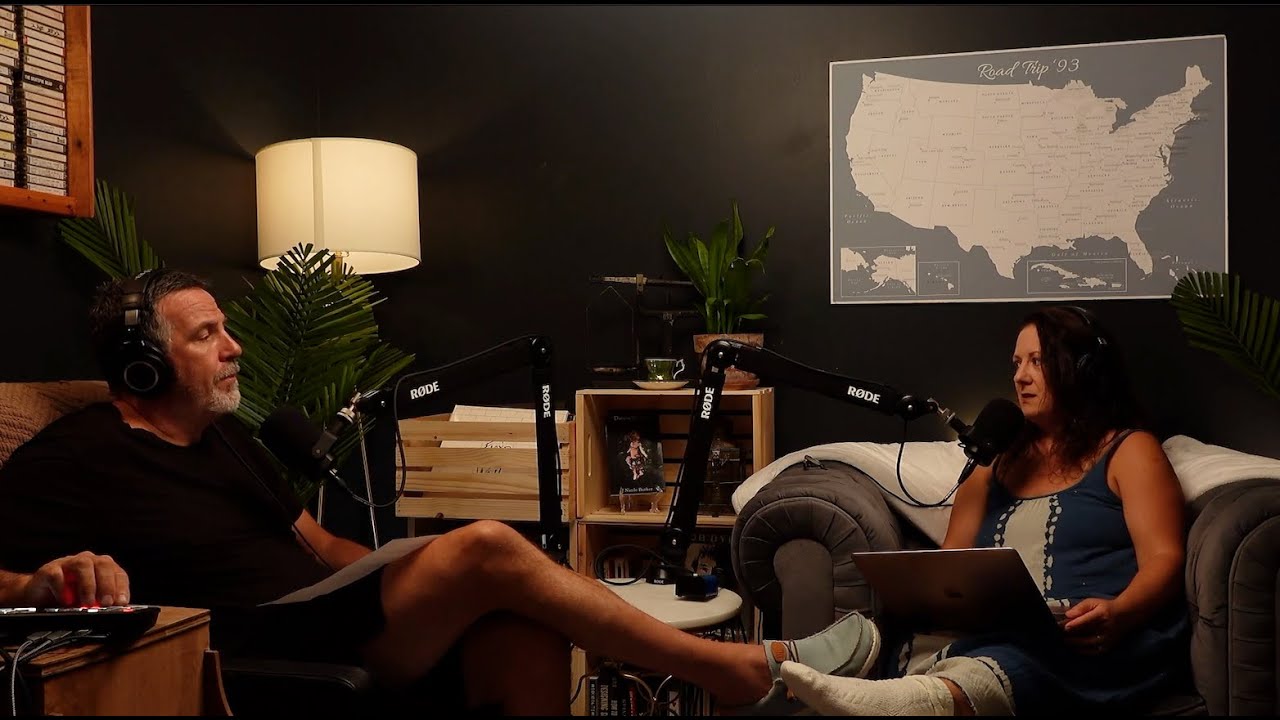
In this episode of Gen X Adulting, the hosts discuss their motivations for giving up alcohol as part of their journey towards a healthier lifestyle. They share personal experiences, the challenges of quitting, and the positive changes they've noticed since making this decision.
[Music] Welcome to Gen X Adulting. Today we are starting a conversation on various changes we've made in our lives to become lead a healthier lifestyle. You know, as we get older, we're Gen Xers, so we're aging, trying to age gracefully and actively. Today we're going to talk about some of the motivation behind some of the changes we've made. And actually we'll start it off with you. What's been some of your motivations for the changes? So I want to be healthy as we head into the second phase of our life. I hope to be a grandma someday and I'd like to be an active grandmother, be very present. We want to continue to do physical activity outside like hiking, traveling, going to the beach, all that type of stuff. I want to still be doing that in my 60s, 70s, 80s. I want to be the 85 year old that's doing yoga. So I knew that when I, around 51, I knew that if I was going to be that person that I was envisioning, that I needed to make some major changes in my life or I wasn't going to make it to 80. Or if I did, I was not going to be healthy. Now that all makes sense. Yeah. So what was the first change you did make? Begrudgingly, I gave up alcohol. That's a good one. Yeah. And what led up to that? So for a few months leading up to the decision, I started doing research, which probably was my first mistake because ignorance is certainly bliss when it comes to drinking alcohol. So I learned a lot and in preparation to give it up, and I use the term give it up because I used alcohol as a coping mechanism. It was my crutch. I, like many people, enjoyed it in celebratory times and dark times. If I'm cooking dinner, I would pour myself a glass of wine. It's such a diverse, good thing to do though, right? Yeah, it was such a part of my life. And
celebratory times and dark times. If I'm cooking dinner, I would pour myself a glass of wine. It's such a diverse, good thing to do though, right? Yeah, it was such a part of my life. And we live in South Florida, so every day is summer. So you feel, you know, every day you have an excuse to have a drink. So I loved it. I loved alcohol. The only negative connotation for me was the hangovers. Yeah, and they get harder as you get older. And they get much harder as you get older. And I was giving up, whereas before I could drink and still get up and get through the day. It became where I was in bed all day, and sometimes I still felt the effects the second day. Yeah. So I was, if I drank, let's say heavily on a Friday, I could give up my entire weekend. Yeah, and that just sucks. So I realized that that was my life was what I was envisioning for myself was not going to happen with everything that I learned. In your research, was there one big thing that had the most impact in a sense to drive you there? Learning about how alcohol affects your brain, that it can lead to dementia and Alzheimer's, that it can lead to brain atrophy, basically, which I didn't know that. Brain atrophy. Yeah. So that was like one of the main things that it's so dehydrating, which can affect your appearance. Yeah. So I mean, as a woman, I obviously care about my appearance. And so not just with your skin, in the vanity way, how you look, but inside, like you're just completely dehydrated. Another thing is that I kind of knew this, but through my research, I confirmed it is that it was completely contributing to anxiety and anxiety. Alcohol stays in your body for about 72 hours. So the effects of alcohol, the anxiety can linger for that many days after you've drank.
contributing to anxiety and anxiety. Alcohol stays in your body for about 72 hours. So the effects of alcohol, the anxiety can linger for that many days after you've drank. That's a trip. Because when you drink, so it has a depressing effect on your body, right? So then your body releases stimulants to counter the depressing effects. So once the effects of alcohol go away, the depressing effects of alcohol go away, you still have all those stimulants in your body. And that causes the anxiety. It also causes you to wake up. I don't know about you, but I always woke up at 3 a.m. after drinking. It's very disruptive to sleep. So disruptive. You never really get into a deep sleep. Yeah. And those stimulants are what's also waking you up. And then you're awake. And I would be awake for like an hour or two with anxiety. I always attributed that to though it's like your body's processing it. And there's something going on metabolically with your sugars and glucose levels. Then or you just have to get up and go to the bathroom. Yeah. Yeah. No. And also I have my little notes here. People are watching. They see just so I wouldn't forget anything. But your your body, you're right. It does go through the liver and processes. But your body is going to process the sugars from the alcohol before anything else. So if you're drinking so far as like losing weight, you're never giving your body a chance to start burning fat really, because it's always working on what the sugars that that you've put into your body. It's going to go for that first. Does that make sense? Yeah. Yeah. It goes for what's readily available, run into your blood. Yeah. So and then of course it causes inflammation. So I would I could tell since I've given it up,
Does that make sense? Yeah. Yeah. It goes for what's readily available, run into your blood. Yeah. So and then of course it causes inflammation. So I would I could tell since I've given it up, I was I was definitely inflamed. I can see that I was more swollen when I was drinking. But of course inflammation is the cause of most diseases. Yeah. So it basically is such a body of work now. So much research is being done on inflammation. So much you're saying I mean, I don't really drink anymore either. Right. Right. And so I think mine is probably more driven on feeling like shit versus not feeling like shit. You know, the hangover stuff, the mental clarity is so much better. The just the common sense of this stuff can't be good for you. No. And it catches up with you and you don't feel as you know, it's just not nearly as much fun as when you're younger. Unfortunately, it's not. Yeah. I guess as we get older and have you found any research on that in terms of as you get older, does your body just not handle it well, or is it anecdotal and we're just spot on anyways? No, there is research about how it affects you as you get older. I I I remember reading about something saying that your body gets so used to alcohol in a certain way that as you get older, even as you try to only maybe have one or two glasses of wine, your body is still going to respond like if you were having 10 drinks. So you could end up feeling hungover, just having one or two glasses of wine as you get older because your body's almost been trained. If that may, I don't know scientifically why I did read about that and explain it. I can't remember what it said, but it's as you get older, your body just gets used to alcohol in a way where it doesn't matter
why I did read about that and explain it. I can't remember what it said, but it's as you get older, your body just gets used to alcohol in a way where it doesn't matter how much you drink, you're going to have that hungover effect. Yeah. It also raises like me and wine, one glass of wine and I'm yeah, feel like shit the next day. Yeah. It also raises cortisol, the stress hormone, which especially for women is you don't want to raise that. So so I learned all these things. And once I learned all of that and more, I just couldn't go. I couldn't go back. I just, I couldn't, it sucked. Like I said, ignorance was bliss. But so there's a ton of bad things in the world, right? In terms of whether it's diet or whatever, what was that same primary motivation to give up alcohol? Then just the research and information you found. So everything I, I knew that everything I wanted to do on my health, new health journey, I call it my midlife health journey. I knew that none of it would be effective to even maybe 50% of its potential. If I was drinking, I feel that alcohol in my body, even if I drank on a Friday, it was still my body Saturday, Sunday, Monday. So if I'm doing all these healthy things, Saturday, Sunday, Monday, the alcohol is negating it. Yeah. I might be getting some of the benefit, but if I was going to take this seriously, drinking was going to negate so much of what I was trying to do. So that's, that's really, once I had all the knowledge, once I learned everything I was going to learn, I knew that I had to stop if I wanted to truly embrace this health journey authentically, like really do it. So it's one of those deals where we walk pretty much every morning, we just work out a few times a week, eat healthy and everything.
authentically, like really do it. So it's one of those deals where we walk pretty much every morning, we just work out a few times a week, eat healthy and everything. So would you say, was it a, how difficult of a choice was that for you to, to make? And were you either scared or nervous going into it type of thing? Well, I mean, I was a habitual drinker. So like the mom style, I'm going to have a glass of wine while I cook type of thing. So the first couple of weeks were challenging. I wouldn't consider you a lush by any stretch of the imagination. Well, no, it's interesting. The first, okay. So the first few weeks were challenging because I was a habitual drinker. So, but full disclosure, I drank in high school. I drank through college probably heavily. Like most people do. When we were in our twenties, we were having kids. So we only socially drank. I only socially drank. I only drink in the house during that time when they were really young. I think I did. You might have, but it wasn't, it was not a lot. It wasn't, it was just social, but we were very social. Well, something happens as you, as you raise the kids and you're in your career and it's easy to be like, all right, I'm going to have a beer or I'm going to have a martini. And it's Tuesday night. And to your point, it becomes a habit. It's like, all right, Tuesday. And then Wednesday. And then you're like, well, well, shit, tomorrow's Thursday. Then you got Friday. So it is easy to get into that, that habit. I think like you're describing. It's then before you know it, your pet years pass and you have been a habitual drinker, not, not the quote unquote drunk or, or maybe that stereotypical type of concept. You know, it's not like we're going down to cheers
years pass and you have been a habitual drinker, not, not the quote unquote drunk or, or maybe that stereotypical type of concept. You know, it's not like we're going down to cheers and walk in and say, Hey, Nicole, Brian, you know that, not that kind of thing, but you definitely use the gen X reference there. There you go. I think that, that it's incredibly easy to incorporate alcohol into your daily life. It's society makes it so easy. It's more normal to everywhere you go that you watch the super bowl, you're bombarded with ads or whatever. Yeah. Especially in Florida, like you mentioned, it's more normal to drink than not to drink. So, okay. So through our twenties, I was just drinking socially. Uh, my dad died when I was 32. And I definitely started using drinking as a coping mechanism for that. So I'd say that I was drinking a lot probably daily then. And when I'm say drinking, it could be like one drink a day. I'm not, I'm not getting drunk every day, one or two drinks a day. So it's fully functional, functional. Drink too. It's, do you mean I'm having a stiff Martini or I'm having a glass of wine or something along those lines maybe depends on the day. It varied. It varied. So, um, and then, um, we popped up pregnant when I was 39, 38. Um, and we ended up having a baby and a middle schooler and a high schooler. So this was now into our forties. And I would say that that's when things got really crazy in our lives. And we were drinking. Yeah. We were drinking Martini's almost daily. There was another, another phase there too, for me at least was, I love microbears. I love IPAs and total wine came to town. That's such a good selection. So I remember going and getting, I don't know, five or six different IPA styles
too, for me at least was, I love microbears. I love IPAs and total wine came to town. That's such a good selection. So I remember going and getting, I don't know, five or six different IPA styles and drinking them over the next few days. Yeah. I think that that's all part of that whole period. It's just that cultural thing. Yeah. That period in our forties, especially, but yeah, in our thirties too, but really in our forties, I think for me personally, I drank the heaviest in my forties, which was probably the worst thing I could have done because I came down with, I got Hashimoto's thyroid disease around that time. I was perimenopausal without realizing it. And then I'm drinking every day. So once you stopped, did you notice anything either physiologically or psychologically or, or some of those big changes? There has to be changes, right? And how you feel, how you think, what do you think of that? Yeah. So I immediately slept better. Like that was immediate. I think that's what I was going to say when people say, what do you feel first that you sleep better? You actually get sleep because when you're drinking, you're really never getting into a deep sleep. You're never getting a restful sleep. So the alcohol just doesn't allow it. So it was probably the first time in years that I'd gotten a really good sleep. Cause like I said, even on nights, I didn't drink. It was still in my system. I, my bloating went down. I was still dealing with bloating. I'm still dealing with bloating because of menopause now, but I was perimenopausal when I gave this up and I, and thyroid disease, both those can cause bloating. Also the alcohol had wrecked my gut, not just the alcohol food, just not taking care of myself. I'm still
when I gave this up and I, and thyroid disease, both those can cause bloating. Also the alcohol had wrecked my gut, not just the alcohol food, just not taking care of myself. I'm still in the process of healing my gut. So there's a lot of research these days on your gut biome. Yes. And the impact of alcohol on it. Yeah. It does. Oh, right. Well, well researched. It just destroys it. It destroys it. Yeah. This is the way I look at it. I feel that for a good 10 years of my life, maybe longer, I wrecked my gut completely and that I've been on this healing gut journey now for almost about a year and a half, almost two years. And I expect it to take even long, a little longer. I, I took years and years of wrecking it. It's going to take some time to heal it completely, but the bloating, some bloating went down. Um, I wasn't as swollen because the inflammation came down. So I was not as swollen. Um, I really saw that in my face. I was really, I was hydrated. I had people that would say, oh my gosh, your skin is glowing. And I hadn't done anything different except I had it stopped drinking and I was hydrated. It's amazing what being hydrated does. Yeah. Yeah. It solves so many things. I would say to anyone listening, if you have something going on, make sure you're hydrated. Cause a lot of times that will solve things like headache, tired, hungry, irritable, just make sure you're hydrated. Cause it's interesting being hydrated 24 seven. I had not been hydrated consistently for a long, long time. A good part of my life. Yeah. So just giving my body that, that hydration, it's addicting now to be hydrated. Like I don't go anywhere without my Stanley or Stanley dupe. And I usually have a cup of tea in my hand or my coffee. I,
that, that hydration, it's addicting now to be hydrated. Like I don't go anywhere without my Stanley or Stanley dupe. And I usually have a cup of tea in my hand or my coffee. I, I leave the house with multiple cups of things like most women and I'm drinking in the car. I'm, it goes around when I walk around the house, I have something in my hand. It's just, I constantly have something to drink. I think too, what you're describing is just the whole, with the gut biome, hydration, the alcohol just really just wrecks havoc on your body, on all your systems, essential nervous system, your auto immune system, your vascular system, everything basically. Yeah. And as, and I had a lot more energy, so I, it allowed, it gave me the energy to exercise more and I was getting so much more out of exercising because I would, I would exercise hungover in the past. I'd go on a good run, hungover. To quote unquote, sweat it out. That's a thing. Yeah. But I, I now know I wasn't getting nearly the benefits now that I'm getting the benefits. I now know I had, I put my body in a state of fight or flight for years with this, with the alcohol in my body was always like, what's going, what are we doing? What are we doing? It just never knew what was going on. Cause I was constantly shocking it with alcohol, which, you know, depressing it and then it's fighting the depressants. And then, you know, it's like, it's digesting the sugars and it's, everything was so out of whack. It's such a cycle. Cause I can speak for myself in terms of, I don't really drink nearly as much as I used to either. I don't, you've probably been more disciplined, but I could probably count on both my hands so many times I've drank this year. Um, but what, what I've noticed is you
used to either. I don't, you've probably been more disciplined, but I could probably count on both my hands so many times I've drank this year. Um, but what, what I've noticed is you get into a cycle, right? If you drink and then the next day you're like, it's kind of the hair of the dog concept. It's like, and I kind of have this craving now and it's to get that sugar back in you. Yeah. You get the, the, the alcohol back in you. Yeah. Right. And well, I, yeah, that's the cycle of carbohydrates too. 100%. Yeah. I mean, empty calories, empty carbs. It just makes you want more. Yeah. You know, it, and you're finding that. So same with alcohol, like if you eat a bag of chips or pizza or something, the next day you want that. Let's lay off the pizza. But as I had more energy and I had more time because in the past I would, my day would kind of stop when I would make my drink or wine. Cause I was re quote unquote relaxing. So I would, that's what I would do. Like drinking became a real verb. Like I'm drinking. So that's what I'm doing. So I'm doing, I'm doing nothing else. Would you say it was, I, you know, it's a curious thing. The motivation I guess would be for you. Is it more of, of I'm relaxing and I'm escaping and I'm taking an edge off or what's the, for me, I like, I like alcohol cause I like the escape. There's nothing in the world that lets you shut off your mind. Then, you know, a nice stiff martini and some music. Yeah. And that's like, to me, that's almost like, all right, I'm going to my, my happy spot. Yeah. I think for you, especially because you're one of those people and I'm sure there's people that can relate to this, you struggle shutting your mind off. Your mind is you have a very curious mind and it never stops. So for you,
people and I'm sure there's people that can relate to this, you struggle shutting your mind off. Your mind is you have a very curious mind and it never stops. So for you, it really served a purpose of shut giving your mind a chance to relax. There's other ways to do that, but that was the quickest and easiest way for you. But other things, other substances don't do that. I don't even mean other substances. I mean like meditation, yoga, you know, but even, but I think even for you, I just think you have one of those minds. That's just really, yeah, it's an interesting concept. That's really hard for you. It would be a new skill to learn to learn how to shut off your mind. Totally different topic and not going to go down a rabbit hole, but I found that solace, that escape in cold plunging. Yes. Getting in there. And once I survived that first 20 to 30 seconds, I actually am able to shut my mind off. That's an amazing thing. Yeah. I'm still kind of sorting that out. It's an amazing thing. Yeah. Yeah. That's exciting. Yeah. I, I noticed it. The past two days where I get in and it's like, okay, I'm just going to breathe and I'm just going to breathe. I'm going to focus on the sensations that are running through my fingers and my legs and how cold it is and all of that. It's a trip. I'm excited for you because there's very, very few things that have worked. Well, alcohol was it, I think. It was the only thing. Yeah. To be honest. So, so for me, you asked, what was my motivation? So, um, relaxation for sure. But in general, it was a coping mechanism. So like I said before, I had more energy and I had more time because that time when I would make that drink and then that's what I did the rest of the night,
was a coping mechanism. So like I said before, I had more energy and I had more time because that time when I would make that drink and then that's what I did the rest of the night, I wasn't making that drink. So now I have all this time on my hand, not on my hands are still stuff I'm always doing. Meaning I wasn't, I wasn't escaping, I guess that's yeah. So it wasn't escaping. It's a, yes. Energy really leads to time. Yes. Right. We've talked a little bit about that. I think just casually about it, but when you aren't drinking and you don't feel like shit, you now have this motivation to go and, and maybe go on a walk or go on a hike or go down to the beach or whatever it might be. Right. And you're just recapturing time lost in some respects. A significant amount of time was given over to alcohol in my life. It will be one of my regrets. You know, there's, there, I think it's okay to have regrets to talk about them. That's one of my regrets in life. I don't have many, but now that I've stepped away, if I could go back, I would absolutely change my relationship with alcohol. I will say this. I do believe I started using it as a coping mechanism in high school because of my stuff going on in my childhood through college, in addition to social life. And so now, now, once I stopped, I used it to deal with my dad's death, all that. Once I stopped, then you have to face all those things you were running away from. That's a whole nother aspect of giving up drinking that a lot of people don't talk about is I kind of was smacked in the face with a lot of thoughts, a lot of feelings, um, and a lot to unpack. And it was very overwhelming because I couldn't turn to alcohol when I started to feel all the things I had to feel all the things.
with a lot of thoughts, a lot of feelings, um, and a lot to unpack. And it was very overwhelming because I couldn't turn to alcohol when I started to feel all the things I had to feel all the things. So I went through months of feeling all the things. And that was a shock to my system. It was hard. It was, it was very challenging. Um, I'm still unpacking some stuff, but it allowed me to actually get to know myself authentically and get become a stronger person. It's funny when I'm, what I'm laughing at is we were talking about this on our walk the other day, how you said you started drinking in high school. And I was like, Hmm, you're a late bloomer. It, because we, I don't remember, I had older friends and we would sneak beers or like Boone's farm wine, right? Some shitty brandy. And, and, but we weren't doing it to escape or just doing it to be kids of the eighties, you know, in, in that kind of thing. And you're hanging out with older kids. And so it wasn't a, an escape per se. So it's more of a party. Yeah. But then I think as you get older and your life is happening and you know, you kind of fall into some of the things we were just talking about. Well, and I think for you, you had a very different childhood than me. So you didn't really have anything to run away from or escape from. I think there's a lot of people that can relate to that experience where it was like, oh, I'm not going to do that. I'm not going to do that. But I think that's a really interesting thing. I think our kids, for our kids, it was when they drank our older two drink in high school. We know that our youngest is about to go in high school and into high school. And I know at some point he will drink. We're realistic. I don't think they were escaping anything
youngest is about to go in high school and into high school. And I know at some point he will drink. We're realistic. I don't think they were escaping anything for them. I think it's social. I hope not. You know, it kind of brings up a good point. Um, not drinking. How has that affected your social life when you, you know, not just between you and I don't think we have much of a social life, but you know, when you girls night out or, you know, going to lunch with some of those types of things. Okay. So I never realized how much alcohol was part of the human social experience. The fabric, the fabric of the world. Until I stopped drinking. And then I, it was a trip. It was really a trip to realize it's everywhere. Birthdays, parties, celebrations, funerals, um, girls night out. It's it ever, everything. You're going to go to the beach, bring bottle wine. You're going to go on a picnic, bring a bottle of wine. You know, and you sneak wine into youth sporting events. You're watching your kid play. Oh my God. I think that was a big one for me to like, this is crazy. Everybody on the sideline here. Oh my gosh. I was drinking. I would bring the whiskey, the whiskey, with the little, uh, clear shot glass. Yeah. And it was, it's all, it was all wonderful and so much fun at Halloween. I mean, we would, I can't, I can't think of anything where alcohol every holiday. Um, so at first it was a trip. I'm very blessed. I love my girlfriends. They're the best. And they, it was like, it didn't even matter if I was drinking or not, you know, they didn't bother anybody. Um, I've noticed that too. And it almost becomes, you go somewhere, everybody's drinking. You're like, no, I'll take an Iced tea. Yeah. No one cares. No one gives a shit really.
I've noticed that too. And it almost becomes, you go somewhere, everybody's drinking. You're like, no, I'll take an Iced tea. Yeah. No one cares. No one gives a shit really. Maybe it's cause of our age. It probably is good. Yeah. I think it's our age. Cause I know for my, like my girlfriends also do sometimes abstain. So I think it was, you know, but I think for like our kids age, if they were to try to not drink or when they do, cause I know they have taken breaks, I think it's more awkward when you're their age, you know? Um, so I do, I order mocktails. A lot of restaurants and bars are starting to really catch on, you know, the generation that's really spurring the no alcohol movement is Gen Z. Yeah. I saw something about that. Actually, I read an article about it today, how there it's, it's having a material impact on certain bars or breweries or you know, that industry. It's really interesting. They are so educated and care about their health. And it's, it's, I love it. It's very interesting. It's fascinating. It's forcing restaurants. Yeah. It's forcing restaurants and bars to have a great mocktail menu. And when there isn't one, I have my club soda and either pineapple, with a splash of pineapple, splash or a splash of grapefruit and lime. And I just pound those all night. I can, I don't think I'll ever do the, I'll take a non-alcoholic beer or I'll take an, I'll just have a nice tea. Oh. Or water. I'm not into the whole mocktail or fake beer stuff. If I wasn't gluten free, I would totally have non-alcoholic beer. I love the taste of beer. I miss it. Now sometimes we do get gluten free beer. Yep. And I really, when I do have a drink, I'll sometimes enjoy a gluten free beer, but I would have a non-alcoholic beer. I do. I love beer.
Now sometimes we do get gluten free beer. Yep. And I really, when I do have a drink, I'll sometimes enjoy a gluten free beer, but I would have a non-alcoholic beer. I do. I love beer. So I know you can't love me any more than you do and just cherish me and look up to me any more than you do, but what would you, how do you think marriage or, you giving up alcohol and it has say affected your marriage and your, even your family life, if it's, you know, kind of combined the whole family, you got your marriage and your children. So giving up alcohol affected our marriage so positively in that I think we both ended up having, like we've said, more energy to do more things. So we started exploring more stuff, doing different things we hadn't done before. And I guess being on this health journey together has brought us closer. Um, we've had years of just having a blast drinking. Like we've had so much fun. Um, and I wouldn't necessarily take those times away, but we also had drunken fights. I mean, we definitely got in drunken fights. We got in fights over silly things. Yeah. Stupid shit. Stupid shit that, um, could be just a simple little argument or debate and turn into an all out. Nothing. Just to be clear, nothing physical ever. But, um, just really just, you know, when you're drunk, you just, just nonsense, you know, and emotions come out that are cause you're drunk. Yeah. So I would love to hear stories from people on some, some zingers on that. Yeah. It's just, you know, I honestly, I could see how marriages fall apart. Yeah. I really could because you don't realize that it's not you guys. It's the problem. It's the alcohol. Yeah. That third element you've allowed. It's the third demon. Really? Like the third rail train doc.
that it's not you guys. It's the problem. It's the alcohol. Yeah. That third element you've allowed. It's the third demon. Really? Like the third rail train doc. Yeah. I don't know about train talk, but touch the third rail. Okay. But, you know, if you, if you didn't know better, I could see marriages falling apart and it was all the alcohol. Could see how many do you think have, right? It's statistically, has to be one. I don't know if it's a leading cause I'm sure financial problems are, but alcohol has got to be top five. Yeah, probably. And what's, what's unfortunate is that if the alcohol wasn't there, they potentially could maybe still be married. I don't know. Cause you don't know people, but I could just, I could see how it could destroy marriage. Um, so I guess I, um, I guess I could attest to, I think us not drinking, you eliminate some of that stupid nonsense. So now you're somewhat more grounded. You're not escaping things. So you're more present. You have more energy. You do have more time. And I think for us, it has led to consistently walking in the morning and walking is great. You get a lot of good conversations and yeah, good release. It's good, healthy. Yeah. It's when we solve all the world's problems. 100%. Yeah. Everything is solved. Yes. Um, go down the beach, you know, we're about to go see a concert. We're flying out of town in a couple of days and going to go see a concert out of state. I don't know if not that that alcohol wouldn't have stopped that, but no, but I just think the quality of all of the experiences I, I feel completely present. I feel completely present. And everything I'm doing right now, no matter what we do, I feel I'm there. I'm a hundred percent there and I
all of the experiences I, I feel completely present. I feel completely present. And everything I'm doing right now, no matter what we do, I feel I'm there. I'm a hundred percent there and I remember it all. And, and it's me there. It's not that it's like, I feel like a demon would get inside of me sometimes. And it's like, ah, it's really me in that state. It's not an altered state of myself. Well, what's interesting in saying that it's when you get to where you're going, you're not looking to where's the bar. The bar doesn't exist. Right. You're going to wherever you're going. And there's no concept of a bar where I need to get a beer. Yeah. I need a glass of wine. Yeah. It's, you're kind of the weirdo maybe meandering and looking at other things. I mean, how many things have we done where we're like, okay, let's get a drink or where like you're saying, where's the bar? Or we should bring it with us or how are we going to sneak it in? I mean, even when we bring our kids universal, we know that that one Mexican restaurant, you can get drinks that I know Irish pub and then the Irish pub across from the mummy. Yeah. But he was listening. And when you first walk into islands, you can get a Mexican restaurant on the right and you can get drinks there. Well, the only redeeming, uh, Disney park in my mind is Epcot because you could go around the world and eat all the food and drink all their drinks. Yeah. I mean, and there's nothing, first I just want to be clear. I don't judge anyone for drinking. And there's nothing wrong with that. This is truly talking about my own personal experience, our own personal experience. So, um, as far as you asked about the family, um, so as far as the kids, so the kids witnessed us at times, fighting drunkenly. Um,
personal experience, our own personal experience. So, um, as far as you asked about the family, um, so as far as the kids, so the kids witnessed us at times, fighting drunkenly. Um, and I regret that. And I would say that's another, uh, thing I wish that I could go back and that's a regret. I could go, I wish I could go back and change that. I'm a big believer that I want, uh, that I'm fine with the kids. Seeing us having disagreements, you and I are constantly giving each other shit. We're very sarcastic couple. Um, and sometimes we'll have spats and I'm fine with that. Because I want our daughter to know she has every right to speak her mind. And I want my sons to know that their wife has every right to speak her mind. And I want the children to, I always wanted the kids to witness conflict and resolution. And conflict does not mean isn't bad. And it doesn't mean divorce that married people fight. It's actually, I'm a big believer when you stop having disagreements or when you stop talking, that's the problem. I think one of the biggest things with the say a new found consistent sobriety is you realize I'm never wrong and always right. So it's probably helped in that sense. Absolutely. Yeah. Yeah. I became submissive. That was it. Yeah. Not, not submissive. Just realizing. Yes. That was part of the enlightenment. That's a very good way to put it. And for anyone that's not catching the sarcasm completely, we're not being serious in any way, but, um, so I think I have no issues with arguing. I really don't in front of kids. I mean, as long as it's normal arguing, arguing, but our drunken fights, um, they sometimes were in the midst of that. And I know that that affected them. I know, especially the older two, I would say they don't have a lot of
but our drunken fights, um, they sometimes were in the midst of that. And I know that that affected them. I know, especially the older two, I would say they don't have a lot of adversity in their childhood. You and I have worked really hard to give them as close as we can to the perfect childhood. You and I have two different motivations when it comes to that, which I think we've talked about in other episodes. So I'd say the biggest adversity they had in childhood was that there were a few years where we were drinking and we would argue and it wasn't pretty. And it's just senseless, senseless bullshit. But when you're in middle school and high school, yeah, yeah, it's, it's fucking sucks. Yeah. You know, and you probably wonder are your parents getting divorced? Even though we knew we weren't, but it created instability. And, um, so I do regret that. And, and, and the kids talk to us about it. I mean, it's not like it's the big elephant in the room. We talked about, we have very open communication. I mean, they're fine. Well, we've gone to their, uh, frat parties. Yeah. Oh yeah. We've drank with the kids. So that was, those were isolated incidents, but the kids are totally just so everyone knows kids are totally fine. Um, but I would say that's, it's positively affected the kids probably in that that's not happening. There's no chance of that happening. And I want to be clear. Every time we drank, we didn't fight. It's those rare times we did that it was just like a stupid drunken fight. Yeah. I don't know what, what, why? I know people go through it. I grew up around it. Um, like I remember my aunt and uncle, they were both just raising alcoholics and they were from Jersey city. I won't name them by name. I
know people go through it. I grew up around it. Um, like I remember my aunt and uncle, they were both just raising alcoholics and they were from Jersey city. I won't name them by name. I don't want to upset my mom, but man, they had some good ones. I remember my aunt and they were fighting. They'd been drinking all night. They hadn't slept. And I was sleeping over at my other aunt's and they got in a fight and my aunt was ready to hitchhiker, catch a bus back to Jersey city, but there's no buses where we live. Right. Right. She's hitchhiking and there's no one picking up hitchhikers. Yeah. So yeah. Yeah. It's yeah. So yeah, I think it's for hundreds of years, but it's been going on, you know? Yeah. I don't think you and I ever had anything in public. I think this was always in the house. Yeah, probably. We're not very public. It was really just you stepping out of line, get a couple drinks in you. You step out of line. Yeah. You were, you were a saint. I think I was always, always so saintly. So overall, not drinking. How's that affected say your, your psyche and your worldview we've kind of touched on some things. Yeah. I'd say I'm more content. I'm more at peace. I have more energy. I feel like I've gotten to know myself in my mid, in midlife. I've gotten to know myself better. Um, and I've been able to have a lot of self reflection. I'm proud of myself and that those words never come out of my mouth. All the time, but I am proud of myself because it wasn't easy and it's not easy. I mean, and I don't want to make, so I would say I would characterize myself as I was a functioning alcoholic and it's not easy. I don't want to make this sound easy, especially for people that are struggling with alcoholism or giving it up.
myself as I was a functioning alcoholic and it's not easy. I don't want to make this sound easy, especially for people that are struggling with alcoholism or giving it up. It's not easy to do. And you do still crave a drink. You know, like I would love to be able to pour a drink every night and still have that lifestyle. You still want to have that drink. Well, have you, have you reintroduced? And I know I think, feel like you have, but yeah, no, I, I, I have, let's go back to second. So when you stopped, feels like you might've been this year, right? January 1st, I'm done cold. No, it was January of 2023. Okay. So we're on your year and a half, year and a half into this. So when you first stopped, you went some period of time and I remember there was some milestone event. Right. So I stopped in January and I didn't drink until our daughter graduated in May. Yep. That's right. So that was a decent amount of time. Yep. Then I, so I, I drank at two days of that weekend, like at dinner, the two dinners we had. Um, and then I didn't drink and that was fine. I was fine stopping. It didn't lead me to wanting to drink. And then we were on vacation in July and there was a family reunion and I drank up in Jersey at the family reunion. That's right. Yeah. So I drank at the family reunion and I drank a few other days of that trip. We were with our cousins, your cousin, but my cousin's here. Um, and so I drank, but then stopped. And then I feel like in September I had a drink or two, don't know why stopped. And then, um, September might've been anniversary or something. Yeah, that's probably it. Yeah. So, so have, so this, this actually, almost like a sense, right? This is, this is how I drink. So I, um, I drink special occasions
something. Yeah, that's probably it. Yeah. So, so have, so this, this actually, almost like a sense, right? This is, this is how I drink. So I, um, I drink special occasions and holidays. So there's, unless or if we're out to dinner and I feel like it like the other night we were out to dinner and I had two glasses of wine. And then when we got home, I wanted another glass of wine and I keep non-alcoholic wine in the house in our wine fridge. And I poured myself a non-alcoholic glass, a glass of non-alcoholic red wine, just to have that. I'm big about my glasses. So I like to have things in wine glasses or like, if I put this in the glass, then it feels psychologically, it feels like I'm having a drink. And that, that's a different way. I handled things. So I wasn't hung over. I drank a lot of water. I wasn't dehydrated. I didn't want to drink the next day. So sometimes out to dinner holidays, special occasions. And you, would you say at least I think I know the answer, but I'm curious to hear your response. Would you say you you're pretty guilt free about it? You have a drink. If you had a glass of wine tonight, you're feeling pretty guilt free, or is that kind of the hang with you at all? I don't feel guilty like I'm breaking my streak or that I'm going to go back to drinking regularly. I'm just very conscious of what it could be doing to my health. That's kind of where I'm at. And I get hung up on that. So I try to either only have one or two and counter it with non-alcoholic stuff or with a lot of water or tea. Um, I have overindulged a couple times and gotten drunk. Yeah, I have. You're the accidental. Oh shit. Yeah. I didn't eat enough. Um, and then you just start drinking. I've done it a couple times. I've gotten
couple times and gotten drunk. Yeah, I have. You're the accidental. Oh shit. Yeah. I didn't eat enough. Um, and then you just start drinking. I've done it a couple times. I've gotten drunk. I'd say two times. And, I'm not very much though, right? Not very much. You lose your tolerance. I lost my tolerance to solo. And I was the one night I was just a drunken mess. This hot girl mess. Um, nothing bad happened. Like both times you and I didn't fight. Nothing bad happened. I just, I'm just a, just mess. And I was actually, I think we had some fun with you. I think you did mess around with me. We didn't paint like funny years. No, but you know what? You're gibberish. We had fun with. Yeah. But I was so hungover. Yeah. And that just, those times reminded me, this is why I don't want this. So alcohol is no longer a part of my life. It's something I visit and I've been successful. Yeah. I, I visit it. Yeah. How are you? But many, many people can't do that. So that's why I don't want to like make this seem like, Oh, it's so easy. Yeah. I mean, I have my own thing. I struggle. I also, and we'll talk about this in another episode, but I've suffered from an eating disorder for a good part of my life and still have an interesting relationship with food. So if I was listening to someone that was like, Oh, I just solved my eating disorder, everything's fine. I'd be like, Oh, what a bitch. Like it's not that easy. So nothing's easy. No, but there may be nothing good for you as easy. I know, but there may be people listening that have a harder time with alcohol and are like, she's making it sound so easy. I'm just saying for me, I was able to step away from it and I can visit it, but I understand there are people that can't and I get why they can't.
like, she's making it sound so easy. I'm just saying for me, I was able to step away from it and I can visit it, but I understand there are people that can't and I get why they can't. And I don't know why I can't, I thought I wouldn't be able to. So far I've been fine with that. I've been able to moderately have it in my life, but it's a mental thing. Yeah. I am telling myself, you will not have another drink tomorrow. I don't think about it personally. Do you? Not a ton. Just sometimes there's days or nights where I'm like, I'd love to have a glass of wine or I'd love to have them. I'm, cause you know, gosh, there is nothing like a martini with blue cheese. I want to have one. I know a martini. So, and I don't mean to trigger anyone who's listening to this that might be, um, not drinking, but for me, those are those moments. And I just have to think, no, cause I have to think, okay, how are you going to feel? How does it feel afterwards? And it's a lot of, that's where I go really, because I don't, I have, you know, I kind of ask you about your psyche, but for me, I don't like to drink because I don't want to feel like shit for the next three days. Yeah. And I don't like that, that, uh, what's the right word persistent. I don't want it stuck with me. Yeah. And I want to be able to wake up and feel good. Yeah. And I hate that that's that. So it's not guilt, but it's regret. You have a drink or two and you wake up feeling like shit. And then you're, it lingers till the next night, the next day. Oh, easily. I hate that. Well, it's a toxin. It is. It's a poison. It's a poison. And it's, it's a poison and toxin that your body is, as soon as it goes in your body, your body's ready to fight. Yeah. So your body, you know, it's, it's,
It's a poison. And it's, it's a poison and toxin that your body is, as soon as it goes in your body, your body's ready to fight. Yeah. So your body, you know, it's, it's, you're not supposed to feel, you feel good for that moment and then you're just ravaged. So, yeah, you know, the, uh, we didn't touch on it, but for me, I one of my primary drivers for not wanting to drink besides not wanting to feel shit for three days. But I, I believe, I know this, it's a fact alcohol feeds cancer. So I consider it my, my cancer prevention program or part of it, right? Limiting refined sugars, limiting alcohol. The cancer loves, loves the bad stuff. It does. Now I won't give up pizza and I won't give up ice cream, but alcohol and everything else is pretty much off the table. Yeah. Health wise, you know? Yeah. No, it's, it, definitely that that goes along with the, um, the part of inflammation, just all of that stuff. So it is, it is, it is preventative care, you know, to have a healthy relate, to have no relationship with alcohol or a healthy relationship, relationship with alcohol. But I will tell you it, it's insidious. It it's such a part of our society. It's such a part of mom life. And there were so many years where the mommy drinking wine thing was so prevalent and it may still be, I'm not in the, the young mom community, obviously. Um, and it's so accepting, totally. But I think it creates a lot of functioning alcoholic women who are already under so much pressure raising children, usually working, usually working, um, and then coming home, taking care of their children, taking care of their house. There's just so much that a woman carries and it's also one of the reasons she may drink. Um, but then the drinking also
taking care of their children, taking care of their house. There's just so much that a woman carries and it's also one of the reasons she may drink. Um, but then the drinking also just deteriorates so much of her health and her psyche. So it's a vicious cycle. And that mommy wine culture temporarily helps things, but it really makes it worse. It's tough cause it's also a social thing. So it's a social support system to be around other women and other moms. It's a tough one. It's a tough one. You know, it's, it's easy to just down bottles of wine when you're in that situation. So what would you say your overall perspective or relationship is at this point of view of, of alcohol? I mean, I, I just, I have, don't judge anyone for drinking. Um, alcohol, like I said, is something I visit. I hope my kids have a much better relationship with alcohol than I did or you I hope that they come to these discoveries much earlier in their life. Um, you're Irish. I'm Armenian. Both of our cultures drink. Um, so you know, and we're very celebratory. And when we throw parties or social events, it's one of the first things we buy and we always will. We have a bar in our house and I'm not getting rid of that because that's a social center of our home. So I'm not altering everything just because of these health choices we've made, but I'm just hoping that they can be adapted in just a healthier way that that continues. I think it will. And I hope that I hope for the kids that they, that they adapt to a healthier, I mean, not that they have issues now, they don't. So, you know, I hope that it stays that way. Um, but again, like I said, I think the younger generation Gen Z is way ahead of the game. Then, um, Gen X and millennials when it comes to alcohol,
hope that it stays that way. Um, but again, like I said, I think the younger generation Gen Z is way ahead of the game. Then, um, Gen X and millennials when it comes to alcohol, I'm, I'm so surprised. Well, they are in on a few fronts. Um, alcohol, smoking. Yeah. Well, the vaping shit drives me crazy. Yeah. I would say millennials were the ones who really got rid of the smoking. I thought, but maybe it's Jen. I lose track of it. It might be Gen Z, but, um, no, it might be Gen Z, but the vaping. Okay. So that's, that's a big one. That drives me crazy. It's horrible. I'd rather they have cigarettes available than this shit that's coming in from foreign countries with who knows what the hell's in it. Yes. I agree. The fact that it's legal is insane. Yes. It's crazy. I have such an issue with vaping. It's, it's where I draw a hard line with my kids is vaping. Um, and once you do it, it's, it's, I think it's harder to quit than cigarettes and that's saying a lot because it's hard to quit cigarettes. It's incredibly hard to quit, but I think it's harder to quit vaping. It seems like it's so accepted and you can do it everywhere. Yeah. That's the problem. So I think Gen Z does have that battle, but at least they're countering it with, um, and I'm just, I never thought that I never really thought about it. You know, that a general whole generation changing their outlook on alcohol. So what's, what's kind of interesting. It's a whole different topic probably, but alcohol and smoking is less prevalent, but now there's more, well now shit, you know, pots legal in most states, if not, uh, recreationally it's it's a medically legal, but now there's a lot of, you know, there's this, this undercurrent of psychedelics too for medicinal purposes. Microdosing not even
recreationally it's it's a medically legal, but now there's a lot of, you know, there's this, this undercurrent of psychedelics too for medicinal purposes. Microdosing not even medicinally talking about it. Medicinally is the gateway to making it recreationally acceptable. Yes. And I'm fine with that. I think far better choices in microdosing and psychedelics than the in vape, even alcohol, quite frankly. No, I know there's the vaping thing. Yeah. No, it's interesting how it's expanded. So, and maybe that means Gen Z is doing more, um, like you're saying more, more drugs, you know, more like, you know, more record, more microdosing or yeah. I think they call it weed. It's so funny. It's come full circle because it was weed back in like the sixties and seventies. And then we were, we call it pot and I think they call it weed. Yeah. I'm still predisposed to calling it weed. I think so. Yeah. I struggle to call it cannabis. Hey, let's go score some cannabis. I don't know anybody who calls it that. Let's go score some weed. Let's go get some buds. No one says buds except Gen X. I think that's definitely just us. They would say that, but yeah. So Scooby snacks. Yeah. No, no one says that. No, don't say that. I mean, I, I think overall this has just been, it's such a positive thing for both of us. And at least I can say for me, um, and we're going to talk more about the other healthy changes that I made that I made, those healthy changes would not have occurred if I hadn't given a bowel call. If we hadn't made that change, you know, I do think that in that sense, it's very foundational because if you stop drinking, you, everything we talked about, you have more energy, you're a president blah, blah, blah. Yeah. That lets you get into doing other things,
foundational because if you stop drinking, you, everything we talked about, you have more energy, you're a president blah, blah, blah. Yeah. That lets you get into doing other things, whether it's hiking or walking or biking or lifting weights or meditating, cold plunging. That's a whole, whole new world. Yeah. That's good stuff. Gardening. Gardening. Yeah. Working in the yard, landscaping all this. Yeah. All the things. And it's not saying that people don't do that and drink. I think maybe. I mean, way was a raging drinker, right? And then he killed himself. Yeah. So I wrote some classics and sailed the Caribbean and caught some huge fish. Yeah. Yeah. No. I'm people are very functional. It's just for me. I couldn't be anymore. And again, it had to do with how do I see myself in the future, the future me. So me now is trying to help future me. Yeah. And I'm hoping future me looks back and says, Oh, I'm so glad that you did that. So I'm really, it's a forward thinking attitude. And maybe when you hit your fifties, you really start forward thinking, you know, you face your mortality and all that, but maybe you start forward thinking more. The first part of your life is just, you're just doing, and then maybe once you hit your fifties midlife, you're looking ahead and you're, you know, to your point there, look ahead. And do you want to, I, if I want to die quickly, whatever that is, I want it to be fast. I don't want it to be some cancer. It's just grinding on me. Right. Cause I've seen that at the end of that show, we've all been to that. And you kind of want to go out, I think fast. So you want to be old and die fast. Yeah. I just don't want to have a bunch of ailments, right? And you want to keep, you want to have all your faculties.
And you kind of want to go out, I think fast. So you want to be old and die fast. Yeah. I just don't want to have a bunch of ailments, right? And you want to keep, you want to have all your faculties. You want to be able to walk up steps and down steps and maybe go up a hill. You want to be able to pick up your grandkids, you know, walk the dog, all that stuff and play basketball with them. You've got to, in order to do that, you know, and this is a whole, you know, I think we'll kind of get into these topics. Um, but you do need to do like, you have to lift weights or resistance training. It doesn't have to be the weights, but it's got to be stressing your muscles. You've got to stay active. You've got to stay limber, be able to stretch, whatever those things are, whatever it keeps you, but again, you got to be able to move. But again, um, I personally, I would not have, uh, tackled and stuck with any type of workout regimen. If I was still drinking. Yeah, I wouldn't have. Yeah. Yeah. I just know that now some people can't, I couldn't, you do that when you're in your twenties and thirties. Sure. Yeah. In college, I could get up and go for a run and I wasn't bloated. I wasn't feeling like crap. I was, you know, uh, but as you get older, Tuesday morning, yeah, it was normal. So, so that's the story of the first, the first thing that the first change I made. And I think we're going to do an, and the next episode on a whole bunch of other health changes that we made, you know, whatever form or platform you're listening to this on, you know, shoot us what you guys are doing too. We're interested to hear what other people might be doing. Absolutely. Yeah. Always. All right. Cool. Thank you. Thank you. Bye bye.