

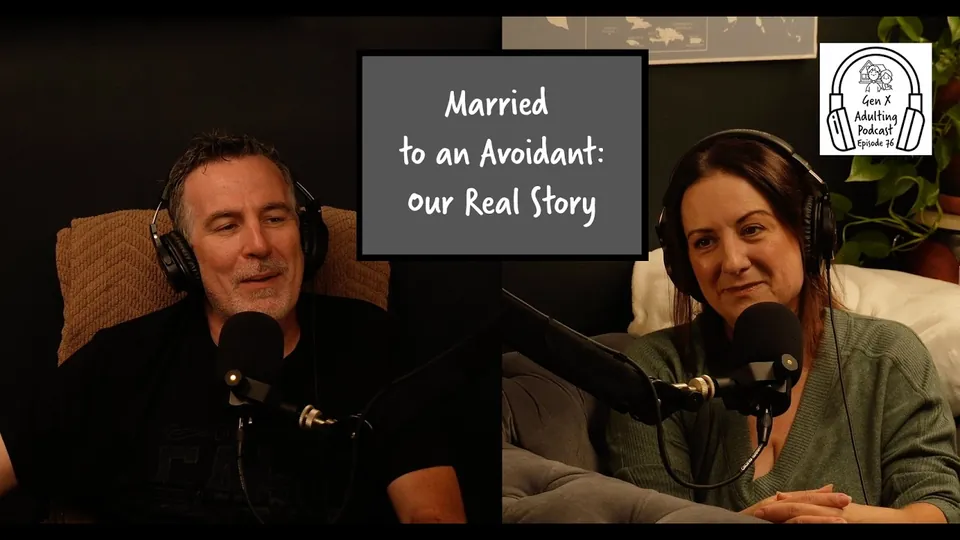
Married to an Avoidant: Our Real Story - Episode 76
Episode Summary
In Episode 76 of the GenX Adulting Podcast, hosts Brian and Nicole discuss the complexities of being in a relationship with an avoidant partner. They explore the emotional challenges faced by non-avoidant partners, particularly women, and share insights from listener comments about their experiences with avoidant behavior.
Key Takeaways
- Avoidant partners often struggle with emotional intimacy and conflict resolution.
- Healthy communication involves acknowledging feelings and returning to discussions after a cooling-off period.
- Avoidance can lead to feelings of abandonment and resentment in the non-avoidant partner.
- Many women feel isolated and devalued in relationships with avoidant partners.
- Setting boundaries is crucial for non-avoidant partners to protect their emotional well-being.
- Self-awareness and emotional development are key for both partners to improve their relationship dynamics.
- Avoidant behavior can stem from a lack of emotional tools and conflict resolution skills.
Frequently Asked Questions
What does it mean to be in a relationship with an avoidant partner?
Being in a relationship with an avoidant partner often involves navigating emotional distance and difficulty in resolving conflicts, which can lead to feelings of abandonment and resentment for the non-avoidant partner.
How can I communicate effectively with an avoidant partner?
Effective communication with an avoidant partner may involve giving them space to process their feelings and agreeing on a time to revisit the conversation, ensuring that both partners feel heard and respected.
What are the signs of avoidant behavior in a partner?
Signs of avoidant behavior can include dismissing discussions about feelings, withdrawing during conflicts, and failing to return to important conversations, which can leave the other partner feeling isolated.
How can I set boundaries with an avoidant partner?
Setting boundaries with an avoidant partner involves clearly communicating what behaviors are unacceptable and being consistent in enforcing those boundaries to protect your emotional health.
Why do avoidant partners struggle with emotional intimacy?
Avoidant partners often struggle with emotional intimacy due to a lack of emotional tools and fear of vulnerability, which can stem from their upbringing and past experiences.
What impact does avoidant behavior have on relationships?
Avoidant behavior can lead to significant emotional distress for the non-avoidant partner, resulting in feelings of loneliness, confusion, and resentment over time.
Can avoidant behavior change over time?
Yes, with self-awareness, emotional development, and effective communication, both partners can work towards improving their relationship dynamics and reducing avoidant behaviors.
Part of these Topics: Dating & Modern Relationships
Description
Married to an Avoidant: The Parts Nobody Talks About
When conflict arises, why does he deflect, redirect, dismiss and avoid? After a clip explaining what happens to a woman when her partner is avoidant struck a nerve and took off online, we decided to go all in on what it's really like to love, and to be, an avoidant partner.
This is the follow-up to our popular Attachment Styles Episode 32, and this time it's boots-on-the-ground research: Nicole reads real comments from women who've been through the push-pull, while Brian offers the rare, candid male perspective as someone who admits he's historically been avoidant and has worked to change. Together we unpack the classic anxious-avoidant trap (Nicole's former anxious style meets Brian's avoidance), why avoidants pull away and shut down, and the deactivating "hot and cold" patterns that leave partners confused and exhausted.
We dig into the roots of it all: childhood, a lack of any modeling for conflict resolution, and trauma that turns avoidance into a defense mechanism, and get honest about the GenX angle that asks, are the men of our generation especially wired to suppress emotion and dodge conflict? Most importantly, we talk about the way forward: the difference between avoidance and healthy "I need time, let's come back to this" communication, firm boundaries with real consequences, self-awareness, and whether an avoidant can actually grow toward secure attachment.
If you've ever felt like you and your partner were speaking two different emotional languages, this one's for you.
━━━━━━━━━━━━━━━━━━━━━━━
📄 Full transcript of this episode:
https://genxadultingpodcast.com/transcripts/podcasts/genx-adulting-podcast/episodes/episode-76
🔎 Search every episode transcript:
https://genxadultingpodcast.com/transcripts
🌐 GenX Adulting Podcast:
https://genxadultingpodcast.com
━━━━━━━━━━━━━━━━━━━━━━━
🔔 Subscribe for more Real People. Real Stories. Real Conversations. From Every Generation.
Tags
#genxadulting #avoidantattachmentstyle #anxiousavoidanttrap #dismissiveavoidant #whyavoidantspullaway #datinganavoidant #attachmentstylesexplained #pushpullrelationship #emotionalunavailability #genxrelationships #healingavoidantattachment #secureattachment #avoidantpartner #anxiousattachment #relationshipadvice #genxwomen #womenshealth #mentalhealth