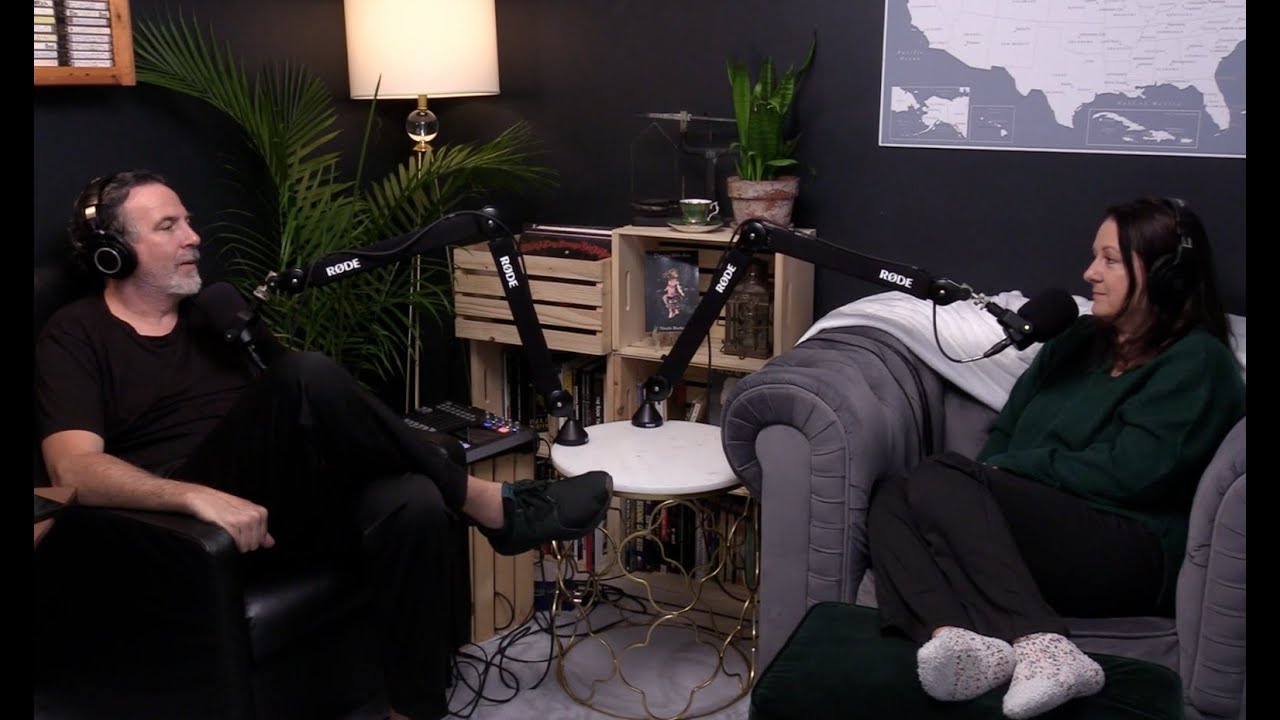
In the first episode, Brian and Nicole introduce themselves by sharing their contrasting childhood experiences as quintessential Gen Xers. They discuss their family backgrounds, parenting styles, and the impact of their upbringings on their current lives and parenting approaches.
[MUSIC] So in this episode, which is episode one, we're just going to give a little bit of a background of ourselves before we dive into current events, different issues, hot topics, et cetera. So, Brian, do you want to share a little bit about your childhood? Like, I would say that even though you and I were both born in 1971, so that makes I'm 53, Brian will be 53 in a few months. I married an older woman. Yes. So even though we are the quintessential Gen Xers, we each represent kind of the two different backgrounds Gen Xers came from. Our backgrounds could not be more polar opposite. But even so, we still have some common experiences. When we reflect on our childhood, there are some definitely some common experiences we share. Even if our childhoods were the complete opposite. So would you like to start with sharing? Sure, sure. So even geographically, we're polar opposites. I grew up in the East Coast. I grew up about 45 miles outside of New York City in the northwest corner of New Jersey in a little town called Sparta. Sparta is not so it's still probably the same size, but it's probably bigger and more global thinking. Then it then it was when I grew up there. You know, for me, two parents, sister, so we had four of us in the house in the suburbs. I always had a dog, had a large extended family nearby. My mom had six sisters and a brother. They had a total of eight kids and they all live pretty close. So, you know, weekends for us were family parties, birthday parties, just hanging out, barbecues, whatever it would be. What was the what's the word demographic of your family or the. You mean like the. I'm using the wrong word. Our background was Irish and English and kind of mutts. So your so your mom, were they Irish Catholic?
of your family or the. You mean like the. I'm using the wrong word. Our background was Irish and English and kind of mutts. So your so your mom, were they Irish Catholic? Yeah, yeah, my. You know, my mom's and her family, her sisters and brother, they grew up in Hoboken, New Jersey. Yeah, they grew up poor in Hoboken, New Jersey, as Irish immigrants, second generation, not first. Her parents didn't come over, but I'm sure her grandparents did. So, yeah, you know, she's Irish Catholic. And then your dad grew up in West Virginia. That's from West Virginia. My mom grew up in Hoboken, Hoboken, Hoboken today. If you go to Hoboken today, it's it's you know, it's very wealthy. It's the up ease. Yes. A lot of folks that work in New York. Very different. You know, the cake bosses there now. Right. I think so. Well, yeah, I don't know. But he was there for years. Yeah, my dad grew up in a little town called Granville, West Virginia, which is across the river from Morgantown where West Virginia University is. Yeah. He went to the Navy after high school. And for him, fortunately, there were no active wars at the time. He was there between, I would say, the Korean War and Vietnam. So very lucky. Traveled the world. You know, got to see the world basically. They met in Hoboken, I think, at a dance. Well, I've had my mom on, right? Yes. She can tell us. She can tell the story. But so they met and then they didn't want to raise their children in Hoboken at the time. And so they went out into the country basically in New Jersey. I mean, it's a ton of farmland and it's still very rural, even though it's building up because so many people are moving out there. And they well, they got married and then they moved out to Sparta and they raised
still very rural, even though it's building up because so many people are moving out there. And they well, they got married and then they moved out to Sparta and they raised you and your sister. Well, they did. My aunt and uncle Sonny first moved to Sparta. My uncle Sonny was the fire chief of the Hoboken Fire Department. And they bought a little plot of land in Sparta and they built a house there. And then probably, you know, within five years, maybe my parents then moved to Sparta. So I feel like if I remember correctly, they moved to Sparta. Was it in like 1958 or was it in the 60s? I thought it was like 1962 ish. Okay. Something like that. Yeah. Maybe even 66 because I think my sister was born in what, 68 or seven? Like that 67, I think. Yeah. So I think it was 65, 66 ish somewhere around there. Right. And so you had, they stayed married. You had aunts and uncles, cousins, a whole bunch of family living in the small town of Sparta. And so you really had this traditional, you know, conventional upbringing where your parents are home. When you were young, your mom, she didn't work, right? When you were young? No, she didn't work until I think I was in eighth grade, she went back to work. Okay. So yeah, no, I 100%. I grew up in the, very similar to how we've raised our kids, but dad worked. Mom didn't. Mom was home raising us. I remember coming home from school and having peanut butter and jelly sandwiches. You know, she'd make them obviously. Yeah. Or grilled cheese, watching cartoons after school, getting some food in my belly, then going and playing. Right. And if I played within the neighborhood, it was, I'm outside and just out there. But if I was going to a friend's house, she would drive me there. Right. So yeah, she was home
Right. And if I played within the neighborhood, it was, I'm outside and just out there. But if I was going to a friend's house, she would drive me there. Right. So yeah, she was home till I went to eighth grade. Right. So, but did you, do you feel that you still, um, experienced a lot of this, of the same Gen X upbringing that some of the more feral people from that generation experience that didn't have. What do you mean by feral? Meaning, um, just go outside and you come back when the lights come on. Oh, a hundred percent. A hundred percent. You know, a couple of the rules I think we had was be home by the time the lights come on. Every Sunday, we had to be home for dinner at like four o'clock. So we'd always have dinner on Sundays. Um, you know, when you're younger, there's tighter rules. Right. And as you get a little older, the boundaries get a much broader, much wider. So, um, I grew up near Lake Mohawk, which is the centerpiece Lake in Sparta. And we would walk down to the lake and go fishing and then walk home. And sometimes if, you know, when you have sleepovers, we'd stay up all night and go fishing at like three in the morning. Right. It's still dark out. Um, so it was, yeah, it was pretty, um, the, the, that Generation X, you know, our, our upbringings and that Generation is, is, um, probably very similar in, in that we were all, that was the parenting style. Right. Yes. You just, you were out, but for in different ways. So, so you had this more traditional upbringing. Mine is the exact opposite. So I am more one of the first kids of divorce parents, my parents divorced when I was two and a half. And my mom was a single mom. We started out, I was born in Michigan, but then we moved to Oregon where she's from.
divorce parents, my parents divorced when I was two and a half. And my mom was a single mom. We started out, I was born in Michigan, but then we moved to Oregon where she's from. And I grew up, um, in Portland, Oregon. And that I would say that I was a daycare kid. You know, my mom had to go to work. So I was in daycare from the time I was in preschool all the way through until I was old enough. Well, really I was, I was in preschool until a third grade. So I was in daycare. I mean, I'm sorry. I was in daycare from preschool through second grade. And then in third grade is when I became a latchkey kid, which is a little grade third grade. So, and that is a, it's a legit term. We had keys and we wore them around our neck. I don't know if everybody wore theirs around their neck. I have a feeling I kept mine in my backpack throughout school. And then on the way home on the bus, I put it around my neck, but I thought that was the term to you told me that right now it's a legit key. I had a key. So we hit our keys if, um, yeah, probably maybe once it was eighth grade, right? And there was, I'm going home to an empty house. The key was hidden somewhere like under the doormat or whatever. Right. I don't know about, I don't know. Cause I had a key. So I don't know if my mom had a key as well, but I had a key. I don't think so because I remember in, um, I think it was, I can't remember. I want to say fifth grade. I got locked out and I was, I was so upset because I couldn't get in. So we didn't have a, we didn't have a key had hidden, but in third grade is when I started. So, well, first of all, I should backtrack. I hated daycare. I hated daycare there. Daycare was not as common as it is now. Um, it feels like it just really started.
grade is when I started. So, well, first of all, I should backtrack. I hated daycare. I hated daycare there. Daycare was not as common as it is now. Um, it feels like it just really started. It was really starting up because we're the first generation. I think of, uh, of say higher divorce and daycare probably. Yeah, I would say, and I would, yeah. And again, it was, it was fine, but my mom was at work. I was one of the last ones picked up. I hated it. So in third grade, I was able to go home. I would go inside. I'd lock the door behind me. I'd call my mom, let her know I'm home. I'd call my dad, let him know I'm home. He was in Michigan, but I would let him know that was the rule. And then I would, I don't, I don't think I had any homework then. I don't think we had homework in third grade. I don't remember having homework really until maybe sixth grade, but if I had any, I did it. And then I would pick up around the house. I would, you know, do the dishes, get the coffee ready for the next day, any picking up that needed to be done. And then I would go outside and play with the neighborhood kids until my mom came home from work. And that was kind of my life through third grade. We moved a lot. It's another thing because she had remarried. So, and then they got divorced. So I was, I was, let's see, by fourth grade, I'd gone through two divorces. And then, so we moved and I was still the last key kids, still coming home, doing all those things. But then having, you know, as you get older, having regular experiences, I played basketball. I wasn't a huge athlete. Middle school, I ran cross country. I love that. But it's interesting because I'm sure, as I know that your parents were at all your football games,
I wasn't a huge athlete. Middle school, I ran cross country. I love that. But it's interesting because I'm sure, as I know that your parents were at all your football games, baseball games, basketball games. And my mom went to my games, but my dad was never at anything. So when I had a stepdad, he would go, but there were intermittent. It's hilarious when I had a stepdad. Well, because she did remarry again. She was a wild one. She remarried again and he came to some stuff. But then, so there's periods where it's just your mom. And then when she remarries, it's your mom and your stepdad. And then if they get divorced, and they did get divorced again. So I'm a thrice divorce, a kid of three divorces, I guess, is how I'd say it. My parents stayed, they were married, I don't even know how many years, like 40 something years? Oh, yes. Yes, they were into the 40s. Yeah, they'd still be married if my dad was alive. Yes, 100%. So again, opposites, but I was out, not supervised until my mom came home from work. And as a result, I had an empty house too. That's another thing with last key kids. So when I had a boyfriend in sixth grade, he came over to the house. There's lack of supervision. In that capacity, the house is not supervised either. Or at least for you, you had someone supervising the home until eighth grade. But you also had sports so much, so you were going out, going to your practices. You didn't have as much downtime as I did. I had a lot more downtime. No, probably not. Because I played the town sports from whatever age you could do it. Played football in the fall, basketball in the winter, and baseball in the summer. And then actually, having a mom who's home, we had lake memberships. So we'd go down to the lake and go to the
Played football in the fall, basketball in the winter, and baseball in the summer. And then actually, having a mom who's home, we had lake memberships. So we'd go down to the lake and go to the same beach every day, unless it was raining. That was in the summer. Yeah, in the summer, yeah. Yeah. I can't even remember. Oh, I know. When I was younger, in the summers, I would go spend like five weeks at my dad's in Michigan. So I was gone in the summers when I was younger. And then as far as when I got home, I think I just hung out with my friends. I would sleep in and wake up, watch cartoons. So we're also called the MTV generation. And something that's interesting about you and I is that because I lived in a city or outside of a city, we got MTV right when it premiered. Like the day it premiered, I remember coming home from school, watching it the minute it premiered. And I know you guys didn't get it till later. I don't even know when we got it. I feel like maybe eighth grade, ninth grade, something like that. So for me, I want to say it was sixth grade. Well, what's interesting a little-- Or fifth grade, because it was 1980. A little nugget of little trivia, at least this is what we grew up thinking or knowing or learning later, is that Service Electric Cable TV is the oldest cable TV provider in the country. They were the first. And that's who we had our service from. Oh, that's interesting. They were the first and we had like 13 channels or whatever. Then we finally got the upgraded box and then MTV came out and that kind of stuff. Yeah. And they had a monopoly on that whole area for you. They still might. They still might, yeah. But so then I come home from school and watch MTV. I would do my normal stuff, get my snack,
Yeah. And they had a monopoly on that whole area for you. They still might. They still might, yeah. But so then I come home from school and watch MTV. I would do my normal stuff, get my snack, whatever it was, and watch MTV for hours, for hours, because it was such a new phenomenon to be able to see the music, not just listen to it. So if I didn't have anything going on, because I really only played it that fifth, the elementary years I played like rec basketball. And then in middle school I ran cross country. I don't remember anything else. So I had a lot of downtime. I had too much downtime, but I think a lot of us did. And then once, and then I would go over to my friend's house in elementary school and middle school and we would hang out. So we would walk around the neighborhood and do stuff. So I think I'm similar to you in that. I would go out and hang out with my friends. Or I'd go over to their house and we would watch MTV. Like we would do that together. But I think that's similar. I had to be home when my mom came home from work. I think that as far as... You mean like if she was coming home at six you had to be home by 555 type of thing? Yeah. So I think the thing with Gen X is we were unsupervised when we were out of the house. The whole drink from the garden hose, like in the summer. So much of that is true. If you're outside with a bunch of kids, there was no, I'm going to bring my 10 friends into the house to get drinks and snacks. It just wasn't like that. If everyone's thirsty and you're in the middle doing something, if there's a big group, you would grab a hose, turn it on, everybody got a drink. I mean, I experienced that. Where I'm from, I imagine you did as well, being from more of a rural area.
if there's a big group, you would grab a hose, turn it on, everybody got a drink. I mean, I experienced that. Where I'm from, I imagine you did as well, being from more of a rural area. 100% I can taste the taste right now. It's like metallic. No, that rubbery taste. Yeah. Well, I feel like metallic when I think back. That's so interesting. Yeah. To me, it's that rubbery garden hose taste. Yeah. And you all took turns or sprinklers. You would just hook up a cheap ass sprinkler, the hose and run through it for like hours. It was such simple entertainment. We played a ton of Whiffle Ball. We had a pretty cool situation. We had the house behind us. It's like abandoned or something or the people that were there. I think it was abandoned. They were just, I don't know what the deal was, but the backyard was open. It was flat. We'd bring a lawn chair up there as the strikes on. Yeah. We played Whiffle Ball for hours. Well, and I think that's also the difference between a boy and a girl. So I was more social. Like girls would get together and be more social, watch MTV. We did have some girls play with us. Did you? Some of the neighborhood girls. I'm not trying to like say girls in a play with football. I'm just saying that role for us, there wasn't an empty abandoned field because everything I'm in a suburb, you know, and we would walk to seven 11. We would take our money and we'd walk to seven 11. And I remember I would always buy a tangy, big tangy taffy bar, which is kind of like a big, laffy taffy bar now and chocolate. And then we'd sit on the curb on a highway, a fairly decent, busy highway. We'd sit on the curb and watch cars go by and eat all of our candy. I'm sure you had similar situations. We actually, we had the seven 11.
highway, a fairly decent, busy highway. We'd sit on the curb and watch cars go by and eat all of our candy. I'm sure you had similar situations. We actually, we had the seven 11. Yeah. We'd walk up the hill to seven 11. And we buy candy and we're hot dogs, slurpees, right? Slurpees. Yeah. Yeah. We'd actually dumpster dive to see, to get magazines like the playboys. Oh my gosh. They threw away. Yeah. Some of my friends caught on. Cause that was the porn then. Yeah. Yeah. That was porn. Yeah. There wasn't any access to the internet for videos, uh, for porn for boys. It was Playboy, Hustler, Penthouse. There was no internet. Right. There was no internet. But yeah. No, it's your uncle's stash of playboys or somebody's we or Penthouse or whatever. And yes. 100%. That was the porn. But then they caught onto the whole thing. Um, and they, I think they stopped doing it or something. I don't know that that didn't last forever. Well, you used to have to. Okay. So how about this? Did you ever go down to a store and buy cigarettes for a friend, a relative? Um, we actually had the Sparta diner. Okay. And they had the machine you'd put your quarters and then pull the thing and the cigarettes would fall out. But you did it. You were able to stand at that and no one stopped you. 100%. I would go down there. We'd have family parties at my house. And, um, I knew what all my, I know, I still know what all my cousins smoked, right? Whether it's Paul malls or Winstons, Marlboro Reds. Yeah. Um, and I'd go down there because they, we would have parties at the house. Every party. Um, there was poker game. All my cousins, uncles, my dad, they'd all play poker. So they all had changed. They send me down to the diner with their order.
Every party. Um, there was poker game. All my cousins, uncles, my dad, they'd all play poker. So they all had changed. They send me down to the diner with their order. I'd walk down and, um, get everybody their cigarettes. Yeah. And they had the matches sitting there. Um, pretty funny. Cause I was probably, I don't know, 10, 11, 12 ish type of thing. Did you go by yourself? Um, um, no, no, my cousins, um, or like my problem, I don't know if my sister went, um, but definitely like cousins or friends. Yeah. Yeah. No, my, so the smoking thing is interesting, right? Like, so my mom smoked Virginia slims. Um, she smoked when she was pregnant with me, she smoked. That does explain a lot. Yeah. Uh, uh, they, she drank too, not heavily. She was never a big drinker, but they drank. Um, she smoked, you know, with me in the car, she smoked in the house. Um, that was normal. One of my favorite memories is my aunt dot would smoke in the car. So we'd go to the mall. I just specifically remember this time where we're going to the mall and she had a, this alarm on her car. It was this old big ass green sedan. I don't even know what the hell it was like a Chevy. It was a Chevy or a Ford or something, right? It was, um, an American car big had this little red thing that if it went over as 55, the thing would start to buzz. It wouldn't alarm would come on. Yeah. I just remember sitting in the back, no seatbelt windows are down and she's up there just smoking and it's just bellowing around the whole car. Yeah. No, it's hilarious. It's very normal. Um, I remember you, uh, telling stories about for holiday parties, you guys would be sitting, you're young sitting on the floor and you could see a whole. Yeah. My aunt Lorraine and uncle Tom's. Yeah.
about for holiday parties, you guys would be sitting, you're young sitting on the floor and you could see a whole. Yeah. My aunt Lorraine and uncle Tom's. Yeah. Um, it was just the full inversion of smoke. Like just hovering above you like a cloud. Yeah. Almost. Yeah. No, it was awesome because it was for like Christmas parties. We'd all go there. And there's, I don't know how many people, 20 people, 30 people. I don't even know. Right. But the house wasn't that big. Yeah. And everybody's there and everybody's smoking and they had these in its winter and it's freezing outside, but they're the heat they had was the old radiators, those, you know, people, kids today would, they would no clue what a radiator is, but you know, people are, those radiators would run pretty hot. So that was like the source of heat. And it was, you just couldn't really totally dial it in because you had the radiator on, you had a bunch of people there. So it's hot as shit inside. You've got the bellowing smoke up above and everyone's loud and drinking. And yeah, yeah. Just chaos. Yeah. Which I would say probably for most Gen Xers who grew up like you with a big family that you spend a lot of time with, uh, your family, probably some of the best memories you've ever had. Oh yeah. Yeah. And people would love to go back to even one day of that. So what we look forward to doing. Right. And what's interesting listening to you talk about these memories, these memories you have with your family. And then for me, so much of it is just my mom and I, because she's a single mom. So, you know, my mom smoked and I have memories of that. Now my stepdads did not smoke. So it was just my mom. So my memories are chaos. Your memories are chaotic,
So, you know, my mom smoked and I have memories of that. Now my stepdads did not smoke. So it was just my mom. So my memories are chaos. Your memories are chaotic, loving family, fun times. My memories are chaos from the craziness that was going on in my childhood. Meaning my parents got divorced. I was moved from one state to another. I saw my dad every summer and every other Christmas. I remember I flew alone at five years old. That's when I started flying to see him. I was five years old. He would put me in first class just because I was so little and a stewardess would, or flight attendant, they were called stewardess back then. Flight attendant would be in charge of keeping an eye on me. And I flew alone from Oregon, Portland, Oregon, and I would land in Detroit. Get off the plane. Like a flight attendant would walk out with me and hand me to my dad. Cause back then you could meet planes up until nine 11. You could meet people right at when they're getting off the plane. So actually that stopped right before nine 11, but it's in New York at least. Cause I, when I would fly from Oregon to Newark, uh, Newark airport after the first, uh, the basement bombing or the parking garage, the first bombing. Okay. Yeah. The that's, that's what happened. But to your point, you, people would go to the airport and hang out. Oh yeah. Hang out at the gate and you'd walk off. You walked off the flight and your loved ones were standing right there. And they would walk with you to baggage claim or they, if you didn't have bags, pretty much everyone checked back. Thanks. It didn't cost another thing. It did not cost money to check bags, but the flight attendant would walk me off the flight and hand me to my dad. And then when I would go back to Oregon,
Thanks. It didn't cost another thing. It did not cost money to check bags, but the flight attendant would walk me off the flight and hand me to my dad. And then when I would go back to Oregon, he would meet the flight attendant right at the gate, she would walk me on the plane. They'd get me settled. And this was back when, uh, so, uh, first class at that time, you got a hot meal. I think everyone got a hot meal back then flying, you got a meal and it was hot, but on first class, you would get on a tray and you would get these little glass salt and pepper shakers. They were maybe one inch tall each one inch by one inch each. They were so pretty. They were clear crystal, little glass salt and pepper shakers. So I would take them and then I would give them to my mom when I would get off the plane. So she had a collection of, I can't tell you how many salt and pepper shakers she has because every flight. So I started doing that at the age of five, I would fly out in the summer. I'd spend the summer with him. He was an emergency room, uh, doctor. He ran the ER. I spent a lot of time in the ER. The nurses took care of me. Um, entertained me. God bless them. They spent hours entertaining me and then I'm, uh, I'm half Armenian. And so my whole Armenian family is out in Michigan and I had ants and cousins. And because my dad would be on shifts, I spent a lot of time kind of, this is similar to you, I would spend a lot of time with, I would be one ant for like a week and I'd be another ant for a week and another ant for a week. So those women really cared for me and raised me. Thank God at that time. Um, so my summers, a lot of my summer was that. And, but then there was, I'd go back to Oregon and it would just be, so I had
cared for me and raised me. Thank God at that time. Um, so my summers, a lot of my summer was that. And, but then there was, I'd go back to Oregon and it would just be, so I had this big family feeling, this big family, um, vibe in Michigan, and then I'd go back to Oregon and it'd be my mom and I again. Now I do have family in Oregon, but it wasn't, we did see each other maybe for family birthdays and stuff, but it wasn't, we lived on the other side of the river in Portland. We didn't see them a lot. So really my memories feel like it was my mom and I, unless there was a stepdad. And so there was a stepdad two times throughout my childhood. And then there wasn't. So that's pretty good. So it's, it's the opposite of it's so interesting, but I will say that. Well, I had ultimate stability. Yes. Whereas you're, you had semi-pure chaos. Here you talk about it. It's, it's, it's actually funny, but it's, it is pretty fucked up. It's crazy. It's crazy. No, it's crazy. It's, it's, but I think that a lot of Gen Xers are children of divorce. And because divorce was so new back then, I don't think society knew how to deal with it for these, for us kids, let alone our parents. Not at all. If you think about it back then, you know, at least women didn't have rights, the same rights they do today. Right. If you, I don't know, whatever the divorce settlement was safe for your mom. I, it feels like they're probably more equitable today. Um, maybe, maybe not. I don't know if you know, you still hear a horror story, but there wasn't, I don't think there were as many systems in place to, to help with all that. So you were, you're at home on your own. Very limited resources. Yeah. Very limited resources. I mean, daycare had just like we were
to, to help with all that. So you were, you're at home on your own. Very limited resources. Yeah. Very limited resources. I mean, daycare had just like we were saying that it probably was, it just started back then when, when we were kids. Like con institutionalized daycare. I think, I think that people helped out moms, like your neighbor would watch your kid, that type of stuff. But, but so, well, I mean, right after my parents got divorced, my mom was able to get a credit women were pretty much just starting to get their, starting to get their own credit cards for the first time in their name. Yeah. Like you used to be able to get one in your husband's name. Yeah. Um, and you, and on your bank account, it was Mr. And Mrs. So the husband's name, but finally in the early seventies, women could finally get their own bank account in their name, their own credit card. It's just crazy. No, it is crazy. It's crazy. But so I think what we have in common, whether we're children of divorce, genex children of divorce or a genex child that was raised in a normal, quote unquote, normal family. I think one thing we do have in common is the lack of supervision. And also I would say a complete and utter lack of checking in with us as kids on how we're feeling, how we're doing psychologically, how we're handling life, there was zero checking in. It was, it was, you know, we, or I think there was probably checking in, but it's kind of like you good. Yeah. All right. Right. It was very, maybe very surface that I will say for my mom and I, we probably took it a little step further. Cause there was now I look back a ton of trauma, but there was drama going on. There was a lot of ups and downs. So she, as a result would check in with me on that.
Cause there was now I look back a ton of trauma, but there was drama going on. There was a lot of ups and downs. So she, as a result would check in with me on that. Overall, I would say for Genex kids, we were just kind of doing life on our own and whatever, whatever happened to us, no one was catering to how we were feeling about anything. No, I'd even go a step further in. We grew up in the generation where coaches were old school, right? We call them quote unquote old school. I used an old school approach. Like my old basketball coach. Boy, I hated that guy for a while. Uh, he would scream and yell at us. Swear, swear, you know, call us. Pussy's names, whatever. Um, but man, I know basketball cause that guy was, he was a genius, but he would be in the gym chain smoking, he would light his next cigarette off the one he was currently smoking. Yeah. You do not see people like that anymore. And what's funny about it, actually he got ran. He got ran out of the program. So, you know, I left that was seventh and eighth grade travel basketball. Um, and you go, you know, you move on to high school, come back from college. And, and I remember he was just got run out of the program because he was just, he hadn't changed, but the world had changed around him. Yes. Very different. I think there all of those coaches were, were let go. All right. Where there might still be somewhere around, but not, I would be shocked. Could you imagine? You almost see it now, um, more in women's sports, right? This, this coach at LSU, she's, she's kind of got a reputation to being little, you know, little, uh, aggressive, maybe. I don't know. I don't, I forget her name, but she seems to kind of have that old school style. She doesn't take shit from anybody.
you know, little, uh, aggressive, maybe. I don't know. I don't, I forget her name, but she seems to kind of have that old school style. She doesn't take shit from anybody. It's, it's actually pretty funny. Yeah. But is it that, or is it just that society isn't used to seeing a woman being like that? Yeah. Good point. Could be because any, I don't find her offensive or abrasive, but I know, um, she catches, catches some shit from people. Right. But is again, could be because she's a woman. Like if she was a man, would anyone blink twice at what she's doing? Um, the Bob Knight coach of Indiana, he kind of got run out too, right? He was that old school type of coach. Right. And she finally just got set up. I don't know. I don't follow. I don't follow the sport closely enough, but you know, it's the NCAA women's tournament time of year. And so she's got a little spotlight on her. Yeah. Yeah. And she's not taking anybody shit. I think it's actually pretty funny. I think that's awesome. Honestly, I think that when you can speak as an athlete growing up in the eighties, um, and your experiences with different coaches, I'm sure that your experiences with different coaches are completely different than the experiences our kids have had with coaches. As far as the coaches you had had zero boundaries. They had complete, they could do whatever they wanted with you. Well, it's an interesting concept because I do remember I'm by the time I got to high school, that was, we were in that transition phase. I do remember one of our coaches getting in trouble for getting physical with a kid. Nothing crazy. I think he grabbed them too rough. And you know, so, and that didn't fly, but five years prior to that probably would have been fine.
in trouble for getting physical with a kid. Nothing crazy. I think he grabbed them too rough. And you know, so, and that didn't fly, but five years prior to that probably would have been fine. Yeah. So we were kind of in that, um, that transition. Yeah. Yeah. Like where things were starting to a little bit change. Yeah. Yeah. You know, what's interesting is, um, I remember in eighth grade, some, I had a junior, I was junior high, so seventh, eighth and ninth grade where you were more middle school, which was sixth, seventh and eighth grade, I believe. No, no. We went K through six, seven and eight is junior high. And then, so K through six is elementary middle school was seven and eight. And then nine to 12 was high school. So we went K through five, seven through nine and 10 through 12. Yeah. So in eighth grade, I remember we had a gym teacher who took an interest in a ninth grade girl. We didn't really know what was going on. They just were always sitting next to each other in the hallway on the bench. You know, he was a PE teacher. Um, looking back now, I am shocked that nothing was done. I net it would never fly now, but the interest that he took in this girl, it, you just kind of went, everyone just kind of went about their day. And, you know, it's crazy, but, and come to find out, I think I'm not sure, but it was inappropriate. I don't know what happened, but whatever was going on was inappropriate. Whether it was, even if it was just him talking to her every day and giving her special attention, inappropriate. And the fact that it wasn't even handled by the staff or the administration. And that all of those kids, that shit flies today. No, I think even as parents, if you see it, you know, people would get involved. Yeah.
by the staff or the administration. And that all of those kids, that shit flies today. No, I think even as parents, if you see it, you know, people would get involved. Yeah. People are way more hyper aware, at least in schools. Now, if you're talking about what's so interesting is the documentary quiet out right now, and I just watched it last night, if you're talking about Hollywood, I think it a hundred is a hundred percent with, uh, with, uh, Drake. Yes. Drake and Josh. Yes. It's incredibly sad. And I think that in Hollywood it's still rampant. So we're talking and Hollywood's full of perverts too, though. In general, I would say a lot, but perverts and weirdos and lots of inappropriate shit. It's what they get away with. It's, it feels like there's, there's a change coming. Maybe, maybe not. Well, with everything going on with, um, Diddy as well. Was who with Diddy? Oh, Diddy. Yeah. Yeah. I mean, you maybe, maybe there's a shift coming, but what's so interesting is since we were growing up, there's been a shift in how coaches can treat student athletes. There's a shift in how teachers male or female can be towards their students. That doesn't mean it doesn't happen, especially I feel like more women teachers now are getting caught inappropriately with young boys, with teenage boys. Yeah. That's wild. You know, then, then when we were growing up, I don't remember ever hearing about that, but I do think people are more aware and there's more shift of, of being more being on it, there's more consequences. Well, you know, think about the, we were kids, the priests were still molesting boys. Yes. And that it's, we're from that generation. It feels like we were that last generation for that to be, just continue. Yeah.
kids, the priests were still molesting boys. Yes. And that it's, we're from that generation. It feels like we were that last generation for that to be, just continue. Yeah. Um, probably continued it probably, I, you know, I'd never let my kids be an altar boy or anything like that. I'd never let my kids be alone with the priests because I grew up in that generation, right? I do know of someone who accused one of our local priests and it was the whole thing. Um, the resolution was to move the priest to another, uh, diocese or whatever. Right. But either way that you, that doesn't, I don't think that's, it's not certainly not as prevalent if it happens or not. I don't know. Feels like there's a lot more awareness around that. Yes. All of these things really. So, well, I feel like to your point in the church, in school, in sports, but it has not evolved in Hollywood. Yeah. I think it's coming. And maybe that's the last shift. It feels it, it has to. I don't know. Because you think about it. Hollywood is, is what feeds. I'll tell you why I think it's happening. Um, look at what we're doing, right? We're doing a podcast. This is alternate media. Right. Hollywood does not have the same monopoly on entertainment that it once did. Right. So there's a lot of avenues for creative people to do creative things and a lot of more independent filmmakers, right? You can, you know, think of the technology. You can get a cinema capable camera at a very affordable price now. Whereas the barriers to entry on, on all fronts, distribution, marketing, you know, the equipment to do things, all of those costs have come down. Hell, you can make, uh, make amazing videos with, with your iPhone. Yes. So I just don't, I don't think they can get away with it.
of those costs have come down. Hell, you can make, uh, make amazing videos with, with your iPhone. Yes. So I just don't, I don't think they can get away with it. Like the, like they once could. I think you're right. And I think what's interesting is that Tik TOK has pulled so many viewers away from streaming services, not only viewers, but creative people. If right. You want to go to a lot of people would want to go to Hollywood to become famous and make money, right? Probably the, you know, 50% one to make the money, the other, either way, it's, it's fame and money. You can get that now on Tik TOK. Get that now on YouTube. You can get that in other avenues. So you don't have to be, um, part of something that you don't necessarily want to be, I guess. Well, yeah. I mean, if you look at people that wanted that dream of being famous and making the only outlet for that was Hollywood. That was it. And so people would go there and sell their souls and do whatever they needed to do. Or whether it was their choice or they were forced to, or they were assaulted. Well, the power paradigm was in the favor of the person in power. Yes. The, if you go there and you do have to sell your soul, maybe even your body. You just don't, I don't think you have to do that today. Like you once did. Well, I don't know about that, but I, I, to your point, I do think that there are now so many outlets that people can go to content creators, um, creative people and where other outlets where viewers can go, where people aren't beholden to Hollywood anymore and YouTube, Tik TOK. And I, I don't know about Instagram and Facebook, but there's, I will say Tik TOK exposes people. It exposes celebrities. It exposes the regular people that if
and YouTube, Tik TOK. And I, I don't know about Instagram and Facebook, but there's, I will say Tik TOK exposes people. It exposes celebrities. It exposes the regular people that if they're not doing something they should be doing, you can't, the regular people are talking to each other. Do you mean the exposes them like in the form of like a cancel culture or. More like, um, takes them off their pedestal. I feel like it's brought, it's brought actors and actresses off their pedestal. Because for example, this whole JLo documentary, she's getting so much back. Um, what's the word backlash from it? Uh, people in general don't like it. Uh, they view it as it's just a narcissist that funded her own movie and all that. So now people are coming out on Tik TOK sharing their JLo stories and they're all negative. And people are like, You mean like their, their JLo story that they went and saw the movie and now they're bashing on it or they know her and. Like they waited on her in a restaurant or they had to do this, help her personal shopping or it's all these different things, right? Or they worked, they were, um, my working on a video shoot. Maybe they brought her water. I don't know. It's all these different stories. So it, that's what I mean when I say exposing is that the regular people are going to, are, can connect and come out and talk to others and say, look. This is what this person did to me, or this is my experience with this entertainer and they're not a nice person or they're not a good person. And it can, it affects them. No, I know. I'm not, I'm not, I don't know. I don't know how I feel about that. It's, it's good, I guess, but at the same time it's maybe sniper sniping or maybe a little catty, maybe petty, maybe
No, I know. I'm not, I'm not, I don't know. I don't know how I feel about that. It's, it's good, I guess, but at the same time it's maybe sniper sniping or maybe a little catty, maybe petty, maybe it's, you know what I mean? I don't know. Cause so many people do things for attention. So what's up, you know, will you get attention if you say something nice about JLo? Versus if you say something bad about her. Well, you know what I mean? Yeah. What's the fine line there that feels like it's getting crossed at times, I don't know. I think it's good because I think it does bring, it brings these entertainers down a little, down a notch a little bit, but is a nice story going to garner as much attention as a negative story? I can say yes, because on Tik TOK you have just as many positive stories. And there are people on there that will say nice stories about entertainers and they get just as many views and just as many likes. So in fact, sometimes the nice happy stories get more attention than the negative ones. Yeah. So it's funny. It just, it just depends. I, I think, I think it's a very positive thing. I know there's people that have mixed emotions about Tik TOK, but I think it's a great way to connect us. Just us people, us regular people with each other to share ideas and to share stories. And it's also shows the different generations that we all kind of had a shared experience, like listening to other Gen Xers on Tik TOK made me realize, oh wow, what I was going through, it wasn't just me. There were other kids my age, home from school, sick, watching the prices, right? Yeah, that shit cracks me up. Campbell's chicken noodle soup or, or, um, you're with your, staying with their grandma and a young and the restless is on and you're watching
Yeah, that shit cracks me up. Campbell's chicken noodle soup or, or, um, you're with your, staying with their grandma and a young and the restless is on and you're watching her stories with her. All of us were doing that. That commonality stuff cracks me up. Yeah. Things like fantasy Island, the Brady Bunch, Gilligan's Island, love boat, what all those things, but that, that, I think I saw that meme as well around. You're everyone who was home sick, eating Campbell's soup, watching prices, sitting on the same couch. And so it's just so interesting to me. I never would have realized how connected our generation was and how we all had very similar circumstances if it wasn't for tick tock. And I would say the millennials are, they go through the same stuff. Cause I see their videos talking about it and Gen Z will too, when they're older. Yeah. And the boomers, you know, I have seen boomers on tick tock. Um, I either see them being filmed for being racist or rude or ridiculous, or I see really cool ones making videos with really positive messages and great advice. Um, and there's really no in between. I mean, I do sometimes, and then there's the grant, the grandparent videos, but that's more silent generation. So I think it's very positive. I think it's been a great way to connect people. Tick tock plug. That's my tick tock plug. Little tick tock. Yes. Yes. I'm one of those, you know, middle-aged women that will go into her room and watch, you're not a Karen on there. Are you like, no, I'm a Gen X or we're not Karen's Gen X women are not Karen's. But is that a fact? Who are the, you think so? I don't know. I'm sure there's some asshole Gen X people out there that have been jerks. I, I'm sure. Everyone says boomers, but sometimes when
But is that a fact? Who are the, you think so? I don't know. I'm sure there's some asshole Gen X people out there that have been jerks. I, I'm sure. Everyone says boomers, but sometimes when I'm watching the videos, I'm like, they don't look that much older than me. Cause cause Gen X is a age, I think it's 35 to 30. No, 45 to 59, 45 to 59. So there's a wide range there. Yeah. We're kind of in the middle, I guess we are. But I feel like it's more young boomers that I see doing the complaining and stuff. Yeah. But I'm sure there's, I don't know, Gen X doesn't care. We don't, we really don't want to insert ourselves into what's going on or other people's business unless if you need help and that's obvious. But other than that, we're just kind of living our lives. We do not care what anyone else thinks. We do not care. Certainly don't care what the younger generations think about what we're wearing, how we look, like what decisions we make with our own personal lives. That doesn't mean we don't care about what's going on in the world. We are, most of us are very pro environmentalist, big on recycling. We do more action than speaking or yelling, I guess. We don't really virtue signal a lot. We just kind of more live our lives and we are compassionate and we do care, but we aren't out screaming it like the younger generations do, if that makes sense. Yeah, it does. I don't, I'm trying to think. I think I do that sometimes. So, and I try to catch myself, but I don't, I don't, I can't think of an example of, I don't know. What were you trying to prove a point? No, no, no. Where I know I shake my head at what the hell are these kids thinking or doing? Right. That kind of thing. But then you have to, you know, you have
What were you trying to prove a point? No, no, no. Where I know I shake my head at what the hell are these kids thinking or doing? Right. That kind of thing. But then you have to, you know, you have to check yourself and think, okay, you know, dial it back a little bit. What are they thinking? More as a, what the hell are they thinking? It's okay. Why are they doing that? Right. That kind of thing. Well, and I meant more, we don't, we don't need their approval. Like we're going to live our lives and we don't really care what they think about how we're living our lives. But I didn't mean I don't care what they're doing. I, you know, I definitely am observant to what the millennials and what Gen Z, especially Gen Z, because we have three Gen Z kids. We have the oldest Gen Z kid. We have a Gen Z kid right in the middle. And then we have the youngest Gen Z kid. Um, so I find, I find it fascinating to observe the generations and how they tackle millennials seem to have a lot of anxiety, but so do Gen Z. There seems anxiety seems to be very common and I have a feeling that is what they don't get about us. They don't, we don't come across as having a lot of anxiety, but ironically, because of the way we were raised, we kind of, I think didn't have time to be anxious or if we were anxious, we buried it because it was not acknowledged by anybody, we didn't allow it to have a right to exist. You buried that and you went, kept going forward. Whereas then when. What interesting concept. Yeah. There, there wasn't, wasn't, So my heavy. Yeah. There wasn't time for us or we weren't allowed to bring it to the surface for it to be dealt with. It's an interesting concept because I don't, you know, what is the source of their anxiety and if you know kind of the
allowed to bring it to the surface for it to be dealt with. It's an interesting concept because I don't, you know, what is the source of their anxiety and if you know kind of the source, I guess you could start to make sense of it. Um, we had anxiety around things like, you know, I remember when that kid, was it Mikey, the kid on the life commercials. He died, right? No, that was just like a rumor. I don't think he died. I thought, cause the rumor back then was he ate pop rocks and died. So there you go. I bought, I bought that, but we did grow up in the generation of sitting and eating your cereal and the back of the milk cart was some lost kid, right? Right. And that was like, so we were scared in some ways, but, but not. Right. Yeah. I, it was, I think it was just another thing, at least speaking for myself. Cause I would, again, I was in the middle of. But there, there is, you know, nowadays too, the kids are, there's a high tech bombardment and constant assault on everybody from all these different technology, um, inputs, whether it's social media or the news, you know, the, the environment is, is, you know, we're all going to die. So the kids today are completely in it. There's it's by design, right? Right. Very, it's high tech paranoia, divisiveness type of type of stuff. For us, it was like, okay, the, we're going to go to war with Russia. Right. Russia's going to come and kill us or the there's the body snatches are going to, aliens are going to come out of the sky and take us. Right. So they have that plus all the really sophisticated, you know, I don't know what you would call it. Mind fucks. I was going to say mind fuckery. Really? Yeah. It's a good term. No, I, I agree. Oh, well, gosh, that's a whole, the
sophisticated, you know, I don't know what you would call it. Mind fucks. I was going to say mind fuckery. Really? Yeah. It's a good term. No, I, I agree. Oh, well, gosh, that's a whole, the social media concept, but it's really interesting. I think that the Gen Z, especially they have more anxiety because of social media, because, um, with your peers, right? When we were growing up, if your friend spent the night at your other friend's house and you didn't get invited, you either never found out about it or you didn't find out till Monday when you got back to school, right? You didn't know about it in real time. That's, that's a good point. Phones know, you know, our phone was hung on the wall. Yeah. And if the landline, yeah, the landline and there was one phone, there was one phone in my house, my mom was usually on it at night. So there's not a whole lot of, um, tracking you down type of thing. You had to go knock on someone's door, right? So to your point, there's no, there's no Snapchat or, or Instagram or whatever of kids out doing something and you're left out. So if you, and that, that's where Snapchat really comes into play because kids post what's going on on their stories. So, you know, immediately, Oh, I wasn't invited to Timmy's house. Um, and then you're crushed, right? Yeah. So I think that happens enough to children that eventually it just breeds this insecurity and this anxiety. That's amplified. It's like on steroids. It's not normal. And, and also I think that even go older, like they're saying in the clubs now, they don't dance. Like when we were, you didn't go to clubs, but when we were going to clubs, we would dance and I know the millennials dance too, but the Gen Zers don't dance. And is it because they're
Like when we were, you didn't go to clubs, but when we were going to clubs, we would dance and I know the millennials dance too, but the Gen Zers don't dance. And is it because they're afraid of getting filmed? Yeah. Good point. You know, every, everybody can be recorded now. Every aspect of your life at any moment can be recorded. Yeah. And I'll be the first to say I live my life literally. Like I dance like no one is watching to a fault. I know that, but I love it. It's my, it's my church besides the actual church. It's my moment. I'm picturing Elaine on Seinfeld when you say you've danced like no one's watching. Kinda, but I don't care again. That's the Gen X in me, but there is no way a millennial or Gen Z. I think millennial, maybe Gen Z, no way they would there. I think that they have this, this paranoia that now lives inside of them, that they could be quote unquote caught doing something at any given time. And I think it's just, and not caught doing something illegal, but being caught, embarrassing kids will pick on them type of thing. Something it's, and it could just be you're standing there and you have a facial expression. That's neutral and you'll get ripped apart type of thing. I mean, Ben Affleck's an example of that. They rip on him because he never has an official expression. He's just sitting there. So I think that for the younger, that's that's actually kind of funny. Yeah. And he doesn't care. But which people are, I think are astounded by that. But I think for the younger generations, once the social media and the phones came in, there's so much positivity about it, right? Like we have a family chat. Yeah, we were able to keep in touch with our older son and our daughter when they were in college. We never felt
there's so much positivity about it, right? Like we have a family chat. Yeah, we were able to keep in touch with our older son and our daughter when they were in college. We never felt disconnected from them right now. Our youngest is out. He's old enough. He's going to be in high school in the fall, but he's out biking with his friends. We can track him. We know where he is. These are all wonderful things. Yeah, there's a lot of positives, but the negatives, I think sometimes outweigh the positives and how it affects the psyche as you're growing up. And our youngest Gen Z is the first generation that literally has had social media from the time that he got a phone. Whereas with our other two, they were in late middle school and high school. So they had the privilege of having some childhood without social media and without phones. What's interesting about that, though, is he at least he uses it more for a communications tool, it seems, where in that they'll use Snapchat to communicate with people. I don't he's not a big IG kid, right? He's not a big he'll look at shit on on TikTok, but he's not posting a bunch of stuff. No. YouTube, I guess, is social media, technically, maybe. I don't know. But that's a wealth of information. So it is interesting because we Gen Xers Facebook, what was the other one that that fell over? It was Myspace. It all started with Myspace. We didn't do that. The millennials, the millennials did Myspace. Yeah, we it came out. We didn't really hop on it. We didn't have on it. Facebook came out and we were on that like crazy. Yeah. And so there and but are older to had Facebook. They means they probably still do, but they're not posting. They're not actively engaged. So it's an interesting where I'm going
Yeah. And so there and but are older to had Facebook. They means they probably still do, but they're not posting. They're not actively engaged. So it's an interesting where I'm going with this is the as Gen Xers Facebook came out. We got on it. The boomers got on it and everyone, you know, it went nuts. Now that these now that it's out and it's kind of run its course, it's not as big of a deal. I don't think for kids, it's not a deal at all. So Gen Z does not Facebook at all. It's it's non-existent thing. Millennials, I think it's significantly less like for millennials. We had it in, I want to say high school college. Yes, Facebook. So they were on then our oldest son. It was high school. He was on and our daughter, she didn't have it. She was middle school. She didn't have it. But now I think the only people on Facebook are so boomers did not go on it right away. It was they did not. They discovered it late. But now it's a lot of boomers and Gen X on Facebook. Facebook. That's who's on Facebook. Gen Z wouldn't be caught dead. The only reason I think our daughter's on it is for work. Yeah. Yeah. Other than that, they have no interest in Facebook. Instagram's kind of going that same route. Instagram's interesting because our youngest son, him and his friends have Instagram. They're on Instagram. He plays lacrosse. It seems to be more for them posting lacrosse videos and all that stuff. As far as communication, I think it's 100% Snapchat. Snapchat's their world. Snapchat's their lifeline. And Instagram, I think Gen Xers are still on Instagram. Millennials are still on Instagram. But what has taken over is TikTok. TikTok's taken over. TikTok and of course TikTok's changed. Right. So during the pandemic, it was fun,
Millennials are still on Instagram. But what has taken over is TikTok. TikTok's taken over. TikTok and of course TikTok's changed. Right. So during the pandemic, it was fun, dancing, you know, and it's now it's gotten dated a bit with, you know, the same people that inundate Facebook and ruin it, the same people that inundate Instagram, they're trying to creep in and then celebrities are getting in there and some of them understand it and do it well. They do, but others don't and it's just cringe. So I don't know. The whole thing, as far as the anxiety is what we were talking about. I think a lot of it has to do with social media. The anxiety that millennials feel that also could be because they did get Facebook in high school. It could be a lot of social media. I'm sure there's tons of studies on this. I don't know, but they seem to be two very anxious generations. And again, we probably suffered as well from a ton of anxiety, but I don't remember. I personally had anxiety because of my own personal situation, but in general, we were kind of just out there. Like I remember in second grade, walking down to the baseball diamond around the corner and the lady, I would pick up trash. I was alone picking up trash and then I would turn it in and she'd give me a ton of candy and then I'd walk home. What was I like? Seven. I didn't have anxiety to do that. I wasn't nervous about doing that. Is that good or bad? I think we were so unsupervised. Did you have a Chester, a Chester, the molester in your area? Well, I moved so much. I never was in one place long enough to do what that was. Yeah. Did you? Oh yeah. It was like, okay, stay away from that guy. That's Chester, the molester. Was it ever proven? No, no. It was pure rumor. Yeah.
long enough to do what that was. Yeah. Did you? Oh yeah. It was like, okay, stay away from that guy. That's Chester, the molester. Was it ever proven? No, no. It was pure rumor. Yeah. But everyone was like, they were just weird. Well, and now everyone can be a molester. Yeah. The, you know, our kids, friends, parents can be, you know what I mean? It's you suspect everyone. I'm sure our, our Chester was on the spectrum in some. Yes. Unfortunately, unfortunately. They get ostracized for that. Exactly. No, that's yeah. It's horrible. So I don't know. I mean, us not being supervised and our, our parents pretty much not being involved with our emotional and mental psyche in any way probably helped us become so self-reliant and so independent. We didn't really have time to ponder being anxious about ordering off of a menu or making a doctor's appointment. These are things they're anxious about. So. That gives me anxiety. Oh, mostly because I don't want to deal with calling a doctor's office and explaining something to somebody. So I think when it comes to you, you don't want to have, you don't want to be, you're annoyed that you have to go through the process of dealing with that. Yeah, that's a totally different thing. And you've had a wife. We should mention this year marks our 30th anniversary. So we got married at 23. Yep. So you've had a wife since you were 23 years old and we have a very old fashioned. The reason this is great. Yeah. We have a very old fashioned marriage in a lot of ways. So you've had a woman that's been taking care of that for you your whole life. You've had that privilege. That's been a privilege for you. Oh yeah. Yeah. Sure. Privilege. So, but I'm talking about for kids.
care of that for you your whole life. You've had that privilege. That's been a privilege for you. Oh yeah. Yeah. Sure. Privilege. So, but I'm talking about for kids. Well, even with our kids, like our son is in his late twenties and our daughters in her early twenties, and they are just now starting to make their own doctors appointments. So, which brings me to another point. I think Gen X because we were so quote unquote neglected and there's different levels of that, but sending a kid to buy cigarettes isn't being neglectful. You know, there's all different levels, right? So mine was more severe than yours. But there were missteps by, I think most parents, what the boomers and the silent generation that were raising the Gen Xers misstepped in a lot of ways out of ignorance most of the time, but because of that quote unquote neglect, Gen Xers became helicopter parents. Yeah. We are. And we also wanted to give for us personally, wanted to give our children everything that they didn't have. And so for me, I wanted to be home raising our children because I didn't have that. So staying home and raising our children healed so much of my inner child, allowing me to give, I wanted to be home when they walked in the door from school. I wanted to, I wanted to make the grilled cheese. I wanted to be at every practice, every game, because I didn't have that. So you wanted those things because that's what you knew growing up. Yeah. You wanted a similar, um, a childhood for your kids, but where you also went extra is I would say you are way more involved with your children with interpersonal communication, with knowing really who they are authentically with keeping your finger on the pulse of their emotional
is I would say you are way more involved with your children with interpersonal communication, with knowing really who they are authentically with keeping your finger on the pulse of their emotional and intellectual psyche and their mental health. I think you definitely stepped that up from what you grew up with. Yeah, probably. Yeah. So I have a, my, I have a BS in psychology. So I have a natural interest in that. Yes. You know, maybe that's kind of weird, but, and I'm not, they're not lab experiments in any way, but to your point, there's just the greater awareness of. The mind, I guess, in mind and emotions and things like that needs. But do you think that that's driven from your college degree or your interests or more you wanting to, you wanting to be even, even a better father, not your dad was a great dad, but in even better father and stepping up the level, even higher than what you experienced. I it's great question. I think it's, I did have a great dad was close with him. Um, and he did check in, you know, we definitely, uh, you know, spent a lot of time in the car together, type of thing and talking pain enabled various things. Um, no shot at my mom here. Mom, I love you. Um, she was more afraid. Whereas he grew up a country boy and he, and he did the Navy thing. Right? So he, he grew up a country boy and then left and traveled the world. So when I hit that face, he was very supportive of it, um, and enabled those types of things. Um, so yeah, he was a great dad, great role model. So yeah, you do want to level up, you know, long story short. Yeah. And so you want to do as good, um, and or better. Right. Right. I think Gen X overcompensates in their parenting in general, because of the feeling, because of what they feel they
Yeah. And so you want to do as good, um, and or better. Right. Right. I think Gen X overcompensates in their parenting in general, because of the feeling, because of what they feel they did not get as kids, yeah. You know, I don't know if I totally agree with that. I think it's, I think it's a combination. So in some ways for you, right? You're, you're, and this is maybe, I don't know if we've even touched on this before. For you, it's making up for, um, what you didn't have for me. Like I just described, it's maybe more of trying to do, like, level it up a little bit based on what I, what I had. And, you know, even to be honest with you, it's not like I'm, I'm, my sister and I were alone in having a pretty good upbringing where we grew up. A lot of people, that was the norm. Right. A lot of my friends, parents were, you know, married forever and together still they had bigger families, they had brothers and sisters, siblings. Uh, they had cousins. So I had cousins, right. Um, that I knew and played with often. Um, and then my cousins grew up in the same situation. So I don't know if we're trying to make that I'm trying to make up for lost ground, but more just try to maintain in some ways, maintain and do a little better. And I think that, and that's kind of brings us full circle of where we started. You had a completely different upbringing as a Gen X or than I did. And so I think that people that had a similar upbringing as you probably can relate to what you're saying. You want to do at least the same. And if you can improve upon that. Yeah. And people who had children of divorce. One to ideally create what they didn't have at all. Yeah. So, and I think that kind of, that kind of sums up where we're at, where as
Yeah. And people who had children of divorce. One to ideally create what they didn't have at all. Yeah. So, and I think that kind of, that kind of sums up where we're at, where as Gen X adulting is we are both coming at it from two different backgrounds. But the commonality is that we want the same thing. Yeah. So as we've raised are raising our kids and being married for almost 30 years and trying to do this life together, even though we're coming from two different backgrounds, there's enough of that common need to do better or to create something that didn't exist that's even better. So, yeah. And this will happen a lot is we will start on one subject and we will go off many different tangents. That's just how our communication style has been for the last 32 years. We've been together 32 years and I'm sure many people can relate to that. So, yeah. So, um, welcome, welcome into our lives, our, our world here. Um, you know, this is the first of many and we'd love to hear feedback and any questions or comments and, you know, any, you know, any topics that our plan is to just to cover a whole slew of topics, things from, um, you know, historical relevance or current affairs, um, plan to have special guests on probably have, uh, you know, maybe our moms on maybe both at the same time, you know, individually other friends, our kids friends. Um, so multigenerational, uh, topics here. Definitely multigenerational. Cause I think we'd like to interview your mom who's from the silent generation. My mom's from the boomers and then interview people who are millennials, people who are Gen Z and really kind of get some insight. You know, I guess this is also going to be kind of a multigenerational podcast
interview people who are millennials, people who are Gen Z and really kind of get some insight. You know, I guess this is also going to be kind of a multigenerational podcast kind of to two Gen Xers talking to the other generations to hear their outlook on issues and current events and hearing their life stories and, and I'm sorry to interrupt, but also having a lot of Gen Xers on because Gen Xers don't, don't, don't speak, they don't share, they're not overshares. And there's so many really interesting stories. There are so many interesting life stories. So we'd like to have them on to hear their life stories and their perspective as well. Yeah. I'll throw it out there. I want Elon Musk to come on at one point. That's your goal. Yeah. You're going to manifest that. Yeah. All right, everybody take care. Thanks for joining us. Thank you. See you next time. Bye bye.