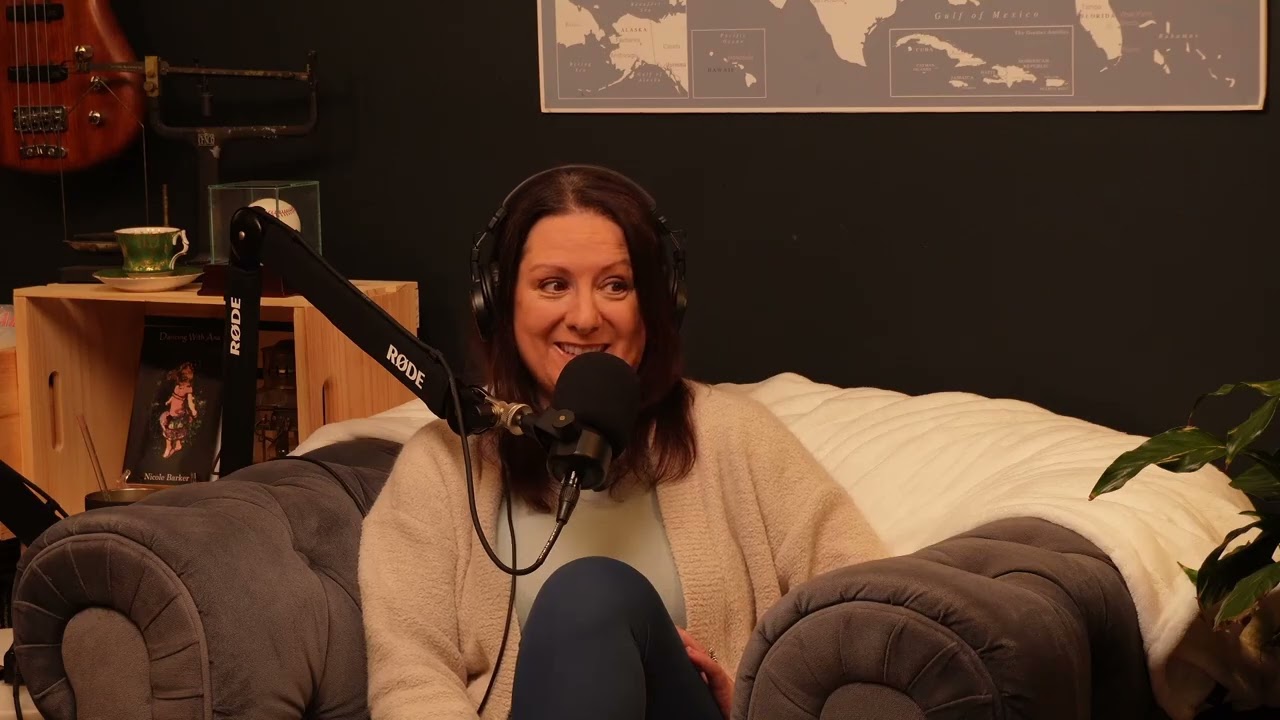
In Episode 16 of the GenX Speaks Series, Jasmin shares her personal journey of growing up as a military brat, navigating cultural shifts, and redefining aging for women. She discusses her experiences with career, motherhood, and the challenges of maintaining relationships while embracing her identity and self-worth.
[Music] Welcome to Genex Adulting. Today we have Jasmine with us and in addition to sharing her story she's also going to share with us her outlook on how she views aging for women and how she's redefining that and sharing that with other women she knows. But before we get into that we always ask our guests what year were you born? 1966. 1966 so you are Genex. I'm Genex. You are Genex. Yep. You just made it in. I just made it in. What's the cutoff? 64. Oh is it 64? 64 yeah. And where we were born? I was born in Madison Wisconsin. Oh cool we've been there. Yeah. That's a cool town. Yeah I only lived there for six months out of my life. Okay so you don't remember? Yeah no my dad was in the military. Okay. He was stationed there. Okay. And I've never been back. Okay. Okay. Yeah no. Yeah okay cool. So you moved a lot then I assume. Yeah. So where did you go after Madison? I think we ended up going to Germany. Wow. And then the Netherlands and then Washington State. Okay. Arizona. Virginia. And we lived in the Netherlands and Germany for a huge chunk of my life. Like I moved back to the United States when I was 17 a senior in high school. So you spent most of your all your formative years overseas. That's so interesting. My mom's Dutch and so that's what my dad always requested getting stationed in Germany or he would go away to like remote duty for a year like to Alaska and Thailand so we would go live with my grandparents and we would go to international schools. Okay. And yeah so probably from I think seventh grade to 11th grade. I lived in Europe. Oh wow. So which branch was he? He was in the Air Force. And was he a pilot? No. He was what honestly we don't really know what my dad did because he was like kind of top secret. Like you know like
which branch was he? He was in the Air Force. And was he a pilot? No. He was what honestly we don't really know what my dad did because he was like kind of top secret. Like you know like when we lived in Arizona my mom said he would go to work at night and they would get he would go to that area. Area 51. Yes. No way. Yes and he would go with what blindfolded but what he his he would say he's just tactical and radar. That's all we really knew what he did but no he was not a pilot. So he went to area 51 and would have to wear a blindfold. But and he obviously could never tell you guys anything. Yeah never. Or your mom probably. No. That is fascinating. And my mom just told us that recently like like probably like five years ago. Just like you know out of the world. So where did they meet? So funny. My mom and dad met in a bar in Belgium. Oh wow. Okay. And I've been to that bar actually. That is so cool. It's called the Queen's Club in Belgium and my dad was the GI and my mom was like you know a young local girl. Right. And they you know they dance whatever they dated for like three months. Okay. You know back then. Yeah. And then they got married and and and he was deploying coming back or back to the US. So okay that's when they went to Madison Wisconsin. So when they then she could come over because they got married right. Right. So and then so you grew up overseas so you would have come back here right at the end of high school. My senior year of high school I moved back. How was that transition? Horrible. I can't where did you go? Niceville, Florida. Okay. So I lived in Europe and it was like punk and Pat Benatar and very trendy. And then I moved to Niceville, Florida where people wore t-shirts had said I lost my husband to hunting season. Where
like punk and Pat Benatar and very trendy. And then I moved to Niceville, Florida where people wore t-shirts had said I lost my husband to hunting season. Where is Niceville? It's up in the panhandle. It's two hours west of Tallahassee as a matter of fact. Yeah it's in between and actually. It's almost Alabama. It's they call it Lower Alabama. But the largest Air Force in the world is Eglin Air Force Base and it's at Niceville, Florida. I never knew that. So you went from this cosmopolitan diverse life to Niceville, Florida. So that that alone would have been a complete nutter culture shock and then you're starting high school. My senior year. Which I assume it was a small high school. I don't really remember but it was a combination of military kids and local kids. So military kids are just used to assimilating. You're used to being the new kid. And I mean that's why I can go anywhere. You can drop me in a room and but it was a big culture shock. It was hard like my senior year because you know you are popular in your school. I was a cheerleader and I listen to now you're like the newbie and the newbie with a Pat Benatar haircut. Right right right right. And so you were super cool but maybe not everyone there totally realized. Yeah. So would you say for kids whose parents are in the military that moving that often is a benefit in your later years as you become an adult or do kids typically yearn for that stability of being in one place because they move so much. I mean I personally yearn for being a want to be to being in one place because I moved around so much although I had a great childhood and I really adapted well. I mean next thing you know I was wearing flannel shirts. I mean I will adapt to any environment. But like my brother and my
childhood and I really adapted well. I mean next thing you know I was wearing flannel shirts. I mean I will adapt to any environment. But like my brother and my sister they had a really hard time. They're both introverts and academically my sister struggled because even though we were in the military has a school system called the Dodds school system which is the Department of Defense. And when we have these military bases they have you know their their teachers and such and it's a whole program but you know they have the exact same upbringing that I had and they're very very different and they didn't have the best experiences like I do. And they're they still live in the same town. They're very introverted. They are they younger than you. Yeah. OK. So how old would they have been when they So my sister is 18 months younger than I am and my and my brother's three years younger than I am. So you and your sister both started high school and then he would have been in middle school when that happened. Yeah. So they have they are they still there. Yeah. Oh so they're nice. Yeah. Wow. So they settled. So yeah they settled. My my brother actually joined the Navy and then got his education through the GI Bill and now he is a software engineer. He works for a private company that has a military contract. OK. And so and then my sister works on the base in child care development. It sounds like for them though it's perfect like they like you said they're introverts and they're in one spot and they're comfortable with that. So kind of worked out for them. Like they needed that. Yeah. I picked up and moved because I was like I'm not living in a small town moved to Miami. Why did you choose Miami. So I had a really good friend who was from Miami and she
they needed that. Yeah. I picked up and moved because I was like I'm not living in a small town moved to Miami. Why did you choose Miami. So I had a really good friend who was from Miami and she I went to visit her and I was like this is where I want to be and I loaded up my Honda Civic. And what year would that have been. That was 19. I think 89 or 90. OK. And that was the Miami Vice years. Yeah. Yeah. Yeah. I mean I didn't get exposed to any of that. But but but listen everybody you know I was a drug dealer. Right. I mean honestly like it wasn't it didn't phase anybody if you knew some everybody was affiliated. So it wasn't a cliche. No. It wasn't mainly coke or was it all drugs. Actually like I dated this guy who was like a drug smuggler. Yeah. Marijuana. Wow. Yeah. I mean it's funny you say that because one of Nathan's best friends in high school his dad used to be a drug smuggler. Remember that. I don't remember the name but he was a pilot and he was bringing in weed from like South America. I forgot about that. He actually spent time you know he got caught. Yeah. I have a friend who he went to UF his older brother got caught and back then they were really I don't know if they still are now but back then they were really really harsh on that. Yeah. Yeah. Yeah. So it was very common for anyone in Miami to be dealing drugs smuggling drugs. That was just very normal. It was very normal. I saw the city was built. Yeah. Yeah. That's what they say. So so I how did you get settled there. You did you know what you want. Well did you go to school down there. No. So it's interesting. Like when I was answering your questionnaire about the you know things so no I didn't go to school down there. I I did not graduate from college. OK. And I just had to like
interesting. Like when I was answering your questionnaire about the you know things so no I didn't go to school down there. I I did not graduate from college. OK. And I just had to like come clean and tell my kids that it's been my like shameful secret for a really long time even though I climbed the corporate ladder and I was super successful. I had to like tell my kids that. So the story is no I dropped out of college. I moved to Miami and I started working and when I was in college I worked three jobs. Where did you go to college. I went to a community college up in nice nice and then I was transferring into U.W.F. OK. And I was working three jobs to go to school and then I went to visit my friend in Miami and I was like you know I'm blowing this taco stand. Yeah. And it's my biggest regret but but you did fine. Yes. I'm like I don't know if I would have worked as hard as I did in proving myself had I had I graduated college. But it's still my biggest rep. But so I moved down there. I dropped out and I lived with my friend and got a job and got you know two or three jobs and just lived that Miami lifestyle. And then I met a guy. Yeah. And we moved to North Carolina. I mean I had a very colorful. So wife. So you pack up. You drop out of college. You pack up. You're like I'm going to Miami. I'm going to just have that adventure. You live with your friend. When you worked down in Miami was it related at all to what you ended up doing or was it just you were just taking jobs. So I was like I worked for a German airline because I spoke. I speak German. Oh yeah. And that lasted like three months. And then I got a job. I just got a lot of administrative jobs. OK. And then I moved to North Carolina. And why did
speak German. Oh yeah. And that lasted like three months. And then I got a job. I just got a lot of administrative jobs. OK. And then I moved to North Carolina. And why did you move to North Carolina. Because the guy that I was dating got arrested for dealing drugs. This is the guy. This is the guy. And he wanted a fresh start. He had his like seed money. OK. And we moved to North Carolina and he actually did. He started his own business. There was like a video. He took video depositions. Like he worked in the legal field. So he could get arrested and still get a job and everything. Yes. I mean I don't really like did he didn't go to jail. Like he got off. He got off. OK. OK. And so what did you do in North Carolina. So I landed the job of my first time I got went to work for this broadband technology company as a temp in the H.R. department. OK. And for a woman who was like everyone in my job my bosses in my whole life been predominantly women who've climbed the corporate ladder. But she I worked for her for three months and I was had to interview for the job. I had I did not know how to use a computer but we had Max back then that you could zip up and take home because it was like the screen was at the top and then they and so I taught myself how to use the computer. What did this have been like the early 90s. This was yeah probably like 1992 93. Like the old word processor. Yes. Not like a computer but you would type it in it would print to it or something. No like it had a little disk because this was a Mac and it was like it was like the bottom part was like you put a disk in and the top of the apple to. OK. That would. Yeah. And but you could put it in a little thing and portable thing and bring it home. So I would go home. I
was like you put a disk in and the top of the apple to. OK. That would. Yeah. And but you could put it in a little thing and portable thing and bring it home. So I would go home. I don't even remember how I trained myself how to use it but I did. So you taught yourself. Yes. And I had some computer experience back then was WordStar. I don't know if you remember that but in WordPerfect and all that. And I interviewed she had me I did not I was not qualified but I worked for her for three months. I interviewed against qualified candidates and her former assistant. HR assistant and I got the job. Wow. And it changed my life. Yeah. You know. That's amazing. Yeah. Because even back then I know now everyone requires a college degree. Just even work at Macy's it feels like I need a college degree. Back then was it as predominant as a requirement. Well when I went to work for that company she hired me one of the stipulation was they had tuition reimbursement. And so I had to commit to her personally like that I would do it and I was going to go back to school. But then after working there I don't know maybe two years I moved back to Miami. Oh OK. OK. And did we leave the guy behind. No we went back with him and we were he and I were together for quite a while but I then went to work for an HR consulting firm and it was a firm. So this is back in the day when there was like Ryder and all these big companies were merging with other companies and downsizing. So I got this big project to work down at Burger King headquarters and manage their whole outplacement. I was trained people how to interview. I would help them write resumes. A lot of times I had imposter syndrome. You know how did I get here because I don't have a formal education.
how to interview. I would help them write resumes. A lot of times I had imposter syndrome. You know how did I get here because I don't have a formal education. How did you know you have to tell people even though back then there was no way for them to look it up. You have to produce a document. So I really don't know how and sometimes I would I would feel like an imposter. How did I get this job. So after that I always had a job when I was recruited to all the other jobs that I did. And so. So just to go back real quick when you were in North Carolina was your motivation. Were you looking for another job down in Miami. Were you wanting to get back to Miami. What was the motivation to. Was it the job offer. No no because I didn't move back for a job offer. I think what happened was after Hurricane Andrew and the guy his family he came down to help and his whole family was in Miami. And so then he stayed and then I didn't really have anybody up in North Carolina. So then I went back out. And then you know I had to start over and like and find find a job. And it's amazing that you went down there. And what you know you didn't go from one job to another. And you and you still landed with such a great place. And that's why it's like some like sometimes I talk about it now like I used to walk around being so ashamed. Like only certain people in my company knew only people hired me and I would just never I would never talk about college or go down there because I didn't want to lie. But I didn't want to talk about it either because I was like a shame. It wasn't even embarrassed. I was ashamed. Then like when I'm now like I'm just sitting here talking to you or I talk to my kids like I really accomplished a lot for somebody who yes you're weird. These
embarrassed. I was ashamed. Then like when I'm now like I'm just sitting here talking to you or I talk to my kids like I really accomplished a lot for somebody who yes you're weird. These kids that was when college was like everybody went to college and you know my dad was so disappointed in me. And you know it was just a lot of whatever. But did he always want you to go to college. Oh yeah. Like he was. But also you know he financially couldn't help me. And so it was like a lot to work three jobs and go to school. And he was retiring from the military and going. So it was just like family stuff. But but instead look at now you probably see it as you were this badass woman. Yeah. But I realize you know at the time if you think about it like what you accomplished without that college degree right is amazing. I'm curious just to go back. You said the job in North Carolina changed her life. How so I gave me knew that experience because it was I didn't really have a direction to know what I was doing. I was a good administrative assistant. Yeah. But it was a I did HR for 20 plus years after that position. So this woman took a chance on me and it took it. And by the way that was like when HR first became HR because before it was personnel. And it really was not about employee relations and things like that. It was really about managing benefits. It was just it wasn't what it is today because you know now that we as we start living in a more litigious environment whatever like you needed to protect yourself. I learned almost everything on the job and had amazing mentors who like took me under their wings and most of them were women until like the very end of my career. But that's amazing that you were also during that time surrounded by so
and had amazing mentors who like took me under their wings and most of them were women until like the very end of my career. But that's amazing that you were also during that time surrounded by so many women because during the late mid to late 70s and 80s is when women were really entering the workforce. But then you're talking about late 80s early mid 90s probably to have that many women around you so quickly when it was really recent that women were establishing themselves is is amazing. It's really very very cool. Yeah. It's historical really in that sense. Yeah. I mean listen like I looked I'm right now going to enter the workforce again. I haven't worked in seven years and so now it's even more competitive. I've worked for seven years and I don't have a college degree. So I'm currently taking this certification that will it's like the CPA for HR. And I videotaped it the other day because I'm doing during the classes. The guy says most companies a lot of big major companies are dropping college degree requirements. And the reason why is for a multitude of reasons. But the main thing is the most college students college grads recent college grads are not qualified. So they have degrees so big companies like Google Microsoft they have to put them through a whole training program. Anyway, number one. Number two most organizations would not consider moving someone within an organization to an exempt position a salary position if they didn't have a college degree. But now they're realizing that you know a lot of people who come up who work and don't have an education have our exemplary employees and so they should give in chances. So this was in my HR certification class. And I was like oh my gosh you know and and and so
don't have an education have our exemplary employees and so they should give in chances. So this was in my HR certification class. And I was like oh my gosh you know and and and so I want my kids to go to college because I didn't finish but you know part of my story is that I didn't finish college and And you were still able to find your way and still able to be very successful. And that means you know anybody can like you just write you have to be given the opportunity to believe in yourself. Like I really wanted to show my dad. You know because he was very disappointed in me and I was like I'm getting out of this small town and I'm going to make it. Yeah yeah. Did he come around to you know I don't know. No I remember one time I was I was interviewing for this big position. It was a newly I've always been in a lot of startup organizations. And he said you know what you should do is you should call them and you should tell them that you'll take twenty thousand dollars less because you don't have a college degree. Whoa. He just kept throwing it back in your face. And I was like no I won't. And a year later because it was a pilot position for a company that just had gone public. I wrote him a letter and I said not only did I get a bonus I just doubled my salary. Good for you. So you know I'm he maybe him push like doubting me and making me feel bad really just challenged me. Right. I realize now that I'm just saying that to you. So was he ever proud of me or did he ever express that. I don't know because he never was a military guy. But it was probably part of your driving force. I'm sure you know. OK so you're in Miami. You get this job with Burger King. So I was working for a consulting firm and the job they gave me
But it was probably part of your driving force. I'm sure you know. OK so you're in Miami. You get this job with Burger King. So I was working for a consulting firm and the job they gave me was the job at Burger King. OK. Yeah. Yeah. And so you're still in H.R. though right. Yes. OK. You're saying so the outplacement so they were doing mergers and acquisitions which led to layoffs. Then you were helping people. Yeah. So like Burger King back then unlike McDonald's did not have franchises. They had they were a corporation and all of the employees in all of the locations belong to Burger King. So they own the real estate day or whatever. So then in this I guess this is in the early mid 90s that they had a huge facility that they built right after Hurricane Andrew. And they decided to divest Burger King was getting hit. So they were selling off the the the locations now as franchises in this whole corporation their corporate headquarters. Most of the people were getting laid off. So you had someone who had worked for Burger King for 20 years in the mail room who was making sixty five thousand dollars a year. Who doesn't have a lot of qualifications. So we we we set up a huge outplacement center there where we work to with executives and the entry level people to help them get back help them get ready to interview for jobs help them with whatever like planning resume writing interview skills. And we I would conduct job fairs and have different companies come out. You know. And it was hard because you're dealing with people at one of the worst times of their lives. Yeah. You know so you're kind of get to be a little like beacon of hope for them. Yeah. You know. You mentioned the imposter syndrome. Where did that come from
worst times of their lives. Yeah. You know so you're kind of get to be a little like beacon of hope for them. Yeah. You know. You mentioned the imposter syndrome. Where did that come from in that that experience. Because sometimes I would be I just would stop and say how do I know this. Why are people looking at like these like why am I taking charge and doing this. Sometimes like like where did this come from because I don't have because I didn't learn this in school. So like like so that I would feel like what if somebody finds out that I'm really a fraud. Not realizing that it was innate and it was a gift. Yes. And that you didn't need college for that. You had it already and you were it was coming out of you at that time but you still were doubting yourself just because of not having that degree. It's what it sounds like. Yeah. Yeah. I think that that that's it. And like because sometimes I would say like how how am I leading these people and telling them here's what we have to say. Here's how we're going to manage this. Like how did I get there. And sometimes you know I would and then when I left that job and I doubled my salary at the next job I mean I went all the way up to director level. I was flying over to all of our locations all over the world being like the head of HR and I'm like. You know I'm like and I mean it's just it is. I had a huge thing of imposter syndrome and I was very very insecure and. But I'm sure you no one would have known that. No. And I think while I was working but once I stopped working and became a mom. Those are the most insecure years of my life because my identity you know because most of ours. Yeah. You know. Yeah. So how long did you. So you said you were traveling the world.
Those are the most insecure years of my life because my identity you know because most of ours. Yeah. You know. Yeah. So how long did you. So you said you were traveling the world. You made it up to director level. How long did you work before you. Got married and started having children. Oh I worked until I was 51. So even when I had kids. OK. I worked for 10 years parts of part time. OK. And then I mean you and I were really close then you know I was struggling with my older son a lot. And so I made it like the company I was working for because we were all coming out of that 2008. You know. Finan recession. And so as the company started to build back and grow they really needed me full time. And it was in Miami. So I was going down to Miami three days a week and my son really needed me. So it's only been eight years that I haven't worked but that's when I decided to become a stay at home mom. Grayson was in sixth grade. OK. So when did you get married. I got married in 2006. Oh OK. So how old would you have been when you got married then. I was 40. So you were four. So you really dedicated. Like the first 20 let's say call it 20 years like when you or 22 years you were 18 tried college. Packed it up on my career. And then the rest was building that career which you were obviously very successful at. And would you say that focusing on that did it was getting married a little bit later a result of focusing on that or was it just more timing. Just not meeting the right person yet. Oh I mean I think that I hadn't met the right person yet but I was really and I really never wanted kids. You know I did not want a white picket fence. I did not want to be like my mom. I mean kind of like and I was like I'm
right person yet but I was really and I really never wanted kids. You know I did not want a white picket fence. I did not want to be like my mom. I mean kind of like and I was like I'm never going to be dependent on a man that I'm going to just this is whatever. But then when I was. I want to say my I was like 35. I wasn't wasn't my husband but I was in a relationship and I and I got pregnant had a miscarriage. And I mean it was a blessing in disguise but the suit it's kind of like when you can't have something you suddenly want it. And it just may change my perspective. And so then I started dating more guys that were more husband material instead of party material. And then I met not drug smugglers. Right. Right. And then I met Alex and I met him at 37. I was 37. He was 35 and then we dated until I was 40. OK. And then we got married and Grayson was born the same year. OK so you would have had Grayson when you were like 41 or 40. So Alex and I got engaged on September 30th 2005 and Grayson was born September 30th 2006. Oh that's so cool. That is so cool. So we had this big wedding planned and then I got pregnant which we were trying. Right. And I said I cannot walk down the aisle with my belly. I would not. I don't want to do that to my dad. Little did I know that I wasn't going to be showing. But I was like I can't do that to my dad. So then we had like we just had a wedding on the beach and then we had to put our money on the at the Addison actually. And we had a big reception. OK. Like four months later. OK. Oh that's lovely. Funny little story. But but yeah so I had him when I was 40 and then great. I had Gavin when I was 43. OK. So what are the would you say the pros for young women especially Gen Z.
Funny little story. But but yeah so I had him when I was 40 and then great. I had Gavin when I was 43. OK. So what are the would you say the pros for young women especially Gen Z. I think that Gen Z young women are their work ethic I think is strong. I think they're very independent. I think their outlook towards marriage is shifted at least for a lot of where we came from Gen X and maybe even from millennials. What would you say to Gen Z women as far as the outlook of career marriage children. What would be the pros of focusing on your career first before taking that that commitment. I mean from my perspective the pros are like I have done it all. So by the time you know I see a lot of stories that a lot of my friends who got married right out of college you don't really know who you are like I have traveled I have dated I have partied I have climbed the corporate ladder and this is like my decision. So when I finally had kids that was like the icing on the cake for me. And you know I had already accomplished everything so I didn't feel like it was missing out on anything. I worked because I needed to stimulate my brain but it wasn't because you know it was still rewarding. But the minute that I needed to shift gears and be a stay at home mom I put a hundred percent 10 percent into that. And I never felt like oh you know wish I could have done this or wish I could have done that. I think though you know I was one of the lucky ones because I got pregnant without any help at 40. Like I mean I tell my kids like your miracle babies because there are a lot of women who can't get pregnant for whatever like a lot of different reasons. Right. And so you do run that risk. I think that's that's the biggest con for women.
women who can't get pregnant for whatever like a lot of different reasons. Right. And so you do run that risk. I think that's that's the biggest con for women. Otherwise I think if that was not an issue I would tell every woman. I feel like having kids later choosing a partner later when you kind of know who you are you choose them for different reasons. Like I dated all these bad boys but when it was time to get married and have kids right. This is who I would choose. And he chose me for those reasons as well because by the time I met him I had already settled down. Right. You know I had already realized that and like I was successful in my career and I just stopped like slowing down and you know my partying and just was ready to get serious. So I just think there's more and from my opinion more pros and then cons except unfortunately the biological clock. Now I think that I think it's the one thing unfortunately that young women do need to think think about and not that age is the sole factor of what may make it challenging to get pregnant because women of all ages struggle with that. Yes. But with the older you get the chances increase. You may have challenges. So and it is frustrating right as a woman that we have that one thing right. That's kind of always looming over us if you want children. And well and here's the thing you may not know you want children because I never wanted children. Right. So until you know something happened to me and it made me reevaluate that. But I will say that right now women can freeze their eggs. True. That's that's so like that's an option. And I think that if I were a young woman I would also freeze my eggs. Even now like because the other thing with being an older pregnancy which they
True. That's that's so like that's an option. And I think that if I were a young woman I would also freeze my eggs. Even now like because the other thing with being an older pregnancy which they technically refer to as a geriatric pregnancy anything over 35 which is crazy. I know. But the thing is is not only are you dear is it sometimes more challenging get pregnant but you also open yourself up to a lot of different issues medical issues. So with the technology they have now I think any like the issue is just freeze your eggs at like 25 30. Yeah. And just that way you are you have them and they're healthy eggs. Yeah. That's it's a great opportunity for young women. Is it expensive. Do you know. I have no idea. Probably because everything. It feels like you know it's kind of like one of those things that's been around for a while now. Yeah. As things are and they're not as new technology wise whatever maybe it's not but maybe in the future that'll just be something normal that's covered by insurance and it should be as with most things with women. You know so many things that should be covered by insurance aren't that we need or should be annual checkups that aren't. So you know we can only hope but it would be wouldn't it be amazing if women were just offered to freeze their eggs right in their mid 20s while they're discovering their life. It would be such a wonderful opportunity. I mean it's so interesting because like you just what just popped into my head is sperm banks. OK so you have you have couples and women who are trying to get pregnant. Yeah they have sperm banks like the person who pays for that is the person that's buying the egg right by the sperm. So like there's got to be a reverse interesting thing for women. Yeah I agree.
Yeah they have sperm banks like the person who pays for that is the person that's buying the egg right by the sperm. So like there's got to be a reverse interesting thing for women. Yeah I agree. But there is it. There isn't. Maybe we should start. Jasmine that's our that's our next business. OK so you you were this incredibly successful woman you got married you had your children. How was it balancing having this new family in your life after you've been working for so many years. How was that adjustment. It was really difficult. I mean I'm not going to lie. I thought I was going to be Martha Stewart like the idea that I didn't have to work because my husband and I moved to Tampa because he was building this whole community out there. He's a home builder custom home builder developer. OK so is that what he's always done. Yes OK. Yes. And the real the whole financial market real estate market everything crashed in 2008. So we were there. I just had a baby you know and we had to come back. So at the time I was like oh I'm going to be a stay home mom. I'm going to be Martha Stewart. But after Grayson was 18 months old I had to go back to work. But it wasn't full time. It was just that I was. That's the thing about being older. You're set in your ways. You're used to having your own set of accomplishments. And so I couldn't be a stay home mom full time and I went back to work. And fortunately my mother in law and my father in law were there to help. Oh that's wonderful. So they would watch him three days a week. And well when he was 18 months he was able to go to grace preschool. Oh yeah. Remember the moms. Yeah. And so yes that's what I did. And then I worked part time for 10 years. Well so it's wonderful that it was part time. Right.
able to go to grace preschool. Oh yeah. Remember the moms. Yeah. And so yes that's what I did. And then I worked part time for 10 years. Well so it's wonderful that it was part time. Right. So you kind of got the best of both worlds. Exactly. That is that's and I think that that is the golden you know equation is having the best of both worlds. You get a break from your kids because it is a lot you know especially when you're older and you have less patience whatever I don't know what it's like to be a younger mom but then you come back and you're excited to see them and you do this and you have your weekends then you're excited to go to work. But you know it was really it was very balanced. Yes that's the word I was about to say it was balanced. Yes. And then you had touched on this a little bit but what did make you decide to stop working completely. So as a combination of two things for one three my company needed me to work full time right. They were going to hire me an assistant but I was like it's just going to create more work for me. My husband's business was taking off. So like I would come home from Miami and call him and say I'm stuck in traffic. You have to go pick the kids up. And he's like listen I can't be in a client meeting and you call me and you know and I said you know I totally understand that but sometimes you don't know what the traffic like right. And then the last but not least most important thing is my older son was struggling and I really needed to. He was struggling in school. He had behavior issues and which really were you know just things and I needed to be home and support him and be there for him. I mean you and I were friends during that you know and I failed him in a lot of ways.
were you know just things and I needed to be home and support him and be there for him. I mean you and I were friends during that you know and I failed him in a lot of ways. Because I really didn't understand what he was going through. I was kind of raising him in a military style because that's how my parents raised me like you just got to do it. What it is. And then something happened in school one day and at that day like I took him out of school at a meeting on Monday Wednesday I had him out of school my Friday I had resigned from my job. It was the best thing I ever did. Yeah. Big week. Yeah. I remember that. Yeah. So how was the adjustment to stay at home mom. It was great. At that point it was great. Yeah. Okay. You were ready for it. My kids were older. So I had a hard time with the part that I couldn't control when they were little because you know you're working you are used to being in control and having being task oriented. And so like that was really difficult for me and my personality. Once the kids got older like I just immersed myself in running things at school being room mom. I did a big fundraiser at the last school we were at. And I did that while you know they were in school and then I just worked out and you know it was fulfilling. It was fulfilling. And it's interesting because you've had all these different phases you know you had this life as a military brat quote unquote where you got to travel you got to live overseas and then you did the adventurous pack up and had to you know something that I think I know our daughter would have loved to have been able to do. Because you get to say you did that. I mean that's like it's so Stevie Nicks vibe you know.
know something that I think I know our daughter would have loved to have been able to do. Because you get to say you did that. I mean that's like it's so Stevie Nicks vibe you know. And then you know it's hard sorry and had the bad boy the bad boy boyfriends and all that lived the Miami life and then did the corporate thing and had the successful career as a woman which is accomplishment in itself and then as a mother and a wife. So you really have had already at that point lived so many lives. So I'm probably I'm sure by the time it was stay at home mom time you're like I'm OK. So lean in. This is like is a perfect timing like before I wasn't ready. Right. Yeah. Right. And so how old were you. Would you say when you did that when you were 51. OK. So let me ask you this because I know I've gone through my own experiences when I hit 50 51. I want to talk menopause a little bit. So did you did you for the women out there listening that are going through that or feel like they might be starting that. Did you go through a perimenopause or menopause. Did you get there some women that are like I didn't everything was fine. And then women who are going through it like what are you talking about. I feel like I'm going crazy. What was your experience with that. So after Gavin was born my body that was the first thing like it I'm super vain. So my body I did not lose my belly fat. And you were how old. I was 44. OK. I wasn't sleeping at night and I was moody and I just did not feel like myself. I didn't bounce back as quickly or as well as I did after the first pregnancy. So I happen to be talking to a friend who said you should get a hormone test. And she's like your hormones are probably out of balance. And so I found a doctor in Fort Lauderdale.
So I happen to be talking to a friend who said you should get a hormone test. And she's like your hormones are probably out of balance. And so I found a doctor in Fort Lauderdale. It was a specialist. Now you can go to your OBGYN. But right back then that was when Gavin was so like 12 years ago. And I feel like it's really just recently where anyone's even starting talking about menopause and giving it its due. Yeah it's because of Covid. There's a doctor that I've been following and people started doing this on TikTok. Honestly during Covid. There's just Dr. Marie Claire. OK. Yeah. Is she the pause life. Yes. I love her. And that's how she started like talking during Covid. Yes. You know. And and so she kind of from my perspective put it on the map. But like I did not have any friends that were my age number one and nobody talked about it. So I found this doctor in this practice in Fort Lauderdale. Insurance did not cover it. It was extremely expensive. And basically they did full panel and they did all the stuff test hormone tests. And they put me on testosterone. That was what I was low on. And I would go every three months on blood work. Yeah blood work. And for like three or four years all I took was testosterone. So were you you were perimenopause then during that time. It was perimenopause. Did that make a difference for you? The testosterone. One hundred percent. And I had to give myself the shot. It was a shot shot. And but it made a huge difference. It it helped me with like brain fog. It helped my body bounce back because it's like the male hormones. Right. Right. Right. And I didn't have as many mood swings and I was having great workouts. I'm not going to lie. Yeah. And I was on the same dose for many many
it's like the male hormones. Right. Right. Right. And I didn't have as many mood swings and I was having great workouts. I'm not going to lie. Yeah. And I was on the same dose for many many many years like probably seven years. Did you have any of the any of the side effects? I am. The only side effects I really had was like like hair. OK. But I was like I don't really care about it. Like it's worth it. It's worth it. Yeah. And then as I got a little older, my cortisol levels started going off again and they redid it and then I started I just so I've added. So now like I'm on progesterone and then I am just about two years ago, they added estrogen. So over the past 12 years, it's evolved. But the dosage it had changed my life. I mean, I really never had hot flashes. I had one or two in the beginning and then it never happened again. And I think that that whole home and replacement therapy is why I'm able to still stay motivated to work out. And I think it helps you your body stay healthy and youthful. I agree 100 percent. I I know that after I had Dylan, I had Dylan at 39 and then turned 40. And I know Perry menopause hit. I want to say by 42 and I had a lot of the same symptoms. I all of a sudden I was a runner and all of a sudden after 10 minutes, my body was just not letting me run and I couldn't lose the weight like I did with my other two kids. And I just attributed. Oh, I'm older. Da da da. The brain fog, all of that. And I wish at the time I had known to go get my hormones checked because I could have started so much sooner. But I did start hormone replacement therapy just within this last year because I full blown hit menopause, I think. And it has been life changing. First of all, the progesterone helps you sleep.
But I did start hormone replacement therapy just within this last year because I full blown hit menopause, I think. And it has been life changing. First of all, the progesterone helps you sleep. Well, and listen. I did not sleep well when I was going through perimenopause. So I took Xanax every single night. I had a prescription and just recently I lost someone very close to me to a drug overdose. And one of the things that he was addicted to and abusing was Xanax. So this was in May. I'm sorry. No, that's OK. Thank you. I'm sorry. So I went to my doctor and I was like, I don't want to, you know, she's like, you're not addicted because you've been on the same dose for five years. You know, whatever I go, I want to get off of it. What can I do? And she didn't really have a solution for me. So I was telling my OBGYN about it and she's like, I'm going to give you 200 milligrams of progesterone. I was taking 100. Yeah. And she goes and just wean off. And I mean, I've been using 200 milligrams of progesterone to sleep at night. I've been killing my brain cells for five years taking Xanax. But you didn't know. I didn't know. So I have both. I have a prescription for 200 that another OB gave me. And then my current my regular OB gave me 100. But I and depending on what's going on in my life, I'll either take two of those, the 200, or if if I'm really tired, I'm like, I only need the 100. But I take something, some form of progesterone to any women listening in out there, if you are perimenopause, menopause and you can't sleep, get some progesterone, I'm telling you it is it is. And I'm post menopause, by the way. So it is a game changer and you're not waking up groggy. It's healthy. You know, like I just take it regardless
progesterone, I'm telling you it is it is. And I'm post menopause, by the way. So it is a game changer and you're not waking up groggy. It's healthy. You know, like I just take it regardless because my thing really was falling asleep was hard. And if I woke up in the middle, I couldn't go back to sleep. Yeah. And so I literally get seven hours of sleep every night and I wake up. You know, no, it's a game. He knows because sometimes like I'll feel it starting and I'm like, I can't talk anymore. I wonder if there's a male equivalent. I'd love to sleep for seven hours. Find out because my yeah, I think that's a whole other subject about men's hormones. Men don't really talk about this. But my husband, you know, you know, he I'm like, I don't know why you meant don't talk about this because you're he's going through hormones, too. And the functional medicine doctors are managing it. Yeah. So it's just now starting to be talked about. But the men go through this as well. They do. They do. I think their testosterone, I think your testosterone starts dropping. They don't like to talk about it. Ego bruising. We can't even go there. You can't handle it. Yeah. I'm not trying to get across the line here anything. But this is what I think is so interesting that men, my husband included, can't talk about like the testosterone or whatever. But men all over the world are getting Viagra. Yeah. Whatever. So at what point like, like when do they connect? Yeah. Yeah. No, they just want the pill. Just fix it. We don't want to talk about where women are like, no, I want to get to the root of this problem. I want to I want to help myself. So I think this whole discussion about menopause stems a lot from Dr. Marie Claire. And you're right.
no, I want to get to the root of this problem. I want to I want to help myself. So I think this whole discussion about menopause stems a lot from Dr. Marie Claire. And you're right. I forgot during covid. She was all over TikTok social media just talking about, hey, are you having these symptoms? This is what it is. You know, and you're and you're not crazy. And these are all the things that menopause affects and women. And the list, she put up like 25 things that, you know, and I think it validated women. Well, and also she was going through it herself as an OBGYN. So it really had a lot of validity to it. Yeah. And it really like and now like there's a lot of celebrities and actresses who have come out with products and have really kind of started talking about it. Yeah. Yeah. It's the Genex. The Genex celebrity women are starting to go through menopause or perimenopause. Maybe the older millennials, women to celebrities. And they're talking about it and they're the but they're the first ones. It was always just this taboo subject that, you know, women just have to get through it. I mean, I never even knew it as a subject. I didn't know what was happening to me. And I had a friend whose mom I was talking to her mom and she said, you know, this and this. And then but she didn't say you should get a saliva test to do a hormone test. She just said to me, I have some books for you. And then I was talking to a friend who was my age who recommended it. So that woman who who was telling me about it, they just tough tough through it. Right. They don't even do saliva test anymore, by the way, for hormone testing. There's a whole like they do blood work and and I don't like it's advanced a lot. And now I go to my OBGYN for it.
Right. They don't even do saliva test anymore, by the way, for hormone testing. There's a whole like they do blood work and and I don't like it's advanced a lot. And now I go to my OBGYN for it. And now I pay ten dollars for the progesterat thirty dollars for the progester. And then I do compounding pharmacy for the other creams. I mean, I used to pay twelve hundred dollars every quarter to go visit. And then I'd have to buy all of the like the testosterone and give it to myself and all of the other things. So it was really expensive. It was worth. Yeah. Every dime because it just made you feel better. Absolutely. And are you still taking everything? Because I saw I think it was on TIC talk. A few doctors talking about how women should continue hormone replacement therapy into their 60s, into their 70s, because it helps with our organs. It helps with our bones. It helps as we age. I that's interesting. I hadn't heard that yet. I remember them saying to me at some point you have to stop because you won't need them. And I was like, well, why wouldn't I need them? Yeah. And I don't think I'll ever stop unless somebody like maybe because I'm afraid of what will happen when I start weaning off them. I will tell you like like I'm going out of town for the weekend and I just don't bring my vitamins and all my stuff for a weekend. I don't notice a difference if I don't take everything for two days and then I just bounce right back on on it when I get you know, whatever. But if I go away for a week, I'll take it. Right. Right. But no, I mean, unless somebody tells me I'm doing something damaging to my body, I don't know when I will stop. Same. I mean, I can't imagine it will. It would be a very long time because when I even notice I do the patch
I'm doing something damaging to my body, I don't know when I will stop. Same. I mean, I can't imagine it will. It would be a very long time because when I even notice I do the patch and if I miss it, if I'm a little late on switching, I will feel a hot flash coming on by like day two, I'm like, oh, shoot, I didn't switch my patch. So it's that it's that fast. But I think I'm in the middle of what that's going to say. You're in perimenopause. I'm postmenopausal. Exactly. Exactly. So what supplements do you take, though, daily? So I take a lot of supplements. Well, so when I was going to the hormone doctor, there are two supplements that they gave me that are called Pregnaglone and seven Keto DHEA. Like you can buy these at Whole Foods. They are they are supplements, but they are supplements that support your hormone system. I've been taking those for 12 years. Wow. So I take those and then I take my it's a testosterone biased bio estrogen testosterone cream and then I do progesterone. And then my supplements that I take are I take digestive enzymes, probiotic omegas, calcium and D and K. And then I don't take a multivitamin because I do a smoothie every morning. And that protein powder has a lot of that stuff in there. And then in the evenings I take zinc, a magnesium blend and the progesterone. OK, yeah, I do the magnesium as well. You do that for sleep. Yeah, I do the magnesium. This is I do the magnesium for just calming, you know, whatever. So I do a combination of all this because literally the minute my head hits the pillow, if I didn't, my mind is just going going and I bought this. I buy this brand. So when Grayson was I give supplements to my kids for that are support ADHD. I don't know if you've heard of Dr.
just going going and I bought this. I buy this brand. So when Grayson was I give supplements to my kids for that are support ADHD. I don't know if you've heard of Dr. Amen. He has this huge brain institute. They open one in Miami. So he has these supplements and one of them is called Calm My Brain. And it's magnesium. Ashwunga root. I'm going to miss Ashwunga. And then it has something called L-theanine in it. So it is a combination of those. And they're all to help me sleep and they all work. So you take that. That's your your is it a powder or it's a capsule. OK, so I take that the zinc and I take the. Progesterone. And why do you take the zinc at night? I knew you're going to ask me that. I take the zinc at night because it gives me not gets me nauseous. OK, an empty stomach. And the reason why I take zinc is because they say it makes your Botox. Oh, that's a great segue. Yeah. So you have an outlook on aging for women. Yeah. Would you like to share with us what that is? Explain what it is. I mean, I feel like I'm going to age and fight my way through it. And what does that mean? When it means different things to different people. I use Botox, but I don't freeze my face. Like, you know, I find a balance. I work out, I eat healthy. But I do use Botox. And I recently started putting lip filler in my lip. Not like nobody would know. Right. But it's just to because it's lost a lot of volume. And then I think that happens to all women. Yeah, it happens to men. And there's a whole science behind like why that happens because the facial and everything are starting to relax. You're losing fat. So, you know, so I try to be as natural as possible, but I do use I've been using Botox since I was 45, you know, and I started
and everything are starting to relax. You're losing fat. So, you know, so I try to be as natural as possible, but I do use I've been using Botox since I was 45, you know, and I started off where I just did it here. And I did that for like two years. And then the next two years I did this. So over the years, I increased it and I increased how frequently I go. And I will probably, you know, do it till I'm 80. Like the hormones. Yes. Yes. Yeah. And I do like the micro needling. I haven't done anything invasive. I will never go under anesthesia unless, you know, now that I'm a mom, I don't want to take that risk. But all of those things I do to just try to stay youthful looking. And as a result, feel youthful. Right. And I'm very vain. Like I always think I mentioned that earlier, like the whole thing. Like I just I feel like when you feel like you look good and everybody feels differently, everybody's I look good is different. Yes. As I don't wear a lot of makeup where when I was younger, I wore a lot of makeup. I mean, I had all the styles, whatever. I'm very comfortable being in sweats and no makeup. But I also know that I need a little like lift, whatever, because, you know, just to help me feel youthful. And that's not. And there's a lot of this there's a lot of women my age that are on social media. Like where they're why why is why is society forcing us to be youthful? I don't think anybody's forcing me. I choose that for myself. And I think it's great that you want to like I dye my hair. And I have there's a very popular woman on Instagram. And her whole thing is that she's younger than I am. But she went completely gray. And I think that's amazing. It's just not for me. Right. And so I think that I think there's
And her whole thing is that she's younger than I am. But she went completely gray. And I think that's amazing. It's just not for me. Right. And so I think that I think there's a should go both ways, like if you you want to do a little Botox, you want to color your roots. It's great. If you don't, that's great, too. I think that what you're touching on also is about women supporting women. Yeah. And sometimes it's that internal misogyny that we do to each other where we, you know, we we judge each other for it. I almost sometimes I wonder, is this a Gen X thing? Because I do feel like I don't know if this was your experience, but I feel like our generation was raised to compete with each other immediately. One hundred percent. As soon as you walked in a bar, you were in competition. Like you didn't if you saw a girl and she was skinnier, had a prettier dress. Your first thought wasn't, oh, that's so cute. It was OK, I have to compete with her now. Whereas my daughter, Kaya, who, you know, their generation, although I mean, there's still that subtle competitiveness, but they'll look at a girl and be like, oh, my God, look at her dress. Cute. Or they'll be so supportive of each other. The girlhood is strong. It is. I watched your podcast with her and her saying that. And it's kind of like if you're a stay-at-home mom or working on, you know, that whole stigma. And at the end of the day, we're all doing our job. We're all doing it in different ways. But we are we also are the generation where we're trying to break the glass ceiling, becoming competitive in the workforce. I think that that is the Gen X thing. When I go to the gym, I'm going to find I always compete with somebody. I just do that.
ceiling, becoming competitive in the workforce. I think that that is the Gen X thing. When I go to the gym, I'm going to find I always compete with somebody. I just do that. And my younger friends like look like I'm like, did you see I went faster than her? I did better. So it is a competitive thing. I think it's how we were raised. You know, 100 percent society. I think the society we grew up in, the magazines, the commercials, the TV shows, there was no girlhood. It was all women. You're competing with other women for a man. Usually that's the era of the supermodel. Yeah, yeah. Or a job. Or a job. Or a job. Women were like backstabbing women all the time. That's why it's really interesting that I always had women who mentored me. Yeah. And I never had that experience. But I've heard so many stories of women saying that other women had it out for them. And I'm like, I honestly never had that experience. Yeah. But but yes, I think that and I think I find myself internally judging also. I'm guilty of it as well because like I'm here saying I just do it subtly. But who cares if it's subtly or if you freeze freeze your face or you don't. Right. All of those are good answers. Those are all good choices. I think it's subjective. You made a good point. You said how you feel good about yourself is different for each person. So I don't do I'm sure anyone looking at me knows I don't do anything to my face. I'm 53. I have wrinkles. But I take my legs very seriously. I do have spider veins. And you can bet I'm at the dermatologist getting those things taken care of because that is what bothers me. So I think it's different for every woman. You know, I'm not as right now as concerned about this. My face. I'm fine with my face.
because that is what bothers me. So I think it's different for every woman. You know, I'm not as right now as concerned about this. My face. I'm fine with my face. Right. But my legs because I was a runner. So that's where I identified a lot of my fitness. And so to see my legs age is what distresses me. So it's very unique to each each woman. And I think as women, we have got to start supporting each other in that and not judging each other. But our generation, it's a struggle. It is. It's a real struggle for us. I mean, it really is. And I was at lunch today with some girls and we were talking about parenting thing and they were asking advice and two of myself and another mom had a different perspective. And at one point I was like, why are we trying to convince each other that ours is the right way? You you you parent your way and I'll parent my way because there's there's no one size fits all. And like going back to the spider veins, I have them all over my legs and they don't bother me. And then also like the neck, like a lot of people. And I'm like, I don't even look at my neck. I could care less. Yeah. So it's true. I dye my hair. You know, I get my grades right. Mine show up right above my forehead. Like it's as soon as there's no hiding them. Yeah. And I have dark hair just like you. But it's different for all women. And I think that and parenting and being a mother, like it gets very judgy among. And I don't know if that's changed with the generations. I don't know if millennial women are as judgy as Gen X women moms were with each other. And I don't know if the older Gen Z women moms are. I'm not sure if that's shifted. You know, I have a lot of younger friends. And I sometimes like have you ever just
other. And I don't know if the older Gen Z women moms are. I'm not sure if that's shifted. You know, I have a lot of younger friends. And I sometimes like have you ever just been around a group of young moms with kids and you listen to them because they have a lot of young moms that work out at my gym. And what I've noticed that I think is a little bit different. It is still the same level of competitiveness, but it also it's a bokeh thing. They're all trying to outdo each other with parties, with bar mitzvahs, with sweet sixteens. You know, this girl has like there is a mom. They had seven year old boys asking when they thought they should. The kids should start to pick the one sport they were going to do. Oh, my goodness. And doing the big I mean, so I think I don't think we did that. No, I mean, we were a little more organic, but this is like, are you kidding? I don't know about you, but my birthday party was a cake, some balloons and my friends came to my house. When I was growing up. Yeah, yeah, it was. So when we when we were moms, we had the bigger birthday parties. Like I remember that was new. That wasn't like our Gen X birthday party. But I didn't feel we competed with each other with the party. It was just like the norm. And I think also we have boys. So yeah, less competitive. So like everybody just did the Sky Zone party. Everybody just did the monkey Joes or whatever. I forgot about monkey Joe. Yeah. But even with Kaya, we would do the big parties. But I never felt I was trying to outdo the other moms party. But I guess maybe with the younger mom. I mean, that's what I'm noticing. And like even when I was still at St. Paul, the new moms that came in. There were a lot of younger families who had money.
But I guess maybe with the younger mom. I mean, that's what I'm noticing. And like even when I was still at St. Paul, the new moms that came in. There were a lot of younger families who had money. Yeah. And so they would try to outdo each other donation wise. And, you know, things like that to the school, which we all were just like us older moms. Yeah. Wow. Like even even the families that did and could just didn't do that. Yeah. It was it's like a so I think it's like a different level of competition. But they also live in a world of Instagram. Like we didn't have that. We had Pinterest. We started, you know. Yeah. So you start seeing all these baby showers. Like, excuse me, the reveal like the gender reveals. Yes. So there's things that we didn't have. But like they're getting all of this stuff from social media. And then it's made for social media. You just nailed it. So the millennials are the MySpace and then Instagram, Facebook generation. So when it comes to having their families that FOMO or that competition online on social media exists with them. And that's probably what's driving a lot of competing with each other on sports, parties, family, family competition stuff. But with Gen X, we were when we were parenting, typically, we weren't comparing our lives on social media. Exactly. Yeah. So I just don't think that competitiveness, even though Gen X women tend to compete with other Gen X women, I guess when it came to raise in our families that I don't know that is it that motivation wasn't really there where they a lot of what I think the millennials have is online. So it's really that image, that persona of your family that you need to put out there. Right. And I think like I think our kids Facebook started becoming
the millennials have is online. So it's really that image, that persona of your family that you need to put out there. Right. And I think like I think our kids Facebook started becoming popular when we had kids. But the stuff that we put out was kind of raw. It wasn't like put together for Instagram or this and that. So even though we shared, it was just like like you were sharing your family photos, you know, not this fabricated photo ops. And listen, I'm guilty of it, too. I do this whole martini and caviar and chip night because I saw it on social. Yeah. Yeah. Yeah. I was like, oh, I want to do that. Yeah. But no, but you're not competing. No, no. It's a little different. You're sharing something. I think for us, it was more I guess wholesome and it wasn't performative. Right. Exactly. It was it was organic. It was organic. So the pressure. Could you imagine being a mom and then having you already have so much on your plate and then also having that pressure of OK, now we need to and I'll need to look this way for our Instagram. Right. Right. I mean, I don't even go on Facebook anymore because I just got like to the point that I would look at other people's lives and think we need to go on more vacation. Yeah, we need this. And what I liked about Instagram, it's changed a lot when it was like random, inspirational stuff that you share with people. And and I really was like a form of expression and you didn't really care how many followers you had. Yes. That's how it started. That's how I remember it's starting. Yeah, exactly. And I'm the same. I'll check in on Facebook once in a while. And then I'm like, I like I peek in and I'm like, I don't want to because same. I'll see all these like perfect lives that I'm thinking.
I'll check in on Facebook once in a while. And then I'm like, I like I peek in and I'm like, I don't want to because same. I'll see all these like perfect lives that I'm thinking. No, this doesn't make me feel good. Like if I don't feel good looking at this and I don't wear and that's where TikTok comes in. Is that a happy place? It is. It's authentic. It's authentic. It is. I love it. Like, like I literally I don't know what I'm doing with my life when it's gone. I don't really. I don't think it's going. I think we're going to be fine. I think there'll be a little blip, but I think we're going to be fine. I think it's become a huge I think TikTok has become a huge help for mental health, for a lot of people, especially for Gen Z's. They have that support because they're out there in their 20s figuring out themselves, figuring out their careers, figuring out where they're going to live, and it can be very lonely and especially they are the social media generation. So if you have Instagram where everything is perfect, everything is performative, that's a really good point. You feel like you're failing no matter what you try to do. And then I think when TikTok showed up, it was like, no, you're just you're normal. Like look like my life's falling apart, too. And it's totally OK. And I think I have a feeling it really helped with people's mental health. Yeah, you know, I was looking at I love reading the comments and in TikTok. I mean, it's just especially opposing view. Like that's how you learn. But today when I was looking at the CEO of TikTok's his message, there were so many elderly people in the comment section saying how TikTok connects them to the world. So when you think about the younger generation, because it's all really, really
his message, there were so many elderly people in the comment section saying how TikTok connects them to the world. So when you think about the younger generation, because it's all really, really blew up during covid when people were disconnected from one another. And it started off with a lot of lip syncing and things like that. And then it just evolved into a lot of different things. But today when I was reading the comments, it was elderly people connecting with elderly. So you should go look Google. I mean, go on TikTok and do his his announcement. He made a speech and then look at the comments. And it was surprising. It was elderly people. I will because I saw his video. I just didn't read the comments. TikTok comments are top tier. Oh, yeah. There are some witty people out there. I'll be crying, laughing. And he's like, what are you laughing at? I'm like the comments. You know what I've noticed? There's there seem to be at a higher intellectual level than say Facebook. And there seems to be more respect, more discourse that's respectful, as opposed to Facebook gets kind of nasty at times. I mean, I don't even look at that anymore, but I remember that. And one of the things and this is going to be a very controversial thing that I say, but I have to say it and I may have already mentioned it to you when the unfortunate. Event happened where the CEO was killed. Yeah, that was a horrible United. Yeah. But when I went to I wanted to just read the comments. I mean, they were the most clever. I know all the comments. And I just thought, you know, it was interesting to see people's perspective, but just the way that they they did it. And again, it's I'm not supporting the what happened at all. But it was just very interesting to me.
interesting to see people's perspective, but just the way that they they did it. And again, it's I'm not supporting the what happened at all. But it was just very interesting to me. Yeah. Yeah. The way that they worded their strongly worded feelings, but they did it in a very clever and witty way. Right. Like trying to determine insurance terminology. Right. Yes. That was pretty good. It was good. It was good. Well, hopefully, TikTok stays around for all of us. So you were talking about that you're turning back to work and the steps you're taking towards that. Yeah, I'm hoping to. Yes. So what was the motivation there? So last sorry, last year in December, I had a midlife crisis, midlife awakening. You know, I think that a lot of times you think you're in your 50s. I mean, I'm going to be 59 on Sunday. So thank you that you're like going to be retiring and and last year, I Grayson's driving, Gavin's biking, Alex is working. And I was home putting up the Christmas tree by myself, not this year, but the year before. And I just got so resentful to everyone in my family for moving on with their lives and realized I needed a purpose. And the first thing I did was I turned to my husband, who's super busy and whatever. And he was not he didn't have the tools to be supportive. I was telling that he's I'm like, I'm going to give you the benefit of the doubt. Like he's not in most men. Sorry. I mean, he's not evolved. So he did not know what to do with what I was bringing to him. Yeah. And because like to him and to outsiders, like I have this perfect life in this perfect home. And I was like, I don't have any any purpose. Right. And so he's like, I want you to come run my company, like you or whatever you come run my company. And I kept saying no.
And I was like, I don't have any any purpose. Right. And so he's like, I want you to come run my company, like you or whatever you come run my company. And I kept saying no. I mean, for years I said no. I was like, I just don't want to work for you. I don't think it's healthy. And then I started going to therapy and I started doing Reiki healing. I just started doing all this stuff because I wasn't feeling good. And I was like, why don't I feel good? I have no reason to not feel fulfilled or feel good. You know, it's great. I would cry because Grayson was he hadn't even gone to college yet. And I would just felt like because we were so connected because I took time off to be with him, raise him and and now he was flying. And, you know, that's where I wanted. But I was lonely. And I just went through this whole thing and and took a huge strain on my marriage. Like like at one point I was like, I don't be married to you anymore. Like I'm not fulfilled. I want to you know, you don't do this. We don't do that. And like we told our kids we're getting divorced because he's like, I can't make you happy. And I said, well, that's your attitude. OK, you can't you're right. You can't make me happy. But I'm not going to spend the rest of my life like this. So I mean, then I realized it was a knee jerk, whatever. But in the moment I was like, that's it. Right. Whatever. And unfortunately, my children went and told their friends. So now people are texting me and, you know, whatever was a huge. So it was a really big everything kind of blew up. Yeah. I did go work for my husband. And it did not go well, not for you know, he's like he's the boss, not me. I'm not used to that. And also it's his business. And I was coming in and telling you how
And it did not go well, not for you know, he's like he's the boss, not me. I'm not used to that. And also it's his business. And I was coming in and telling you how he should run things because that's what I do. And it really just even though I'm good at what I do and he's good at what he does, it's not healthy. And so I left about right around Thanksgiving. Of this past year. And then I was like, you know what I'm going to do? I'm going to get us because I don't have a college degree. I haven't worked in seven years. So I'm going to take the certification. It's the hardest thing I've ever done in my life. I mean, and it was a bad timing. So I decided to do that and I hired a career coach and I'm taking the exam on February 15th. Why am I want to go back to work? I want to have a purpose. Yeah. And it's not about I don't even want to be in charge of anything. You know, I don't even care if I take it. I want to actually do want to take like an entry level position so I can go to work and leave. And I'm like, if I like it, I will rise to the top. I mean, that's just the way, you know, but I don't necessarily having not worked for seven years don't want to jump right back in and be responsible. You know, because I do also like my flexibility. Yeah. And, you know, so are you looking in the same in HR? So right now I'm not actively looking because I'm just getting myself prepped. I want to in what a luxury for me to say I want to get Grayson off to college and then I'm going to get a job because I don't want to take time off or be distracted and the career coach is like kind of helping. Like, what do I want to do? Yeah, everybody keeps saying you should start your own business. You should. I don't want that much responsibility.
coach is like kind of helping. Like, what do I want to do? Yeah, everybody keeps saying you should start your own business. You should. I don't want that much responsibility. Right. I want to go to work, do my job. Get a paycheck and go home. It's really for a fulfillment. And I feel really fortunate that that's why I'm going out to work. So that's, you know, I did this little video on TikTok that was like, I thought at this age I would be like planning my retirement and but I'm not ready to wind down. I really don't feel 60. I don't feel tired. I don't feel a retirement age like that. I don't want to work. And I would met with our we met with our financial planner and I was like, I plan on we're talking about Social Security. I said, I'm going to work until I'm 70 because if you don't, you turn to mush. Yeah, you know, maybe I'll work part time. Right. Right. I think well, I think Gen X has completely changed the idea of 60. Yeah. Oh, yeah, for sure. I think 60 is like 40 to us, you know. And I think so many Gen Xers plan on working like you, whether they a lot of them, I think, have to the way, you know, everything's gone with the world. But but even if they didn't have to, they want to. But I think we I think in general, we view getting older. We're pioneering that we're changing that. Just if you look at how we all live, we still live like I feel young and we're getting older, but I still feel young. Yeah. I mean, I think we have to make changes healthwise. I agree. Yeah. I think that's a big thing is we can't drink like we used to. And we need to exercise and we need to take our supplements and eat better. We have to. You know, if we're going to head into this next phase and tackle it. But I just think we are completely
And we need to exercise and we need to take our supplements and eat better. We have to. You know, if we're going to head into this next phase and tackle it. But I just think we are completely pioneering, quote unquote, old age for the younger generations. I have to agree. I mean, I went back to my hometown for my 40th High School reunion. Actually, not my hometown, nice field, Florida, where I graduated. And they are a very simple people, you know, very humble. They they don't I mean, if you have a coach handbag, you are really, you know, they just don't care about any of that stuff. But the other thing is all of my friends from high school, not one of them uses Botox or any of that stuff. But they're hiking, they're running, they're exercising, they're boating. They're very, very active. Yes. But and so like I look at them and I'm like, if I lived here, I would still do Botox because it's an it's a personal thing. Yeah. But they and they all moved away and came back and they're living this really healthy, active lifestyle. And they're all connected with each other again because it was such a small town. Everybody moved away. Now they're all back and they're sailing and boating because it's on the water. And they're yeah. And like my mom at my age, I mean, you know, they were sitting on the right. I mean, literally. Yeah. So she still lives there as well. Yes. That's cool. So she's yeah, my dad passed away. But she you know, but she lives in the house and but she sits on the couch to watch his TV all day. And I think with the boomer generation and probably with the silent generation, I think mentally in their heads, they thought, OK, so now I'm this age. So this is what I'll do. And now I sit and now I watch TV or they
and probably with the silent generation, I think mentally in their heads, they thought, OK, so now I'm this age. So this is what I'll do. And now I sit and now I watch TV or they in their minds, they thought once you hit a certain age that you're supposed to slow down and wait till you die. Yeah. Yeah. I observed that with my grandmother, my grandmother all of a sudden just sat and waited and my mom lives with us, which keeps her active. Yeah. So she's lived with us. Now for seven, seven years, I think, six years, but seven wonderful years. Yeah. But that that keeps her active. But probably if she didn't live with us, honestly, because she did retire at 17, she's 77. Wow. She's really. Yeah. Yeah. She turned 77 in October. I think she would definitely live a more sedentary life if she wasn't living with us for sure. And she'd be the first to tell you she's grateful. Well, she did. When she wasn't living with us, she would chill. Yeah. And her most activity was when she had the kids for the weekend. Well, she was still working because she moved in with us when she retired. So I think she would just be chilling where here she's with Dylan was younger. So she helped. She still helps. You know, she ran an errand for me today. So even something simple like that, as you get older, like it's good to go and do those things and be out. And she has like a mahjong group and all that. But even her generation, though, they kind of think, OK, well, I'm this age now. So this is what I'm going to do. But I don't think Genex doesn't have an age that they're that they see the finish line coming up, it's just redefining. We're always redefining. I think we are. And I think like if you think about our generation, us, I didn't really start eating
line coming up, it's just redefining. We're always redefining. I think we are. And I think like if you think about our generation, us, I didn't really start eating healthy and taking care of myself until I had kids. Yeah. So I was 40. And I told them, I mean, I mean, I can still remember going to Taco Bell. Yeah. And I was an adult. Yes. You know, I'll still go. Yeah. So when when I had kids, that's when I realized because I was older, like I want to be healthy and live to see my kids grow old. And I don't want to, you know. And so I think that's the middle root. But a lot of people our age are on the health bandwagon, eating well, eating healthy, exercising and not for necessary to look good, to feel good. Yeah. And like you said, our kids are eventually going to hopefully get married, have children and we want to be active grandparents. We want to be out there running along with them and and doing things with them. And if we're going to do that, we have to acknowledge that we need to make some health changes. We're just not going to make it. And so it's slowing down on the partying. But oh, my gosh, we're the generation of baby oil laying out in the sun and smoking cigarettes and eating like crap. Like we've we've come to that that wellness life midlife. Exactly. Exactly. Whereas the millennials and the Gen Z's Gen Z's, especially, that's all they really know. They're very big into wellness, Gen Z, especially. But and I see with the millennials. So and Gen X, we finally found it. Yeah. You know, you know, my kids were never allowed to have fast food or anything. And so now what do you think they're doing? Yeah. And so I was like, maybe I should. But like it just went against everything, you know, that I believed in.
allowed to have fast food or anything. And so now what do you think they're doing? Yeah. And so I was like, maybe I should. But like it just went against everything, you know, that I believed in. So now I'm like, you guys, when you're out, because now I'm all about the GMOs and the pesticides and so like now we're not doing gluten. And Alex is on the special diet now. But I was like, you never going to get an unhealthy meal in this house again. I'm not buying snacks anymore. If you guys want to buy it outside the house, because I realize that maybe I should there should have been a balance, but it would have gone against what I decided to do for my health. Yeah, it was at 40. So it was life. Yeah. And up until then, I ate and drank and did whatever I want. Now I do it on a Friday or Saturday. Yes. Yes. No, it's same. We've reincorporated it in. But we we had to make some big changes. It's funny you say that on the Friday and Saturday, because that's the thing in the corporate world. It's like I stopped drinking during the week. Yeah. I save it for Friday or Saturday. That's I hear that all the time. Yeah, it's kind of wild. If that gives you another reason to look out for the week, but then you don't have to worry about waking up, you know, or like being like having it. Because now that my kids are older, we don't have to get up at six or seven o'clock in the morning and the weekend. So sometimes like sleeping until seven is really good for me. But I'll stay in bed till nine sometimes. Yeah. Or I'll have a third drink knowing that I don't have to get up. But nothing really beyond that. I mean, nothing like our nights out, you know. No, we used to have some fun nights. We'd be out till two in the morning. Yeah. When we our girls nights out were so much fun.
I mean, nothing like our nights out, you know. No, we used to have some fun nights. We'd be out till two in the morning. Yeah. When we our girls nights out were so much fun. They were. I could never do it now. Now I'm more like, can we meet at five? Because I'm going to probably leave by nine. So my girlfriends are all younger than me. Right. I just met them all. So my birthday is on Sunday. And my two friends just turned 50. All three of them just turned 50. OK. So they're 10 years younger than me, nine years younger than me. And so they're like, I want to do something for your birthday. Your last year of your 50s. And I'm like, let's get it. Let's go to Miami. Yeah. They're like, let's go to Palm Beach. And I'm like, oh, my God. So we're going to Naples and we got a reservation for dinner at eight. And my friend calls me the other day. Now, I'm great to remember she's nine years younger than me. Would you mind if we change the reservation to six? I can't eat that late. Yeah. I was like, we're on vacation like the didn't have reservations. I guess. But if you want to call and you can get a reservation somewhere earlier in the in the hotel. Yeah. But it's just so crazy. It's crazy how things change. Listen, if I eat too late, it affects my sleep. Like I prefer to eat earlier. And OK, when did it become where even if you only have two glasses of wine, you're just as hungover as if you had to go through that. Yeah. Yeah. I I can usually not drink wine anymore. Now I only know what I can drink. But right. Yeah. Or anything like you would have one or two drinks. I used to be able to have one or two drinks and not even know I drink at all. But now I have one or two drinks and I am hungover. Oh, you are. Oh, yeah.
would have one or two drinks. I used to be able to have one or two drinks and not even know I drink at all. But now I have one or two drinks and I am hungover. Oh, you are. Oh, yeah. If I drink Tito's with anything, I could have three drinks and work out the next morning. Seriously. That's pretty good. But if I have a glass of wine, I'm done for the next day. Red or white, either one. I don't even drink red anymore because the minute I take a sip of red, I have a headache. Yeah. So it's generally wine. But like like today, I went to lunch and I had a glass of wine just because we were I was like, it's early to have vodka. So we all had a glass of wine and I had a headache. All. Yeah. Yeah. I don't react as well to wine, but alcohol in general, I it's almost like I might as well have a few drinks, because even if I have one, yeah, I feel the same the next. Oh, you do. I do. Don't you? 100 percent. Yeah. I'm impressed that you're lucky you don't have that. I'm the same as you, though. If I have red wine, one glass, I'm completely just wrecked the next day. Yeah. There's something in the talent or whatever. Yeah. Yeah. So where do you see yourself five years from now? So you're going to be 59 on Sunday. Yeah. So that means you'd be 64. Well, 64. So honestly, I see myself being happily married because we did work through that. We're not getting which is wonderful. Yeah. And what can I touch on that? But I think I don't think that's talked about enough. I think that when women hit 50 ish their midlife, they've been married. They've worked. They raise their kids. I think when we're raising our kids, our tolerance is much higher for things. I think we're in that nurturing state. We want to create a family. We want things to be perfect and
I think when we're raising our kids, our tolerance is much higher for things. I think we're in that nurturing state. We want to create a family. We want things to be perfect and wonderful for everyone. So we ignore certain things. Then when I think our children are pretty much raised and we've been married for a while, I think that that tolerance goes down. And that also may have to do with menopause to where we just it might give us that that might be a pro of menopause is it gives us that permission to say, what, no, I'm not dealing with that anymore. I'm tired of it. I've done it for so long, so many years. And it's time for me now. I'm going to reclaim some of my energy. I'm going to reclaim some of my time and make myself a priority. And I think a lot of times when women do that, the marriage gets affected because the husband or partner has been kind of used to her humming along things have just been fine. And to men, I think they truly think, oh, everything is fine because if it wasn't, I would know not knowing women's tolerance is so high that we could be sick and no one would know. Right. And I think there are divorces, a lot of divorces during this time because a lot of women say I'm not going to put up with your shit anymore. Yeah. And there has to be an adjustment for the marriage to continue. Right. I mean, right now they say that it's called gray divorce. Right. And it's women and men in their 50s and in the 50s rage. And a lot of it has to do with like because most women, most couples are very raised their kids and empty nesters. Right. Like, but I think what you're saying is true. Like you're also very distracted because you're busy raising your family that you don't even realize and you do it, you do it.
empty nesters. Right. Like, but I think what you're saying is true. Like you're also very distracted because you're busy raising your family that you don't even realize and you do it, you do it. You don't even realize that, you know, all of a sudden there's something that you need. So I could see that. And I think also you sometimes you get to the other side and like, who are you? Because like in my marriage, for example, one of the things that I that was difficult for me was like by quitting my job and staying home, I used to say I just put myself back to the 1950s, meaning, you know, my husband is now working and he's the breadwinner and I'm home and, you know, what's for dinner and it's very traditional, which which I. Plan my whole life not to be like that, you know, I want to be like that. Right. And I lost my train of thought. So you ended up you ended up in a situation that you had worked your whole life not to end up in. And then you ended up there. Yes. In that traditional role. Yeah, because we all know that whether a woman works or is at home, most of the domestic responsibilities fall on her. Yes. So even when I worked, you know, I did everything. And but like I think for me, when I started realizing this to your point, the men think that everything is going smoothly. And my husband just really did not know to handle what I was saying. Right. And in everything he kept saying was what I'm not doing anything right. I'm not doing anything right. And I'm like, oh, I'm just trying to say that now that, you know, the kids so that I need more time, I need more companionship. I go everywhere by myself because you work all the time. Now, the flip side is that is that I have everything that I want. But I was like, what I go,
I need more time, I need more companionship. I go everywhere by myself because you work all the time. Now, the flip side is that is that I have everything that I want. But I was like, what I go, money can't buy you love. Like you can have security. You have this big, beautiful house. But where are the memories? Where's the home? And he's like, well, somebody's got to pay for all this. And I'm like, but we didn't ask for all this. And it just goes back and forth. And so finally, it's like a matter of the chicken or the egg. Right. And so and the balance and the balance because it was fine because you were busy raising kids. And so you guys had your roles. Yes. And then the kids were left. And you're like, wait, I I still want a relationship. Yeah. And we kind of put it to the side without realizing it. It's almost like we need to get to know each other. What do you think the switch is there, though? Because I'm hearing you talk about Alex and I can relate to his side of it. And you brought up the concept of he wasn't equipped to deal with some of the stuff you were bringing. I've been in that situation. Yeah. She's brought me things. And it's like I thought I was doing OK. But so I do think we're slower to evolve. I feel like I've gone through some evolutionary things, maybe with like maybe the menopause or we're getting into different phases or whatever it is. But what do you think is happening for you guys that's flipping the switch, whether it's either an enlightenment on your part or your needs have evolved or something's happening right where we were here. Now all of a sudden we're here. Well, you're here, but we're still here. I think that women finally make themselves the first priority. Yeah, I think that's exactly right.
right where we were here. Now all of a sudden we're here. Well, you're here, but we're still here. I think that women finally make themselves the first priority. Yeah, I think that's exactly right. I think that your family and your husband come first. Like that's just the nurturing aspect of you're busy taking care of everybody else. That you and you are taking care of like like your home is this and that. But it's like the emotional nobody who's who's checking on me to make sure I'm OK. Who's who's checking on me to see if I have a gift under the tree? Who's checking? And by the way, part of it is my fault because I just took care of everything. And so now, yes, I'm starting to realize that I have more time. My job is starting with in terms of the parenting is giving me more time. And now I'm like, well, wait a minute. What about me? Yeah. And so true. And then and so I don't think it's anybody's fault. You know, I think it's just the evolution of a family and marriage. But I think that the partner has to make an effort to try to understand. And I'm going to be honest with you, my husband did not. And he buried himself in work. And. I mean, we went to mediation and I was like, I'm out. And I said, and I am going to. Have the next 20 years of my life are going to be joyous and I'm going to have a partner or I'm going to be alone by myself instead of lonely in a marriage. And he was like, fine, fine. And then the very end, I mean, he has never and and then I went looked at a town home, I was getting ready to buy it, I was going to renovate it. And he he finally had some sort of epiphany. And this is real. It's happening type of thing. Yeah. And he was it started off with like, he's not a man of words. He's more of actions.
And he he finally had some sort of epiphany. And this is real. It's happening type of thing. Yeah. And he was it started off with like, he's not a man of words. He's more of actions. But he was like, I really appreciate you coming to work for me. You did a great job. And then he'd say, I really. So he started just like saying things to me. And I was like, you know, those are little things that really mean a lot. Like take just acknowledge, appreciate, ask me to go to lunch one day and follow through on it. You know, think little things. And, you know, I was like, of course, I'm going to give him a chance because he's my husband. I love him 20 years. But basically I would say I will be I will move on. Right. And I am not hesitant on that because now I know like going back to school and like I have a lot of life left in me. A lot of potential. Yeah. Yeah. So I think that's a thing. They've actually been coming out with studies that they're finding women are fine without men, that that men benefit more from marriage than women do and that men get more out of marriage and become healthier, become happier, more settled. And women actually end up suffering more and their health is more affected from marriage and they're finding more and more women are willing to walk away from a twenty thirty forty year marriage and are completely happy and fine living that way. So I think that it's like you were saying, you were either going to live on your own and be happy or maybe find a companion. But you knew no matter what, you'll be fine. Right. And it's that feeling of, look, I'm going to be fine. And listen, when I say that, I'm not going to like the past year when we were going through, it was it was I did a lot. I had like it was hard.
I'm going to be fine. And listen, when I say that, I'm not going to like the past year when we were going through, it was it was I did a lot. I had like it was hard. Right. Yeah. And it was really hard. And it was also very difficult to deal with what I perceived as rejection because he you know, what can I do? You know, I'm sorry that you feel like he was just like, you know, I don't know what your problem is like. No, but I'm I'm I'm not doing anything wrong and I'm not changing. So and I can't make you happy. And then I was like, one day I looked at him and I was like, I'm never going to chase you again. I'm never going to be in this role with you ever again. Right. And I walked up and I mean, honestly, like we didn't talk for like we lived in the same home. We did not talk for three months. Wow. Except for interacting. We're not fighters. We don't yell and scream at each other. So we were just disengaged because I was like, I'm taking my energy back. Yes. And, you know, and I had to like choose myself. Like that's what I kind of felt like it was like, you're not choosing to meet me in the middle. So I really have to leave. Like I can't do this because I'm letting myself down. And I was going through this therapy where it was like, what would what would the little girl in me think? And I was like, you know, yes. Whatever. So like I think so. But I I think it's unfortunate that I had to take it as far as I did. But I think that it was the best thing that I did for myself to know that I will be OK. Yeah. And I choose to be with you. Yes. And but I know I'll be OK. Yeah. And I don't know about you. And I don't mean that in a whatever way. But like you have to do the work. You have to meet in the middle. You have to appreciate
Yes. And but I know I'll be OK. Yeah. And I don't know about you. And I don't mean that in a whatever way. But like you have to do the work. You have to meet in the middle. You have to appreciate you're losing your whole family. Right. Do you think if you if you look back, do you were you ever at that point, say 10, 15 years ago and the timing is right now? Or do you think this is a news was a new thing? I do think that there were issues, mainly issues that were never resolved, not major issues. But but what would happen is I'm just so dedicated to my like I let a lot of things slide. Yeah. So over. So finally, when I'm like there were times I just stop bringing things up that bothered me because I would get, you know, poo poo to whatever. But then now, like, OK, now there's nowhere to turn out. That is this is how I'm feeling. And I'm not criticizing you per se. But this is what I think as well. And this has been a common denominator. But I would never have ever considered divorcing when my kids were young. Like I would always put my family first. Yeah. And but I have a lot of friends who have parents who were divorced that said that a lot of their parents, like the day they went to college, that's when their parents got divorced and they were like, we lived it. We knew they were unhappy. And so they're like, if you're unhappy, don't because I was like, I'm going to wait for Grayson to graduate. Right. I don't want to ruin, you know, I mean, this is very recent. Yeah. And my friend was like, don't do that. And so then I pushed forward and I was like, I went to mediation and I did whatever. And again, it wasn't I wasn't angry. I wasn't mad. I was just done. Yeah. I was just like, I just don't want to live like this. You know, he didn't he
whatever. And again, it wasn't I wasn't angry. I wasn't mad. I was just done. Yeah. I was just like, I just don't want to live like this. You know, he didn't he didn't do anything wrong. Yeah. And I didn't do anything wrong. No, but I think you really nailed it. I think women look past so many things when they're when you're in the in the thick of raising kids, I think and you try, right? You have conversations like I could you bring me flowers once a while? Could you still take me on a date once a while? You know, could you be more romantic once a while? But then life's going so hard that that's not the hill you're going to die in at that moment because your kids have so many things going on as a couple. You're raising children, you have a life together. So you kind of just let those quote unquote little dreams or whatever, you know, kind of die for a while. But then I think when the children get older and you actually have time to focus on yourself and you said you said it right there, you reclaimed your energy, that's exactly how I felt as well. I would say around the age of 51, I felt I've given, you know, I had I got married to twenty three, I had my first child at twenty six. So I feel like my adulthood has been a care taking care of everybody. And I just thought, OK, and that's that kind of was with that mid awakening, as you call it, of OK, I face more mortality. Life is finite. How do I want to spend the second half of my life? And I'm going to reclaim some of my energy. I'm going to put myself first for the first time ever, maybe, you know, because my childhood was messed up. Yeah. And I remember like we we had some conversations and some arguments. And I took a while to get my point across
first time ever, maybe, you know, because my childhood was messed up. Yeah. And I remember like we we had some conversations and some arguments. And I took a while to get my point across because things had been humming along so nicely for 30, almost 30 years. So I think he was like, wait, what what do you mean? You know, and but then all those things I had let kind of die off. I was like, no, like these are important to me. And like when you said the child and you, I always tell my kids when they're trying to make a big decision, I say, well, what would you in 10 years want to look back and see you did? So think of yourself 10 years from now and you need to be happy with this decision now that you're going to look back on it and be proud of yourself for whatever you decided. And I kind of thought that to myself. I'm like, OK, so 10 years from now, how will I look? How I feel about what I'm doing right now, my decision making. And that really gave me that courage to go for it. And in a way, it's like you're sticking up for yourself for the first time. You know, and I think like going back to like what we were saying, like they don't like my it did catch him off guard. So and I think his defense mechanism was, you know, I'm doing everything right. So I can't make you happy. You know, it was like in and he was the first one to say, why don't we just have an amicable divorce? And I was like, wow, that's your that's your go to. And then and but also coming to the other side of it. Now I can see his perspective, you know, and when I was telling him, I was like, these are the things that I appreciate about our life. And I was telling him, I said, don't want you to take everything negatively. But you also can't be so sensitive.
these are the things that I appreciate about our life. And I was telling him, I said, don't want you to take everything negatively. But you also can't be so sensitive. And like, because I would talk about something that happened 10 years ago. Yeah, it was still in there because he never let me whatever. And I was like, so instead of arguing with me about it or gas, he didn't he didn't argue, he would say, what are you talking like? And like, this is how I feel. Yeah. So it's like it's like it's good cry. I need to get it out and then I'm going to move on. But by you keep saying, what? I go now you're pissing me off. And it has nothing to do with you per se. I'm telling you how I feel. You can choose to do with this whatever you want. Yeah. But I'm no longer for there was. So what happened with the cat of cattle's review is like I would get nothing because he was tired of work, but then I would hear him on the phone and I was like, you you talking on the phone? All why does everybody else get the best of you? Oh, my God, I've heard I've had that said to me. Right. It's true. I'm like, so don't ever fucking talk about sorry. No, no, don't talk to anybody in front of me on the phone ever again. I go because I have to listen to you be so nice and so compassionate with other people, but you can't be that way with your wife. I'm not going to that's not going to work for me. Yeah. Did did he go from you guys having beef to going right to the nice conversation? Because I've done that. No, no. Right. What do you mean? Where we're where we've we're having a heated conversation where I'm probably not getting something to be honest with you and then I hop right into a work call. Oh, very nice. Yes. I miss him.
Where we're where we've we're having a heated conversation where I'm probably not getting something to be honest with you and then I hop right into a work call. Oh, very nice. Yes. I miss him. So did I. Yeah, I miss him. No, we'll have tension and I'll be not happy with something. And then he has to go be on a call. And he sounds like all great. And I'm beyond. I'm just like, are you serious right now? But I understand it's his work. But still, you know, I have I have canceled. Like we'll have work dinners with clients and if I'm not in a good place with you, I'm not a fake. I cannot be fake. So I will tell him I know it's last minute, but I'm not going. But is that new since you've hit 10 years ago? Yeah, that's new. And I think that's that reclaiming energy. I think it's that we're honoring all those little things in ourself that we neglected. Yeah. We're finally honoring. And we're like, we're going to honor this and you can choose to or not. But we're honoring. And it could affect this relationship might be affected if you choose to gaslight me or belittle what I'm saying, but this matters. And I don't even need you to validate it anymore. I can validate it for myself. But if you dismiss it, we're going to have some problems. I think that's it. Something's got to happen here, though, because that's a whole paradigm shift. I feel for Alex because I get it. I really, you know, I sympathize. We're not alone. When you look at some of the commentary on some of our social media stuff, especially Facebook. Men are at a loss for this in many ways, right? And we just we probably don't evolve as quickly, right? We don't mature as quickly when we're kids. Probably don't mature as quickly as adults either. You guys enter this phase.
And we just we probably don't evolve as quickly, right? We don't mature as quickly when we're kids. Probably don't mature as quickly as adults either. You guys enter this phase. You're reclaiming your energy. You're you know, you're thinking about stuff 10 years ago. And we're just like, everything's cool. We're yeah, we got a nice house with nice lifestyle, you know, but something changes. You guys make a change. It's not I find it fascinating. Listening to what you're talking about totally relatable. And I guarantee you people listening are relating to this. And I just wonder what the solution is because you could save a marriage if you come to the realization of I need to figure this out type of thing. Well, I wonder, I don't I don't know if men feel this in general, but I I feel like I know you you've kind of expressed this before that, you know, you're married, you've married me and you're you're faithful and you're here and you you provide for the family. So that is I think to men that's showing their love. That is their love language. That's their love language where women need more than like we need that, obviously, but we need more than that. But then I think men might feel well, now you're just being spoiled or now you're being high maintenance or I can see where they like. I'll hear my I will hear Alex banter with, you know, different people that he works with and joke around and then I'm like, I remember saying him, I want that, Alex. Yeah. And I go. But I think what happened is, is that what I think, whether it's on purpose or not, that I am wife and mom, you know. And so like sometimes he'll say things to me and I'm looking at him like, I'm not stupid, you know, and he's like, why are you getting so sensitive?
wife and mom, you know. And so like sometimes he'll say things to me and I'm looking at him like, I'm not stupid, you know, and he's like, why are you getting so sensitive? I go, because sometimes you talk to me as though all I am is a wife and a mom. Yeah, I worked for this many years. I am. But by the way, because I haven't been out in the world, maybe I am not as interesting or whatever. But and so it like to have this conversation with him yesterday because you were saying, where do you see yourself in five years? Yeah, I was telling him, I said, oh, my God, in six months, my life is going to be so different. Yeah. And he says, oh, really? Because Grayson's going to college. I said, no, because I'm going to be working and I'm going to be interacting with a group of all new people, I'm going to be accomplishing things. And people are going to respect me and I am going to be successful. And he just looked at me like I had four heads. I love that you were just manifesting that. Yeah, you're just manifesting. I am. I love that. Yeah, I am. I mean, that's, you know, and so I think I think that. But that probably took him back. He's like, whoa, not realizing this is the woman that you fell in love with. I don't know how he's going to handle it, honestly, because for 20 years, like actually, even though I worked for this, like I was the stay at home, I was whatever. But I told him, I said, I lost myself and it is not a bad thing towards you because I'm asking you to join me. Right. And but that that includes like, I feel like respecting me outside of a mother and a wife role as a woman. Yes. You know, and I also need your respect and look at him as more than just a provider. And that may be the disconnect, right, is
of a mother and a wife role as a woman. Yes. You know, and I also need your respect and look at him as more than just a provider. And that may be the disconnect, right, is that we all get so wrapped up in raising our kids and and all the things that go on with that, that somewhere along the line, you lose that that initial man woman. The connection, the connection and and not seeing each other as father as the father or the mother or the husband or the wife, but just as a guy and a girl, you know, and and I think that's why it's so important, if possible, for couples to try to do things together. But it's hard when you're in the middle of raising kids. It's hard to find that you fall into roles. Yeah. And you do fall into roles. And also it's not authentic. Right. Right. So like just recently, since we've decided to give our marriage, you know, we went on a walk, we go walk the dogs two nights a week and we just talk about stuff besides the kids. Now, we don't not forcing ourselves to do it. We just are kind of getting to know each other a little like dating it. And it a little bit it's a little weird in a way, because I'm not used to him being attentive. Right. And whatever. So it's kind of like we've been in this one role and not that it's good or bad. Like so now he's like, oh, you know, that looks great. Or would you cook? Because like I never and I'm like, I'm not used to him giving me compliments or recognizing. So it's almost kind of like weird. You're being seen. Yes. That's exactly. I mean, that's exactly insane. Yeah. And I think that's what it is, is that we start to feel invisible. Yeah. And then when when things do change and our husband does do something where you feel seen, you're like, you also trust it. Yeah.
that we start to feel invisible. Yeah. And then when when things do change and our husband does do something where you feel seen, you're like, you also trust it. Yeah. You're like, well, I think Alex has got me by six months, maybe nine months. But like the other day, I realized like I was looking at some of the texts and a lot of times my texts and my interactions with Alex are, can you transfer this? Right. Can you pay? I went to Puffer this. So then I was like, you know what? He didn't say this to me, but I was like, I want to stop looking at him as the money guy. Right. Yeah. So because those are the roles that we cried, I go when I go, you're out building million dollar homes. But when you walk in the front door, you're Alex and dad. Yes. But it does go back like we are reclaiming our energy, but we also have to give the husbands time to kind of catch up with that. You know, and I think that that it took it was a bumpy road. But I think Alex got there and in his own way. Yeah. Like, you know, what you what I felt like is important to do was just to step like they say when you're in the middle, you focus on yourself. Yeah. And if you do, you attract what you what needs to come to you. And it's such a cliche because you're reading this stuff. But like if you really practice it and you just say, like, I just want to take care of myself, I'm not nobody's done anything wrong. Nobody has gone outside the marriage. Nobody's done anything wrong. So let's just so when I did it just gave him time. And if I would have chased him or made him go to therapy or do all this stuff, it would just be pushing him away. So on his own, he just was able to get there. Yeah. And, you know, my kids are just you could just see everybody's attention in
do all this stuff, it would just be pushing him away. So on his own, he just was able to get there. Yeah. And, you know, my kids are just you could just see everybody's attention in the home is just like it just happened organically. And and I think my kids learned a very valuable lesson. Gavin is like, you know, observes a lot. So, you know, he he knew everything that was going on just by observing. Yeah. But now you guys are actually it's a living authentically. Yes. Yeah. And it makes such a difference. It's just the very beginning. Like, it's just but but but I do feel really hopeful about it. And I feel like when you're going through a midlife crisis, awakening your marriage, I think it's pretty normal. Yeah. Right. And you have you got to figure out how you want to get through. And if somebody hasn't done like stepped out of the marriage or whatever, I do think that it can be salvaged. I agree. I mean, I do have my cheating is that's the deal breaker for me. But I think that if you're if you're talking about just what we're talking about here, I definitely think it's worth putting in the work and finding each other again, because usually what you'll find is you're unstoppable then. Yeah. Like if you come out of that and you're like, you're stronger, you're good. Yeah. You're good for the second half. And it's almost like a new relationship. It is. It is. You know, and it's fun. And, you know, one thing that comes to mind when you were talking about your text, it almost becomes transactional. Because if I look at our text, we'll have that same. Yeah. Have you done this? Have you done that? And it gets very transactional. So we're stuck in those roles when you're raising kids. Somehow, again, you guys, I think, change first.
Yeah. Have you done this? Have you done that? And it gets very transactional. So we're stuck in those roles when you're raising kids. Somehow, again, you guys, I think, change first. Yeah. I had to guess. Always. Yeah. Then we have to we have to just catch up. Well, because listen, our roles are directly tied into our children. So as our children mature and grow, our role changes. Whereas your role hasn't changed. You know, it's it may have you may have switched jobs or whatever, but your role kind of stays the same. So that's why I told Alex, my job's ended. Yeah. Hasn't really ended. But the but the I'm still always going to be a parent. But that part of taking care of your kids and I go, but your role hasn't changed. And it hasn't it didn't change when we had the kids. You know, and I used in the beginning, like, you know, when you're like, oh, my God, like, how am I going to do this? Like. And it's it's not like, oh, I do more or whatever. It's not about that. It's just that I think it's just like honoring when the other person's growth or lack of growing with you, like, you know, and just. But I think that when you gaslight, I think when you don't try to understand, you don't try to meet in the middle or try to talk about it. That's where you set someone on fire, so to speak. I'm glad that he reacted that way because it did me a favor. And now it kind of comes full circle. Absolutely. And it's and it's real and it's authentic. Where he's coming from is not forced by you. Right. And you feel seen. I do think you hit it, though. Your roles have changed because the kids have gotten older. You don't have to be as attentive, although you're you're still attentive. But our roles are still going on the same path. We're out there
Your roles have changed because the kids have gotten older. You don't have to be as attentive, although you're you're still attentive. But our roles are still going on the same path. We're out there working and doing providing. On Sunday. You know, like, yeah, same thing. And like you said, their love language many times is providing. But how's the lawn look? Yeah, which which is enough when we're in the thick of raising children. It's when it's when we focus on ourselves again, we realize we want more from them. Right. Yeah, we want to be seen. And it's really more emotional. Yes. Yeah. It's not like I want you to buy me more handbags or take me on more vacations. You're starting to realize, hey, I'd like to have a conversation with you or let's go to the movies and they're like, well, I'm busy working. Yeah. Yeah. So I realize they come in on the other side of it. Yes, they have to have time to transition. It's not going to be on our timeline. I'm going to get killed by anybody watching this. Any man there, like, dude, you folded. I'm going to get this rated. So I so probably part of where you see yourself in five years is your marriage is even stronger. Yeah. Yeah. I feel like where I see myself in five years, as I think we're just being a productive, fulfilled woman, whatever that looks like. You know, I think that the key is knowing that you're still alive, that you still can accomplish things that I mean, I don't know if you watch the Martha Stewart documentary. I'm going to. Well, this is like your chapters don't end, you know, at 50. There's a whole world out there. And I don't really know specifically even what kind of job I'm going to end up doing. But I know it's going to be something, you know. And I'm open to anything.
There's a whole world out there. And I don't really know specifically even what kind of job I'm going to end up doing. But I know it's going to be something, you know. And I'm open to anything. And and I I'm sure you guys feel the same way. Like I. Feel like I'm 40. Yeah, I feel like I'm 35, 40. I still have. You know, as that's for life, I still, you know, and so I don't know. I think this is just this is who we're going to be. This is like you said, redefining what aging looks like. Yeah. And I and I think hopefully the younger generations will see because Gen X is also notorious for not giving a shit when anyone thinks and I do think the younger generations sometimes care too much to a fault. If you let go of some of what are caring about what everyone thinks, it does give you some freedom and some liberation. And I think that also that characteristic of our generation really helps us as we pioneer through and redefine because we don't care like we don't care. We're going to wear what we want. We're going to wear our hair the way we want. We're going to whatever we need to do to make ourselves feel good for. We don't care about like social standards or expectations. You know, at least Gen X women, I think generally are, you know, I wore my ugs the other day and you know, I'm sure that there's some 75 year old woman that thought I'm too old to wear them. I don't care. Right. Like I honestly did not come into that till later. Like and I think it's because I grew up moving around my whole life. So I was always a chameleon assimilating to whatever my environment was. And I really remember discovering who I was when I had kids. Because when I had kids is when I started not giving a shit about what people thought, because now I'm like
And I really remember discovering who I was when I had kids. Because when I had kids is when I started not giving a shit about what people thought, because now I'm like focused on raising this life. But but I do I did when I was younger. I don't think I fell into that because I always had to reinvent myself. I didn't have to do that. My brother, my sister didn't do that. But that's what made me thrive was put myself in environments and rise to whatever like, you know, where I wanted to be fit in, you know. And so I really didn't know who I was until I had kids. That makes sense. So even through working. Well, working, I mean, I that was my my one solid thing that I had. But I did, like I said, have a lot of imposter syndrome. But I also lived a little bit of a double life, too, because I was in corporate America Monday through Friday. And then I was like partying on South Beach on the weekends because I was living different lifestyles and whatever. So the good and bad is I'm very adaptable. But it does take took me a long time to find my true authentic self. And it's and when you became a mother, that imposter syndrome gone. Yeah, because you were you were. You're in survival mode. Yeah. Well, yeah. And you I think when typically when you have children, whatever I know for myself, whatever issues you have kind of heal. Yeah. As soon as they hand you that baby, because your purpose is clear, your purpose changes and now you're. Yeah. Yeah. And it's it's just kind of it settles some things, I think. So so when do you get this certificate? And you said next month. February 15th, I'm taking the exam and I was talking to a friend of mine who's a retired teacher and I was telling her, like, it's so difficult. I can't do the flashcards.
And you said next month. February 15th, I'm taking the exam and I was talking to a friend of mine who's a retired teacher and I was telling her, like, it's so difficult. I can't do the flashcards. I'm having a hard time memorizing. I'm taking online classes. And she was saying when she had kids who had ADHD in her classrooms, that they would like bounce on balls. They would do other activities. So to keep them distracted, but allow them. So I've been working on some projects for college stuff that I'm making. And I aced all three of the tests. So I just found this thing where I can I'm listening and I'm watching, but I'm doing something with my hands. So it helps me. Wow. Okay. Retain the information more. So after each module, there's like a study exam. I mean, I'm not a study exam, like a exam, a little thing quiz on what you just learned, and I was getting 60s because I was seeing they're reading textbook. And the last three I took, I got. It's hard to go back. What did you get on the last three? All three of them got 88. That's an angel number, by the way. Oh, that's wonderful. So it was just finding that little distraction. You know, I was still in front of the screen, but I was doing my cricket. And so, yeah, February 15th. And then that'll be the first step in that journey. What is the certificate? It's called. So it's Jim Shurm, which is the greater. Wait, it's Shurm. So it's Society for Human Resources Management. And it's a national affiliation. And you take this exam and it just kind of like a CPA exam or real estate exam. It covers everything relevant and current in HR. And if when I take that and people see that I have that, they'll know that even though I don't work in some years, I'm up to date with everything kind of going on.
relevant and current in HR. And if when I take that and people see that I have that, they'll know that even though I don't work in some years, I'm up to date with everything kind of going on. And and also that it will not like substitute like it might. I have 25 years experience. The fact that I that this certificate is much more valuable than I'd agree that I got 25 years ago. Yeah. You know, yeah, absolutely. You're going to go back in. It's I wonder if by the time you get back in the DEI stuff will have run its course because that's been a thing right for the last five to seven years. And listen, by the way, I have zero experience. I have zero experience in the area that I didn't do well in with this because, you know, I really is for the major corporation, you know. And I did work for a really big corporation, but I was not in corporate headquarters. It was the headquarters were in Ohio, in Cincinnati. So everything trickled down to me. I wasn't part of the process of getting that. So I really don't have very limited exposure. I have zero exposure to that. Yeah, that'll be if it's still even going on, that'll be new. I don't know if it will. Well, I don't know if they're going to be able to phase it out that quickly. And I think that a lot of the bigger companies will probably still keep some. Some some of it. Because right now, what I've learning in this H.R. stuff is that a lot of things are really directed to global, you know, global industries, global business. And I think that they have to keep some sort of part of that going. The D.I. for multicultural multicultural. I think maybe some of the other stuff might kind of, you know, but really, if you are a big corporation, you do have to be you have to be able to do business
I think maybe some of the other stuff might kind of, you know, but really, if you are a big corporation, you do have to be you have to be able to do business in different countries and show that you are equitable. And and so. But when you're working for a smaller organization that's just like in Boca, that's not going to be something relevant. That makes sense as relevant. That makes sense. So the certificate, does it how does it kind of fulfill that that you didn't go to college? Is it kind of like coming full circle with all this experience you've had, all this life experience, all this work experience? What is the represent and then you are having your midlife awakening and everything you've gone through? This certificate probably represents way more than anything you could have gotten back when you were twenty two. Yes, it does. It's like it's my college degree. Yeah. You know what I mean? And it was it's the one thing that I've walked through life. Being ashamed of. And that was like the root of a lot of my insecurities because I would feel like I wasn't good enough, even though I would present, you know, whatever. It was a whole internal thing. And honestly, like when I said it out loud, it freed me. When I told my son, I was like, I told him this whole speech because he was like, I need to know where you went to college and what you graduated. And I was like, oh, he goes, OK, so where is that? That was his response. And then I said, well, it's a nice little Florida and then Pensacola, Florida. He's like, then by the way, Alex doesn't have a college degree either. Alex went straight to working with his dad. So he calls us back. He goes, my chances of getting into FSU or just got higher because I'll be first generation.
have a college degree either. Alex went straight to working with his dad. So he calls us back. He goes, my chances of getting into FSU or just got higher because I'll be first generation. Oh, wow. So I just like, you know, I really appreciate you looking at it that way. Like you free me. Yes. Yeah. That's precious. Yeah. I love that. So I'm just thinking of some of the I work with at least four or five guys that I can think of extremely, extremely bright and capable. None of them have degrees or certificates of like computing stuff. And these guys are geniuses. They program, they automate, they do a ton of stuff. So it's interesting that, you know, even like Mark Zuckerberg, Bill Gates, none of these guys finished college. What your industry that you're in kind of is the, you know, exception probably. It's an exception. It's also like that, like a lot because these people you don't fit in like when they talk about the academic environment, you know, there's this whole thing where the A students are working for the C students and B students because when you're creative and you're especially when it comes to information, technology, computer, science, like this is most of us can't even understand it, you know, so it's led the way to a lot of these companies looking at revamping their job descriptions, Google and such to. And that's your industry that has led like spearhead the last few people I've don't look at college degree or certification. That is so quite frankly, if someone has a certification, I question it because there may be aren't we need people that are hackers kind of figure stuff out, create to your point, create make stuff in your industry. By the time you have a certification is already obsolete. Right. Very true.
we need people that are hackers kind of figure stuff out, create to your point, create make stuff in your industry. By the time you have a certification is already obsolete. Right. Very true. The technology changes very fast. Yeah. You touched on that earlier in the podcast that there is a shift and that companies aren't always looking for the college degree anymore. So there is a which I think is is a positive thing because a lot of these kids are coming out of school, hundreds of thousands of dollars in debt for what? So if there is a shift, I think it actually helps a lot of kids get ahead. Or have a chance or a chance without crippling debt. Yeah. Like right now with social media, right? Who are you hiring to do your social media management? You're hiring a young kid who doesn't have a college degree. They understand this. They know the nuances and they're in high demand. Have you ever looked to see how much they charge? I mean, it's pretty like you buy a package and you get like this package of X amount of this X amount of that and it's like three grand. Yeah. You know, so and by the way, you can't teach that in the class. No teach classes of that. So so they there was a little niche right there just to show you. And every single organization relies on social media. Yeah. One hundred percent. One hundred percent. It's actually Kaya does that at her job in her in her she's marketing and she does that as part of the job. Yeah. No, it's it's vital. So all right. So we're going to see you in five years in your new career. Yeah. And you and Alex will be doing your walks. Yes. Yes. And who knows where the boys will be. I know. But we'd love to have you back on and do a follow up. Oh my gosh. Thank you.
Yeah. And you and Alex will be doing your walks. Yes. Yes. And who knows where the boys will be. I know. But we'd love to have you back on and do a follow up. Oh my gosh. Thank you. I first of all, I admire you guys. I wanted to say that I've been watching all your podcasts even before. Like it just like popped up. I remember I texted you and you did. And I just think it's a really gen. This is like our generation, like talking about the things that you're talking about that are real, that people aren't talking about marriage, menopause, all these things. So I was beyond flattered that you invited me. And I really enjoyed it. And I really admire you guys. I'm really glad you came. I thought this was great. Thank you. You're part of our midlife awakening. Yeah. But that's all that we're trying to share. Right. We know a good walking loop to that. We do. Yeah. We walked by here last night. OK. Yeah. Yeah. We we have what we walk really close to your house. A nice four mile loop you can do here. Yeah. Yeah. So yeah. If anyone's caught on, we also are neighbors. We live in similar close neighborhoods. Yeah. Yeah. We are. But again, thank you for coming on. We really have and for sharing so authentically your story. And your outlook and your your hope for your future. Thank you for sharing that with our listeners and with us. Because I know there's a lot of people that can relate to a lot of what you said. So thank you. I hope so. Thank you. Thank you so much. And we'll see everybody next time. We welcome any questions, comments. And thank you so much for listening. Bye.