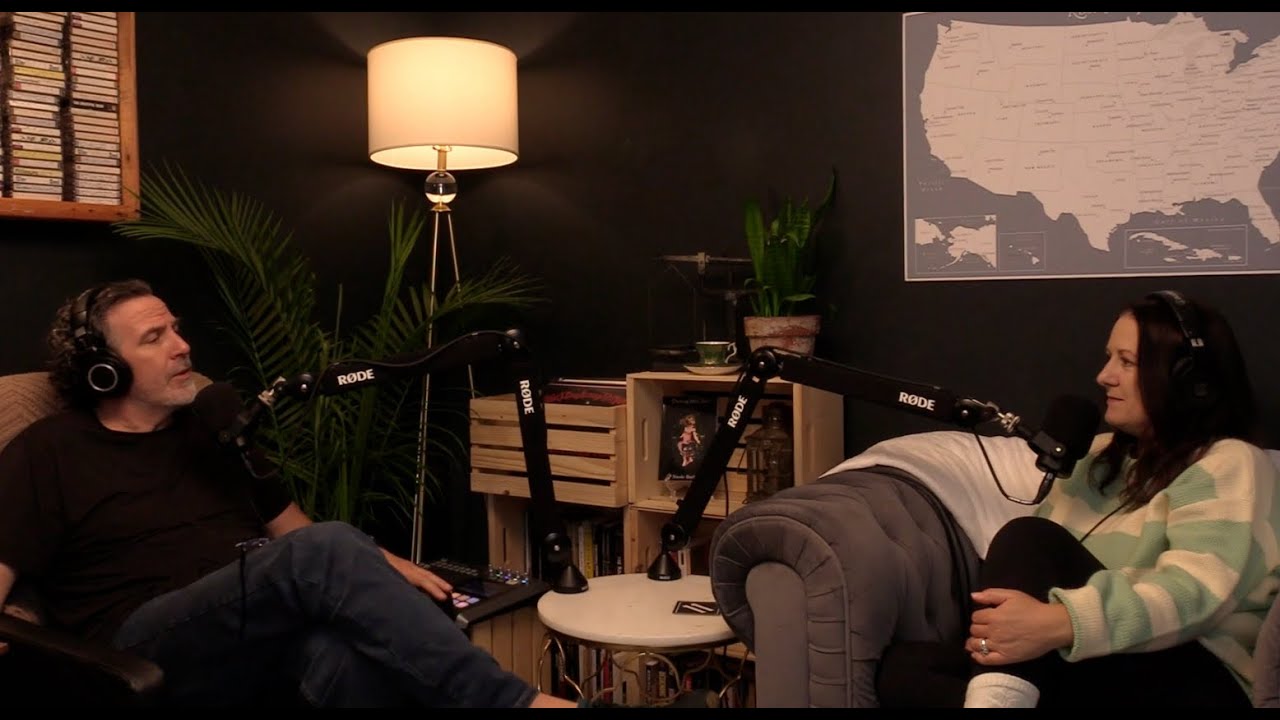
In this episode, the hosts discuss their journey of raising children while building their careers, reflecting on how they grew up alongside their kids. They share personal anecdotes about their early parenting experiences, the importance of communication, and the evolving dynamics of family life over the years.
[MUSIC] Welcome to GenX Adulting. This is episode number 2. Today, we're going to talk about how we were essentially kids when we started raising kids, and talk about the different phases we went through throughout our lives with each child we had, because they were very different. Oh, yeah. And how we grew up with our kids essentially to some degree. So we got married at 23, got pregnant at 25, and had Nathan, I was 26, you turned 26 like four months later or something like that. Yeah, yeah. I remember correctly. I did marry an older woman. So when we had Nathan, we had nothing. We lived in a house that is probably as big as this room, I would think, if you could compare it. The kitchen was probably four by two. About as big as this area right here. Yeah. Well, and if you're listening about four by two. Oh, yeah. Sorry. Then it was the tiniest little house that we brought him home to. His crib was right there in the main room. You were working up until I had Nathan. I was working, but then once I had Nathan, I stayed home. So that's one thing I would advise before anyone decides to either get married or have children together, is have that conversation about how you see each other's roles. You and I had that conversation really even before we got married. Actually, I think we talked about it when we were friends. We were friends for almost three years before we got together. And I feel like during that time, we even had the conversation where I told you that I wanted to be a stay at home mom because I didn't have that growing up. My mom was a single mom. She was working. I wanted to create the exact opposite experience for my own kids. You wanted the same thing, a wife who stayed home because that's essentially what you had.
I wanted to create the exact opposite experience for my own kids. You wanted the same thing, a wife who stayed home because that's essentially what you had. So have that conversation. I can't stress that enough because then you're both on the same page before you get going on it. Because when you start to have financial challenges or responsibility conversations, you want to fall back on that conversation. Absolutely. And also talk about how you're going to see the money situation in that because you never once made me feel like it was your money that you were giving me. It was our money to build our life with. You had the privilege of pursuing your career and focusing on that 100 percent with the knowledge that everything was good at home and your children were being raised. And you had no worries about the home front because I was home taking care of it. So it worked both ways. You supported the family financially. I supported the family on the home front. So have that conversation. It will really help over. It helped us immensely. It's honestly critical. We're almost over emphasizing it at this point, but it is very critical. You do have to have that. Yes. You have to be on the same page. 100 percent. Have the conversation. Do you both want kids? Yeah. That's important. And if somebody does not want children, that's not going to change. Yeah. And then have the conversation. How do you see the home front? That's how I like to think of it. How do you see the home front? How do you see the roles? So you and I had that established. The other thing I would say too is do not do the ultimatum game. We've had some friends play the ultimatum game, which is if we're not engaged by this time, then I'm moving on. Yes.
The other thing I would say too is do not do the ultimatum game. We've had some friends play the ultimatum game, which is if we're not engaged by this time, then I'm moving on. Yes. Then they jump into the marriage and it's over. Those do not last. So don't play that game either. Absolutely. I think it's one of those things, at least for my advice for young women or women in general, I shouldn't just say young women, women in general who are in a relationship. My opinion is a man knows within a year if he's going to marry someone. If he goes too long, I don't know. In my opinion, if he goes past three years and hasn't asked you to marry him, you're a placeholder. You are not the one for him. He's waiting to see if something better comes along or if his person is going to come along. Would you agree with that? Yeah, I was thinking you might even know sooner as a guy, but I don't know if that's the case in all cases. I'm not saying it's love at first sight and you jump on that and decide to get married and elope like in that weekend type of thing, but you know pretty quick, I think. When do you honestly feel you knew that you wanted to marry me, that I was your person? Oh God, I don't know. Because in some ways the theme of this conversation is kids raising kids. Yeah. So I don't know. We were kids. I don't know. I don't recall. Would you say it was on our trip around the country after we graduated from high school, we drove around the country college. I'm sorry. After we graduated from college, thank you. We drove around the country for two and a half months. Would you say it was during that trip or then we moved in together. Well, I think it, yeah, yeah. I mean, probably around during that time. You spend three months in the car with
half months. Would you say it was during that trip or then we moved in together. Well, I think it, yeah, yeah. I mean, probably around during that time. You spend three months in the car with someone driving around the place and a lot, you know, you know, it's, you kind of, you get a feel for your, whether you're compatible or not and if you like each other. You have to like each other before you can love each other, right? 100%. I think we got through that unscathed and we still liked each other. Yes. So there was definitely large potential. Yes. I think we talked every day on that trip nonstop. We brought the tapes that are hanging above you. We brought those in my car. Yeah. He's got, I don't know how many bootleg Grateful Dead tapes. Yeah, but it's fine. But there they are. They're above. Yeah. But so we brought most of those thinking we would listen to them because my car at the time had a cassette player because this was 1994. No, 1993. This was 1993. The map above me says road trip 93. So we plan, there's a map above me and it says road trip 93. For those who are not watching here in a room here, we're in opposing chairs above me is a set of about 200 and something Grateful Dead cassette tapes, you know, handwritten covers and things like that. Their bootlegs. Then above Nicole is a map of the US that says road trip 93, which we are going to track. Yeah. We, we did a real good road trip starting in Portland, no Ashland, Oregon, and went all across the Northwest, Northern part of the US over to the East coast and then looped back around through the South. We'll go through that someday. It was a lot of fun. We'll do a podcast on that. We're actually going to track it and then talk about it. But so after, so we brought the tapes, but we
South. We'll go through that someday. It was a lot of fun. We'll do a podcast on that. We're actually going to track it and then talk about it. But so after, so we brought the tapes, but we only used a few because we talked every day for two and a half months in that car as we traveled. That was a first clue to me that, okay, something's here. Some, you know, and then I just knew you were my person. But like to go back to about men, I think that men know. And if you go too long as a woman, you don't, I tell my daughter, don't give away your baby ears to a man. If, you know, it's, more vital for a woman is on a timeframe, a time clock here. So, you know, obviously give it some time, but no one to walk away for yourself. Anyways, that's my little bit of advice there. So we drove around the country. We lived together for a year. During that year, you asked me to marry you in May. And then we got married in September in Las Vegas. That was a blast. And, um, that was, we were 23 and then we moved to Michigan, lived in Michigan for about a year, moved back to Oregon and then got pregnant with Nathan. And we actually didn't even make it a year in Michigan. Was it just shy of a year? Well, what's crazy in, if you've ever lived in that area, Michigan, we were in Detroit area, it snowed on Halloween. Yeah. There was a foot of snow on Halloween. There was still snow on the ground at Easter. Yes. And we're like, we gotta get the hell out of here. It's just too cold. It's beautiful. It's beautiful. It's Michigan's a wonderful state for used to be. I don't know. It seems a little nutty now, but it's still a beautiful state. So beautiful. Yeah. Um, it was cold, like really cold. It's a Canada cold. Yeah. There is an Arctic cold. Yes. For sure. But so we, then we
but it's still a beautiful state. So beautiful. Yeah. Um, it was cold, like really cold. It's a Canada cold. Yeah. There is an Arctic cold. Yes. For sure. But so we, then we moved back to Portland and got pregnant with Nathan. We were 25. Uh, we were renting at the time. We had already rented, let's see, an apartment in Portland. We rented a home in Michigan and we rented then this little home in Portland and had Nathan and brought him home to this teeniest, tiniest little house. I remember every Christmas I make, gosh, dozens and dozens and Christmas cookies of at least eight different types of cookies. I still do. You're doing it then too. Yeah. I still did it in that little tiny kitchen. That kitchen was literally, you could not have two people in there. No. And at one end of it, so picture a rectangle, maybe the size of like a crib mattress. Yeah. Right. It was probably about that. Yeah. And at one end of the crib was the fridge, which was small. Yes. And there was a, um, tiny sink, tiny sink and a tiny oven, like a half of it, like a little oven. I made all those cookies and I, they were drying on racks and stuff around the little house that we had anyways. So I had worked up until having Nathan really up until I think I stopped working maybe a week before I had him at that. And then we had Nathan and I stayed home. We had no money except for what you brought in. You were working two jobs that you're working at the greenhouse. I might've been just the greenhouse at that point. You worked at a wholesale greenhouse company and then you got the job at the phones, right? Calling people. I think I was, Oh no, that was earlier. I went to jobs. I had the phones and the greenhouse, the nursery job. Then we moved to Michigan. Yes. And we
job at the phones, right? Calling people. I think I was, Oh no, that was earlier. I went to jobs. I had the phones and the greenhouse, the nursery job. Then we moved to Michigan. Yes. And we came back and got sort of a promo, I guess, a promotion. Um, moving back and worked my ass off. But, um, eventually there's just, there's not a ton of money in that. So then I got into it. But when we moved back, you went back to work at the wholesale greenhouse. Yeah. Yeah. A hundred percent. And then you got into it. Yeah. And then right at the beginning, right? Like what you were what, doing what at the very start of it? Yeah. Back then, um, if you're younger than Gen X, you may not remember this, but we used to connect to the internet through phone lines and modems. So us West, which I don't even think us West is around anymore. I forgot about us. Right. They're out of business. Yes. Um, we, I was working doing tech support for dial up, uh, customers, their internet customers. So people who could not connect to the internet, we talked them through how to get connected. And to your point, that was very, very early on even pre.com. That was what year was that? 90, 90. Uh, he was born in 97. Yeah. 97. So again, time stamping ourselves or dating ourselves, it was windows 3.1. And then windows 95 came out and windows 98 came out. And that was really the start of the internet. Right. Yeah. Yeah. So you were there right from the start, right at the beginning. And I should mention when we lived in Michigan, your dad, my dad bought you your first computer. Yeah. Yeah. And that's, that thing was one of those big, it was actually a Pentium 90 with either four or eight gigs of memory had floppy drives. Uh, but it was fast back then. I think I had a 17 inch monitor that was
one of those big, it was actually a Pentium 90 with either four or eight gigs of memory had floppy drives. Uh, but it was fast back then. I think I had a 17 inch monitor that was like the size of the old TVs. Yeah. Yeah. That's crazy. So then when did you start working two jobs? Was it in Portland or were you only working the word? I thought you worked two jobs and we were in Portland. No, the, the, that us West gig was decent in the scheme of things for back then. Um, because it was an outsourced gig. So I, it was, I worked for a company called stream who was doing all this support for us West and they had tons of overtime opportunities. So I just, I don't know if you remember, but I would go in sometime, got to the point where I'd do four 10s or 10 hour days. But then each time, each day there was always overtime. So I could work like another four hours. Yes. I'm like working 14 hours a day, four days a week type of thing. That's fine. And I would be with Nathan. Yeah. I mean, right when I had Nathan, I think you had a week, it was a big deal. You had a week off with me because you were working so much. So you were off with me for a week. Then you went back to work. Um, you were gone a lot. I was with Nathan. And then we decided, then we moved into a bigger rental. Um, and I did a little daycare there. You, you set up a whole playground in the back. You had a huge garden and, um, I watched some kids and then we decided right before Nathan turned two. So this was in right as it turned 1999, uh, right before we, um, so right at the end of 1998, we drove to New Jersey and moved to the town where you grew up. Yeah. And probably why we did that at the time is because we both wanted a smaller town atmosphere to raise our
end of 1998, we drove to New Jersey and moved to the town where you grew up. Yeah. And probably why we did that at the time is because we both wanted a smaller town atmosphere to raise our children. Portland was feeling like it was getting a little too much of, no, I can, I'll nail this one for me personally. He wants to say, but no, I mean, Portland was becoming a drug culture. Portland was always pretty liberal or obviously, right? Yes. Liberal. You don't become what it is today overnight. Right. Um, but it wasn't, it wasn't what it is now when I was growing up. I like to clarify that we actually hit Portland personally for me, um, not being from there. I felt like, Hey, well this is Portland's a pretty cool town, right? Yeah. The Brewers Fest and good music scene. It was safe. You can go downtown Portland at two or three in the morning and no, no problems. Um, but meth is really became meth became an epidemic back then, right? Meth hadn't really been on the scene and it moved in and Portland was sort of an epicenter of it. The West coast Pacific Northwest. Yeah. Full of methods. So it was no place to raise a kid. No. So for me, it was very simple. We're not raising a kid in this environment. It's fine. If you're in your twenties, thirties, whatever dual income, no kids, no harm, no problem. Right. Once you have kids, I wasn't cool with it. So we, that's, we weren't comfortable with it. No. So we moved out to New Jersey and, um, really quick. Do you remember the ride there? Yeah. Um, we did it in the middle of the winter. Yes. Rent at a U-Haul or a rider. I think it was a rider. Yeah. Loaded up the bus, the two of us. Two dogs. Yes. Remember we had the dog sitting at our feet. Yes. And driving across country in
Rent at a U-Haul or a rider. I think it was a rider. Yeah. Loaded up the bus, the two of us. Two dogs. Yes. Remember we had the dog sitting at our feet. Yes. And driving across country in the middle of the winter. Well, no, we didn't have karma. She passed away right before we left. Oh, that's right. So we just had mocha. We just had mocha. Yeah. Okay. Um, do you remember the oil filter or the fuel filter got clogged and we got stuck in Wyoming? Yes. That was fun. Was that on the way to New Jersey? Um, yeah, I think it was. Yeah. Cause we had a kid. We had, this is crazy. Yes. It was cold. It was treacherous. It was a little sketchy at times crossing bridges. Um, cause we were driving through the whole Northern part of the country. Yeah. So we made it with all of our stuff and then lived with your parents for a year. Yep. Thank goodness. Yeah. We had that landing pad and did you have a job when we went out there already? I did. Um, I can't did we go, did we do Christmas in New Jersey that year? We must have arrived before Christmas. Yeah, because I went and interviewed at a, at a local ISP, Net Access, actually. I met with them over that break when we were visiting. Um, I got offered the job and then we moved back, our shit up and moved. So, um, what did you do at Net Access? Very similar stuff, um, started in their, their, uh, what do we call it? The technical support center or the tech technical assistance center. Same thing that access was an ISP at the time, local ISP. So now, you know, it's, it's, it's a fascinating thing because a lot of these ISPs are gone. ISP stands for internet provider. Um, now that's all, if you're in the Northeast, you probably have Comcast or Verizon.
it's, it's, it's a fascinating thing because a lot of these ISPs are gone. ISP stands for internet provider. Um, now that's all, if you're in the Northeast, you probably have Comcast or Verizon. Down here, we have AT&T or Comcast. Back in the day, it was all smaller companies, right? It was all these regional entrepreneurs who's, who set up ISPs. And basically it was a, you, you got what's called an ISDN line that connected to the internet and people would call in on their dial-up connections and you get connected to the internet. And again, it was supporting those people. Um, wasn't the technology, right? It's almost like fax lines, fax line type of stuff. But, you know, so I started in that and then as time went on, I moved into the NOC, which is the network operation center dealing with, you know, just higher sophisticated things or more technical things. So yeah, this was all at Net Access. Yeah. And did you only work at Net Access at that time when we were living with your parents, you were just working at Net Access, right? I was, but that's the time this would be my career advice to people. When you're young, you do what I guess I'm about to say, but remember, I would work, I think I had to be at work at like nine or nine 30 and it was half an hour away or so. So I'd leave the house half an hour before, go work, and then come home. And I would stay up till two, three in the morning teaching myself everything I was doing at work, really. And at the end of the day, what I was teaching myself was how the internet works, how to networking, routing, switching, DNS, domain name services, how to set up mail servers, how to set up FTP servers, everything related to how the internet worked and how to connect computers and servers and
DNS, domain name services, how to set up mail servers, how to set up FTP servers, everything related to how the internet worked and how to connect computers and servers and workstations and people to the internet and broader networks. So I don't know what you asked me, but that's what I was doing. Yeah. Well, I asked you if you were working two jobs. I had one job, the second was almost night school, my own personal night school. Right. So the second job I would say was teaching yourself and to your point, when you're young, especially if you don't have a spouse or children, definitely grind, definitely burn the candle at both ends. This is the time to do it. We did get married young and you had a responsibility for a family at a very young age. So you were more than motivated because you had to be. Now, if I will pause there, if there's any one younger listening or even a Gen X or who's looking for a career change, the move now would be teach yourself Python, GoLang, how Azure works, how AWS works, really how to code. You hear that a lot, like teach yourself how to code and you'll find it's kind of true to a point. A lot of that's getting off short, but if you know how it works, you can manage it. Yeah. So yeah. No, that's good advice. So you were working your butt off. I was raising Nathan and we were saving money and then I got pregnant again while we were living with your parents. I got pregnant with Kaya and I believe you took a new job around that time too. I did. And where did you go from there? The company called G-Triad, which was a kind of a dotcom startup that a larger company, Computer Horizons bought. Both these, they're both out of business, which is wild. But yeah, so G-Triad, we managed the web infrastructure for various companies like
startup that a larger company, Computer Horizons bought. Both these, they're both out of business, which is wild. But yeah, so G-Triad, we managed the web infrastructure for various companies like toysareus.com, Dow Jones University, Amex had some sites that we managed. Yeah. It was pretty cool. That was like pretty high end stuff and the way it kind of worked, G-Triad had a development arm. We had developers who would develop websites and applications in an application server called ColdFusion. We handled the web server side of it. Okay. So and with that new position, you had a salary raise. This is how it works. Yeah. Okay. As you're building your career. A little more career advice, I guess. In the beginning, you can job hop a little bit. You probably need to. Yeah. I mean, I started in tech support, which pays shit. You know, just do it so you learn, but teach yourself more. And then yeah, to your point, I took this next gig and then became a manager. And then you start to make some money, right? You get mid-level management type of stuff. Right. Right. Right. But from that mid-level management, we were able to purchase our first home. Yeah. So we purchased our first home. I was pregnant while we're painting the walls inside getting the home ready. We had friends and family helping us and we moved in. And I believe a few months later, we had Kai, our daughter. Yeah. And so I was 29 and you were 29 as well, because this was in November. So we were both 29. So we had two kids before we were 30 and you were still building your career. I was home still. Nathan was starting preschool and we just kind of hummed in New Jersey, raising our kids, you know, doing the Nathan started a little league or T-ball.
building your career. I was home still. Nathan was starting preschool and we just kind of hummed in New Jersey, raising our kids, you know, doing the Nathan started a little league or T-ball. Kyle came to all the stuff because she was the younger sibling. We spent time with family. It was where you grew up. So we were involved in the community. Yep. And then did you accept another position during that time from G triad or were you at G triad that entire time? Well, so during that time, the dot com bust happens 2001. So it was very interesting time. We, I think I went through the Y2K stuff. Yes. In at net access was a side note. Could you share when 9 11 happened, what you were asked to do? Where was I at that? I think I was at G triad. Yeah. I was at computer horizons. Yeah. Yeah. Pretty wild. A quick 9 11 story because everyone so I was getting Nathan ready to go to preschool. I think I had Kai in my arms and looked at the TV and saw the second plane hit the second tower. You called me. I think the, the plane had hit the first plane had hit. No one saw that. That wasn't filmed. Well, it was filmed by a few home videos. But I remember, I remember leaving, getting ready and it hit and it's like, wow, you were on your way to work and you called me. This was, I thought I, you turned around and then said, I'm going in because I didn't think it was not a big deal. Right. The first plane hit. And then it was not a big deal. And then I got to the office. Okay. Yes. The next plane hit. And I remember being in the office and everyone's like, wow, what, what the fuck is going on? Right. And, and they, you know, there was some kind of that semblance of, okay, what's happening? And then I left, I went home and everybody was,
is going on? Right. And, and they, you know, there was some kind of that semblance of, okay, what's happening? And then I left, I went home and everybody was, and you know, we were, we had our own place, but my parents place was half a mile away or whatever. We all went there. We all went there. It was your dad's birthday. Yeah. And watch the news and kind of freaked out. Absolutely. And then, what were you so we had a contract at the time with the, or at least contacts with the FDNY, uh, New York fire department. And we were, we were asked and volunteered. I didn't get paid for this. I don't think we, any of us got paid for it. I don't even think our company got paid for this. Um, but we went in and set up a pier 94 in New York. And what pier 94 was at the time is basically, you know, if you picture the Hudson, not the Hudson, probably the East river or whatever, whatever there's on the other side, I know the Hudson. I don't know what the other river is. Maybe the, it might be the East river or something like that. Um, but the pier 94 was a big kind of warehouse. You know, as ships would come in, I think normal stuff would get put in there or something. I don't, I don't even know, but what either way, when we got there, we set up all the computer systems and phone systems for the DNA collection, um, uh, effort, I guess you'd call it. Well, because at the time, well, what, what went down there is, um, this is back when Giuliani was married to, cause I remember him rolling in. This is Giuliani before he became whatever he is but he was a great mayor in New York at the time. Um, it was interesting. He showed up and just had this presence larger than life, right? Just a celebrity either way. Um, we set up different,
but he was a great mayor in New York at the time. Um, it was interesting. He showed up and just had this presence larger than life, right? Just a celebrity either way. Um, we set up different, you know, they were curtained off rooms and probably a couple hundred of them with a computer and a phone in each one. So we built out the network, we connected everything. And, um, if you had a loved one or a missing person and, and, uh, what you would, people were bringing bags of like, say a toothbrushes or, or hair brushes and combs and anything that had their loved ones DNA on it. And it was so premature though, in so many ways, but it was just this reaction. Everyone came together, right? Everyone came together. We built out to peer 94 and a shit. I don't even know. I was gone what, for like a day and a half. I don't know. You were gone for almost over two days. Yeah. I don't even know. I just, you know, we, three days you were gone. Yeah. We went in and then the flash, you know, you do all this stuff and we're just, everyone was grinding. But when I say it was premature, because the building was still smoldering, right? There was still that plume of smoke and shit was just still on fire. Probably very deep in the earth. They were still searching for survivors. Yeah. Finding people, they probably found people, but we were there within, I guess, 48 hours setting that up. Oh, easily. Yeah. If not sooner. What's interesting though, about that is, um, when we first went in, you know, coming from New Jersey, you go through the Lincoln tunnel and, um, back in the day, there was tolls and there's probably tolls again, but they stopped everything this time. Right. So now we're like, it's fresh, but they waved us right in. It's
and, um, back in the day, there was tolls and there's probably tolls again, but they stopped everything this time. Right. So now we're like, it's fresh, but they waved us right in. It's very interesting. So they were, I remember them opening trucks, having them open the back and look inside and stuff. But as we rolled in, we obviously didn't look like bad guys and they just looked at us and waved us right in. They profiled. It was a trip. It was just, it was very interesting. And that was obviously pre 9 11, where, you know, within two days of 9 11, the world's changed the, you know, we're completely spied on at this point, right? Everything they know, everything, um, they being the government and the intelligence agencies back then, I, they probably knew, but who knows, right? I'm not getting into conspiracy level. It was just very interesting that we did not get a full security shake down. Right. It was easier to go through the Lincoln tunnel two days after 9 11 and it is the board and airplane today. Right. Right. And I remember you telling me also a story related to 9 11 and then we'll move on. Um, you were supposed to have a meeting with Lego Yeah. On 9 11. Yeah. And you had switched it to 9 12. Yeah. Yeah. No, it's an amazing thing. It's my procrastination worked out pretty well. Not that anything would have happened, but I would have gone through the world trade center subway. I would have taken the path from probably from might've gone into like Jersey city instead of I've done that, that, you know, I've, it would have been a follow-up meeting. So prior to that, I would go to Jersey city, catch the path, take it right over to the midtown Manhattan and into the world trade center. There's a massive, um, train station
So prior to that, I would go to Jersey city, catch the path, take it right over to the midtown Manhattan and into the world trade center. There's a massive, um, train station there. It's, it's, it's a shame because I don't know what it's like anymore. But back then it was like, I remember my first time doing this and the escalator was like, you know, you go to a mall, it's like what 30, 40, I don't know, 50 feet tall. This thing, these things were like 200 feet tall. It's crazy. Um, but yeah, I would have gone in and it would right at that time would have been around nine ish. Um, my buddy did go to something. I don't know who he was meeting with, but he got into the, he got off the train in the world trade center and felt the ground shake and heard a big bang hop back on the path and got the hell out of there. So you got very lucky. Yeah. Oh, 100%. And I would assume that would have probably been my fate as well. I don't know. Knowing you, you always want to know what's going on. So I think you would have stayed and seen what's yeah, you have a huge, huge amount of curiosity about pretty much everything. So I think you would have stayed to see what was going on. So anyways, so, uh, during that time you said Y2K, you were with G triad. Is that the company that went in? And then, then did you change companies after that? Yeah. I went to, um, allied. Right. And that was another move, right? So did you move from manager? Did you get a new title when you went to the VP of it infrastructure? Okay. And honestly, that's, that's, uh, that goes back to like, you gotta teach yourself things, right? So again, career advice for anybody is don't just be a one trick pony. You gotta learn different things about whatever you're interested
like, you gotta teach yourself things, right? So again, career advice for anybody is don't just be a one trick pony. You gotta learn different things about whatever you're interested in. You go for it. So I mean, that was that moved on from just networking to all of the infrastructure. So servers and big IBM refrigerator size servers and mainframe type of systems, and then warehouse systems and the computers that everybody uses and the printers and the fax machines and the phone lines and all that stuff. So you working there allowed us to continue to live a nice life. I was able to stay home as the two kids grew up in Sparta. Um, Kai started playing softball. Nathan was playing you were coaching, um, with the nice thing, you were still working so hard, so hard, um, that you'd be gone. I think sometimes you left because where you worked was, I want to say an hour to an hour and a half each direction. And so sometimes you would leave before the kids got up and then you would get home right as I was reading them a bedtime story. This was like Monday through Thursday and Friday, but then Friday you'd come home and you were home and you made that Friday, Saturday, Sunday, big time family time, nothing against guys who golf, but you weren't golfing. You were home on the Saturdays. You didn't go to the bars with the guys. You were, you were a family man and that was our values. Now, every, everybody makes their own decisions. Everybody has their own way of working things out. This is what worked for us. So you would be home. You coached Nathan's little league. You coach. I think you helped coach Kai's softball. Um, and then I don't think she was playing softball yet. She played one year of softball in New Jersey members. She, um, after a game
think you helped coach Kai's softball. Um, and then I don't think she was playing softball yet. She played one year of softball in New Jersey members. She, um, after a game is when she caught her cleat in, uh, the stairs at the playgrounding, cut her under her chin and needed stitches. But you were there on the weekends for them. And then if they did have a game during the week, you did make it sometimes you were late to a game. I remember you'd come in late to games, but you were there as much as you could be. But Monday through Friday, I kind of felt like a single mom. You did start traveling. Um, you had teams all over the world. And so I did it totally different gig, but yes, that now we, that was company though, right? No, we got bought out. And that's when we moved down here. Okay. Okay. So I'm jumping ahead. So you were working really hard, still building your career. I'm on the home front. And then Nathan's in fourth grade. Kaya is in kindergarten and your company was bought out by a company down here in Florida. And we looked at each other and had long talks and decided this was the best move for your career, which would be the best move for our family. So I didn't want the kids to, well at the time too, right? So the, the housing crisis of 2007 was happening. We're at 2007 now. Yes. Yeah. So yeah, that was pretty dodgy, you know, in some ways because the company I was working at sold move and I never thought we would live in Florida. Never. Florida was sort of laughing stock material, right? Any weird stories or any, I think it's a thing to a lot of people still is. Yeah. So you hear about weird shit. It's like, Oh, that's probably Florida, right? No, Florida's turned the corner. Quite frankly. Now it's like weird shit is happening
people still is. Yeah. So you hear about weird shit. It's like, Oh, that's probably Florida, right? No, Florida's turned the corner. Quite frankly. Now it's like weird shit is happening elsewhere. True. It's not as, you know, there's still some good stuff down here. Oh yeah. It's still very much Florida. Yeah. But yeah, you're right. So the housing crisis was happening and we needed to look ahead. And I guess that's another thing for people that are younger, building their career. Sometimes you're going to get thrown a curveball. Things are not always going to stay on the same path that you think they are. The trajectory of your life could change in an instant for many reasons, but one of them is a job change and you family. Cause that's the best thing. Move away from, we moved away from grandparents, yeah. Ants, uncles, cousins, our children were very close with their cut. They still are. Thank God. But they were very close. Um, it was a brutal decision. The kids did not want to move. I didn't want to move them in the middle of the school year. So you moved down here in January, lived down here and flew home almost every weekend to see us. And then, uh, we did that up until we moved in. Well, we waited until the end of the school year, the end of the school year. So we moved end of June, beginning of July. Yeah. We moved down here. I remember moving, um, when we moved here, moving our stuff in and we rented, when we came down here, we sold our house. Actually, we didn't sell our house. That's a whole other story. Yes. Um, but moving in until like July, the middle of July, you felt like the sun was literally five feet above your head. We've acclimated since, but that was crazy. We had never experienced a heat like that. No. Um,
the middle of July, you felt like the sun was literally five feet above your head. We've acclimated since, but that was crazy. We had never experienced a heat like that. No. Um, so we moved, we, we rented for a while while we got to know the area. Um, and then we eventually bought our own home here. Yeah. And, and like you said, it took us a while to sell our house in New Jersey because of the housing crisis. So we've been through, that was terrible. We've been through housing crash. We had people coming in from other States and they were offended by what we were selling our house for, but in New Jersey, that was normal. What we, you know, so that was rough as people would be shocked, but what you sell a house for Texas at that time was much less than what you sell for in New Jersey. So we went through a lot of that. I think it took over a year to sell our house. Yeah. No, I was thinking about that. The challenge at the time was selling a home anywhere was tough. Um, and then to want to buy a home was equally as unnerving. Right. I remember living down here and driving through the streets we drive through now, the neighborhoods, and you could literally every home on the block was for sale, not literally, but you know what I mean? You look down and you would see for rent, for lease or for rent for sale or for closure. It was, which was really just sucked. Um, but yeah, our house, we sat on that house for the whole winter. It was super cold winter heating oil prices were up. So we had to pay for snow removal, heat the house. So it wouldn't, you know, it had to be heated. Yes. Um, lights had to say, it was a very expensive year and so finally we sold the house. We got settled here. Um, with the kids, they started a new school. This is all part of
it had to be heated. Yes. Um, lights had to say, it was a very expensive year and so finally we sold the house. We got settled here. Um, with the kids, they started a new school. This is all part of building a life together, right? I felt my advice to people when you're moving, find the school first, then look for your home, which I did. I did not want to spend most of my life driving in a car from my house to the school, school to the house. So I found the school first, then we found the house. I would say that's, that's actually, um, that's sage advice. I didn't know that you were like, we've got to, we've got to live near the school. Yeah. And you found the school and it was key because it worked and the school, uh, the school was good. It was close to our house. Now you're in a community and that, that is, um, especially when they're the kids were the ages, they were, that was pretty big first grade. They were first grade and fifth grade. So we hum along, they get involved in sports. We get, I get settled in the community. Everything's going great. And then at the age of so good, so good, everything was just humming along, but life was about to get better because, um, I popped up pregnant. I want to say at the age of 38 and God just felt that in my opinion, that we needed, we, our family was not complete. I'm far more scientific about it, but, and gave us our bonus baby Dylan. And so we were all kind of like, what? So for the people that, um, that happens to, I'm here to say everything's going to be fine at the moment you panic, because again, your life was headed in one certain direction and now you're, it's, you're, it's completely going in another direction. And it's like, what, what are we doing? What are we going to do? It's all going
headed in one certain direction and now you're, it's, you're, it's completely going in another direction. And it's like, what, what are we doing? What are we going to do? It's all going to be fine. It's, and better, it's going to be better than what you ever could have imagined. And you can't imagine. It is just what it is. You don't, you start to not know any other life. Yeah. You couldn't imagine it any other way. So at 39, I had Dylan and you were still 38, I think. No, no, I had Dylan at 38 and turned 39 a couple of months later. You were still 38 for a little bit longer. So we had a new baby. So our Nathan was 13 years older than him or is 13 years older than him. Nathan was 13. Kaya was 10. So it was exciting for them to have this little baby, exciting for us. You know, we were heading into our forties and starting all over. And ironically, I think a month before I got pregnant with Dylan, we had a garage sale and I had gotten rid of, other than the sentimental stuff that I was keeping, I sold or got rid of all of the toys and then I got pregnant. So now I don't get rid of anything. I keep it. I keep it all in a storage unit, all of Dylan's toys, everything. What's that? Yeah. I'm saving it for our grandchildren. Semi-professional hoarders at this point. Well, it's organized, but for our grandchildren, God willing. But, uh, so we, we had Dylan and what's interesting about where we were at when we had Dylan, you look back on where we were with Nathan, bringing him home to a little teeny shack. And then with Kaya first time homeowners, we didn't even have living room furniture for like, I think a good three months in that house. Cause we were all the money was going towards buying the house and getting set up. It took us
we didn't even have living room furniture for like, I think a good three months in that house. Cause we were all the money was going towards buying the house and getting set up. It took us a while. Well, we had furniture. It just wasn't new. No, no. The, the upstairs part, we didn't have furniture there for a member. We had it downstairs. Finally we got furniture. We didn't have furniture off the dining room for a while. Yeah, I do. So it's that we weren't totally established, but then with Dylan, we were, you know, you were at a place in your career. We were established, you know, we, and more than established, he was coming home to siblings and, you know, my mom, thank God, moved down here when we did. So there is a grandparent down here or there was with him. She's still here. So to go from to, to just watch the phases, raising the kids where we were, what was going on in our life and what we needed to do to get to that point of feeling, because the company that bought out and moved you down here, you're still with. And it think, and thank God that's been a great experience and that's continued to allow us to have a wonderful lifestyle for the kids and allowed me to stay home. But again, it started in a little tiny shack with no money. What's funny is, well, so think about this too. And I still have this bike, but I bought the bike. Yes. And I used to ride my bike when we first had Nathan lived in a little shithole shack about the size of this room. I would ride my bike along the biker's path along I 205 in, in South Portland or Southeast Portland. Yeah. So I'd ride my bike to work back and forth. And then when we had Kaya, we, my commute was 35 miles or 10 miles outside in New York. Yes. That was like an hour to an hour and a half or more,
I'd ride my bike to work back and forth. And then when we had Kaya, we, my commute was 35 miles or 10 miles outside in New York. Yes. That was like an hour to an hour and a half or more, depending on each way, each way, yeah. Which sucked, which really lends itself to why I wasn't around as much. Absolutely. I think that's a good point there. You know, you need to be close before traffic starts, then you wait till traffic ends before you know it, you're in a 12 hour day. Right. One nice thing about here is I'm 6.2 miles from the office. Right. A left, right, right. Yes. Huge quality life difference. And I emphasize that because it's huge. You don't want to work too close pretty close. You want to minimize your community. If possible. We've lived all of those experiences and by far the best one of course for you and for the family. And I would say another area where Dylan has a very different experience is Nathan and Kaya when they were young grew up with you not around during the week for the reasons you just stated. You've been around and for like constantly for Dylan. You've been home for dinner. You would see him before he goes to school. He's never known you not around now to go back to the traveling. When you took this job with this existing company, you were traveling when we were living towards the end of New Jersey. And then when we first were living here. So the kids also went through and I went through, they went through having a dad who travels. I went through having a husband who travels. Once the market really started getting bad, your company stopped all that. But even I think that went on for what? Two years? At least a year. Or a year. It was fun though. It was fun for you. Yes. No, and it's nice you got to see the world, but I will say it's a
that. But even I think that went on for what? Two years? At least a year. Or a year. It was fun though. It was fun for you. Yes. No, and it's nice you got to see the world, but I will say it's a different world for a wife and a mother. Yeah. And it's a different world for the children. And again, if anyone is in that situation, just starting out, keep that in mind. You know, it's going to be a different lifestyle. It could work for you, could not, but it's a very different lifestyle. Many people live it. Yeah. You know, we just ours didn't last. It would have kept going if the market hadn't, you know, yeah, I think. Well, the other thing too is COVID. Now, obviously, well, that's much later. Yeah. COVID changed things too. A lot of guys that would be in sales that would travel just to travel, you know, get customer touches. A lot of, you know, that stopped a lot of that. Yeah. Then it's still going on today. Well, COVID is a whole another thing. I mean, you were, you lived, you worked close to us. So you were around, but then once COVID hit, you were working from home and then your company allowed your team. So you've been home ever since COVID. Yeah. So that changed my life. Yeah. For the better, I assume depending on the day. Yeah. Yeah. So I guess another one, something that I would say, whether it was Nathan, whether it was Kaya or whether it was Dylan, something that we had, all three that's vital is create open communication with them. And that starts as young as preschool. And the way it starts, if I can give anybody advice on that is when you pick them up from preschool or you see them at the end of the day, you ask simple questions of what was your snack today? What did you color today? What, when did you, what did you
when you pick them up from preschool or you see them at the end of the day, you ask simple questions of what was your snack today? What did you color today? What, when did you, what did you do on recess? Little questions like that. Then when you get into elementary school with them, it gets into bigger questions. Like they tell you who's being mean to them or, you know, what grade they got on a test, middle school, they're still, even though it's different, that communication has been established. Even if it's like pulling teeth, they still will tell you one thing I've learned once you get to middle school is when to push and when not push a little bit back off and be quiet. And then they come to you and tell you things. It's kind of like a dance. You take two steps towards them. One step back, two steps towards them. I don't know if I fully learned that yet, but I like to know. You like to know right away. Right now. Yeah. Let's talk. Yeah. Tell me everything. So once I get to middle school, my tactic is I plant the seeds. I say it, I let it sit. I let it marinate and quiet and invariably they come and tell me if they don't, I say it again. And then if I really feel if I'm concerned, then I push if it's something about safety or whatever. And then that leads to high school where they will talk to you about almost anything our kids did. We've caught, we caught a lot of people. We've caught them in lies a couple of times, you know, and, and I think the biggest one, Nathan only wants grounded. Yeah. But other than that, open communication, which has continued through college and our older two are in their twenties and we talk to them every day. Our older kids are graduating from school, saving money. So starting when they're little with those little bit
through college and our older two are in their twenties and we talk to them every day. Our older kids are graduating from school, saving money. So starting when they're little with those little bit of questions, it, it breeds this open communication and sometimes it's a blessing and a curse because as they get older, they start telling you everything. Some things you don't want to know, but they get comfortable, but you, you need to grow up and be able to deal with it too. As a parent, you do. And one time I remember there was something going on with Kaya. You were having a really hard time with it. And I said to you, look, you can either be part of this narrative or not, but it's happening. So it's, it's not, this doesn't have to do with her. This has to do with you deciding if you want to be on this journey with her, if you can get out of your own way. Well, you know, when we were talking about a topic to cover, it was how we were kids raising kids. And then you might've said that in the beginning, but there really is part of that. Right. As if you look back over the time, at least me personally, I know I've grown quite a bit. I didn't know it. No interest, no knowledge, no experience dealing with younger kids. At least you have a degree in early childhood education, right? And did nannying. And so you, you kind of had an idea. I had no fucking clue. Right. So it's been a, I think that, um, I think that's true though, for everybody. I think that every day of parenting presents a new experience and a new challenge. And we're, we've been doing this now for 27 years and I would still say we don't know what we're doing. I don't, it never ends. No, it's constant guesswork, especially with Dylan now. And what's really just
years and I would still say we don't know what we're doing. I don't, it never ends. No, it's constant guesswork, especially with Dylan now. And what's really just over the top crazy is how much the world has changed since when Nathan was first born and where Dylan is now. Yes. The world's fucking crazy. And it felt a little bit nutty back in the day. It's really gone off the rails now in, in terms of just, just being a Gen X or we're from a different mold, right? Some of these things aren't necessarily natural or as important to us. Um, for what's important for kids today in, in terms of say, accepting everybody. We didn't always accept everybody. Right. You kind of have to now. Yeah. Whether you want to or not. Yeah. And, and there's good and bad with that. No, I mean, Gen X, please. I mean, there was no politically correct. Anything you said, whatever you wanted, you did whatever you wanted for good or bad. Yeah. You know, I think that, um, the way things have evolved is really positive in a lot of ways, but then I think there's a lot of detriment to it and it's very stifling. Yeah. So I think, yeah, you look at how Nathan grew up. My gosh, like you said, when you started working, it was the very beginning of the internet to now where, you know, social media and the phones and it, it, it, from our first child to our last. Yeah. And so the, the, the, uh, internet alone, the situation with the internet grew during those years. Well, 27 years is when our, you watched it just take off. So that alone is even more than just the internet. It's the internet. It's mobile phones. It's apps on your phones. But I mean all of that. That's what I mean. Yeah. Like technology, technology. I'm using the wrong word technology. Sorry. I forgot. I'm talking to an IT guy.
mobile phones. It's apps on your phones. But I mean all of that. That's what I mean. Yeah. Like technology, technology. I'm using the wrong word technology. Sorry. I forgot. I'm talking to an IT guy. But technology. So I think that also is so interesting is as his parents have had to grow with the technology that grew along with our children. Well, it's an amazing thing because now we use the find me. What does it find my, find my phone or something? Yeah. The find me function on the iPhone. I should know this. Um, you should. But back in the day when the kids were older to were younger, it wasn't as easy to, to, to, to find me. Track them now we know where everybody is at all times. Um, it's an amazing thing. No, it's, it's, it's crazy. Uh, it, the whole thing and it's for good or bad, right? Because the good part is that we have a family chat. And when our kids, the older two were in college, we could be in constant contact with them. We didn't feel like we were missing out on anything in their lives and they didn't feel like they were missing out on anything at home. So when they would come home, you didn't have this feeling of needing to catch up because you'd been in constant contact. That is an amazing thing. It's an amazing thing. So you were automatically comfortable. There was no adjusting and no time was wasted catching up. It's a beautiful thing. The find my phone. A lot of people use life 360. It's a beautiful thing. The negatives of course are the social media and all that, which we've talked about in episode one. We talked about that a bit. So, but as a parent, you know, having to learn how to deal with kids having phones and when do kids get social media? And a lot of parents are very anti social
that a bit. So, but as a parent, you know, having to learn how to deal with kids having phones and when do kids get social media? And a lot of parents are very anti social media, but here's the tough part with that. If all the kids are communicating through Snapchat and you don't give your kids Snapchat, your kids out of the loop. And so, and then some parents don't care about that. I feel that to me it's important that we don't cause social grief for our children because of our fears of an app. And I'm not putting people down. I'm just saying that obviously the app concerns me and I know there's been a lot of dangerous things on the app. There's a lot of risks. You're almost even touching on a broader topic of just keeping up with the Joneses or the kids themselves. Yeah. Whether it's a hairstyle or the brand of clothing, but we had that too, right? When, when we were kids, it was, I don't even ocean Pacific was huge. And I think seventh grade then polo Ralph around polo. Yes. The members only jackets. Remember those. Oh yeah. Yeah. No. So that's always happening. So I think for us, it's that, but yes, it's the same thing, but it's now for us as parents, it's technology. Well, it's 24 seven. At least back in the day, we had a phone that was hanging on the wall. If it rang, you could ignore it. If it went to voicemail, you could listen to it. Now it's like everybody knows you've got a phone. Aren't you picking up? Aren't you texting me back? You know, you only have a certain amount of time there. I think where, you know, you run out of excuses. It's access 24 seven. Um, they have to each other. So if you're in a, if you're in a bullying situation, that's horrendous. If you're in a boyfriend girlfriend situation, it escalates the
It's access 24 seven. Um, they have to each other. So if you're in a, if you're in a bullying situation, that's horrendous. If you're in a boyfriend girlfriend situation, it escalates the speed of a relationship 10,000 times more. It's crazy. So we had to adjust to that. Right. So that's the thing. We had to adjust to that. That's the thing. That's the, that's the reason why we had to adjust to that. Right. And that's the thing. We were one of the first ones to give Kaya a phone, one of the last ones to give Nathan a phone and just figuring all that out. Yes. Now we're, I don't know for the oldest, but we certainly are no longer the youngest. No, we're, we might be some of the older parents for his age. For his age, I think we're on the older side. On the older side, but probably not the oldest. I don't know for the oldest, but we're on the older side. Yes. I would say that. It's really interesting. And for Kaya, we were like average. That, and when you have your third and there is that age difference, some of the stuff he's able to get away with that the other two couldn't is, is actually kind of funny too. We don't, we take it in stride, but I think the older two hold us accountable to it or give us a hard time. Right. Oh, for sure. But again, part of that is technology. We know where he is at all times. Like I just tracked him. Yeah. Like not while I'm filming this podcast, but right before the podcast, I tracked him. So there's a safety feeling in that he also checks in. He uses Apple pay so I can see where he's spending his money. Again, it's more of a tracking where with Nathan and Kaya, he, they didn't have that safety feature. So if they went somewhere, it was an unknown. So yes, we were more strict and we were more strict with a lot of things
Nathan and Kaya, he, they didn't have that safety feature. So if they went somewhere, it was an unknown. So yes, we were more strict and we were more strict with a lot of things because of that, I would say. So that's again, another way that we adjusted our parenting with this child versus with our older two. Yeah. And it's really just a sign of the times. And I think it's important to be flexible depending on each child. Like the way you punish one child is at least for us, it's different the way than how you punish other children, your other children. Like that's why I say as a parent, you never really know what you're doing because every child is going to be different, but every each child is different. So you're going to adjust, you're going to adjust the way you communicate. They're little living creatures with personalities in their own mindset, their own needs, wants, temperaments. And so you're constantly evolving, constantly being challenged. The whole concept of, Oh, I can't wait until they're 18 and I'm done is non-existent. I mean, the boomers did it. The silent generation did it. I don't see such a, what do you mean? They did what? Once you're 18, you're done. Yeah. But I, and I think there's probably some Gen Xers that do it, but overall it doesn't end. It doesn't end. Even if they aren't living at home after high school or college, you're still, Oh, they start their careers. And now it's, it goes from, you know, consulting on, say college where, I don't know, right? It all evolves each, each phase they go through in their, their lives. If you're close with them, there's constant parenting, coaching, advice, giving support. So now once they get out of college and they're into their careers, it's, you
in their, their lives. If you're close with them, there's constant parenting, coaching, advice, giving support. So now once they get out of college and they're into their careers, it's, you know, it's advice on maybe a move to make it work, how to deal with a, a, a coworker, how to manage your boss, that kind of stuff. Yes. Or should I leave this job? Should I go for this? It never ends. Those little questions in preschool are still working at the age for our kids in their twenties. It's just the subject matter changes. And there has been nothing more vital to our relationship with our children than communication. It's been most important thing in our relationship with them. And it's what's allowed us to be so close with all three of them. So I, I can't stress it enough. If anyone ever asked me, because people have like about, we're so close with our kids, with, with our older kids as they become adults and all that. And I say, it's the open communication, 100%. But again, it's not that that, that has come easy or continues to be easy. And you and I have disagreed at times on, you know, what we should do or say in a situation we've butted heads. It's important to be united front though. We've tried to do a lot of that behind the scenes and be united front when the decision's been made. Yeah. Somebody has to give at some point, you can't be divided trying to do this. It's that I'm laughing because I think it was just yesterday you had told Dylan something. And then I was like, well, I gotta let mom know. He's like, wait, you're going to tell mom? I was like, whoa, dude, we're, we're in this together. Yeah. I forget what it was. It wasn't true. Yeah. Yeah. Yeah. Yeah. No, I mean, you have to be the united front because if they get an
was like, whoa, dude, we're, we're in this together. Yeah. I forget what it was. It wasn't true. Yeah. Yeah. Yeah. Yeah. No, I mean, you have to be the united front because if they get an inkling that they can divide you, they'll work together. Yeah. So, but it's, it's so far so good. We're 27 years doing this. And, uh, you know, hopefully as my entire family knows, I'm hoping the face of grandparent happens in our lives. And that's going to be a whole nother experience for us because then we're parenting our kids who are parents and get the joy of watching that, but also probably hopefully give them advice on when they need it in parenting and watching the way they parent. Because again, we have three Gen Z kids. We have the oldest Gen Z, our daughters are right in the middle and our son's the youngest Gen Z. And I will be very curious how Gen Z parents, and I will be very curious to see the different, um, ages in Gen Z, how the older one parents, the middle and the younger, you know, if that changes, because there's such a wide range. Well, in our case, I think they will, because they're all different as much as they are similar and probably have very similar value systems, um, being siblings and us being a pretty close family, there'll be some similarities, but they're very different. Each one of them, their temperament's different. I do think that's interesting when it comes to parenting, you would never, I wouldn't have thought that, but again, I don't know how much thought I put into this before becoming a parent. Each one is so different in how you adjust or how you approach them and adjust your communication style to them and how they react. It's, it's, it is wild. It's an amazing thing. And I think that the fact that you know that
adjust or how you approach them and adjust your communication style to them and how they react. It's, it's, it is wild. It's an amazing thing. And I think that the fact that you know that is because another thing that comes with open communication is it allows you to know your children authentically for who they are. They do not have to pretend to be someone else when they're around you. And our kids have had friends who act a different way around their parents because they cannot be honest with their parents. You and I made a decision a long time ago that no matter what our kids are going through, whether it's middle school, high school, college, whether they're partying, you know, whatever they're doing, we want to know because we want to truly know them, who they are authentically. And that's allowed us to get to know them and understand they really are three different human beings with similar values. Yeah. And, uh, but we need to respect that. So not easy, but the most wonderful, rewarding experience in the world. There's no question about it. And it's still continuing. There is no end until we die, you know, and even then I'm going to hunt them, but you know, there is anyone who's thinking, Oh, okay. So we can do this in 18 years. Sure. You're going to be able to like, you know, you get a little more freedom as they get older. You do, but the parenting never ends. It never stops. If you're involved with your children and close with them, if you want, you know, it just changes, but it never ends. They do. There is this morphing to the center in some respects around, you start to become more pure like in some ways, which is a fascinating thing. I've really enjoyed that. Um, where you can start to talk shop
is this morphing to the center in some respects around, you start to become more pure like in some ways, which is a fascinating thing. I've really enjoyed that. Um, where you can start to talk shop professional shop or whatever it might be financial shop or whatever those common things are. That's no longer just parent child dynamics. It's slightly more pure like. Yeah. It's cool. Yeah. So, so I think that's everything for today that we wanted to talk about, about that. Right. I think so. We covered it. I think so. That's been our experience parenting our kids so far. So far. So far, so good. So we'll see you next time. All right. Take care everybody. Bye.