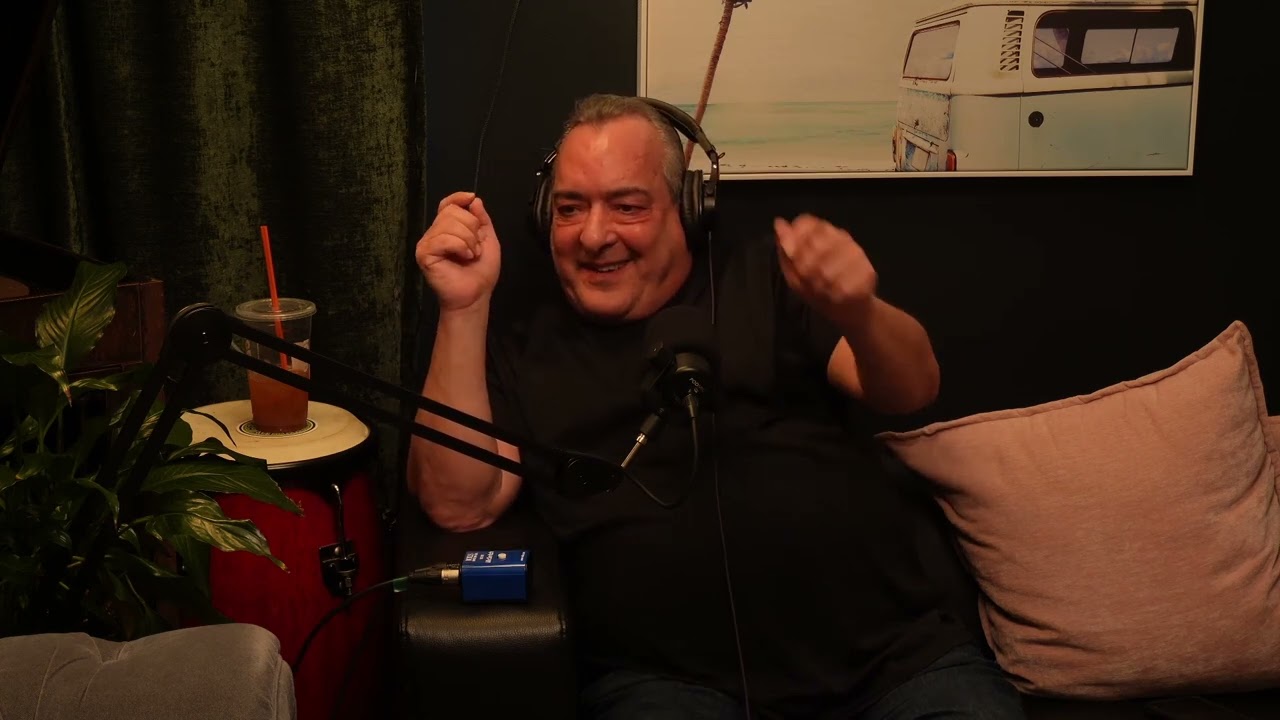
In Episode 26 of the Boomer Series, Lou shares his experiences growing up as the youngest baby boomer in Queens, New York. He discusses his childhood adventures, family dynamics, and the transition from a construction worker to a stockbroker, while reflecting on the changes in societal norms and the impact of technology on younger generations.
[MUSIC] Welcome to GenX Adulting. Today we have Lou with us. Welcome. Hello. Welcome to the studio. We're happy to have you. Happy to be here. Thank you for having me. Of course. Our first question we ask everyone is, what year were you born? I'm the last of the baby boomers, 1964. You are. You are the last of the baby boomers. Next month I'll be 61. Wow. Okay. You're the baby-est baby boomer of them all. What comes after the baby boomers? Us. Okay. GenX. GenX. Okay. Yeah. I missed it by one year. You missed it by one year. So 65 is the beginning of GenX. Right. So okay. So you're actually our second boomer. Okay. So I'm excited. And my mom was the other boomer, but she was born in 1947. Okay. So 1946 is where boomers start. So she's one of the oldest and then you're the youngest. So it'll be interesting to see if you guys have different perspectives on certain things that were going on growing up because it's such a wide range. Because I know that there's younger GenXers that have different perspectives on things than older GenXers. So I'll be curious. Your mom was a teenager, like when Vietnam was going on, you were just a baby. Yeah. Yeah. Yeah. She was, yeah. Well, teenager into her early 20s. Yeah. Yeah. Yeah. Okay. So where were you born? In New York. In New York. Flushing. Okay. So the city, right? Is that the city? It's a borough. Well, in Queens. Flushing is in Queens. Okay. It's in Queens. Okay. That's where I grew up. Okay. In the borough of Queens. So growing up in Queens, did you leave Queens a lot? Or is it kind of like you stay in your borough? Queens is the biggest borough of the five, I believe. Yeah, I think it is. And we had public transportation. Well, I stayed in Queens until I was
Or is it kind of like you stay in your borough? Queens is the biggest borough of the five, I believe. Yeah, I think it is. And we had public transportation. Well, I stayed in Queens until I was probably a teenager. Then when we were teenagers, we would ride our bikes everywhere. Okay. I grew up in Met Fen. So, and we had public transportation. So we were out of the house eight o'clock in the morning in the summer. And when the street lights came on, that's when we knew it was time to go home. We didn't have cell phones. Yeah. You know, anything like that. So we used to take the bus to Main Street Flushing and then either walk over the bridge or take the seven train and go to a Met game for a dollar and a half. Oh my gosh. You know, the seats were all the way up. And then during the national anthem, we'd sneak down. Yeah. You know, and we'd get kicked out. We'd get moved around and get out of the air. You know, those aren't your seats. And, but yeah, it was a great time growing up. So it felt safe. Everything felt safe. Yeah. Now is that? You used to use pay phones, germs. We built up immune systems. Did you guys like go into Manhattan or to go to all the other boroughs? Brooklyn, Harlem, Brooklyn, Brooklyn. Not so much. If I went to Coney Island, I'd go into Brooklyn, but not so much Brooklyn. I went into my state in Queens and Manhattan. OK, the Bronx. No good. OK. And Harlem. And I lived right on the other side of the Throgsnek Bridge. OK. In Bay Terrace. That's where, well, in 1977, my my family moved there. I was 12 years old. Then I turned 13, moved to Bay Terrace. It was like 90 percent Jewish. So funny story. When we first moved to Bay Terrace, I was like 12 and I was meeting all new friends. So, you know, when
Then I turned 13, moved to Bay Terrace. It was like 90 percent Jewish. So funny story. When we first moved to Bay Terrace, I was like 12 and I was meeting all new friends. So, you know, when you're turning 13 years old. Yeah, I was getting invited to Obama's for every other month. Yes. Yes. And my father would be like another one. Yeah. And back then they gave like 25 or 30 bucks. He's like, just can't you meet some Catholic kids for Christ's sake? Because every week is shelling out like 25, 30 dollars for me to go to Obama. That's funny. You didn't move us to a Catholic day, but a dad. Sorry. And I used to and my family used to sit down, eat dinner every night at six o'clock. And I used to stroll in six thirty seven. Where the hell we go? I was at Hebrew school with Adam. You used to go with them? Oh, yeah. Yeah. My friends. I used to sit there, tell them my name is Mordecai Cohen. And and and I read this Baruch ataia de nai al hainu melacholam. That's all I really remember. That's like you learn something. That's pretty good. Well, I mean, that would have been what? Right around middle school? Yeah, that was that was elementary school. And then we didn't call it middle school. We called the junior high. Right. Yeah. Okay. High school. Yeah. I called it junior high, too. But did you call it junior high? OK, I think I got switched up somewhere. So honestly, that's those are kind of can be challenging your socially to just move into a new school. So having all of the celebrations with your Jewish friends was probably a great way to get make friends. Oh, yeah. And get to know people. Yeah. We had a great time. Like I said, we were we were out on our bikes. We were playing basketball. I grew up in a little garden apartment in Bay Terrace.
Oh, yeah. And get to know people. Yeah. We had a great time. Like I said, we were we were out on our bikes. We were playing basketball. I grew up in a little garden apartment in Bay Terrace. And we all just used to, you know, wherever the bikes were going. That's where we go. We all go to like a school, an elementary school that was like maybe a half mile away from the apartment that I lived in. And we'd play basketball, stickball all day long. Yeah. All day long. We were active. So you grew up playing stickball. Yeah. That's cool. Yeah. We've seen that in the movies. Yeah. Yeah. Well, we draw. We draw a box against, you know, the concrete wall. That was the strike zone. Yeah. And just, you know, throw a tennis ball with a broom handle. Yeah. Black tape around it. And very arms fell off. That's very, very cool. So it was a very traditional like you guys would head out in the morning, do your thing. Your parents really didn't know where you were until you came back. When the story. We didn't have cell phones where they track you and see where you are. Yeah. You know, it's just like I'm going to. Adams, I'm going to Michael's. I'm going here. You know, yeah, we tell them where we're going. And I mean, it was it was it was close by. And we were always on our bicycles where we'd stop by, you know, the house. We wanted to get something to drink or something and something to eat. And then just go back out again. Now, was your mom a stay at home mom? For. I'd say the first 13 years of my life, I have two older sisters. OK, so yes, she was in the beginning. I had a traditional upbringing in Flushing before I moved to Bayside from when I was born till 12 years old, lived in a two family house. My grandmother and grandfather lived on the bottom. Nice.
I had a traditional upbringing in Flushing before I moved to Bayside from when I was born till 12 years old, lived in a two family house. My grandmother and grandfather lived on the bottom. Nice. And we lived on the top, had the clothes lying outside of my bedroom to hang the clothes on. Yeah. Yeah. And I would go downstairs. My grandmother made she rest in peace. She I think by the time I was five, six years old, drinking coffee and eating. You need a biscuits with butter. Amazing. And dipping, dipping the biscuits and butter in my coffee. Amazing. Yeah. But to grow up with that multi-generational experience, I personally think is priceless. It is. It is. It's amazing. Yeah. But probably the stories that she told you or just even spending that time with her with your grandparents. Yeah, completely help form who you are. I'm sure, you know. Yeah. So then that was from when you were born till you were 12. Till I was 12. Right. Then they bought the garden and my parents bought the garden apartment and bay terrace. Now, is bay terrace also in Queens? Yeah, Bayside, Queens. Yeah. It's on the it's on the other side of Throgs Neck Bridge from the Bronx. And then so were your grandparents? You were then living how far away from them when you guys moved? Oh, 15 minute car ride. So would you still see them pretty regularly? Oh, yeah, I would ride my bike and go. It was like maybe a half hour bike ride and I'd go and and, you know, go visit them. Sure. OK, so you were it was that safe that you could just get on your bike and ride your bike for 30 minutes to go see your grandparents. Yeah, it was crazy. Yeah. When you think about it then and. What 1977 New York had the blackout. Son of Sam running around New York killing people.
see your grandparents. Yeah, it was crazy. Yeah. When you think about it then and. What 1977 New York had the blackout. Son of Sam running around New York killing people. Yeah. But, you know, I mean, that that time when when Son of Sam was running around New York. I mean, I was still too young to go. I was seven, four, five. I was 13 years old. It wasn't like I was going to clubs and I had to worry about getting shot. Yeah. Yeah. My old sister did, though, because she was like three years older than me. Right. So, you know, she she and he killed someone that was at a club that my sister used to go to frequently. But it's crazy. We had the blackouts, we had Son of Sam, but you felt safe. It wasn't. I used to take the subway from Main Street into Times Square, Manhattan just to ride it when I was 13 or 14 years old. Yeah. And I used to stand in the front car right near the conductor. Yeah. And just, you know, because I was fascinated by like the tracks and pulling into the stations and seeing the people on the platform. No one worried about getting pushed onto a train track and getting murdered. Yeah. I don't know. I don't know. It's just were you alone or you and your friends? No, I went with like, you know, one or two other friends. OK, so you guys and your parents knew you were doing that. You're heading into Times Square. Sometimes. Sometimes. I think he has some stories from Jersey. So I think he has some of those stories going into the city. Where your parents didn't know. We didn't go down the Hoboken catch the path over into New York. Right. Go around the city and just take the reverse path back home. It seems to be the thing that kids growing up there would do that sneaking into the city stuff. I think what you're picturing, though,
the reverse path back home. It seems to be the thing that kids growing up there would do that sneaking into the city stuff. I think what you're picturing, though, you picture Manhattan because that's most of your exposure point. Yeah. But where you grew up was probably a lot of neighborhoods, right? Yeah. Yeah. Yeah. Yeah. I was picturing things. It sounds so cliche, things I've seen in movies. When I picture Queens or Brooklyn, it's how it's been depicted in movies, which is neighborhoods and the clothes line and all of that. So then so your sisters, your one one is three years older than you. What about your other sister? Fifteen months. Oh, I was twins. Yeah. Yeah. Yeah. My mother had three kids by the time she was 23. Wow. OK, so how did your parents meet? I think two friends. I don't know. I don't. My old sister could tell you, but I probably through friends. Were they both from Flushing? My father grew up in Astoria, I believe it was. And my mother, yes. OK. And what's the background? Italian. Yeah. Italian, southern Italian, Sicilian. Were they my father's family was from Sicily. My grandmother's was from Sardinia, a little island off of Sicily. And where you've been there, you've never been to Italy? No. Wow. So is that something on your bucket list? I think so. Maybe. That'd be cool. So was your grandparents, were they first generation? Yeah. And so your parents were second and your third generation. Yeah. So did they get if your mom had all three of you by 23, how old were they when they got married? 2021 young, they were young. Yeah. Yeah. Yeah. Well, I think back then that was common, though, right? Then they got divorced after 30 years. Oh, my God. That's common, too. We've actually done some episodes on that.
young. Yeah. Yeah. Yeah. Well, I think back then that was common, though, right? Then they got divorced after 30 years. Oh, my God. That's common, too. We've actually done some episodes on that. So what did your dad do? My dad was a bricklayer. My dad, my dad's dad, my grandfather died when my father was nine years old. And he had a mother who. Was an immigrant, heavy accent, didn't really know anything. She was a stay at home mom. He had three sisters, so he had to get to be the man of the house. So did his dad pass away here or in Italy? New York. In New York. So they made it over here. Yeah. And then had their family. Oh, yeah, obviously he was here. And then when your dad was nine years old and he had three older sisters. Yeah. So she had these four kids and was a stay at home mom. So your dad at what age nine, nine, nine years old. Yeah. And. Was figuring out how to make money at that age. Yeah. Wow. He had the hustle. Wow. And so and so he's a bricklayer. So for younger generations who've never even heard of that, what is a bricklayer? What do they do? Builds walls and reinforces buildings block. It's not just not just brick that you see, like you might see a brick house. Right. But then, you know, houses are built with block reinforcement bar and, you know, just mortar and concrete. And they work hard. OK. So what areas of New York would he work in? Manhattan, Queens, all the five boroughs. OK. He was in the union. I was going to ask you. Yeah, he was in a local 41, I think it was called. And and he was talented. Then he was a bricklayer form. And so he didn't like, you know, like when he was like 40, 45, he would just stand there and force the guys. Right. Right. Right. And that's what you want to get. Yeah. And then when I was
And so he didn't like, you know, like when he was like 40, 45, he would just stand there and force the guys. Right. Right. Right. And that's what you want to get. Yeah. And then when I was younger, he would bring me on jobs. Who would stack the scaffolds with brick and block and he'd pay me like 100 bucks a day and and mix the mortar for the bricklayers. And was this when you were like a teenager? Yeah. Yeah. Yeah. Like 16 years old. Nice. And that's what I did in the summer, too. I didn't go to sleepaway camp. I just like made money. I wanted my own money because I wanted to go do my own things, you know, and I wanted to go to Met Games. I didn't want to get a dollar 50 seats anymore. You know, I wanted to get good seats. Yeah. Yeah. Then work, you know, and and I didn't know. Would most of your friends also do the same? When you mentioned sleepaway camp for most of them going away for sleepaway camp. When I moved to Bayside, yeah, like and they were like 13. They would go away to a sleepaway camp up coaches in the Catskills, the Porsche belt. Called it Porsche belt. And then. Another funny story, when I was 15. Me and two of my friends got jobs as ushers in a movie theater. Right in the Bay Terrace movie theater, we were able to walk to work. Making minimum wage, two dollars and 90 cents an hour. Amazing bow tie, red jacket, right? Smoking section is upstairs. That a smoking section in the movie theaters back then. And and we did that. My sister worked behind the counter. The candy counter. Yeah. Yeah. And God forgive me for telling this story. And minimum wage just wasn't cutting it, then. Me and my friend just go into the aisles and take the uncrushed popcorn cups, tubs, rinse them out, dry them. Give them back to my
for telling this story. And minimum wage just wasn't cutting it, then. Me and my friend just go into the aisles and take the uncrushed popcorn cups, tubs, rinse them out, dry them. Give them back to my sister concession stand and she would refill them with popcorn and give us money for doing that. So it's like a tub of popcorn was like three dollars. And we'd give her like 10 of them. Right. Thirty dollars. Right. Right. Right. Extra. Right. Because back then they had re did they have reusable tubs? Is that what they were? They were cardboard. I mean, OK. OK. Crush them up. You know, you couldn't reuse them, but most of the people, they didn't even finish their popcorn. Big tubs of cardboard. Right. They put on the seat next to them. And then we would have to go in the movie theater and like clean out the theaters. You know. Right. Right. Right. Get the popcorn tubs and throw them out or or give them back to her. So you might be into a crime right now. It's not true. No, no, no, no, no, no, no, no, no, no, no, no, no, no, no, no, no, no, no, no, no. It's like 1970, whatever. You're good. You're good. You're good. So they would track what was sold based on the carton. So then you can. Right. Yeah. Inventory on the soda. Yeah. Yeah. Yeah. That's funny. Yeah, that is funny. And then. I did that from age 15 to 17. And I got fired from the movie theater because I used to stand outside. My friend Adam was at the door ripping tickets. Like people buy tickets from the booth right outside. And then you'd go and you give it to the usher and he'd rip the tickets in half. And yeah, say theater to is your movie. Yeah, I used to stand outside and see a boyfriend and a girlfriend coming in. I was like, hey, you two want to get in
usher and he'd rip the tickets in half. And yeah, say theater to is your movie. Yeah, I used to stand outside and see a boyfriend and a girlfriend coming in. I was like, hey, you two want to get in for $10 for the both of you? Instead of like, you know, $13 a fee, you want to save $5? They're like, yeah, yeah. OK. Give me your money. Tell the doorman. Lou said it's OK. And the manager used to come into the theater. She's like, I don't understand. We only sold 50 tickets and it's like 80 people, 100 people in the theater. Oh, so that's hilarious. So then one day I'm standing outside and they asked a couple if they want to get in. Yeah, it was the manager's sister and her boyfriend. No, I never knew who she was. And I can we see in the office, please? And I was like, you're fired. Get out of here. How old were you when you were doing this? Seventeen. So that was the best thing that ever happened to me, because I had just got my driver's license and some guy who lived up the block from me. He's like, you work in the movie theater anymore? I said, no, I just got fired. And I told him this story. He's like, you want to park cars with me? I go where? So North Shore Statehouse out on Long Island. Big high end steakhouse. I had my driver's license for three weeks. I was parking Mercedes Benz Rolls Royce. There was there was a I don't know if you ever heard of Pergamon. It was it was an electrical outlet called Pergamon. They sold washing machine. It's kind of like a brand smart, but brand smart estate. But it was called Pergamon back then. I used to park Mr. Pergamon's Rolls Royce. His wife used to pull up in her Mercedes 450. I saw I had my license for like two weeks. Were you driving out to the restaurant?
I used to park Mr. Pergamon's Rolls Royce. His wife used to pull up in her Mercedes 450. I saw I had my license for like two weeks. Were you driving out to the restaurant? Yeah, my father let me borrow his car. And was that like a long commute for you to get out there from Queens? So this isn't great. No, it was only 15, 20 minutes. OK, so that's not right up right up northern Boulevard. And then you're parking all these expensive cars. And I was making good money. 100 bucks a night. Did you have any issues? Did you accidentally ding anybody's car? Of course. Did they know? Yeah, yeah. You know, you had to tell him like because, you know, when you park a car so close together, you have to keep the wheels straight. You can't have the wheels cut because when you back them out fast, you're going to hit the car next to that a couple of times. Yeah. I don't know. You ever hear of Alan King? He was a comedian back in the day. He did Roast. I think so. Alan King. He was yeah, he was famous. He lived in King's Point. I locked his keys in his car one night. He was a famous guy. He used to come in all the time and I had to drive him back to his mansion in King's Point with my car and then bring him back. There's no way. Yeah, so you can get another set of keys. Did you see any other celebrities? We're going to the old Yankees used to come in there. Whitey Ford came in with Billy Martin. He's the Yankee guy. OK, I saw Whitey Ford, Billy Martin and. Um. Garreg or someone like that? No, it was whoever played with them back then. It was like the threesome. They they'll they shut the I'll never forget they shut the steak house down that night. They were drinkers. Yeah, they were. Oh, yeah. Oh, so how long did you do that? I did that.
They they'll they shut the I'll never forget they shut the steak house down that night. They were drinkers. Yeah, they were. Oh, yeah. Oh, so how long did you do that? I did that. I did that for early 20s in the 18th and 21 till about I was 22. OK, so I was working construction during the day. I went to community college. Right. I was going to say you went to high school. I yeah. And then you graduated. I went to community college. Right. I was taking liberal arts and OK. You know, I think back then I was like. I kind of feel this way today. Maybe it's wrong. I think college is a good way to go if you have a path. Like if you want to be a lawyer or a doctor, but I don't know, maybe maybe like a trade school is the way to go in this day and age. Yeah. I think I would have done that back then. Like if I knew when I then what I know now. Yeah. Like maybe. Be an apprentice of as an electrician for three or four years, and then you could open up your own electrical company and become a multimillionaire. Yeah. You know what I mean? I know plumbers who are worth 50 million dollars. Yeah. Yes. They're saying that we are going to be in dire need of trade. Yeah. And I think in the next five to 10 years, we're going to need like so many welders. We have a welder shortage and plumbers and we want to be a TikTok star, though. Well, yeah. You know, you know, you know, making 50,000 a month. Yeah. You know, but not everybody. We're on the list of not everybody. Not everybody, not everybody, but not but not everybody. But unfortunately, with the way social media is for the younger generations, they it feels like everybody. So everybody thinks they can do it. Not really. It's kind of like probably back in our day, how everyone thought they could go to
they it feels like everybody. So everybody thinks they can do it. Not really. It's kind of like probably back in our day, how everyone thought they could go to Hollywood and become an actress. But it's such a small percentage. Right. So there's just that there isn't a balance of reality in there. And I think social media is 100 percent to do that. So so I went to community college. I was I was working construction during the day then. And I was parking cars at night. I was. That's what you're busy in my early 20s. I was I was I was taking home a couple of thousand a week. Yeah. And my money back. A lot of money back. Oh, yeah. Yeah. Yeah. Yeah. Back in 82, 83. Yeah. Yeah. Nice Mazda RX7 sports. I remember that. The only thing my father did for me, my father would maybe another crime I'm admitting to my father would put the car in car insurance under his name because so it wouldn't be so expensive. But yeah, I paid my own car insurance for my own car payment. You know, yeah. Were you living with them after high school while you were doing all this? Yeah, I was. And I was the last one in the in the apartment with them. That's when they started like arguing. My parents, I told you they got divorced. Yeah. Yeah. And I said to them, I was like, Why don't you guys get divorced? You got that bad sleep in the same room. You know, like, yeah, just, you know, it's like and they did. Yeah. And so how did they were both happier? You know, how that affects you and your sisters, where you grew up with them married and this traditional family. And then you guys are young adults and your parents are divorced. How did that alter you guys? No, no, it didn't affect us. You don't want to see them fight. I mean, they were able to stay in the same room
your parents are divorced. How did that alter you guys? No, no, it didn't affect us. You don't want to see them fight. I mean, they were able to stay in the same room when my sister had when my sisters had, you know, their kids and they were young and they'd have birthday parties. My mother and father, you know, they were they were civil. They did come to their grand granddaughter or grandson's birthday party and sit in the same room. Hi, how are you? You don't talk, you know. Right. And I mean, they're both gone now. Did they have other relationships after my father? My father did. My mother, I guess she just dated. She didn't have anyone serious, but did they stay living in the same area? No, my father moved to Long Island City, which is just outside of Manhattan. OK, this girlfriend. And then your mom stayed in the apartment. Yeah, she stayed in the apartment. OK. And what about your sisters? Did they go to school to college? My older sister did. And my younger sister went to School of Visual Arts in Manhattan. OK, cool. She's into the cameras and all that. OK, cool. Yeah. She she lives in Nashville, Tennessee. Nice. Not in the city. She lives about 30 minutes north of the city. Yeah. And her husband, my brother-in-law is. Such a talented illustrator. I mean, this guy, you could just tell him, draw me Mickey Mouse and Donald Duck shaking hands. And in like 10 minutes, he'll have like like he's worked for Disney like his whole life. He's just people like that. Is his his daughter, my niece is like that. She she builds murals. She's she paints murals, sorry, on the side of restaurants in Nashville. And that's cool. She. Yeah. And it's amazing. But they're artistic. Is your sister artistic as well? Well, I guess she went to the school.
side of restaurants in Nashville. And that's cool. She. Yeah. And it's amazing. But they're artistic. Is your sister artistic as well? Well, I guess she went to the school. Yes, she went to the she went to the school. Yes, she likes, you know, a good photographer. OK, she's she's not like a good drawer. All right. But still, photography is an art. So they're an artistic family. Yeah. Yeah. And then your other sister, my sister lives in South Jersey, Ocean, New Jersey. OK, so she's right near Asbury Park and Great Adventure. I think she lives like 10 minutes away from Great Adventure. Yeah. Yeah. And she's been living there a long time. Are you so close with them? Oh, yeah. That's great. Yeah. So then when your parents divorced, it kind of allowed them to create this civil relationship where you guys went through your adulthood. You could still, like you said, have them at weddings. Yeah. Gathering. Oh, yeah. And it was so very healthy. My mom passed before my father did. And even my wife to this day, she can't believe like my father was at the funeral home every day supporting his kids. I get like a little well. Yeah, of course, of course. And but that says a lot right there. Yeah, that's a lot right there about that. They were able to still have that functional relationship, even post divorce. So and did she when you said your mom went to work when you were 13, what did she do? Oh, she worked. She worked at Flushing Hospital when it's something clerical Flushing Hospital. And you know what? I don't know if I partied too much when I was younger, but my sisters remember so much more stuff like when we were younger and and they're like, what are you doing? I was like, oh, smoke a pot. Yeah. You know, I.
too much when I was younger, but my sisters remember so much more stuff like when we were younger and and they're like, what are you doing? I was like, oh, smoke a pot. Yeah. You know, I. Well, let's see, you would have been when you were a teenager. This would have been what, the 70s, late 70s? Yeah, I was born in 64. So 74. Yeah. Late 70s. Seventy seven. I was 13, 78. I was 14. Yeah. Yeah. So it's those late 70s, early 80s. Yeah. The first time I was able to vote was Ronald Reagan's second term. What was that? Eighty four. I think I was 20. Yeah. I was 20. I was 20 and 84. So so growing up in the 70s, because we would have been young. We would have been like five, six, seven, eight. Yeah. In the 70s. You were in the party years in the 70s. Well, I was a teenager. I was a teenager. Right. You were in your early, but you would have been doing what teenagers do. Yeah. Yeah. Yeah. You know, smoke, mental, cigarette. Yeah. All of that. What would have been like for us going to parties would have been either a house party or like in a field somewhere. What were parties like for you guys? I'm not we used to go like under the Throgs Neck Bridge, light fire. Because you had the border right there, the Long Island Sound right there. It was nice. Yeah. Someone's house. Yeah. And some of these bar mitzvahs were like at clubs, you know, that we weren't old enough to go to. There was a there was a whole called Lenders of Great Neck. That was like a big catering hall. They had two floors and like two big rooms on the second floor. Two big rooms on the first floor. So that's cool. Yeah. You guys got to go there. I mean, you were really the music then was insane. Did you go to nothing like the 80s now or or even 70s? Yeah. Well, I was I was telling you,
So that's cool. Yeah. You guys got to go there. I mean, you were really the music then was insane. Did you go to nothing like the 80s now or or even 70s? Yeah. Well, I was I was telling you, I was been in the 70s for me. It was I was a headbanger. I like rock and roll. That's why I love all the instruments around here. It was Kiss. Yeah. I like Kiss and Led Zeppelin and The Who. And then like in the early 80s, I got into, you know, it was Aerosmith. And and and then the hair bands, Motley Crue. Yeah. Yeah. Poison and like Twists. Like Twists. Yeah. The Twists. The Twists. I used to go and see at Queens College when I was like 17 years old. That's amazing. So did you see most of those bands live? Oh, yeah. Yeah. Really? When they were first starting out, Van Halen. Did you see Zeppelin at the Garden? I did not know. I did not. I saw The Who with the Garden. OK. At in 79. That would have been crazy. Yeah, that was a great show. I didn't I didn't see Zeppelin. That was they came to the garden. I think that was 77. So four or five. I was 13 years old. I guess I my father started driving me to concerts. So maybe like when I was 14 or 15 years old. And that's cool, though, right? But he did that. No, yeah. Because probably not every parent was doing that. Yeah. He used to drive us out to the National Coliseum. We used to. Oh, God, I did a lot of jobs. I got to retire soon. I remember, you know, we used to do when we were like 16. This is a crazy story, you know, talking about earlier we used to get on our bicycles. I had a friend of mine. His sister used to date a ticket scalper. He used to pay us a hundred dollars. We used to go to Penn Station in Manhattan and stay up all night, get there at 11 o'clock at night. So we were the first
He used to pay us a hundred dollars. We used to go to Penn Station in Manhattan and stay up all night, get there at 11 o'clock at night. So we were the first ones online. Oh, yeah. And Ticketmaster would open up at nine o'clock. And then we would get first, second, third row seats in this guy. We'd give us money and he would pay us a hundred dollars. Our parents didn't care. I was with like, you know, five or six other guys. Yeah. And we were in Penn Station from 11 at night to like nine in the morning. Like, yeah. On a Friday. Did you bring like, did you sit there all night? Or did you bring like sleeping bags? Or did you guys just sit there? Yeah, no, we sat there and we had coffee and stuff like that. But no, we stayed up. How old were you? Probably like 16. And like during the summer. Yeah. It wasn't like we weren't skipping school. Right. You know, sit online so this guy can make money. But he was paying us 100 bucks. But that's back when the days when you had to go to an actual ticket booth to buy a paper ticket in line for a big guy. And people would wait overnight to try to get tickets. Like when you said you waited online, it's like people are going to automatically think online on the Internet. It's like, no, no, you were in a line physically waiting. Yeah. You know, by the time Ticketmaster opened up, we were right at the beginning of the line. There were there were 200 people behind us. Right. You know, 300 people. Yeah. And that's yeah. That's back when ticket scalpers had to work for it, too. Yeah. They'd have to hire like people like you to do it or whatever. Now it's just an online hack more than anything else. And they didn't have I don't remember them having ticket limits, did they? Couldn't you just go by
like you to do it or whatever. Now it's just an online hack more than anything else. And they didn't have I don't remember them having ticket limits, did they? Couldn't you just go by like 100 or something? No, I know. Yeah, there were limits. Maybe four or eight or something. Yeah, I think it was like eight. It wasn't it was only four. It was it was a decent amount. Yeah. Yeah. But I mean, you have you have you're paying six guys I could get eight tickets each. Yeah. Yeah. You know, it's like 40, 40. Yeah. Yeah. So no, I mean, if I could go back in time, that time frame is when I would want to see live music. Yeah. Because I think that's when you saw everybody in their prime. I saw Van Halen open up for Journey at the Rits in New York. That's amazing. And yeah. And people were like, after Van Halen went off stage, I was like, I don't think I want to see Journey. Yeah. I was like, who the hell were those guys? Yeah. But see Perry, his voice. Oh, it's on the journey was great. Yeah, I just saw Journey. I've seen Journey like five or six times, but I just saw them with my wife on this last tour, them, the Amaran. How are they now? Because they're all right. You know, you know, 65, 70 years old, you know. But the lead singer isn't on el teneta. He's like from Thailand or something. Yeah. How does he do that? OK, he's been with the band like 15, 20 years. Yeah. Yeah. But coming from someone who saw them at the beginning and then to they'll never be a voice 60. No, no. Yeah. You know, you're going to replace Stephen Tyler and Aerosmith with someone. Right. Right. No, no. So did you ever see the Grateful Dead? No, I didn't. But I had a lot of friends who used to you know, when they when they would do
Tyler and Aerosmith with someone. Right. Right. No, no. So did you ever see the Grateful Dead? No, I didn't. But I had a lot of friends who used to you know, when they when they would do 10 nights at the garden. Yes. Ten nights. Yes. Yes. And I used to wait on that line and get my friends, boyfriend tickets for the dead. That's funny. You know, I like the Grateful Dead. I was like more of like, you know, touch of gray. Casey Jones. Yeah. They're famous songs. Yeah. Now that they have the span fish. That's like a fan. Yeah. Yeah. It's been around for a while. Yeah. For a while. They're very. Yeah. They're a huge fan. There's so many jam bands now. But yeah, I, you know, I think like I think the Grateful Dead for me, maybe they would they would talented AF musicians. Yes. I don't know. I just wasn't into that whole I'm going to drop a tab of acid and go see the dead and you know, and just and go on the journey. The long ride of the campaign. Yeah. Yeah. I think they were too mellow for me. Yeah. I kind of like the plug, the less Paul into a stack of Marshall amps and right. And go. Yeah. You ever see ACDC? Of course. Yeah. OK. Yeah. Yeah. So you saw them all like those are going to see them next month. Oh, that's cool. Yeah. That's very cool. So then you're hustling, working, going to community college into your early 20s. And when your parents divorced, where did you live then? Oh, then I moved. Then I moved. Like I told you, I was making good money. Yeah. Got a roommate. Move to Little Neck, Queens. Another like another suburb of Queens on a suburb. Yeah, suburb of Queens, Little Neck right near the train station. Had a roommate. Nice two bedroom, two bath apartment. I don't know, maybe like 1800 square foot.
suburb of Queens on a suburb. Yeah, suburb of Queens, Little Neck right near the train station. Had a roommate. Nice two bedroom, two bath apartment. I don't know, maybe like 1800 square foot. I think we paid $900 a month. Wow. The 450 each. Yeah. Yeah. Yeah. And that's a huge apartment, though, for that. I don't know how Queens is. I know in Manhattan, people live in closets. Oh, yeah. But Queens, I think in Brooklyn and the Bronx, you probably get a lot more apartment for your money. Yeah. But I mean, this day and age is not like, you know, you know what? Queens is like probably like Raway, where my uncle Mickey lived. Remember that? Yes. That's kind of a Queens vibe. And yeah, that makes sense. You ever see the King of Queens? The show, the houses are right. Like, yes. Yeah. It's like that. It's like that. Yeah. That's my perspective, because I think when we lived in Jersey, we never went over there. I don't think. No, I think we went to Long Island once the Bronx. Yeah. But to see the Yankees. But we were in Manhattan a lot. Right. Because we had the kids and I would take them. It's almost it's kind of like near the the Nassau neighborhood. Right. We were at East Meadow. Yeah. Italian place we went to was in East Meadow. So yeah. And Queens, where I grew up, the side was at the steakhouse that I parked. Cars was was in Nassau County. It was a 15 minute ride. OK. OK. Yeah. You know, just to go back to the music real quick, one of the best Grateful Dead shows was at the Nassau Coliseum. Yeah. Yeah. I missed it. I did. So when you were in this apartment, were you what were you doing for work? I was working construction. You were still working in general contract. They had big general contractor called Herbert Construction.
apartment, were you what were you doing for work? I was working construction. You were still working in general contract. They had big general contractor called Herbert Construction. I used to I used to get on the Long Island railroad train into Manhattan in the morning and do that. I did that until I was about 20 years old. Were there any buildings in Manhattan you worked on that were like big skyscrapers? I worked, you know, we did a lot of apartment work. I worked in. I think his name is John Leon has his son, John has. Leon has used to own the New York Jets football team. OK. Before Woody Johnson owns and I think Leon has before Woody Johnson, but and I used to work in these Fifth Avenue apartments. Opulent like. Yeah. They were houses. And I'm like, how is this apartment so big? It was. Yeah. They were like 10,000 square foot apartments. And they were not. I mean, we did work in the in the World Trade Center, you know, when when when a company would want to refurbish their office. And by the way, I've worked in the Empire State Building, but not on like any buildings that became famous. Right. Right. Right. Like what is it called now that that replaced the World Trade Center? Freedom Tower. Freedom Tower. Yeah. Yeah. I do that from the ground up. But you were in Manhattan and I was in Manhattan a lot. Yeah. You were doing work in Manhattan. And how long did you do that? It's like eight years. OK, so through your 20s. Yeah. Then. There's another funny story. See, Nate told me to come on here because of my story. So then I was dating a girl four years older than me from the time I was 20 years old to 24. So I was 20. She was 24. Then I dated her for four years. So I was 24. She was 28. She started putting a little too much
me from the time I was 20 years old to 24. So I was 20. She was 24. Then I dated her for four years. So I was 24. She was 28. She started putting a little too much pressure on me, you know. You know, I'm not getting any younger. So yeah, I had to break up with her. That's hilarious. I broke up with her right before Christmas and her apartment was on the second floor. And she bought me like a ski coat for Christmas. She threw it out the second week. Take your fucking Christmas presents. I don't want. She started throwing my Christmas stuff out the window. Did she not have any idea? Did you just bring that on her? Or like we just like, oh, we need to break up. Or were you guys having problems? Or were you just like? No, no. Once once I started feeling the pressure, I'm like, I'm not ready. I'm not ready for this. We were 24. I wasn't going to string her on any longer. And that's good. I wouldn't tell you. Oh, my gosh. Preach, because I'm telling you now this younger men will do that. They'll string them and they'll take away their baby years. Yeah. So at least you were man enough to say to know what was better for her. You weren't going to give her what she needed in that moment. Right. So at least you made it. I was having too much fun. I was making money. I was, you know, I loved the girl, but, you know, I just wanted to have fun. I didn't want to settle down and get married. Yeah. So I broke up with her when I was 24. I still work in construction. And then like, I don't know, a year or two later, I met this other girl that became my girlfriend for like two or three years and. Shared problems, a little bit of free base problems. But anyway, so. I moved into I was going to buy her mother's house in Garden City, Long Island.
like two or three years and. Shared problems, a little bit of free base problems. But anyway, so. I moved into I was going to buy her mother's house in Garden City, Long Island. And because her mother was retiring and her sister moved to Kentucky and her mother was going to Kentucky to live with the other sister. I'm like, you know what? I'm going to buy this house and we'll move in like we were kind of serious. But she just I shouldn't say a little free based problem. It's like being a little pregnant, but it was fucked up. I didn't I didn't dabble in any of that shit. I mean, I'm not saying I didn't try cocaine. I did. But smoking it. No, that's the next level. I tried that once and I thought my heart was going to explode. And I was like, I prayed to God. I was like, please, if you don't kill me tonight, I will never do this again. I swear. Yes. OK. That's in the 80s, right? Yeah. So this is like big coke decade. Oh, yeah. Coke decade and crack and crack crack. All of it. All of it. So what did you do? All of it. All of it. So what is the difference between snorting coke and smoking it? Would you say? Oh, God, I don't know that smoking it. It goes right into your lungs and it just makes your heart. I don't know. I don't know. I only did it once and I couldn't do it. It was not enjoyable at all. No. It was just stress. No. And even even snorting the cocaine. Yeah. Yeah. Wasn't I never. I snorted a lot of cocaine with some guys. Yeah. And. I never the next day, if I even went to sleep, whenever I went to sleep, right? The next day or two said, Oh, God, I feel so good. I'm so glad I snorted that cocaine was what a great night. I was paranoid. I forget to be like, I wouldn't leave the house. My eyes would be like this.
Oh, God, I feel so good. I'm so glad I snorted that cocaine was what a great night. I was paranoid. I forget to be like, I wouldn't leave the house. My eyes would be like this. I couldn't go out in public because my face would like show this fucking guys fucked up, you know? Yeah. Yeah. I got a problem. I couldn't talk. I was like, Lockjaw. I used to call Lockjaw. I'm like, I think I still call it that. Yeah. Yeah. I was like, it was not a good experience. Yeah. And it's expensive, right? Well, I think it was. I don't know about now. Well, it wasn't that expensive. I mean, you know, it was just it was it was a bad drug. One one thing that's different. Well, now you have to worry about it being cut with fentanyl. People are dying. You can't take anything today. Yeah. They're doing a line and dying. Yeah. It's ridiculous. Yeah. I would not take anything except for my doctor. Yeah. You know, yeah. No, my pharmacist, the public. You don't know. You don't know. I think back then in the 80s, you didn't have to. It was even a pill like the year. Some would be like here. Oh, you want something to help you sleep here? Take this. Yeah. Help you sleep. And it could be I'm not going to take a pill from anyone that now, maybe in Advil, but, you know, yeah. But I'm not taking anything that. Yeah. It's just white. And they say, yeah, I'll help you sleep. Because I think there's an ex that also has fentanyl in it. Yeah. Well, died from that. So it's like it's a totally different game for the younger generation. What I'll go to my doctor and say, I have trouble sleeping. Give me some alprazolum or Xanax. And right. He'll give it to me. And it's straight from your doctor. Right. Yeah. I know where it's coming from. You know, it's never do that.
Give me some alprazolum or Xanax. And right. He'll give it to me. And it's straight from your doctor. Right. Yeah. I know where it's coming from. You know, it's never do that. But so you guys didn't move into the house together, though. You decided not to. So I get my friend, Michael. I'm still friends with this day. Get a U-Haul truck. Moved all my stuff out of the apartment. I was sharing with this other guy. Moved it into her mother's house. And I'm putting the bed together, putting the dresser together. She's like, I'm going to my friend's house. I'm like, OK, you know, put the bed together. This bitch didn't come home for the whole night. I woke up in her mother's house. She didn't come home. It was like 6 30 in the morning. I'm not a good sleep. I'd never been a good sleep. I only I'm the type of person where when I was going out with my friends when we were like 17, 18, 19, 20, we'd stay out till three, four or five in the morning. Yeah, I would be up at 10 o'clock calling them up saying, it's beautiful. Let's go to Jones Beach. You know, we get one of those friends. And I had friends who could sleep 12 hours. So I guess I can't. I mean, I'm fine. We just got home five hours ago. You're a maniac. So five, if I get six hours sleep straight, that's like, wow, I'm like ready to go. Right. So so so I woke up at like 6 30 in the morning. She never came home, called my friend Michael up. I go, I'm getting a U-Haul truck, moved in on Saturday, moved out on Sunday. No way. Yeah. Michael's like, what are you crazy? We just moved all that shit in yesterday. I'm like, we're moving it out today. And I was like 28 years old and I was going to like some changes in my life that I get to in a second. So.
We just moved all that shit in yesterday. I'm like, we're moving it out today. And I was like 28 years old and I was going to like some changes in my life that I get to in a second. So. I bought it to my mother's house. She had a garage in Bayside. So by the time I got back there with my friend, Michael, with the U-Haul truck, she was there crying, don't leave, don't leave. I'm like, I'm done. Where was she? Did you ever she's had a friend's house smoking cocaine? Oh, OK. You know, so. So that's when you probably knew this isn't going to work. I'm like, yeah, this is. You're not wife material. Yeah. Yeah. So, you know, I dated her for like two years. And so we moved it out, moved all the stuff back in my mother's house. And well, not in my mother's house, put it in the garage. And then I had friends. Then I'm like 27, 20. So I'm like, yeah, this construction, you know, it's kind of like boring. I had friends who were stock brokers. Right. So one of them sounded like he had marbles in his mouth. Guys knocking down $40,000 a month. Wow. I'm like, so now I broke up with my girlfriend. My Mazda RX-7 got stolen. I moved back home with my mother in Bayside. I was 20 years old. Yeah. So I really had nowhere to go. I just, you know, I was moving with this girl. I wasn't going to stay at a hotel. You know, I'm like, right. I'm like, Ma, you got to let me like just move in with you until I find the place. She was fine. Oh, yeah. She's like, I love it. Yeah. Yeah. Come back. Oh, yeah. I moved back home and my car got stolen from the street. I got no car. I got no girl. I'm like living at home. I think I'll become a stockbroker. So I had some friends like, hey, come work at our firm. And I took my series seven. Like I went to community college now.
I'm like living at home. I think I'll become a stockbroker. So I had some friends like, hey, come work at our firm. And I took my series seven. Like I went to community college now. Now the shoving economics 2000 down my throat. Yeah. It wasn't an easy test. So. It took me about six or seven months. Then I was I was only getting paid $250 a week, making four or five hundred calls a day for me for a senior broker to get him leads. I like to say, hey, Mr. Jones, can I send you out some information on my company? And, you know, and then maybe have a senior broker call you back in like three weeks when we have an idea. Yeah. So that's yeah. I was only getting paid $250 a week. I was lucky I made enough money, you know, that I had a nice little nest egg. And you were you were living with your mom still, right? But were you in Manhattan doing that? No, no, no. I was doing the stockbroking. Yeah. Yeah. But I was in Bayside. You're right. I moved back home to Bayside. I used to think going on railroad into Manhattan. But working in Manhattan. Yes. Like we own right on Wall Street. Well, yeah. OK. So I was a pitching wedge away from the New York Stock Exchange. Down by the bull. Yeah. Yeah. So you're so how long you did that, like six or seven months? And then I got my series seven. I got my I was a licensed broker. Then I had to open up like 30 accounts for my senior broke until I can go out on my own. I did that in like a month. I was pretty good at it. And I'm a good talker. I like to talk and yeah. And I did that in what? 90s, the Clinton days where everything you bought that come would go up. Yeah. Yeah. You made your money. You know, Yahoo dot com by going, you know. Mm hmm. So we we did good then. And then what did I do that for?
you bought that come would go up. Yeah. Yeah. You made your money. You know, Yahoo dot com by going, you know. Mm hmm. So we we did good then. And then what did I do that for? I did that till about 2005. So then then about 2000, 2004, 2005. I don't know if you remember this. They used to have every other commercial on TV. It's well, it seemed like to me because I was a stockbroker. It was like, did you lose money in the market? We're Cohen and Cohen and we're on a contingency basis. We don't make money until you make money and sue your broker, sue your broker. So when you would get a complaint like if I had a customer in California that said, hey, Lou Faux lost me $40,000. Now, now there was a thing back then if you would settle for under five, then you'd have to get this was like legalized extortion. Because. If you settle for less than five thousand dollars, it doesn't go on your you for it was like, you know, your permanent record or whatever you call it. Yeah. Yeah. So I would talk to a lawyer like, OK, what's it going to cost us to fly out to California? So now you got to pay a lawyer. You got to pay for his plane ticket. You got to get him a hotel room. And he's like, it's going to cost us like ten thousand dollars if we're going to be out there a day or two to fight this. Right. Offer him four thousand five hundred dollars to settle. Some of them did. Some of them didn't. And I had four guys who didn't. I had to fly to California. I had to fly to Texas. People that were suing me because they lost money. I won every single one of those cases because I was like an aggressive trader. I was like trading people's money on margin. But I had them sign paper. I was like, listen, it's going to get aggressive. I don't want you to send me.
because I was like an aggressive trader. I was like trading people's money on margin. But I had them sign paper. I was like, listen, it's going to get aggressive. I don't want you to send me. I told them I don't want you to send me your kids college fund. I want you to send me money you can afford to lose. Right. Because we're going to trade on margin. We're going to be aggressive. I just want you to know that. And I had them sign papers that said trading on margin is a very aggressive, you know, trading system, whatever. You could lose all your last sentence. You could lose your entire investment. Yeah. And they signed it. So I bought that to the arbitrations. I won all of my cases. I was like, this is this is crazy. I'm just sick and tired of paying. One year I spent like 60,000 in lawyers. So defending myself. Right. Crazy. There is a lot of pressure to the to put you guys out of business and go online. Yeah. A merit rate or whoever was. Well, now, now, now it's not like that. Like back in the day, I can call you up and say, Mr. You know, like open up an account with me. Give me a shot. Yeah. You're like, OK, Lou, I'll give you a shot in 2000. She says, OK, what's your social security number? Yeah. And that, you know, you would give to me over the phone. I would be able to from what I heard now with anti money laundering laws. Now they have to see where the check is coming from. You can't just go and buy the stock for that person that. Yeah. You know, maybe I don't know. But now, you know, with the hedge funds, everyone's bad. I don't even know what that business is like now. So the thing you had them sign was that something unique to you personally that you created for your clients or was that your company had?
I don't even know what that business is like now. So the thing you had them sign was that something unique to you personally that you created for your clients or was that your company had? I might have to come to the company. The company is like, listen, if you're going to be trading like this on margin and stuff, yeah, they had paper. So that I said standard CYA, right? It's a disclaimer. You might lose all your money. And yeah, that's crazy that people still sue you, though. Yeah, that's I don't get is how people can sue you. I could sue you because I don't like you wearing a white shirt right now. OK, so I can't believe you invited me in your home. You're wearing white. I'm so offended by why. OK, so it's just just like a big boom of that. Yeah, that's crazy. Yeah. So OK, so to go back, so it sounds like you pretty much spent the good part of the 80s and 90s on Wall Street. Would you say or late 80s? No, no, no, no. Early 90s. So early 90s. You're on Wall Street. You're doing construction. I think you're done. Yeah, years. OK, so the 80s was the construction years. Yeah. And you had the two ladies. I have a question on that. But then the 90s was Wall Street. OK. On the bricklaying stuff, just to go back, you'd mentioned your dad was pretty good at it. And you were probably you didn't gravitate towards that at all, because it was it's an artwork. I don't know. It's it's dying off on. Yeah, absolutely. But now I didn't I didn't want to be outside. You know, it's hard work. Yes, it's not easy. It's heartbreaking work. Yeah. But, you know, until you get to the point, if you're like a foreman, or, you know, you're running a crew of guys and then, you know, you're not picking up 12 inch block every day. And, you know, you're
point, if you're like a foreman, or, you know, you're running a crew of guys and then, you know, you're not picking up 12 inch block every day. And, you know, you're climbing up and down scaffolds. I mean, you know, it's just it just was it wasn't something I could see myself doing into my 40s and 50s. You know what I mean? Yeah. And was there was those were the Gotti years, too, right? Oh, yeah. So the there's some organized crime activity. Then it was all probably controlled by those guys, right? Well, close to that, I got close. I saw it, but like like I used to go out to clubs up on on Bell Boulevard and base. I used to see John Gotti's son. He's the same age as I am. Yeah. And that's like being there with his crew of people, you know, like, oh, I love your dad. He's my idol. I'm like, oh, my God. But did you ever go to Studio 54? No, my wife did a lot. OK. My wife had her own little card. She tells the story. No way. Yeah, she had her own little card. She had a guy who Valley Park the cars. She grew up very privileged in my life. Well, that brings me to my next question. So when did you meet your wife? I met her down here in Florida in 90. Ninety four. We were 30. Yeah, 94. So were you on vacation? No, this is how I moved down to Florida. So I was a broker up in New York. Yeah. Another guy was a broker with me. And I used to come down to Florida all the time for spring break. I'm like, it's beautiful down here. So I said to this other guy that I work with. Oh, so then I was living in Manhattan. I was sharing an apartment in Manhattan with this guy. When did you make the move to Manhattan? After I got licensed as a broker, OK, I only lived there for like maybe two years. Like eighty nine to ninety. No, no, I'm sorry. Ninety
When did you make the move to Manhattan? After I got licensed as a broker, OK, I only lived there for like maybe two years. Like eighty nine to ninety. No, no, I'm sorry. Ninety one to ninety three. OK. Three thousand dollars a month. It was like a one and a half bedroom apartment. Nice building like. Conciers like living in a hotel. Yeah, yeah, yeah. You get the dorm and you're dry cleaning, you know. Yeah. Yeah. And it was nice right on second avenue and 79th Street. Really nice, nice building. So I said to the guy that I was broke with him like, you know, the price of Microsoft isn't going to change whether we're here in New York in this cold winter, or if we go down to Florida. It's a company we work for. I had an office in Florida, too. OK. And then I start looking two bedroom, two bath apartment with tennis courts and a pool. You know, two thousand five hundred dollars. It's only twelve hundred dollars each. You know, we could live like kings. So we did. So you left New York. Yeah. And ninety three ninety ninety. Yeah. Ninety three. Yeah. Ninety four. And then but you still kept working for that same company trading until. No, no, no, no. I was with like two or three. I bounced around. But you kept trading. Yeah, yeah, yeah. OK. Still stuck broke until about 2006. OK, so you moved down. I moved down. Met my wife at Club Boca on the metal. But he moved down here with. Oh, yeah, he did. And then you guys got the place together with the tennis courts and all that. Yeah. And so you're living the Boca life. We're living the Boca life from West Boca Corvette. You know, of course, you know, to get the Corvette. And some girl that worked with us at the firm in New York had moved down to Florida a year earlier than us.
life from West Boca Corvette. You know, of course, you know, to get the Corvette. And some girl that worked with us at the firm in New York had moved down to Florida a year earlier than us. And she said to my friend Steven and I, hey, me and my friend Fran are going out tonight. Why don't you meet us out? Fran is my wife. Yeah. So we're like, yeah, yeah, we'll meet out. You know, so we went to Club Boca. We met them. And that's it. And that was it. That's it. August will be 27 years. Wow. Wow. Is she also from the same generation as you? Yeah. Yeah. She she grew up in Manhasset, which is in Nassau County. I don't know, 15 minutes from me. And it's funny because, you know, when we were first dating, we used to go to the same clubs. I can't believe we never ran into each other. We used to go to the same diners at like two o'clock in the morning. No way. Yeah. That's. I bet you were in the same place. Yeah. I mean, you just had no idea, you know, it's like. So is she also Italian? She is. OK. And but in your families didn't know nothing like that. There's no connection at all. Same backgrounds and everything. But you guys meet, you know, but not in a range. No. I just went up to her. I said, hi, I'm Lou. She said, Lou, I hear you're funny. Make me laugh. That's the first words out of her mouth. Well, there you go. There you go. Like, all right. You want to. Yeah. She's like, I hear you're funny. Make me laugh. I'm like, no, not right now. So I go to Club Boca to drink. I love that. So and then that was it. And she was living down here with her mom. And and then. So her mom was down here. Yeah, her mom and her father were down here. Oh, nice. But they were divorced, too. But but. And then did she have siblings down here, too?
And and then. So her mom was down here. Yeah, her mom and her father were down here. Oh, nice. But they were divorced, too. But but. And then did she have siblings down here, too? Was it just her parents? No, just the parents. Her siblings are still up in New York. OK. So we met. We started dating. We dated for four years. She was another one. I felt a little bit of pressure on, but I was getting on in here. Now I'm like, you know, in my 30s, I'm like, you know, if I'm not going to have kids, I mean, she's she's a great one. My wife, smart, pretty. She's my ride or die. Right. Right. Right. And. Then I we got engaged. I think we had a honeymoon baby because we got married in August of 98. My first daughter was born in June of 99. Sounds like it. Yeah. Did you get married down here? No, up in New York. No, we we we accommodated. By the go home. Yeah. It's all about all about our guests. Yeah. 100 percent. Yeah. You know, because 90 percent of the people were up in New York. So I'm like, you know, so we only have like maybe 100, 110 people at our wedding. That's actually not bad. No, it was nice. Yeah. We were just up there for a wedding last week. There were 200 people. I was getting anxiety, like getting a drink at the bar and bringing it back to the table. I'm like, this place isn't big enough for. Yeah. But but but it was a great wedding. I mean, considering all of your she had her family up there, your family up there. That's 100, 110. That's not that big. Considering you guys probably knew so many people up there. Out of the hundred, 110 people at my wedding, I'd say 20 of them flew from Florida to New York. OK. And the rest was up there. Yeah. Yeah. Yeah. The rest is up there. I was like, you know, so we
Out of the hundred, 110 people at my wedding, I'd say 20 of them flew from Florida to New York. OK. And the rest was up there. Yeah. Yeah. Yeah. The rest is up there. I was like, you know, so we had a nice French restaurant. It was beautiful. The food was great. It was it was great. And. But then how come you guys decided to raise your family down here, considering there's so much family up there? Was it mainly the lifestyle down here? Yeah. Yeah. Loved it. And. I just loved it. Yeah, I still love Florida. I mean, yeah, I never got used to the summers. July, August, September, hurricane season when it's oppressively humid every single day. Yeah. You know, you walk out of your air conditioned home. It feels like you got hit in the face with the wet blanket. You know, it's like, yeah. Oh, my God. But you know, but you deal with it. Yeah. I always say that's like our winter where we all kind of either stay inside or you go to the beach. Right. Or maybe your pool briefly. Right. But it's really it's where the Northeast stays inside in the winter. We kind of stay inside in those months. Yeah. Unless you're somewhere that's like nice and comfortable. Well, that's one thing about Florida. I think it's like acclimated to the heap because you go to a movie theater. You know, you got to bring a sweater or something. You know, it's yeah. Hold in the movie theater. You got to go to the mall. It's cold in the mall. Yeah. Yeah. You know, yeah. I was in Vegas with my daughters last year in August. That's brutal. My one year. Oh, it was so I was like 110 degrees. And we would walk into the casino and like the doors would open up. But you wouldn't feel the air conditioning until you got like maybe 200 feet into the casino.
so I was like 110 degrees. And we would walk into the casino and like the doors would open up. But you wouldn't feel the air conditioning until you got like maybe 200 feet into the casino. Really? It was really weird. And my daughter was like, this is terrible. One daughter was complaining. But no, that is weird. Because I guess here, like you feel the air immediately. Yeah. Like to your point, even in the summer, if we go places, I will bring like a cardigan or something because it's going to be freezing inside. But I'd rather have that. So so yeah, my wife is my ride or die. She's a great girl, woman, great mother. Would you stay at home, mom? She was for the first, I guess, for the first 13 years, 14 years. Similar to what your kids went to high junior high middle school. Yeah. Yeah. Yeah. Let me ask you this. Got my kids. I sent my kids to a Jewish preschool. The JCC. Yeah. Rosen Levy and like. And that was like four grand a year, but yeah, it was good. People like and our families like aren't they going to get confused? You know, they're like, no, it's just a good pre school. It's like the best in West Boca. And yeah, did they have EMA and ABBA? And did we go and see them? And yeah, you know, yeah. Did they learn some Yiddish chants? Yeah, absolutely. But my daughter, well, my older daughter, my younger daughter, isn't that religious, but my older daughter, she goes to church. Yeah. She, you know, gives stuff up for Lent and right. Did they get confirmed and everything? Yeah, yeah, they got confirmed. All of that. And yeah. Yeah. Did you send them to Catholic school or public school? My older one, I sent to Catholic school to Spanish River Catholic schools. You went to a before middle school. She went to Spanish River. Whatever that is.
Catholic school or public school? My older one, I sent to Catholic school to Spanish River Catholic schools. You went to a before middle school. She went to Spanish River. Whatever that is. Spanish River Christian. Yeah. Yeah. Yeah. She went to Spanish. She got into like she did really good in middle school and she got into like a program, Spanish River High the state like something like that. Oh, yeah. They have like the law program there. Yeah. Yeah. Yeah. She went to she went to Spanish River High School. Right. The daughter, my younger daughter, she stayed in West Polk. She went to the Loggers run. OK. And then she went to West Polk High School. They won the football championship. Yeah. Yeah. Oh, this year. Yeah. Yeah. This last last last last last season. Yeah. They won the champion in the fall. They're going to be good again. They have two, I think two cousins are very good. So they're looking to probably repeat. All right. Go for them. They just don't know my daughter one. Yeah. Yeah. No, they they're known as a really good team. So two things. Did you and your wife, because we've talked about this in other episodes, before you got married, did you talk? Did you communicate with each other? How you envisioned raising your kids? Like, did you have the conversation that you both wanted her to be home? Or did did you cover any of that? Or did you guys just get married and go for it? And it just kind of worked out. Or did you have did you discuss those topics before even getting married? Yeah, probably. Like what you both agree that she would stay home. Yeah. Yeah. Be a stay at home mom. Yeah. Oh, yeah. My wife to this day, she says she told me all you have to do is wake up and go to work. OK.
Like what you both agree that she would stay home. Yeah. Yeah. Be a stay at home mom. Yeah. Oh, yeah. My wife to this day, she says she told me all you have to do is wake up and go to work. OK. I'll take care of the house and the kids. And she even tells she even told my kids, all you two have to do is go to school, get good grades. It's all I care about. Yeah. And I'll take care of everything else. Yeah. So that's and now she's still bitches. But when we don't help her out with the laundry and she comes home from work and she starts doing things. She I'm like, you spoiled us. This is how you trained us. I know. I know. Yeah, it does. This is bullshit. They're grown ass women. You know, I need help. I know everything is about all three of you. What about me? Yes. And she's right. She's right. You know, yes, yes. No, I have no comment on this at all. Yeah. Well, we kind of did the same thing, but we talked about it before we got married, like what we both wanted and agreed on that. But I there's a lot of couples that don't. And then it causes that friction and, you know, that type of stuff. But it was the same thing. I was home through most of raising the kids. And then you do get to that point where you're like, OK, everyone needs to help out. And but no one's used to that. Right. So I did go back to work part time for a while and the whole house. Everything fell apart. It was just a disaster. So but we have covered how it's important to have those conversations. So I didn't know if coming from your generation, if you guys did cover that stuff before, you know, even having a family, although you had a honeymoon baby, but just that community, that open communication to so that in the marriage, there isn't that complete breakdown of
stuff before, you know, even having a family, although you had a honeymoon baby, but just that community, that open communication to so that in the marriage, there isn't that complete breakdown of who's going to do what and the roles. And yeah, we know we know what our roles are going to be. Yeah. And how important it is. Yeah. And then you have two girls to your girl dad. I am. The estrogen. Oh, man. But, you know, that's like super celebrated now, because when we were growing up, it was everybody wanted a boy. At least that Gen X thing was a boy. Right. The millennials changed it to celebrating this girl dad experience and just how awesome it is. And it's like the best thing ever. So what would you how would you reflect on being a dad to girls? Oh, God. Are you close with both of them? Oh, yeah. Very. We tell each other everything. They're very opinionated. They're smart, smarter than I am. Mm hmm. Um. Uh. I think girls are smarter than boys, you know, it's just like they mature quicker. Mm hmm. Um. I couldn't imagine my life without them. Um. Would you say that you had really open communication with them growing up? Yeah, all the time. From the start. Yeah, they're spoiled little brats, but but, you know, um. Yeah, they were great kids. They did. They're really good kids. I mean, you know, one thing, you know, my wife, you know, and her sister and her brother and and my two sisters, too. Thank God, none of our kids, my one sister has three kids. My sister has two kids, two daughters, two boys and a daughter my other sister has. And my wife's sister has three kids and her brother's got four kids. None of well, he's got younger kids, but none of the kids, drug addicts, none of them ever got into trouble. You know, I guess we
And my wife's sister has three kids and her brother's got four kids. None of well, he's got younger kids, but none of the kids, drug addicts, none of them ever got into trouble. You know, I guess we did something right. Yeah. You know, yeah. 100 percent. You know, you know, as long as I always say I never got called from the police station. Yeah. Like we have your kid. Yeah. Yeah. They were drunk driving. They were just right. Just never gotten any kind of trouble. And that's all that's all I could really ask for. And they got good grades. And but yeah, we tell each other everything. We're very close. And, you know, they'll let me know if I'm being an asshole. They'll look at me and say, dad, you're being an asshole. Mm hmm. Mm hmm. It sounds like you guys created a space, though, where, you know, they could come to you guys with anything, anything and how important that is. Oh, yeah. Because if you don't, then kids sneak. Yeah. And then then you're going to get calls from the police station. Yes. And they're going to rebel. Yes. Yeah. Right. Yes. So how would you say you guys went with raising? What would your secret be to raising daughters to have high self-respect and to have high standards when they're in the dating world? We asked for that again. How how do you think you and your wife, what would be the secret you guys did or what would be the way you guys raised your daughters so that they have high self-respect for themselves? Right. And as they're in the dating world, they have high standards of what to expect from a man. What do you think you instilled in them that they take with them? Now that they're out there in their 20s for less. I still tell them now to the state, don't settle for less. If they go out on a date, you know,
that they take with them? Now that they're out there in their 20s for less. I still tell them now to the state, don't settle for less. If they go out on a date, you know, I'm also a licensed private investigator. Oh, really? Yeah. And Florida. So when guys would come pick them up, I would take a picture of their license plate and run their plate. See if they anything. I love it. That's amazing. Yeah. Oh, yeah. People, they would say to my daughters, did your father just take a picture of my car? It's awesome. She's like, yeah, he just took a picture of your license plate. So so they tell them straight up. Oh, yeah. Yeah. Yeah. That's great. So yeah, I just got my it's not like I actively gone surveillance is my friend who's been a PI for like 30 years down here. One day he was doing a surveillance. I'm like, oh, this looks kind of cool. You're checking out a guy who's cheating on his wife. He's like, yeah, get your PI license. You know, maybe like one Saturday, if you want to do a surveillance with me, I'll pay you like five hundred bucks. Really? You know. Yeah. Yeah. I was like, OK, what are you going to do? Sit my car and pee in a Gatorade bottle. OK, take a couple of pictures. So what is what is that like? Because I'm I'm fascinated by it. It's not fun. I mean, once I've done probably a dozen surveillances with this guy. The best one we ever had was a lawyer. Down in Fort Lauderdale, his wife worked in his office, but she would go pick up their kid at school at like three o'clock and he wouldn't come home to like eight o'clock at night. And she knows he wasn't working till eight o'clock at night. So she hired my friend's firm to follow him. So my friend had like a little key chain that looked like a key chain with a camera.
And she knows he wasn't working till eight o'clock at night. So she hired my friend's firm to follow him. So my friend had like a little key chain that looked like a key chain with a camera. So we used to follow this guy. Every night for two weeks, he went from his office to pure platinum strip club. Yeah. No, that was a great surveillance. So we sat right across the bar from him. Put the camera and put the little key camera facing him. And then after two weeks, he's like, what is he doing? I go, he's having a few chardonnays and he's giving strippers some money. It's not like he's cheating. Yeah. Yeah. Like, yeah. You know, yeah, maybe maybe he'll go get a dance from one of them in the back room. But so how did she handle that? I don't know. She just like, OK, thank you. We gave him that was it. Yeah, we don't get involved. Yeah. Yeah. Yeah. Call him up like a year later. What did you do? Marriage. Yeah. Yeah. That would be cool, though. Yeah. Yeah. But so is it mostly cheating spouses like we're no just following people around or do you have access to like databases where you can look people up and stuff? No, we have access to like company. And I work for like idea for we have access to T.L.O. and OK, you know, databases like not not any police databases. Yeah. Oh, true. You could use what you sell in a sense. Yeah. Yeah. OK. When did you start doing that? When did you get your license for a private investigator? Oh, 10 years ago. OK. Yeah. Like maybe more and maybe 12, 13 years ago. So now you're using it just for whoever tries to date your daughter. Yeah. Yeah. That's convenient. Yeah. He's he's like, I miss I miss the boat there. Yeah. I'm intrigued. I'm going to look into it. But but we should we talk about raising them?
Yeah. Yeah. That's convenient. Yeah. He's he's like, I miss I miss the boat there. Yeah. I'm intrigued. I'm going to look into it. But but we should we talk about raising them? Yeah. You just don't settle for less. They're smart girls. I really don't need to tell them anything like my one daughter. She's got a great marketing job. And she's much got a master's from Lynn University. My other daughter is a teacher at Omni Middle School. Oh, nice. Yeah. They're just smart girls. Yeah. I really don't need to tell them not to settle for less. Well, they're pretty girls. They but it's hard to find. I mean, you know, we we used to meet women. Hey, can I buy you a drink? You want to dance? It's like swipe right. Swipe. Yeah, totally. You know, fuck. Yeah. Oh, shit. She doesn't like me. Swipe. Yeah. That could ruin your morale. You know, your own self respect. Yeah. Yeah. Yeah. That's how people meet everyone now. It's crazy online. It's hard for I think it's hard for them now. It is. I think it's very hard for them. And I think if you are at least speaking for our kids and your kids are probably the same if you're an authentic person and you're down to earth, you're I think it's harder for those people. Yeah. You know, for those kids to meet their their person because you have to get through all the crap. Right. There's more crap than ever to get through. And I think they don't even know how to the kids now. The young adults struggle with talking to each other face to face, even in a bar situation because they're so used to the dating apps and stuff like that. So I think I know it's it's not easy out there. Well, I think you probably have two. Self confident daughters, girls. Yeah. And to to meet authentic people, it's just a challenge.
it's it's not easy out there. Well, I think you probably have two. Self confident daughters, girls. Yeah. And to to meet authentic people, it's just a challenge. Well, you know, it is. It is. I don't envy this generation for trying to find their mate. Yeah, because I think it's I think it's tricky. I mean, I think they're doing fine. All that. But I think they are presented with more challenges than us. And then they have the whole situation ship. I don't know if you've heard of that stuff from your daughters. But situation, situation, it's all the benefits of a relationship, but with none of the commitment. So guys are sleeping around with whoever they want. No, it's more like more stringing along. They string them along. It's more of an emotional. They get it's it's like they're in a relation. It's like they're in a relationship, but they're not. So the girls are getting emotionally involved, but there's no commitment. So the guys can say, well, we weren't officially dating if they happen to sleep with someone else or they don't do the official we're dating, right? They don't lock them down, but they string them along. And so this girl is always feels like she's chasing, like not chasing, but just like another week, another month, it's going to happen. And it's a situation ship. And in my opinion, it benefits the men more than the women. I think there's women also that are into it, but it's something as guys are age ish missed out on. We miss the booty call. It's not that it's different. This one guy I work with like three weeks ago, he told me he went up to Orlando with this girl, but so I think yesterday at work, I said, I said, you still date that girl? He goes, yeah, we're talking. I go, what do you mean?
he told me he went up to Orlando with this girl, but so I think yesterday at work, I said, I said, you still date that girl? He goes, yeah, we're talking. I go, what do you mean? What does that mean? You're talking? Yeah, you just I don't understand. That's it. That's like you're still seeing her. So like are you consummating? Like, yeah, or you're just talking. I don't I don't know what you're saying. It means they're basically texting 24 seven. Like they have full access to each other. It's a psychological relations. That's the goal. Right. Like anybody else is that they will end up probably doing that. But then they're not committed. They're in the talking. It's kind of fucked up. It's a talking stage. Yeah. And my whole theory is that's not going to change until women are like, I'm not doing anything if we're in a talking state. You know what I mean? It's just I don't know. Maybe maybe I have. Never been the type of person that could carry on three different relations. Yes. Yeah. I know. I've heard the stories like a married man has another family. Yeah. Like, you know, not married, but has has two kids with his girlfriend that he's had for 10 years. Yeah. How do you find the time and energy to do something like that? I think men like that are psychopaths. So yeah, yeah. Something something's wrong with those men. No, but I but honestly, I think technology has made it easier to to have many different because you just have to text them all back. Yeah. Is that as long as you're texting them back or whatever, then they're all getting enough attention. It's very interesting. That's why I think it's more important than ever to raise young women with standards with self respect so that they don't repeatedly end up in that
enough attention. It's very interesting. That's why I think it's more important than ever to raise young women with standards with self respect so that they don't repeatedly end up in that situation situation for years and years and years and years and lose their baby years all of a sudden. They're 40 and they you know what I'm trying to say. So I know you and your wife, obviously, by example, or whatever you've done, have instilled that in your daughters, which is so vital, I think, especially for this generation when they were younger and would get out of line, you know, waving around the house, help discharge, discharging, you know, a couple of bullets and just get it. OK, so then after you were trading, did you go? Where did you go from there? Down here, you're trading still, but stop that. Right. Stop that. Then I was doing consulting work. I was helping like startup companies raise money. I did that for like five years. I don't even remember the time frame. I saw I through the connections I had from old clients, we would raise money. I would give them presentations with like startup companies, raise money like that. I would get paid in stock, this and that. And then I took some time off and then I then I went to work for the eye because I'm not I'm not a golfer. Yeah, I'm like. You know, I need to work, I need to keep busy. I'm probably going to work for 70 years old and then retire and then live for 11 minutes and die. But hopefully not now, maybe four or five years. But but. So your sales guy now, right? Yeah, yeah, yeah, I work with Nate at the idea. Yeah. Next month will be 10 years on there. That's amazing. Yeah, it's a great place. You know, we are everyone that that works here gets along.
Yeah, yeah, yeah, I work with Nate at the idea. Yeah. Next month will be 10 years on there. That's amazing. Yeah, it's a great place. You know, we are everyone that that works here gets along. Yeah. You know, it's not like you wake up in the morning like, first of all, they let us work from home twice a week. Yeah, which is nice. Yeah. And, you know, when you go in, it's not like, oh, I got to go work with this bunch of schmucks, right? I go to lunch with you, son. And, you know, like a little click. It's a good environment. They abused me. They call me old man. You know, which is so funny because they keep me young, I think. Yeah, you're not much older than us. Right. Right. But when they're when you're their age, we look like we look like old. I haven't seen that on social media where people like are referring to people our age is old. I'm like, what? Oh, I think I guess we're the old people. It might just be us that just doesn't think we're old, but we really are. I mean, would you say there is some truth to that where we all still feel the same? We just are aging, but inside we still. Oh, my mind is still I'm 17 years old. But my body when I, you know, I got bone on bone in my right knee. Yeah. Yeah. Now I know I'm going to need a knee replacement in like five years. Right. Right. But I think that like young people don't realize the way you guys feel now, we still feel like that. We still feel like ourselves. We just look different. We've aged, but you can't explain that to youth. But so do you think, though, that you will is there with with your generation like the other? Would you say that other men, especially in your generation, is there a tendency to continue to keep working? Do you think that or do you think that
generation like the other? Would you say that other men, especially in your generation, is there a tendency to continue to keep working? Do you think that or do you think that retirement is the goal? Or do you see that? No, if you like what you do, you know, there are guys that work into their 80s. Yeah. I'm not saying I'm going to do that. You know, yeah, physically. If you know, if I love what I do, I don't know. I you know, yeah. I don't know what the goal should be. I think if you like what you do and look, I think if you have enough money to retire and you're healthy and, you know, you're not just going to sit around the house and wither away. Right. Then then then retire. If you're not going to live that lifestyle. But if if you're going to retire and you're not going to be active or you're not going to keep your mind, your mind, you're just going to sit there and, you know, watch TV and waiting to do it. Yeah. Yeah. Yeah. You know, then then don't do that. I think the important thing is to keep the mind. Yeah. The mind going, thinking, challenging. Yeah. That's why what you're doing every day probably also does that. It's like you're practicing with sales. You're engaging with people regularly. So it's because I think it wards off dementia, Alzheimer's, all of that, as long as we all keep using our brains and challenging ourselves. Is when you get stuck in that rut. Right. Are you finding, though, that people around your age or a little older are retiring or still working? No, they're still working. Yeah. They're still working. Eggs cost seven dollars a dozen now. I mean, the companies are hiring older people. I'm not saying, you know, like like like boomers. Are there a lot more boomers are working still today?
Eggs cost seven dollars a dozen now. I mean, the companies are hiring older people. I'm not saying, you know, like like like boomers. Are there a lot more boomers are working still today? And they're still hiring them. Yeah, because they're harder workers than the younger kids now. So that's what you're finding. Yeah. Yeah. That's interesting. Because I guess on how hard I work, yeah. Yes. On how hard I work and how often I'm on the phone like, yeah. And that like a talk time thing. I'm always at the top of the list. Look, I'm not saying I'm like the high and mighty over there at IDI. But right. But I don't know any other way. I mean, if I'm going to be at work, I'm going to work. Yeah. Now, are you seeing a difference in generations, though, at work even? And yeah, in the way. Yeah. And some of these young kids come in and they, you know, first of all, they they they come out of college with like a liberal arts degree. And they want to make one hundred twenty thousand dollars a year, one hundred fifty thousand dollars a year. And, you know, and I want to work remote. Yeah. Yeah. You know, I want to work in my underwear all day. Well, this isn't life, you know. Right. And absolutely. I see that difference. Do you think it's backfiring if you're saying that they are the boomers are starting to get hired again? So Gen X is probably starting to get hired. Not again, but still continuing to get hired. Do you think that that attitude of the younger generation is backfiring on them a little bit with companies? A little bit. Yeah. Look what the look with the president of Jamie Diamond of Chase Bank. He requested everyone be in the office. Otherwise you'll find somewhere else to work. Yeah. He's like enough is enough because Jamie Diamond, you know, is what?
Jamie Diamond of Chase Bank. He requested everyone be in the office. Otherwise you'll find somewhere else to work. Yeah. He's like enough is enough because Jamie Diamond, you know, is what? A little older than me, maybe my age. But he, yeah, mother, ever got up, was in the office at 6 a.m. till eight, nine o'clock at night. Yeah. You know, before he was who he is now. And, you know, now what? You want me to give you a bonus, a Wall Street bonus? Yeah. You know, of a couple hundred six figure bonus at the end of the year. And you're not even coming into the office. And, you know, they just built a beautiful new campus, I believe, in in like downtown or midtown Manhattan. I don't know if you saw that, but it's got a cafeteria. Yeah. Weight rooms, Pilates, theaters, medical center, the whole thing. Yeah. It's, you know, that's amazing. And they have wellness rooms. Yeah. Oh, if you feel anxiety, you go decompress in this room. We didn't have any. No, no. We didn't when I grew up. I mean, me and my wife talk about this, we laugh about it. We we didn't go to someone's house and their parents say, you have any peanut allergies? Yeah. Yeah. I would just I. I don't know if it's what they're shooting these kids up with the. I don't know what the vaccines. Yeah. That all these kids are taking. But we don't worry about peanut allergies. Like I said earlier, we used to use pay phones that had all kinds of germs on. Yes. Yeah. I don't know if that helped our immune systems and I probably did. Yes. But I think so. But, you know, now it's like. Everything my feelings are hurt. You know, it's yeah. Go into the decompression room, you know, if you if you feel a little like overwhelmed, everyone's got ADHD, you know, all these kids are running around
You know, it's yeah. Go into the decompression room, you know, if you if you feel a little like overwhelmed, everyone's got ADHD, you know, all these kids are running around like zombies on whatever they put them on, like to pro or right. I don't know. Whatever the yeah. Yeah. Yeah. Little babies. Yes. Like eight, nine years old or on pills because, you know, yeah. I don't know. I don't know. I think that we need to balance. I think things have have gotten off the rails a bit, but I'm not sure how it's going to how it's going to get fixed. What's interesting is the millennials, so the generation behind us are spearheading the whole work life balance thing, right? Right. And to me, I think it's great that sure, let's do it. But it's not part of my DNA. It's probably not part of yours either, where because I like you, I started working at a young age. I hustled and worked my whole life and I can totally relate to this. How to decompression rooms and anxiety over everything. It's just not from our generation. No. Whole new thing. It's not. And but I think there there is something to be said about work life balance, but then you can't have it going completely this other way either, where everything's remote, but you still want to make a certain amount of money. And I think that a lot of the Gen Z's are coming in and dictating what they want and not understanding. You have to start kind of an entry level and you work. There's a ladder here. You're climbing, you're working your way up that. I don't think that's registering completely. So but I also think that that even goes into relationships, marriage. I think a lot of them, when they get married, they expect to have the big house, the cars, have all the things, right? Not understanding that a marriage is
relationships, marriage. I think a lot of them, when they get married, they expect to have the big house, the cars, have all the things, right? Not understanding that a marriage is building those things together. You start here and you work here and you work here. So I and I don't know if that's social media. I don't know if that's technology. It's a good question. So when we started out, we started out on the in a house not much bigger than this room in Portland, Oregon. So we brought Nate home from the hospital, but we've built our lives together. We were 23. We were 23 when we got married. Did you and your wife do that or did you kind of reestablished more established and start right in? No, we were we got married late. We were 34 years old. OK. Yeah. OK. So she we had our first order 35. OK. So no, we just jumped in. But you were you guys your careers were already established. Oh, yeah. Yeah. Yeah. I was a broker. She was working in retail, which she does today. And, you know, and then she stopped working. And yeah, yeah. Yeah. Established. So you're more because you got married a little bit later. Yeah. I thought you meant we just jump right into marriage. Not no, no, no, no, no. We kind of did that. More, more, more the concept. If you've built your life together and it wasn't all just say. Kind of what would the right. Perfect from the start. We had all the things and everything was. Yeah, I think there's this idea with some of the younger generations that they need to have this before they can get married. Like, wait till we have the big house before I get married. Wait till we have these two cars before I get married. Wait till everything is perfect. We're not understanding. Sometimes you you start small.
before I get married. Wait till we have these two cars before I get married. Wait till everything is perfect. We're not understanding. Sometimes you you start small. You don't don't not get married just because of that. You know, I mean, I agree. I agree. The heart wants what the heart wants. I mean, you know, if you if you love someone and you want to marry them, you could see yourself spending the rest of your life with them. Marry them. Yeah. And build the life together. Right. Right. And, you know, let the cards fall where they may. Right. You're going to have rough times. That's life. Life is adversity. You know, yeah. If you can't deal with adversity, then you should be single and live in a room by yourself. That's, you know, it's because, you know, it's a good point, though. Marriage is adversity. Life is adversity. Like nothing's going to be just because you have hard times. It's not tinted glasses. Yeah. It doesn't mean you should necessarily get a divorce or end it. That's that's how things go. That's how life goes. So but I don't know. Maybe so much adversity has been removed from some of. And maybe that's Gen X because we raise Gen Z as we feel like we were ignored. Right. We were there's the whole divorce movement was happening and we were growing up and a lot of crap was happening to us. So I think we went to a completely other end with our kids, all of our kids and making everything so wonderful. And maybe and then I think we're seeing some of the repercussions. Did your folks stay married? No. Is it yours? Yeah. Yeah. Two different childhoods. Yeah. So but we both wanted the same thing for our kids because of that. If that makes sense. Yeah. Two totally different. My parents, my dad passed away. How long ago, 15 years ago or so?
So but we both wanted the same thing for our kids because of that. If that makes sense. Yeah. Two totally different. My parents, my dad passed away. How long ago, 15 years ago or so? 17. Yeah, 17. But my parents would have stayed married forever. Right. Yeah. The reason that. Yeah. So but then we were the one we got married young and built everything up. But we were used to adversity from our childhood. Right. So it wasn't unusual for us to have hard times. And I don't know if with the younger generations, especially coming into the workforce, if they understand hard times as part of it, putting in the work, the grind. Yeah. You know, I just had this talk with my daughter, the other. Maybe it was last night or the night before my older daughter. She was she was stressing out about something that wasn't something minimum that happened at work. And I'm like, that's this is Thursday night. I said, that's a Friday problem. I said, don't bring it home. I mean, I was like, did the company lose millions of dollars because you made a mistake? No, it was like a harmless mistake. She's like, yeah, I say, well, people are going to make mistakes. Your boss makes mistakes. You're going to make mistakes. Just deal with it the next day. You can't let that eat you up. Otherwise, you're going to be taking high blood pressure medication like me. Yeah. Yeah. Yeah. But I think that they overthink and they have anxiety over every little thing. Yeah. Yeah. So and you guys are boomer parents and we're Gen X parents. But I think our kids have the same outlook. So I don't know what that is. I mean, I don't know if it's social media or technology. I don't know why. But he's a younger boomer, though. You are. You're closer to us. The last baby boomer.
So I don't know what that is. I mean, I don't know if it's social media or technology. I don't know why. But he's a younger boomer, though. You are. You're closer to us. The last baby boomer. But I don't know what it is, but they are. They're worried about everything. Yeah. Overly worried. Right. And I don't know. I don't I can't put my finger on it. But it's interesting that you're saying you're seeing it in the workforce, too, the difference in the work ethic or what they're in the work ethic. Yeah. Yeah. Yeah. And what they're expecting. Now, are you seeing some younger generations that grind like you do? Yeah. Oh, yeah. That's good. Absolutely. That's good. Yeah. I don't know. What about you, though, in your work? What do you mean? With younger generations? What have you observed? I think we talked a little bit about it. There's there. They are looking for more of a work life balance. They're way more in touch with their emotions and I sit that I am. I prefer, you know, historically. But there's some smart people in the workplace and they they do work hard, but they just would prefer to have a balance. Ideally, you know, say you work nine to five at five or one. They don't really want to hear from work until the next day. Right. And I'm I don't know if that's new to me in a sense. I love it, but it's new. They're driving that in with your job. Are you when you're done, you're done or does your work have access to you? Like when you're I don't know. But you're out right once the day's over, you're you're done for the night. Now, if I see if I see like an important customer calling in, because I have my work phone that goes over to my cell phone. If it's a important customer that spends a lot of money, it's like six thirty seven o'clock at
customer calling in, because I have my work phone that goes over to my cell phone. If it's a important customer that spends a lot of money, it's like six thirty seven o'clock at night and I'm not doing anything. And I'm not, you know, maybe intoxicated. Yeah, that's learning my words. I'll take his call. Yeah. Or call. Are you allowed to? Don't you have to leave by a certain time so they can close the office? Yeah, our office closes at like six. Well, they shut the air conditioning off in the building at six. OK, so like, oh, wow. Yeah, maybe, yeah, maybe six thirty. That's one thing about the company that work, but they're not asking us to work on the weekends for the 40 hours a week. And, you know, they're not asking you to work any overtime. Yeah. So as long as you get, you know, you stuff done. And do you still do PI work? No, I haven't like done a surveillance in like a while. Could you at any time? Yeah. You wanted to. Yeah. I just renewed my license three months ago. Just sent in the paperwork and see you can do that photo as a side. If you ever wanted to. My friend called me up tomorrow and said, yeah, you know, I have to do a surveillance. You want to help me out? I tell you, yeah, I wasn't doing anything. Yeah. So it sounds like get my dust off my camera. Yes. It sounds like from the start of it, from even when you were very young, you've always been kind of hustling. I'm a worker. I'm a worker. I'm an earner. I need to make money. And where do you think that I like to go to nice restaurants? OK. I you know, I like to travel. Yeah. And, you know, I, you know, where do you think that drive came from? My father, my mother and my mother and my my older sister. Who lives in South Jersey? She was even as a late teenager, early 20s.
do you think that drive came from? My father, my mother and my mother and my my older sister. Who lives in South Jersey? She was even as a late teenager, early 20s. She had three different jobs. She was a bookkeeper for this one company, worked for a tennis magazine. You know, she was just like she was like, yeah, love that money. Love that money. Wow. Yeah. So what advice would you give to younger generations? You got number one, you got to work hard. If you if you want that beautiful house, the big backyard, you know, you got to work hard. You know, don't don't you know if you have to live with the person you love in a one bedroom apartment or studio apartment, you know, do it. If you find your soulmate, do that. Right. You know. But, you know, work hard. That's no one's going to give you anything. I mean, you know, unless. I don't know. Unless you you invent something or. That's mainly a work ethic. Yeah. You have to work. Yeah, that's it. Right. Yeah. No one's going to give you anything. I mean, unless you're like a Walmart kid or, you know, and a trust funder. Yeah. A trust fund, baby. You know. Yeah. I did. And then some of these trust fund kids wind up to be drug addicts. Yeah. A lot of them. If I was a trust fund baby, I would kiss my father's ass. But dad, whatever you want, you want bacon and eggs, I'll make it for you. Yeah. No, it's true. You know. Yeah. You know, and but even now those rich kids like like it's not all of them grow up to be assholes. You know, arrogant look down on people, you know. But, you know, hopefully, you know. I don't know. I think that some of that, too, if you have everything given to you, then you never learn a work ethic and you also never understand the ups and downs of life.
I don't know. I think that some of that, too, if you have everything given to you, then you never learn a work ethic and you also never understand the ups and downs of life. So you almost don't know when what happiness is, because everything's been given to you. So you don't have a gauge. Exactly. And it loses. Things don't have a meaning. Right. And I think that's where these kids get lost and into that, into drugs and stuff. Right. You want to have a nice Mercedes Benz to drive? I work my ass off to buy that car. Yeah. Not like my dad bought it for me. Yeah. So for you, it has meaning, of course, for them. And so then they struggle finding meaning in their life. Right. I think I think that's a tough thing there. It's better to have lost that love and to never have loved at all. Yes. Yes. One hundred percent. One hundred percent. No, I think that's great advice to go back to when you were working in New York. I for anyone who's there during the time you were talking about, I always ask what their 9-11 story is. Do you have one? I was here. OK. OK. So you were right. That was 2001. Yeah. So you were trading. OK. You were trading till 2000. I was I was on the sales floor at the brokerage. I was working in. Yeah. And there was a TV right in front of me. So the whole thing happened. And I was like, oh, my my wife. That was September 11, 2001. My my daughter was born September. My second daughter, September 27, 2001. My wife was at the OBG with friggin old wires on her, you know, listening to the baby. And I called her up. I'm like, do you see what's happening? And I had friends who worked in the the American Express Tower right across the street from the World Trade Center. And she's like, yeah. And my daughter was born on 27th of September.
And I had friends who worked in the the American Express Tower right across the street from the World Trade Center. And she's like, yeah. And my daughter was born on 27th of September. My second daughter, two weeks after. Wow. And yeah, I was at the brokerage. I worked and then they shut the market down for like a week. I think it was. Yeah. Yeah. Did you know people that were there when it happened in that area? I knew people that that worked right across the street. But one of my good friends that I grew up with, he told me he was late going into work. He was in he was on the FDR drive going from the tribal bridge downtown. And then he turned around. Um, I knew people that were in the area. I didn't know any people that perished. Thank God. Thank God. Yeah. How did that, if being a New Yorker, because him from Brian being from New Jersey, Brian actually rescheduled a meeting. He was supposed to be in the arriving pretty much in the bottom of the trade center when the first plane hits. And there's so many stories like that where people missed a flight or whatever. But I know for I know the way Brian felt about it. It it really hit him like they they attacked him in his backyard. Like it was it brought it personal for him. And he's from Jersey. Yeah. Being from New York. It was terrible. It was terrible. I felt bad for everybody that that lived there, that worked there. I know I probably had guys that I worked construction with back then that were down there in that area working that might have perished. I don't know about it. Yeah. Yeah. It was terrible. You know, it's like someone declared war. Yeah. On us. You know, how else can you look at it? You know, it's so surreal. Have you have you gone to what's it
It was terrible. You know, it's like someone declared war. Yeah. On us. You know, how else can you look at it? You know, it's so surreal. Have you have you gone to what's it called? The Freedom Tower? Yeah. And like the yeah. Yeah. Have you gone to that at all? Yeah. I yeah, I was down. I haven't gone in it. Yeah. Yeah. Sound like in the Chelsea area. Yeah. A little while, like like 10 years ago. I don't miss New York. I got to tell you, I have. I have a bitter taste in my mouth now about Manhattan. I don't like the way the city has become with the crime. Yeah. Like I told you earlier, me, my friends and I take the train. We felt safe, you know. But now what I see that's going on in that city, I have no love. It's like I have no I have no desire to go back. And I think you feel the same way. Yeah. It bothers it bothers me. Yeah. Because I used to love this so much. Yeah. Well, we used to when we lived in Jersey, I used to take the kids in. But those were the Giuliani years. So we ended up this even Bloomberg wasn't bad. Yeah. Yeah. Yeah. Yeah. No, it was safe. We would go in and I could walk around all like Disney. Yeah. I remember it when we'd go to 42nd Street and it was the peep shows and the hookers and then went to college, came back. And it was Disney. You know, you go along 42nd Street and it's all corporately owned. And yeah, it's all right. But it was like Vegas and like, but all the lights up. Yeah. Times Square. It was not allowed us. It's fine for bringing your family. Yeah. We could go in. We do all the things and never feel I never thought about someone pushing us in front of a subway, all of that. But I think now there's so many things you have to take into consideration to live there. It's I don't know.
never thought about someone pushing us in front of a subway, all of that. But I think now there's so many things you have to take into consideration to live there. It's I don't know. And it makes me sad. And I didn't even I'm not even from there. I only lived in that area for 10 years. It feels like since it's like a post covid thing, it feels like it was somewhat still OK, but trending in the wrong direction. Then covid hit. And now it's a complete it's a mess. Yeah. Covid messed up a lot of things. Yeah. Yeah. Well, thank God we were ruined the generation of school kids with that were all messed up. They don't know how to interact with other kids. And you can see their faces, their expressions. It was just terrible, terrible, terrible time. Well, thank God we were in Florida, though, because we were the most free out of the whole country. You know, we were all able to kind of go back to our lives before I think anyone else in Texas. So we had to deal with that with our youngest. He was in a school that wanted masks and then like the plexiglass. Like that. And we put them at switch schools. Right. They still had to do masks or you can. Or you could stay home. Yeah. Yeah. No, but that didn't last too long. Like, again, I think that out of all of the country, Florida had the best situation. Yeah. My office, our office was shut down from March. Then we went back sometime in June, like middle of June. Yeah. Yeah. Yeah. Maybe like two and a half months. Yeah. And then when we did go back, we had the plexiglass. Yeah. That we're separating the cubicles. Yeah. But there were states that stayed like that for like two years. Oh, yeah. Well, we were up in Pennsylvania for a lacrosse tournament. It was just weird. I think people stole a
But there were states that stayed like that for like two years. Oh, yeah. Well, we were up in Pennsylvania for a lacrosse tournament. It was just weird. I think people stole a lot of covered money. Oh, 100 percent. Yeah. 100 percent. So do you not go up to New York anymore? I was just up there last week for a wedding. But no, I used to go up there when my kids were first born. My wife and I used to go up there every Christmas. So my kids could like know their cousins. I mean, they were young. Yeah. Just babies. Like six, seven years in a row. Every Christmas we used to go up. But I stopped doing that like 10 years ago. Do your daughters have any interests in living up there in the city or anything? My older one, probably if she if she because my niece lives in the city, my older sister's daughter and she lives a very nice life in the city. If my daughter got a job, she wouldn't live. My niece is married very well. Right. Right. And she lives in a beautiful apartment that has a view of the Empire State Building from a living room. And my daughter goes up there and she'll visit her cousin. And but I'm like, yeah, but if you had a nice opportunity, that's not that's not how you're living. Yeah. But she would probably, you know, move up there. My younger one. I don't think she has a desire. My my younger one's funny. She's a. She I told you she's a teacher. So she's like, what does she teach? She teaches 40, 13 and 14 year olds. Yeah, middle school. Greatest. Yeah. Yeah. Middle school. She comes home. She's like, I am not having kids. I'm like, when are you going to give me a grandchild? She's like, I deal with these kids all day long. I am not having kids. Don't wait for me. Talk to your daughter. She's in the worst age. And she's in the worst.
going to give me a grandchild? She's like, I deal with these kids all day long. I am not having kids. Don't wait for me. Talk to your daughter. She's in the worst age. And she's in the worst. I mean, middle school teachers are special. Like we need them so bad because there's only certain types of people that will put up with that age. And so I so appreciate middle school teachers because we we desperately need them and we know how annoying that age is and how crazy it is. There's so much drama and all of it. And then they all have phones. They are 100 percent social media technology. Yeah. Crazy. So it's a completely different thing. So now before I ask my last question, do you have any other questions? Because I always have to ask him because he says he do you you forgot me and I wanted to have another question. No, not that I can think of. OK, I mean, I mean, I'm fascinated with like your upbringing, where you grew up and stuff like that. I you know, it was a fun life. The 80s, like I was saying earlier, the best decade of music I could ever remember. We had Michael Jackson, George Michael, the air bands, rock and roll. Yeah. The 80s were amazing. Yeah. Magic Johnson and Larry Bird. Yeah. Yeah. Yeah. No. No, it was awesome. It that and we were it's funny. We were again, middle school, I think high school, middle school, high school, elementary, middle school, high school during that time. But the music part of it, you know, you know, it's great about the music of the 80s. My daughters know all these songs like the famous. Yeah, because it's in all their movies. Yeah. They watch now all these directors or yeah. You know, musical, whoever it composes the music for these movies puts like the 80s songs. Yeah. In their movies. Yeah, they do.
Yeah. They watch now all these directors or yeah. You know, musical, whoever it composes the music for these movies puts like the 80s songs. Yeah. In their movies. Yeah, they do. And also they'll do remixes. Yeah. So they'll take parts of songs. And then it's so funny because the kids think that they discovered that song. And it's like, no, we know where the song came from, the root of that song. And it's usually an 80s song. Go ahead. I'm just going to ask, what was what's your favorite concert you've ever been to and or your favorite venue? My favorite venue. That's rough. Probably the garden. But I don't know, favorite concert. I probably that Van Halen opening up for Journey at the. That's pretty special. Yeah, that was that was pretty cool. I was like I was like second row side of the stage for Van Halen. The National Coliseum. I was just at the show here at the Hard Rock. That's a nice new venue that they built the Hard Rock live. Yeah, we saw the chili peppers there last year. Recently, a year ago when I was in Vegas with my daughters, I saw Bruno Mars at the Dolby out. And OK, that was a great show. Have you gone to the sphere? I haven't been there yet. Yeah. And my friend who I saw at the wedding last week up in New York, he's going out there to see the dead show next week. That's the end of the month. It looks weird. I feel like I would fall. It's just like I'd get vertigo. Yeah, the whole perspective is that I don't know if I'd want to if I'd want to go. But the kids just went to Red Rocks and we want to go to that. I was telling him also about Billy Strinks. Yes, he loves guitarists. Billy's trying to explain describe. There is some jam band aspect to it, but not the dead. It's not like the dead, right?
I was telling him also about Billy Strinks. Yes, he loves guitarists. Billy's trying to explain describe. There is some jam band aspect to it, but not the dead. It's not like the dead, right? I think you'd like it. It's like bluegrass jam band. That's how I would describe it. Yeah. Yeah. I like country music. I started getting into country music. My older daughter lived in Nashville for a year, two years ago, and she had she got a job out there marketing. Yeah. So we drove drove her car out to Nashville. Yeah. Thirteen hours. Just me and her packed it up, found her an apartment. That was cheap. That was that was great. Found her an apartment and. Then went to all the hunky tonk bars. That was some way. Yeah. Jason Aldean in concert. Yeah, I remember she's like Jason Aldean is playing. I'm like, who the hell say I never even know who he was. Yeah. And she's like right at the Bridgestone. Now, have you ever been to Nashville and Broadway? OK, yeah. See, it's like the Bridgestone arena is right there. And her apartment was a seven minute walk to the Bridgestone arena. That's awesome. So, yeah. So but this is even before we found the apartment, we were in a hotel. I'm like, OK, let's go walk over to the Bridgestone, see if there's any tickets. And I just went up to the the box office and I said to go, yeah, give me the two best that you have. What do you have? And she's like, I have these right on the side of the stage, like fourth row. I'm like, how much she goes, 200? I go, OK, each given to me. And she goes, no, 200 for both of them. I go give me four. Yeah, yeah. Right. But yeah, that was a good show. And I just love live music. So I yeah. Yeah. So when she lived in Nashville for the year, I
both of them. I go give me four. Yeah, yeah. Right. But yeah, that was a good show. And I just love live music. So I yeah. Yeah. So when she lived in Nashville for the year, I my wife and I, we would go down there like six, seven times a year. I'm sure because that's a mecca. Yeah. And so a quick flight for Fort Lauderdale. Yeah. They get everybody. Yeah. Well, great musicians in those bars. That's where the action is. I think I was about to say is we were walking around there. Somebody there was like an Allman Brothers cover band. It sounded like the Allman Brothers. Yeah. Yeah. Incredible. Well, coming from the Tri State area, like everyone goes there. So you grew up like you said, you had access to all these bands from where you grew up because they didn't go everywhere. Right. So and you had that experience. That's the one thing I miss about that's the only thing I really miss about New York metro areas, all the bands go there. You've got the Beacon, you've got the Garden, New Jersey. That's a great venue. I saw the Allman Brothers there. Yeah. Yeah. Yeah. When did you go? Oh, when did I see the Allman Brothers? Yeah, that was probably the 80s. That is so the Allman Brothers at the Beacon Theater. That was a great show. Yeah. Is to do that every year. It was her birthday. So in March, they'd always come and do like nine, 10 shows. Yeah. So we'd go in, stay in the city, catch a couple shows and then drive home. This is like the early 2000s. It was great, though. Yeah. Now I miss that because not everybody hardly anyone comes down here. It's just to see people. It's harder down here. So I do miss that. And it's super expensive. Not that that's a you know, it makes sense, but like Pearl Jam was at the Hard Rock Stadium.
It's just to see people. It's harder down here. So I do miss that. And it's super expensive. Not that that's a you know, it makes sense, but like Pearl Jam was at the Hard Rock Stadium. Well, like like 800 bucks a ticket or something like that. Those are sales. It's the scalpers. Yeah, they get in there. Pearl Jam, Pearl Jam recently. That would have been like what a year ago. No, they're coming. That's what it is. They're coming to the Hard Rock Live, not not the football stadium. Oh, OK. So they're playing at the Hard Rock Live. Another good venue that I like is Broward Center. Yes. Forming. Yes. Yeah. That's a nice place. Yeah. I've seen a couple of ways there. We saw Bob. We're there. Yeah. That is a good place. So you do get people here, but it's not like up. You know, another good one is the pompano beach amphitheater. Yeah, that's a nice little place. Yeah. Yeah. Even Sunset Cove here in Boca, some games get things. Now live music has been like so integrated in our family. Like we we took all of our kids to concerts and like for birthdays instead of a gift, we would give them concert tickets Christmas. So they Nathan's first concert was Bruce Springsteen in Giant Stadium. Our daughters was Red Hot Chili Peppers in the Meadowlands. So and then Dylan's was here. It was dead in company or no in Atlanta. Yeah, we did company. So we same as you like it's a huge outlet for us. That was another good show. She just brought back a memory. Bruce Springsteen saw him on the Born in the USA tour. Yeah. Yeah. And that was the first show I ever saw. That made me a Bruce Springsteen fan. I was like, I was like, this guy, he played for like two hours. And he said, we're going to take a little break and be right out.
the first show I ever saw. That made me a Bruce Springsteen fan. I was like, I was like, this guy, he played for like two hours. And he said, we're going to take a little break and be right out. It's what the concert was over. I'm like, he's coming back out. Yeah. Yeah. Guys, you really saw everybody in the prime. I did. I never go to the Stone Pony in Asbury Park. I never went there. No, my sister lives right down there. No, I never went there. That's where Bruce, you know, started. Yeah. I used to see a lot of people in the Ritz in New York. OK. OK. Yeah. I mean, again, there's so many areas up there that we don't have access to. I was going to ask you. So I don't know if you know, you probably do, but boomers get a bad rap for not being like kind or nice. I don't know if you know that. But when the younger generations look up, look at think of boomers, they're like, grumpy, grumpy and just not. Selfish, that's what they always say. That's what I see over and over again is they're selfish, they're self-centered. Dada, do you think that from what you know of your peers, do you think that that's justified or do you think that's not fair, that that's not accurate? I think boomers. Are. Comfortable in their old ways, they they they more so. Wait, what's when I'm looking for this? That's tough. That's a great question. I think I think boomers may. I'm still stuck in the 80s with with the music. I still listen to that stuff, you know. Like my my friend, he's like, you want to go to the tool concert and tool is like a really good band. Yeah. But I don't listen to them. He's like, what are you listening to? I'm like, I'm still listening to my own. And I can't do that. Yeah. But but. All right. So the question is, a boom is grumpy.
But I don't listen to them. He's like, what are you listening to? I'm like, I'm still listening to my own. And I can't do that. Yeah. But but. All right. So the question is, a boom is grumpy. Yeah, they could. They're probably set in their ways. Do you think they're selfish by nature? Leave a selfish half. Probably it's coming from the set in your way. Not you, but set in their ways. Vibe of as long as they're happy, they don't care about anybody else, what's going on with anyone else, as long as they it they're not too concerned about what's going on with the younger generations or how the world is for them. I'm not that I'm not. I'm not like that, but I'm sure there are people like that. And actually, actually. My daughter, who's a teacher, doesn't agree with the current administration cutting out the education department of education. Yeah. She's like, it's going to make my job a lot harder. And I said to her. I said to her, well, doesn't matter to me, I don't have any kids in middle school anymore. And there you go. Yeah, there you go. That answers your question, right? She's like, you're an asshole. You don't have to have kids in middle school to know what's right and what's wrong. I'm like, oh, Jesus, I don't want to have this conversation. I think that's it. So, yeah, yeah, I guess. Yeah, I guess, you know, yeah, it's in a way I'm like that. You know, I'm not right. I'll own up to it. Yeah. Yeah. I think that's that's I think that's where that's coming from. If it doesn't affect me, I don't give a shit. Yeah. Yeah. I guess. I guess. Yeah. Would you say that we put in our time? Right. Right. Right. Right. So would you say even with your peers, you probably they feel have the same outlook.
I guess. I guess. Yeah. Would you say that we put in our time? Right. Right. Right. Right. So would you say even with your peers, you probably they feel have the same outlook. I don't think I don't think we don't care about the younger generation. I I totally care about the younger generation because the the the teenagers today in 10 years, God willing, I'm alive. You know, I'm going to be making laws and running my country. You know, so I hope they're successful. I really do. Yeah. Yeah. I'm rooting for them. I'm you know, I'm yeah. I'm not a hater. Right. Right. I would just you know, just you know, you have to work for what you want and you know, just have some common sense and just just don't. I don't know. Yeah. You know, there's a lot of shit going on. I don't want to get political. I don't I don't believe men should be playing in women's sports. Right. Right. Don't believe. Right. And you could you could talk to me till you're blue in the face. You're not going to change. Right. My my outlook on that. But I don't even know if that's a generational thing. Like, I think there's people in every generation that are on both sides of that. I so I don't know why, why, why, why, why is there so much? Why are they letting why they're letting murderers or or someone who puts a razor to some woman's face or punches someone in the street and cocons and why do they just let him out of jail? Why? Right. Right. I don't think shit like that, that should happen. And you could talk to me till you're blue in the face. Why they should let him out, but I'm not going to agree with you. Yeah. Yeah. You know, so I, you know. But I think that there's probably Gen X, millennial Gen Z's that would agree with you. You know what I mean? Like,
going to agree with you. Yeah. Yeah. You know, so I, you know. But I think that there's probably Gen X, millennial Gen Z's that would agree with you. You know what I mean? Like, I think your line of thinking transcends the generations, but then I think it transcends it on the other side. I think there's boomers that would disagree with your line of thinking, too. Do you know what I mean? And you know what? Yeah. I do think I do think maybe and I'll say this. Boomers are a little jealous of the current generation, Gen Z and Gen X, because. Like, like I'll speak personally, like I can't navigate shit on a computer, OK, the way a kid can today. Yeah. Like with Excel and this and that. So maybe I have to work harder because I'm not as savvy on the computer as this 30, 25 year old, you know. Yeah. Put together spreadsheets and this and that, you know. Yes. I mean, I work with guys that are so much more organized with their clientele and and, you know, not that I'm all over the place. I know where my money is, but I'm just I don't know if I just in my mind, I don't have time for that or it's just fun for them. Well, it's kind of like what you said. You're you're stuck. Your generation, a lot of it is you guys are stuck in your way. So that would require you learn, learning a whole new way of doing something. Why are you more lean towards? No, it's easier. This is the way I've always done it. But then I got by you got by. But you do kind of know that the way they're doing it is more efficient. Yeah. Yeah. Would you say that's accurate? Absolutely. So I wonder if that also goes into other areas of life, too. Not like that's one example. But there may be other situations where boomers see younger generations doing some things differently or more
into other areas of life, too. Not like that's one example. But there may be other situations where boomers see younger generations doing some things differently or more efficiently, but it require it would challenge them to change some things in order to participate in that. So that could result in some either frustration, but maybe also some envy. You know, I just say do whatever makes you happy. Yeah. Don't break the law and don't kill anybody. You know, just I really don't care who you want to have sex with. I don't care if you want to be a guy or girl. I really don't. Yeah. Just live and let live. Be happy. Yeah. But just don't try to shove something down my throat that I don't like. Right. And we'll all be happy. Yeah. Yeah. Yeah. I think where you're part of what the sentiment is around boomers is that. The world's crazy today, right? And it's crazier than it's ever been. And it's probably harder now to get ahead than it's ever been. The opportunities just don't seem as accessible, even in my generation and compared to today. So I think the boomers are getting blamed for some of the obstacles and the craziness and the chaos that exists in the world. So, for instance, when I first started in technology, I worked for a company that was based in the US. Those jobs are gone. They're all offshore. It's India. It's China. It's in Mexico. It's Thailand where anywhere but here. And people are blaming boomers for that kind of stuff. And whether that's fair or not, that's where I think the boomers start to get a bad rap is mostly in probably that corporate or professional life of opportunity. I don't you know, would you agree with that? The boomers gave those jobs away. Yeah, that the boomers, the boomers are
corporate or professional life of opportunity. I don't you know, would you agree with that? The boomers gave those jobs away. Yeah, that the boomers, the boomers are still in control is the perception. And because things are hard, not easy. The boomers are at are to blame is what I think it is. OK. And they're waiting for the boomers to pass the baton. Yeah, I think. Yeah, but what's going to happen when the boomers are gone and what? What they're going to ship the jobs from China over here? No. And that's why I think it's an interesting thing. I tend to agree that boomers, your generation and the what's the one before them? Silent generation, there is a system in place that's pretty crazy, but you just got to work hard. And I think if you work hard enough and you get some lucky breaks, everything works out. But that's a Gen X guy saying that. I don't know if that's the mentality that everyone still carries. Right. Just work hard, work hard, figure it out. Sleep less, work harder. Right. Things will work out. I couldn't agree with you more. But I don't think the younger generation see it that way. Yeah, yeah, that's what you're saying. And so there's that's what I think is a disconnect. And she gives me a hard time because I my advice to younger kids is sleep less. You don't sleep for older guys. Well, you sleep when you're a baby and maybe you sleep when you're older. But it's sleeps overrated. Work your ass off. Yeah. Work harder. He's about the grind. Yeah. Yeah. Actually, when you're 20 and you're 20s and 30s and you're physically able to do. Yeah. Yeah. Absolutely. Work three jobs. Yeah. But I don't I don't know if I don't I don't think that they've integrated that somewhere along the line.
and 30s and you're physically able to do. Yeah. Yeah. Absolutely. Work three jobs. Yeah. But I don't I don't know if I don't I don't think that they've integrated that somewhere along the line. The idea of the grind got lost because people are making too much money being reality stars. I think social media. Well, or tech too. Right. Tech, if you work, what's that company? The I should know this off the top of my head, but you go out to Silicon Valley, you're making three, four, five hundred thousand dollars in salary. And then you get stock options that are worth a few million bucks. We get these young millionaires at a very young age that are smart. But to your point, there's a lot of money. Yeah, but they're smart. I mean, I don't begrudge them. I mean, as long as they're smart and they're doing their jobs, I don't care if they make 50 million dollars a year. Yeah, I agree. You know, you got some people that are that are twenty five, thirty years old. They're Bitcoin multimillionaires from Bitcoin. Yeah, I didn't know shit about Bitcoin. I'm just a little. I'm just a little more. Yeah. Yeah. You know, same. If I would have put 10 grand into Bitcoin in 10 years ago or built a computer and mined it for free. Right. Right. Yeah. You know, God bless them. You know. Yeah. Yeah. No, I think that I I wish that the younger generations didn't vilify boomers the way they do, because I think it cuts down on the communication that could be going on across generations, but instead of making them the villain and the situation when that's just too simple. But that's a victim mentality. You've got to blame somebody. If you're a victim, you've got to blame somebody. But getting back real quick, because I know you probably have to wrap up.
But that's a victim mentality. You've got to blame somebody. If you're a victim, you've got to blame somebody. But getting back real quick, because I know you probably have to wrap up. No, we're good. We're good. My relationship with my daughters, we were talking about how close we are. Like I was getting around my daughter. My daughter was like, dad, I know you tell me I'm going to make like a and I really believe it by the time she's 30. She'll be 26 in June. That the way she's climbing up the corporate ladder, I tell her, by the time you're 30, you're going to be making a quarter of a million dollar a year salary. Yeah. Not my mind. And the other day she was complaining. She went to Ben's deli and she got like a matzo ball soup and a sandwich. And it was like $30. So she's like, it's expensive to live. I go, OK, I go, this is what we're going to do. I go, let's set up a camera. Let's set up an only fan's page and you're right. Right. I'm just kidding. I don't mean it. Yes. That's just kind of really. Yeah. She she she knows my sense of humor. Yeah. She's like, right. I go, hey, if you stop knocking down 50, $100,000 a month, mommy will be like, I'll run the camera for you. Yeah. Yes. But that's the type of humor and open communication that you have to have. Right. So that they're always talking to you. And they're in this and look at you a boomer knowing about that. That's an option. Only right. Well, he knew about the only fifth. Yeah. We won't go into that. Now, I think there's a lot more commonality across the generation, the younger generations and boomers than the younger generations realize. But the victim mentality that you brought up, I think, is part of it. Well, what I think people don't realize, too, at a younger age,
the younger generations realize. But the victim mentality that you brought up, I think, is part of it. Well, what I think people don't realize, too, at a younger age, there's a lot of boomers out there willing to be mentors and share their knowledge. Yeah. But I don't know if it gets tapped into. I do that. I do that. You know, I work with your son. Yeah. Yeah. And then they they they come to me. Some guys come to me for advice. And I just tell them, like, especially when you're in sales, I just say to them, number one, pitch with enthusiasm. Be excited about what you're selling. Know your product. Yeah. And act like you're the biggest sales guy on the sales floor because they don't know. Act like you don't need their business, but you want their business. Yeah. Like, you know, because if you come from abundance, you know, it comes through even even if it's a phone job, it will come through. That's great advice. Yeah. You know, that's that's it. You have to be enthusiastic. Work hard. Yeah. And but be but you can be delusional if you're not the biggest guy on the floor. They don't know that. They don't know that. When I was a stockbroker, I didn't have a pot to piss in. I first went out on my own and I used to tell the guy on the other end of the phone, listen, I make like a half a million dollars a year. I don't have time to waste with you anymore on the phone. Either you're going to buy the stock or you're not. Yeah. Some days, sometimes they hang up on me and sometimes they give me an order. Yeah. You know, that's smart. Cut to the chase to though. Right. Because if they are going to buy, then cool. It's on if they're not, they're not move on. Yeah. That's really great advice because you could really use that advice in so many areas
Because if they are going to buy, then cool. It's on if they're not, they're not move on. Yeah. That's really great advice because you could really use that advice in so many areas and so many different careers wouldn't have to just be sales. Right. You know, but for the younger generations, because I because it is one. I always like to ask people who have gone through it. What would you tell the end? So what you just said that you tell your the guys you work with any anybody in a career could use that advice. It doesn't have to just apply to sales, but, you know, just be what you want to. Act already that you're there. Act like you already have made it. Right. And no one's going to know the difference and it will play out for you no matter what you're doing. So I think that's great advice. What what advice have you given your daughters around what they should do? Or did they just gravitate into the roles they're at or their career decisions? They did. So they did. My older daughter is in marketing so that she always knew she went through the month. She started out working for the Florida Panthers as an intern. Cool. But their marketing department. Then then she got the job with a promotional company in Nashville and she moved out there up there for a year. And then she got even a better offer. And now she's a marketing director with Live Nation. Oh, nice. Nice people. So and my other daughter, she graduated. She just graduated from UCF, a history major. So you can do you can be a teacher or professor. Yeah, or lawyer or lawyer. You got to go to grad school for that. That's why she still might grow to grad school. Yeah, I doubt it. The kids will chase her out. Yeah. She's close, man. So be like, I've had enough of this.
You got to go to grad school for that. That's why she still might grow to grad school. Yeah, I doubt it. The kids will chase her out. Yeah. She's close, man. So be like, I've had enough of this. Yeah. And this is the first year she just started teaching. Oh, geez. And I guess when did the school year start? Oh, yeah. Yeah. Oh, my God. The book I said, maybe next year your classes will be better. Who your daughter's teaching? That isn't their Gen Alpha. Their Gen Alpha. Yeah. Oh, the 14, 15 year old Gen Alpha. I think so. Are you getting the Greek alphabet? Yeah. Or they're the last. No, they're calling them Gen Alpha or they're the last. The very last of the Gen Z goes to 2012, I think. So I think she's got she might have the last of the Gen Z's. And then the next one grade she'll be getting is Gen Alpha. And they say Gen Alpha. They say Gen Alpha is smart. That's what I'm hearing that they're smart. And they're quick. No, we're Gen Z. OK. All of them. But I don't know if we'll be curious what your daughter finds, but that they're very quick and I have no doubt they're smart kids. Yeah. That there's technology. Technologically smart for sure. So I'll be curious what she thinks. But OK, now, do you have any more questions? No, no, I'm good. So the last question I always ask is, where do you see yourself in five years? Well, like I said before, maybe retired, maybe not. I don't know. Yeah. I don't know. Maybe I'll pick up golf in another year and I'll absolutely love it. And I'll be good at it. I don't see that happening because golf is a sport that set you up to fail. Yeah. You know, seriously, you see some of the best golf. And I've golfed the last time I golfed, I did something that was like like what's the word I'm looking for?
Yeah. You know, seriously, you see some of the best golf. And I've golfed the last time I golfed, I did something that was like like what's the word I'm looking for? The trajectory. It was like the side, the law of physics. I addressed the ball. I had my club out. I kept my arm straight. The swing felt great. The ball went behind me. I'm like, that's like that's like not possible. Right. And you know, you did too high. Yeah. And I don't know. You just talk about keeping your mental stimulation. Hopefully on a beach. Yeah. Yeah. And here that's definitely possible where you live. Yeah. So although do you guys go to the beach that much here? No. Yeah. No one that lives here does. No, I told I told my daughters I go from what I'm seeing. Like, you know, I'll mess around on Instagram. I'll watch those TikTok videos. Some of them are funny. Yeah. And I don't have a dog, but some of those dog videos are so cute. Yeah. With the little babies. Now they they put a blanket on the little babies. Yeah. Just cracks me up. Just when I'm on the toilet gives me something to watch. So so. But the shit I'm seeing that's in the ocean, I don't want it. Yeah. The sharks like only in Dave, you know, they they have the thing. Sharks like 10 feet or off the beach. I'm like, you know, there's some big shit in there now. I'll go to the pool. Yeah. Yeah. But I'll take a walk on a beach. You know, you know. Did you see that one fish that come only lives down in the deepest, deepest, deepest part of the ocean and never sees daylight and has like that thing hanging over with the fake light to attract? Like poison. Well, I don't know what this they have, like, like teeth, really sharp teeth. And it was in the actually they had one of the fish
the fake light to attract? Like poison. Well, I don't know what this they have, like, like teeth, really sharp teeth. And it was in the actually they had one of the fish and finding Nemo be that fish. But it has like a light to attract prey. And it it swam up and people were seeing it for like the first time ever. This was like a month ago on social media, two months ago. And it was swimming to the surface and it was was a big. Well, OK, so that's the thing. It looks big in the video in the videos. But then when people showed the pictures, it was like a little fish. It wasn't that big. I saw it's a super rare, weird looking prehistoric thing that lives in the bottom of the ocean and its surface. Yeah. But what you're thinking about the poisonous one, those are those lines. Yeah, those are where are those all over the Caribbean? Yeah, golf. Yeah. The keys. They have bounties out for their they're an invasive species. They're poisonous and they reproduce like crazy. So now people go out, there's bounties here to go go kill them and catch them and cook them. I need to be sitting in the kayak and seeing the fucking whale breach the water. And I know I know I need to see those videos. You know what's cool? If you go down to the Deerfield Pier at night, there's hammerheads. Yeah. Right. You're pulling 20 feet from the shore. Yeah. Yeah. Yeah. Now, go a nice swimming. Yeah, I mean, I do like it in the summer because it's warm, but I don't know. Yeah. I kind of watch around. Oh, I'm out there. I'm not completely. I'm not saying I'll never go into the ocean, but, you know, scuba diving, snorkeling. I won't do that anymore. All right. So you might be retired. Yeah. Maybe playing golf. Maybe a grandfather. Maybe probably too soon.
never go into the ocean, but, you know, scuba diving, snorkeling. I won't do that anymore. All right. So you might be retired. Yeah. Maybe playing golf. Maybe a grandfather. Maybe probably too soon. You never know. Five years. Now am I young? If she stays teaching. If you're right. One for that generation, if they can meet someone with the whole dating apps and everything, maybe I've been put St. Lucie retired. Or maybe up north and maybe like St. Augustine. So do you like a nice little beach town just like you and your wife not see yourself retiring here in Boca? No, she's kind of sick of Boca. I saw Micah. It's getting crowded down here. I know. I know. It's getting crazy. It's not. Yeah, it's crazy. I, you know, to cross for 41, like I have to go up like a I have to go up towards glaze. I live right between Palmetto and Glades and for 41. Right. So so if I want to go to Palmetto, I have to go up about a quarter of a mile. Make a U turn. This is if I want to go to the target on for 41. Yeah. But then to come out of target, it would be quicker for me to walk to Target than it would to come out from the oncoming traffic, making the U turn. It's so crowded. Like they run over, though, trying to cross the street. Yeah, you might. They're trying to completely change East Boca to East Boca is getting crazy. It's the whole one. Now they put a Whole Foods and much spoke of that uptown Boca. Have you been there with the Lenoir's restaurant? But they put a Whole Foods. How are they going to handle that? Because you can't even park there to go to like it's not. You're not. Yeah, you have to go there. I tried to go there like an idiot right after work when everyone is like shopping for dinner or something. I was like, I got anxiety.
You're not. Yeah, you have to go there. I tried to go there like an idiot right after work when everyone is like shopping for dinner or something. I was like, I got anxiety. I walked in. I was like, I'm not. I'll go somewhere else. No, it's good. It's getting really crowded and they just keep building and building. So you guys will probably say in Florida, though, just maybe find a different area. Go north. Yeah. In Florida. Yeah. I'm not you know, I'm I'm I'm with the cold. Yeah. Yeah. My sister, my oldest sister has a beautiful place in North Myrtle Beach. That's nice, but it gets cold up there. I'm not dumb. Yeah. Yeah. I'm dumb with the cold. Yeah. No, I agree. I don't I don't I don't like it under 50 anymore. Well, and that's cold. Yeah. But once you live in Florida, you get used to the temperatures here. It's easy living. It's hard to leave. Yeah. It really is. Yeah. So that's why I'm never like my sister and Laura was done a couple of months ago. She's like, you don't miss living in New York. Not at all. Yeah. Yeah. Not an option. No. No, he was he was once he was out, he was never going back. Yeah. Yeah. I never look back now. Well, I think that's a good five year plan. I think it's great. Retired golf in the beach. Yeah. You know, maybe doing a little private investigator work on the side. Probably not. I'll probably be my knees won't let me sit in a car for eight hours in August. And maybe a grandpa, maybe. Maybe. Maybe you never know. I think that's awesome. That's I mean, yeah, we can't thank you enough for sure. You're going to rock shows. Yes. So going to rock shows. So going. Although I don't know. We'll say in August in amphitheater. Have you been there? No. We're going for the first time in two
You're going to rock shows. Yes. So going to rock shows. So going. Although I don't know. We'll say in August in amphitheater. Have you been there? No. We're going for the first time in two weeks and supposedly it's beautiful. Oh, yeah. And they get a lot of acts. So if you and your wife end up in St. Augustine, you'll see. We're going to see. We're going up to see Billy Strings for three days. Oh, OK. Three nights. Yeah. But that amphitheater is supposed to be amazing. I'm excited to see it. So now you got you always have to have. If you're into music and you go to live music, you can't stop doing that. It's such a healthy outlet. It's such a good outlet to keep going. And whenever we go, we're like, we need to do this more. Kind of like the beach, which we don't do. Yeah. Yeah. But we can't thank you enough for sharing your story. Having me is just so interesting. Like everything from the start in in Queens and your family all the way to here. It's quite the journey. Yeah, it was, you know, it was fun. Yeah. And your perspective. Yes, that's what I tell the younger generation to. Yeah. I go you're 30 now. Before you know it, you're going to be 50. It's crazy. It's crazy. And the older you get, the quicker it goes. It's so true. It's even nutty. So yeah, we keep saying it really does. 50 is the new 30. That's what I keep saying. No. And I feel like we keep changing aging. Like, you know, you I wouldn't guess you're a boomer looking at you and people. I don't know if they they probably guess we're Gen X, but we don't look like the Golden Girls. You know, I'm trying to say like in the 80s, people that were 45 looked 65. Yeah. Like they allowed themselves, I don't know, to just age differently, where I think at least the younger
You know, I'm trying to say like in the 80s, people that were 45 looked 65. Yeah. Like they allowed themselves, I don't know, to just age differently, where I think at least the younger boomers and the Gen Xers. I think they just were waiting to die. You you get older. And next thing you do is die. For all of us, we're like, I'm not I don't want to die. I want to live. Yeah. I think people are a lot more health conscious today. Yeah. Yeah. I mean, you know, you're not a lot of people drinking soda like they used to. Yeah. There's a lot less smokers. Yeah. A lot less alcohol. I saw a statistic like this generation is drinking so much less alcohol. They are than the boomers. There's more weed, though. Yeah. So there's a shift there. Yeah. No, they're the I know the alcohol companies and the wine companies are like, yeah, scrambling. Yeah. Because it's affecting them. But you have a good point. I think it's more of a wellness, health conscious, you know, and we just keep reinventing ourselves and keep living and challenging ourselves. Where, to your point, I think a lot of our grandparents would just sit in a chair and watch TV and spend their old age like that. If all anoscopy starting at 40. Yes. Yes. So don't wait till you're 50. And it used to be 50, but now I think it's 40. Yeah. Yeah. So I think we're redefining it, you know, keeping things fun. But thank you. You know, I think it's good for our listeners to hear boomers perspective. Yeah. To have that, you know, I want to to cross generations to show that, you know, boomers, they're nice and they're approachable and they're, you know, they're not selfish and they are thinking of the younger generations because I think there needs to be more cross communication between Gen Z
they're approachable and they're, you know, they're not selfish and they are thinking of the younger generations because I think there needs to be more cross communication between Gen Z and boomers and millennial millennials and boomers. So I think your story. Millennials. I love people. Yeah. As long as you're happy, I'm happy. Yeah. Really. That's the way I feel. Yeah. Yeah. Yeah. And I think that the boomers are not out to get the younger generations where I think that sometimes that's how they feel. And I don't know where that narrative came from. Yeah. That they're out to that they don't care about them. Yeah. That they don't care about what they're going through, that the boomers just care about themselves, like I said. So. I've not found that I have a couple of friends that are guys and they care very deeply because they have kids. Right. Your your daughters are embarking on their lives. They're still right. Well, like I said, we all care. They're going to be running the country. Yeah. Yeah. Yeah. Yeah. I don't know where it came from, but it's. I think it's the construct that exists in the world of how this just how things operate, right? You got to wake up. You got to go to a job or whatever that is. The nine to five, whatever that is. And. People want things faster, maybe easier. And they're blaming the boomers for creating this situation. That could be it, though. What you're saying is also the speed of satisfaction of gratification and not accepting the way the old people did it, that type of thing. The long journey, not a quick race. Well, conversations like this will hopefully start to break that. Whatever is going on there. So again, thank you for sharing your story. Thank you so much. Had a great time. So did we. Thank you.
Well, conversations like this will hopefully start to break that. Whatever is going on there. So again, thank you for sharing your story. Thank you so much. Had a great time. So did we. Thank you. And thank you to our listeners. And please leave us any questions or comments. We love to read them and we will see you next time. Bye.