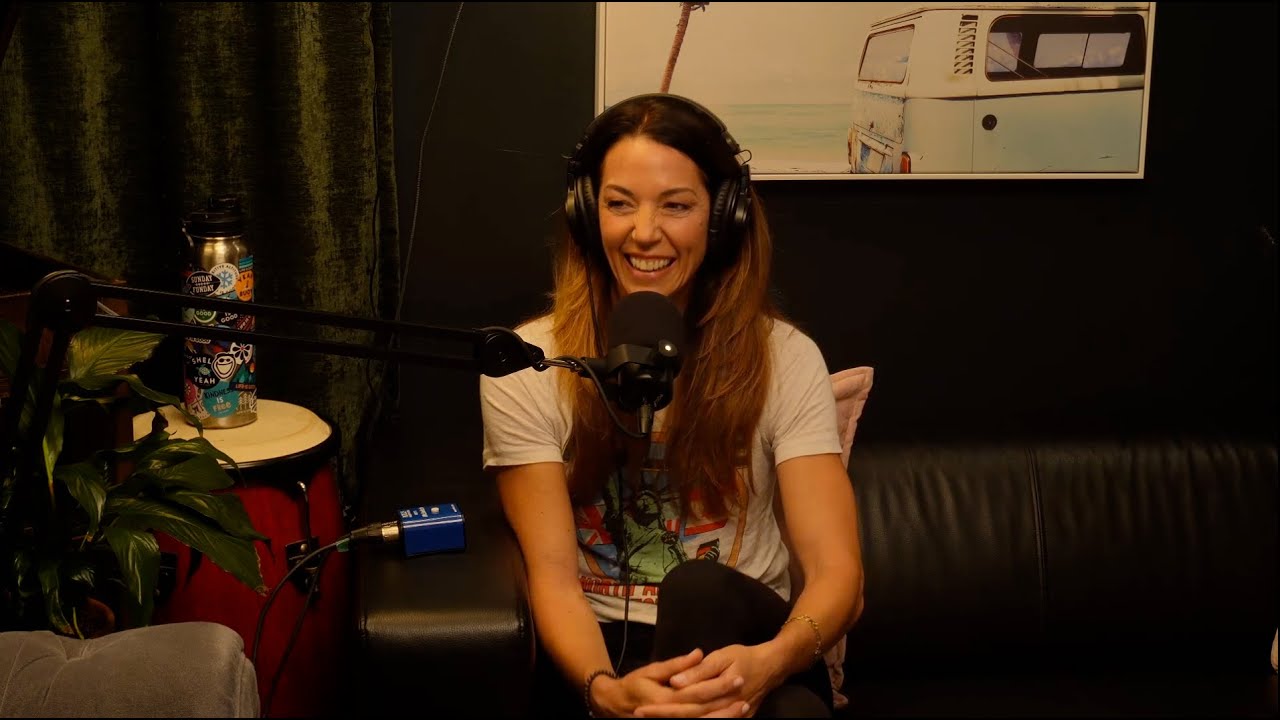
In Episode 28 of the GenX Speaks Series, Mary shares her life story as a proud member of Generation X, discussing her upbringing in New Jersey, her experiences with sports, education, and her journey into adulthood. The episode delves into her career transitions, personal challenges, and her recent endeavors in yoga and holistic healing.
[Music] Welcome to Genex Adulting and today we have Mary with us. Welcome. Thank you. We're so happy to have you here. I'm happy to be here. Thank you for having me. Of course. So the first question we always ask is what year were you born? 1974. So you are Genex. Yes I am. A proud Genex. And where were you born? Marlton, New Jersey. So you're Jersey girl. I'm a Jersey girl. Okay. And do you have siblings? Oh yeah. There's six of us. So I have five siblings. Okay. And what order are you? Six. You're the baby. I'm the baby. Oh my gosh. So what's the range between your oldest sibling and you? Nine years. Wow. Okay. Yeah. So in nine years. Yeah. That's that's I thought it was going to be more. Yeah. Yeah. So in nine years, your parents had six kids. Correct. Wow. God bless your mom. Yes. Wow. And what's the mix? Five girls and one boy. Okay. All right. So that's a busy household. Very busy. And the town you're you. Did you grow up in that town? The one you're born in? I was born in Marlton, but I grew up in a town called Morristown. Okay. New Jersey. Everybody thinks it's the one near New York, but it's not as M O O R S. Oh, I was. Okay. A Philly. Okay. Yeah. I was about to say I grew up in Sparta, which is near the Morristown. Yes. I think you've always thought Mary grew up in that one. Morristown. No, I thought, I thought you grew up in like central New Jersey, but you sounds like if you're down in Philly, that's a little more south. We call it South Jersey. Yeah. South Jersey. So were you by the shore? Well, everybody is kind of, it's like, we're 50 minutes to the, to the shore. Okay. Even with traffic. Yeah. Okay. All right. There's always traffic and everything's an hour. Yeah. Yeah. That's true. So, um, is it a small town?
we're 50 minutes to the, to the shore. Okay. Even with traffic. Yeah. Okay. All right. There's always traffic and everything's an hour. Yeah. Yeah. That's true. So, um, is it a small town? Yeah. It's a small town. So you grew up in like a small town vibe. It was. Yeah, I did for sure. It was like just a typical suburbia. Good, really good schools. Everybody went to the public school. Yeah. Yeah. I used to a little bit of farmland and a lot of people worked in Philly. Some of the Philly athletes live in Morristown because you know, it's kind of right outside of the city. Yeah. Yeah. Very suburbia. Now was your mom home with you guys? She was. Oh yeah. Okay. So that's, that's nice. So would you say you had the typical Genex childhood of. You could leave and wander. And just as long as you. You know, you were home when the lights came on or were your parents maybe a little more strict than a lot of the other boomer silent generation parents that Genexers had? Hmm. I think, well, definitely. I grew up in a strict household for sure. Sure. Sure. I felt like that, especially as the youngest. Um, but my parents were definitely strict, but I do remember just, you know, being outside and really the only role is like, don't scream bloody murder, or I think you're like dying and pretty much you can just be out running and you're like, okay, there was no stay on the sidewalk by, you know, that was, yeah, I was kind of it. So you could kind of wander wherever. Kind of wander wherever pretty much. I remember, um, we all were on a swim team. We all rode our bikes there and back. And it was like, I don't know, five miles away across busy roads. Okay. Yeah. One time I had a broken ankle one time. I still rode my bike. Yeah. Oh my God. Five miles. Could you
And it was like, I don't know, five miles away across busy roads. Okay. Yeah. One time I had a broken ankle one time. I still rode my bike. Yeah. Oh my God. Five miles. Could you imagine letting our kids? No, no, no, no, no, no, no, no, no, no, no, no, no, no, no, no, no, no, no, no, even in Jersey, which I think is one of the States that regulates everything. At that time there were no helmets. Yeah. Not that I recall for anywhere. We never wore helmets. Not until you got like a moped because mopeds were a thing today. It's the surrounds the e-bikes. Yeah. We had mopeds as kids. You had to wear a helmet. Yeah. Yeah. But not bicycles. Yeah. So you went to elementary school there. You went to, did you call junior high or middle school? Middle school. Okay. Five through eight. Okay. All right. You, and we were junior high. Is that interesting? And then high school there. Yes. So were you, did you always have a sibling in school with you? Pretty much. I mean, my sister above me, actually, I think she and I were the furthest as far as like the order. She was two years ahead of me in school, two and a half years ahead of me in age, I guess. So yeah, I only didn't have her when I got a little older at the end, the last two years. Okay. And I always, and actually, I also went to college where one of my sisters went and she went to college. We went to Loyola in Baltimore and four of us out of the six went there. Wow. Yeah. Well, we had rules. We had rules. It had to be a Catholic college within a three hour driving radius. So, okay. Okay. So did you go to Catholic school? No. I went to the public school. All right. But then the rule was you have to go to a Catholic college. Okay. Except if you're the boy, then you can go to NYU.
go to Catholic school? No. I went to the public school. All right. But then the rule was you have to go to a Catholic college. Okay. Except if you're the boy, then you can go to NYU. Apparently. Interesting. Yeah, that's hilarious. And so that's just was a double standard that was accepted in your house. And I said something. I was like, wait a second. But were you the only one that questioned it? I think so. I mean, everyone's just like, oh, NYU, cool. You know, and he played basketball. But I'm like, that is not a Catholic university. No. Did you have like seven? I'm trying to do the math. Your family was eight people. Right. Did you have seven parents being the youngest? No, I mean, it's funny. No, they didn't. They were they were just they were like, it's funny because we broke my parents down by the end. You know, I'm getting older, six kids. They're like, Mary, how did you let me do that? Like one point, my parents just went to the storehouse and I was like by myself at the house. My sister's mind was like blown. You know, she would go out. They'd be like, be back by 10. You know, they weren't even around my last two years of high school. I think that happens. That's happened with our youngest. So as I know, we know the word Dylan is right now. I think we think we know we have a general idea where he is. I know. Actually, you told me where everybody was except for Dylan. Yeah. And I think you're the one that is watching him. He's fishing, but we're not sure exactly where, but somewhere in our town. OK, so did you find that comforting having a sibling in school with you or was it at times annoying because you always had someone there that kind of was watching or that kind of kept an eye on you and you couldn't have complete
having a sibling in school with you or was it at times annoying because you always had someone there that kind of was watching or that kind of kept an eye on you and you couldn't have complete freedom, I guess, to be you. She really didn't keep an eye on me. Like everybody just kind of did their own thing. And in fact, it was good. This is the story I had above me because she was a good student. She got good grades. So she kind of greased the wheels for me when I came in. They were like, oh, please. And you know, until. But it was good in the beginning. OK, OK, so that was that didn't like squash any of your freedoms or self-expression or anything. So how would you describe what kind of student you were? I was not a good student. Now, what was the reason for that? Do you just not challenged or do you think like you might have had like I know there's a lot of Gen X women that have they found out they have undiagnosed ADHD or do you think you just were not interested in school? It just wasn't a thing. I was just super bored and I just wanted to talk to my friends and be outside and play sports. And I just it was boring. Yeah. So not challenged is what it sounds like. They didn't grab you. I mean, I guess it wasn't like it could have been challenged. It was challenging to skate by. It was just good enough grades. That was kind of my goal. OK, so I could have time to do the things that I wanted to do. Which sounds like sports. Yeah. So were you athletic right from the start? Yes. Yeah. When did you start playing sports? I joined the swim team when I was three. Wow. Wow. Mm hmm. Is that when you learned how to swim? I guess I learned younger than that. Yeah. Yeah. Because you had to be able to swim like twenty five meters at three. Mm hmm.
when I was three. Wow. Wow. Mm hmm. Is that when you learned how to swim? I guess I learned younger than that. Yeah. Yeah. Because you had to be able to swim like twenty five meters at three. Mm hmm. Yeah. Wow. Was that common? I don't think so. I think it's because just I had my five siblings all swimming and I would go to every practice. And then, you know, when it was time to learn, they're like, all right, throw her in. And I said watching so much. And I was always tall and strong for my age growing up. I was a big guy and I just took to it. So everyone you were a swimming family. Mm hmm. Yeah. That makes sense. Yeah. You're the youngest one. You spent a lot of time at the pool then on weekends. Yes. Yes. With the meats and all that. Yeah. Yeah. Was that your main sport? It was my main sport. Yeah. And like the summer we all just you would go to some practice at the pool seven to nine. And then you'd just stay there. You'd have lunch. The pool wasn't even open, I think, until like twelve. But nobody cared. You just pack your food, you stay and then you leave at like six, seven a night. And that was your life. That was my life. And so you did that from three through elementary school, through middle school. Yeah. And this was for the town or the town had it. It was a little private club in the town and it wasn't like a fancy country club or anything. It was just two pools, diving board, a slide, a baby pool and a swim team. And was that your main social world? It was. Yeah. OK. And did those friends also go to school with you? Mm hmm. OK, so that's nice. Yeah, it was fun. Yeah. And then in high school, what's the same? You swim? I swam in high school and I still went to the club and I was a lifeguard at that point.
so that's nice. Yeah, it was fun. Yeah. And then in high school, what's the same? You swim? I swam in high school and I still went to the club and I was a lifeguard at that point. Mm hmm. Cool. Yeah. That's a cool job. Yeah. Yeah. In the summer, that was your job. Right. That's awesome. So did you end up swimming in college? I did. Did you know you always wanted to do that? Swimming college? No. In fact, I wanted to play soccer in college. I loved playing soccer, but I hurt my knee, I guess my junior year in high school. And that really took me back. So I actually I can't remember if I I don't think I tried out. I think the last minute actually asked my coach for a recommendation. I'm like, will you write me a recommendation? I want to try out for the soccer team at Loyola. And he was like, oh, Mary, you're not the player you used to be, you know. And I was really like, oh, OK, thanks for the support there. Like, you know, it's not like I don't know. I just feel like I was a horrible way to write that recommendation. Right. She has. She's an athlete, high potential, but she hurt her knee. She's worth giving a shot. Yeah. Yeah. That's the letter. And June and junior year. That's a pivotal year when a lot of people are figuring out where they want to play, especially as an athlete. And had you been playing soccer in tandem with swimming? Yeah, it's a soccer in the fall. And did you do like travel soccer too? Or was it mainly? I did travel soccer when I was young. I actually just reminded me of that. Yeah. So you really enjoyed soccer. I loved it. But I loved that. I love soccer and swimming the best. I played a bunch of sports, but those are my favorite. Yeah. I can't believe that he said that to you. Yeah. And it was a bummer, but it was OK
I love soccer and swimming the best. I played a bunch of sports, but those are my favorite. Yeah. I can't believe that he said that to you. Yeah. And it was a bummer, but it was OK because it's not like they were even doing scholarships. It's not like his name is in the line for some, you know, oh, there's a couple of scholarships on one. I like it was just kind of crappy. Yeah. I guess he wasn't wrong. You know, I knew he wasn't wrong. So anyway, I just I didn't even in the end, I didn't end up trying out and I ended up swimming, which I loved. And I know I would love it. It was great. So was he your soccer coach? He was. And was he always like that? Coaching you like where you would get those types of messages or he'd be just like, no, I just didn't know. I just know I did everything he'd like, you know, I was the captain. I did all the direct kicks, everything, everything. And I'm like, and I have this recommendation. And it was like, what a shock. What a shock. What a shock. That is just crazy. What did you do to your knee? I tore him. Apparently, they said I tore a muscle in my knee and I ended up having like a full body, a full leg cast. And, you know, when that came off, my leg was as big as my arm. Yeah. And I just took a while to build back. Yeah. And but, you know, I wasn't like I didn't I don't know. I think I went to the Y. I was like trying to do my exercises. And it just it just didn't pan out, which was fine. But to to even have that opportunity to swim in college, that was amazing. So you were very natural, talented athlete to be able to have because you probably could have tried out for the soccer team and possibly made it. But then to have a backup option to play to swim in college. You know, that's
able to have because you probably could have tried out for the soccer team and possibly made it. But then to have a backup option to play to swim in college. You know, that's great. So what would you would you say back then youth sports are different than they are now? That's pretty funny. I, you know what, I don't know, because I coached my my dad used to coach us a lot and I was dragged to all of my siblings, various sports. And, you know, it's people don't really change. There's always going to be those crazy parents that think their kids the best or that go ballistic on another eight year old who, you know, whatever found their kid and they don't think like parents, people go crazy. So I feel like I saw that then. And as a coach now, I kind of when I coach my daughter, like, I don't know, six years ago, I thought, oh, this would be nice. Be fun. And yeah, no, I had a mom like go crazy on me. And what what was she going crazy about? We had made it to like the semifinals or something in basketball. And I guess I don't know if her kid was on the bench or she didn't like. I don't even know. All I know is she she got up, she crossed the gym and she liked to be on my side and she stood. She stood like super close and she just started screaming at me. And I was like, this lady is going crazy. Oh, my gosh. No, I'm I mean, eight year olds, eight year olds. Yeah. Yeah. I mean, that's been our experience is that there's some. But it's interesting that having your dad coach so much, you probably were exposed to a lot of that. So for you to say that was going on back then. See, when my dad was, you know, he was very even keel and it was like everybody played if you ran the laps, if you didn't run the laps and you don't play like it was very like, you know, it's fair.
See, when my dad was, you know, he was very even keel and it was like everybody played if you ran the laps, if you didn't run the laps and you don't play like it was very like, you know, it's fair. Yes. Yeah. And but there were always parents that would, you know, be crazy. I remember. Yeah. I mean, just the parents of other kids being crazy. So would you say as far as if somebody's going to play a sport in college, do they need to be passionate about that sport? Is what kind of commitment do you have to make when you're in college playing a sport? Well, yeah, you definitely have to. You have to like what you do. You have to like it. So I loved it. And I and I love the social aspect of it, too. You know, it was more than just time times and winning and records or whatever, whatever the goals were in the pool. It was also part of a team. And swimming is pretty cool sport because it's it's men and women mixed, you know, when you're practicing and and it's a big team for that reason. So to answer your question, I think that if you're going to do something well, you've got to have some passion for it. You got to enjoy it. With sports, at least for me, I was also super focused on just having fun. I always had fun. There was never a time when I'm like, oh, I don't want to swim. I'm so burned out. OK, I don't. That's not really my personality. Yeah. So but you need to enjoy it. This sport. It this way. OK, if I enjoyed it less, I probably would have been a better swimmer if I enjoyed this social aspect less. And, you know, I would have been a better swimmer. OK, then I was. But that's just not my personality. I was having fun, too. It was most of your social world. The swimmers, the swimming world. Yeah. At college. And that typically happens when
not my personality. I was having fun, too. It was most of your social world. The swimmers, the swimming world. Yeah. At college. And that typically happens when you play a sport in college. Right. Does most of your social world become the people that are also on those teams? I think so, because you're with them so much and you have preseason and then you have season and then the season so long. And championships, it goes on and on. Is it year round pretty much the whole time you're there? I mean, I think our championships were like in March, early March and February. But we started even before school started in August. OK, yeah, that's the whole time. And would you have morning practices like before classes? Yeah. Mm hmm. Morning and afternoon. So two days, two days. Sometimes it was optional. OK, so, yeah, that's a huge commitment. And it's optional, truly optional. Yeah, I was just laughing. I should have done two days more. I didn't. And then also there was what we call swimming dry land where you go and you're lifting weights and you're doing. And that was kind of like that also would have immensely helped my swimming. But who wants to do that? Yeah, but I mean, the fact that you were still able to make the team be on the team and without the 100 percent or 120 percent effort, that's impressive. That means maybe more about the team. I don't know. I think there's probably you. I think you were probably a natural athlete. You had to have been to be able to even maintain without doing everything. I mean, that's pretty impressive. Did you swim all four years? Yeah. Mm hmm. That's impressive, too, because a lot of people like get burned out and will stop. No, see, I didn't get burned out because I always I didn't. Maybe I would have
swim all four years? Yeah. Mm hmm. That's impressive, too, because a lot of people like get burned out and will stop. No, see, I didn't get burned out because I always I didn't. Maybe I would have gotten burned out if I did the two days I did every dry land and it would have been a lot. But I was able to find that balance. That's awesome. Yeah. Now, did all your siblings do sports in college? Mm hmm. Yeah, actually, no, my oldest sister didn't. She swam on her own like she didn't. Didn't do the team. My brother played basketball. My other two sisters, they went to lay a little on the swim team. And then my sister, who went to St. Joe's, St. Joseph University, she ended up doing crew. OK, wow. Wow. So was your were your parents collegiate athletes? Um, my dad was an excellent athlete, but he he went to college later after like he basically was with my mom. And I was like, if you want to marry me, you need to get your college education. And he was like, oh, all right, let me do that. How did they meet? They went to high school together and they actually ended up going on a blind date with other people. OK. And then they went apart. My mom went to college. And I think I don't think a lot of women were going to college. And my dad didn't have a lot of money, didn't know what to do. So he went to the army. Wow. And then when he came back from the army four years later, I guess my mom had graduated college and he came back from the army. They were at the same wedding. And that's where they really met. In the same town where you were born? No, they they were from North Jersey. So my dad grew up in Wippany and my mom was in Providence. OK. OK. All right. Wippany is legit like seven miles from Sparta. OK. Yeah. From where we lived. Yeah. Yeah.
my dad grew up in Wippany and my mom was in Providence. OK. OK. All right. Wippany is legit like seven miles from Sparta. OK. Yeah. From where we lived. Yeah. Yeah. So did he what years was he in the army? If you had to guess. I don't know. He was born in 37. So it's 57. You know, so probably 55 around that time. Were there. No, it sounds like Keith probably was my dad's age ish. And he got to miss all the World War I and II, obviously. Yeah. And then too young or the Korean War was it was it would have been like Korean War or Vietnam. But it sounds like he missed both. Wow. That's wonderful. Yeah. So then he came back. And my mom had a wedding. And then that was that. And then she said, if you want to get married, you need a college degree. You need a college degree. And so then he did that. And he was working as a teacher and he went to college, but he had played baseball in the army. And that was his main sport, I guess, is baseball. And how impressive that your mom went to college, because like you said, at that time, that was not a thing. I mean, women did, but it wasn't the norm. So do you know what she went to school for? Yeah, she was she home economics. OK. Yeah. Yeah. I don't even think they have that. I don't think so either. Was it four years? It was. She went to St. Elizabeth's College. OK. College of St. Elizabeth's. Thank you. Right. Yeah. So four years for sure. And then she worked until she they started the family, their family. So where did the swimming come from? I don't know. My mom was probably like, what am I going to do with these kids? That's a great way to burn energy. Right. Yeah. I'm going to put them in a pool. I think so. I think so. That makes sense, though. Yeah. Yeah. And then she could just have everybody
That's a great way to burn energy. Right. Yeah. I'm going to put them in a pool. I think so. I think so. That makes sense, though. Yeah. Yeah. And then she could just have everybody together. Yeah. You're on the pool. Yeah. I just think it's so impressive, though, that most of your family played sports in college. That's I think that's unusual to have that many siblings place sports in college. I guess. I don't know. I think it is right. That the statistically. I know another family that had all their kids play. They were all tall. And one actually made it to the professional NBA. Yeah. It's it's rare, though. It's very rare. Yeah. So I mean, your parents, your parents somewhere in there, the DNA, there's some good athletic genes in there. Pretty athletic, even though my mom didn't really do sports. Well, she did synchronize swimming now that I think about it. OK. Yeah. There you go. Yeah. So she had she was familiar with that and had all these kids. And she's like, I know something. So cute. Let's do this. Yeah. OK. So what did you go to school for? L. A. Ola. Oh, I majored in English. And I did a minor in secondary education and that minor in secondary education was not for a lot of education. It was because everyone in my family, all of my siblings got their masters or beyond and after college. And I would watch them all come back to the house. And my parents paid for college and we had to pay for grad school. And so everybody came home, lived at home, had no money or students. And I was just like, I don't want to do that. I do not want to come back after college. Yeah. So what job can I do where I don't need a master's or whatever? And I thought, OK, I could teach. And that's what I did. So you saw all your siblings come back
what job can I do where I don't need a master's or whatever? And I thought, OK, I could teach. And that's what I did. So you saw all your siblings come back and live back at home while they're getting their masters. And you decided, OK, that's not for me. Were you always kind of taking your own path? I mean, in some ways, I think so. But I think part of that is being the youngest of six. I saw so many paths already taken. So it wasn't such this brave new world to me. I'm like, OK, if you do that, that's what happens next. If she does that, then that's I saw a hard deal with that. You know, you know, I feel like I had experience through my siblings. Yeah, yeah, absolutely. So what did you do when you graduated? So I got a teaching job. I moved to Maryland. I got an apartment. I got a Nissan Sentra and I had my first job. Why did you move to Maryland? That's where I got a job. OK. In New Jersey, you have to apply like school by school, district by district. In Maryland, you send one application out to the county and it covers every school in the county. OK, so it was just much easier to apply to schools in Maryland. Absolutely. So you were a high school English teacher. I was what grade, ninth and 11th. How'd that go? I was you know, it was I liked it. I did like it a lot. I could I love the kids I did. I love the teaching moments that I did love. But it's a lot of testing. And it was tough because it was a kind of a tough school and a lot of it. I think this statistic was twenty five percent went to four year college. Twenty five percent went to like a two year and fifty percent went to the workforce. What town were you in? It was in Edgewood, Edgewood, Maryland. No clue. No. Baltimore County. OK. Nice kids. Nice people. Super nice. I
percent went to the workforce. What town were you in? It was in Edgewood, Edgewood, Maryland. No clue. No. Baltimore County. OK. Nice kids. Nice people. Super nice. I really enjoyed it a lot. Was it blue color with that type of college distribution? Mm hmm. Yeah. Yeah. So how long did you do that? Two years. Two years. And talk about burnout. I did get burned out with English. And I was kind of anal about it because I would have them write and write. And, you know, every comment period and misspelled this. I am the English teacher. Like you can't let that stuff go. But I'm up till two, three in the morning grading papers and reading journals and doing these things. And then and then, you know, you go to open up your drawer for lesson plans. It's empty because you're not you're just starting off. And then you got to create the lesson plans and read the books you haven't read in however many years. It's a lot of work being a teacher. I give teachers so much credit. It is a very difficult job. Yeah. Because you're giving of yourself so much. And then I always imagine then the teachers that have children at home. So you've given of yourself all day teaching to other people's children and not just teaching academically, but there might be personal things going on that they need your help with or just that emotional support. And then you go home and your children need all that and your spouse if you're married and and then you somehow maybe try to find some time for yourself for some self care. Maybe I can only imagine the burnout, you know, if you really think about it, if you're trying to raise a family and all that is. So so two years and you were like two years. I lost two years. I can't do this anymore.
know, if you really think about it, if you're trying to raise a family and all that is. So so two years and you were like two years. I lost two years. I can't do this anymore. So then what did you did you get start getting a backup job before you left or what did you do? Oh, I was like, oh, man, I've always wanted to be an actress. That's I was always wanted to be in theater. And but I never did because I was I was in sports. And I think New York City is really cool. I'd love to live in New York City. So I quit my job. And I that's what I did. I think I went on Craigslist. I found one of mine helped me find a way was Craigslist around then. Had to think I remember a friend of mine found this apartment for me a four floor walk up and I didn't even know what that meant. I'm like, well, keep keep in mind. She's a couple years, three years younger than you are. Yeah. Maybe Craigslist. Yeah. It's been around forever. Has it really, guys? Wait, had you because I know Brian growing up in Jersey, he would sneak into the city. And so he was familiar with the city. Did you also go in the city? Our city to sneak into his Philly. So you weren't familiar with New York. Only from going up to watch my brother's basketball games. OK. Yeah. So this really was going to experience living in the city. Yeah. Unknown. Would you is that a thing to do? Sneak in the Philly? Oh, and go. Where do you go? Like down by Temple and St. Joe's? OK. Did you do that? Mm hmm. A little not a ton. But a little. Did you buy fireworks like Brian? No, no. I do have to ask, did your being the youngest, did your older siblings buy you booze or other things when you were growing up at all? Or because you were all athletic. You know, we really were like very PG family.
youngest, did your older siblings buy you booze or other things when you were growing up at all? Or because you were all athletic. You know, we really were like very PG family. Now, it wasn't boozing or, you know, a couple little sneak out things like that, but it wasn't. And it was nothing like that. Like I hear my other friends talk about their high school times. Like, oh, you know, and I was thinking I didn't do that. So in high school, you were you were a party. No, you weren't like a Gen X that was like Drunken afield somewhere in your parents that you're spending the night. Never. So she had the parents that kept an eye. Yeah. Yeah. Yeah. I know, which is, you know, there are Gen Xers who had that upbringing. You know, there's just so many of us don't know any of them. Now we've met one that had my upbringing. Yeah. Yeah. Because so many parents, whether it was I don't just the attitude of I don't know the boomer attitude, the silent Gen attitude or there were a lot of divorce was happening. So you had a lot of women going into the workforce, single moms. And so there wasn't a lot of supervision. I was just like, she was on it. She's like, no, you can't go. She's how we are. That's how she is. Yeah. Yeah, yeah. Yeah. Something was going on. I'm picking you up at 930. Yeah. 930. Yeah. Yeah. And that's how it was. Yeah. So okay, so you you got this apartment. Yeah. And you go in without a job. The city. Yeah, I didn't have a job. Right. What are you like? 20? 22 24. I taught for two years. So yeah, I was like, 20. Now I was like, 22 23. Wow. I'm kind of young for my like, I'm a September birthday. So yeah, I think I was like, 22 23. And I had a family member, like an uncle that would were not related, but we call them an uncle who
September birthday. So yeah, I think I was like, 22 23. And I had a family member, like an uncle that would were not related, but we call them an uncle who had a daughter who was an editor, I think for a Spanish version of People magazine. I don't know. And she knew someone in the city who was a fashion stylist. And this person who need her name is Holly, she needed an assistant. Okay, great. I'll do it. Yeah. And so that was really my first job as an assistant fashion stylist to Holly. And so you took that job. And then did you continue to try to pursue acting? Um, not at that time, like I was so new. And I just had to get like, figure out where I was and like, how much stuff cost and which I'm sure even back then, the city was expensive. Was it ever not expensive? No, it's always always insanely expensive. Yeah. Was it a nine to five job? Or if you were an assistant, was it 24 seven? It's like you you work and get paid or you're broke. So it's like when she's called me, okay, we have a five day shoot here, you know, and I would just get a daily wage. And that would be that and then I just pray that she'd call me within the next week or two for another gig. So what would you do? Like, with that job as a fashion stylist? It was my job. Yeah, what was your job? My job was to iron the clothes, steam the clothes, which by the way, I'm horrible at that stuff. I think that's what I did. She showed me how I got the steam or I steam the clothes, dress the models. Okay. At one point, it was my job, like after like a year or two is my job actually booked the models, which is funny, because I remember one time I was on a photo shoot, you know, I'd ordered lunch, I just I was like the gopher. And I ordered lunch. And if we
actually booked the models, which is funny, because I remember one time I was on a photo shoot, you know, I'd ordered lunch, I just I was like the gopher. And I ordered lunch. And if we were on a location somewhere, and one of the models was like in the woods having a cigarette and I didn't get his lunch order and I got everybody's lunch order. And I, you know, there's no delivery, then you know, you're going to do all this stuff, get it yourself and whatever. And I came back and I'm handing everybody their their meals. And I'm like, Oh, my God, I'm so sorry. I forgot I didn't see you. You must have been out having a cigarette. You can have my lunch. He's like, Okay. I was like, Oh, and he was such a jerk about it. And like, here he is making like $3,000 a day, you know, whatever. It's fine. He's right. I didn't order his lunch. Right, right. Such a non gentleman about it. But like, lo and behold, a couple months later, it was my job to hire the models. Oh, I'm going through the headshots. Like, nope. Nope. The moral of the story, you always got to be good to the little people. Yes, it's so so true. Because what comes wrong goes around, comes around goes around. So true. So were these models for that magazine? It was just that was a cat. We did a lot of catalogs stuff. So so you were just kind of doing everything and just running around ordering food, ironing clothes, like, and then hiring models. Yeah. So hiring, how do you know who's a good model? And who isn't? Like, how do you hire a model? She knew he was an asshole. Well, she knew he was an asshole. But like, if they gave you a sec, how do you judge that? Well, you have to just like, mix it up. Like, you're not going to get everybody with brown hair, everybody who's playing,
like, if they gave you a sec, how do you judge that? Well, you have to just like, mix it up. Like, you're not going to get everybody with brown hair, everybody who's playing, you got to get different ethnicities, different coloring, some, you know, it's just something that looks interesting together that fits the vibe. And then of course, some specific things you need someone who if you know, if you're gonna someone's got a ride a moped or something, you know, certain skill sets or whatever. So Okay, was that fun? Did you enjoy that? Super fun. I actually like that a lot. And were you making more money? Like, was that a promotion? It was just more hours to work. So it was just more money. Then how long did you do that? I did that for about two years. And then something happened with the economy. And people were not hiring Holly as much because they didn't want to pay her rate. And so they hired me at a little bit more than I was making as her assistant, but not as much as she was making. And that was a little weird. And I like asked her, like, Are you okay with this, you know, they hopped over to get to you. Yeah. Yeah. And I asked her, I was talking about this stuff. Now I'm remembering, you know, some things that went down. But yeah, Was she mad? Mm hmm. Yeah. And I was mad too, because I asked her if it was okay. And she was like, Yeah, it's totally fine. And so I did it. And then she was like, I'm hiring you again. And I'm like, Wait a second. I asked you. Yeah, I asked you. And so anyway, and then so then I started not, I started being the stylist. And that was fun. But it wasn't really what I wanted to do. So and I think at that point, that's when I started probably taking acting lessons and Okay, courses, and then I walked like a couple
fun. But it wasn't really what I wanted to do. So and I think at that point, that's when I started probably taking acting lessons and Okay, courses, and then I walked like a couple blocks from my apartment to try to figure out where I could get some money. And of course, waiting tables and bartending and stuff like that. So kind of transitioned out of the stylist and into kind of a New York lifestyle, right? You just hustle. Yeah, that's what you do. Just hustle. Yeah, the rent. That's what you do. So you were you were stylist. And then you were going out on auditions. I'm not at that point. I didn't have an agent. I was just making, you know, cash working as a bartender, waitress, and taking these classes. And then, and then I guess I did get an agent, eventually, I don't know, I don't even remember how, I think you just send your headshots out at that point. And then people either accept, say, I'll be your agent or Yeah, or not. Or they don't hear from them. Or they're like, Okay, come in, we want to meet you. And then they'll say, Okay. And then you had you said you had taken acting classes. How are those really fun? Those are fun. Are you still friends with anyone that you met in those classes? No. Did you actually learn things? Yeah, I learned about that. Because I didn't know anything. Okay, I've never even done theater, nothing. And they're like, this is the fourth wall. I mean, I was like, okay. Like, I didn't know anything. And how do you feel you did acting? Um, I don't know. I think I was okay. I don't think I was like, great. It was just it was just fun. It was just something I wanted to try. No, it's just fun. Actually, I did get an audition for like my dream job. Dream job. Did you ever watch soap operas? Yeah.
just it was just fun. It was just something I wanted to try. No, it's just fun. Actually, I did get an audition for like my dream job. Dream job. Did you ever watch soap operas? Yeah. Okay. So did you Brian? So poppers? Oh, yeah. Jen, X latch key. Whatever. Yeah. On parents. Which one? Guiding light. Oh, yeah. Okay, so that was the one I was obsessed with my sisters, my mom and I like obsessed. And I don't know how somehow I got an audition for that show. Wow. Yeah. And so I was, I was so beyond excited. And I went to the audition. And I sat and I sat and I sat and I sat and like three hours later, this this lady at the desk comes back and she's like, Oh, you're still here? She's like, Wait, who are you here to see? And I told her, and anyway, there was a mix up with the schedule. And so I was there for three. I imagine like, you know, by then. Oh my gosh. I was so nervous. So did they not have you on their schedule? No. So another lesson learned here. So they the woman who was I was supposed to have the audition with came out was like, I'm really sorry. And there was a, you know, mix up in the schedule. Can you come back? Do you want to come back? She's like, you can do it now. You can come back. And I was like, I want to do it now. I want to do it now. Yeah, which I should have said, I'll come back. I should have said that. How come? Because I was already like, spent with like, energy and nerves and mascara is probably halfway down my face by then. And my hair was flat. And I was just tired. And yeah, but I was just you're drained. Yeah, I was trained. And but I just wanted it so badly. I was like, No, no, I'm gonna do it. And I remember she kept asking me like, I did the scene. And then she said, Okay, now can you do
trained. And but I just wanted it so badly. I was like, No, no, I'm gonna do it. And I remember she kept asking me like, I did the scene. And then she said, Okay, now can you do it like this? And I'm like, uh huh. And I and I saw myself doing it the exact same way, like, again, and again. And she's like, Okay, can you give me a little more of this do like, and I didn't, I just didn't probably because you didn't have it in you anymore. I was depleted. And I just was so focused on getting it done, I guess. And then I didn't get the job. But um, when you're doing that, are you reading with just one person or is there like a particular it was just she and I? So how many of those types of auditions that you go out on? Not many, not many at all. That was like, that would have been a big break. And again, I don't even know how I got that one. I mean, you know, you're just mailing stuff out to network. I don't know how I got that. But I blew it. It wasn't meant to be. And and your waitressing and bartending at the same time. And that stuff at any particular restaurant that's still there, or just random know if it's still there. Do you do you remember where you were living at the time? Yeah, so my first apartment was at four floor walk up on 89th and it was on second or third. That was perfect. And then it was like a railroad apartment along skinny apartment. It's a nice area. I was in the middle and like, in bed. And then was your apartment the size of like smaller than this room? Or the size of this room? The apartment itself might have been bigger than this room. But my spot was like, you know, probably where Brian and I to the wall. So small. Yeah. Were you living with other people? Yeah, yeah, yeah. Oh, it wasn't just my spot.
bigger than this room. But my spot was like, you know, probably where Brian and I to the wall. So small. Yeah. Were you living with other people? Yeah, yeah, yeah. Oh, it wasn't just my spot. No, you almost have to. Yeah. How many people were you living with? Just one girl and she needed a roommate. And then I always lived on the Upper East Side. And then by the end, when I actually had jobs and was doing well before I moved to Florida, I was on 87th and Lexington. That's cool. Yeah. So your wait, you're seeing your bartending, you're hoping for auditions. Yeah. And how long did you do that? Oh, God, I don't know. Probably another two years. And then I was like, All right, I'm tired of this hustle. I mean, I'd like a paycheck. I'd like a little bit of security. And that's when I started becoming a assistant salesperson in the Government District, which actually happened through one of my jobs that I got working for a bongo gene. So that way. So go back what the bongo genes, what's that? So the bongo genes. So I got sent on a ghost and they needed a showroom model, just someone to wear the genes while they're selling the selling the genes to their buyers that come in. So I did that. And it was great, great, great job because I was in like, like, say you gave a presentation, I would be modeling for you and then if I gave right, so I'd hear how you presented how he was like all of the sales people to the president. I got to hear everybody's presentations and I learned a lot about the genes, the product, how to sell presentations, the whole thing. And so after doing that for probably another two years, I asked for, hey, can I work here, you know, I'd be an assistant. So the bongo genes modeling gig was a two year job that you or was that just like
probably another two years, I asked for, hey, can I work here, you know, I'd be an assistant. So the bongo genes modeling gig was a two year job that you or was that just like one of the gigs you would go out on? Just one of the gigs, but it was most regular. Yeah, it was like every month I was there. So you would be live wearing the genes where they could see you in the genes. Oh, that's cool. So as they're doing a sales presentation, you're saying, oh, okay. Yeah, yeah. So they have like a whole rack of the line. And they could be like, and the buyer would say, I don't know about those. Oh, Mary, throw them on. I'm like, okay, here's what you know. Wow. Seeing stuff on looks a lot different than just hanging. Yeah, that was fun. And I met one of my best friends at that job who I'm still best. Okay, that's cool. So okay, really quick. So the buyers are maybe from like Macy's or Nordstrom where? That's exactly where they're from. Okay, cool. All over the nation. I didn't know they did that where they have models right there. It's New York Fashion District. I guess that makes sense. That's cool. So in addition to going out on auditions for acting, you were also getting modeling. Yeah, I did end up getting some of those, which I wasn't, you know, I, I wasn't thinking I was going to do that. But then the bongo thing became very consistent. And then I gave up on the acting thing. It was just too much where I was probably spending more money on taxis and subways. And I was like, on anything. I just stopped doing that. And that's when I wanted to become Were there are there any interesting stories from your modeling days? Besides the bongo? That's interesting. But it didn't anything else happen. Because
that's when I wanted to become Were there are there any interesting stories from your modeling days? Besides the bongo? That's interesting. But it didn't anything else happen. Because modeling in New York, I can only imagine. That's quite an adventure. Yeah, it was an adventure. It was an adventure. I yeah, it's a lot of a lot of did a lot of random stuff like I did like wedding. For some reason, I booked a lot of wedding showroom things. Okay, that was fun. And I did like, just I actually was in swimming magazine or swimmer magazine something I did some swimming things and some fitness things and other magazines. And were you in any like, like Cosmo or any of those magazines? Cosmo was one of the first jobs I booked. And that was just a big one. It was a big one. It was, it was a I got called to go. And I almost didn't go. I was like, I am not going to an edition for Cosmopolitan magazine. Like, I'm not doing this. I'm you know, why did you hesitate? Because like, Cosmo, these are models like they're 510. They're beautiful. Like this is this is what they're doing with their lives, you know, and I'm just taking some acting classes and throwing on jeans. I'm like, I'm not going to Cosmopolitan. This is nuts. You had like imposter syndrome a little bit. Totally, totally. I was like, what am I doing? I don't have a book. You have to have this book with all these tear sheets and all these things that you've done. Like, I haven't done anything. So I went there and the content as building up on whatever floor and I was like, I think I showed a headshot that I had. I didn't even have any modeling picture. Yeah, you know, because the bongo thing was live. And anyway, they're like, okay, yeah, go into this room. I would just want you to show
any modeling picture. Yeah, you know, because the bongo thing was live. And anyway, they're like, okay, yeah, go into this room. I would just want you to show the two women like we just want you to try on this outfit. I'm like, okay, that's fine. Teeny tiny outfit, like a little teeny, lacy boy short and a little crop thing. And I was now even more horrified and embarrassed. And I just, there's no way I'm putting this on like, is it like lingerie almost? Pretty much. I mean, it was Yeah, it was cute. It was tasteful. But yeah, it was very skimpy. Like kind of fluorescent lights to people I don't even know. Yeah. And you never modeled something like that before. No, no. And this wasn't thank God they weren't taking pictures. This was just they just wanted to see what I look like. Yeah. And I remember being in the bathroom like how do I get out of this? How do I get in there? I tell them I puked like I how do I get out of this? I can't walk out there. I'm not not and I was probably really 10 minutes. Like, wow, you're taking a long time to it wasn't that much to that outfit. Totally, totally. And then I finally was like, Oh my god, I just walked out like probably with the worst like just head down. Like, okay, here. I was like, Okay, they're like, Okay, I'm like, Okay. And then they said, Well, can you just turn around? Can you just do a 360? And then I was like, this is could this get any worse? Like, what's you seriously? So I stand I do the 360. Then I'm like, good, we're good. We're okay. Great. I ran back to the bathroom, got dressed. I'm out. And back then, I think I had a beeper or a blackberry. I don't know what I had. But by the time I was just a couple blocks, my agent called me was like, Oh, Mary, you booked a job for Cosmo. Wow. I
And back then, I think I had a beeper or a blackberry. I don't know what I had. But by the time I was just a couple blocks, my agent called me was like, Oh, Mary, you booked a job for Cosmo. Wow. I was like, what? That's cool. That's cool. Yeah. And, and that was cool. But I was I was the one and only time but the moral of that story that I've told that story to my daughter before is like, don't tell yourself no, even if just let someone else tell you no, I didn't if you don't get it, you don't get it. You know, there's a lot of things you're not going to get. But you can take that into almost any aspect of life. Anything that is huge. Don't tell don't tell yourself no, let someone else tell you no. That's just just go. Just do it. Just do it. You just don't know. Now. Yeah. Has that stuck with you? Totally, totally, totally enough to tell your daughter. Uh huh. Yeah, enough to tell her. That's a that's a great lesson. Because that is a great lesson that any age can adapt to or adopt in their life. I mean, that's just any situation. Any situation yourself. No, just just go for it. Yeah. Worst case scenario, it is a no. And then you learn like, okay, I can do something different or this isn't for me or whatever. Yeah. But that's a huge lesson for me. So how long did so you said about two years you did the modeling, the acting. I feel like everything's been on kind of a two year rotation. I don't know. Like test it out for two years. You're like, okay, I did that. Seems like it. And then you and then you got the job as the sales. Yes. And then I was an assistant salesperson. And then that grew into an actual salesperson. I was probably there for another two years and then that grow. And then I ended up to be an actual sales
Yes. And then I was an assistant salesperson. And then that grew into an actual salesperson. I was probably there for another two years and then that grow. And then I ended up to be an actual sales executive there, which I loved. Wow. So you've been in the city at this point, what? Oh, eight years. Would you say since you got there? Yeah. So good. Yeah. Right up. Yeah. So most of your twenties. Yeah. All your twenties pretty much. And what was the what years was that in the city? Would you say that was almost a golden era. That's like the nineties. Giuliani was probably married. That's what I was thinking. Nathan was safe back then. It was fine. It was beautiful. It was clean. I used to take Nathan and Kai in like just them. And I would have this parking garage that only charged eleven dollars all day. And then we would cab it everywhere. And I would. That's when Toys R Us was in Times Square. Like there were Mars 2112. That restaurant where it's like you were like you were living a different life than me. So there's a reason for you to go to Mars 2112. But it was like this. The restaurant was like Mars. There are aliens. It's like a flea stacks. Yeah. Yeah. So it was like I could take young children and feel so safe. Yeah. It was you were there in one of the best times of the city that I can think of. Yeah. Were you there for nine eleven? Yeah, I was there. Were you? So can you share your nine eleven story the day that that happened? I was at Bongo and that was in the Garment District. So their place was on 40th. I think it's between 6th and Broadway or 6th and 7th. I can't remember. So 40th and I just we had the TV zone is between between clients, between buyers coming. And that was it. We were just like, oh, my God, someone,
and Broadway or 6th and 7th. I can't remember. So 40th and I just we had the TV zone is between between clients, between buyers coming. And that was it. We were just like, oh, my God, someone, you know, just flew a plane into the towers. It was crazy. I almost looked like, what is the quake? And then you see you started seeing smoke and smelling and everything. But I was far enough from it that you could smell the smoke, though. After a while, I don't remember how long. And I think I had to walk home. So I was living on the Upper East Side and, you know, nothing was running. No, that was nothing. So you had to walk. And yeah, it stunk. What was the when you were out on the sidewalk walking? Was everyone just kind of in shock? Yeah, that's a good way to put it. No one's really talking to each other. It was kind of eerie and scary and panicky. But like a calm panic kind of everyone was just kind of like nobody really knew what to do. I feel like, you know, or how to get to where they needed to go. Yeah. And was the city pretty quiet for was really quiet? I think that's why for a few weeks, would you say after that happened? Yeah. So he actually went in what a few days after two days later, two days later to help set something up. And but I think that was the only activity was down there. I imagine that I mean, it's New York, right? It never sleeps. It never stops. But the quietness is I remember it was kind of ominous. It's like people were just wasn't that happy. That hustle bustle. It's still there. But yeah, we set up. What did we set up here? 94, I think it was the DNA, the DNA. They had the DNA collection for the people who died in the towers. Their families were bringing toothbrushes and brushes. They were hoping to
was the DNA, the DNA. They had the DNA collection for the people who died in the towers. Their families were bringing toothbrushes and brushes. They were hoping to find people DNA stuff. Yeah, it was the whole thing. So so did you then not go to work for? How long were you not going to work after that happened? Like how long did it shut down? I don't remember. I remember. I have a blurb. Yeah, I think it is for pretty much everyone that is in the city at that time. So you were there through 9-11. Were you an exec, a sales executive? Was that your last job in the city? Yes. And then had you had it with the city? Like what made you move? I had had it like I was ready at that point. You know, it was fun, but I was ready for the next stage in my life. I wanted to, you know, I wanted to experience something a little slower, get out of the city. And my parents had always had a timeshare down here in Florida. And I would come every year. I was like, man, I don't really want to live down here. How do I live down here? My dad's like, work, you get retired. That's how you live down here. I was like, that seems like a long time, dad. Yeah. So and I imagine I mean, that's a long time to live in New York City. Yeah, I feel like I've heard a lot of other people tell me that too. Like when I ask people that like 10 years, 10 years, I was there for 10 years. Like I feel like 10 years. Yeah, you're done. You're done. So that's such a grind. Yeah. You wake up and it's on and maybe you go hide in your apartment, but then you need to go do something and it's on. Got to be on. Yeah, it's on. What would you say is like one of your best memories from living in the city? Um, oh my God. Well, before I moved out, I had a great
do something and it's on. Got to be on. Yeah, it's on. What would you say is like one of your best memories from living in the city? Um, oh my God. Well, before I moved out, I had a great apartment and my best friend at the time, her bedroom apartment, her apartment was right next to mine. So my living room, all the other side was. That's awesome. Yeah. We both had adjoining balconies. And yeah, so we had a lot of fun. Just, you know, at that point that was just, I don't know anything particular, but we just ran around and, you know, we just had a lot of fun. Would you say you had a very Sex and the City type experience? Yeah, that's what I was thinking about when I just talked about her and our next journey we got was like Sex and the City, which is, you know, the restaurants and then going out and the dirty martinis and like, you know, yeah, yeah, running around having fun. And that's awesome. You had that experience working, you know, yeah, we were both working and doing well and running around and having fun. And you could afford it. Yeah, we could afford it at that point because we had lived with the roommates and the walk ups and the yeah, you know, we did all that stuff. Would your siblings or your parents ever come in and visit you when you lived there? Nobody really wanted to come in and visit. My I broke my ankle at one point, which was terrible. It was in a basketball league in New York. Still playing sports. I was still playing sports. Yeah. And was it mixed or just women? Just women, just women. I went down hard and I like crazy, crazy breaking my ankle and I needed surgery so my mom came up and like stayed with me for a couple of days because I was totally immobile. Other than that, like, no, I think once my birthday, they
breaking my ankle and I needed surgery so my mom came up and like stayed with me for a couple of days because I was totally immobile. Other than that, like, no, I think once my birthday, they came up and we saw a show and like, but during the 10 years, no, nobody was like. Would you do a little bit of a hike from Philly? Is there a couple hours? Yeah, yeah, yeah. Yeah, do the tunnels and bridges. And yeah, did you ever do the Christmas stuff like Radio City? Rockettes and all, you know, I know it's so funny. I never did that stuff. I had never gone to the Empire State Building. Like you just live there. So I did go skating in Rockefeller Center and see the tree and all that. That's cool. Never saw records. I never you never went to the top of the Empire State Building. Oh, that's worth it. I'll have to go back and do that. It is pretty cool. It's cool. It's cool. We have we have a secret. We won't share it online, but if you do text, yeah, way to cut the line. You have to get to the top. The way to cut the line. OK, so you decided to leave the city. So what steps did you take to get down to Florida? Well, I was just visiting my parents at that point. I was still working and it was like just a thought like, OK, I want to do something else. I want to live somewhere else. And then I ended up getting engaged and marrying someone who lived down here. OK. OK. Did you meet him in the city? I met him in the city. Yeah, we were we were we have a mutual. We ended up having a mutual friend who set up up on a blind date. And so the blind date happened in the city. And then, you know, eventually we got engaged and I got married and came down here. So that worked out because you wanted to be down here anyway. I wanted to be down here.
happened in the city. And then, you know, eventually we got engaged and I got married and came down here. So that worked out because you wanted to be down here anyway. I wanted to be down here. So, OK, so it works. So when you got down here, did you then look for you? You didn't have a job when you came down here, right? So you needed to find one. So when I was considering so the swimsuit is in Miami like for the, you know, the Garment District in Miami. But I thought, oh, that's a long drive. And, you know, I did that in New York. I don't really want to do that. And I've always wanted to be a yoga teacher. And now that I'm down here, like, you know, I couldn't figure out how to do that in New York and afford rent. So I I met someone who was doing yoga down here and she was like, oh, Mary, we're doing a teacher training. You should totally do it. And I did. So is that something you did in New York, though? Did you I went to classes? Yeah, I took classes. That's where I first, like, started. Wow, I really like this yoga thing. It's awesome. So when did you start yoga? How old were you when you first did yoga? Oh, God. Um, oh, I don't know. Maybe 30. OK, in the city. OK, yeah, I started going. I was going to Equinox and we take classes there at the gym. Did you keep swimming after college? No, I stopped swimming. But you know, when I started swimming again, anytime I get injured or hurt when I hurt my ankle, I get back in the pool. OK, I heard something. I get that when I was pregnant, I got back in the pool. Like it's therapeutic. It's therapeutic because it's there's no weight. You just you're not using your body weight. So it's very, very gentle. And I'm happy that I like. Is that a mind body thing for you or more
It's therapeutic because it's there's no weight. You just you're not using your body weight. So it's very, very gentle. And I'm happy that I like. Is that a mind body thing for you or more just the you know, it'll help. I know to help anything. Yeah, I know to help. And it's like, you know, when I was with my ankle, I had to. Just wanted to get off it. It hurt, you know, to get off it. And so the swimming and the mobility and the water, all your joints, you're super mobile and you're completely supported by the water. So it's it's like the greatest thing if you have any type of injury. So then you did you get certified to become a yoga instructor? And I got certified. How long does that take? That it's a 200 hour to be certified with yoga Alliance. It was the 200 hours of training and teaching and watching, observing. And yeah, that was fun. And then you started teaching. Yeah. And then I started teaching. And did you like it right off the bat teaching? Actually, no, I didn't. It's so funny. I didn't really like it that much because. I don't know, I think like I guess I guess I wasn't that sure myself in the beginning and you know, this is a physical practice now. So you're in charge of like people's physical safety. And you know, I saw that I got a little nervous with that. But then the more I learned about the body and the anatomy and the practice and you know, like anything, the more you do it, the more you learn. And then I end up loving it. OK, that's that's great. And I was like, I will say I've taken some classes from Mary. She's amazing. Yeah, you're amazing teacher. Yes. And I didn't know anything I was doing and wonderful teacher. So so you're married, you're a yoga teacher. And then did you start a family? Yeah. So then I did.
you're amazing teacher. Yes. And I didn't know anything I was doing and wonderful teacher. So so you're married, you're a yoga teacher. And then did you start a family? Yeah. So then I did. I have a daughter. OK. And that's life changing. That was totally life changing. So you come from living almost 10 years in the city. Yeah. Living the sex and the very independent. Very independent. Totally. You've hustled. Mm hmm. And now you're living a domestic life. And you're very zen with yoga teaching. Yeah. And you become a mother. So how would you describe how that changed your life? Become a mother? Um. I guess it changed everything because for the first time, instead of thinking about what do I want to do, what do I want to go? What do I want to learn? You know, changing from this and going from this to that. It was what does she need? Yeah. Yeah. And I better learn. Fast. So I started reading books about babies and pregnancies and nutrition and all of the things. And I slept on my left side and I, you know, I did all the things. Mm hmm. And never stopped, I guess. Yeah, it doesn't. Yeah. It never ends. Isn't it amazing, though, how we immediately come out of ourselves and it's all about that child? Has to be like it's just immediate. Like you're in charge of this life. Yes. Don't mess it up. Yes. And invariably somewhere along the line, we do somehow a little bit. But for sure. You know, but it's an instant thing. Yeah. You know, and immediately we're and that's why I think it's so hard for women, especially to balance self-care when they become mothers. Oh, yeah. Because our first instinct is always to give, give, give to our children. And that's definitely not something that Gen X women were taught because, of course, our mothers and grandparents.
always to give, give, give to our children. And that's definitely not something that Gen X women were taught because, of course, our mothers and grandparents. Well, I can't speak. Your mom was unusual. So maybe she did talk to you about this. But in general, our mothers and grandparents, grandmothers didn't talk to us about self-care, prioritizing that for ourselves, even as a mother, finding that time for ourselves. And I think that's something that Gen X moms are just now finding midlife, really carving that time out for ourselves, honoring ourselves and giving that self-care time to ourselves. Because when we became mothers, we immediately were like, it's all about you. Yeah. Just give it all over. I remember when I first heard that free self-care. I was like, this is stupid. I'm like, oh, self-care. What is that? Like go to sleep, eat, just be alive. Like, I didn't I didn't even understand what it actually meant. Yeah. And and how important it really is. Well, for a lot of people, yoga self-care. Oh, for sure. Oh, my God. It's my self-care. Yeah. Yeah. So all right. So you're humming along. You have your daughter. I'm going to love it. I'm going to long. And did you do in addition to teaching yoga? Did you because you seem to be very adventurous. And even though you might have a little bit of imposter syndrome at times, it doesn't stop you from tackling new experiences. So was there anything else you did along the lines while you were raising your daughter and teaching yoga? Yeah. So while I was teaching yoga around 2013, when yoga really started to become like big, big time as far as even a fashion movement, right? Like jeans used to be the comfy clothes and now everyone's in leggings. Yeah. And anyway, I just remember like
become like big, big time as far as even a fashion movement, right? Like jeans used to be the comfy clothes and now everyone's in leggings. Yeah. And anyway, I just remember like going to these yoga classes and seeing these really terrible prints. Just the kind of reminded me of the prints that I'd see like in cars in Europe. You know how like, yeah, like that that that cloth on the inside, it's like these like neon triangles and squares. And yeah, so ugly. Yes. It makes me think of jazzercise. Like jazzercise patterns. Yes. Really ugly prints and patterns that computer generated. And they're on Nike and all these great brands. And I'm like, there's got to be something better out there. So I ended up taking a class at the art school down the street. And it was a fashion design class and basically like learned how to do the computer for these prints like graphic design. Pretty much, I guess you'd call it graphic design. And anyway, I took this class and then I got some manufacturer to like, got some fabrics and then I started. All right, let's see what my print looks like on the fabric. And I had known all about fit through my time in New York and working in the garment district. So I was like, OK, I got to find the right fit and something that's not see through. I mean, you've seen all kinds of things in the yoga studio. You don't want to be seeing. And so anyway, long story short is I ended up creating a leggings line. That's amazing. Yeah. How do you even like you said, you got a manufacturer and you got the fact. OK, so how do you get a manufacturer? Yeah, that just sounds like you pick up and call a manufacturer. Yellow pages. Yeah, I know. I mean, and then so how does how do you even do that? So the woman I took the class from, she
Yeah, that just sounds like you pick up and call a manufacturer. Yellow pages. Yeah, I know. I mean, and then so how does how do you even do that? So the woman I took the class from, she had a couple of connections and I was trying to tell her I had to call someone and they ended up making some samples for me that were so bad. I could have some of these samples and I don't even know how to sell. They're really bad. And then she finally hooked me up with somebody who does this on a large scale, lots of brands. OK. And so and then and then the same thing with the fabric. Like I just looked up like Google to like who I think I looked up like who does Lululemon get their fabric from? Where are these? You know, and I found a place in California, which I liked in the USA. And I asked for some of their samples and then just trial and error. Just what fabric weights and stretchiness that you like. And they just went from there. And so then you started your line, started my line. It was called Man Maker, Man Maker, Man Maker Sports. I just went on like Zoom Legal Zoom, I think, and got an LLC. I'm like, I called my brother. He's a lawyer. I'm like, do I know? What do I do? Like, how does one start a business? I didn't know. Like an LC. And I did some paintings, some drawings, some whatever. And I created some cool designs and put them on the pants. And I got a website domain on, you know, you can do these things. Yeah. Oh, no. You know what? I went to Shopify because I was selling stuff and I just like figured that out. I mean, it's not hard to figure that stuff out. If I can figure it out, anyone can figure it out because I'm not techy. So are you you must be artistically inclined, though? I mean, yeah, I mean, to come up with
to figure that stuff out. If I can figure it out, anyone can figure it out because I'm not techy. So are you you must be artistically inclined, though? I mean, yeah, I mean, to come up with these designs, I mean, and also you worked in fashion that had to have been something that came naturally to you. Yeah, I think that I've always enjoyed aesthetically that kind of thing and always loved fashion, but I didn't know. And I just did it. I just did it. I'm like, let's just see how it turns out. If it turns out bad, it's bad. But some things came out really, really nice that I was really proud of. And so I just ended up going for it. And then where did you sell your your attire? So it wasn't just leggings, right? You had. Yeah, no, I had sports bras and I ended up doing a top and I ended up doing a dress. I just basically did stuff that I wanted to wear. Yeah. And I was just again, another hustle. Like I would go to trunk shows like outside yoga studios at events around town, just hustling and filling up back of my car with racks and all these clothes and put them in garbage bags and hang them up and get a table and get some marketing stuff. And wow, it was fun. It was a lot. I did that. And then in the end, I ended up getting in a couple of yoga studios, which was very, very cool and a lot better than all that hustle, hustle, hustle. But then Covid happened and and everything kind of shut down a little bit. And then two years must have gone by because then I was over that. We're seeing a pattern. I know. Maybe I am a little ADD. I can't do anything for too long. Well, and I and again, I can attest, I own a few pairs of leggings and I still wear them. I wear your sports bras are super comfortable. You're not doing that
I can't do anything for too long. Well, and I and again, I can attest, I own a few pairs of leggings and I still wear them. I wear your sports bras are super comfortable. You're not doing that any of that anymore, right? But I mean, how exciting that you did that. Yeah. You know, maybe I'll go back to it. It's very cool. Not now. It was really, really fun. Very cool. And super high quality compared to pretty much everything else that was out there. Super high quality. I think we learned our lesson from Covid in Florida. So you could probably probably safe to go back in. Yeah. Yeah, absolutely. Well, speaking. OK, so our our Covid experience in Florida, I would say, is very different than the rest of the world. Like we we were shut down maybe what? Two months. We were lucky. We were very lucky. There were still some places that still you still to wear a mask, I think, in the grocery stores. Right now. Wait now. No, no. After two months, I think we still had to wear. We did. I think we did. Right. I think no, no, no. It was suggested. I remember being in publics and being like the only person without a mask because it was suggested, but not required. I thought even though serious hate on that statement. Yeah. But even though we even though we opened after two months, I thought we still had to wear masks everywhere. Maybe the kids, right? The schools got right crazy and stuff, but I don't know. I don't know. Do you remember wearing masks in grocery stores and stuff? I remember taking off my mask in grocery stores and people being like, did you miss good? And they would chase you? No, I never got chased. But what happened? Oh, I know what happened. I didn't want to wear my mask. And so they took my temperature. Fair enough.
did you miss good? And they would chase you? No, I never got chased. But what happened? Oh, I know what happened. I didn't want to wear my mask. And so they took my temperature. Fair enough. So I was like, that's great at the store. Yeah. Yeah. I remember going to the food and they were like, ma'am, can you put on your mask? And I was like, oh, I don't wear masks. Sorry. And they were like, OK, can we take your temperature? I said, yeah, you totally take my temperature. So they did that. And that was how that's how pretty much everyone should. You know what? The country now that you say that we went to a lacrosse tournament up in Orlando and in order to get in, they had. Remember that? Yeah. Take your temperature at the gate. As long as you weren't, you know, you never fever, you were fine. That's right. I totally forgot about that approach. Even when we were traveling in the South the summer of 2020, it was pretty lax. I think this I think overall, compared to the rest of the country, that's when Dylan was playing lacrosse. And we were playing lacrosse up in South Carolina. Very similar experience. It was over. Yeah, I think we had to wear maybe your mask to the table or something, then you which made no sense. Yeah. Then you took it off. Yeah. But but I think we were very fortunate. Oh, 100 percent to where we lived. Sure. And for me, we definitely had a better experience. Yeah. And northern France. Absolutely. Absolutely. OK, so after so COVID hits, so you're not doing man maker sports anymore. Were you still teaching yoga? Because I know the yoga studio shut down, right? They did. We were doing it online. That's right. Yeah, I was in my backyard. That's right. And then and then things kind of get back to normal.
Because I know the yoga studio shut down, right? They did. We were doing it online. That's right. Yeah, I was in my backyard. That's right. And then and then things kind of get back to normal. Was there another any other major changes that happened in your life? After 2020. Yeah. So. Like, are you talking about personally? Oh, personally? Well, yeah. So I after COVID, I was just started teaching yoga again. And then I. I guess the most the biggest life event after that was I got divorced. You got divorced. Yeah. So how long were you married? 15 years. It's a long time. Yeah. So you are divorced. Now, right. And you are starting really freshly starting your new life. Yeah. How has that been? Good. Yeah. It's been great. Clearly, I like change. So this. Yeah. Hey, it wasn't two years. It was 15. Yeah, it was 15. Exactly. Exactly. Now, this is a big, huge change. And you're a single mom. Yeah. It's a single mom. So for women out there that are maybe going through a divorce or freshly divorced. What advice would you give? Because you literally just went through it. Hmm. Yeah. I think I would say to anybody. Thinking about getting divorced or my advice would be look into a collaborative lawyer. So collaborative lawyers and you don't know this until you go through it. But collaborative lawyers are will save you a ton of time and money, which I did not have that option so much. I didn't. Ours was not collaborative in the sense that our lawyers were litigators. So it's either like you have a litigating lawyer, which is basically a fighting lawyer or you have a collaborative lawyer, which works kind of for the two of you together. And it's like if you are on speaking terms, I think that you should at least look up Google if you're anyone's out there thinking
which works kind of for the two of you together. And it's like if you are on speaking terms, I think that you should at least look up Google if you're anyone's out there thinking about doing this collaborative lawyer. So it's just kind of can dismantle your marriage in a more collaborative way. That's less adversarial and fighting and lengthy. These things go on forever. And which of course is just a million dollar signs. It's terrible. For the lawyers. Yeah. They make out right there. And everyone else kind of gets screwed. Yeah. Everybody else. And it's like your life. It's your life. Yeah. It's like, why are you getting rich off of? It's big business. Yeah, it's big business. So that, that would be my biggest advice. I've never heard of a collaborative lawyer. That's why I'm throwing it out there because I, you know, nobody really talks about it. There are these long divorces that take two years, three years, four years, people spending a gajillion dollars. It's like, just get a collaborative, talk to your spouse, get a collaborative lawyer and be like, Hey, listen, let's try to do this like that. That would be my advice. Is that like one attorney who's acting on both of your behaves to mediate a conversation and a settlement rather than you pay your team. The other person pays their team. It's one person. It's trying to help you sort it out. Or I don't know if you each get a collaborative lawyer or if it's one lawyer, I kind of think it's one that goes between the two of you and just is like the mediator type of person. That's like, all right. And they try to, and you have to do that in the end anyway. You have to kind of figure unless you're going to go to court and then let some judge figure it out for you. You kind of
And they try to, and you have to do that in the end anyway. You have to kind of figure unless you're going to go to court and then let some judge figure it out for you. You kind of get there eventually anyway. So it's kind of like cutting to the chase. Like we're going to end up splitting, whatever it is we're splitting and deciding on whatever we decide. Let's talk it over now with this person. So yeah, people haven't heard of collaborative. No, no. It almost reminds me of the concept of a mediator, but as a lawyer, exactly what it is, which sounds perfect. It's like skipping to the end and just having that person do you see a lot of money and a lot of time. That's my advice. That's great advice. That is great advice. Cause it's, it's so stressful anyways, then to be throwing so much money at lawyers. So you have your, is it your own place now for the first time in 15 years? How's that? It's good. I mean, I'm still just pretty much unpacking. There's boxes everywhere. There's painters everywhere. So it's, um, it's, it's awesome. It's great. I mean, it's a, it's a new beginning. It's a new start. It's so it's exciting. And it's your own place. It's my own place. It's your own dishes and your own everything. Everything is you're picking it out. And yeah, that's that. I'm really happy for you that, um, that you found a place that you can call home and you, you know, for you and for your daughter and your dog. So that's awesome. So what do I, so then, um, during the divorce also, um, wasn't there some loss? You went through a lot in a short period of time. Yeah. Um, um, right before it, I lost my dad. And so that was very, very, very difficult. What did he pass away from? It was, he went to the dentist and he wasn't feeling well after that.
Yeah. Um, um, right before it, I lost my dad. And so that was very, very, very difficult. What did he pass away from? It was, he went to the dentist and he wasn't feeling well after that. And so I think he got sick. He got a virus. He got sick. And just that generation, what generation is that 1937? I mean, that's silent. Yeah. So it's like, they could be a breath from death. I'm okay. I don't want to see a doctor. I'm fine. And it was kind of like that. And I think by the time we finally acted, um, it was, it was pretty far gone. And it was just like, we were just like backpedaling and trying to, trying to save his life. Um, my dad died at 84, 85. I forget. He died in 2023 right after his birthday. He's, he's the end of the year birthday. Um, yeah. So that, that was terrible. And then right after that, then the divorce started and that thing took a year and a half, two years. And that just came out of that now. And, um, it's kind of starting again, back to back traumas in a way. Yeah. So it is a lot. Yeah. It's funny cause your dad also same generation, um, wasn't feeling well, not really not communicating it to many people, maybe your mom and come to find out, you know, he had cancer. And I think he passed away seven weeks later. I think it's, I think it's something with that generation, the men, like not talking about their health and the women too. My mom was the same way. Did you lose your mom? 2021. That's what I thought. So, and what did you lose your mom from? I think just old age, but she, she, my mom would not take any medication and, um, you know, I, she had high blood pressure or she had, um, heart disease. And she just, you know, lived her life and did her thing and eventually she just kind of, how come she wouldn't take any medication?
I, she had high blood pressure or she had, um, heart disease. And she just, you know, lived her life and did her thing and eventually she just kind of, how come she wouldn't take any medication? And she just, she, after my mom died, we found like all this, you know, notebooks and things and, and she, this quote from, I think, I don't know, Ben Franklin, Thomas Jefferson, somebody saying like the best medicine is nutrition and food. And she believed in all that, which I also do, but she, um, didn't have the lifestyles to support that completely. You know, she was an out like going to her yoga class or whatever. She, you know, she's homeless kids real life, but so she just didn't want to take medication and she did. And I'm not saying taking it would have prolonged her life or not, but, um, the side effects and this and the that, you know, she just didn't want any of that. She just didn't want any of that. And she just lived her life her way. So, and then she held with you when she passed away. 83. Okay. So they were both in like, a pretty good life though. Yeah. She was 83. Now that I know my dad was 85. But nowadays even your mid eighties is still kind of young. People are living longer. I know. If you think like when we were younger, I think about 80, but there's still, you know, it's not how it used to be. Like sixties are like the forties. I feel like are the fifties. Yeah, I know. 100%. So you lost your mom and then you lost your dad and then you go through this so crazy. Yeah. So you really are coming. I feel out of this into this new chapter of your life. Um, you have your new, your place, your space. Um, what about professionally? Cause you are you teaching yoga still? I'm still teaching yoga. Okay. Um, and, um, I,
new chapter of your life. Um, you have your new, your place, your space. Um, what about professionally? Cause you are you teaching yoga still? I'm still teaching yoga. Okay. Um, and, um, I, when this whole thing started the divorce, I mean, I, um, did I go see a, I went to, I went to go see a, a channeler. Okay. So, and she, I walked in there. Now she's now a channeler. She's a, like a medium. No, what's the word she's, um, Oh, what's the word Nicole when she, um, not a psychic, I guess it's type of psychic, but it's like, um, trying to think like me. Um, I'm thinking of like a Ouija board. No, not that nothing like that came out. I forget. I forget. I think it was like in the realm of Reiki, which is like energy, which is why I was drawn to this. And so I went, but she, but she turned out to be like kind of like psychic and things. And anyway, long story short as I walked in there and she was like, yes, yes. They're telling me as I'm like, who, you know, and she's just like, wherever I was talking to her and she's like, what is it? You really want to do, you know? And I'm like, well, I'm really, now I know I'm getting to work someday. Like, you know, I'm, I'm teaching over, but maybe I want to do something else or something more into this. And, um, she was like, have you ever heard of tapping? And I said, yeah, I've heard of it, but I don't really know exactly what it is. And she, and so then she's like, I think whatever that turned into me getting curious about what is tapping, which is EFT, which is, um, what does EFT stand for? EFT is, um, and, energy freedom techniques. I'm like blanking now. It's not frequency, right? No, it's not. It's freedom techniques. It's emotional freedom techniques. Emotional freedom techniques.
energy freedom techniques. I'm like blanking now. It's not frequency, right? No, it's not. It's freedom techniques. It's emotional freedom techniques. Emotional freedom techniques. Yeah. And, um, I, what's the concept of it? This is a concept of it is you're tapping on certain body parts, most of them on your, your head. And, um, it's almost like getting acupuncture without the needles. Like these are energetic parts of the body, um, that stimulate pathways. And while, um, while it's an, it's considered an energy psychology. So, um, while you are tapping on these points, you're also kind of having a, your, your, sorry, don't worry about that. Why is that out? I'm sorry to me. You, um, you speak like what is on your mind. What's happening with her. It's an anxiety, a stress, a fear or something that happened in the past and it's happening in the future or something you're worried about now, um, sadness, whatever. You're, you're speaking the words as you're tapping. So, um, you are processing the whatever trauma, the worry, the fear, the stress physically and emotionally. So it's kind of like re I'm sorry. Is it kind of like rewiring? Yes. Yeah. It's like rewiring. So it's like, you're not changing the experience you had. You're changing your perception of the experience. You're not storing it as, as, as, as a trauma or as a trigger stress. It's another way of unpacking trauma. It's another way of unpacking trauma. So not just psychologically, but physiologically. Yeah. Cause it's the tapping and the talking together. Right. So we're taught that trauma comes to the body, enters physically. And so it has to leave physically because the body never forgets. It holds onto trauma, right? Right. Right. Until you do.
So we're taught that trauma comes to the body, enters physically. And so it has to leave physically because the body never forgets. It holds onto trauma, right? Right. Right. Until you do. And I always say, if you don't deal with something in your mind, your body's still going to deal with it. A thousand percent. Through sickness, through what something is going to happen. Yeah. So it's almost releasing that. Yes. Physically. Yes. But also psychologically at the same time. So it's like therapy. Yes. It is like, it's like literally like, it is like, it is therapy. Pretty much. I mean, I think we're technically not allowed to think. I wouldn't, so I got certified in this. Right. Right. So you're not able to say you're a therapist. I'm not a psychologist or anything like that. I am certified in EFT tapping and it's, it's amazing. I mean, it's, it's so amazing. And then what's cool about it is when you're the practitioner, all you're doing is asking, listening and asking questions. And it's all, it all comes from within the client, the patient, the person, you know, and it's so cool. Because as you're tapping and talking, you might be talking about this fear you have of speaking in front of large groups because you have to do this for your work. So we're tapping through it. And then all of a sudden you're like, wow, this is crazy. I'm thinking about that time in fifth grade where, you know, I was made fun of because I had on like these bad genes or whatever. And then, and then it turns into that. And you kind of, it's like, wow, what happened? And well, that was the day that we all went to the auditorium. And you find out like why you have this fear of talking in front of people. And if you can kind of get in there and just kind of smooth out that memory,
that we all went to the auditorium. And you find out like why you have this fear of talking in front of people. And if you can kind of get in there and just kind of smooth out that memory, it lightens your load then for a touch. Yeah, it's very trippy. It's, it's amazing. Cause all that stuff is stored in your memory and in your body. When you do that, then are you, say you're, you and I are doing this. Are you tap me or am I tapping myself and you're talking and facilitating? You're following my lead. So I'll be, okay, tap on the side of your hand. And I'll say something and you'll repeat it. But it's be your words. And you'll tell me what's going on. Like if it was like, um, we'll just use the talk fear of talking in front of people. You could say, Oh my gosh, I have, I have to give a presentation tomorrow in front of a thousand people. And I am anxious and nervous. And I'd say, where do you feel it in your body? Brian, you'd be like, I feel it in my gut. I'm like, okay. So you'd be like, even though I feel anxious and nervous and I feel it in my gut, cause I have to talk tomorrow in front of a thousand people. And then you have an end or where that's the positive part. I still deeply and completely accept myself or ice. I still know I can get through it and I'll do it well or whatever the end you want to say is. And then I'll say, okay, top of the head feeling anxious in my stomach. And then you'll be like anxious in my stomach. So I'm doing it and you're mirroring me. Okay. So you're doing it. I'm looking at you and I'm, I'm tapping me and you're tapping you. Okay. Which also is a good question because some people ask like, wow, how do you do this? Like, you know, people can go through heavy things and
I'm tapping me and you're tapping you. Okay. Which also is a good question because some people ask like, wow, how do you do this? Like, you know, people can go through heavy things and get through it and not be exhausted or take it on. And you're not taking it on cause you're doing the tapping too. So you're keeping yourself, then and, um, is the tapping then sort of a distraction or you, or maybe the outlet, right? It's if I'm tapping and I'm thinking of this, you maybe you start off with this negative thing that's causing you anxiety. And then you switched to more positive thoughts or, or just dig into it a little bit. And as you're tapping, is that a way to like kind of get it out? Yeah. Yeah. Yeah. That's the outlet releasing the release, the concept. Totally. So you're starting to top at the center of your head, which is your amygdala. And that's where your whole, your memories, your bad memories or your trauma or whatever. So it's, it's starting these, every part has a different, um, energetic like opening in the body. So you're tapping on very specific spots, but also why you're tapping. Yes. Cause you have to think about what to say. You're physically moving. So you're using left brain and right brain. So it does distract you a little bit. And then, yeah, so that's a great question and that it's all part of it and why it works together. So are you working with people doing that actively? Yeah. And have you seen, you've helped people get something, I don't know, off their chest, out of their body type of thing, off their mind. Unpack their trauma. Unpackaging. Or as he calls it, unpackaging. He always gets her wrong. He says unpackaging, not unpackaging. I'm coining that. Then, um, put it on the shirt. Yeah. But then, um,
Or as he calls it, unpackaging. He always gets her wrong. He says unpackaging, not unpackaging. I'm coining that. Then, um, put it on the shirt. Yeah. But then, um, so let's say the next day they go to give their speech and I don't know if you just touched on this, but can they then tap at that same spot to re-calm themselves? Oh yeah, for sure. Um, one of the sneaky ways you can do it is on your fingertips. You can just kind of squeeze the side of your fingertips and nobody sees like one and then the other just to kind of calm yourself down. It's almost like pressure points. I don't know. Now does it go below the neck? The tapping? Yeah. So it starts top of the head here and then you'll go side of the eye, under the eye here, here, and then right around collarbone area. And then the last area is like four inches below the armpit here. Okay. And it starts at the side of the hand. Now I know a lot of people also carry trauma in their hips, but just tapping not do you. So you stay, you stay up here. Physically with the tapping, we stay up there, but we can tap on physical pain anywhere. Okay. All right. And when I say on it, I mean, acknowledge it like, okay. Yeah. Even though I have this searing pain in my hip and it started last week and I feel anxious about it, you know, I deeply and completely is that myself, like we can go through it and then your pain can start. Sometimes it's, there is a technique called chasing the pain or now they call it chasing the sensation. It can start to move and you're like, you know, my hip feels okay, but now my knee hurts. So my knee is okay, but now my shoulders feeling it and you're chasing it. Cause your body's like sending it places. You're moving energy. And also people start to
So my knee is okay, but now my shoulders feeling it and you're chasing it. Cause your body's like sending it places. You're moving energy. And also people start to yawn far. Like things happen. Energy starts to move. Involuntary responses in some ways. What a trip. Yeah. Do you have people that come for regular sessions like repeatedly or is it mainly not as much now I need to, I'm trying to cultivate my business in this. So what I'm doing mostly is teaching yoga, but I've had some zooms like, and I have to get my website out there. You know, I haven't been in like marketing. Well, you've been busy. What are you doing? You got to get it together. Getting divorced and starting your new chapter. It takes a lot. You're really there now, like at the edge of that. So are you, um, are you just doing the tapping and the yogurts or any, it feels like there's a lot of things that it's a spider would have, of related things that could go with that. I have one more, um, pan on the stove. Yeah. It's homeopathy. So I'm a student of homeopathy right now, which is an energy medicine, really. And, um, it's a two year program that I'm in and, uh, I, I'm, June will be one year into it. Well, it'll be halfway. Wow. Yeah. And then next year, hopefully I'll be a registered homeopath of North America. So is that like a doctor of homeopathic medicine? Not a doctor, just certified to with homeopathic, homeopathic medicine. So that whole thing, I think is really related to the tapping and the energy, the emotional freedom techniques. Um, because the emotional freedom techniques, the tapping, that's, you're moving energy, you're speaking. And with homeopathy, you're taking these little pellets that hold the energy, the frequency of whatever it's comes from, you know,
the tapping, that's, you're moving energy, you're speaking. And with homeopathy, you're taking these little pellets that hold the energy, the frequency of whatever it's comes from, you know, whether it's a flower or a mineral or whatever, that's it's the energy from that substance that's been potentized and put into this little teeny tiny pellet that if you look at under a microscope, you're going to see basically nothing, but it holds the frequency. It's talk about trippy. It's crazy. Yeah. Yeah. And then you take the pill. You take it, you let it just melt underneath your tongue and your body just kind of absorbs it. And it just assists the bodies of the whole, the whole concept is behind homeopathy, homo is same. So like cures, like so say you have a fever and a headache on the left side of your head and you have, you know, a rash on your feet, will find you a remedy that if you took it causes a rash on the feet, headache on the left side of your eye and a fever. So, so it like negates kind of, it meets your body where your, so your body's responding to something. So your body doesn't mess up. Your body's like trying to help you. Right. Right. So great examples of fever. When you start to get a fever, your body's not hurting you. Your body's trying to get rid of that pathogen that that is hurting you. And that's how it gets rid of it. So it makes that pathogen uncomfortable by raising the body temperature. So when you take a remedy, the remedy that's very specific to exactly what's going on, and there's a million different kinds of temperatures, maybe you're better with hot water with cold lying down, standing up, there's all these specifications. But the bottom line is you take the remedy that that's best fits you at that,
maybe you're better with hot water with cold lying down, standing up, there's all these specifications. But the bottom line is you take the remedy that that's best fits you at that, that moment, and it might raise your, your temperature a little bit, but it's actually assisting your body. And then the temperature will be gone. Rather than suppressing it. Right. Advil or Tylenol or whatever, even though that feels better, it'll, your, your temperature will come back. And you're not talking about just one pill that is the cure all it's addressing specific issues. Yeah. Super specific. So when I used to get vertigo really bad, like I'd have these drop attacks, and I'd be sitting and soon the whole room spinning and the solution, the best solution I found was a homeopathic. Uh, uh, I think it was called like Composeetum something. Yeah, maybe. And I would put it under my tongue was sublingual type of thing. And that thing was the best. Yeah. It's a trip. So you're onto something. I I'm a huge believer in that. Herbalie based. Was that from an herb? What you took? No clue. I just, some are herbs, some are from poisonous substances. Yeah. Yeah. You know, it's, it's all from natural earth or somewhere. You know who's into this very much as Pat. Yeah. We're going to have him on. We're going to have a friend of ours is, um, very well versed in this. He had like Lyme disease, nearly died from a few different things and he found he made it back. Natural path. Yeah. He's a natural path out in Oregon. Um, so you're getting trained in that. Yeah. So then will it be like, once you're done with your certification, you will, you can prescribe people. But it's all over the counter. I think, right. It's not. It's a little over the counter. Like
So then will it be like, once you're done with your certification, you will, you can prescribe people. But it's all over the counter. I think, right. It's not. It's a little over the counter. Like right now I can, I can, as a student, I can take, um, cases, you know, and charge a little mini student rate because I'm being overseen by an atropathic doctor who's training us in a group of 12 people in this class. And it's amazing. Dr. Eli camp. She's amazing. She's got a lot of cool books out. You can read too. Um, her name's Dr. E like Elizabeth camp, Elizabeth camp. And is, are these on like zoom virtual zoom every week? Yeah. We take cases and then we discuss the cases and then come up with the remedies and that's cool. It's really fun. Yeah. That's cool. That's really, really every day will be different. You'll be dealing with different ailments. And I bet are you finding so far that the folks you're talking to have tried to go the traditional medicinal route and it's not working. And now it's like, I want to try something different. A lot of times that happens. Yeah. Where they've tried so many different things and then they're like, I'll try anything. I'll try this homeopathy thing, you know? And some people are just wanting to do something more natural in the first place. So it's like a mix, but you know, it's interesting with these cases that we're taking, um, that I'm getting to listen to. It's like, I'll give an example, you know, someone will come in with vertigo and tinnitus and a skin fungus and athlete's foot. And then we're like, okay, so I'm thinking, all right, what's the worst thing for you? Is it the athlete's foot? Is it the tinnitus? Like what's driving you crazy? And you take their case and either they taught,
okay, so I'm thinking, all right, what's the worst thing for you? Is it the athlete's foot? Is it the tinnitus? Like what's driving you crazy? And you take their case and either they taught, they taking their case can take like two hours and it's not just tell me about your, your, your skin fungus or your tinnitus. Tell me about your marriage. Tell me about your childhood. Tell me about that or whatever they want to talk about. Cause it comes forth. And then what's blowing my mind is as we're taking these cases, we prescribe on the main thing. What's the main thing of the case? And sometimes the main thing is not the skin fungus or the tinnitus or the vertigo. The main thing is shame that your dad was in jail when you were a kid. That's what we're prescribing. Interesting. So there's, you're not, you know, it's not like here, take some dandelion root for that, right? There's, what do you do in that situation when you realize that you prescribe for them? That's you. And, and you may, how do you prescribe for that? That's a psychological remedy. So that's well, yeah, I mean, and how you deal with shame, like you might deal with shame differently than Nicole deals with shame. Like you might, I have no shame. You might deny it. She might like throw something against the wall, right? You know, someone else might like go into like rages, you know, um, or, or whatever. So everybody deals with it differently. And then that's what that, and it's, it's so specific. You ask all these questions. It's not, it's not, oh, you have a headache and you have this, you would give you that, or, oh, you have shame. No, no, no, no, it gets. So psychological and again, and physiological. So it ties in with the tapping too. Totally.
this, you would give you that, or, oh, you have shame. No, no, no, no, it gets. So psychological and again, and physiological. So it ties in with the tapping too. Totally. So it can be a whole thing. Like when you meet with someone, it could be a whole list of medicine. Wow. So are you studying anything else that, I mean, this feels like it keeps growing and growing. Is there, are there any other new things you're studying related to this? Well, for the, for the, or in this world, two years, I'll come back in two years, right? There'll be some other, I just feel like it can snowball. Yeah, it does. It does. And I, I guess I'm so excited about it now. Cause it's like, they're, they're related that the yoga, the tapping, the homeopathy. And didn't you go out to, was it like Tahoe or Palm Springs? Palm desert in California. I thought you were studying something else kind of related in this world. It's called matrix re-imprinting. Okay. And what's that? I did it through Craig Weiner and Alina Frank. They're, they're my mentors and teachers for the EFT tapping. They're amazing. And they, they kind of check out the matrix. Matrix re-imprinting is part of the tapping thing. It's like a leg of it, but you go into your past life. Not your past life. You go into your younger self, maybe. So, and that's it's, it's very wild. And it's really cool. And that you do. And that actually Ryan, when you said before, like is the tapping kind of take your mind off things when you're going into, into the matrix. So it's called like the matrix because anything can happen, it's, there's no time, space or reality. It's kind of you when you were 10 years old and you got in this fight with your dad and then you didn't see him out, like whatever
anything can happen, it's, there's no time, space or reality. It's kind of you when you were 10 years old and you got in this fight with your dad and then you didn't see him out, like whatever the memory was for you that you have to go back to, you're while you're doing it, you're tapping just on the fingertips. And that kind of puts you in a little bit of a hypnotic kind of ish headspace. So you can see yourself as that 10 year old. And then you start talking to that 10 year old as a completely than you. And you have to listen like what is 10 year old Nicole saying? What does she need in that moment that she's scared? And this is happening to her or she's watching something happening, you know, because you're holding that trauma from when you're a 10 in your body. Yes. Okay. So now so that through the tapping, you can go back and talk about how you feel about it now. But through matrix re imprinting, you actually go back in your mind to 10 year old Nicole and you now Nicole speaks to 10 year old Nicole, just like you're speaking to me now. That's who you're looking at. You're not looking at you. You're looking at 10 year old Nicole. And that's when you're in the matrix. And you have that conversation and you have that conversation and you you help that child heal in that conversation and feel safe. Yes. It's all about safety that you become the person that child needed at that time. Exactly. Right. Right. You become that person you ask her, what do you need to happen? Yeah. And she can say, I need my mom to apologize to me, or my need my dad to come back and not lock the door or whatever has to happen. And you and you you give it to her, you say, Okay, that's gonna happen. And then you wait until it
or my need my dad to come back and not lock the door or whatever has to happen. And you and you you give it to her, you say, Okay, that's gonna happen. And then you wait until it happens. Or what do you need? You know, I need I need my brother to apologize to me. Okay. How does it happen? I'm not following. So when so so if you say that's going to happen, you wait, meaning it happens back in it's happening then. Like when you're with that child, that's like, let it happen. So let your mom come back and apologize to you. Like, it's a visualization thing that you're going to visualize your mom came back in apologize. And now you're gonna close that chapter in your trauma. This is you can ask, what is your mom saying to you? You're asking Nicole, what is your mom saying to you? Oh my gosh, she's hugging me. She's telling me that she loves me. And she made a big mistake. And it wasn't my fault. Or whatever it is. This is like deep unpacking deep, deep, deep, deep, this serious question packing now is there I'm thinking of like a guided mushroom psilocybin trip or a peyote or the what's that other stuff the ayahuasca? Is that in? Is that part of this at all? Or is this more the you're gonna channel it naturally through thoughts and tapping and it's you know, you know, I'm going I don't know, maybe there's a workshop for that. I'll have to take it. But I didn't take that one. But for this, for this, it sounds like that. Yeah, no, it's tricky. But for this, it's it's no, it's just you and you're going into the matrix in your mind. Because this all happened. And you're not even though you're asking the echo, that little you what she needs. It's you're not changing the memory. You're just allowing you in that moment to get what you actually need.
happened. And you're not even though you're asking the echo, that little you what she needs. It's you're not changing the memory. You're just allowing you in that moment to get what you actually need. So then when you come out of the matrix, it's imprinted in you that new feeling of I got what I needed. I'm not harboring whatever it is. True. You're healing. You're healing. You know that your mom left you and you know that thing actually happened. You're not like changing your your reality. Yeah, you would actually happened. But you get to feel and sense it's a sensor you get and feel a different safer solution or moment or whatever, which is physiological. It is. And not just psychological. You allow someone to envision a different outcome that they wanted to have. And then that becomes the memory or the association, or at least an alternative to what really it's allowing people to find pretty heavy stuff. Yeah, it's allowing them to find their own closure to give themselves their own closure when the people in their lives maybe wouldn't will never give it to them. Right. You can. There's so many levels to that so many levels. So are you certified in that because you went out there and did that whole workshop? I don't think I'm certified yet. I have to watch like a bunch of videos of more and more and more of that work being done. And then I will be certified. I mean, I did the workshops. I went out there, I did the workshop, and I had on me. And it was amazing. I can't even imagine. It's cool, because there's things that you think about. I'm sure everybody has like little memories that you care that just the people like kind of talking to you in the back of your head, even though you're not consciously
everybody has like little memories that you care that just the people like kind of talking to you in the back of your head, even though you're not consciously thinking about them every day, or this sometimes you might be, you know, I had one and then I worked on it. And I honestly haven't thought about it since we're talking about it right now. And it would be like a little memory that I was gonna ask you back there. If you've has this helped you? All right, you've gone through some shit in the last few years. Has this helped you? Well, have you have you used this at all? For current stuff that's happened in your life? Are you not there? Are you not ready to go back to to deal with that yet? I haven't used matrix on recent stuff. Yeah, I've used it on things. I don't know, my memory when I was around 10 memory when I was around 11. And I would think about them a lot. But not some I don't know. Do you know what I'm saying? Call it your Roman Empire. So there was this whole thing on social media, probably about a year ago, where they say men always every day, at least once think about the Roman Empire, every man you know, thinks about the Roman Empire, at least once a day. Is that symbolic? No, it's just they say that happened. I don't I don't know if it's literally true, but they said, in general, men will think about the literal Roman Empire, that time, okay, history, once a day, right? So now, if there's a thing that pops up in your head, people say that's my Roman Empire. That's my thing. That you that it's just that thing you think about, you don't know why. But you still think about it daily or weekly or whatever it is, it still is there. Right. It's your Roman Empire. But I wonder, almost what you're
think about, you don't know why. But you still think about it daily or weekly or whatever it is, it still is there. Right. It's your Roman Empire. But I wonder, almost what you're describing, Roman Empire is more like, oh, this nebulous thought about Romans. No, no, when it was, yeah, yeah. Yeah, she's describing more like maybe some traumatic. Yeah, I'm just I'm just using something that's bothersome figuratively, though I'm saying figuratively. It's her Roman Empire. I'm not saying she's thinking about the Roman Empire. I'm not suggesting that. But but one's like nebulous like, oh, yeah, it'd be cool to live back in the Roman. Yeah, hers is personal. Yeah. Yes, I see what you're saying. But still, that's like, you're sort of the goal of this also is, because of that moment, that thing that happened, or didn't happen, or whatever, you have some you took away a belief about yourself or about the world around you. And we all have these beliefs. Yes. I'm terrible at public speaking, or I'm not good enough. I'm not smart enough. I'm never going to make enough money. I'm never going to have enough. Whatever it is that that drives everybody has these limiting self beliefs. I love the concept. It is literally rewiring. Yeah. And and it's self care. There's your example. Oh, wow. And I started laughing at self care. Now it's like my my thrive. Right? Exactly. It's definitely a form. Yeah, because therapy is a form of self care. And in my opinion, my opinion only, this, I think this is a form of therapy. You know, if you really take the whole picture of it, how can it not be? Because therapy gets in your brain, they ask you questions and have you do practices. And it's it's very similar. So and I think therapies like Freud and Jung would be super proud
Because therapy gets in your brain, they ask you questions and have you do practices. And it's it's very similar. So and I think therapies like Freud and Jung would be super proud of this because they're the Godfathers, right? The originators of psychoanalysis. This is that in such an evolutionary scale of leaps and bounds. It's a trip. How common is this? Is this relatively new, this concept? Or has this been around for a long time? I think the matrix I don't really know. I know that I think I want to say in the early 80s is kind of started and I could be wrong. But Alina Frank, my mentor, learned from Gary Craig. And that was in he did that, like came up with this thing in the 80s. And it was and it was kind of by accident. I think he had like a client. I think he was a psychiatrist and a client, which I shouldn't say his name. It could have been someone else. I don't want to mess it up. But he had a client who was definitely afraid of water, definitely afraid of water. And she didn't know why. And like didn't even want to take a shower, like looked at a pool and like freak out. And he had her tapping like accidentally like she was like doing this or I don't know, something was happening. And then she was like, she was like, Oh, I can step a little closer to that water. And he's like, Okay, let's keep doing this, you know, and yeah, and it kind of like, I don't know, I probably butchered that we may have to edit that out. Okay, I get the actual facts. Yeah, it was but it was something like that. And let's answer your question. I want to say it was like early 80s. And that's new. Yeah. But but I would encourage anybody listening who thinks this is kind of interesting, just go for it. Take the workshop, look up. Alina Frank and look up
like early 80s. And that's new. Yeah. But but I would encourage anybody listening who thinks this is kind of interesting, just go for it. Take the workshop, look up. Alina Frank and look up Greg Wiener. They are amazing. And this workshop I did with them for EFT level one and two was in June of 2023. And it took me about a year. And after that, then I just did matrix in January of 2025. And, and there's so much more to learn. There's so much more to do. Yeah, I can only imagine. So if you were going to start taking clients for this, are you setting up a space in your new home to accept people? Are you going to just meet with people virtually? Or have you thought about it? So I have a little office in my house, I could meet people there, I can meet people at their houses, or I was working with a woman in zoom, and she's in California. So it's something you can do with zoom. Because yeah, I'm not tapping on you, you're doing your own thing. Yeah, yeah, yeah. So it can totally be on zoom. It's very versatile. I worked with a guy in the Philippines. Wow. Yeah, yeah, yeah. And zoom. I think that it's something that could snowball definitely, you know, if you start getting more and more clients and helping people. Yeah, it's the business partner, I have to figure out how to probably need to get on social media and do all that stuff that I'm not on. Yeah. Yeah, but it's it I think for this, it's worth getting on. Yeah, yeah. You know, to get to get the word out. I mean, that's the boring part. But I got to do that part. Yeah. Well, you've, like I said, you're really at this point in your life now, we are kind of ready to probably go for it. Yeah, focus, you know, so you have another year before you're certified with the homeopathy. And, and so you'll
really at this point in your life now, we are kind of ready to probably go for it. Yeah, focus, you know, so you have another year before you're certified with the homeopathy. And, and so you'll have that plus the tapping, plus the matrix treatment, or when it helps re imprint, re imprinting, which is really what you would do in a tapping session. Like, so once you have a couple of tapping sessions with someone, then they kind of know the drill with the tapping. If there's a limiting self belief that keeps coming up, you might need then you could say, hey, when I approach this a different way, we could, you know, it wouldn't be something that I would just go to someone and say, hey, I want matrix re imprinting, right? Kind of like do the tapping and be familiar. And then because that's way more intense. So you probably have to get people just used to the whole concept of what's happening before you take them deeper into it. Yeah, there's a level of trust, obviously. Definitely. Have you have your siblings done it with you at all? Have you worked with I've done tapping with a couple of my siblings, but I've done the matrix, I really I've got to do it. I want to do matrix with them. Yeah, it's super I've done it with my I've done an exchange with one of my fellow students that we did the workshop with. Very, very cool. It's fun. And we're complete strangers. So I think it's so exciting. I'm excited to see where this goes for you. Because I think this has so much potential. Because I because I think it, again, it could help so many people, and especially people, especially Gen Xers who are really getting to a point where they're unpacking their trauma. I could see this taking off for them, but not just that, but women who are going through divorce, like
people, especially Gen Xers who are really getting to a point where they're unpacking their trauma. I could see this taking off for them, but not just that, but women who are going through divorce, like people in abusive situations, like it can just be so healing. So it's such a great opportunity for people. Yeah, it really has no, no cap to it. And it really has no, nothing's too small. Nothing's too big. Yeah, it can be I get nervous at work, or I really hate my boss. You know, I don't want to feel like that. You know, it could be any of that. There's no, there's no problem too big or too small. Exactly. Exactly. Now what about with kids? Do people do it with kids? And helping them with anxiety and stress? What about with like ADHD? And ADD? Has there been any work with that? I don't I don't know how to speak to that. Like from a medical standpoint, I just think that if it's, you know, everything's connected the mind, the body, so wherever that's coming from, if you can tap on it, yeah, or, or if there's a result of the ADD that is undesirable, or that someone's nervous about like, oh, every time I go in a classroom, I started like jerking my foot around, and it embarrasses me like we can tap on that, you know, and see, yeah, kind of and it takes its own life, it takes its own path. Yeah, I can, you know, I can see really helping Gen Z has a lot of anxiety, that generation, I could see it how the kids in their 20s right now, they get paralyzed a lot of not all of them, but many of them get paralyzed with the anxiety, I could see it being a tool for that generation too, just with anxiety alone, for anyone. Well, I've been thinking the the fidgets spinner things. Yeah, that's a big thing for the kids with ADHD. It almost is this comparable,
anxiety alone, for anyone. Well, I've been thinking the the fidgets spinner things. Yeah, that's a big thing for the kids with ADHD. It almost is this comparable, maybe the fidgets spinner stuff is for younger kids, because that's the no, I think that I think college students have used. I like it too. Yeah, well, you might I think you might have some of that. I don't think I've set still this entire time. So we might all. So in in this life, this adventurous life you've been living where you've been tackling all these different jobs and taking all these different chances, have you traveled? Hmm. Just recently to California to do the matrix. No, I really haven't traveled in the past. I'd say the past five years, I haven't really traveled that much. I used to travel a lot. Where did you go when you used to travel? Well, I used to travel when I was married. Okay, so travel to different. Do you go to Europe? Mm hmm. What countries in Europe have you been to? France. And then, you know, once we went out there, then we tack on the vacation close by go to Italy. That's one of my favorite places to go. And England, Scotland, you know, on trips to go to Spain. No, I went to Spain in college. Okay. I'll tell you what happened to me in Spain. No, in Spain. Well, I studied abroad in college when I was a junior. My spring semester of my junior year. I do that a lot. We didn't. I don't think our school offered it. Okay. Yeah, they did. But I don't know. No, I didn't. We followed the dead. Yeah. Oh, there you go. No, no, we went and saw Grateful Dead shows. So we know internationally. Did you go? No, no, no, no, no, no, like up and down the west coast. Yeah. You know, we're studying abroad now. No, but so you did that your your junior
shows. So we know internationally. Did you go? No, no, no, no, no, no, like up and down the west coast. Yeah. You know, we're studying abroad now. No, but so you did that your your junior spring? My spring semester, my junior year. Yeah, I did that. And that was really fun. I my parents kudos to them for trusting me to do that. Yeah, me out of my way. Yeah. That was fun. And I was in Spain. And I was at a payphone trying to make a phone call payphone. That's how a billion years ago. Yes. And my sister like had a friend and she's like, I'll call my friend. You're in Spain. And like, who knows where they were in Spain. I'm like, I will call them. So I did. And like, it's funny. I know really funny, right? And the phone was just like beeping. It wasn't ringing. And I was like, is this busy sign in Spain? Or is it getting through? And I had taken off, you know, as a student, so I would stay in hostels and travel and get the rail tickets. And this is the trick because I was based in Rome. So this was a trip to Barcelona. And I had a crossbody purse with like everything in it, my license, credit card, my student ID, my every I slept with this thing under my pillow, like it was like a body appendage. And for some reason, it has happened to everyone. You start doing something, you're like, half your brains like I shouldn't do this. I shouldn't do this. The other path is like, just do it. Don't be such a freak. Yeah, calm down. So I took it off. And I put it on the like the ledge of the payphone. And my friend was shoulder to shoulder with me. And the strap was between us. And the purse was like, I don't know, like this big. And I'm listening, she's right there. And I don't know how I don't know how, but I looked down and the
between us. And the purse was like, I don't know, like this big. And I'm listening, she's right there. And I don't know how I don't know how, but I looked down and the thing is gone. It's gone. No, they're pros over there. They are how though they're just pros or pro pickpocketers. I don't know. But the fact that he moved this purse past between our shoulders or between our head, like, I just don't without either of us seeing all I know is I'm listening to speed, I look down and I my purse is gone. And I'm like, Oh my God. And she didn't notice either. No, she didn't notice either. And I just like dropped the phone and I scanned the crowd. We were near like a park area. And people are like walking at the drinking fountain, throwing balls, having picnics. And I see one guy walking quickly. And guys don't walk quickly. I just kind of lumber along. Yeah. Yeah. Not in Spain. Huh? Not in Spain. It's all chill. It's all chill. And this guy's walking fast. Yeah. By himself. And I just ran. I didn't think if I thought I probably should have thought that I didn't think I just ran after him. I jumped on his back. I brought my arms and legs around. And I did. Yes. Like a piggyback almost. Yes, exactly. Like that. That's true. That's true. She's like, you don't know who you just met. Oh my gosh. It was the gentleman jumped on this guy. And I didn't see my purse. I didn't know for sure. I just Oh, you just saw a guy walking fast. And but she's from Jersey. So you know the rest. Sorry, buddy. Yeah. And that's what I said. I said, nice try, buddy. Nice guy. And then he screamed and he threw my. Oh my gosh. Oh, there it is. And then I got off and then I got and my friend is just, could you imagine my friend's reaction?
nice try, buddy. Nice guy. And then he screamed and he threw my. Oh my gosh. Oh, there it is. And then I got off and then I got and my friend is just, could you imagine my friend's reaction? Just what happened? And then after then I was like shaking. I'm like, of course, how would I do that? That was so dangerous. Oh, that's that's amazing. That's amazing. You did that though. That goes along with your how you tackle life though. I think through instinct and not thinking probably no, but you find success. You find success. You got your bag back. Yeah. I got my bag back. Could you imagine if you had an that's hilarious. Could you imagine if it wasn't the guy? Oh, that's even better. You could not do that nowadays. No, you could. No, absolutely. No, I don't think so. I think people know they're the same cowards that were doing that shit. That's not a manly thing to do it. Not a, you know, yeah, I get. I don't know. Ridiculous. I don't know. I think it'd be pretty scary. So, and then did you have a situation in California with someone named, I thought someone named Kim or something. Yeah, Kim. So Kim was who I became really close friends with who Bongo. Okay. Okay. That's your, that's your good friend. And was it something happening in California? Oh, so speaking of Jersey girls, she and I were, we had to, so there was a show for Bongo and we had, we were at in LA and Kim and I were the model. So we had to, we were in the same hotel and we're like, all right, let's go to the job. And we had to get gas. Yeah. So you know what they don't do in Jersey, right? Yeah. You don't pump your own gas. Yeah. And we were living in New York, so we didn't have cars. So we didn't, and we're like, what do you, what do we do? Was this the first
Yeah. You don't pump your own gas. Yeah. And we were living in New York, so we didn't have cars. So we didn't, and we're like, what do you, what do we do? Was this the first time you'd ever been presented with pumping your own gas? I think so. Oh my gosh. That's hilarious. And we were like, and we're running late. It was behind and we went inside to get coffee and I'm kind of like being like, I know it. Come on, Kim. Let's go. Like, let's go relate. And she's just like, oh, and she starts talking to the guy behind the counter and she's like so nice to him. How are you? Good morning. And I'm like, can we just get $20 on number four? You know, I'm trying to get going and relate and she's just smiling. Like, and so we, I get my coffee, we get in the car, we drive away. And then we start driving and I'm like, did you pump the gas? Oh my gosh. Did you pump? I'm like, we didn't pump the gas. We didn't pump the gas. Who pumped it? Nobody pumped the gas. We had to go back. We had to go back and sure enough, he was so nice. Why? Because nice Kim, instead of, you know, bitchy running late, Mary, you know, and she's like, oh, we paid, but we didn't actually pump. And then he's like, no problem. You know, he remembered her. He was like, he was like, I remember you. You're nice. Oh, your friend is smiling. I'll cover this. And I learned from her. I'm like, I, you know, you gotta, yeah. Yeah. Yes. Yes. Yes. But that is funny. You guys both your first experience and neither one of you did it. We paid for it, but that's about it. You know, it's Jersey and Oregon are the only two states. Oregon is that way too. No, we, I didn't pump gas. That's great. Yeah. And then all of a sudden we moved to Michigan. I think that's the first time. And it was completely
Oregon is that way too. No, we, I didn't pump gas. That's great. Yeah. And then all of a sudden we moved to Michigan. I think that's the first time. And it was completely foreign. I didn't know what I was doing. So now I just bring a bunch of antibacterial gel with me everywhere. Now we go back to Jersey and we had, we were there a couple of summers ago and the guy pumps our gas and I'm like, do we tip them? I'm like, we should tip them. It feels unnatural now. Yeah. Totally. And was there something, I feel like there was something that happened back when you were 17 with your dad and like a confrontation with like someone that was inappropriate or. Oh God. Oh, she tapped that one out. Yeah. Did you tap that one out? Gone. Yeah, that one was bad. That was like, yeah, I was 17. I was a lifeguard and like, there was somebody who like a creepy dad that was like kind of, I guess, hitting on me, but I didn't really know he was hitting on me. Like a middle-aged dude. Only 17. Yeah. I had little kids there whenever. And he ended up writing me a letter, like a 10 page, like double-sided letter. Did he come to the pool a lot? Yeah. Yeah. And, uh, and I guess my mom saw the letter and was like, fuck it. So, you know, my mom like opened it and like looked at it. They were like, okay. So is this a dad that would come to the pool every day with his kids? Yeah. Oh my God. And then was it like mid-season? He gave you this letter. I don't even remember. And maybe it was the end. Maybe I was like going to college. It was the end of the summer. I was like, I don't know what it was. Did your dad, I don't even think I read the thing. I was just like, what is this? You know, did your dad confront him? No. So it was interesting
of the summer. I was like, I don't know what it was. Did your dad, I don't even think I read the thing. I was just like, what is this? You know, did your dad confront him? No. So it was interesting because I thought my dad would like go crazy, but my dad was so even keel and like a gentleman. And, um, they, my parents said, you have, we're going to give you the opportunity to deal with this. And if you don't deal with it, then we're going to deal with it. And, um, I was like, oh my God, don't say anything. This is so embarrassing. You know, like the last thing you know, it was, it was just a creepy, weird, embarrassing situation in general all around. And so I'm like, all right, I'll say something. I'll say something. I'll say something. And, um, my parents came to the pool and they're like, it was like, they're eating pizza. They're having dinner and like, watching. Watching. Watching. Yeah. Yeah. Waiting for me to go and say like, yo, this is totally inappropriate. And wow. Yeah. And did you? No. I think that's, I mean, that's a lot to ask of a 17 year old, but you know what? I think it was the right thing for them to do. And I wish I would have done it. I just, I think it's like, I was procrastinating and procrastinating and procrastinating. I was nervous. I'm like, you know, I was 17. Yeah. I'm basically going to go up to somebody and be like, you're a pervert. Yeah. Yeah. You know, you wrote me this letter and you shouldn't have whatever. And so I didn't do it. And then, um, next thing I know my dad's standing there talking to this guy and, and it was done. Yeah. I don't blame your dad. I, your dad had a lot of patience to give you that opportunity. A lot of pain. I know maybe my mom had. Do you think your mom talked him into that
and it was done. Yeah. I don't blame your dad. I, your dad had a lot of patience to give you that opportunity. A lot of pain. I know maybe my mom had. Do you think your mom talked him into that approach? My mom probably did because, you know, as I became older and an adult, I knew my dad more as an adult. He for sure would have said something. Oh yeah. You think about that though, back then that was before the internet, before social media. So, um, think about how easy it is now for men like that to send stuff like, like digitally to young girls. If this guy felt so brazen, had all the audacity to send, give you a 10 page letter to my house, to your house. Those are the type of guys that are preying on underage girls on the internet. I know. And there's so many of them. Well, these are the same guys who meet, uh, federal agents at an airport thinking it's a 13 year old girl. Yeah. That's who he is. Yeah. No, it's crazy though that it's, I think there's way more men like that than we even comprehend. Yeah. Was that your only experience with a situation like that? Cause you were out there modeling and, and, you know, probably in situations, maybe with some unsavory people, would you say that was the worst situation? Yeah. Mm hmm. And probably after that, it helped you be a little more on guard too. Maybe. I think so. But I, yeah, I, I think so. I think I tend to be a little more, um, I think everyone's nice, you know, but I think living in New York wisened me up a little bit, but then, you know, being down here, I just feel like that kind of went away. Yeah. Because now I'm like a sophomore, a gentler version, you know, and I just, I don't know. But no, but if, if it was your daughter, that'd be different. That's where it switches to them.
Yeah. Because now I'm like a sophomore, a gentler version, you know, and I just, I don't know. But no, but if, if it was your daughter, that'd be different. That's where it switches to them. Yeah. It does switch. Right. You know, where it's like about our kids. I know you're right. I think it goes on a lot more than you think. And I have to be aware of it. It's just something you don't like to think about, but it's a harsh reality and it's something you gotta be aware of. No, it's one of the reasons when my kids get all of them would get social media. I would get that social media and they would have to be friends with me to have it. Yeah. So that I can just at least have an idea what's going on. Not that I know everything, but just to be connected to some way, because it's so easy to hide things right now. It's so scary. So I do have to ask you because we're in a similar age bracket here. Touching on the topic of perimenopause and menopause. Have you gone through any of that yet? Not to my knowledge. Or had any symptoms, do you think? I don't think so. And do you know if your mom, did she ever talk to you about it? I just remember my mom telling me like she's so hot. Got it so hot in here. Hot. Yeah. And that was like in her 50s, I think. That's what all of her moms would say. Yeah. They're just hot. That's all I really remember. I don't remember anything. Nothing else. Stabilitating or like going on and on or anything like that. No. No, there was no discussion of it. No, they didn't. No, not really. I mean, it's just always. Yeah. No, that was it. Just that she was hot. Yeah. And that was it. That's why the air set for 40 degrees right now. Yeah. No, I'm just kidding. No, but I think that one thing I think Gen X women are doing
And that was it. That's why the air set for 40 degrees right now. Yeah. No, I'm just kidding. No, but I think that one thing I think Gen X women are doing is bringing the discussion of menopause, premenopause to light out in the open. And also for the younger generations of women, because it's just as big of a shift as puberty was for us. And puberty is talked about in school. Even young boys know to some extent what girls go through. They get their period and physically they know. Yeah. But menopause is not really talked about. It's not talked about. And there's women out there that are suffering because there's so many symptoms. And if you don't understand what's going on, you could feel like you're starting to go crazy. And a lot of women through their 40s as they hit premenopause into their 50s suffer because of that lack of communication. When you say they feel like they're going crazy, do you do you mean like psychological symptoms? They're psychological symptoms. I mean, other than the brain fog and the temperature, the hot flashes, the unexplained 20 pound weight gain, especially around your middle, the thinning of the hair, the muscle, eggs, frozen shoulder. But then also not being able to get a word, grasp a word, which could be related to brain fog, too. But go to say something and you know that word, but you're like, I don't know what that word is. I'm trying to say I can see that word. But then emotional ups and downs because of hormones because of the drop in estrogen. And there's so much more. Like there's like 100 symptoms. And then the family, a lot of times the partner, if she's married, has no idea what's going on. A lot of times she doesn't know what's going on. And there's a lot of divorces that
the family, a lot of times the partner, if she's married, has no idea what's going on. A lot of times she doesn't know what's going on. And there's a lot of divorces that happen. There's a lot of women that commit suicide. And so I think it's on Gen X women to talk about it so that millennial women and Gen Z women, by the time they get there, because doctors really, OBS don't really give it, it's just do. It's more like, oh, yeah, workout, eat better. That's not what it is. There are doctors who will offer HRT to help, but it's just this subject for women that's been largely ignored and women are suffering. So it's something that when I have someone on who's around that age, I bring the subject up just to see and you aren't experiencing it yet. So you can't speak to it. But as you're out there living life, if you encounter, if you start to have those experiences and not all women feel it, there are women who go through it and they don't have that. They went through the shift. I know women are like, I didn't feel anything. Now you are still, you're younger than me by, I think three years. I'm 54. Yeah, four years. So it could still be there. That's going to happen. But if it does, talk about it. You know what I mean? Talk about with other women, we have to start and with our daughters too. We need to talk about when you hit this point in your life, these are the potential changes that can happen. I think it's important that we're part of that shift. So and congratulations on not having any issues yet. But a lot of that could also be due to your lifestyle. You live a very healthy lifestyle. I do think diet and exercise has a lot to do with supporting women through that. And a lot of women are not on a good diet or
to your lifestyle. You live a very healthy lifestyle. I do think diet and exercise has a lot to do with supporting women through that. And a lot of women are not on a good diet or exercise regularly. So I think that's, you've been a very clean eater for the whole time I've known you. Yeah, it's interesting. I had a raging bout of eczema, which I've never ever had anything like that in my life. That's a symptom. Just saying it is. Well, but I'm not saying it's related to that. But it is a symptom. I don't like I could see that because I think everything gets more sluggish, including your liver. And I think this was a liver issue that I had to like clean up my liver. And I ended up I guess cleaning up my diet. Although I've always you eat really well. Yeah, I eat a balanced diet. I'll say I eat everything. There's nothing I don't really eat. But I don't I think I eat pretty well. And you've never been a big you don't consume a lot of alcohol, I don't think right. Since I've known you, I don't think you're a big drinker. I'm not a big drinker. I mean, I guess I'm a casual social. Yeah. But when I had my sorry, I had my eczema. I think that that is that was something that I cut down on a lot. Alcohol. Yeah, alcohol like, oh, I have wine cooking dinner. Oh, wine with it. And there's a lot of crap in wine. There is like, there just is I thought that wine was like, oh, it's grapes. And it's for men's those alcohol. No, food coloring in it. There's added sugar. There can be way in it. Like WHU I way there's so much crap in wine. Yeah. I mean, now there's organic wines and things. But I think that there was like, you think you're just having a glass of wine and you're actually putting a bunch of horrible crap in your body that you would
there's organic wines and things. But I think that there was like, you think you're just having a glass of wine and you're actually putting a bunch of horrible crap in your body that you would never opt for. Yeah. And that's why I think that helps with my eczema really stop drinking wine basically for a while. And that I'll clear up. Yeah, yeah, totally cleared up. And I'll drink wine again. But not I wouldn't say I'm a big drink or anything like that. No, no, no. Have you noticed as you've gotten older, your reaction to alcohol is stronger? Like, have you ever do you get hungover? Have you ever gotten hungover? Yeah. But I think when I had that eczema, my liver was burdened with just too many things. And I would notice then that I would feel horrible after just one glass of wine or after you know, and then after I stopped really and just cleared all that out and cleared out my liver and cleared out the eczema. Now my tolerance is much higher because I don't it's not it's the kind of the opposite way you think it would have worked. But you think if you don't drink that much, you you'd have a low I guess I guess what I'm saying is my tolerance for being hungover or feeling bad, right, you know, it doesn't make me bad because I think I've cleaned up the liver. I really think it's about the liver. I've cleaned the liver and so I can process this stuff because as soon as you drink it's going to your liver. Yeah, yeah, 100%. Well, you're the one that introduced me to celery juice. Yeah. And that's still as I every morning. That's life changing. That's medical medium, Anthony Williams, I'll never forget when you told me about that. That was probably like three years ago, I think when you think it was more than that was it was before COVID. And that and
medium, Anthony Williams, I'll never forget when you told me about that. That was probably like three years ago, I think when you think it was more than that was it was before COVID. And that and I noticed when I don't drink celery juice that day I noticed I gotta get back into it. I stopped because my ex went away when I got lazy. But it's so good. And it's what you put in your body. So important. We actually we were out of town last weekend and she brought celery juice. I made it and I put it in sealed jars and I had it because I have it in the morning. I take my thyroid meds and then I have to wait like 45 minutes to an hour and then I have my celery juice on an empty stomach committed. Yeah, changing, right? It's it's life changing. I would say like, because you've shared a lot of good health stuff with me. And that one is one that I'm so grateful for because it's it's life changing. I wish everyone knew about celery juice. You know, and at Costco, it's back organic. I wish we could grow it more easily down. I know. It is tough to grow. It is Costco. Yeah, has the pre trimmed bulk that's the best. It's the best. Do you do it to Brian? No, he did. He did. And then you saw it a while. You did for a while. I typically fast in the morning. I don't usually eat till probably noon. So I can't do that. Well, that was one of the medical mediums tips not to fast so much. But as soon as you consume fat, your liver stops detoxing your liver is detoxing during the night where you're sleeping. And then as soon as you consume fat, it has to start making bile. It's working hard to make this bile to digest the fat. So if you can at least from medical medium, Anthony William says in one of his books, if you can not eat fat until if you're trying to detox
working hard to make this bile to digest the fat. So if you can at least from medical medium, Anthony William says in one of his books, if you can not eat fat until if you're trying to detox until 11 or 12, and you're giving your liver those extra hours, like if you just have fruit or, you know, yeah, avoid any eat, but avoid something with fat. That makes sense. That's a good little way to kind of extend the detoxing of that your liver has been doing through that night. Now, do you stop eating at a certain time in the day? No. So you'll just see when and actually, I'll eat whenever. Okay, see, I can't grab stuff. I'm kind of bad. Like, and I'll just, are you just like a grazer? Yes, it's rare that I sit down and like mealtime. Yeah, yeah. I have to stop. I have trouble sleeping if I eat too late. Because I'm still working or whatever I needed to stop at a certain time. So but that celery juice I for anyone listening, it's life changing. Check out medical medium Anthony Williams, but honestly, I just drink 16 ounces of celery juice every morning. And it heals your gut. It's so good for your gut. If you're dealing with constipation, it will fix that immediately. It's just and you just feel your brain feels cleaner because the gut and the brain are connected. And it helps keep all of that. I don't know. I swear by it. So I can't thank you enough for that. You're getting me back on a now. No, it's and I think you even recommended the the juicer, which I can't remember now, which one Hamilton maybe? I don't know. I don't know. I probably say he's a link of the one I got on Amazon. Yeah, like a cheap one. That's a trick. I'll put a link. We should put a link into the juicer. Because we've had it. Add plastics. You got to get like a good
of the one I got on Amazon. Yeah, like a cheap one. That's a trick. I'll put a link. We should put a link into the juicer. Because we've had it. Add plastics. You got to get like a good one. Oh, my mind. Have a positive. No, I feel free. But that's it. That's what you know. Yeah. Yeah. But I mean, the juicers are juicers legit. Well, if you tell me about it before COVID, we're going on over probably five years before that juicer using it almost every morning. We'll put the link in there because that that juicer I highly recommend. I may start again. You were you were drinking it with me and then you stopped. You thought it maybe raised your sugars or so like it did. Like I'd get a slight sugar rush in the morning. But I don't know if that was necessarily bad or not. I don't know. I don't know. I don't think celery has much sugar. No, it doesn't. No. Maybe that was just like a euphoric. That's what it was. My gut my liver thing. Yeah. Yeah. Before I ask my last question, did you have anything we covered at all? Yeah. So where do you see yourself in five years? Five years. Oh my God. Should I make it an even six? You can go two years, two years, two years. Yeah, exactly. Exactly. That's what I'm calculating now. I'm like, hmm, like, is me trying to do what? Turn off her whole system. It's an odd number. I don't do odd number cycle. That's so funny. I don't know. Five years. Oh my God. Oh, well, something I have been thinking about is to be an N.D., to be an atropathic doctor. I think that would be really cool. And there's no school in Florida. So in a couple of years, my daughter will graduate high school. So it could be an opportunity for me to go and get that degree wherever it is. I think there's one in Arizona. There's one in
couple of years, my daughter will graduate high school. So it could be an opportunity for me to go and get that degree wherever it is. I think there's one in Arizona. There's one in Chicago and a couple of their places. I think Arizona sounds the most appealing, but that's just something I've thought about. You know, I don't really know if that's actually two N.D.s that I was just talking to the other day, or like, I would not recommend going to N.D. school. Like you learn so much more doing kind of the thing I'm doing with the homeopathy and having a one-on-one teacher and learning, like really dialing into the things that you're interested in. So we'll see. But that's something that's on my radar. That's exciting. It's interesting. There isn't a lot of N.D. schools, I mean, do you know how many there are in the country? Well, I can tell you in Florida, in N.D., you're not even considered a doctor. It's not considered a doctor. You're not a doctor. Like in other states, you can be called a doctor. Yeah, if you're, it's four years of medical school, but it's just you're studying different things. You're not studying the pharmacological aspect as much, even though I think they do depend on your herbs and homeopathy and nutrition and different things. Right. But in Florida, you can't be called a doctor. No. Is that common in a lot of states? I think so. I think more, I looked it up fairly recently. I think that maybe it's like half and half, but I feel like there's more that don't than do. And that's something that I would love to see changed in Florida. Yes, 100%. 100%. Just gives people more options. Absolutely. Absolutely. I think that's a great goal. It's an exciting goal and involves some travel, maybe a move change. Would you ever consider
100%. 100%. Just gives people more options. Absolutely. Absolutely. I think that's a great goal. It's an exciting goal and involves some travel, maybe a move change. Would you ever consider living in Jersey again? It's not appealing to me. I have to say now that I've been in Florida, I love being near the ocean and I love the warm weather. You know, it snowed there this morning. Yes. In New Jersey. It did? Yeah. I didn't hear that. My cousin sent us a picture. Yes. It snowed. Where? In Northwest New Jersey. In Sparta. I actually got a text from a friend in Boston. It snowed in Boston this morning. Oh, wow. Oh, that's crazy. Yes. It's crazy. It snowed, I think once in April when we lived there. I always remember maybe March, but never April. It was early. It was like April 2nd or something, but this is late. This is very late. Yeah, we're in mid April. Yeah, no. It's crazy. Well, that's like him. He doesn't even want to go back ever. Like not even to visit. Once he left, he doesn't even know what he's doing. Well, ever since COVID too, New York, it just isn't New York. And so the appeal there isn't really very attractive either. I used to love New York, but I don't, there's not much of a drive. I think there's hope it'll get back. I think it'll get back to, I don't know, maybe not Giuliani days, but I think it'll get better. I have hope. I like to go to New Jersey in the shore, you know, in the summer. There's nothing like the Jersey shore. That's always going to have a huge place in my heart. Yeah. And it's just Long Beach Island particular. Yeah. It's just in flip flops. It's so cash. It's just so it's for me that well, cause that's where my parents lived also the last 20 years of their life where I'd go back.
particular. Yeah. It's just in flip flops. It's so cash. It's just so it's for me that well, cause that's where my parents lived also the last 20 years of their life where I'd go back. It's just like for me, that feels like home. It smells like home. Yeah. Are your siblings still there? My brother's living in the house. That was my parents. Okay. Yeah. So do you have any siblings down here? I have two sisters in St. Augustine. Oh, yeah. They're a couple hours away. We were just there. Yeah. We love St. Augustine. Beautiful. Yeah. That's become our new favorite place. Yeah. We've gone twice this year. Yeah. It's so pretty, right? It's beautiful. Yeah. We walked, I think over 40, almost 40 miles over three days. Yeah. There's so much going on there. And we were staying in old, you know, the area by the Fort. So we were staying right there and we were going out to the amphitheater. So it's a three mile walk one way. If you go direct, then on our way back, we meandered through neighborhoods and stuff. It's an awesome town. Yeah, it is. It's cool. They have, it's really cool. Yeah. They have everything. They have the beach situation. They have like a whole art kind of thing. They have the historical thing. They have a lot going on there. No, that's cool. They just don't have late night food and they need late night food. So yeah, if they're like nine, there's nowhere to go. Yeah. And we're not really drinking a lot anymore. So there are bars open, but we don't, we don't really drink a lot anymore. So we're like, wow, I guess. What do we do now? Yeah. This is what people that don't drink a lot. What do they do? You order food early. So it's in your hotel. We learned, but we love St. Augustine. Well, I think that's a great goal. I honestly do.
Yeah. This is what people that don't drink a lot. What do they do? You order food early. So it's in your hotel. We learned, but we love St. Augustine. Well, I think that's a great goal. I honestly do. And I think it goes in line with the theme of your life of adventure, not being scared, not saying no until someone tells you no. I love that. That's such a great, I hope our listeners don't tell yourself no. Let someone else tell you no. It's very liberating. It's a great lesson. And I'm excited for you in this new chapter of your life with everything that you're taking on and with your new home. I just think it's going to be amazing. You know, you're really hitting a prime, I think. Yeah, it feels like that. It feels really good. Yeah. It's fun. It's exciting. And yeah, I'm pumped up about it. Thank you. Yeah. And there's hope for women. Definitely after a divorce, there's a whole new life after divorce. Definitely. You know, and that's because for some people, they may not be able to see that right now, but once you get through it, there's a new beginning. Yeah. And it was never fun, but I think a good tidbit was a collaborative. Go collaborative if you can. Yes. Get it over done quickly. That was great advice. Yeah. Don't tell yourself no. Go forward and fight the imposter syndrome. Yeah, that didn't last long. And I think everybody has that at some point, but once you get over that and then you kind of realize it's okay to be new at something. It's okay to not know everything about, you know, and you just like let go of ego. Yeah. Because it's ego that makes you feel like you need to know everything. Yeah. And once you let go of that and are like fine being like, I don't know, can you tell me or I need to learn or just judging
Because it's ego that makes you feel like you need to know everything. Yeah. And once you let go of that and are like fine being like, I don't know, can you tell me or I need to learn or just judging yourself? Yes. We're the worst. The worst. We're the worst on ourselves. So, but thank you for sharing your story. Thanks for listening. Very cool. It's fascinating all the things you've done and how courageous you've been through it all. And, you know, especially considering, you know, you came from a quote unquote strict family, but that didn't stop you either. You know, you right away, we're kind of blazing your own path and continue to do so. So I'm very impressed. Thank you. Thank you for sharing your story. And I think you definitely have inspired some people out there. I know there's some listeners that can relate to some of what you said. So, and they'll resonate with them. So thank you. And hopefully we'll have you back. And well, I don't know if you're in Arizona, maybe you'll fly back in five years. That'll be in five. So we'll see. I don't know. I first, I gotta get my, maybe you guys can help me with my social and all this stuff. Get this stuff going. For sure. For sure. Get your stuff out of some ideas. We'll talk. Yeah. I think there's a lot. I honestly can see you having like, almost like a health center where like, cause holistic medicine, it's, it becomes a practice that has multiple tentacles. I think. Right. There's a lot of, a lot involved and it all ties together. Yeah. That's happening and all of that. I think you have such potential to help so many people. So in that respect, you got to get yourself out there. That stuff is fun. There's so much to learn and it's just, it's fun for me. So yeah,
think you have such potential to help so many people. So in that respect, you got to get yourself out there. That stuff is fun. There's so much to learn and it's just, it's fun for me. So yeah, I'm going to keep doing it. Yes, exactly. So, and thank you to our listeners. As always, please leave us any questions or comments and we will see you next time. Bye.