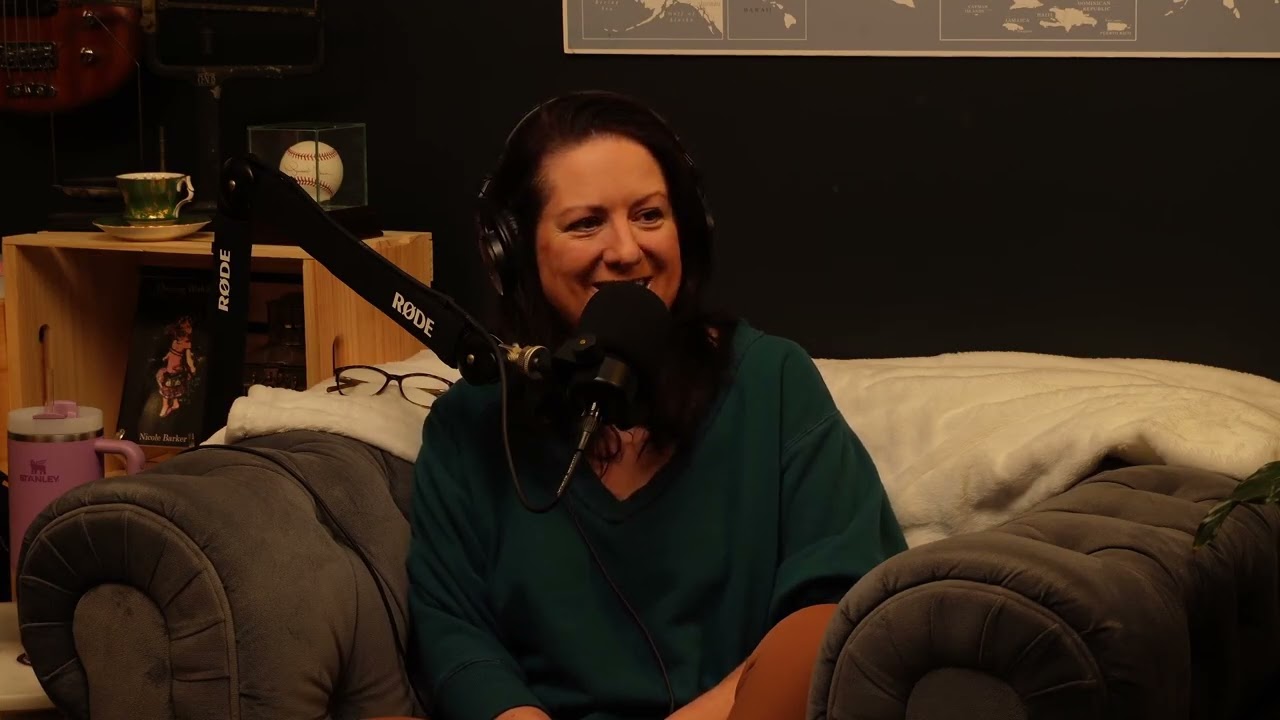
In Episode 23 of the GenZ Women Series, Grace shares her experiences growing up as a Zillennial, navigating the complexities of family dynamics, and her journey through motherhood. She discusses the impact of her parents' divorce on her trust in relationships, her transition to college, and the challenges of postpartum anxiety after the birth of her daughter.
[Music] Welcome to GenX Adulting and today we have Grace with us. Welcome. Thank you. We're so happy you're here. Happy to be here. Our first question is always what year were you born? 1997. Okay. So I'm sure, do you know that you're a Zillennial? You're Gen Z, but you're the last Gen Z. But you're also a Zillennial. Had you ever heard of that before? Never. So a Zillennial is you're in between the Millennials and the Gen Zs, even though technically officially 1997 is the last Gen Z. But like your generation cannot relate at all to like the 14 year olds that are Gen Zs. You know, that's a completely different life. But nor can you completely relate to like the 38 year old Millennials. They have a completely different experience. So you guys are kind of in the middle. You spent a decent amount of your childhood without social media, without technology, without phones. And then all that stuff showed up more in your high school years, right? Yep. So were you one of the first ones to get a phone or did you come from a background where your parents kind of waited a little bit on that? We, our rule was going into middle school. OK. Because you were going to start taking the bus then. So my parents wanted us to have a phone for the bus. You know, the bus is late. Something happens. You have a phone and you can call them. But it wasn't. I mean, it was a slide up and down phone. Yeah. It wasn't a smartphone. No, I don't even think those existed at that time. I don't know when. No, I don't think that was. They were all flip phones. Yeah. The other motor roller ones, you could barely text on them. I think you had to hit the number one three times. Yeah, exactly. So your parents recognize the safety aspect of it right away, which is really
barely text on them. I think you had to hit the number one three times. Yeah, exactly. So your parents recognize the safety aspect of it right away, which is really commendable because I think for a lot of parents, it was so new that like I know we held off for a while because we were just I don't. You're in technology. So you were probably more comfortable with it. But I was more hesitant. But to recognize the safety aspect of it, you know, your parents were on it as far as that because it makes such a difference. And now we have a younger Gen Z and I wouldn't even think twice about as soon as we felt it was comfortable. We handed him the phone with our older son, who's your age. You know, we hesitated more. So it's kind of that evolution. So yeah, but you kind of got the best of both worlds. You know, a little bit of an organic millennial Gen X childhood and then right into the technology and the social media. So I always like to say that about you guys. So did you grow up in one town or did you move it all through your childhood? Yeah. So I was born in Miami and then we moved when I was about one and a half, I think. And my mom still lives in the same house. So I was raised in that house. I moved away for college, was away at UF for a little bit and then stayed there an extra year past when I graduated and moved back home with my husband. So most of your childhood is in one town and do you have siblings? Yes, I am one of four. So I'm the second in the lineup. Okay. Older brother and then it's me, my little sister and then my youngest brother. So busy family. Yes. Okay. So would you say you were raised in a traditional was your mom home or did she work? Did your dad work? Like what was the background there?
So busy family. Yes. Okay. So would you say you were raised in a traditional was your mom home or did she work? Did your dad work? Like what was the background there? Yeah. So my mom raised us, all four of us, she was a stay at home mom all the way through. My dad worked very long hours, busy job, classic Monday, Friday, and then also on weekends he would typically work and he would take Sunday off. But Saturdays he would work as well. Okay. So your mom had the load of four kids. Yep. That's a lot. Yep. And where did they meet? They met at church in Miami, actually. Okay. Yeah. And are they still married or how long were they married? No, they were married. I believe it was 22 years. Wow. Maybe 23. That's a long time. And so did they divorce? Yes, they got divorced when I was in high school as a sophomore. That's a rough time for something like that. They actually separated then and then they didn't legally get divorced for a couple years. But yeah, yeah, it was a big transition at that age. Yeah. Yeah. And so how did that affect you and your siblings at the time or at least speaking of your own experience? I feel like I just had a hard time in general with trust at that point. I kind of shut everyone out of my life. My friends broke up with my boyfriend at the time. I just kind of shut everyone off. Didn't know who I could trust. Didn't know who was just trying to get information from me or if they actually cared about me. I just wasn't sure. So I just wanted to protect myself. So up until that point, were you a fairly trusting person of your friends, of your boyfriend, in general, of the people in your life? For sure. Yeah, I think I always kind of saw the best in people until they gave me a reason not to.
trusting person of your friends, of your boyfriend, in general, of the people in your life? For sure. Yeah, I think I always kind of saw the best in people until they gave me a reason not to. But once my parents split up, I just I wasn't I was kind of like if these people who are supposed to be my example of love and what I know what love is from. And they broke up like what's real? How am I supposed to tell if this person really cares about me, if they just want to gossip about me and my family? I just I had no idea. So in order to get hurt, I just walled myself up. You probably felt completely disillusioned and like the rug had been pulled out from under you. And would you say your siblings, it was kind of a everyone felt the way in the home or. I think we each had such a different experience. My oldest brother was the summer that my parents split up was his last summer here. And then he moved away for college. So he was pretty much gone. My younger sister, I think probably felt similar to how I felt. She was a little bit younger. I kind of felt like I began taking the role of I always looked out for my younger siblings, but I really feel like once my parents split up, it was a lot of stuff was on me. Like I wanted to keep their lives, my younger siblings lives as normal as possible. And my little brother was really little. So he was in elementary school. So he doesn't even have memories of my parents together. Right. So that's all he's ever known. His childhood was completely different than ours. Right. So you, as you just alluded to, so you probably felt you took on a little bit of parental. Read not responsibilities, but just making sure your younger siblings were shielded from some of it. So more of a maternal role. Yes. Yeah.
probably felt you took on a little bit of parental. Read not responsibilities, but just making sure your younger siblings were shielded from some of it. So more of a maternal role. Yes. Yeah. So would you I don't know. I've read some stuff about eldest daughters and that they tend to take on a certain role, whether it's to as a people pleaser or. If they're more compliant or they just feel an innate responsibility for all of their siblings and for keeping the peace in the family. Is there any truth to that in your own experience as the eldest daughter? I find myself agreeing with everything you just said. I think I was previously before becoming a mom. I think I was definitely a people pleaser. Definitely felt I mean, ever since I was little, I feel like my sister and I are 20 months apart. And I still feel like I was kind of mothering her when we were, you know, three and one. And then especially with my little brother, I felt that too. I do think I don't know. I think I think partially I've always loved kids. I've always wanted to be a mom. That's always been something that's kind of my natural instinct. But I think that there was a certain point where I wish I was able to kind of just be a kid. Did you feel that you were carrying a responsibility of people's perception of you through most of your childhood? Absolutely. Yeah. So and as a result, do you feel that that kind of identified you without you having control over your own identity? Does that make sense? Yes, exactly. I think that I was kind of in this box. People thought they knew who I was, you know, what my beliefs were, values, just kind of who I was as a person. And I feel like I didn't I was not able to break out of that until I went to college.
People thought they knew who I was, you know, what my beliefs were, values, just kind of who I was as a person. And I feel like I didn't I was not able to break out of that until I went to college. So that had to have been incredibly frustrating, especially through middle school and high school years, because especially in those years, the you the need to defend yourself when people misunderstand you is strong. But then in some ways, did you feel you couldn't come out and maybe write some wrongs or some misconceptions about you because of maybe how it might affect your family or or a situation in general? Yeah, I think there was always at the forefront of my mind, protecting my family, who they are, reputation, everything I didn't want. I kind of just let my character take a hit or let people have their conceptions about me, misconceptions about me to protect my family as a whole. And to give some context, just your your family has had a place in our in our in our society, in our town, right? Just people might be wondering, like, what with the family? Right. So so some people know your family, people in our town would know your of your family, not everyone. But so that's where that comes from. So as a result, did you feel you didn't really have your own voice for a lot of your formative years? For sure. And then this divorce happened. So you probably you found a lot of identity through your family. This divorce happens and you're completely disillusioned and feeling kind of lost for a while. And that happened right in high school. Yeah. So what do you have vivid memories during those years or do you kind of do you do you kind of disassociate? Did you disassociate through part of it? I do. There are some kind of black and
Yeah. So what do you have vivid memories during those years or do you kind of do you do you kind of disassociate? Did you disassociate through part of it? I do. There are some kind of black and white memories that I have, you know, finding out my parents were splitting up all of those things. Some memories with friends, some weird things teachers would say to me, just kind of distinct memories that are in my brain. But I do think I kind of just shut down and and walled up. So I think there's a lot of that that I don't remember. That's blacked out. That makes sense. The trauma response in some ways. So then how did you view college? Was it I need to get out of here. I need to I need to to get out of this space. I need a fresh start. Or were you hesitant to leave your family? I felt like I wanted to get I definitely wanted to get out of town. I wanted to get you couldn't just, you know, drive there in an hour. There needed to be a little bit of a road trip involved, but I wanted to be close enough for my siblings. Yeah, it was something that I really I didn't just want to leave them and feel like I was abandoning them. Right. Yeah. So then UF was a nice balance for that. And so then when you got to school, was that really your first time where you could just be like that freshman year arriving in the dorms? How was that? Because that would have been really your first time to be you. Yep. Right. Right. I felt like I could walk out into the world and people wouldn't just look at me and say, oh, that's Grace. I know who she is. I know her family that and be whispering about me. Like that's how I felt. Anytime I walked outside where we live before I went to college and I got to meet girls who loved me for me and who just supported me.
about me. Like that's how I felt. Anytime I walked outside where we live before I went to college and I got to meet girls who loved me for me and who just supported me. And I feel like I hadn't had that. I always felt like there was a an ulterior motive for people having me in their life when I was in high school. Like everyone had an agenda. And that's awesome, though. It's just awesome that you were able to get to UF and kind of be your own person, somewhat anonymous. Right. Yep. And go find your own people. And it was more organic and real. I could build my crew of who I wanted around me. Yeah. I feel like I didn't have that opportunity up until that point. No, you would. You know, it's funny. I never thought about that, but you wouldn't have. It was probably fairly depressing if you think about it. So you get to college and you get to know yourself for the first time. And what was that like? It was it was really freeing. I feel like I was. I had had like these weights that I was just carrying around and then I was just able to go and do what I wanted to do and not worry about it. Yeah, it's awesome. Yeah, it was an incredible experience and to also have people friends for the first time in my life who I feel like really loved me as an individual as grace and not as, you know, a part of my family. Or something like that. It was just a different, totally different experience. So you would you would stop trusting people really through your high school years. You get to college. Did it take you a bit to adjust to learning how to trust people again? Yeah, for sure. It's funny. There's this memory. The first night we all went out. I was my my summer bee roommate was that's the summer semester at UF was a triplet.
for sure. It's funny. There's this memory. The first night we all went out. I was my my summer bee roommate was that's the summer semester at UF was a triplet. And so she it was like an automatic group of friends. You know, there were there were four of us and then their roommates. So I think there were seven or eight of us. And I remember the first night we went out together. We got lost. We were trying to find a frat party and we couldn't we couldn't find it. We went to the on campus house and stuff. The off campus house, just like a classic group of freshmen girls not knowing what they're doing. And I was telling them things about my family and all of this stuff. And I was like, do you guys still want to be friends with me? And they just looked at me like I was crazy. They're like, Grace, we don't care. Like, we all have stuff that baggage, you know, everyone has baggage. Yeah. Yeah. But you had been gotten used to having to at least be perfect outside of your home for the reputation and then that chance to be able to express some of your baggage and have them accept you for for who you are. That had been just such a huge moment in your life. It was it really was it was really special. And then were you able to trust, you know, to have a boyfriend again to trust men again? Like, how did your viewpoint on having a relationship change from your parents divorce? And how did you find healing to trusting in having a relationship? Yeah, so I actually had not really planned on dating at all. When I went to college, I met this guy who then ghosted me. So it was just like a classic you hear about college boys ghosting you and you know, using girls and all of that. And that was my first experience with the guy. And so I was like, that's it. Yeah,
hear about college boys ghosting you and you know, using girls and all of that. And that was my first experience with the guy. And so I was like, that's it. Yeah, I'm really not dating. Yeah. I'm not interested. I'm gonna focus on school. And then my second semester, I guess. Yeah, my second semester. So it was January, technically, my third semester. Of my first year, I was at a friend's house, my friends invited one of the triplets invited me over to her friend's house, said it was just gonna be a group of girls hanging out. I really don't want to go. And I'm a very much of a homebody. And I walked in the door. And there was this guy sitting on the couch. And I just saw him and I was like, okay, I guess I'm gonna date. So truly love at first sight. You can relate to that. Yes. So you trusted him immediately. Was there something about him where you just knew you could or did he need to break through a little bit some of the show? Yeah, so that night we kind of we all went out together. We kind of all hung out and then we hadn't talked to each other. He I guess messaged me on Facebook. I didn't see it. And we ended up. He walked me home a few weeks later. I was walking home by myself. And he said he would meet me and walk me back to my dorm green flag. Green flag, immediate green flag. And we sat in the common area and literally from midnight until six o'clock in the morning, told each other everything about each other because I was so set on focusing on my school. And I didn't really want to waste time. I'm not a go with the flow type of girl. I'm very much of like a type A. I have a plan. I didn't want to waste any time. And I thought that if he knew everything about me, there was no chance he would want anything to do with me. So I just
I'm very much of like a type A. I have a plan. I didn't want to waste any time. And I thought that if he knew everything about me, there was no chance he would want anything to do with me. So I just told him everything. And he said, I want to be here. I want to be your person. I want to help you through this. I want to do whatever I can. And I'll be patient and I'll wait and whatever you need. I'll be here. Amazing. And I just looked at him and I was like, did you hear everything? Are you sure? Yeah. And I knew that night, I always say that he was either going to be the worst heartbreak of my entire life, or I was going to spend the rest of my life with him. Right. Right. And that was it. And it's you met your person, but you also met someone who got you. And I wasn't going to leave. Right. Yeah. It's huge. I didn't. I didn't believe that. You know, someone wouldn't just wake up one day and decide they were done, you know, especially after. And I'm sure a lot of that triggered from what you saw with your parents. Yep. So did it still take you a bit to fully trust it or after that night? Were you in or did you kind of where you still have that little bit of doubt for a while until was it? What was the moment where you knew? OK, I think that we at that point on, I knew I had to give everything a shot. I had to go to the hospital. I had to go jump into this relationship with him because I just knew he was too good of a person for me to not try and see what happened. And then I think probably the first year and a half, I was still do a little self sabotaging, a little bit of, oh, well, you know, if I screw up, then he can't hurt me. Right. And he was just there. He was like, I'm. Yeah, I'm not going anywhere. You don't need to be there.
little bit of, oh, well, you know, if I screw up, then he can't hurt me. Right. And he was just there. He was like, I'm. Yeah, I'm not going anywhere. You don't need to be there. You don't need to be scared of me leaving. And I just I don't know. I think we did a lot of work together, a lot of work on communication. I mean, we were young. We were 19 and 18 or 19 and 20. Yeah. So we were really kids. Yeah. But we just knew we were going to. Just work on everything together. And I think that that was huge, just knowing I like he just wasn't going to go anywhere. Yeah. Just going to be there. Yeah. And what a life changing thing, right? Yeah. To me, to have to know you found your person that's going to have your back no matter what. And and isn't going to go anywhere. And even though you were kids, at least for you, you had already gone through a lot of life stuff. So when you said you weren't wasting time, you you were probably going to be the next person you date was for a purpose, probably for a potential husband. But it wasn't that you just had already gone through it. So you're like, you knew you knew what you were looking for and what you wanted. And so when he showed up, you know, it was like, OK, this is this is a go. And I'm sure that was incredibly healing for you to have that experience to have your partner. And you both were you. Right. Yeah. So what did you study? I actually was pre-nursing originally and then decided it wasn't for me. I thought I was going to be very burnt out very fast. So I kind of reassessed, tried to figure out what I wanted to do, ended up changing my major to sociology and figured out I wanted to be a speech pathologist. So I just needed to get my bachelor's and then I was going to do a
out what I wanted to do, ended up changing my major to sociology and figured out I wanted to be a speech pathologist. So I just needed to get my bachelor's and then I was going to do a post-bac program and then apply to grad school. So that's what I did. Wow. And UF is not easy. No. How hard was it to change your major at UF? It was I had to make a decision because it was going to be the semester I either applied to nursing school or changed my major. There was not really a lot of time. Right. So I kind of had to sit down and really think like, OK. And like I said, I'm a planner. So I wasn't just going to change my major with no idea of what the next steps were going to be. The physical act of changing it wasn't hard. It was more for me not knowing. OK, so I'm not just going to graduate and get a job as a nurse. Like, what's going to happen next? Right. Right. And so did you guys graduate at the same time together? I graduated a year early and he was an engineering major. So his program's five years. So he graduated after me, actually. So did you stay up there? Yeah. While he was up there. Oh, and then did you continue with education? You said with for the speech pathologist, did you continue on at UF focusing on that? Yeah. I got my my bachelor's degree and then you just need a bachelor's to apply for the post back. And OK, fully online. So I did all those classes. It's the prerequisites to get into grad school. You just don't have to earn another bachelor's degree, like with the general education. And that would have been your fifth year then you were doing that online. And then you went to graduate school. Did you do that up at UF? No, that was down here. OK, so then you both moved down here. Yeah. So did
fifth year then you were doing that online. And then you went to graduate school. Did you do that up at UF? No, that was down here. OK, so then you both moved down here. Yeah. So did anything. Did you just graduate, moved down here? Did anything happen? Yeah. So he proposed the weekend that I graduated. Wow. It was just a casual weekend. OK, so he saw a year left. Right. Yeah. And so the weekend you graduated, did you know? No, I had thought I made a joke because his friend was that best friend is a photographer. So he was going to take graduation pictures for me. And I made a joke, had no idea he was planning on proposing. But I said, it would be so funny if you proposed when I'm all dressed up and we already have a photographer. Right. And he's like, Grace, why would you say that? You just ruined my plan. So then he had to work really hard to make me think he wasn't proposing that weekend. And he did. I fully believed he changed his whole plan. So I had no idea going in. And so you're completely surprised, completely surprised. And your family was there, right? So it was your weekend graduation weekend. Yeah. So that's perfect. Yeah. It was really fun to have them there. Is he also from the same area? No, he was actually born in Arizona and then moved to Vermont and then moved to Tampa. So OK. And then went to UF. So was his family, his family wouldn't have been there that weekend, right? So it wasn't his graduation weekend. So it was just your family. Yes. So how have the families blended? I would say it's been interesting. It always is. Yeah. Were they OK with him moving down where you're where you're from? I think so. I think that there was some pushback initially when we got engaged because I was the one with the full time job and he
where you're where you're from? I think so. I think that there was some pushback initially when we got engaged because I was the one with the full time job and he was the one who was still in school, which is not traditional. And we are both very level headed people. And that was something that we had to explain to a lot of people close to us. It wasn't just we're getting married because it's what you know, we just feel like this is going to be a good move. We've really thought about this and we want to spend the rest of our lives together. So and I think that since they've come around, but initially there was. Now it's understandable. So because I was going to ask you because we got married at 23. So and we were the first of anyone we met. We were the first of anyone we knew, I think. And we got married in Vegas. Oh, wow. Yeah. And after driving around the country for two and a half months to talk about people going, what is happening? I think my bridesmaids were in tie dye. So I love that. But so we understand a little bit about what you're talking about. But for your generation, would you say that getting married right out of college or quote unquote young is unusual? For sure. I think that there's been a big push to kind of like, what's the rush, which I totally understand some of my close friends have been in long term relationships and they're not married yet and they want to get married. But they're not, you know, they're both doing their individual things and, you know, whatever the reasoning is, I don't think there's necessarily a right plan or a wrong plan in terms of age. I think you mentioned earlier a little bit about having that kind of life experience. I think that that plays a big role. And also just knowing I think a lot of people
a wrong plan in terms of age. I think you mentioned earlier a little bit about having that kind of life experience. I think that that plays a big role. And also just knowing I think a lot of people think if you have problems in a marriage, have a baby and that'll fix it. Or if you have problems when you're dating, just get married and everything will be OK. And something I tell people is things are just going to get exacerbated when you get married. You are, you have to have each other's backs 100 percent. So if you're disagreeing, if these are small fights or big fights that you've had all through your relationship, you're not just going to disappear. And that was something we were very intentional on. We knew we needed to improve our communication before we got engaged. I have a question there. How did you get to that point at such a young age? Because there's some wisdom to what you're saying and you're still pretty young. Where did you where did that come from? I think for me, seeing what my parents went through. And I think for him, his parents were still married, still together, had been together. I think we also learned from previous relationships what worked and what didn't work. We both that first night, we sat down and we went through what was good about these relationships, what was not so good, what could use improvement, what we were missing. And I just I think the biggest thing was just trusting each other and not hiding anything from each other. Because I think that's something you see too, is people think if they really knew this about me, they wouldn't love me. Or they're gonna leave me or they're gonna, you know, be unfaithful or whatever it is. And I think it's just to have someone who you tell everything to
they wouldn't love me. Or they're gonna leave me or they're gonna, you know, be unfaithful or whatever it is. And I think it's just to have someone who you tell everything to before you get to that point, where you're locked in in a marriage is really important. Yeah. And did he also share with you as much as you shared with him before you got married and share his baggage and his what his past issues or whatever he'd gone through? Was he open with you? Mm hmm. I think that first night, we told each other, everybody we had ever dated and things like that. But in terms of family things or some more personal things, I think that came out more in our relationship. Not so much that first night, I was like, Yeah, question on that, though. So you were entering it from a position of not having a lot of trust towards people, right? And in some ways, you and in the color are similar in that. And I would probably at least from all outside and viewing I've the perception, I was pretty stable, I, my parents were together, they, you know, and it sounds like he was, were you guys almost opposites attracting in a sense? Was he kind of a stable force? And, or was there some kind of a relationship between him and his family? Was there some extra not going into his world? But you know, was there some was he able to share and relate or just more just understand, I guess? I think more understanding. Okay. And he was kind of just like a sturdy, steady, level headed, yeah, place that I could always come back to still to this day, he's he will always be he's very predictable. He'll always just be like strong and steady. And that's what I needed. I don't think I could have had somebody with as much as I could have had. I think that would be really hard for me.
strong and steady. And that's what I needed. I don't think I could have had somebody with as much as I could have had. I think that would be really hard for me. Although we could relate potentially, I don't know, long term, that that would be somebody that I could be with. So he's almost already healed. And he's helping, he helped you kind of heal. Yeah, 100%. Yeah, we have a long comment. Yeah, because that's anyone who's listened to our past episodes, our earlier episodes, I go into this. And that's very similar to Brian nice marriage. And we've been married almost 31 years and together 33. So it's it's it works. As long as I would say as long as whether it's the manner of the woman that's coming from the stable background, as long as they truly are stable, and they truly are, they understand you get you accept you. Then I think it works. It's it's if people, I think sometimes people try to come across as the strong and stable, and maybe haven't totally healed themselves or acknowledge that they do have some deep rooted issues. And then later on the relationship those come out. And that's kind of a jump scare and can derail things not always. So but I think if that person is fairly self aware, and they truly are coming from a very stable place, then they can 100% be that they're not. 100% be that the person for someone who's coming from a background of maybe abandonment issues or instability trust issues. So yeah, you know, I don't know if you'd agree on that. I agree. And I think too, it's, I think there's some, I don't know, save your complex a little bit that sometimes men specifically can have. And so I think you have to be on the lookout for that too. Just knowing that somebody might say like, Oh, yeah, you know, I'm so sorry,
complex a little bit that sometimes men specifically can have. And so I think you have to be on the lookout for that too. Just knowing that somebody might say like, Oh, yeah, you know, I'm so sorry, but and kind of treat you like you're less than and then they're gonna have that power, you know, imbalance. And you have to be kind of on the lookout for that too. You were so right. And I think when men do that, it's tied to their ego. And they're they're feeding their ego by quote unquote, saving this girl, this woman. And I think a lot of times they don't want her to heal, right? Because they feel better that they have someone they're taking care of. And then when she heals, and starts to live her authentic life and her full life, they're threatened. And that controls gone to the control is gone. You're right. So it's it's that fine line of trusting again, we go smart girl. Very smart. Yeah, but it's a fine line of being able to trust a man who seems stable. But really, you know, don't just assume make sure those intentions are pure. Yeah, that's, that's a tough one. I got one other question. Did your husband call your dad and ask for permission? Yes, you did. Okay, he did. We are both very like he, you know, walks on the outside on the sidewalk. Yeah. In terms of that was something that I had, my mom told me with every guy that I had broken up with her had broken up with me to make a list on my phone, things that I liked about the relationship and things that were missing. And that once I got to a certain point in my life, I wouldn't want to just date just because I thought they were attractive, I wanted them to have these qualities. And one that I, you know, had had in previous relationships that I was really important to me in a
they were attractive, I wanted them to have these qualities. And one that I, you know, had had in previous relationships that I was really important to me in a marriage was that chivalry like that, that type of old, you know, old manners. Yeah, yeah, no, it's important. I think it's a strong basis for a relationship, honestly. And I think it's up to especially the moms in the relationship, but the dads need to model it. I think it's very important the fathers model it. But the mothers need to also show that they need to back that up and show reinforce how women should be respected. So it's a joint effort on the parents part. But I think it's so important 100%. And it was great advice your mom gave you about making that list. How old were you when she said, I was in high school, I was I had just broken up with my boyfriend. So I was 17. Yeah, that's, that's really great advice. So did you get, did you have some girlfriends that didn't support you when you decided to get married, or they gave you pushback? I don't in terms of my friends know, they were probably the only ones who I didn't get pushback from, because I think our friends just saw, he was my best friend, and I was his best friend, and they just saw the love and saw how much he supported me. And I think especially, you know, my best friend, I've been best friends with since high school, who we went to UF together too, she really saw the whole relationship. And she was like, you know, you finally found someone who can be there for you. And like, you're always taking care of other people. And now I have someone who can take care of you. So yeah, they were fully supported. Mainly family that was a little like, what are you doing? You know, I know for me, my mom so badly had wanted me to
have someone who can take care of you. So yeah, they were fully supported. Mainly family that was a little like, what are you doing? You know, I know for me, my mom so badly had wanted me to travel and have this young 20s life. But because of my back, my childhood, that's the last thing I wanted. I just wanted stability and to start a family. So but as hard as parents, we have these dreams, you know, and but then it's understanding this, this is their life and letting them go forward. So how old were you then when, when you got engaged? I was 21. Okay, I got engaged in May on May 6. And we got married a few months later, September 1. Yes, it was that was the other thing. It wasn't just that we were engaged at 21 and 22. Yeah, it was that we were then getting married, you know, a few months later. Yeah. But you knew you knew. Okay, so where did you get married? Now in your hometown in my hometown in the church I grew up in. Oh, wonderful. And was it a big wedding? It was probably like 115 120 people. That's decent. And his family came over from Tampa soon. Yeah. Okay. And so you guys settled in your town and use I think you had said you were working but he was still going to school. Was that down here? That was up in Gainesville. So we got married down here. And then we went back up to Gainesville. We were there for about a year. And what were you doing up there? I was a preschool teacher. I was working with babies. Okay, wonderful. And then he finished his education, graduated, and you guys moved down to where you are now. He actually didn't graduate. So we moved in the fall, he had one more class and was kind of he was unable to he had to take the class in person and we had already moved down here. And so there was
He actually didn't graduate. So we moved in the fall, he had one more class and was kind of he was unable to he had to take the class in person and we had already moved down here. And so there was a whole kind of hold up there. Okay. And then COVID happened. And the requirement for it to be in person got removed. So I actually signed him up without him knowing and didn't tell him until after syllabus week. So he didn't have the option. No way. And he did the class every day. He was like, I can't believe signing up this class. He did it and he graduated and he I said, you have one more. Yes, like you can do this. You know, man, that's awesome. You did that. Because he would have regretted it. He would have like you knew, and you had his back there. So and I guess the timing is perfect with COVID that he could do that online. So Oh, gonna be the only opportunity. Really? Yeah, 100%. So when you guys move back down here, question though, before we get out of Gainesville, when you left your hometown went to Gainesville, you start a new life, right? Did you reinvent yourself in any way? It's as part of that. And you probably got new friends and you could go out anonymously. But did you do anything big that reinvented yourself or you know what I'm saying? I don't know about big. I never really went out down here. I never like went to parties. I was never really invited to parties. People were always scared. I was gonna snitch. Yeah. So I didn't do any of that in high school. And so going out in Gainesville was the first time I really went out. Yeah, that would be I think like the biggest jump, I would say. Yeah. Okay. So when you were in high school, would you have gone out and partied if you had been included? I wouldn't have gone crazy. I think I would
like the biggest jump, I would say. Yeah. Okay. So when you were in high school, would you have gone out and partied if you had been included? I wouldn't have gone crazy. I think I would have probably just physically gone to a party and just to more hang out with friends and be social not to, of course, you know, right, get drunk and but then you've but you feel, or factually, that you weren't included because of that risk people felt. So which is so unfair. It's so unfair. But that's not what happened to my brother. My brother did not have that experience at all. People weren't, you know, they wanted him. I could be the life of the party. Yeah. Yeah. So do you think that is misogynistic? What happened there is because you were a girl. I think because I was a girl and because people just thought I was this. I mean, I literally I remember someone saying you're just stuck up goody two shoes. You know, you're just gonna get everybody in trouble. Like people thought I was sending. I don't know. I don't know what they thought I was doing. Right. I had people blocking me on social media because they thought that I was snitching on them. I don't care to do that. Also, I had all this stuff going on with my family. Right. You guys and you're not what I'm concerned about. Right, right, right. But so the misconception there is completely assumed. And you know how high school can be a middle school and high school can be where once something's out there. Oh, yeah. It's hard to. And you that brings me back to what we talked about earlier. You probably didn't feel like you had the freedom to defend yourself or defend your reputation. So things just had to be out there. Right. And then everyone could just assume but you really there was there was no defense for you.
freedom to defend yourself or defend your reputation. So things just had to be out there. Right. And then everyone could just assume but you really there was there was no defense for you. Did your sister go through the same situation? Would you say her experience was so different because she was an athlete. Okay, so she had her lifestyle. Everything was just totally different than mine. Okay. And then what about your little brother? He, I don't know. He I feel like had a lot more physical freedom. Like our parents restrict her with us. Yeah, that makes sense. Last one. That's typical. Dylan came in after midnight last night. Yeah. You know, the common park in the neighborhood here. And we wouldn't let our other two go there. Probably until they were in high school. No seventh grade. I remember seven. He's been down there since he was like nine. Yeah. Rolling around town fishing last night till midnight. So that's understandable that your younger brother that's a completely different situation. But wow. So then you get to school and not only do you are you having this experience of people knowing you and for you you feel and you're trusting them and these real relationships, these real friendships, but you're actually able to go out and be social and kind of quote unquote party a little bit. Not that you went crazy, but just to have that normal experience. Yeah, just to be out. Wow. Most good. Now, it's just a what a wonderful time college must have been for you and for totally different reasons that other than other people may say. What a life changing moment for you. Yeah, you know, I can't even imagine. Pivotal. Yeah. I could totally relate to that in that I moved 3000 miles away and was a totally different person. That's
What a life changing moment for you. Yeah, you know, I can't even imagine. Pivotal. Yeah. I could totally relate to that in that I moved 3000 miles away and was a totally different person. That's why I kind of semi reinvented myself not reinvented, but took on things I would want to do as opposed to what I was sort of prescribed to do. And the small little town I was in. But the question I have is, did your your friend group probably completely shifted that right? Are your best buddies right now more from your college years or your hometown squad? Yeah, so your buddies. I'm trying to be hip. No. Mark. Yeah. So I have a best friend from freshman year in high school who we've stayed all the way through friends. Besides that, I have two friends, a guy friend that I've been friends with since high school as well. Who we stay in touch. He lives out of the States. We don't physically see each other a lot, but still good friends and hell, you know, he met my baby and everything like, and then another friend from high school who we don't really talk super regularly. But I feel like I've met my besides my close, close friend from high school, my best friend. I feel like I've met my girls like my my girls as more in my 20s. You're tried. And it's I've always, always longed for that. I feel like I never had it. There were a lot of a girl I thought was my best friend who was definitely not so that happens. Yeah. And that was hard losing a friend, losing somebody who you've had in your life. Since you're four and not having them is it feels like worse than a breakup. It's so hard. Yeah. So finding those women and having these women who've just been around me and been supporting me through so much has been life changing. Were those the same women you met in
so hard. Yeah. So finding those women and having these women who've just been around me and been supporting me through so much has been life changing. Were those the same women you met in college? Are these college friends? College friends, the triplets. Yes. And then I think even post college, I'm one of the girls I talked to every single day, we actually went to high school together, we had overlapping friends, but we weren't super close. But we both became moms within two months of each other. So we literally voice memo every day. 20. I love voice memo. And when you become a mom, voice memo is so vital because you really can't get on the phone. Nope, you can't know, even at my age with with my kids the age they are. But then voice memo voice memo. So nice. You'll hear the dogs barking in the background. Our toddlers will be screaming at the same time. I can't hear what you're saying. Because my kids screaming and hers is screaming in the background. But it's just, we just understand each other. And we're just in it together. And then you have the inflection and the voice memo. Whereas in text, you can't get that right. So it's so just to go back a little bit to the friend that you knew since you were four. Did that end around the same time as your parents getting divorced? Or was it later? The nail in the coffin was her not coming to my wedding. Okay, so it was officially I feel like through high school, she wasn't as good of a friend. I knew I would do things for her that it just wasn't reciprocated. Yeah, but I think I have a really hard time. Like I said earlier, I give people the benefit of the doubt. And I really don't like losing people. And I felt like I had lost a lot of people. And I thought she was someone that would maybe turn around. And then I
doubt. And I really don't like losing people. And I felt like I had lost a lot of people. And I thought she was someone that would maybe turn around. And then I could, you know, I just didn't want to let her go. That was maybe really sad. And we also were living close to each other went to the same school, it would have been kind of a lot we were, you know, yeah, attached to everyone associated as two of us as best friends. Right, right, right. So if I had cut that friendship off, then I think it would have been just kind of another change that I couldn't really handle. No, that makes sense. And I think, as women, as we have friends, a lot of times when we have a friend like that, someone we that has been so invested in our life, it does take a while to let them go because you know, once you do, you can't go back. And, but then you do reach a point in your life where your time is so valuable. And your priorities change. And you realize this isn't serving me in any way. And in so many ways, it's hurting me. I need to let this go. And it's sad. And there's, you mourn. But in hindsight, it's the healthy decision, which I don't know if you've gotten to that point yet, where you can settle with it and feel this was this is the healthy decision for where I'm at in my life. Yeah, yeah, yeah, I have. There are times though, like recently, I just like, man, it stinks. It stinks to lose someone that you knew for that long. Yeah, we grew up with. And you never know what's gonna happen in life. But you have to keep moving forward. You know, so okay, so you guys then settle in the home? I got another question. He does. Sorry. Well, you're looking at you're looking at me. We've lost over something. Okay. The triplets. I've never met triplets.
then settle in the home? I got another question. He does. Sorry. Well, you're looking at you're looking at me. We've lost over something. Okay. The triplets. I've never met triplets. But where are they from? Are they like, how did that happen? But they all went to UF together, apparently. Did you guys live in a quad? And there were three of them and it was you were like, so they decided they wanted to live separately their first year, they all made the joint decision. They also had an older sister who was one year above. So they automatically they could have very well just lived together and gotten a condo and you know, been just them, but they really wanted to kind of, you know, fan out a little bit. So they each got roommates we met on, you know, the Facebook roommate page. I don't know if people do that anymore. But I don't I don't think so. I don't I don't know. Actually, my brother didn't for college. They I think they just I don't know what they do now. It's something with it's got to be something social media based. But I don't think it's because none of them are on Facebook. I think anymore. It's like, oh, it's even a jump scare for me. I'm the age demographic, but it gets it's like a dumpster fire, honestly. But I think they must do something. I don't know my brother because he's in college. He said that they send out like a little survey the apartment's well, so I think they kind of do that and the apartment will match you. So there's no talking to people unless unless you know the person and your friends with them and you sign at least together. But well, it's almost gone full circle. Because when we we operated, we operated we didn't want in one of the episodes. I think I mentioned I wrote my potential
at least together. But well, it's almost gone full circle. Because when we we operated, we operated we didn't want in one of the episodes. I think I mentioned I wrote my potential roommate a letter. And I was telling our daughter Kai and her friends that in the episode and they were blown away. Like, what do you mean? Right? What did you write? I think it was multi pages. Wow. And then she wrote me back the shit out of somebody. And then we got on a landline and talked on the phone. They were blown away. So but that was it. And then I think it went through the whole Facebook thing where they get to talk, talk, talk and know everything about each other. Now it sounds like it's kind of back to not knowing really. So that's really interesting. Just sidetracked that that has gone back. So anyways. Yeah, so the triplets. So they actually went to the high school that my husband went to. Oh, they knew him. So that's why he was there that night that we met. So you could get some tea on them too. Yeah, they bet him for you. Triple vetted. Yeah, yeah. Okay, cool. And they're and do they live near you now? Or are they back in their hometown? They're back where they're from. They moved after college, and then they all recently moved back to their hometown to be all together. But they're are they part of the voice memo group to have a group chat. Yeah, talking to one of them the other day. Yeah, well, we'll voice memo each other and or call. Because it's I try, I set a rule for myself for once a week, I send one of my friends a text just, hey, I'm thinking about you, what's going on, give me your update. And typically, they know I'm a big voice memo girl. So they'll voice memo back and then I'll voice memo them, kind of fill them in on me, because I
about you, what's going on, give me your update. And typically, they know I'm a big voice memo girl. So they'll voice memo back and then I'll voice memo them, kind of fill them in on me, because I just feel like life gets away from you so fast. And there are so many people where you're like, Oh, I haven't talked to them in months. But that one one a week is very doable. So that's kind of something I that's amazing. I commend you for that because you are so right. Because it truly stay connected with people. It's knowing that day to day or that week to week stuff that's going on in their lives. Then when the big things happen, you were kind of there as it was all building up. But the fact that you find you take the time, you make the time to reach out to your friends like that is amazing. Because everyone I will tell you this, no matter what age you are, everyone, is quote unquote, busy. No one is not busy. Right. So when people say they're busy, and I catch myself, because I will start to and I'm like, don't say that because everyone's busy. And everyone has priorities. So to take that time to make that time for your friends, even if it's that one text a week, is awesome, that you're doing that, you know, and that they obviously are reciprocating. Well, you know, one way, Jen brought that up. previous, our guests brought that up how she and she's our age, she's, she's been the initiator. So she has these relationships that are 3040 years going, partly because she took the initiative. So I think you're on to some now you're definitely wise beyond your years in so many ways. But okay, so you guys, then settle into when you settled here, were you both working then once he finished the class, I guess it's COVID, right?
wise beyond your years in so many ways. But okay, so you guys, then settle into when you settled here, were you both working then once he finished the class, I guess it's COVID, right? So so he was working. And then his job, they kind of shut it down during COVID. So COVID, and then I was done with my post back program, and I had some time before grad school. So it was the only time COVID was the only time it was just us two, I remember looking at him and thinking, when are we we're never going to get this in our lives ever again, where it's just us two in our apartment together. We don't have school, we don't have work. Like, we had so much fun together. I bet. It's funny to hear people not funny. But some people say, you know, I couldn't handle my roommate anymore after COVID. I had to get out of there or whatever. Yeah. But I just remember we would just laugh together. We learned new random things together. We played so many card games. Yeah, just, I don't know. I just remember being like a kid with no responsibilities. Yeah, I think that there are people that look back on the COVID time and loved it. I mean, and taking away all the sadness. So I need I need to put that out there. But I know for us, like all of our kids were here. And we played games, we did, we did a lot of fun family time. We had to celebrate our oldest son's birthday here. And so we set up each room of our house was a different themed bar. Love that. And we did a bar crawl in our house. So fun. And then I had all his frat brothers zoom in at the end. And he talked to them. Yeah, yeah. But we were home. Yeah, you know, but so when I look back, it isn't all bad because we did it's that quality time. So I think COVID did offer people some of that. And horrible,
them. Yeah, yeah. But we were home. Yeah, you know, but so when I look back, it isn't all bad because we did it's that quality time. So I think COVID did offer people some of that. And horrible, horrible time too. But there was, you have to be realistic. There was that time where people had more quality time together. So so it's probably cool for you guys, because you're married, you're newlyweds. And you get this special time together. So it's very cool. So then did you guys go back to work? Once COVID, well, Florida COVID is totally different experience. The rest of the world. Let's be real. But um, so it started in March, it was over. Yeah. But did you when did you guys start picking back up and working? And when did that time end? I think he went back to work in April or May. So it was probably a few weeks there where it was just, yeah, you know, hanging, just hanging. And then were you both working? Did you eventually were you both were working? No, I was not working. I guess was babysitting here and there. But I had that just a few months before starting grad school. So I was kind of just And was that online? Relaxing. No, it was in person. Actually, with COVID, the first semester was online. Okay. And then the next semester, I believe we were in person for for our our clinic. And then how long was that? That was two full years. Yeah, two full years. So and that was to get your speech pathologist, a master's. Yes. And that so he's working and you were going to school. So you were gone during the days. And then you guys, I was, I had a lot of lectures online. So I had, like, I remember on Mondays, I think we had six hours straight of lectures. Yeah, a lot of computer time, which was something I wasn't really used
I was, I had a lot of lectures online. So I had, like, I remember on Mondays, I think we had six hours straight of lectures. Yeah, a lot of computer time, which was something I wasn't really used to, compared to, you know, undergrad being fully in person. Yeah. And then he was working. So he worked nights. So you guys were opposite a little bit. Yeah. And then once you got your degree, did you start working? I did. Yeah, I started working. It took a little bit of time to get my license. The state of Florida takes a little bit to process it. And then I started working in a skilled nursing facility. Okay. Oh, so you weren't working with children. I just assumed you're working with children. I switched a few months later, I switched to kids, but I was in a snaf initially. So you're working with elderly patients. Yep. Were they like, did they have Alzheimer's dementia? Or what was why did they need the speech therapy? So a lot of them, it was actually falls, like they had been discharged from the hospital, they weren't ready to go home. They needed physical therapy. A lot of times, you know, I walk in, I say, Hi, I'm grace. I'm a speech pathologist. And they say, I talk fine, I can eat fine. And I say, I know, you know, I just got to ask you a few questions. And then a lot of times people don't realize we also work on memory strategies and cognition as a whole. And once they realize I'm the fun one who brings them food, they usually open up a little bit more. And yeah, so that a lot of them had had falls like orthopedic injuries and had also had maybe some memory problems from, you know, medication that they had been on or car accident. They had language disorders like aphasia. Or if they had a stroke, would you work
injuries and had also had maybe some memory problems from, you know, medication that they had been on or car accident. They had language disorders like aphasia. Or if they had a stroke, would you work with patients with a stroke? And so would you bring them goodies from you would bring them in, like special treats. So to assess their swallowing, we have different, you know, food items. And one of them is like, graham crackers and applesauce. And I would always make a joke. It's like a pie when you do the graham crackers in the applesauce. So that's sometimes a little bit better. I mean, they get the same food pretty regularly. If you're familiar with kind of hospital esque food, sometimes applesauce and graham crackers is very exciting. So right, right, right. Jello or pudding or whatever. It's pretty good to me. You're gonna try it out. I never would have thought about a speech pathologist in a skilled nursing center. Me neither. I was thinking that it's you're a speech pathologist with memory strategies. It's a fascinating concept. How did what's the approach there? What is what do you say trying to rehabilitate? Yeah, so there's no way you can actually improve. You can't make someone's memory better, right? If the brain is altered in that way, but you can teach them strategies to incorporate into their daily routine. So I had a patient who their goal was to go back to work after they got discharged and in order to go back to but his memory was, you know, impacted. So I taught some strategies where when you're on the phone, he worked in business. So he's on the phone, can take notes instead of just thinking, Oh, I'm gonna remember they're saying I'm just taking notes, having a calendar where you write everything down, setting timers on
notes instead of just thinking, Oh, I'm gonna remember they're saying I'm just taking notes, having a calendar where you write everything down, setting timers on your phone for medication, things like that, where you and I might think about them day to day. But even now, I mean, I have to, I can't remember dates for appointments and stuff. I don't put it in right when I'm standing in front of that desk. I will not remember when I walk out to my car. Yeah. The relationship back to speech, the speech aspect of it? Or are we thinking of speech in the wrong terms? So there's a common misconception, I would say people don't realize how much speech pathologists do. So it's speech language pathology. So language. And there's also cognition under that. So the way that our brain is working, and then there's also swallowing under that. So those are things that people don't when you say speech pathologist, people think, Oh, I'm in a school working kids, working with kids on their R's and L's. But you can be in hospitals, and skilled nursing facilities, home health, all sorts of different. I guess that's really true at an academic or clinical level. Speech is highly complex, and then incorporates right cognition and vision and hearing and speaking. Yeah, so that language aspect is really what is more related to the cognition, I would say like those are kind of closer together. Are there preventative things people can do to proactively ward off cognitive decline? Yeah, so I know you actually had an audiologist on. Room on the couch. Do a duel. Yeah. So that hearing loss is actually a really, really, really big contributor in terms of cognitive decline. So people are feel like the Now I'm blanking on my words, the negative association kind of with hearing
actually a really, really, really big contributor in terms of cognitive decline. So people are feel like the Now I'm blanking on my words, the negative association kind of with hearing aids, I think is improving a little bit more people are realizing it's more embarrassing for me to say what what what or to miss what people are saying that it is for someone to see oh, they've got a hearing aid. Yes. So if you are unsure about your hearing, getting your hearing tested, physical activity is huge. Walking, talking to people just doing things that really exercise your brain. Yeah. Those day to day activities, those routines are huge with elderly, somebody who you know, if they have friends who want to walk or they have bingo or they have an activity that they're doing. Being social, probably the older you get, the more you're surrounded by people helps prevent cognitive decline, I would think. Yeah, you know, you're exercising that brain. You're not just, you know, sitting on your couch and watching TV all day, you're doing things that are pushing your brain to work. And to and to pay attention to the social nuances to the social expectations when you're out and about it kind of challenge it keeps your brain challenging, keeping those things fresh. That makes sense. We got a guy who handles hearing loss. Yeah, yeah, we do watch that episode. But so then how long were you in the skilled nursing center before you switched over to working with children? Just a few months. I was only there for a few months. And then I switched to a private practice for pediatrics. And what were you doing with children there? Um, lots of kids who had autism, or some other genetic diseases, sometimes just that's where a lot of times you focus on
private practice for pediatrics. And what were you doing with children there? Um, lots of kids who had autism, or some other genetic diseases, sometimes just that's where a lot of times you focus on the speech. So the pronunciation of the words, the articulation, also kids who may have a little bit of a delay in their language. And so when you're talking about a kid who's, you know, not following directions in school, a teacher might think this kid is just being stubborn. They're not listening. Really, they probably have a language delay. And they're not understanding the fact that you're saying, put the toys away, grab a marker and come sit down. They're not processing that they're getting stuck on the put the toy away. They're putting the toy away. They're standing on the corner of the rug and everyone else is sitting down and the teacher's like, that kid's not listening. Interesting. So that's something you would see a lot. How, how do you help a child like that? That they can only hear that first step. So breaking it down to those one step directions. So put the toy away, you let them put the toy away, then get the marker. Okay, then come to the table. So it's three separate things instead of a multi step direction. So if a teacher has a child like that in their classroom, then it's is it you communicating with the teacher? This is how you need to give the student direction. So the teacher needs to acclimate for that student. Ideally, yes. So we we it depends on how the school does services. But if it's if the child is receiving services in a school, they'll get pulled from the class. Usually, sometimes it can be in a group setting. So there are other students more of like a social group, not as much of a one on
school, they'll get pulled from the class. Usually, sometimes it can be in a group setting. So there are other students more of like a social group, not as much of a one on one. I was in a preschool where two days a week, so we would do one on one services. And then you go back to the teacher and you tell them what, you know, you found that worked and give them strategies. And I found it's very, very important to a lot of times, you know, teachers, their job is very, very hard. They're managing 20 something kids. They can't really have, you know, an individual set of directions for each and every kid. So establishing a good relationship with that teacher from the start from that first session is really important. Expressing that you understand how hard their job is expressing that you're there to make their life easier and not give them more to do. And also also asking them if there's anything that you can do to make their life easier. They're usually more receptive. And do you stay in the classroom and observe the child and even help kind of get that going a little bit? For the first evaluation, typically, if it's in the school, if the evaluation to the school, you would observe them in the in the room, you talk to the teacher, you talk to the parent, you talk to any other kind of teacher or person that the child interacts with to get information and then you directly will observe the kid in the classroom. And is that like, is that a maturity thing? And maybe this is a synonymous term, but developmental thing. I don't, you know, I don't know what the line is there. But what is happening? The root cause. Is there a common root cause for a language delay? It's hard to say. It depends. Every kid is different. But so sometimes it could
there. But what is happening? The root cause. Is there a common root cause for a language delay? It's hard to say. It depends. Every kid is different. But so sometimes it could be autism. It could be that there's something else going on neurologically. It could also just be that that child just needs a little bit more support. It might just be a little bit of a of a they just need a little bit more. They need someone to pay a little bit more attention to them to kind of help them and give them the support that they need. Because they're there gets us to a certain point where if a child's not receiving services, they're falling more and more and more behind. As a compounding effect, I would think what what each group are you talking about? In my head, I'm thinking about kind of early elementary school and preschool, because that's who I was with when I was going to those preschools. And then but also, I mean, it could be in high school, middle school, there can be there are lots of things. A big thing we would work on with middle school and high school is a lot of those kids will have undiagnosed ADHD. And so they have a really hard time talk about cognition, managing their tasks. It's too stressful for them. They can't, they're not turning in their homework assignments. They're, you know, missing class. They're not, they can't, they're showing up late to school, their laundry is not done. There are things, the day to day tasks that are too much. And those sim, similar to memory, where you give those kids strategies on what to do. And then also refer for them to get evaluated to possibly get a diagnosis, if that's something the parents are looking for. That's, that's something we would kind of see in those later years that, you know,
evaluated to possibly get a diagnosis, if that's something the parents are looking for. That's, that's something we would kind of see in those later years that, you know, something's not necessarily wrong with the child. They just need some extra support so that they don't fall for the behind. Yeah, no, that's amazing. Do you find that, um, Pete, that like, let's say with high schoolers or young adults that have ADD or ADHD, uh, that the tasks build up and then they get to a point where they're so overwhelmed, they just are paralyzed and can't move forward with anything. Um, and so they're kind of existing in a state of chaos. And so what, if somebody were to come, like, what would be the solution? I guess what you said it is, um, start with just one thing at a time, like teaching them, how do you teach them how to take on regular tasks? I think building up that confidence is huge. Um, especially boys, I think, I mean, with girls too, but I think with boys, there's less of a desire to ask for help. Um, and so I think just starting with small things that, you know, that they can do, you know, making a phone call and something, something really simple. Making a calling their dad, calling their mom and asking them a question, right? And you're like, okay, that's not something they're struggling with, but that's something that's going to build their confidence a little bit more. I physically in grad school would write everything down and I had a paper planner. I don't know if kids are doing that these days, maybe Google calendar or something. I don't know if they're doing anything. I really don't know. I don't know. I don't know. I don't, I know that our youngest son does not use a planner and then he was given planners in middle school.
I don't know if they're doing anything. I really don't know. I don't know. I don't know. I don't, I know that our youngest son does not use a planner and then he was given planners in middle school. I don't know if any of his friends used it, which I like you, I use a planner and I write it every single day. Yeah. Um, but I don't even know if our older two who are closer to your age use planners. Um, our daughter might, but, um, so I don't, I don't know if that's a personality thing or a generational thing, but I don't know how people survive without. I couldn't, we have my husband and I have an app on our phone called time tree that we put in doctor's appointments, work schedule, everything, because it's too much there. You can't hold it all in the brain. And those are things that are adding to your mental load when you don't need to be. So those are the strategies that you need to implement so that when you need your memory for things, it's not like this is adding on top of it. This is something you don't need to worry about. That's on your phone. That's good. It's so true because there is so much going on in life. So you have all those day to day to do so unpack them onto your planner, right? Take them out of your brain. Put them, because once I do that, it leaves my brain and then I open up space for things I need to be worrying about in that or thinking about in that present moment. So you're right. Whereas somebody has ADD, um, it's just teaching them, take your task, unpack it somewhere so that you now have open space to focus on. The immediate thing you need to work on. Right. And so, yeah, if that was not caught in elementary school, middle school, high school, you have young adults that are out there in the world
The immediate thing you need to work on. Right. And so, yeah, if that was not caught in elementary school, middle school, high school, you have young adults that are out there in the world trying to function and maybe feeling like they're failing at life. When really they just were never taught the skills they need to organize. We're all dealing with these tasks every day. So it's just maybe they weren't taught those skills on how to cope with that. Right. That's something that just sitting down and, you know, okay, let's take out your folder. Have you have we opened your folder yet today? Let's take it out and let's look at everything. And so I think that's part of it too, is showing that those daily tasks aren't scary. They're not something to be scared of. They're very tangible. You can handle them. And that's part of that confidence building. Now, do you think that your generation, the Gen Z, I would say generation, the early 20s, mid 20s, do you think they have more anxiety than other generations? Or do you think they just feel more comfortable expressing it? Or do you think some of it is this, where they were not taught how to manage the basic load of life. And now that they're in life, they're completely overwhelmed and have anxiety about things even making a doctor's appointment. I think it's probably a little bit of everything, which I know is not super helpful. But I think to something about that Gen Z and younger generations is the technology is so it's taking up so much of the day to day, so much of the brain. You're also looking at what everyone else's life is. And you're like, wow, they're doing so much. What's the point? And even turning in my homework assignment, because I'm never gonna get
You're also looking at what everyone else's life is. And you're like, wow, they're doing so much. What's the point? And even turning in my homework assignment, because I'm never gonna get that mansion at that YouTube browser, whatever, you know what I mean? So I think there is part of that. Also, because we have so much technology and everything is at our fingertips, there's almost this. It's absent, like using that technology to our benefit, you know, using those apps, using that Google Calendar, setting those alarms, all of those things. It's almost like it's so accessible that it's not being used in the most beneficial way. Yeah, no, I didn't I didn't even think about that. But you're right. Technology. That's probably one of the things that's different than other generations that are older. There's so many tools nowadays to accomplish what you're talking about. But then I leverage properly or correctly or to the best of their ability. And the overload and the FOMO and the comparison and and all of it constant mental stimulation. It's overwhelming. Yeah, I find myself overstimulated. I mean, the amount of times that I don't even listen to the radio in the car, if I'm in the car, if I get a car ride by myself, that my baby or my husband or dog, the radio's off. That's like, that is you time, girl. That is you time. Oh, my gosh. So funny you say that, because Nathan and I, if we're in the car, I don't turn on the music. The first thing he does, he's like, I, how do you do that? I'm like, dude, it's quiet. It's quiet. I mowed the lawn this morning. And normally, I had my headphones in my pocket. And I was like, I'm just going to listen to the birds and the lawnmower and just, you know, I want to turn it off. It's from the break of stimulation. Yeah,
headphones in my pocket. And I was like, I'm just going to listen to the birds and the lawnmower and just, you know, I want to turn it off. It's from the break of stimulation. Yeah, it's giving and that is probably something that is going to be a whole I could see be a whole new thing to kind of swing the pendulum back a little bit because this Gen Z and especially younger Gen Z is all technology and scrolling and their brain. So tips to unplug, I bet are going to be a new thing where you need to have this much time. And these are the ways you need in order to balance your brain back out. So to get it not so overstimulated. So I have a question on the kids who are working with, they make it mislabeled or misunderstood as maybe not being smart or immature, but maybe they are overwhelmed. Right. Did you find, though, that some of them are kind of quiet geniuses? Was there an element of that? There is, I think, because a lot of times if there if I mean, kids know what even my daughter, who's a year and a half, she knows if, you know, they listen to everything, they pick up on things. If teachers are constantly in the classroom, oh, that kid just doesn't listen. Johnny just doesn't listen. You know, whoever doesn't listen. They just, oh, so dumb. Things like that, like these kids, their confidence is plummeted. And these are four or five, six year olds, even even a middle school or high schooler. Yeah. You know, so having someone who finally will sit there and say, hey, what are you experiencing? What are you feeling? Someone who's a little bit older, you know, or just telling like one of my phrases that I would tell my little preschool kids was I can do hard things because they would just shut down at the I mean, taking a cap off a marker, even
know, or just telling like one of my phrases that I would tell my little preschool kids was I can do hard things because they would just shut down at the I mean, taking a cap off a marker, even though they could physically do it. It would be too overwhelming because they're used to being five steps behind compared to their peers. Yeah, just encouraging those kids and being kind of that person who will speak up for them, saying positive things in front of them to their teacher, to their parents saying, you know, they are listening. Kids are listening. Yeah, I don't think they're tuning out the world. There's maybe just more going on. And that might be the misconception. It's not like they're ignoring you or didn't hear you. They're just processing it differently. And you're tapping into that. It's a cool thing. And validating them and seeing them and helping them feel under someone gets them, even if you're still also figuring out where they're at, you at least are taking that moment to be like, OK, I know things you're thinking differently. And and I want to hear what you're going through. And let's help. I'm here to help you. Just that probably makes such a difference. Yeah. How long are you still doing that? Or how long did you work with the kids? So I worked all the way up until the time I left for when I was going to get birth. Oh, OK. Yeah. OK. So you so you got pregnant. So I found out I was. Let's go back. We're on tangents. Yeah. So did did you guys want to start a family early? I that was part of the concern everybody had, I think, was that I was just going to get pregnant and, you know, I was going to be so young and never have my own career and all of that stuff. But I knew I didn't want to get pregnant right away. I wanted to have time with just us.
to get pregnant and, you know, I was going to be so young and never have my own career and all of that stuff. But I knew I didn't want to get pregnant right away. I wanted to have time with just us. So we had said probably around five years we would maybe would either be there or I would be pregnant. So I got pregnant. Right around right after graduation from grad school and then about a month later, I had a miscarriage, which was devastating. Yeah. We didn't necessarily plan to get pregnant that time. There was no planning at all, but it was more of like a we'll see what happens. And yeah, I was fully I mean, you know, once you find out you're pregnant, your whole future, all you're imagining is life with that baby. Yes. So having that gone was just crazy. Yeah. Yeah. How how would you. I'm sure there's many women that can relate to this, unfortunately. But how would you describe to someone that experiences a woman? Because I think people are scared to ask and I think people are scared to talk about it. And I think it's an important thing. I think people should feel comfortable talking to women who've gone through this and not be scared to bring it to want to know. Yeah, I think my generation has I feel like it was very taboo. Maybe I don't know about your generation. Yes. For that for sure. Yes. Yeah. I assumed your generation, but I wasn't 100 percent. But one and four women have had a miscarriage. So that is very common. And I actually one of a girl I went to high school in college with had posted about her miscarriage on Instagram. And because of her sharing, I felt comfortable to reach out to her when I went through it. And it made me feel less alone. There were multiple women who had texted me that they, you know, a year later, six
comfortable to reach out to her when I went through it. And it made me feel less alone. There were multiple women who had texted me that they, you know, a year later, six months later, that they had had a miscarriage and they wanted to talk to me because they I had shared about it on social media because I wanted to kind of. Just let other women know that they were not alone. It feels very isolating. It feels just devastating, very frustrating. It feels like it's your fault. It feels like your body to me, it felt like my body failed me. Like I was supposed to carry a baby. And I also do have some anxiety. And I felt so calm the whole pregnancy, though it was short. I felt like everything was under control. I felt like God, just this baby was supposed to be there. So everything had to be fine. So it didn't make sense. I felt anxious when I felt like I was when I have known it was coming. Right. Instead of being so calm. So that just felt like. It just felt misleading, kind of like, why would I even why was I getting why would I get pregnant? Why would I go through this if I wasn't going to have this baby? That makes sense. Totally not fair. It just. I don't know. It was just crazy. And it's a shock. It's not like to your point, there isn't a warning, right? You just have it. It's not like you know it's coming. Right. So you're humming along and then it happens. And so it's such a shocking loss because you're so in it. And then you have to adjust to that loss and change the trajectory of your life again while still mourning the loss of a child. I think that's something that some people don't fully grasp is women who've had miscarriages have lost a child. Yeah. And so they are dealing with child loss. And that will never leave
I think that's something that some people don't fully grasp is women who've had miscarriages have lost a child. Yeah. And so they are dealing with child loss. And that will never leave them for the rest of their life. And I think that that deserves to be honored more personally. And I hope your generation does change the narrative on that for generations coming up behind you. You know, and that women feel comfortable sharing, talking, supporting, supporting. And it'll help the men in their life too and help boys and men understand what women go through. Because well, the men go through the loss too. Is that what you were about to say? No, no, I'm curious. Why don't you girls talk about it or women talk about it? Why is it so taboo? I'm as far as a miscarriage for our generation Gen X. It just it was one of those things that it's sad. It's like some people don't feel comfortable talking about death or when someone dies. And it's something that the woman doesn't in Gen X women didn't openly share. And so you just didn't talk kind of like menophiles. Yeah. Yeah. Yeah. I mean, it's just our theme. Yeah. The women before us didn't talk about our mothers, our grandmothers. We probably didn't even know how many miscarriages the women in our family had. They didn't tell you. They just moved right along. They just moved right along. And you know, you come to find out, oh no, and so and so had four miscarriages. My mom had a couple I think before she had me right between my sister and me. I think what she said, two or three. Two, I think. But you just found that out in the last few years, right? As an adult, it's not like you grew up in your home knowing what your mom was going through. No. Right. Yeah. So that's our generation.
in the last few years, right? As an adult, it's not like you grew up in your home knowing what your mom was going through. No. Right. Yeah. So that's our generation. And we're trying to change the narrative on menopause right now. And I'm hoping that your generation will also change the narrative on women who have miscarriages, because I think women deserve to have that space to grieve and mourn and be respected. And I think people should feel comfortable talking about it. Yeah. You know, people also say really weird things. Do you just when you were saying it's losing a child, I had someone say, oh, one of my friends, you know, she gave birth and her baby passed away a week later. And I just think that that's harder than a miscarriage. And like there's a scale. Right. But I think for some people, they just don't. They can't. You can't grasp. It's so strange being pregnant. It's like growing this human in your body. Yet you have no control. I mean, you can eat the right things and take your vitamins and, you know, exercise safely and do certain things. But ultimately, you have no power over what's happening. Yes. 100 percent. And that's a strange, strange feeling. It makes you so vulnerable because you already love your baby. Right. And so one thing about children is when you become a parent or you get pregnant, it starts right then. You wear your heart on your sleeve and then your your heart leaves. Yeah. And you have to pray to God every day. They're OK. Like mine are in Colorado right now. But as soon as you get pregnant, that vulnerability hits. And I don't know if for men it hits as soon as when the baby's handed to them. That's always for my husband. Yeah. And then they get more of what we've been
pregnant, that vulnerability hits. And I don't know if for men it hits as soon as when the baby's handed to them. That's always for my husband. Yeah. And then they get more of what we've been going through for the last nine months. Yeah. It's like that feeling of you love that baby, you know, and you you become a mother the minute you become pregnant. You know, and so when you lose the child, it's a mother that's lost a child. And I think that's the narrative isn't quite connected. It's I'm going to get shit on for this, but it's it's. I say that. But it's easier for men because. We're not carrying the child. Our body's not going through those changes. Yeah. And to your point, you don't have your child as a at least for me and I get them out. Take the lumps, whatever. But once the doctor and nurse hands the baby to you, it's like, oh, now it's really, really real. And what? Sure. We've, you know, you go to the the ultra sound, ultra sounds, you see the pictures, you hear the heartbeat and that stuff's amazing. But it's different for men. It is still the same because I mean, I was thinking about the second I found out I was pregnant, what I was eating. I stopped drinking coffee. I didn't run because I was nervous, nervous about falling. You know, my husband, when we so had the miscarriage and then I ended up getting pregnant again. Was it soon after? A lot sooner than I was thinking it was going to be. I remember my sister-in-law saying it really helps to be pregnant by the due date of the first baby. And I remember when she said that to me, I was I was just like, there's no way that's going to happen. I'm not going to be ready to have a baby and be pregnant in six months. There's just no way. And I was like, it feels wrong to get pregnant
that's going to happen. I'm not going to be ready to have a baby and be pregnant in six months. There's just no way. And I was like, it feels wrong to get pregnant before that baby was supposed to be here. It feels like I'm trying to replace them. It's just so and these are the things where it's just so helpful to talk to somebody else because you sound a little crazy or you sound a little dramatic or whatever it is. People are like, what's the big deal? You know, just get pregnant, like just get pregnant. Yeah. Yeah. There's also a fear of having another miscarriage. I remember someone said to me, oh, I know someone who had six miscarriages in a row and then they had their baby. And it's like, that's supposed to make me feel right. Right. Right now. But I can have it. I love your statement around people say the weirdest thing. Right. That's so true. Yes. Coming from a place where they don't know what to say and they're trying to say something on the topic because they think that that's going to help. Yeah. But the thing about loss and the thing about trauma is it's OK to just say what you're going through really sucks. It's really hard. And I don't know what it's like, but I just want you to know I'm here to support you when I'm thinking about you. You don't have to, you know, reinvent the wheel there. Like sometimes just knowing that you can cry with me, you can laugh. We can talk about stupid stuff. We can forget and just, you know, gossip if you want to. Like whatever it is. Right. Right. People want to fix things. Yeah, I'm a fixer. So that happened to her. I'd say I'd come up with all kinds of wild, crazy stuff to try to help. Yeah. Try to help and try to ward off more emotional. Not tragedy, but just to try
that happened to her. I'd say I'd come up with all kinds of wild, crazy stuff to try to help. Yeah. Try to help and try to ward off more emotional. Not tragedy, but just to try to ward off more emotions more. They want to make it better. So but a lot. But so many times that's not what we need. How old were you when when that happened? Let's see. I got to do a little math here. I was 26, I think maybe. I mean, you're still young either way, but either way, that's. Yeah. Yeah. Yeah. And it's interesting the fear of having another one. So I would say when a woman has a miscarriage, it's very courageous to get pregnant again, because you're putting yourself back in that hyper vulnerable place. But this time, you know the risks. Yeah. You don't know the risks the first time. The first time you're just like, this is pure bliss. I'm growing a baby. I mean, not necessarily you may be nauseous and going through all the things, but you're still thinking about how special it is to carry this life. And then, yeah. And then I knew I said to my husband, I don't want to declare we're trying again, because that feels very like there's just a lot of pressure on me. I'm going to be really stressed out and anxious. And I don't want this to feel like a chore of like, we need to get pregnant right now. You know, I just wanted it to kind of be not whatever happens happens, but just less. Pressure, black and white. Yeah. And also because people then be what you would feel. People are kind of wondering, like, did you get pregnant this, you know, maybe the people close to you. So where you kept it private. Yeah. So and so how long was it between the time of the miscarriage and you got pregnant? Um, a few months. I think I like my hormones kind of settled down.
So where you kept it private. Yeah. So and so how long was it between the time of the miscarriage and you got pregnant? Um, a few months. I think I like my hormones kind of settled down. I and then I found out I was pregnant, I think in no early December. So I had the miscarriage in September. Oh, wow. So so how did you feel when you found out you were pregnant? Because I'm sure everyone would think it's immediate. Hundred percent celebration. Wonderful. But were you was it a little mixed because you had just had the miscarriage? Yeah, I was so anxious. I was really stressed. And that's when I had reached out to that girl who had shared about her miscarriage from my high school because she had a son. And so I said, hey, just wondering, how did you? Because it was still really early. I didn't want to tell anybody who I was pregnant, really. Like, how did you handle being pregnant after a loss? You know, I'm kind of trying to mentally prepare for that. And she said, I know this sounds really, you know, funky, but I wrote some affirmations on my mirror and I would say them every morning and they just really helped me. And so that's what I did. I wrote, she sent me some that she said, and mine were my body is doing everything right today. I'm pregnant. You're the best mom to your baby. I think there was one more, but that just helped me that today. I'm pregnant, helped me so much because I would just worry, OK, what if I lose this baby tomorrow? You know, what if I go through this again? It helped you stay in the present. And then how long was it was it till the second semester that you finally eased your anxiety or did you ever lose your anxiety? The day of the birth. I remember I always would think like, OK,
And then how long was it was it till the second semester that you finally eased your anxiety or did you ever lose your anxiety? The day of the birth. I remember I always would think like, OK, once we get to the point of viability, I'll feel better once I get to the third trimester, I'll feel better once I get to the delivery room, I'll feel better. I swear it was like the devil was trying to pull on my heart and just take my joy away because I would go on Facebook and I would see gave birth to a stillborn baby at 37 weeks when nothing was wrong. The whole pregnancy like video after video. And I hadn't looked at that up. I hadn't. It wasn't, you know, it was just so I deactivated my social media because I was like, this is not doing me any good. Yeah. And my OB was so relaxed, so professional, but also so relaxed. I remember the first appointment I was like, I had some salad dressing that had whey protein in it and I googled it and you can't have whey. Is my baby going to be OK? And she looked at me and grabbed my hand and said, you have to stop googling. Yeah, you're going to drive yourself insane. You can have the salad dressing. Yeah. You know, don't drink alcohol. Yes. And don't eat raw fish. But besides and manage your caffeine. But besides that, like, yeah, it's OK. It's OK. So were you able to find the joy in the pregnancy by with all these little tools that were given to you? I think once she started moving, I remember doing the kick counseling down, drinking something cold, laying down and counting and panicking. And my husband would be like, she does her dance routine every night at 3 a.m. She's sleeping right now. You know, he would just when we talk about him being level headed and grounded, like he would just
her dance routine every night at 3 a.m. She's sleeping right now. You know, he would just when we talk about him being level headed and grounded, like he would just bring me back down. Yeah. And but helping her, it helps a lot to have her move. And I could feel her kick like, OK. I also once we knew she was a girl and once we knew you're naming her the name I had been set on since I was 13. I would talk to her every morning on my drive to work. And that just helped me just stay in the present. Yeah. And just be kind of ground myself. And how was your birth? Was it pretty uneventful or were there any major emergencies? No, it was she came on her due date. My water broke at first watch. No way. Yeah, we were at practice. Um, I went to the bathroom and I was like, hey, I think my water broke. And my husband said, well, the food just got here and we're going to have to eat. So just sit down. Each of us, I like your husband. He's my kind of guy. You would say, oh, my gosh, so funny. I was like, OK, I think we need boxes. Can we get this to go? He's my guy. He would have boxed it all up and brought it to the hospital at night. But it was it was everything went OK. Yeah, everything was good. I she came relatively quickly. How big was she? 715. Oh, yeah. How long was she? 21 and a half. She's long. And so that moment when they handed. We were you laughing at that? Not I don't know if I've ever heard how long was the baby. It's always way. Yeah. Oh, I know the way and the length. Yeah, I don't know. Oh, that's you don't forget that. No, no, no, no, maybe you didn't push the baby. How was it that moment when they handed her to you? The best feeling in the world, just her going on my chest, just feeling like. Finally, like I could just
you didn't push the baby. How was it that moment when they handed her to you? The best feeling in the world, just her going on my chest, just feeling like. Finally, like I could just take a breath like she was there. And yeah, it was just wild. And then seeing my husband's reaction where he he just looked at her and he was like, this is it. Like, this is what I'm made to do. Just be this little girl's dad. Yeah. Yeah. It's how would you describe to someone what it's like to become a mother? It's a love like no other you. I have had a problem sticking up for myself my whole life, but I have never once had an issue sticking up for my daughter or setting boundaries to benefit her. Yeah. It's just the most incredible blessing. Yeah, there's like I just can't even put it to words until you understand it, until you go through it. Yeah. Yeah. Did you find becoming a mother also healing to some extent? Yeah, I think there was a lot of chaos growing up in my house for holidays, for birthdays, things like that. And being the one that sets the tone of the house, being the one that it's up to me, you know, people can have their opinions. And like I said, I had no problem setting up the boundaries when it came to my daughter, because my daughter was Christmas wasn't going to be chaos. It wasn't going to be schlepping around everybody's house. You know, it was going to be calm and it was going to be us and our P.J. And we were going to do what we wanted to do. And nobody else. You could tell me they didn't want me to do that. But I didn't care. Yeah. It gives you an inner strength. Yeah. That you didn't know you had. Mm hmm. And then it's unlocked like a superpower. Yeah, truly. Because you also you don't care what other people think or say,
It gives you an inner strength. Yeah. That you didn't know you had. Mm hmm. And then it's unlocked like a superpower. Yeah, truly. Because you also you don't care what other people think or say, because you're going to do what's right for your kids and for your family. And you have a supportive partner in that, too, that's not saying, well, we should, you know, so he supported you in that. So that's wonderful. So you have your little family. So you stopped working then. Was that always the plan? Had you and your husband discussed that before even getting married? How you envisioned raising children and what your roles would be? When I was deciding what I wanted to do after I decided I wasn't going to be a nurse, I knew I wanted to find a profession where I could work, not just part time or full time. I knew I wanted there to be some more flexibility because I wanted options. And I knew I always wanted to be a stay at home mom when my kids were little. Like before elementary school, I was typically what I would say growing up. And I had been not that there's anything wrong with it. I think every family gets to make their own decision. And that's the freedom about having your own family. But I had been the nanny who was there full time, you know, from six to seven p.m. with the baby, two weeks old. And I just knew that I wanted to be the one home with my baby all day. Mm hmm. So my husband was he grew up in a house where his mom was working full time and his dad was home when he was in elementary school on. Oh, so he had had a different experience than I did where my mom was full time. And sorry, my mom was a full time stay at home mom and my dad was working. Yeah, you guys had the opposite. Right. Look, but you both had a parent home.
than I did where my mom was full time. And sorry, my mom was a full time stay at home mom and my dad was working. Yeah, you guys had the opposite. Right. Look, but you both had a parent home. OK. Mm hmm. So I knew I wanted to stay at home and he fully supported that. I think he also I've always worked with kids. I've always been around kids. He'd seen me around kids. And he just he said that was one of the things that he loved about me was he knew I was going to be a great mom one day. Yeah. So was it everything you thought staying home? Yeah, I think that initially it's tough. You're going through so much. My husband works nights. So there are nights, you know, where I'm just by myself with this newborn and you don't really know what you're doing, even though I've worked with kids my whole life, you don't know what it's like until it's your own baby that you're holding. Yeah. And yeah, I think that there was definitely a fog. You know, there's that postpartum fog. And my husband was just so supportive and so just there. However, I needed him to be. He was able to take off work for I think it was seven weeks. Oh, that's wonderful. Yeah, he had saved. It was like four years of PTO and vacation time and everything. Wow. I'm to be able to. That's amazing. That's wonderful. Did you experience any postpartum depression? I I definitely had postpartum anxiety, I would say. And I think I had they call it kind of like the blues now when it's just like maybe not diagnosed depression, but you just feel down. I think there were I remember my two week appointment postpartum or sorry, week appointment postpartum. I she's like, how are you doing? And I said, I'm just sad all the time. She's like, that's normal. Those are the hormones.
postpartum or sorry, week appointment postpartum. I she's like, how are you doing? And I said, I'm just sad all the time. She's like, that's normal. Those are the hormones. And I remember thinking this cannot be normal. Yeah. Yeah. And then it didn't really get better. I remember six months. People kept telling me, my mom kept telling me six months postpartum. Like your body starts feeling better. You feel more like yourself. So I was kind of looking to six months postpartum as this light at the end of the tunnel. Yeah. Not that it wasn't beautiful and amazing and everything, right? As a individual person. Yes. And then I got to six months postpartum and I still felt like I was disconnected from my own body and I'm like, all right, what's happening here? And I had pelvic floor therapy and my pelvic floor therapist, I walked into her office for my appointment and she could tell something was wrong. And she's like, honey, what's wrong? And I said, oh, nothing. I'm OK. And she's like, sit down. I'm going to close the door and you're going to tell me what's going on here. And I just broke down. And she was, you know, she didn't say anything that was crazy. You know, I don't even remember what she said. I just remember she was so supportive and she told me I wasn't alone and that what I was feeling wasn't normal. Like I needed to talk to my doctor. I needed to get lab work done just to make sure everything was OK. And everything was officially lab wise. But but yeah, just having someone who didn't just dismiss me and say, this is it like, you know, a million people have babies. This is just how it is. Because I think that that I think that in the generations older than mine, there wasn't that like you're just you have the baby and you
million people have babies. This is just how it is. Because I think that that I think that in the generations older than mine, there wasn't that like you're just you have the baby and you take care of the baby and nobody really cares about mom anymore. Yeah, there's no attention to mom. And I think my generation, my friends have made it a priority to talk to me as a person and not just like, I can't wait to see the baby. I can't wait to see the baby. But how are you? I want to see you. Yeah. Yeah. I think your generation is changing that. You're seeing each other. I think your generation's girlhood is strong. So strong. So strong. And I hadn't I haven't talked to any one of your generation who's a mom until you. So it just makes my heart so happy that in motherhood, too, you guys are supporting each other. In a completely unique way than my generation did, because you're right. It was it's all about the baby and in general. I mean, of course, like my mom, you know, or or Brian was supportive of me, but that your friends are seeing you and what are you going through? And I think you guys are going to demand space for postpartum care, along with, you know, other things, because you are right. That is it still is not given its due at all. And and it's one of the hardest things for moms to not be seen and being told they're feeling normal when you know innately this isn't normal. Yeah, something's wrong. Something has not right. Yeah. Yeah. And then just to have someone say, you're right, it's not normal. And it's OK that it's not normal, but it's not normal. Right. So let's get you some help. That takes a weight off because then it's like, this is normal. This is how it is. Like, this isn't fun. Right. Doesn't get better.
it's not normal. Right. So let's get you some help. That takes a weight off because then it's like, this is normal. This is how it is. Like, this isn't fun. Right. Doesn't get better. What happened? Yeah. Yeah. So what what happened? How did you end up dealing with it or resolving it? So I think it was so that was around six months. And then it was probably about seven months postpartum where I just felt this this shift. And I just started feeling I think a big part of it was I was breastfeeding and when she started eating solids and it wasn't just me, you know, responsible for keeping this child alive. I nourishing her. Yeah. Yeah. There was food. Other people could feed her. I could take a nap and my husband could feed her, things like that. And I think that that helped a lot. And then also I became more physically active. I felt like I physically could move my body more. That was a big thing. My pelvic floor therapist. I remember saying like my joints, my my hips, every my knees, everything hurts still like. And she said, honey, your body is not going to go back to how it was pre baby, sorry, until six months after you're done breastfeeding, like your joint, she physically explained the anatomy and what happens to your joints when you carry a baby and give birth. And to me, that was just so relieving because it wasn't like something was wrong with me. My body was doing what it was supposed to be doing. It was different than what it was before I had her. But and before I got pregnant, but it wasn't like I was not. My body wasn't doing something right because I think that that I had that kind of from that miscarriage, what was like, is my body not doing something right? Am I failing somehow? My body's not going back to what it was.
because I think that that I had that kind of from that miscarriage, what was like, is my body not doing something right? Am I failing somehow? My body's not going back to what it was. What's wrong with my hips? You know. And again, not talked about. Right. No, nobody. People, it's like you go and you can have a baby and you can get an epidural or you can have a C-section or you could not have an epidural and you can do a home birth. And your doctor is going to be there. And then you'll spend a couple of days and you'll go home. Yeah. And that's and you could breastfeed or not breastfeed. And that's it. That's that's what it's like to have a baby. Yeah. Yeah. And there's so much more. There's so much more that happens after that. There should be like 10 more chapters. Right. OK, so we had the baby. Now there's 10 more chapters still that are not discussed. And everything you just said, it's this all. It's almost like it should be another profession made. Just postpartum care. This is what. But we're going to talk to you about it before you even have the baby. When you get pregnant, you know, this is also what could possibly happen, what you should could expect for the first six months after postpartum. And you're so right. Women are just sent home. And I'm shocked, though, that doctors aren't doing it like the Obies are not doing that. No, they're not talking about menopause either. No, they walk in after you have the baby. I don't know. I think to your point, talking about it before you have the baby is huge, because I don't think I got more than an hour and a half asleep for the 48 hours I was in the hospital. Yeah, I have no idea what people are saying to me. They're bringing in folders and booklets and it's high. I'm so and so from that,
for the 48 hours I was in the hospital. Yeah, I have no idea what people are saying to me. They're bringing in folders and booklets and it's high. I'm so and so from that, I don't know who you are. I don't know what you just said. You think I'm going to read this hundred page book about what it's like to bring a baby home. Yeah. When I'm to have to keep this child's alive and take care of this. Like I'm not reading this. No, no, it should absolutely be something that is in tandem with your OB appointments. You know, even if it's just three appointments, three separate appointments just to talk about this, because that might also help with some of the postpartum depression, because so much of that could be second guessing every single thing that's happening. Yeah. Where if somebody was like, no, it is normal. And yes, you're going to feel like crap. And let's look further into this. Like that alone is comforting. Instead of just being like, oh, yeah, I know. Yeah. Yeah. Brushing it off. Brushing it off. It's like, I don't know how this doesn't exist because there's so much. There's a body of information and data about women. Yeah. I was just about to say that if it was if it was you're going through it, if it was men going through it, I don't believe that. It's well, that's because you're a man. It's 100 percent true. It is. But I think I think this generation, this generation is going to listen. I'm trying to fix menopause. No, but this generation is going to be. And I don't know about the millennial women if they if they're communicating as openly as the Gen Z women about this stuff. I don't know. But I think the Gen Z women are going to be trailblazers of this, you know, and you already are doing it amongst each other.
Gen Z women about this stuff. I don't know. But I think the Gen Z women are going to be trailblazers of this, you know, and you already are doing it amongst each other. Yeah. You know, so and you're going to raise children that will do it. So you're going to be pivotal in this shift. If you think about it, you're coming on to our podcast and talking about it very openly and very comfortably and very intelligently. That's, I guess, where it starts. Yeah. If people listen in and in and feel not alone and they feel they feel seen. Yeah. So it's OK. Right. All this is OK. This is a biological event that happens for women. It's and it's happened for centuries. Right. But but that's the point, though. But it may not be OK. It may not be all wonderful. It may not be. No, what I mean by it's a no 100 percent. What I mean talking about it is OK. Because everything is natural. And somebody's probably gone through it in some variation of some variation. It's not you. It's not you failing. Yeah. Yeah. But I think that young boys and I should start to learn about all this stuff, too. And I think young men, you know, I think it's a partnership, right? So the men need to be equipped. It's not all under women. No, it's no, no, because, you know, your husband wouldn't have had all the answers either. It's not like he learned anything either. No. Right. You know, he doesn't even have sisters. I'm right. The first girl he ever lived with. I taught him a lot about living with women and what that entails. So and he's very, you know, probably does everything he can to be aware of understanding. But even someone like him was probably ill-equipped to help you really, because other than just being there and being supportive. I have a question. All right.
of understanding. But even someone like him was probably ill-equipped to help you really, because other than just being there and being supportive. I have a question. All right. So one of the things we've talked about has come up a lot in our conversations with folks is, you know, something before you communicate it, or at least in our generation and the generations before us as women, you're experiencing something, you're thinking about it before you really communicate it. Or do you find that at your age, are you in your situation, are you more communicative earlier? Or do you sit on things and think about it and then present it? He's meaning like as a woman with your partner. Is my generation of like, let's say something's bothering us. We sit on it for a little bit. Yeah, no, I bring it right up. Yeah. Do you think your other women, your age and your generation bring it up to or do you think it's still person by person? I think it's person by person. Like I'm just a type A person where I'm not just going to be able to sit on something and not bring it up, because also I'm I want to find a solution to it. If this is something that's impacting both of us, if I'm going to be salty all day, why would I not bring it up now? You know? And I think it's also just part of like being truthful with I can't fake it with most people, but I cannot fake it with my husband. It sounds like you're in an authentic relationship with your husband. So that really gives you the space to do it. Yeah, that's an important part is he's made it very, very like welcoming to bring up any concerns. Yeah. Well, you probably have a friendship base. 100 percent. Yeah. And that's pivotal. How long? You may have said earlier, I apologize. But how long were you
bring up any concerns. Yeah. Well, you probably have a friendship base. 100 percent. Yeah. And that's pivotal. How long? You may have said earlier, I apologize. But how long were you together before you did get married? So how long did you establish your friendship? We were dating for two and a half years before we got engaged. And then I would say it was just shy of three years when we got married. So yeah. So you had a strong base, which is so important. So as you're still staying home, I actually just a few weeks ago, accepted a position working twice a month at a hospital with adults. Awesome. Yeah. Awesome. Very exciting. But up until then now you were so she's a year and a half, a year and a half. Yeah. During that time when you were home, did you encounter any not judgment from peers, but any vibes about you being a stay at home mom and not working? Yeah, I think so, especially because I had a master's degree. I had only worked for I found out the day before I started working at the pediatric clinic that I was pregnant again. So I had not even worked for a full year before I gave birth. And I think people were kind of like, well, what's the point? In getting a degree, if you're just going to stay at home. But I think, too, I think there are a lot of millennial women. I don't know. I don't want to speak for anybody. But from what I've observed, a lot of millennial women think, you know, you have the freedom to go back to work and also to kind of prove yourself like we don't just have babies and stay home. We can get married when we're 35 and have baby then or not and then go back to work or not. And I think there was that push because I think I don't know. I think I think there's always been judgment against stay at home.
35 and have baby then or not and then go back to work or not. And I think there was that push because I think I don't know. I think I think there's always been judgment against stay at home. Moms, I think there's actually my brother just sent me a video of Andrew Schultz being interviewed and someone asked him, are there any professions you feel like don't get enough credit? And he said stay at home moms because his wife just had a baby. And I think that that's something that men don't realize either until their partner, their person they love goes through it. My husband didn't know about breastfeeding, having a baby, stay at home moms until I went through it. Yeah. Yeah. No one knows. No, you do. You do as a husband. No, I can say I'm sure that you're the home manager, right? She's the home manager. Yeah. Gets the kids out to school, gets the food. You know, I don't want to everything, everything. But everything, everything. The chauffeur, the taxi driver, the everything. Yeah. But like to your point, your husband didn't know and you probably didn't fully understand until their partner is playing is in that role, living that role. So did you have friends that kind of you felt some judgment from or was it just more women in general? Um, I think women. I think my mom was a stay at home mom and she really drilled in my sister and myself to get a degree that you can always have a job. You don't need to because she went through divorce and she hadn't worked. So there was a lot of pressure to come. You know, how do you come out of that? Yeah. So I think for us, when we were in high school and in college and when she knew I was going to get married young, a big thing was get a job or get a degree where you can always have a job.
Yeah. So I think for us, when we were in high school and in college and when she knew I was going to get married young, a big thing was get a job or get a degree where you can always have a job. You always have that job security and a job that pays where you can live. Right. Right. Right. Right. And yeah, so I think that that was a little bit of it. I think we had some family members who were going back to work and went back to work full time. So I think there was a little bit of that, too. Yeah. I think to. Just something that I've accepted, because I even have a doctor tell me I went in for an allergy appointment and she was like, I just don't understand why you won't just stop breastfeeding so that you can get on the medication to help you feel better. And I'm like, well, it's my eyes itching and my nose running. It's not like I'm, you know, you can't breathe. Yeah. Yeah. Defilitating. Yeah. I've also had allergies my whole life, so this isn't anything new. Right. And I was so bothered by the fact that she said that to me while my daughter is in the room, by the way. Yeah. So. And I went home and I was talking about it with my husband and I said, you know, her priorities are just different than mine. Yeah. She probably went back to work, you know, quickly after having a baby, because that was what she wanted to do. And she has the freedom to make that decision. But what I want to do is stay home. And so she's not going to get my perception. Right. There's also no point in that. And I don't need her to because she can tell me whatever she wants. And then I choose whether or not I'm going to listen to it. And I think that that with that judgment, it's like I know I'm doing what's right for our family. I'm doing what I want to do every single day.
going to listen to it. And I think that that with that judgment, it's like I know I'm doing what's right for our family. I'm doing what I want to do every single day. I am grateful that I'm able to stay home, that we have that ability to. Yeah. I think that I think women are our worst enemies when it comes to this, the stay at home mom versus working mom thing. And I look for I look forward to the day when it doesn't exist. This wedge. And I think you just said it. It's different for every family. And each woman has a different need. And some women need to go back to work. That's what they need to feel fulfilled. And some women need to stay home because they want to be home with their children. And there has to be mutual respect among women. We need to stop judging each other for that. We have to support each other. Because why do you care? Right. Why do you care if one woman stays home and one woman works unless for the working woman is the woman who stays home making you feel. Do you have some guilt? But that's not the stay at home mom's fault. That's something you need to resolve in yourself. And as the stay at home mom, do you have guilt for not working? And that's not the working mom's fault. That's something you need to resolve it within yourself. But unfortunately, this wedge has been going on really since women started going back to work, going to work in a in a career based way in the 70s. And in society, of course, fed to women, you can do it all. And then now everyone's burned out. Yeah. So but we've been kind of this infighting has got to stop. I would say it's one thing that we still have not overcome. I agree. As women. And again, I hope your generation takes care of that too. Add it to the list on your plan on it.
I would say it's one thing that we still have not overcome. I agree. As women. And again, I hope your generation takes care of that too. Add it to the list on your plan on it. To do list. It's a do list. So from your generation's perspective as a mother and looking at the world. I do. How do you feel about raising your daughter? Do you have higher anxiety? Do you think is your generation maybe as parents have higher anxiety with the way you see the world and being able to want to be protective and keep things safe for your children, but also wanting to give them the freedom to chase their dreams? How do you feel about that? Yeah, I think my husband, I fully thought I was having a boy. And when we found out I was having a girl, he was in denial for a solid two days. Just when my guy. Yeah, you guys probably have a lot to talk about. Have them pick you up or talk. But but yeah, he was just also he has all brothers. So there was just a lot of unknown. Yeah. And also he's very protective, very protective of me, even more protective of our daughters. And I think there were things that I just knew as a woman that I didn't want for her. We don't talk about her body as a physical appearance. We tell her she's strong. She can do it. Things like that. We don't talk about, oh, you look at your belly, your belly's big. This shirt's too small. Like I have shifted. And the way we talk about food, we don't talk. Oh, you're eating so much. That's something that we've told our family members and some of them who are a little bit older have had a hard time adjusting. And we say this is something that you're going to do when you're around her. And that has been because I grew up. I had a very unhealthy relationship with food, I would say.
hard time adjusting. And we say this is something that you're going to do when you're around her. And that has been because I grew up. I had a very unhealthy relationship with food, I would say. And I just don't want that for her. And I know that I don't want her scared to eat or scared to, you know, tell me she's hungry, even if she just had lunch because she's going through a growth spurt and needs more food. Right. Right. Right. So, yeah, there are things that I have taken from my childhood that I just, you know, want to change. You're adjusting. Yeah, I think that we'll Gen X grow up in the diet culture. Yeah. Our moms were always on a diet. And then we were supposed to be on a diet and thin. And that was really, you know, that's happiness. That's what we were. That's all you need. Fed, quote unquote, fed. You just need to be thin and everything will be good. So I think, again, that's something you guys are changing. I think that's remarkable, though. I think what you just said is remarkable. And people should listen to that and rewind and listen again. Yeah. Thank you. Using different language in support of your child's self perception and in how they feel and view the world. Man, I'm blown away. It's so empowering. Yeah, it's so empowering. And I love that. You know, you're strong like all of that. So I and do you find that in you like you have what? A couple of mom friends, right? Yeah, they do. They do this around the same. They have the same outlook. I would say I have some like my triplet friends who their cousin that they're really close with is the same way. They visited me and met my daughter and they said the same things like, you know, when I when they would say you're so you're so strong, you're so smart, you're so kind
close with is the same way. They visited me and met my daughter and they said the same things like, you know, when I when they would say you're so you're so strong, you're so smart, you're so kind instead of just like, oh, look at you, you're so pretty, you know, things like that. That's just people might roll their eyes and say we're being too soft or whatever. But these are things that if you grew up with this and I grew up with people always commenting on how skinny I was. And then, you know, even if I ate like, oh, wow, you can really eat a lot. And you still say that you still stay that thin and that you just as a little girl, you're just taking all of this stuff in. And then when you gain weight, when you go to college and you think something's wrong with you, I wasn't eating because I thought, what am I like? I'm supposed to be this thin girl. It fed into that box that you grew up with as you were thin and could eat whatever you want and were you were thin. So then when your body started become more of a woman's body and it adjusted naturally. Yeah, because you were also it you were having to leave that identity that you had grown up with your formative years, not understanding. This is all normal. Yeah, this is all healthy. Right. This is what's supposed to happen. No, I mean, even raising my daughter, I've had to I had to watch myself because I would catch myself saying and I know I said way more about like probably I what I try to do is take the healthy, be healthy. This is healthier to eat. This is healthier to do at being active is healthy. So because I had an eating disorder, so I tried to be careful about thin or eating or you shouldn't eat that. It was more this is a healthier thing to eat.
at being active is healthy. So because I had an eating disorder, so I tried to be careful about thin or eating or you shouldn't eat that. It was more this is a healthier thing to eat. Yeah. But even me as a Genex mom are not was was not at the level that you're at. I mean, that is amazing what you're doing. They're advancing it. You're way advancing that. And it's just so, so commendable. But then I'm sure there are times you still say you look pretty or that. Oh, yeah, for sure. For sure. It's OK to be pretty. She's not dressed in all gray all the time. Right. It's not that we never do that. And I think, too, my husband sees how important it is for him to say these things to her. And yeah, I think that that's I mean, that's huge. She is going to see him. And, you know, I mean, she loves him so much. I am just chop. And not really, I'm not chop over, but she loves me, too. But she loves her dad and this thing like her whole world lights up. And for for him to say these things to her about her being strong and about her being brave and about her being beautiful. And all of those things, that's huge. To have the man, the most important man in her life saying these things, because it also teaches her what she should expect from a partner. Because a girl mirrors a lot of that if they if they weren't giving it at all. They're looking for that. Yeah, their partner. But if they see their father, if their father treats them with the utmost respect, then that's what they're going to expect from a partner. And then whoever they date is going to have to rise to the occasion or else he's not an option. Right. So it's and it starts this young, you know, and the communication and the talking, everything you guys are doing.
have to rise to the occasion or else he's not an option. Right. So it's and it starts this young, you know, and the communication and the talking, everything you guys are doing. Have you seen a shift in him now that he has a daughter? Oh, yeah. There's a guy. Yeah. I think so. I think that now it's like he says he even said he's like, I couldn't even imagine having a boy now that I have a girl. I just want another daughter, you know. Oh, wow. Which is so funny, because he was like, we're having three boys, just like where I came from, set on being. And now he's so girl, dad. Yeah. Girl, well, girl dads. I mean, that whole concept has been so just celebrated. I love that. It's so cool. It's the coolest. What has been celebrated? Because girl dad wasn't a celebrated thing with me growing up. Everyone, you're supposed to have a boy, not just my family, but in general, like sons. Yeah. You know, and then and then there's girls, you know. But now it's like I think the millennials are the ones that that really started the girl dad phenomenon. I think so, too. Yeah. And and brought that into society. And then you guys, it's just you're running with it. So it's so exciting. So so then now you're going to start working two times a month. That's such a nice way to ease a little bit of your profession back into your family life. Yeah. Yeah. It's very doable. It's very manageable. My husband's going to be the one who's there with her. So that was huge for me. Yeah. And I actually interviewed four months after she was born. I interviewed for a position that was part time. That was twice a week. Got the job on the spot at the same hospital. And it was just a different floor. And I was so sick to my stomach. The whole elevator ride down.
position that was part time. That was twice a week. Got the job on the spot at the same hospital. And it was just a different floor. And I was so sick to my stomach. The whole elevator ride down. And I knew it just wasn't the time. And I remember when you were talking about feeling guilty that, oh, you should go back to work. I felt that pressure from some outside voices and, you know, oh, just go interview. Just go see what happens. See what happens. You'll know. You'll know. You know, just go back. It's not that much. It's not that much. And I just could not do it. And I I talked to the director. She was very understanding, supportive. She she said you will never regret this time home with her. Yeah. Yeah. And I knew it just wasn't the time. And then, you know, here we are almost a year and a half later and a year and change later. And I knew I know that this is more for me. Yes. Twice to three times a month is very, very manageable. It's still hard. I still cried. Yeah, I'm sure. Day. And I'm sure there'll be days where I cry. But I think something that my therapist has said to me, too, is that, you know, she this relationship and kind of a healthy attachment that we have to each other is great. But me being away from her will give her some autonomy and that that's helped me a lot because she was like one day she'll probably go to elementary school and be gone from you full time. And is that going to be the first time where she's away from you all day long? That's going to be a big jump for her. That's going to be a big adjustment. Right. And she's right. She's like, this is a good baby step. It's also giving her uninterrupted time with her dad. Yeah. That is so, so special. Yeah. Well, and it's true. It's it's it's incorporating
She's like, this is a good baby step. It's also giving her uninterrupted time with her dad. Yeah. That is so, so special. Yeah. Well, and it's true. It's it's it's incorporating a little bit of that balance. And that's what preschool does, too. Preschool is that first step where I'll never forget taking our oldest son to preschool for the first time. I think I cried that whole day. Yeah. But it's two and a half hours, you know, and it's that. But then you you adjust and then you're like, yeah, you're going to preschool. I want that two and a half hours. I don't care if you're sick. Yeah, I don't even go. But it is. It's those first. I remember when they handed our oldest son to us, I looked at my mom and said, I don't know how I'm going to send him to kindergarten. I'm never going to send him to kindergarten. But then once kindergarten came, we kind of grow with our children, you know. So when they get to that phase, you're like, OK, you know, it's it's for it's hard the first days, but then you're like, OK, OK. But to your point, you can only raise your children once. I tell people that you can't go back and redo any of it. It's a one time shot. So you can always go back to work. You can. And maybe you won't have the same title or maybe you'll be starting an entry level again or you won't be making as much money. But you saw the potential to work back up to that. You can never, ever, ever go back again to raise your children. So it's it's what's comfortable for you as a person. And then the people around you need to respect that. And there's no judgment. Whatever anyone feels works for them. But you said it in your gut. You knew what worked for you and your family. Yeah. And you knew that first thing didn't because that wasn't the path.
Whatever anyone feels works for them. But you said it in your gut. You knew what worked for you and your family. Yeah. And you knew that first thing didn't because that wasn't the path. And then the path was presented to you a year and a half later about. And that's the right that felt right. Yeah. So it's trusting that. And as as her mother, you trusted that as as a wife, you trust that. And as you as a woman, you trusted that. And then the right the right thing presented itself. So, you know, just the fact that you already have that that wisdom and that trust in yourself is amazing. Thank you. Honestly. Were you going to say something? I forget what it was. No, I think the concept for me is that I always tell younger parents, it's everything you go through gets you ready for the next step. So you get pregnant. You've got nine to 10 months, 40 weeks to figure out what's going to happen. Then it's different. And then you have more time to get ready for when they go to preschool. Everything just is constantly preparing you for the next. Yeah. Like I'm sure you can never imagine taking her to college. Oh, my gosh. I cry. What were we watching the other day? We were watching a movie and I think someone I think they asked for. Oh, it was a wedding. It was a wedding scene. The dad was walking the daughter down the aisle and I'm balling my eyes out. Everything hits differently when you're a parent. Oh, yes. Everything. I'm like, everything. Oh, my gosh. Everything in life. Yeah, everything. And then like, I can't watch. I no longer could watch anything where children die. Oh, no. Or my tolerance for all of that every year went down. You know, I used to not be scared to fly. Now I'm scared to fly. All those things, because your whole
anything where children die. Oh, no. Or my tolerance for all of that every year went down. You know, I used to not be scared to fly. Now I'm scared to fly. All those things, because your whole perspective changes, you know. And when a children's missing or you automatically feel what that mother's feeling, you know, it's your whole perspective absolutely changes. So but the fact that you have been able to to already prioritize your family so strongly with your family so young, it's only going to pay off dividends as the years go on, because you guys are going to have outside forces that you aren't even expecting. Yeah. And so you guys are already building this strength together. And that's that's I'm sure your husband is just such an amazing, supportive partner and all of that. Or also wouldn't be working. No, he. You know, yeah, they talk about mom got, you know, trust your mom. Yeah, that's something I always tell my friends. Even, you know, your mom might tell you she did something different way or she. And if you are there were so many the first day in the hospital, I had something. My mom was telling me something. And but I was doubting myself because the nurses were like, oh, this is just your first baby, you know. Yeah. But you just you just trust that and you lean into it. But I think dads have it's not really discussed as much because I think maybe dads would get made fun of if they brought it up. But I think dads have kind of like a dad got to. And I think that something for me is I've always told my husband, like, if you feel a certain way about something and I feel something differently, like I want you to feel comfortable, not just because I'm the mom, I get the final say when it comes to X, Y, Z, her sleep or whatever it is,
something and I feel something differently, like I want you to feel comfortable, not just because I'm the mom, I get the final say when it comes to X, Y, Z, her sleep or whatever it is, her schedule, her routine. I want you to feel comfortable talking to me about it and and us having a conversation because we're partners in this. Yeah, it's true. I'm laughing because you're spot on. We do that. I think even as recently in the last week when a decision, something happened, I'm like, you're crazy. We need to get him home or this or that. And it's my dad got, you know, kicks in. Yeah. Yeah. You have to honor it. And that's and learning how to parent together is the whole skill that is also not talked about. Just because you love someone or are friends with them and choose to marry them does not mean that parenting together is just going to come naturally. Right. And there has to be that communication and that give and take. And you're right. The father needs to have the freedom to give his opinion on everything that's going on as well. Now, a lot of guys will they don't want to be bothered. You know, they're like, no, no, whatever you decide, at least in my generation, whatever you decide is fine. But the freedom still needs to be there where they don't feel they don't have a voice because I have witnessed that. Yeah. And it it doesn't work. Eventually, things are falling apart. Yeah. So and there is a dad. I will say for him, he's he definitely right away taught me because I had that mom strength and everything. But he he even amped it up more of no, screw that. We're going to do this. We're going to we're going to challenge this. He's really good about no, no. You know, even when I would be like, well, I don't know. He's like, no, that's weird.
We're going to do this. We're going to we're going to challenge this. He's really good about no, no. You know, even when I would be like, well, I don't know. He's like, no, that's weird. We're not. This is not happening. Right. And he'd set a scroll. Yeah. I mean, but just having that extra person that has your back, that's like we're going to chat, we're going to confront this. And that person's like, that's right. We are. And here we go. And that's part of the strength of the family. Yeah. You know, so now you did mention you have a therapist. I do. Yeah. She has been it's been kind of a journey. I thought after the miscarriage, I should see a therapist. But it's hard to find somebody who takes insurance, accepts new clients. Yes. You know what the copay is calling, scheduling if I was working full time. So my availability was limited. Everyone could only see a therapist after five. You know, yeah. So it never it just didn't make it a priority. And then my it was Thanksgiving. It was our first Thanksgiving with the baby. My husband was working. I had put her to bed and I was sobbing for two hours. And I didn't really know why. And holidays I mentioned were always kind of hard in my family growing up. And I that was the moment I realized I had the stuff that I still needed to work on that I didn't want to pass to my daughter. I don't want to be crying on holidays. Yeah. I wanted to make good memories on holidays. And I was like, all right, tomorrow morning, I'm looking up therapists. And I had two who are not the best fit for me. Now I have my current one who that's the other thing is it can feel really discouraging when you finally get the time, you finally find an appointment, you go to the appointment and then you're
Now I have my current one who that's the other thing is it can feel really discouraging when you finally get the time, you finally find an appointment, you go to the appointment and then you're like, this person isn't great for me. Yeah. So if anybody's going through that, I encourage you to to try again. I had to go. You know, my third one was finally the right fit. And she has been so incredible. And I just couldn't. I've been seeing her now for about a year and a month. And one of her things that she says is if it's not good for my daughter, then it's not good for Grace. And if it's good for my daughter, then it is good for Grace. Yeah. And because as a mom, you put your kids first. Yeah. And so having that as just kind of something that I run my decisions through helps me so much. Honoring yourself as much as you honor your daughter. Yeah. Which is so hard to do as a mom. So hard. But the fact that you are starting to learn how to do it at this age is amazing. It's amazing. It's just it makes it easy when it's on my daughter. If it's going to negatively impact my daughter, then I'm not doing that. Yeah. You know, yeah. That makes it easy. Why would I treat myself that way? If I wouldn't if I wouldn't let her be exposed to that, why would I let my. Well, your whole world shifts. You start to see the world through the lens of how it does impact your your kids and your family. And that's how you start to navigate things. And things become clear. Yeah. Much clearer. But then also loving yourself enough as much. Right. I mean, yeah. Putting holding yourself like, you know, with that value. Yeah. Yeah. That's wonderful. That's a good therapist. I'm like getting a tattoo on my arm. I tell my friends to with mom who are
Putting holding yourself like, you know, with that value. Yeah. Yeah. That's wonderful. That's a good therapist. I'm like getting a tattoo on my arm. I tell my friends to with mom who are moms and they all say, oh, my gosh, you know, thank you so much. Because that just it just helps. It helps simplify things that feel really complicated. Yeah. Yeah. That's that's wonderful. That's such a great message. And gosh, I I'm so hopeful and and just filled with joy about the women in your generation. I really think you guys are just going to continue to positively change things for the women coming up behind you and for each other. And it just and and as Gen Xers are going to try to change things from out of pause ahead of you. Yeah. Thank you. That's what we're working on. Now, before I ask what your five year goal is, I'm going to check to see if he has any questions, because I always cut it short. And he's like, I had a question. The only question I have is I can't remember something that comes up a lot is. A lot of folks, especially your age, they they feel very disenfranchised with the corporate world and and feel somewhat trapped that they have to choose this corporate path. But you had mentioned and I and your mom's advice to you was very good. I can't remember what it was, but it was, you know, find something you can do that allows you to afford, afford where you live, but also go back to work or something like that. What was that advice? Because I think it was it was pretty good advice. Yeah, she said to get a degree where you can get a job where you have job security. It's not going to be a job that's going to get taken away, especially now with with tech and everything. And then also to get a job where you can have a livable wage just with your
It's not going to be a job that's going to get taken away, especially now with with tech and everything. And then also to get a job where you can have a livable wage just with your bachelor's degree, which, funny enough, I didn't because I then had to go to grad school. But, you know, I went straight in. Yeah. Yeah. But yeah, that was it. OK, yeah, no, I think so for our listeners. I think it's more of a you don't have to go the corporate path. You can get a degree where you have that flexibility because if you picked up and moved to Washington, D.C., you could probably get a job. You can move to North Dakota and get a job within your field. So I think that's the the advice. I don't you don't need to be stuck in the corporate trap. Find something that offers flexibility and is something you can do anywhere. Yeah. Yeah. No, that's that's great advice. So where do you see yourself in five years? I hope I have. I hope I'm done having babies. I hope you've had it. I don't know how many it is, but I hope we've, you know, completed our family with with kids. Never say never. You know what we went through. Yeah. They're called bonus babies. Bonus babies. And I see myself. I don't know, just completely in love with my husband and enjoying. I don't there's no, you know, like big goal. It's really just to have a steady, happy family. That's a big goal. That's a wonderful goal. And it's really, really all that matters. It really is. And so I think that's a wonderful goal. It's perfect. And I'm just I have to go back to that. I'm just so happy that you found your friend tribe, your woman friend tribe, because it's vital and and it becomes it's just those certain people as you go through life and then you gather another one and another one.
friend tribe, your woman friend tribe, because it's vital and and it becomes it's just those certain people as you go through life and then you gather another one and another one. But it's not huge. Right. It's a quality thing. And I always tell people, if you can count on your hand, true friends. You're rich. Yeah. But to find those women that are supportive, that you can talk to and that are also leading authentic lives where you can be real with them. It's gold. So I'm after everything, especially you went through in high school. I'm just so happy that you found your people. Thank you. Me too. I couldn't do it without them. I really couldn't. Yeah. Yeah. So and I for our listeners, full disclosure, we've known Grace and she I think we met you were 14. Ninth grade, right. Yeah. Yeah. And she was just a precious treasure then and the sweetest. And it's it's overwhelmingly moving for me to see where you are now in your life. I'm going to put you. But I could not be happier for you. I honestly couldn't. I you are just have grown into such a wonderful young woman, young mother, young wife. But the wisdom you carry within you that you have gotten from yourself is along with the people that have supported you is I'm just thrilled that you you have that. And I just think that you have so much so many good things ahead of you in life and you are just so far ahead. You just don't even know. There's things that you already have discovered and know that have taken women in my generation till they're my age to learn. So I'm just happy. Just so happy for you about that. But I could not be happier for you. And I if I can be so bold, I'm so proud of you. I agree. I agree. I'm very happy for you. I'm super proud of you. I think you're just a
But I could not be happier for you. And I if I can be so bold, I'm so proud of you. I agree. I agree. I'm very happy for you. I'm super proud of you. I think you're just a remarkable person and keep going. Thank you. Yeah. Yeah. Yeah. So sweet. And we're so excited to see where everything leads. And maybe in five years you'll come back or three years or whenever you want and we can hear where you're at. Husband. Yeah. I think those two need to talk. Yeah. Well, hey, you guys go unpackaged things. Yeah. Unpackaged. Oh, my gosh, Brian. But again, thank you for coming on and sharing your story because I know that there are a lot of especially young women out there that can probably relate to a lot of what you talked about. You know, a lot. And so it always helps because then they feel seen and not alone and that there's hope. It's a great episode for people your age, even her age and our age, because, yeah, you don't need to hit a certain point or age to have some wisdom and introspective thought and awareness. You can always reinvent yourself. Yeah. You know, so even if you're you are age, you can still take a lot of the advice you had to share. So thank you. Thank you. And for honoring us with your life story where it is so far. Thank you. It's cool. And thank you to our listeners. We welcome all questions and comments, even those crazy bad ones. Sometimes you guys like to share with us. But thank you for listening and we will see you next time. Bye.